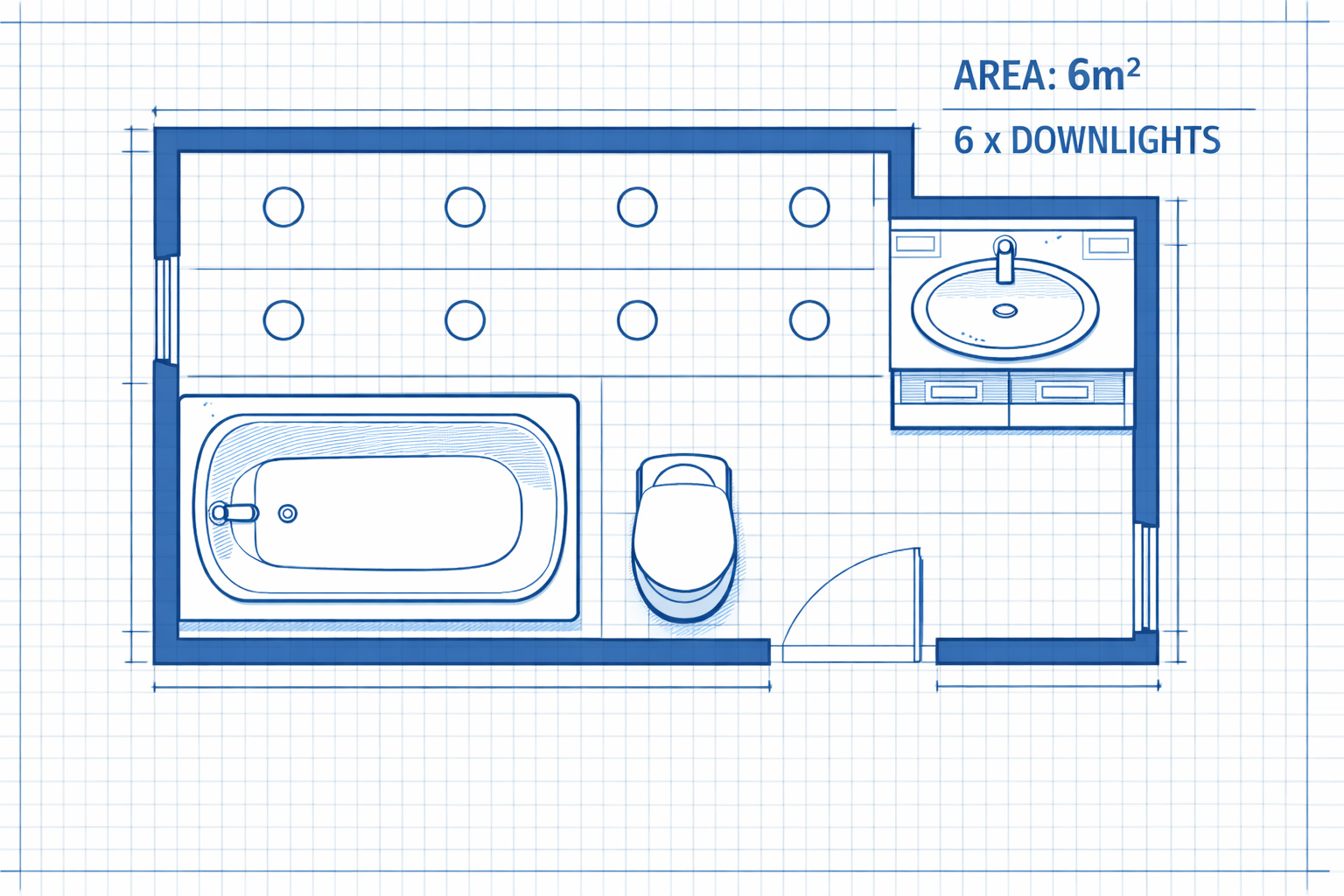
Ever walked into a space and wondered exactly how many downlights in a bathroom you actually need to make it feel bright and balanced? Many UK bathrooms are either over-lit (hello airport runway) or under-lit (hello moody dungeon). The good news is that choosing the right number of downlights isn’t guesswork – it’s actually simple when someone explains it clearly.
This guide walks you through how many downlights you really need in a UK bathroom, how to space them properly, how bright they should be, and the best layouts for small, ensuite and family bathrooms. No maths degree required – just a warm drink and a few easy rules.
By the end, you’ll know exactly how many lights your bathroom needs and why. Let’s make your ceiling look beautifully intentional, not random.
This guide focuses on one specific aspect of bathroom lighting design. For full room planning, layout, and safety zones, see our complete Bathroom Lighting Guide.
Table of Contents
1. The Easy Lumen Rule (Explained Simply)
Before deciding how many downlights to install, you first need to know how bright the bathroom should be. The good news? There’s a simple rule almost every lighting designer uses:
Aim for 150–200 lux across the whole bathroom.
Lux = brightness on a surface.
To reach that brightness, you use lumens (what bulbs produce).
A quick way to think about it:
- Small bathroom (2m × 2m): 1,200–1,600 lumens
- Medium bathroom (2.5m × 3m): 1,800–2,400 lumens
- Large bathroom (3m × 4m): 2,700–3,500 lumens
Most LED downlights output 300–500 lumens, depending on quality.
A simple rule of thumb:
Bathroom size ÷ 1.5 ≈ number of downlights
(no scientific calculator needed!)
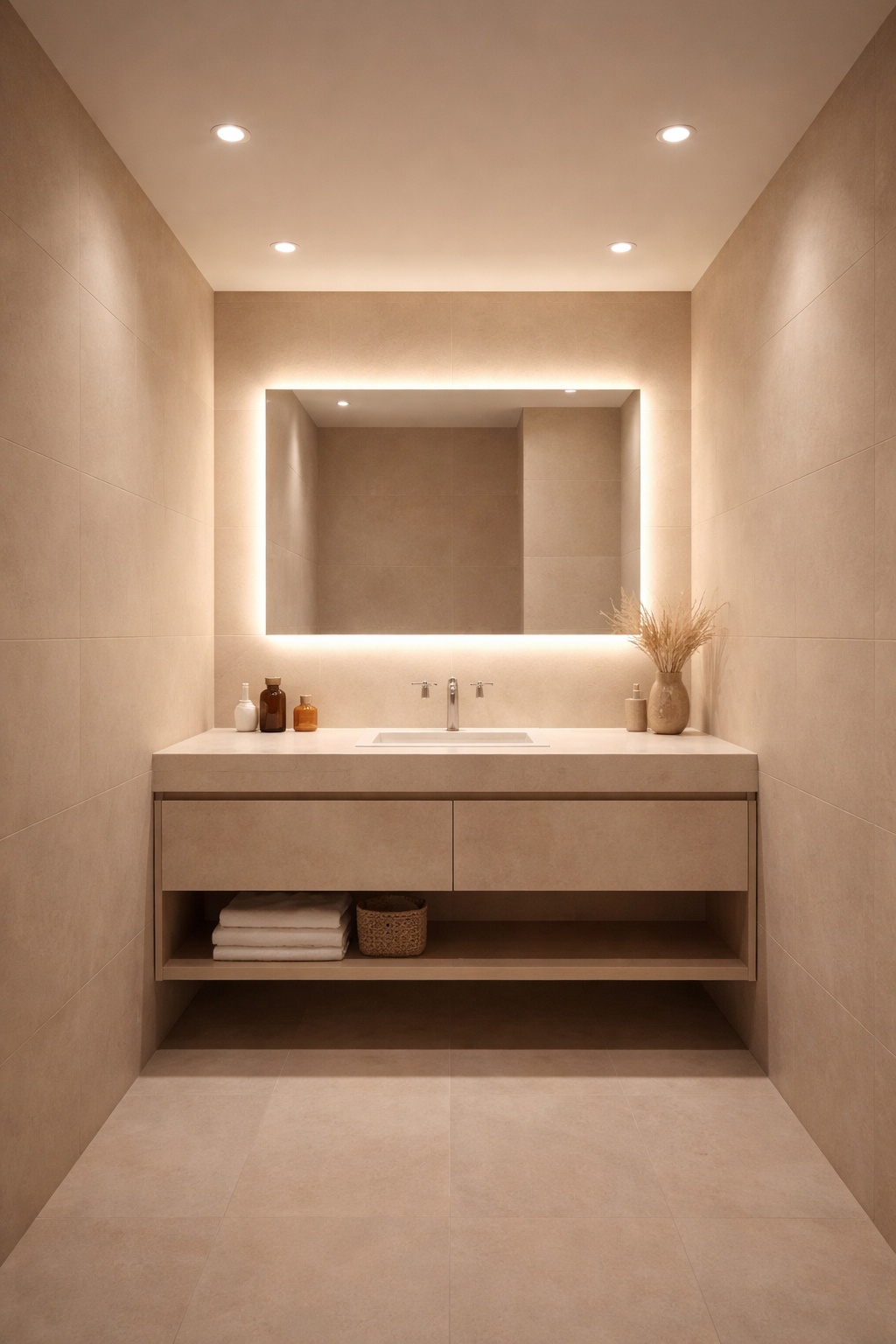
Quick Guide: How Many Downlights Do I Need?
| Bathroom Size | Dimensions (Approx) | Total Lumens Needed | Recommended Number of Downlights |
| Small / Flat | 2m × 2m | 1,200 – 1,600 | 3 to 4 |
| Ensuite | 1.5m × 2m | 800 – 1,200 | 2 to 3 |
| Medium / Semi | 2.5m × 3m | 1,800 – 2,400 | 4 to 6 |
| Large / Luxury | 3m × 4m+ | 2,700 – 3,500+ | 6 to 8+ |
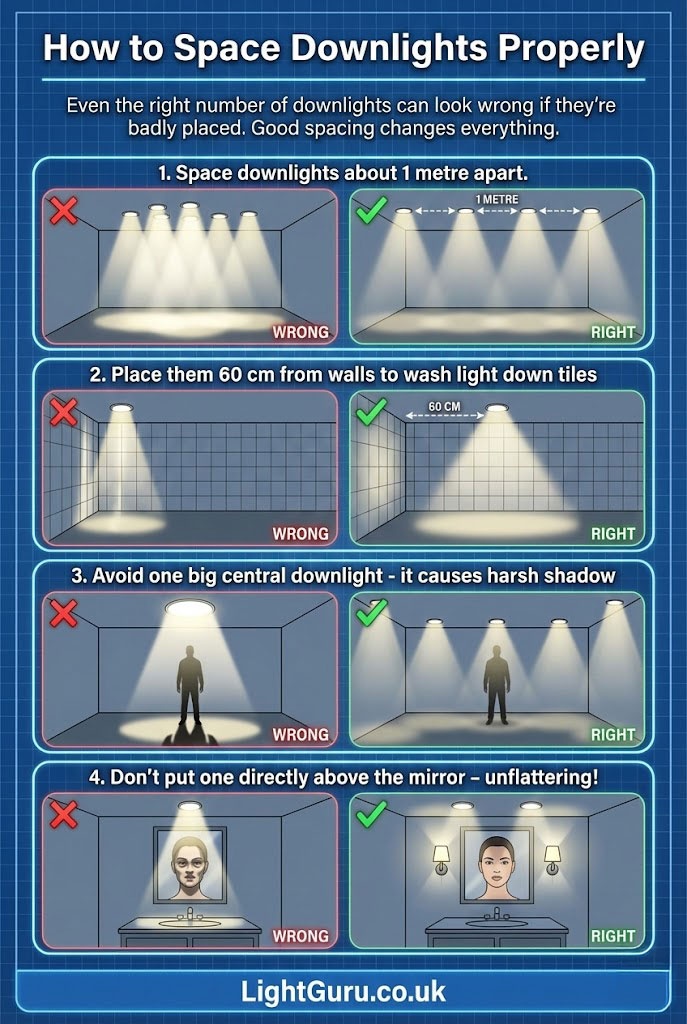
2. How to Space Downlights Properly
Even the right number of downlights can look wrong if they’re badly placed. Good spacing changes everything.
The golden rules:
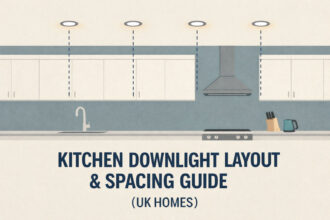
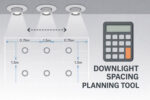
- Space downlights about 1 metre apart
- Place them 60 cm from walls to wash light down tiles
- Avoid one big central downlight – it causes harsh shadow
- Don’t put one directly above the mirror – unflattering!
When downlights graze the wall instead of shining straight down, the whole bathroom feels bigger and more luxurious.
Tile wash = hotel feel
Lighting the walls rather than the centre gives that soft boutique glow you see in spa bathrooms.
More planning guidance: /ideas/bathroom-wall-lighting-ideas/
Pro Tip: The “Grid” Trap
The biggest mistake homeowners make is treating their bathroom ceiling like a perfectly symmetrical grid (like the 5 on a dice). Instead of placing lights perfectly in the middle of the room, place them strategically over task areas—above the edge of the vanity, near the shower entrance, and over the toilet. If the ceiling layout looks a little asymmetrical, that is perfectly fine. The light will look much better at eye level!
3. How Many Downlights in a Bathroom Do You Need? (By Room Size)
Let’s break it down by real UK bathroom sizes so you can copy the layouts easily.
Small Bathroom (Approx. 2m × 2m)
Recommended: 4 downlights
Layout:
- Two in the shower/bath area
- Two near the vanity/wall edge
- Avoid the centre – keep lights near edges for height and glow
This creates a soft, non-glary wash of light.
Medium Bathroom (Approx. 2.5m × 3m)
Recommended: 4–6 downlights
Layout:
- Three along each side
- One optional centre if ceiling is high
- Keep them balanced around the room’s edges
Perfect for British semis and new builds.
Large Bathroom (Approx. 3m × 4m+)
Recommended: 6–8 downlights
Layout:
- Four around perimeter
- Two near shower zone
- Optional central pair for extra brightness
Large bathrooms benefit from layered lighting – consider adding wall or mirror lights too.
Ensuite Bathroom
Recommended: 2–4 downlights
Layout:
- One above shower area
- One or two near vanity side
- Optional small spotlight for feature tile
Extra layout ideas: /ideas/bathroom-lighting-layouts/
Image prompts
“Bathroom layout diagram with four perimeter lights in small bathroom”
“Medium bathroom with six evenly spaced LEDs and bright shower area”
“Large luxury bathroom with eight warm downlights creating soft ambience”
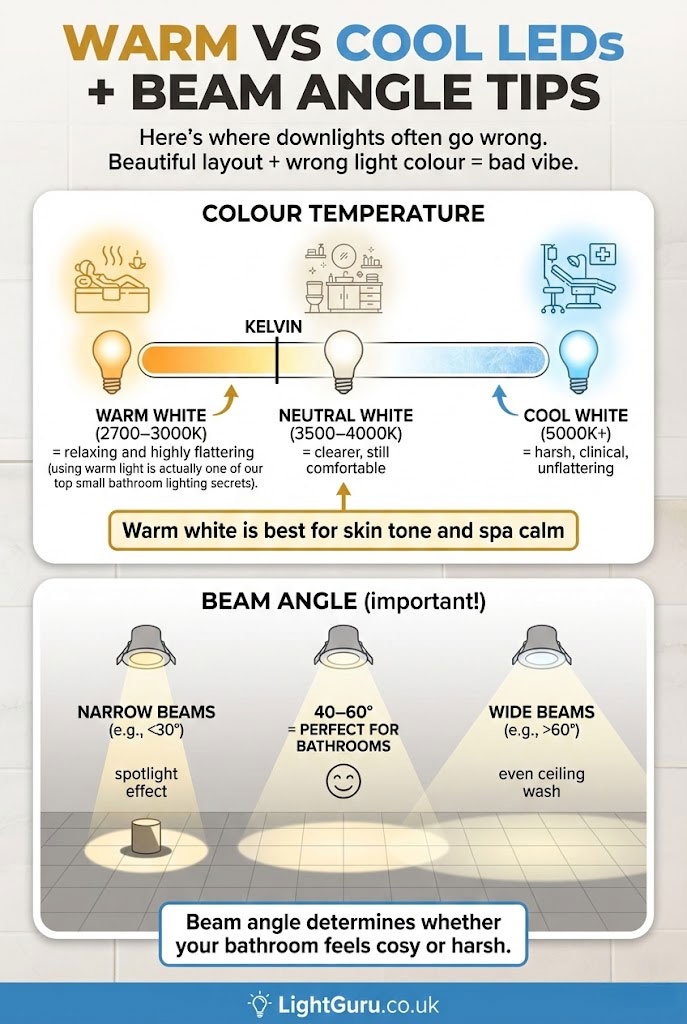
4. Warm vs Cool LEDs + Beam Angle Tips
Here’s where downlights often go wrong. Beautiful layout + wrong light colour = bad vibe.
Colour temperature
- Warm white (2700–3000K) = relaxing and highly flattering (using warm light is actually one of our top small bathroom lighting secrets).
- Neutral white (3500–4000K) = clearer, still comfortable
- Cool white (5000K+) = harsh, clinical, unflattering
Warm white is best for skin tone and spa calm.
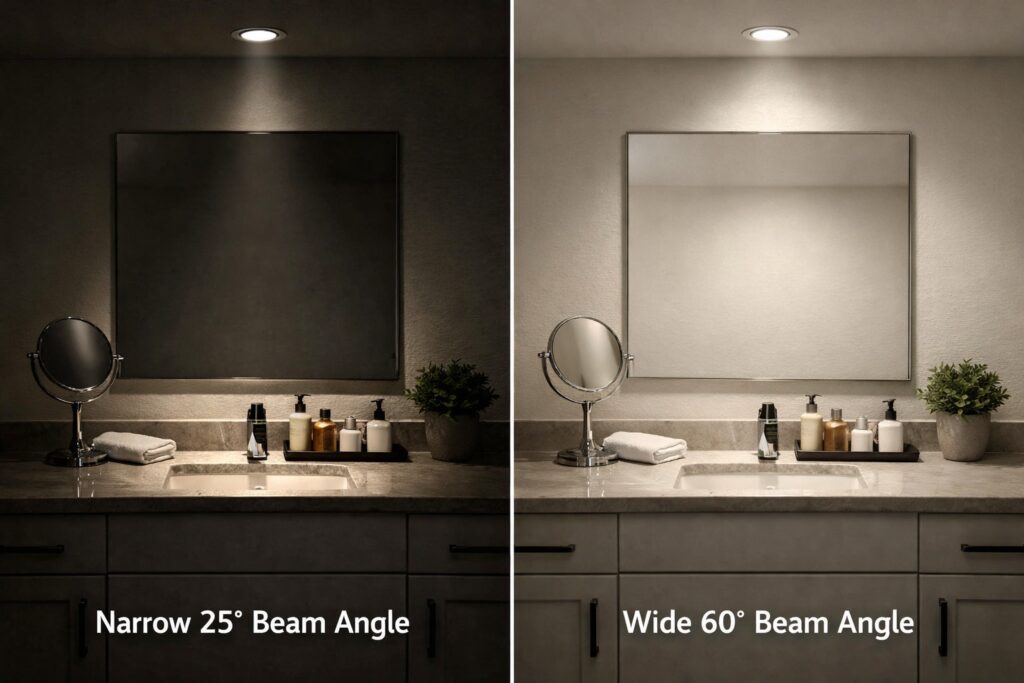
Beam angle (important!)
- 40–60° = perfect for bathrooms
- Narrow beams = spotlight effect
- Wide beams = even ceiling wash
Beam angle determines whether your bathroom feels cosy or harsh.
Learn more about colour tone here: /guides/colour-temperature/
5. UK Safety & IP Ratings
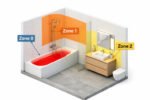
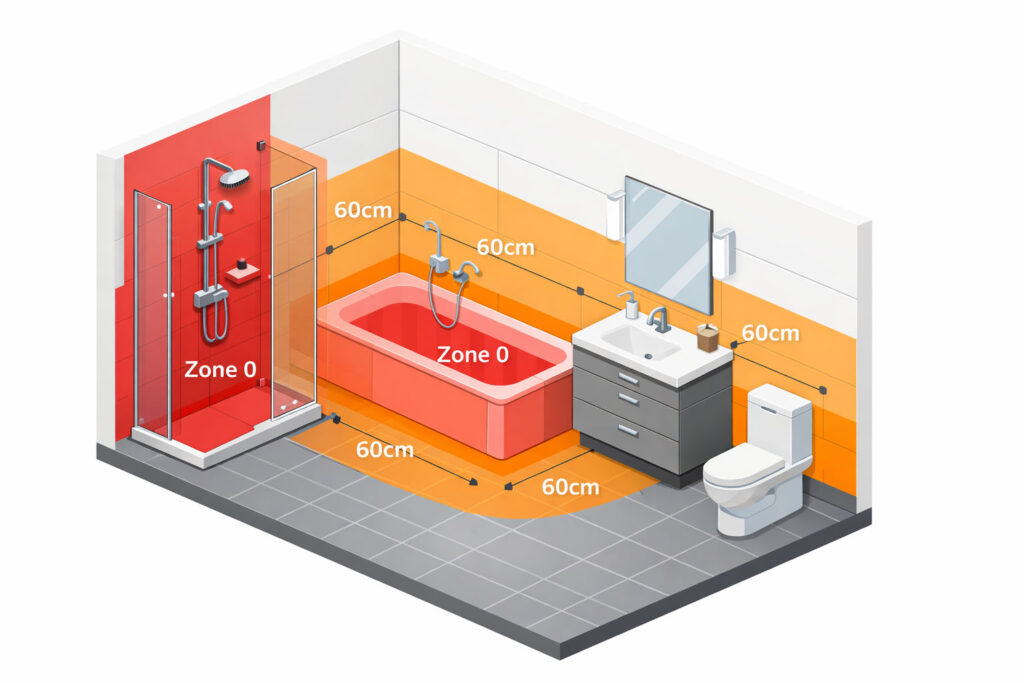
Bathrooms are heavily regulated “wet zones” under UK BS 7671 Wiring Regulations. Because water and electricity are a dangerous combination, any downlight you choose must have the correct Ingress Protection (IP) rating.
- Zone 1 (Inside the shower/directly above the bath): This area gets completely drenched in steam and splashed with water. You must use downlights rated at IP65 (which means they are protected against low-pressure water jets from any direction).
- Zone 2 (The 60cm perimeter around the sink, bath, and shower): This area is prone to splashing. Lights here must be at least IP44 rated (protected against water spray).
- Outside Zones (The rest of the room): While standard IP20 lights are technically permitted here, we highly recommend using IP44 or IP65 downlights across the entire bathroom ceiling. Steam travels, and a sealed IP-rated fitting will prevent moisture from getting into the electrical housing and causing early bulb failure.
(Always ensure your bathroom lighting is installed by a certified electrician and is RCD-protected on the consumer unit).
External trusted source:
> Electrical Safety First
https://www.electricalsafetyfirst.org.uk/guides-and-advice/electrical-items/bathroom-electrics/
6. Real Layout Examples for UK Bathrooms
1. Small Flat Bathroom
- Four perimeter downlights
- Backlit mirror
- Makes room feel taller
2. Ensuite With Walk-in Shower
- Two IP65 spots in shower
- Two general LEDs
- Soft wall light optional
3. Family Bathroom
- Six downlights
- Mix with wall lights
- Great flexibility day and night
4. Wet Room
- Full IP65 ceiling grid
- LED niche for spa feel
Explore layout ideas here: /ideas/bathroom-lighting-layouts/
FAQs
Can I dim bathroom downlights?
Absolutely, and it is highly recommended! A bathroom serves two distinct purposes: it needs to be bright and clear for morning tasks like shaving or applying makeup, but soft and relaxing for an evening soak in the tub. By installing dimmable LED downlights on a trailing-edge dimmer switch, you get the best of both worlds. Just ensure the dimmer switch itself is placed safely outside the bathroom.
Do I need extra lights if I have a backlit mirror?
Yes, you should still use ceiling lighting. While a backlit mirror or wall sconce is fantastic for providing flattering, shadow-free light directly onto your face, it isn’t powerful enough to illuminate the entire room. Downlights provide the essential “ambient” or general light that makes the bathroom safe to navigate and clean.
Can I mix downlights with wall lights?
Absolutely – designers do this all the time.
Is 4 downlights enough for most bathrooms?
For the average small-to-medium UK bathroom (roughly 2m x 2m), 4 well-spaced downlights outputting around 400 lumens each is usually the perfect amount. This provides roughly 1,600 total lumens, which is more than enough to achieve the recommended 150-200 lux for a bright, clean-looking space.
Conclusion
Figuring out exactly how many downlights in a bathroom to install isn’t complicated – it’s all about calculating the right brightness, getting the spacing perfect, and adhering to UK safety zones.
Whether your bathroom is small and simple or big and luxurious, the layouts above give you a balanced, soft and modern result every single time.
Get the right spacing, the right beam angle, the right temperature… and your bathroom becomes brighter, calmer and more enjoyable to use, morning and night.