Table of Contents
- Introduction
- Understanding Kitchen Lighting Layers
- Ambient Lighting
- Task Lighting
- Accent Lighting
- Colour Temperature & Brightness
- Common Mistakes to Avoid
- Installation & Safety
- FAQs
- Final Thoughts
Introduction
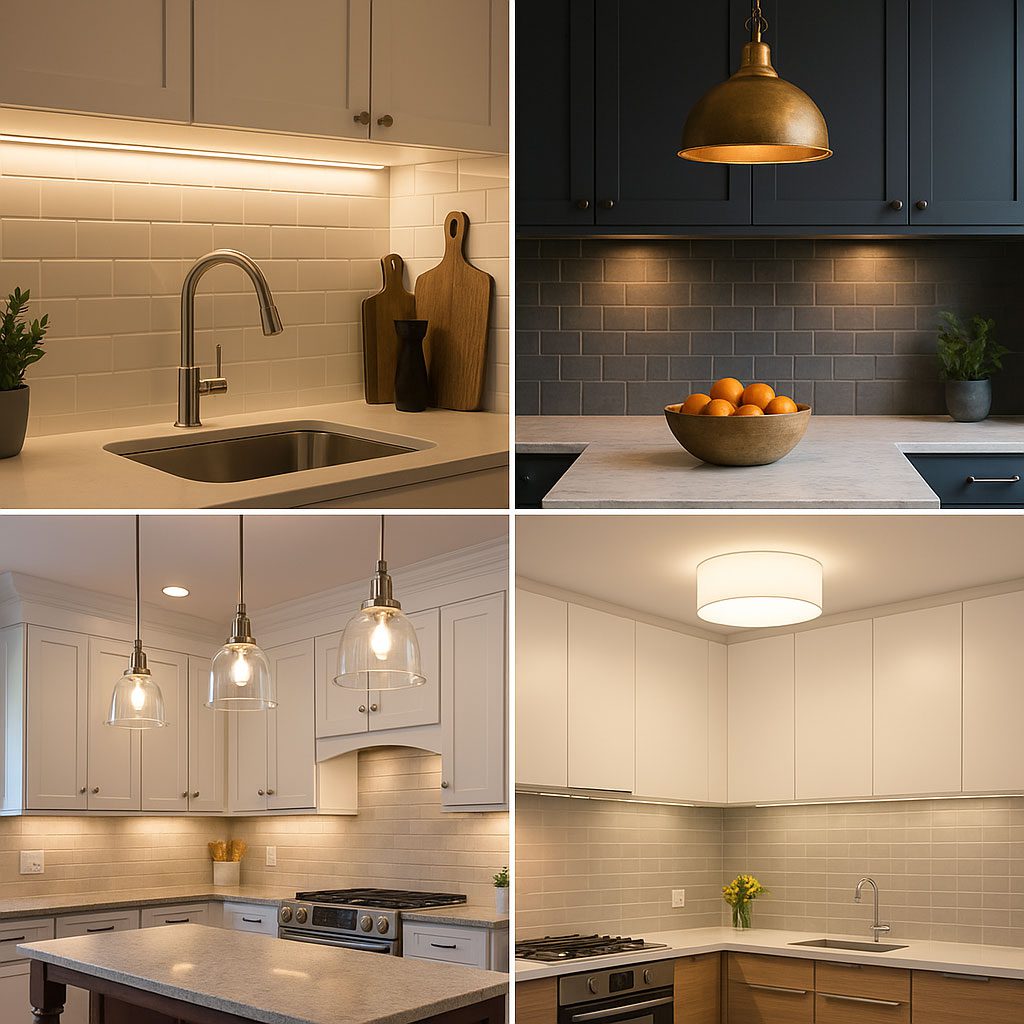
The kitchen lighting guide from LightGuru helps you plan a lighting scheme that’s both functional and stylish. The kitchen is one of the most used spaces in your home, and with the right combination of task, ambient, and accent lighting, it can transform from a busy cooking zone to a warm social space in seconds.
Understanding Kitchen Lighting Layers
A well-balanced kitchen lighting guide includes three essential layers:
- Ambient lighting – provides general illumination across the entire kitchen.
- Task lighting – focuses on work areas like countertops and sinks.
- Accent lighting – adds depth and highlights decorative elements.
Layering these creates visual comfort and enhances both practicality and style.
Related Reading: [The Complete Guide to Choosing the Right Lighting for Every Room →]
Ambient Lighting
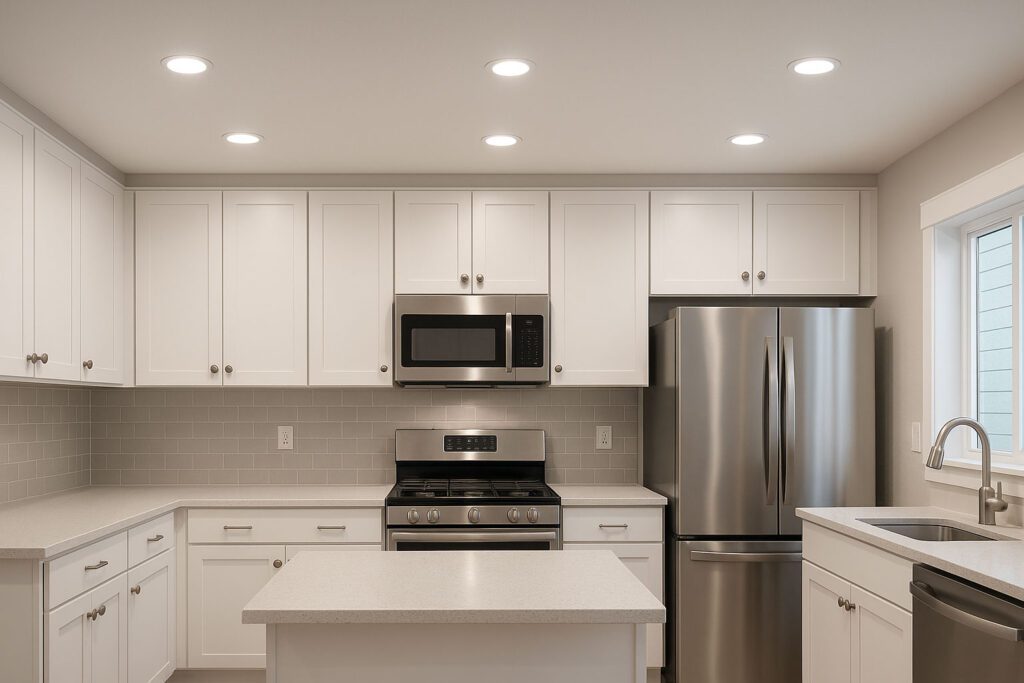
Ambient lighting forms the foundation of your kitchen lighting guide. It ensures even illumination, making the room feel bright and open.
Best Ambient Lighting Options
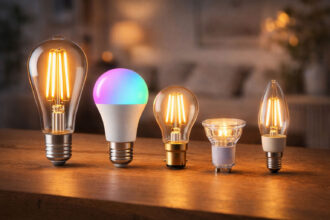
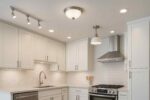
- LED ceiling panels or recessed downlights for a clean, even glow.
- Flush-mount fittings in smaller kitchens.
- Smart dimmable lights for adjustable brightness.
Pro Tip: Use neutral white light (around 4000K) for a fresh, natural effect.
Task Lighting
Task lighting is one of the most important sections of any kitchen lighting guide because it keeps work surfaces bright and safe.
Best Task Lighting Options
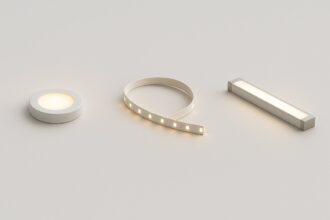
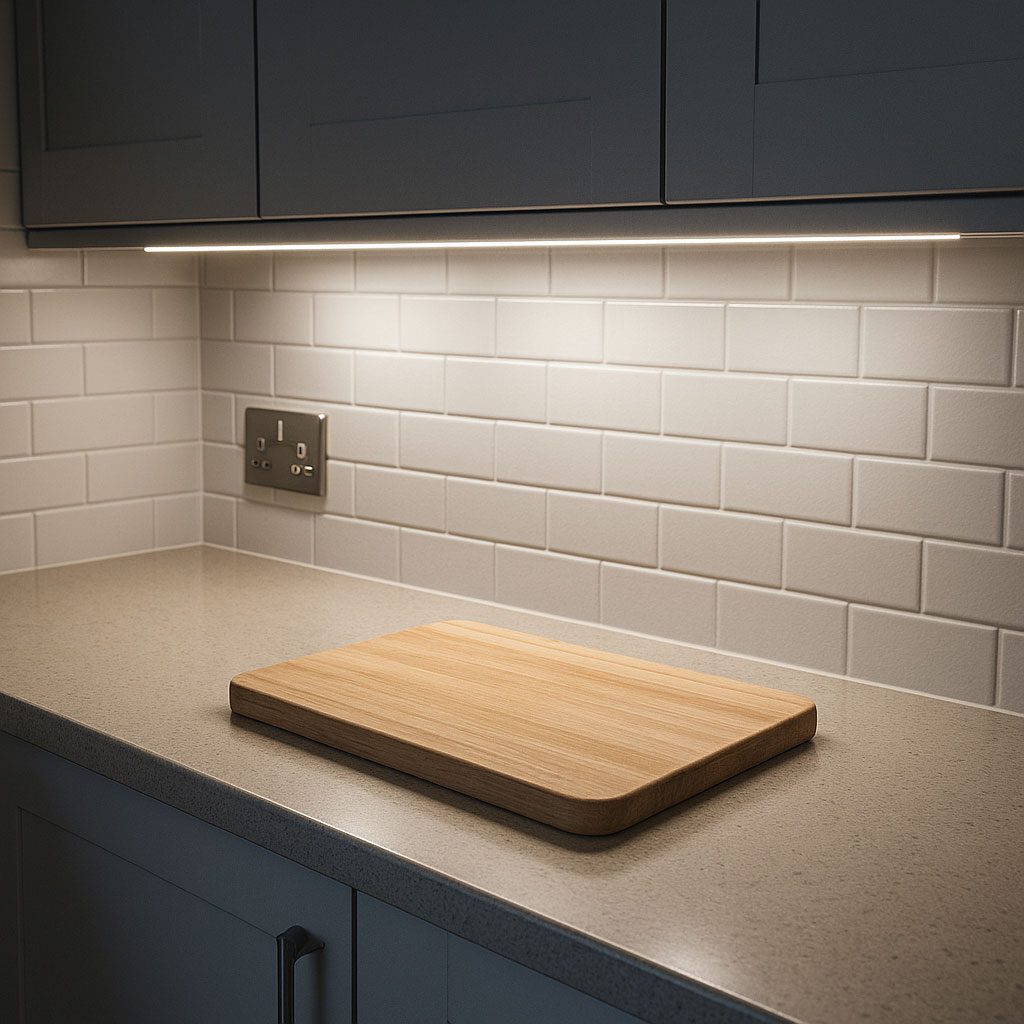
- Under-cabinet LED strips to illuminate countertops.
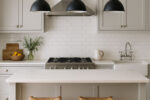
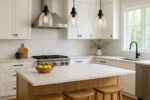
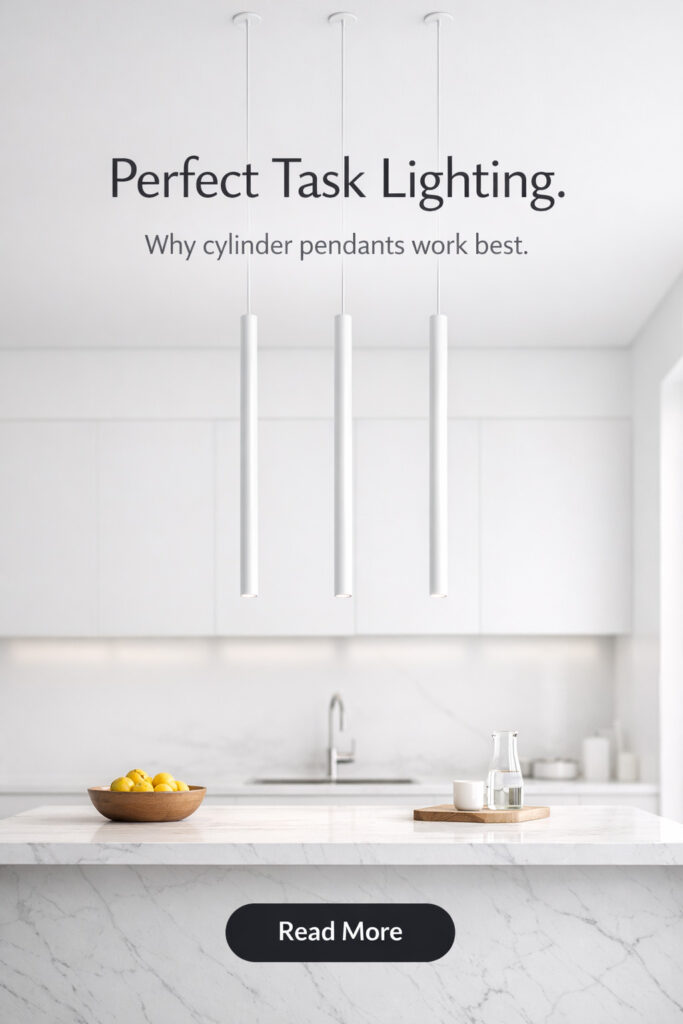
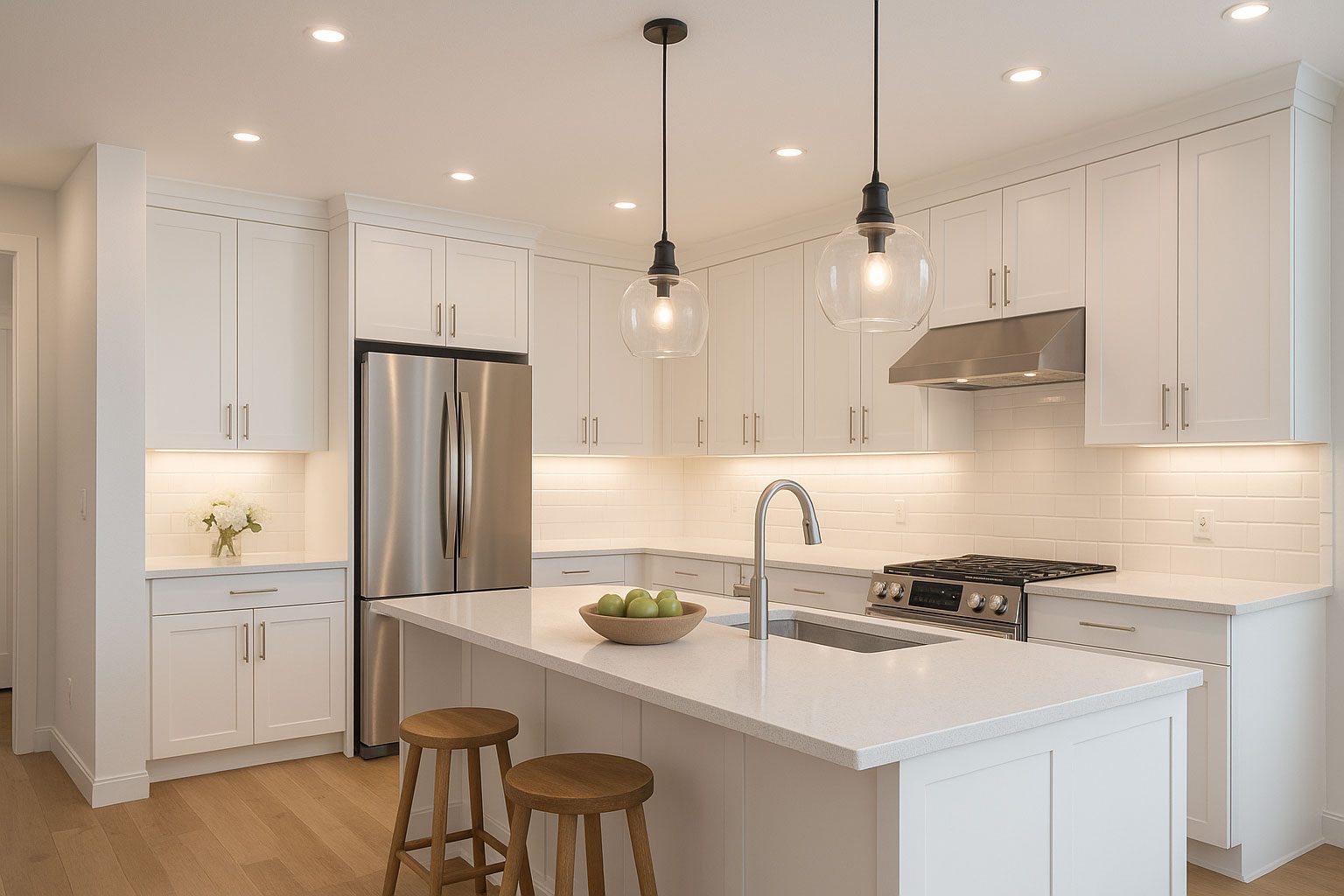
- Pendant lights above islands for visual focus.
- Adjustable spotlights to direct light exactly where it’s needed.
Pro Tip: Position under-cabinet lighting near the front of cabinets to prevent shadows.
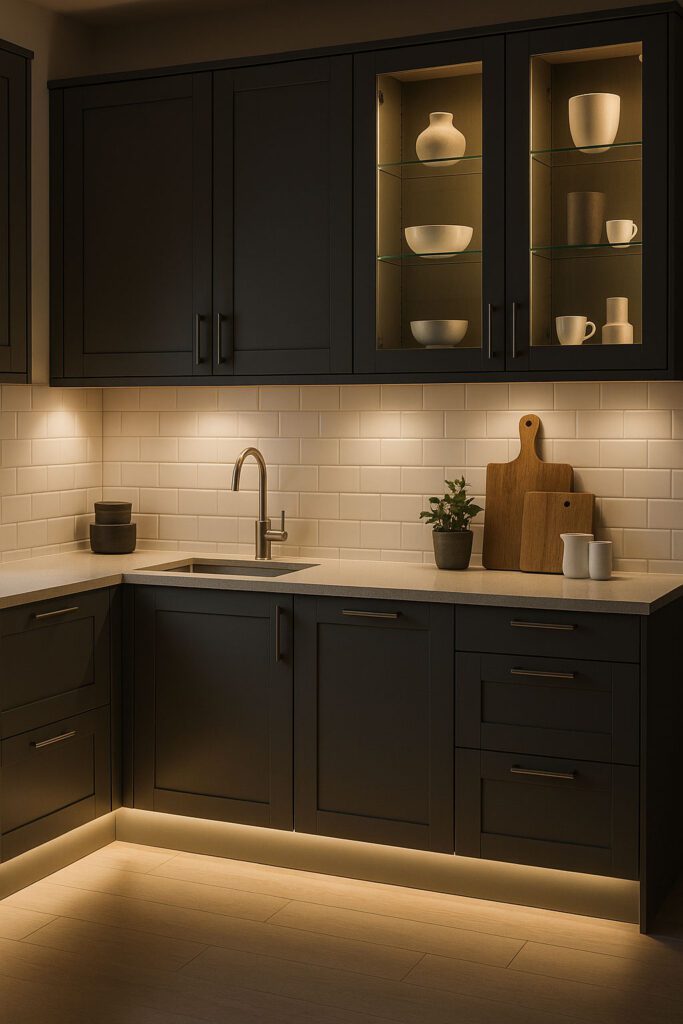
🌟 Accent Lighting
Accent lighting completes the layered look in your kitchen lighting guide by adding atmosphere and personality.
Accent Lighting Ideas
- Plinth lighting along the floor for subtle glow.
- Glass cabinet lights to highlight display items.
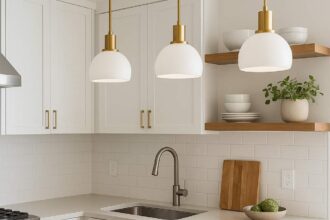
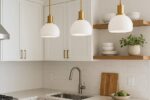
- Pendant lighting with warm white tones to create comfort.
Pro Tip: Combine accent lighting with warm tones (around 3000K) to make your kitchen feel inviting in the evening.
Colour Temperature & Brightness
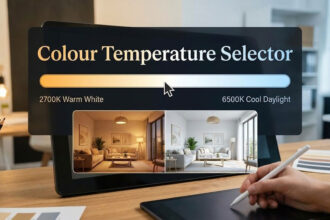
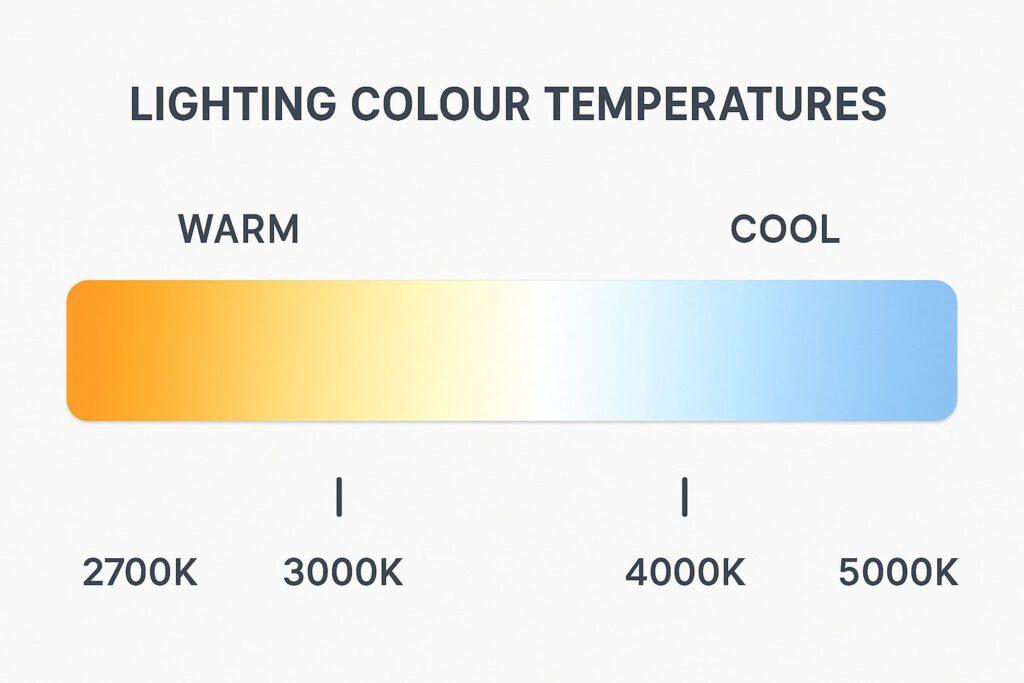
The right colour temperature and brightness make your kitchen lighting guide come alive.
| Lighting Type | Colour Temperature | Brightness (Lumens/m²) | Notes |
|---|---|---|---|
| Ambient | 4000K | 300–500 | Balanced general lighting |
| Task | 4000–5000K | 500–800 | Crisp, clear illumination |
| Accent | 2700–3000K | Variable | Adds decorative warmth |
External Link: Energy Saving Trust – Lighting Advice
Common Mistakes to Avoid
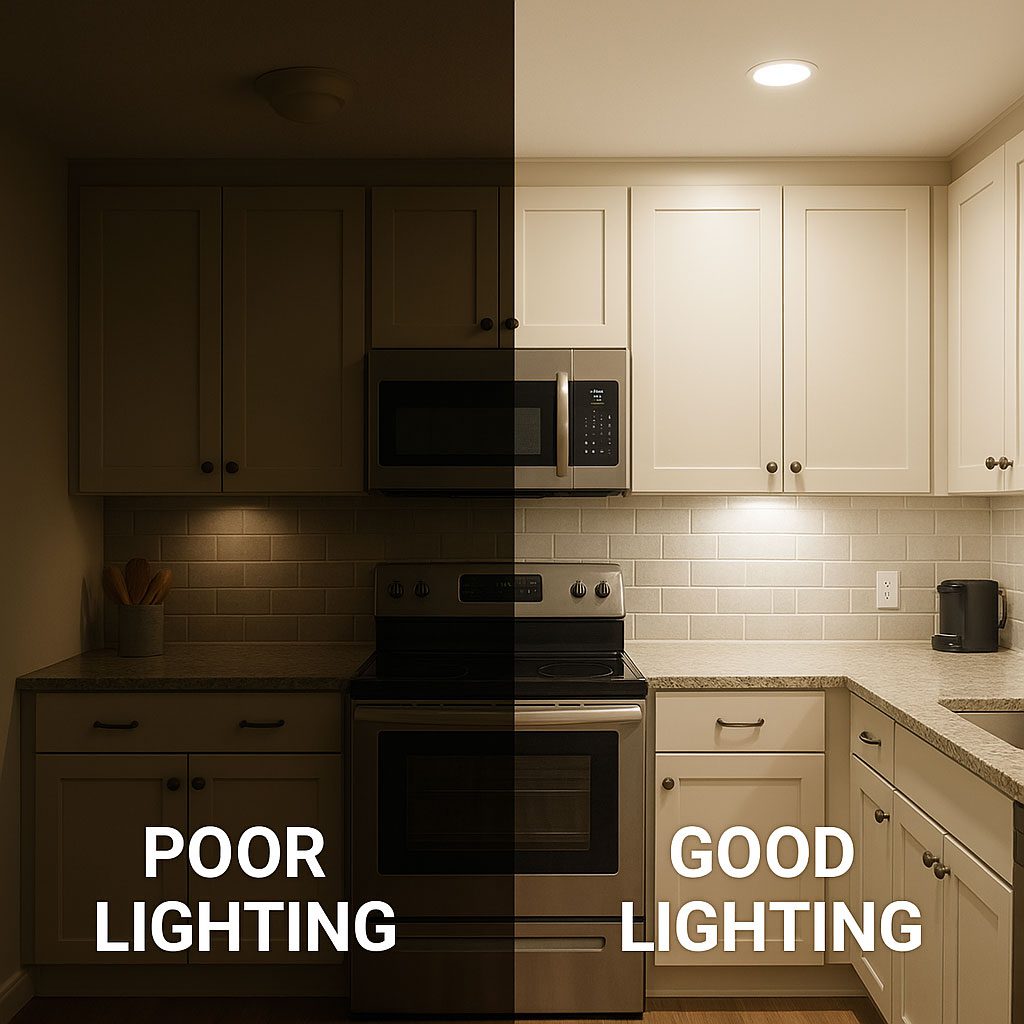
❌ Relying on a single ceiling light
✅ Use multiple layers from this kitchen lighting guide for even coverage.
❌ Choosing mismatched colour temperatures
✅ Stick to one consistent tone (around 4000K).
❌ Ignoring dimmers
✅ Add dimmers to control brightness and mood easily.
Installation & Safety
Always follow electrical safety guidelines when applying this kitchen lighting guide. Kitchens are special locations due to heat, moisture and appliances, so all installations should be carried out by a qualified electrician.
External Link: NICEIC – Kitchens and Electrics
FAQs
Q1: What’s the most effective lighting setup for a kitchen?
A balanced mix of task, ambient and accent lights is ideal. Follow this kitchen lighting guide to create that layered effect.
Q2: Should I use LED or halogen lights in the kitchen?
LEDs are more efficient, longer-lasting and better for heat control — the preferred option in any modern kitchen lighting guide.
Q3: How bright should kitchen lights be?
For general areas, aim for 300–500 lumens per square metre, and for task zones, 500–800 lumens.
Q4: What colour temperature is best for kitchens?
Use 4000K for cooking areas and 3000K for dining or accent lighting.
Final Thoughts
A great kitchen lighting guide is all about layering. Combine ambient, task, and accent lighting for a kitchen that’s bright, functional, and beautifully balanced.
For more inspiration, read our full [Complete Guide to Choosing the Right Lighting for Every Room →] and discover how to perfect your lighting design throughout your home.