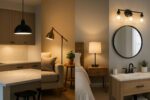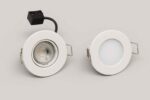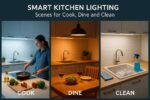
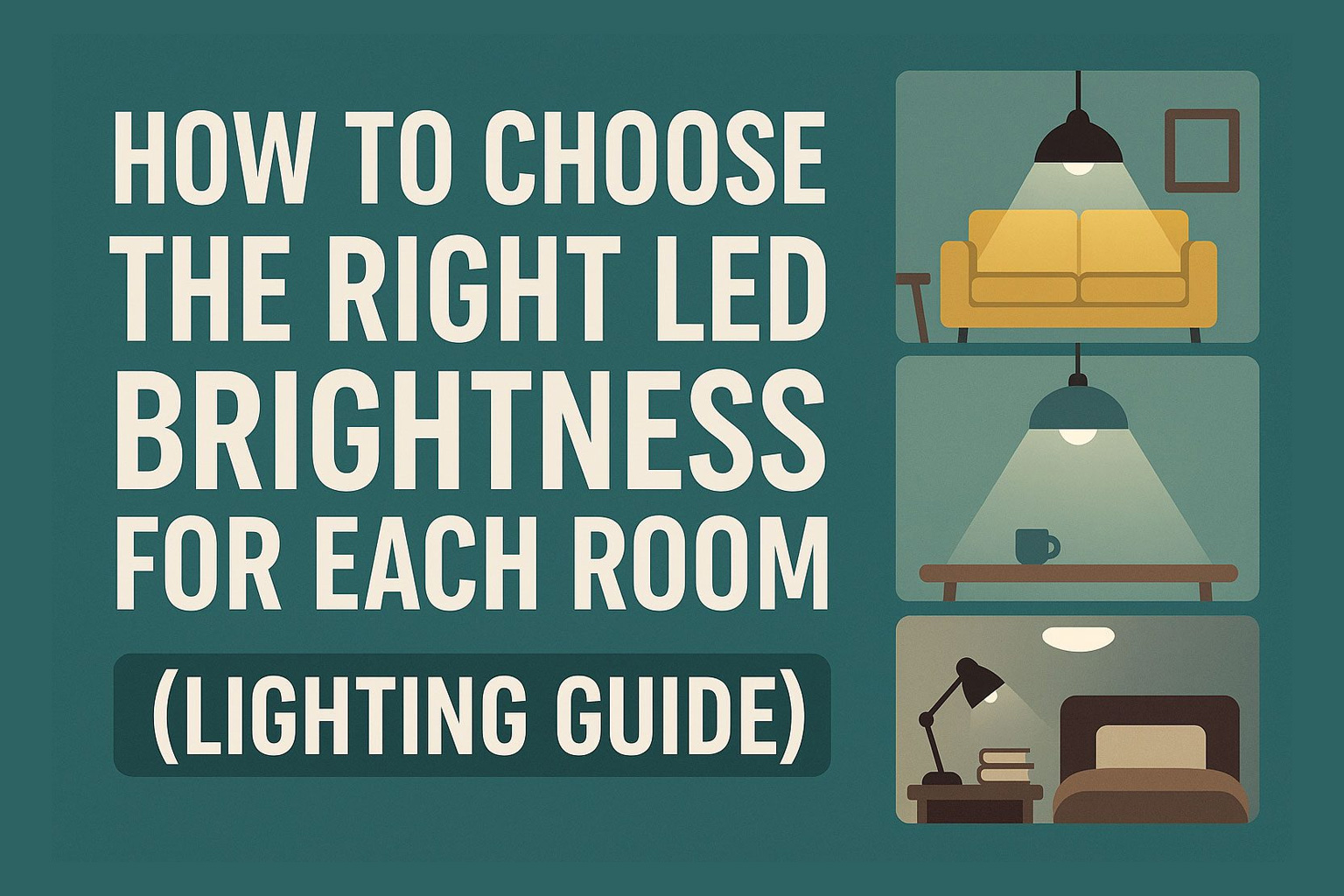
Choosing the right LED brightness can completely change how your home feels. Too dim, and your space feels dull; too bright, and it becomes harsh.
This guide explains how to choose LED brightness for each room using lumens, purpose, and mood as your roadmap.
This guide focuses on specific brightness calculations. For our master room-by-room brightness calculator, see our main Lumens Guide.
What Does LED Brightness Mean?
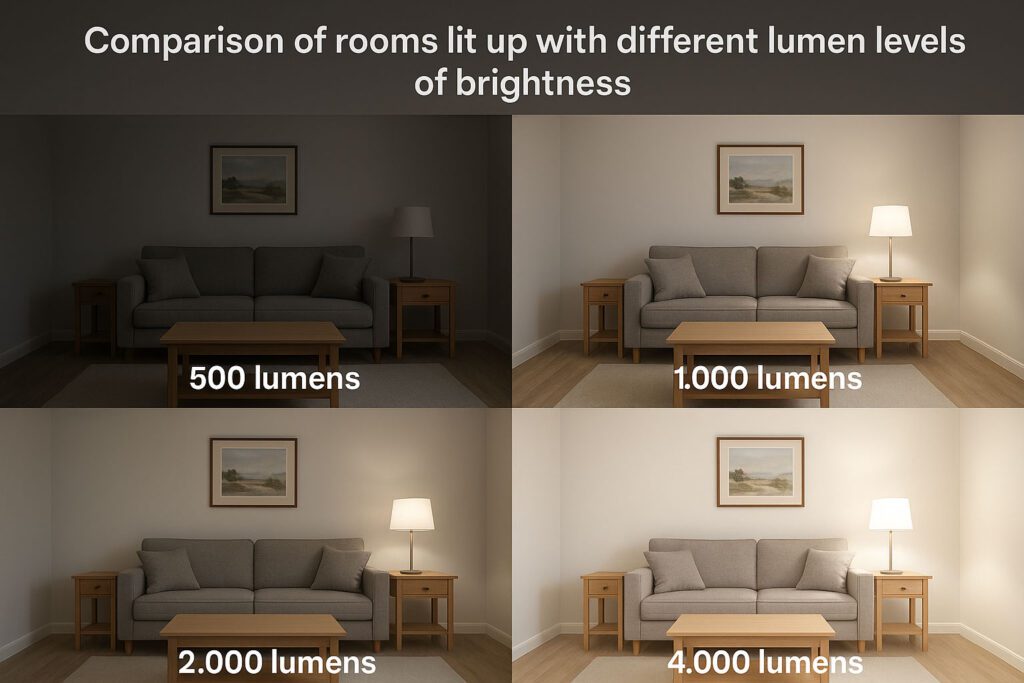
When people say “brightness,” they often think in watts. But LED brightness is actually measured in lumens (lm) – the amount of visible light produced.
| Term | What It Means |
|---|---|
| Watts (W) | Power consumption |
| Lumens (lm) | Light output (brightness) |
| Lux | Brightness per square metre |
Pro Tip: The higher the lumens, the brighter the light, not the higher the watts!
Understanding Lumens: How Bright Should Each Room Be?
Different rooms need different light levels. Here’s how to choose LED brightness for each room based on purpose and ambience.
| Room | Recommended Lumens (Total) | Suggested Product |
|---|---|---|
| Living Room | 1,500–3,000 lm | Dimmable LED Ceiling Lights |
| Kitchen | 4,000–8,000 lm | High Output LED Downlights |
| Bedroom | 1,000–2,000 lm | LED Wall Lights |
| Bathroom | 2,000–4,000 lm | IP Rated Bathroom Downlights |
| Hallway | 600–1,500 lm | LED Bulkheads |
| Office / Study | 3,000–6,000 lm | LED Panel Lights |
These figures are total lumens for the entire room, not per bulb.
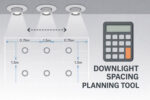
How to Calculate the Right LED Brightness
Here’s how to figure out how many lumens you need:
- Measure your room area in square metres.
- Multiply by the recommended lux level for that type of room.
- Divide by the lumens per bulb to see how many fittings you need.
Example:
A 12 m² kitchen × 400 lux = 4,800 lumens total.
If each downlight gives 800 lumens → 6 lights are ideal.
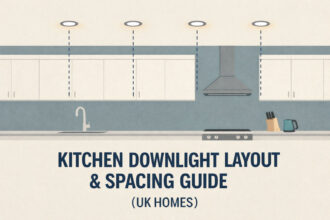
Explore: Kitchen Lighting Layout Guide
Brightness vs Colour Temperature vs CRI
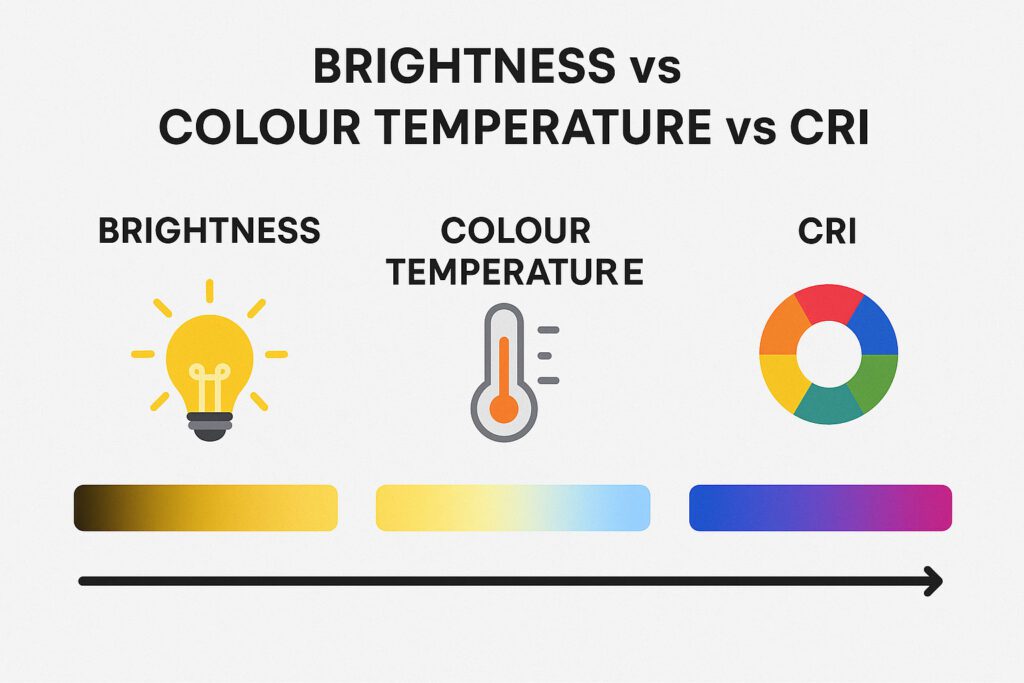
When choosing LED brightness for each room, remember:
- Brightness (lumens) = how much light
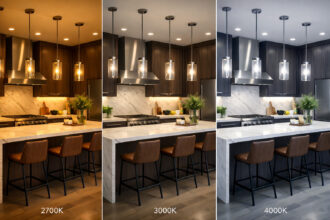
- Colour Temperature (Kelvins) = light tone (warm vs cool)
- CRI = how accurately colours appear
Learn more about CRI vs Colour Temperature and why both affect how your space looks.
Living Room: Brightness for Relaxation and Style
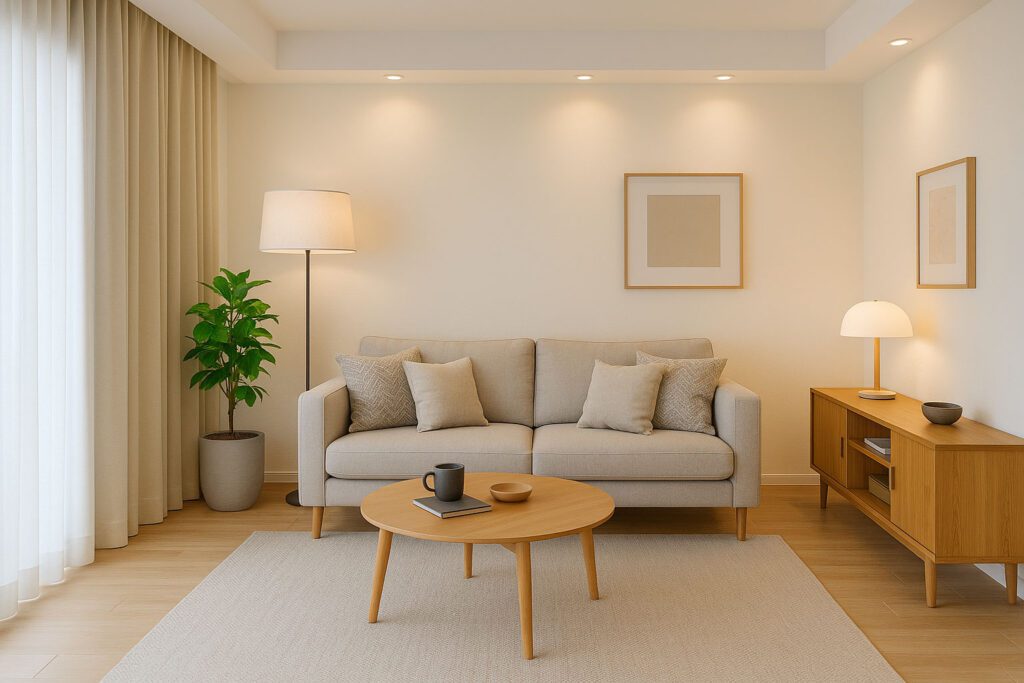
The living room needs flexible brightness – bright enough for reading but soft enough for movie nights.
Ideal setup:
- 2,000–3,000 lumens total
- Warm white (2700–3000 K)
- CRI 80+ for natural colour
Use a mix of Dimmable Ceiling Lights and wall lights for layered ambience.
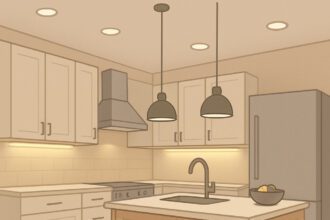
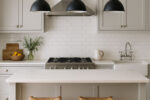
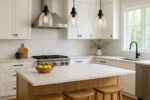
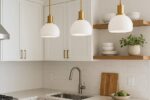
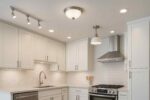
Kitchen: Brightness for Clarity and Safety
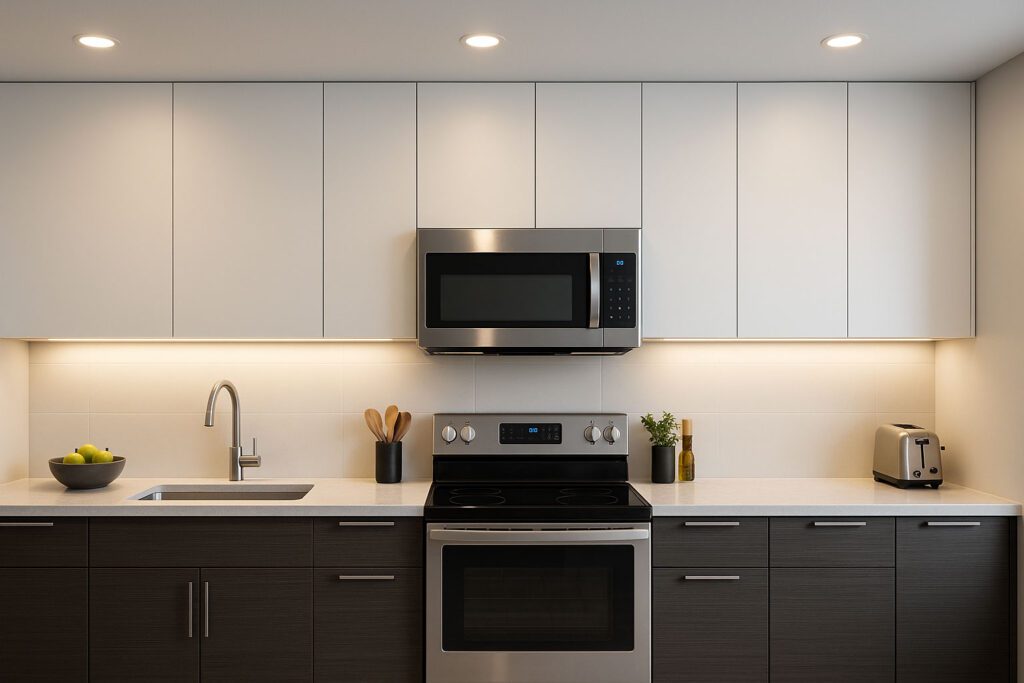
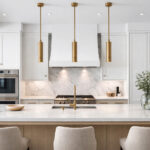
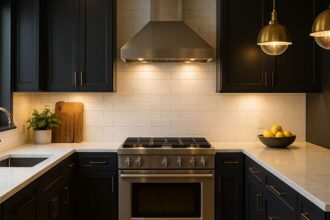
The kitchen is the brightest room in the home – clarity is key.
Ideal setup:
- 4,000–8,000 lumens total
- 3000–4000 K neutral white
- CRI 80-90+ for true food colours
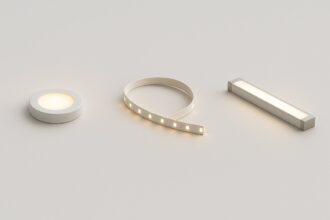
Use High CRI Downlights or Under Cabinet Strip Lights.
Bedroom: Brightness for Calm and Comfort
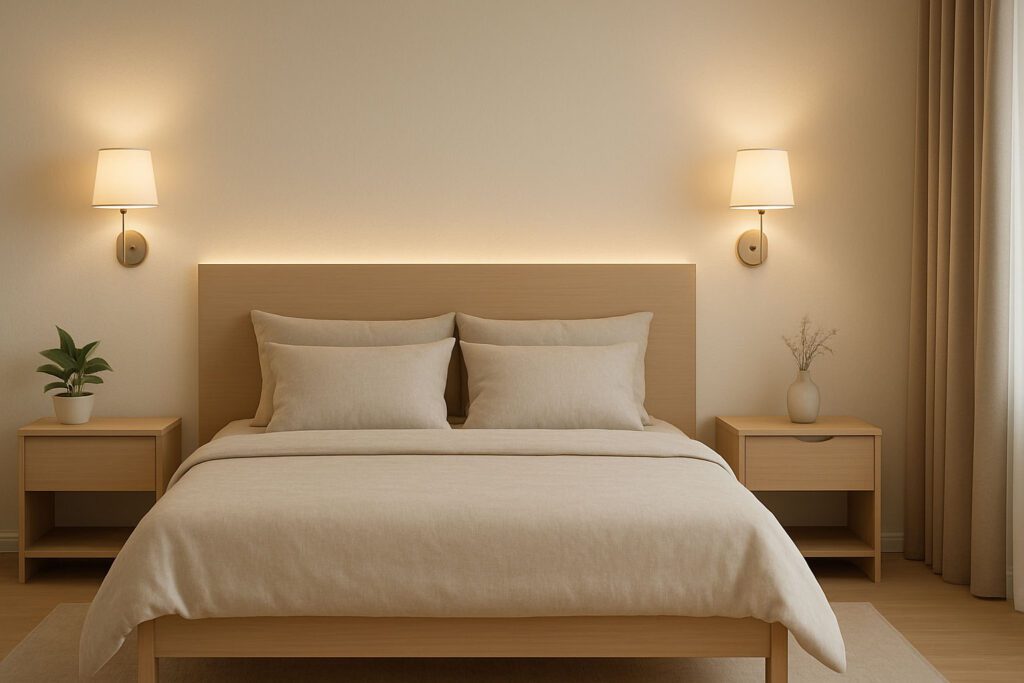
Bedrooms benefit from gentle, relaxing light.
Ideal setup:
- 1,000–2,000 lumens total
- Warm white (2700–3000 K)
- CRI 80+
Use LED Wall Lights and Dimmable LEDs.
Bathroom: Brightness for Function and Safety
[Image: Bathroom with mirror lights and ceiling downlights]
Bathrooms need clear, accurate light for grooming.
Ideal setup:
- 2,000–4,000 lumens total
- Cool white (4000–5000 K)
- CRI 80-90+
Opt for IP Rated Bathroom Downlights to ensure safety and clarity.
Hallways and Entryways: Welcoming Brightness
[Image: Hallway with LED bulkhead lighting]
Hallways should be bright enough to guide movement but not glaring.
Ideal setup:
- 600–1,500 lumens total
- Neutral white (3500 K)
- CRI 80+
Use Round LED Bulkheads or low-glare ceiling lights.
Home Office: Brightness for Productivity
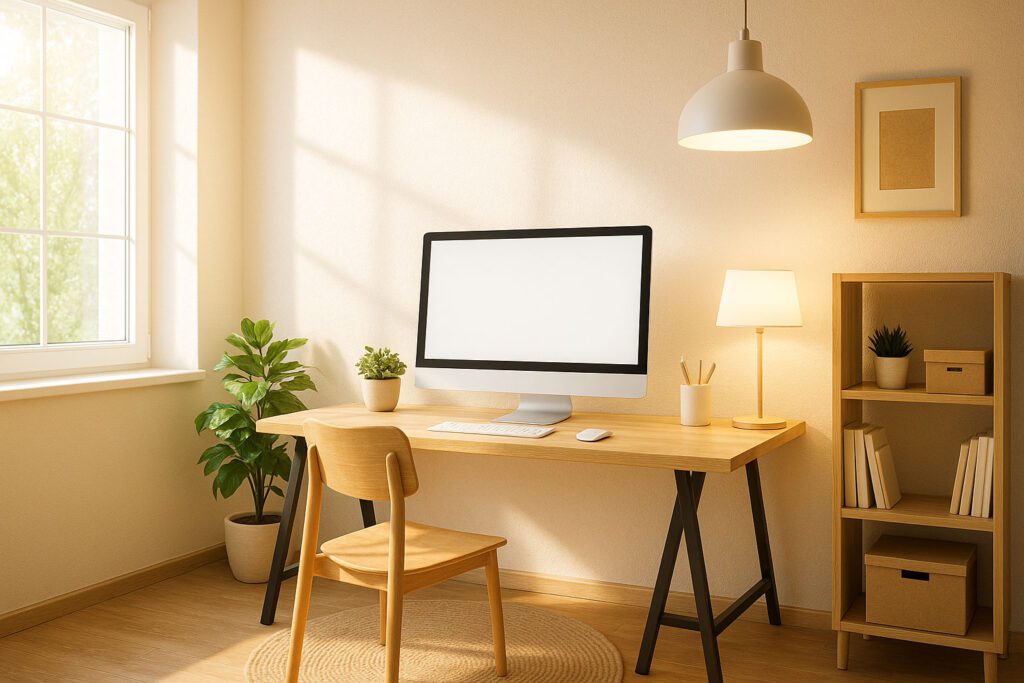
For concentration, lighting must be crisp and consistent.
Ideal setup:
- 3,000–6,000 lumens total
- 4000–5000 K neutral white
- CRI 80+
Try LED Panel Lights for even illumination with minimal shadows.
LightGuru’s Expert Recommendation
For most homes, aim for:
- Living areas: 1500-2000 lumens total
- Kitchens: 4,000–8,000 lumens total
- Work areas: 3,000–6,000 lumens total
- Bathrooms: 2,000–4,000 lumens total
The secret is layering – use dimmers, accent lights, and adjustable fittings to fine-tune LED brightness for each room.
See also: Adjustable LED Downlights – LightGuru
FAQs About Choosing LED Brightness
Q1. How do I know if my LED is bright enough?
Check the lumen rating – not watts. Compare total lumens to your room size and activity.
Q2. What are lumens per square metre?
That’s lux – the light level on a surface. Multiply your room area by the target lux to find total lumens.
Q3. Should I choose dimmable LEDs?
Yes – they let you control brightness to match mood and time of day.
Q4. How does brightness relate to colour temperature?
They work together: brightness sets intensity, colour temperature sets tone.
Conclusion
Choosing the right LED brightness for each room ensures every space feels balanced and functional.
By understanding lumens and using LightGuru’s recommendations, you’ll create a home that looks bright, comfortable, and perfectly lit.
For more tips, explore our LED Lighting Guides or shop our LED Lighting Collection.