Best outdoor lights for coastal homes in the UK: what won't rust

Some links below are affiliate links: if you buy through them I may earn a small commission, at no extra cost to you. As an Amazon Associate I earn from qualifying purchases. How LightGuru makes money

Mike's quick answer
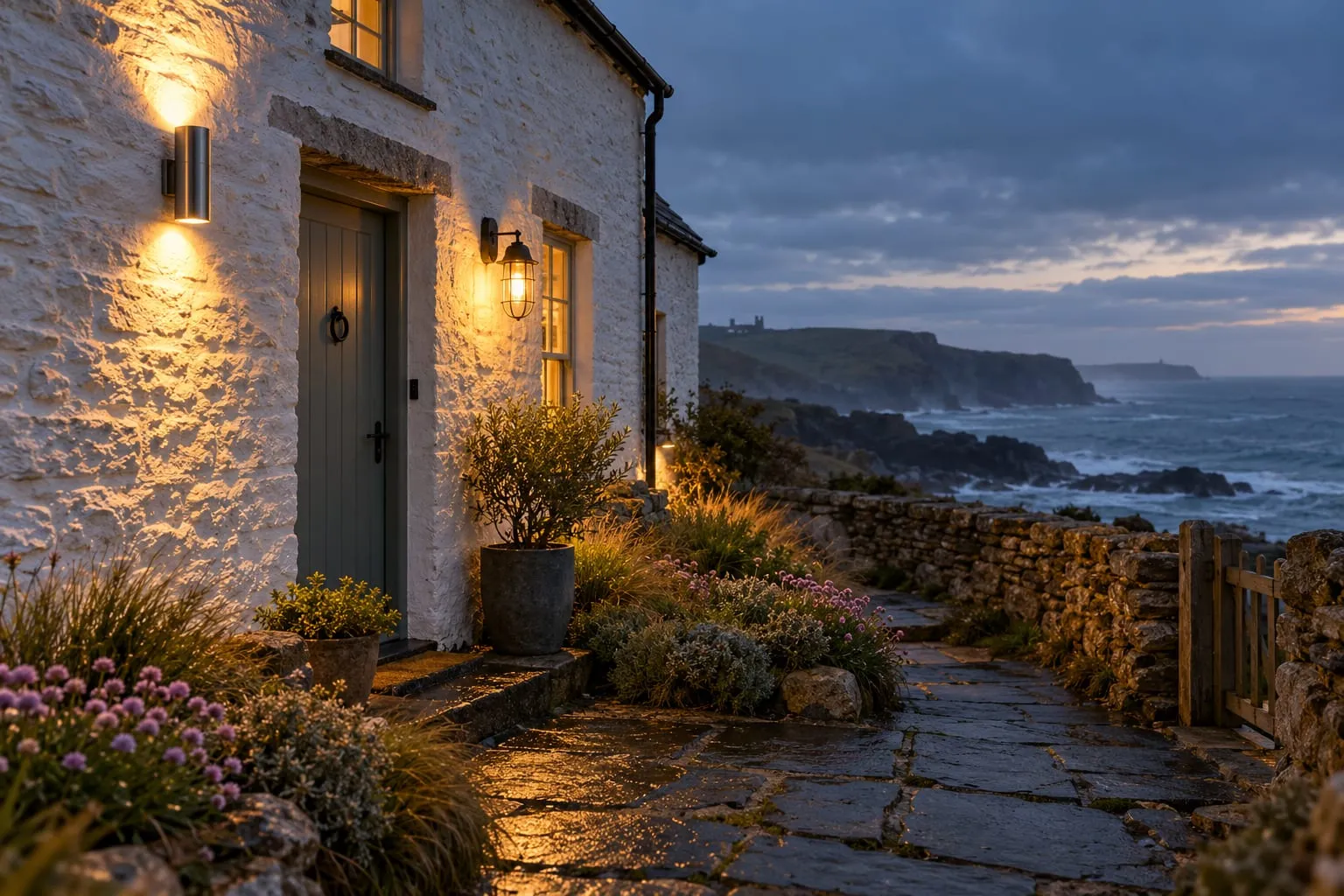
By the sea, buy on material first: polycarbonate if you want zero rust, 316 marine-grade stainless for a metal look, or hot-dip galvanised or solid brass for a traditional cottage. Go IP65 for anything exposed, use A4 stainless screws, and rinse metal fittings with fresh water a few times a year.
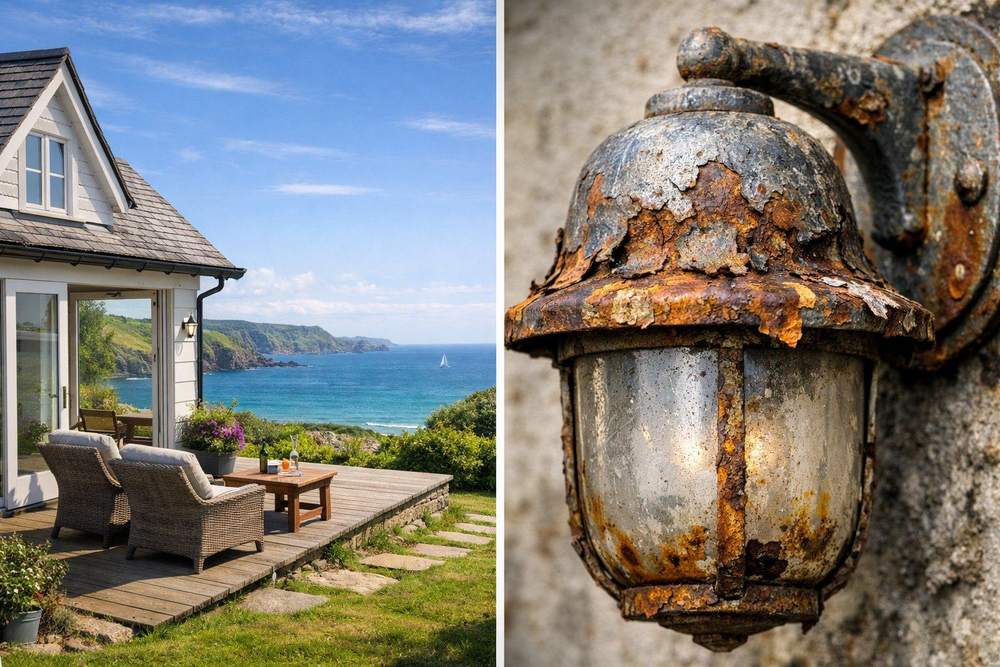
Outdoor lights that would last for years inland can start rusting within a year or two by the sea. Salt carried on the wind settles on the fitting, holds moisture against it and eats through cheap finishes, screws and seals. By the time you notice brown streaks down the render, the inside is often going too.
The answer isn’t a more expensive light, it’s the right material. Polycarbonate doesn’t corrode at all. Marine-grade 316 stainless, hot-dip galvanised steel and solid brass hold up well. Painted steel, die-cast zinc, chrome and the cheaper 304 stainless don’t. After that, an IP65 rating, stainless fixings and a rinse now and then do the rest.
Do you count as coastal?
The worst exposure is on the seafront and anywhere you can taste salt in the wind. But salt carries well inland in storms, and on an exposed stretch of coast it can reach further than you’d think. A simple test: if neighbours’ gates, car exhausts or garden furniture show rust quickly, treat your house as coastal and buy accordingly.
Exposure also varies round the same house. The wall facing the sea and the prevailing wind takes the most. Oddly, a light tucked under an overhang can corrode faster than one in the open, because rain never washes the salt off it.
Materials that survive sea air
| Salt resistance | Watch for | |
|---|---|---|
| Polycarbonate | Doesn't corrode | Must be UV-stabilised or it yellows |
| 316 stainless steel | Very good | Needs an occasional rinse; avoid coarse brushed finishes |
| Hot-dip galvanised steel | Good | Weathers to dull grey; not the same as galvanised-effect paint |
| Solid brass, copper, bronze | Good | Darkens or turns green unless polished |
| Powder-coated aluminium | Fair to good | Corrosion spreads from chips and scratches |
| 304 stainless, painted steel, zinc alloy, chrome | Poor near the sea | Brown staining, rust and blistering, often within a year or two |
Polycarbonate: nothing to rust
Polycarbonate is a tough plastic, and with no metal in the body there’s nothing for the salt to attack. It’s the lowest-maintenance choice for the most exposed walls, side passages, garages and outbuildings. Bulkheads are the classic shape, but you can now get polycarbonate up-and-down lights and lanterns with a matt finish that passes for painted metal from a few feet away.
Check that it’s UV-stabilised, or the sun will yellow the diffuser and make the body brittle. The screws and brackets can still rust even when the body doesn’t, so swap any plated steel screws for stainless. A polycarbonate IP65 bulkhead is about £10–£30 and is the one fitting I’d put on a seafront wall without a second thought.

316 marine-grade stainless steel
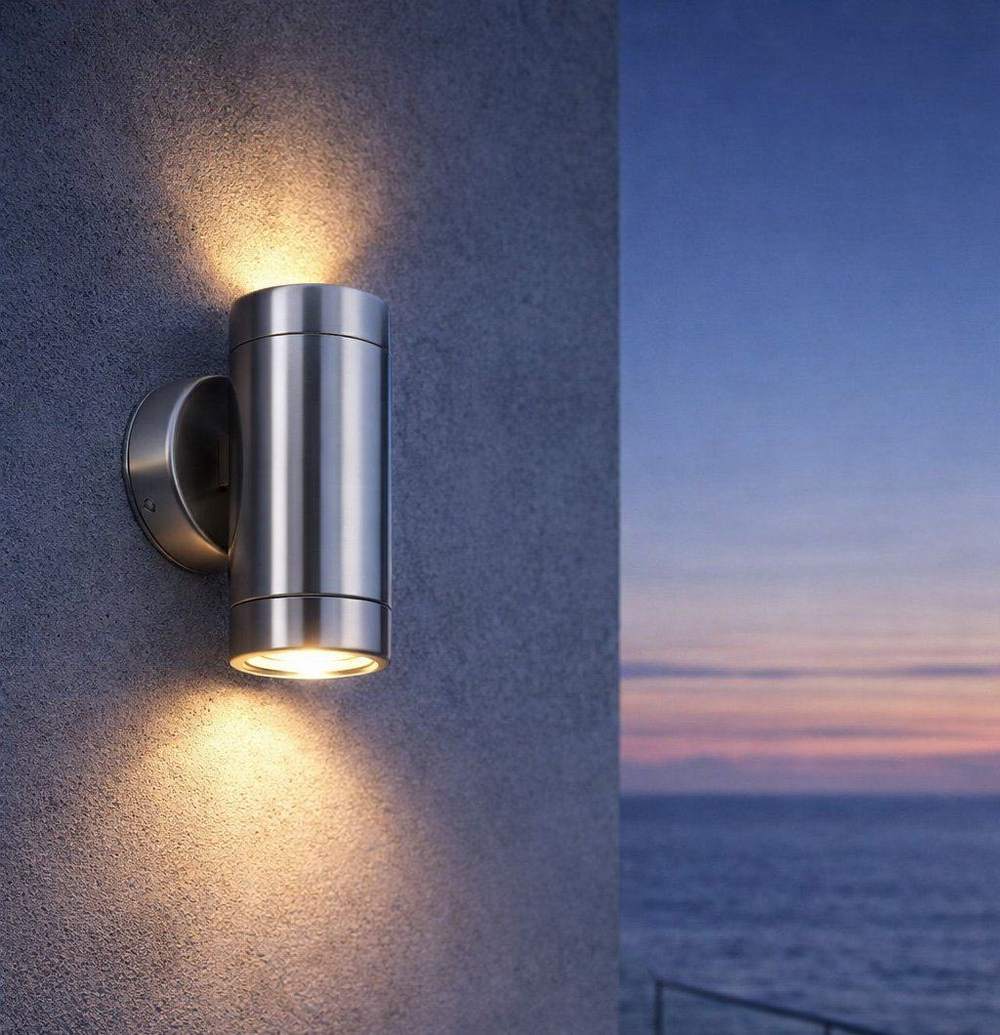
Stainless isn’t one material. The common grade, 304, looks identical on the shelf but develops brown “tea staining” near the sea: a rusty-looking surface stain that starts cosmetic and gets worse if it’s left. 316 contains molybdenum, which makes it far more resistant to salt. The British Stainless Steel Association names 316 as the preferred choice for most marine sites, and recommends a smooth polished finish over a coarse brushed one, because salt sits in the grooves.
So the box needs to say 316 (or its European number, 1.4401). If it just says “stainless steel”, assume 304. Expect to pay about £25–£60 for a 316 up-and-down wall light.
Galvanised steel, brass and copper
Hot-dip galvanised steel is dipped in molten zinc, which corrodes slowly in place of the steel underneath. It weathers to a soft grey that suits cottages and older houses, and it lasts well by the sea, though the zinc wears faster than it would inland. Make sure it’s genuinely hot-dip galvanised: “galvanised-effect” or zinc-plated finishes are a thin coat that won’t last.
Solid brass, copper and bronze don’t rust either. They darken and eventually turn green, which many people like on a coastal house, or you can polish them. Brass caged bulkheads have been used on boats and harbour walls for a long time for good reason. Check the body is solid metal and not brass-plated steel.
Powder-coated aluminium
Aluminium doesn’t rust like steel, and a good powder coat seals it well, which is why most decorative modern wall lights are made this way. It’s fine on a sheltered wall a little back from the sea. On the seafront, the weak point is any chip or scratch, where corrosion gets under the coating and lifts it. Some makers offer a coastal-grade coating; it’s worth asking for.
Which lights for which job
Wall lights
Wall lights by the front door and on the patio are among the most exposed fittings on the house, and the ones you’ll see every day. For the sea-facing wall, choose polycarbonate or 316 stainless with an IP65 rating. On a wall sheltered from the wind, galvanised, brass or a good powder-coated aluminium will last. For types, heights and placement by the front door, see the outdoor wall lighting guide.
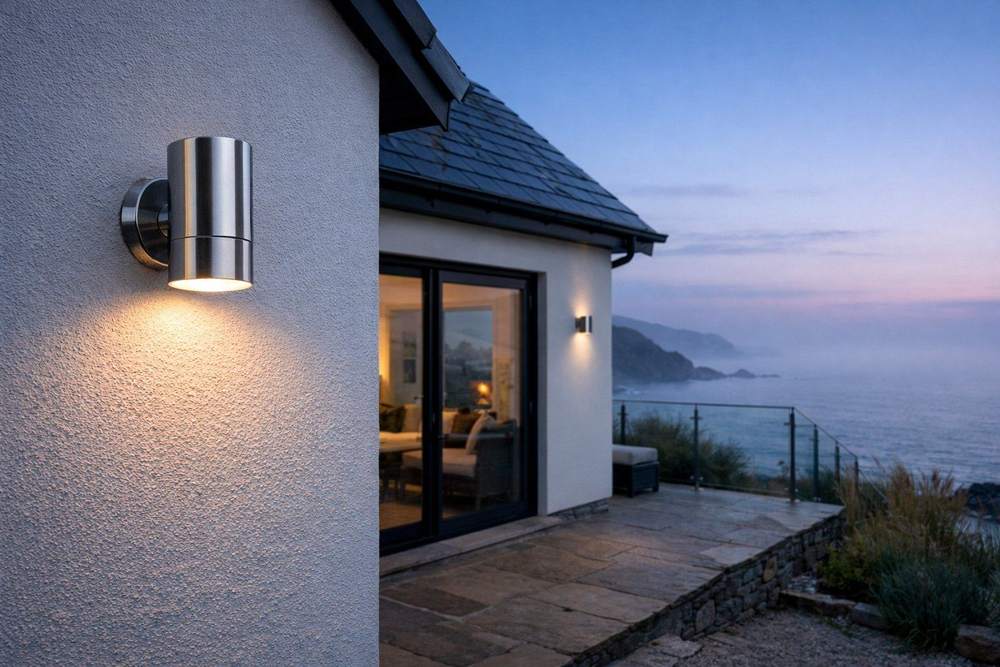
For a shortlist to start from, there’s a large range of 316 stainless outdoor wall lights to compare.
Think about the lamp too. A fitting with a replaceable GU10 or E27 bulb has to be opened every time a bulb fails, and each time you disturb the seal. Integrated LED fittings stay sealed for their whole life, but when they fail the whole fitting goes. On an exposed wall, I’d lean towards integrated from a reputable brand.
Bulkheads for side passages and outbuildings
Where nobody’s looking at the fitting, a polycarbonate bulkhead is hard to beat: sealed, cheap and unaffected by salt. For a more traditional look, a solid brass or galvanised caged bulkhead does the same job.
Paths, bollards and garden lights
Bollards and spike lights sit low, among wet plants and soil, so they get salt spray from above and damp from below. Polycarbonate and 316 stainless are the safest choices; a 316 stainless bollard light costs roughly £40–£100. Fix them firmly, because coastal wind works a loose bollard back and forth until the base cracks or the cable joint breaks. The pathway lighting guide covers spacing and layout.
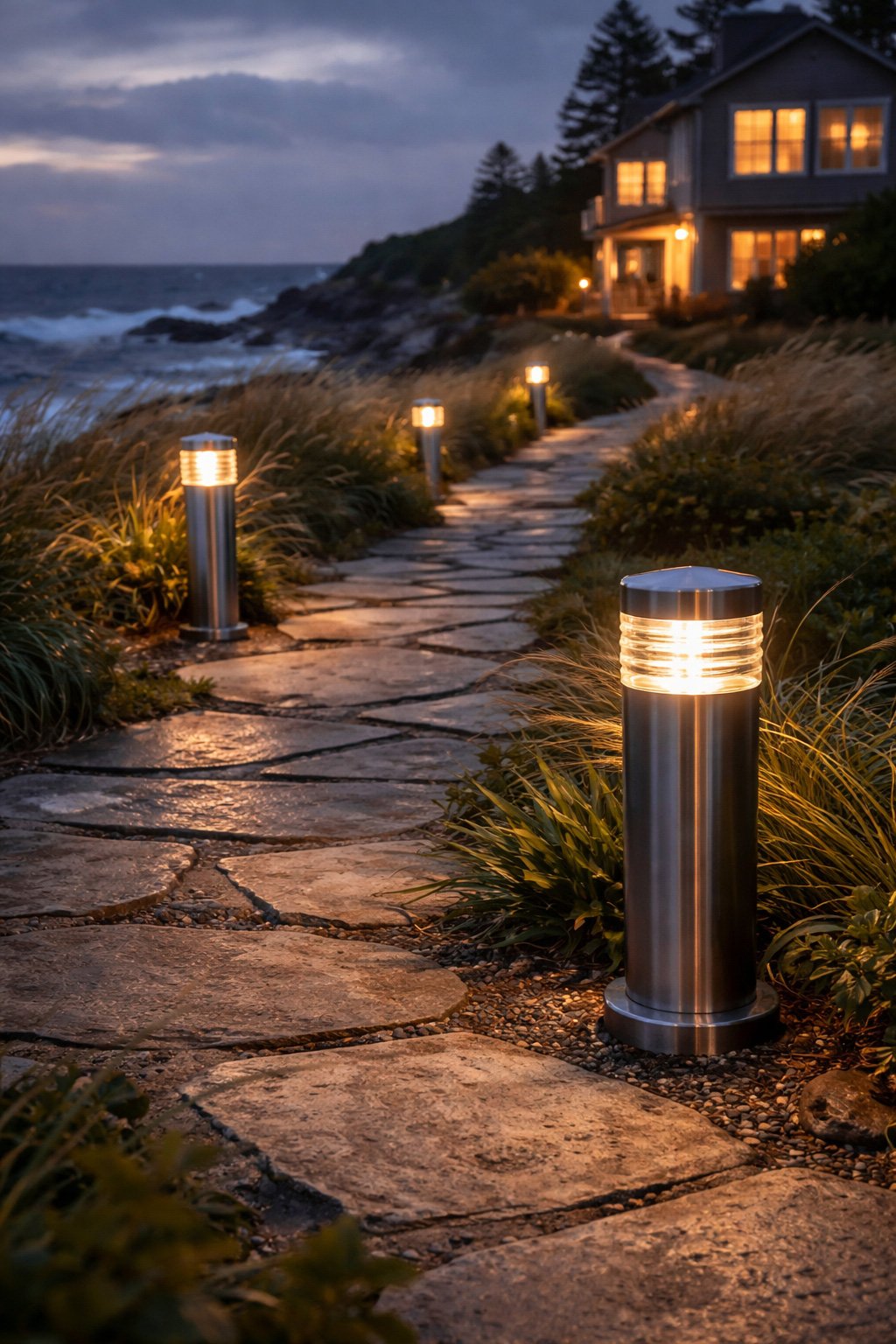
Solar lights avoid wiring altogether, but most have thin plated metal or cheap plastic parts that don’t last near the sea. If you go solar, choose a plastic or 316 stainless body. More in how to light a garden path without wiring.
IP ratings by the sea
Salt doesn’t change what the IP numbers mean, but wind-driven rain and spray make more spots exposed than you’d expect. On a coastal house I’d treat IP65 as the minimum for anything not fully sheltered, and keep IP44 for lights deep in a porch. Lights set into paving or decking need IP67. The IP ratings guide explains each rating.
An IP rating doesn’t tell you anything about corrosion, though. An IP65 light made from 304 stainless or painted steel will still rust, so check the material as well as the rating.
Fitting coastal lights so they last
Early failures on coastal lights usually start at the fixings or the cable entry, not the light itself.
- Use A4 (316) stainless screws and wall plugs. Plated or A2 (304) screws rust and stain the wall below.
- Bring the cable in from below, and leave a drip loop: a small U-bend in the cable just below the entry, so water drips off the bottom of the loop instead of running into the fitting.
- Make sure the cable suits the gland and tighten it fully. Seat the gasket properly and don’t overtighten the screws on one side.
- Don’t seal over drain holes with silicone. They’re there to let condensation out.
Outdoor lights need the same electrical safety by the sea as anywhere else, only more so. The circuit should be protected by a 30 mA RCD, mains wiring outdoors is a job for a registered electrician, and in England a new outdoor circuit is notifiable under Part P. Salt air also corrodes terminals inside junction boxes and fittings, so if your outdoor lights trip the RCD in wet weather, have an electrician look before replacing anything. NICEIC’s advice on garden electrics is a good plain-English summary.
Looking after them
A few minutes a few times a year makes a real difference. Rinse metal fittings with fresh water, especially the ones under overhangs that rain doesn’t reach, and wipe them with a soft cloth and mild soapy water. Avoid abrasive pads and harsh cleaners, which scratch the surface and give the salt somewhere to sit. While you’re there, look for tea staining on stainless, chips in powder coat, and rust on screws, and deal with them early. If a light has already started misbehaving, outdoor lighting faults walks through the likely causes.
What I'd buy
Affiliate linksFAQs
Do outdoor lights rust near the sea?
Many do, often within a year or two. Painted steel, zinc alloy, chrome and 304 stainless are the usual culprits. Polycarbonate, 316 stainless, hot-dip galvanised steel and solid brass last.
Is stainless steel OK by the sea?
Only 316 (marine grade). 304 stainless tea-stains in salt air. If the listing doesn’t say 316 or A4, assume it’s 304.
Are galvanised outdoor lights good for coastal homes?
Hot-dip galvanised, yes; it weathers to a dull grey and lasts well. Galvanised-effect paint or zinc plating won’t.
What IP rating do coastal outdoor lights need?
IP65 for anything exposed to wind and rain, IP44 only deep in a porch, and IP67 for lights in paving or decking. Remember the IP rating doesn’t cover corrosion.
Are plastic outdoor lights any good?
Good-quality UV-stabilised polycarbonate is one of the best choices by the sea, because it can’t corrode. Avoid thin, cheap plastic, which goes brittle in the sun.
How often should I clean coastal outdoor lights?
A fresh-water rinse every few months, more often for fittings under overhangs that rain doesn’t wash. It takes minutes and stops salt building up.
 Save
Save it for later
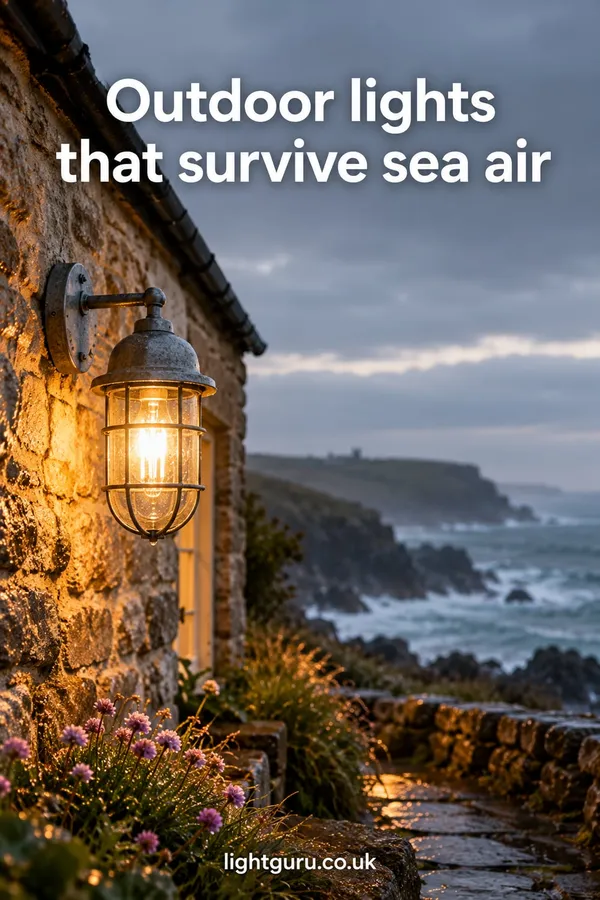
Pin this guide to one of your Pinterest boards so it's there when you start the job.