IP ratings for outdoor lighting explained: IP44, IP65, IP67 and IP68


Mike's quick answer
IP44 for lights sheltered under a porch or eaves, IP65 for anything out in the open, IP67 for lights set into the ground or a deck, and IP68 only for lights that sit underwater. The first number is dust, the second is water.
Every outdoor light should carry an IP rating, and it’s the first thing to check on the box. It tells you how well the fitting keeps out solids (dust, dirt, insects) and water. Get it wrong and the light fills with condensation, trips the circuit or dies in its first winter.
For a UK garden, nearly every light falls into one of four ratings. IP44 for sheltered spots near the house, IP65 for anything out in the weather, IP67 for lights set into the ground or a deck, and IP68 for lights that sit underwater. What decides it is how wet that exact spot gets, not how expensive the light is.

What the two numbers mean
IP stands for ingress protection. The ratings come from an international standard, IEC 60529 (BS EN 60529 in the UK), and the IEC’s own explainer sets out the tests. The first digit is protection against solid objects and dust, from 0 to 6. The second is protection against water, from 0 to 8.
| Protected against | |
|---|---|
| 0 | Nothing |
| 1 | Objects over 50 mm, such as the back of a hand |
| 2 | Objects over 12.5 mm, such as fingers |
| 3 | Objects over 2.5 mm, such as tools and thick wires |
| 4 | Objects over 1 mm, such as most wires and small screws |
| 5 | Dust-protected: some dust may get in, but not enough to stop it working safely |
| 6 | Dust-tight: no dust gets in |
| Protected against | |
|---|---|
| 0 | Nothing |
| 1 | Water dripping straight down |
| 2 | Dripping water with the fitting tilted up to 15° |
| 3 | Spraying water up to 60° from vertical |
| 4 | Splashing water from any direction |
| 5 | Water jets from any direction (6.3 mm nozzle) |
| 6 | Powerful water jets (12.5 mm nozzle) |
| 7 | Temporary immersion, up to 1 m for 30 minutes |
| 8 | Continuous immersion beyond 1 m, to conditions the maker states |
An X in place of a number means it wasn’t tested for that, not that it has no protection. IPX4 is a light tested for splashes with no dust rating. You’ll occasionally see IP69, for high-pressure hot washdown; it’s an industrial rating you don’t need in a garden.
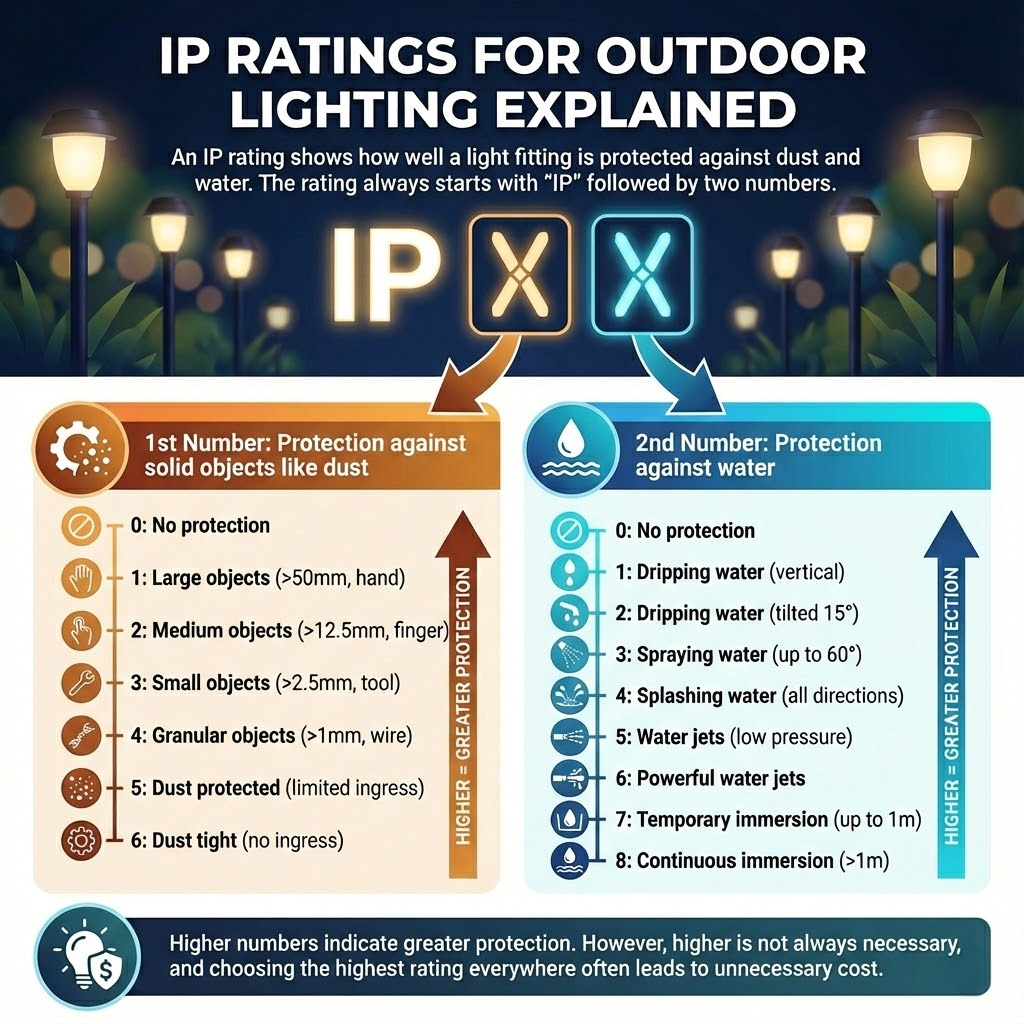
One detail catches people out. A higher second number doesn’t automatically include the ones below it. The standard treats a fitting marked only IP67 or IP68 as not tested against water jets, because sitting still underwater and being hit by a jet are different tests. A fitting that’s passed both will be marked with both, such as IP66/IP68.
IP44: sheltered spots near the house
IP44 keeps out objects over 1 mm and splashing water from any direction. It’s fine where the light is protected from direct rain: under a porch canopy, in a deep soffit, under a carport roof or a covered entrance. Lots of decorative wall lanterns are IP44, which is why they suit a front door with a canopy over it. There’s more on choosing them, and how high to fit them by the door, in the outdoor wall lighting guide.

It’s the minimum for any light outside; NICEIC’s guidance on garden electrics gives IP44 as the floor. The catch is that “sheltered” is often more hopeful than true. A shallow overhang on a wall that faces the prevailing wind gets rain driven straight onto it. If the wall under the light is wet after a storm, the light is too, and IP65 is the safer buy.
IP65: anything out in the weather
IP65 is dust-tight and protected against water jets from any direction. It’s the sensible default for most garden lighting: wall lights on an open wall, spike lights in borders, bollards, path lights, floodlights, fence lights and soffit downlights on an exposed elevation. If you’re unsure which to buy for a spot in the open, buy IP65.
IP66 is a step up, for powerful jets. It’s common on outdoor sockets and some floodlights, and it’s worth having if you’ll be pressure-washing the patio next to the light. If you’re fitting a floodlight, where to put a security light and its PIR sensor matters as much as the rating.
IP67: lights in the ground or a deck
IP67 adds temporary immersion, up to 1 m for 30 minutes. That matters for anything set flush into paving, gravel or decking, where rain collects and a puddle can sit on top of the light for hours. Ground-recessed uplighters, drive-over marker lights and deck lights should be IP67 at least.
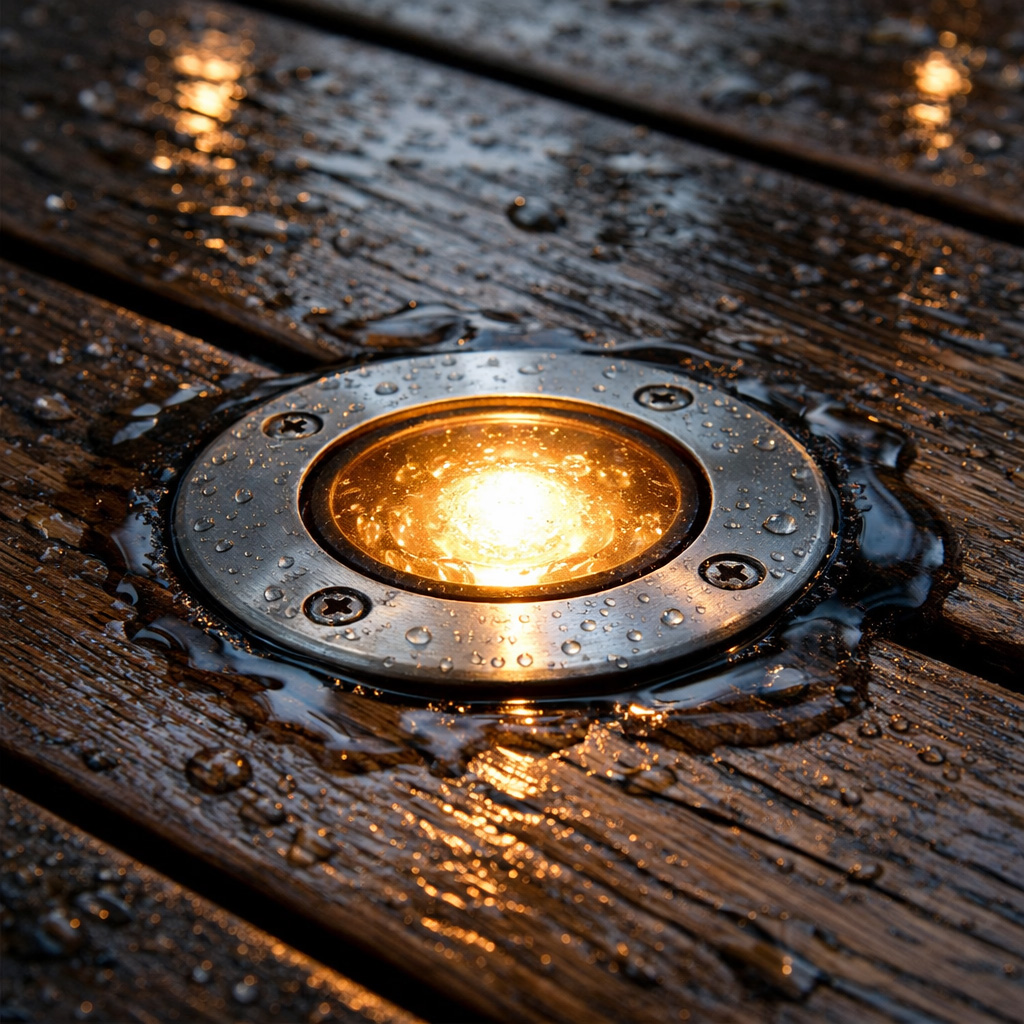
The rating isn’t the whole job. A recessed light sitting in clay with nowhere for the water to go will eventually let it in. Set ground lights on a bed of gravel or sharp sand so water drains away from the fitting, and keep the cable joint above the waterline in a sealed connector. There’s more on this in the deck lighting guide.
IP68: underwater only
IP68 means the light can stay underwater continuously, beyond 1 m, to conditions the manufacturer sets. Because those conditions vary, check the stated maximum depth on pond and water feature lights; one maker’s IP68 might be rated to 1 m, another’s to several metres.
Use it for pond lights, lights in water features and fountains, and lights in a rill or water bowl. Anywhere else it adds cost without adding anything, and as above, an IP68-only fitting hasn’t been tested against jets.
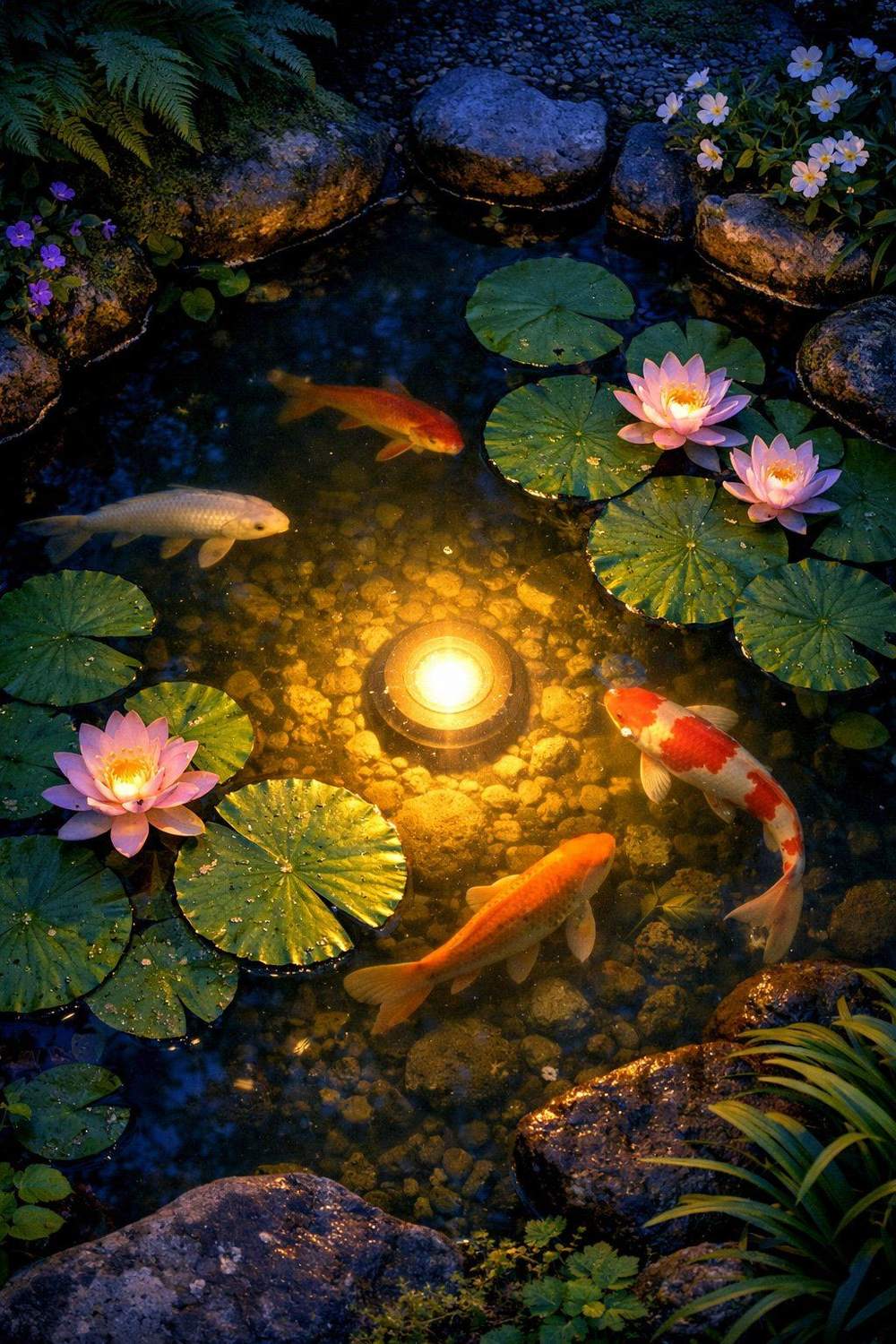
Lights in water should be low voltage (usually 12 V) from a transformer that sits out of the water on dry ground and plugs into a socket with 30 mA RCD protection. Mains-voltage cable in or around a pond is a job for an electrician.
Which IP rating where
| Rating to look for | Why | |
|---|---|---|
| Porch, under a canopy | IP44 | Splashes only; rain doesn’t reach it |
| Soffit downlights | IP44 sheltered, IP65 exposed | Wind drives rain under shallow eaves |
| Wall light on an open wall | IP65 | Rain from any direction |
| Spike, path and bollard lights | IP65 | Rain, soil and sprinklers |
| Lights flush in paving or decking | IP67 | Puddles sit on top |
| Outdoor LED strip | IP67 or IP68 | Fully sealed in silicone |
| Ponds and water features | IP68 | Continuous immersion; check the depth |
| Outdoor socket | IP66 with the lid shut | Exposed and in regular use |
For LED strip, IP65 usually means a silicone coating over the top of the strip, which can let water creep in at the ends and cut points. Outdoors, buy strip that’s fully encased (IP67 or IP68) and seal every cut end with the end caps made for it.
What IP ratings don’t tell you
An IP rating is a test of the enclosure on the day it left the factory. It says nothing about light quality, lifespan or materials, and a well-made IP44 lantern in a sheltered porch will outlast a cheap IP65 one on an open wall.
It doesn’t cover corrosion either. Sea air eats cheap aluminium and low-grade stainless steel whatever the IP rating says; see outdoor lights for coastal homes if you’re near the sea. Impact is a separate rating too: IK, from IK00 to IK10. For lights at ankle height, by a driveway or where a football might hit them, look for IK08 or higher.
And the rating only holds if the light is fitted properly. The gasket has to be seated, the screws tightened evenly, and the cable has to suit the gland. When an IP65 light fills with water, the cause is usually the installation, not the product. If yours already has water in it, outdoor lighting faults covers the fixes.
Outdoor electrics: the safety side
An IP rating protects the light, not you. Outdoor circuits and sockets need 30 mA RCD protection, which cuts the power within a fraction of a second if current leaks to earth, fast enough to greatly reduce the risk of a fatal shock. If your garden lights or outdoor socket aren’t on an RCD, that’s the first thing to fix, ahead of any new fittings.
Low-voltage (12 V) garden lighting kits that plug into an RCD-protected outdoor socket are safe to fit yourself. Mains lighting outdoors, buried cable, a new outdoor socket or a new circuit is a job for a registered electrician. In England, a new circuit is notifiable under Part P of the Building Regulations, and a registered electrician can self-certify it for you. For planning the scheme as a whole, start with garden lighting ideas.
FAQs
Is IP44 good enough for outdoor lights?
For lights sheltered from direct rain, under a porch or a deep overhang, yes. For lights out in the open, use IP65.
Is IP65 waterproof?
It’s protected against rain and water jets from any direction, which is what a light in the open needs. It isn’t rated to sit underwater; that’s IP67 (temporary) or IP68 (continuous).
What’s the difference between IP65 and IP67?
Both are dust-tight. IP65 is tested against water jets; IP67 against being underwater up to 1 m for 30 minutes. Use IP67 for lights set into the ground or a deck where puddles form.
Is IP68 better than IP65?
Only underwater. An IP68-only fitting hasn’t been tested against jets, so for a wall or spike light, IP65 or a dual rating such as IP66/IP68 is the right choice.
Can I use an indoor light outside if it’s under cover?
No. Even a covered porch is damp and cold, and condensation forms inside fittings that aren’t sealed. Use a light rated at least IP44 and sold for outdoor use.
What IP rating do bathroom lights need?
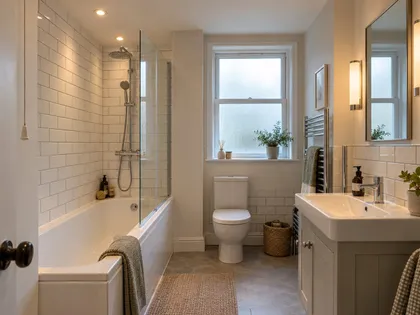
It depends on the zone: IP44 is the usual minimum near a bath or shower, and lights inside the bath or shower tray need IPX7 and 12 V. The bathroom zones guide has the full breakdown.
 Save
Save it for later
Pin this guide to one of your Pinterest boards so it's there when you start the job.