
Deck lighting ideas play a big role in how usable and inviting an outdoor space feels after dark. Well planned lighting makes decking safer, highlights its shape, and creates atmosphere without overwhelming the garden. Poor lighting, on the other hand, often results in glare, uneven brightness, or lights that feel distracting rather than relaxing.
This guide focuses on specific solutions for decking and wooden structures. For full garden planning and safety zones, see our complete Garden & Outdoor Lighting Guide.
For overall planning and placement, our garden lighting layout guide explains how deck lighting fits into a wider outdoor lighting scheme.
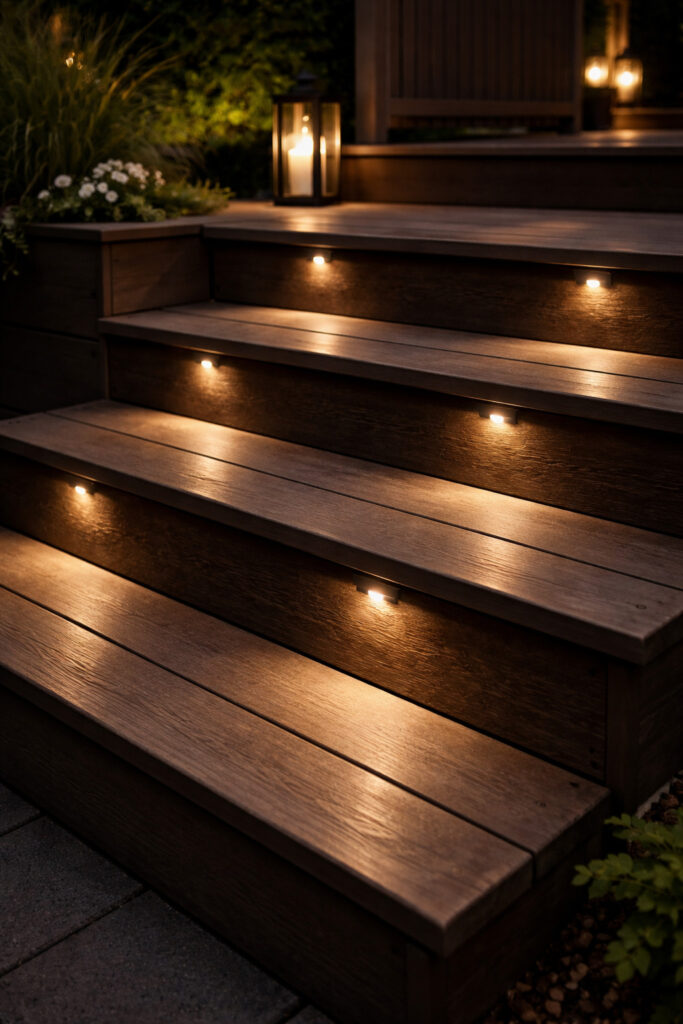
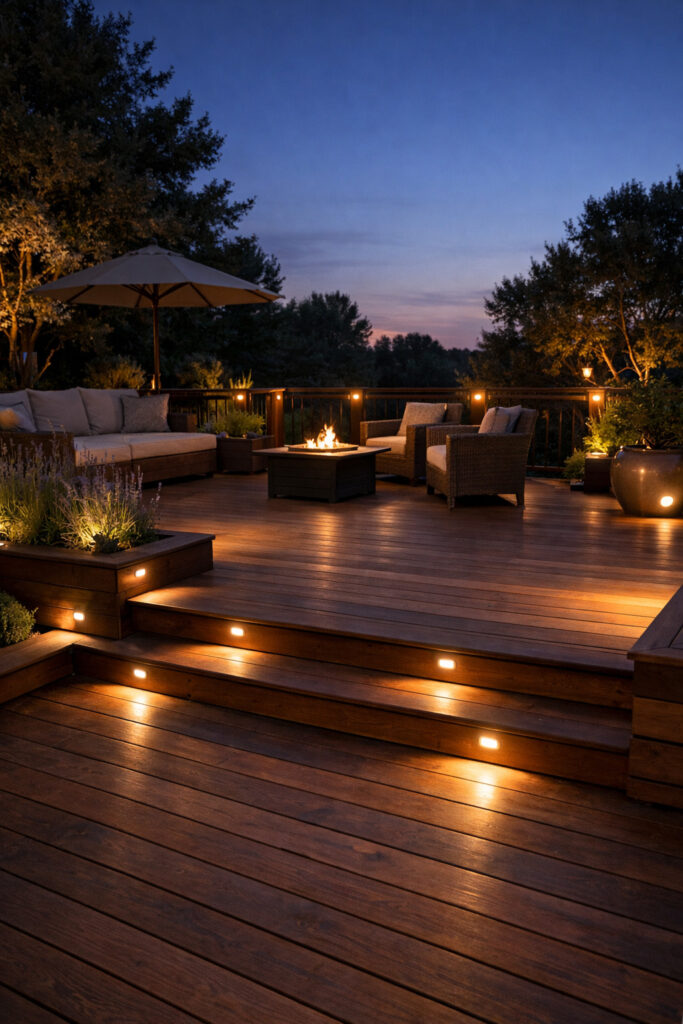
Table of Contents
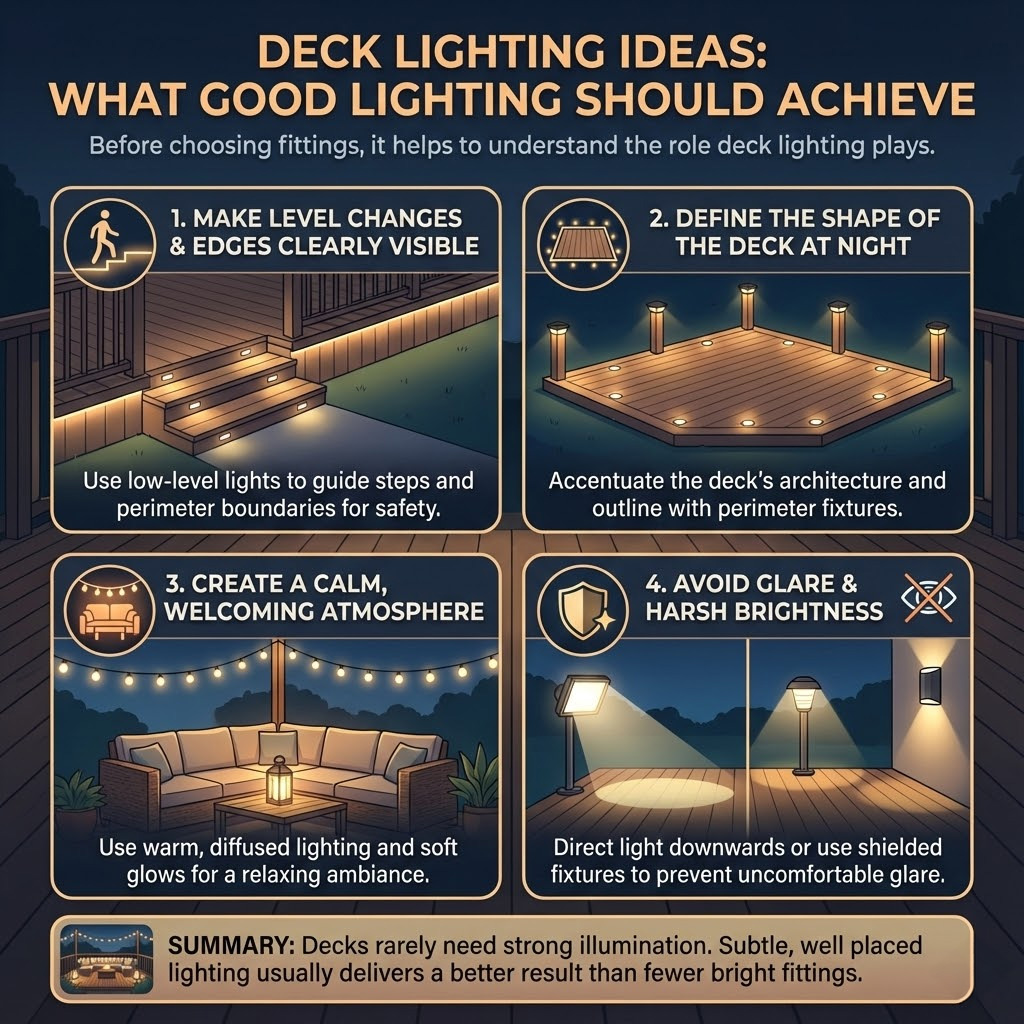
Deck lighting ideas: what good lighting should achieve
Before choosing fittings, it helps to understand the role deck lighting plays.
Good deck lighting should:
- Make level changes and edges clearly visible
- Define the shape of the deck at night
- Create a calm, welcoming atmosphere
- Avoid glare and harsh brightness
Decks rarely need strong illumination. Subtle, well placed lighting usually delivers a better result than fewer bright fittings.
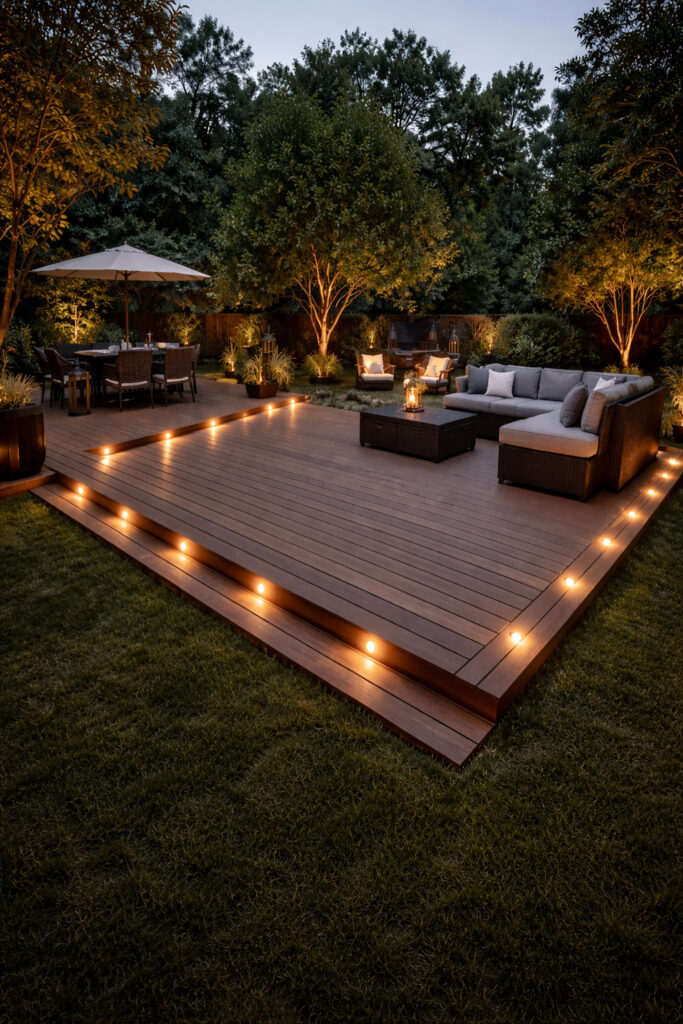
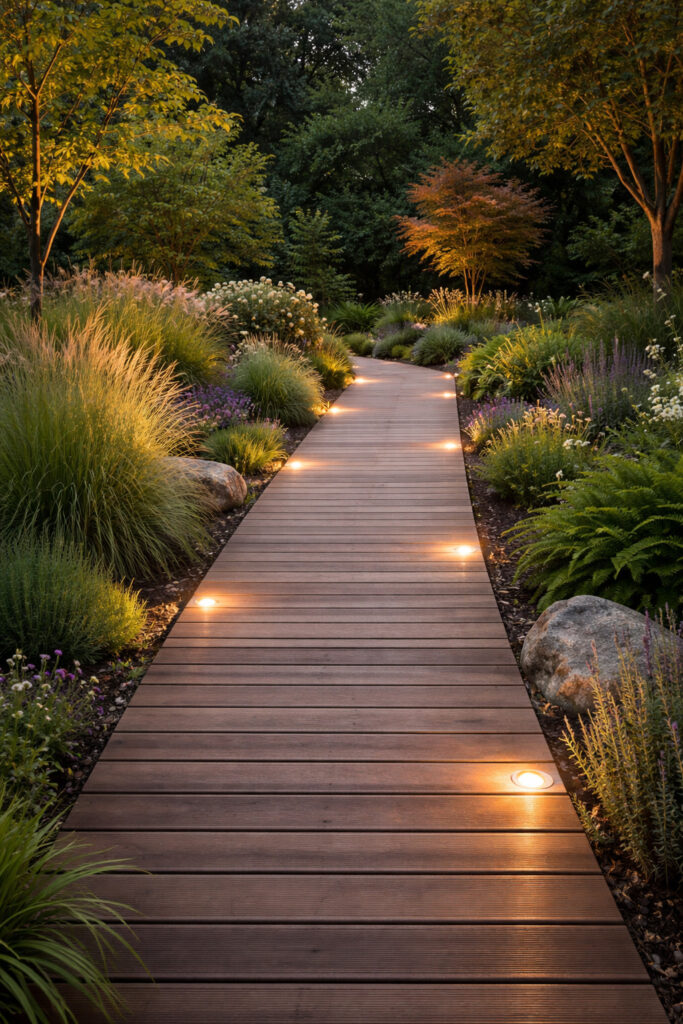
Recessed deck spotlights
Recessed spotlights are one of the most popular deck lighting choices because they sit flush with the surface and remain visually discreet during the day.
Where recessed spots work best
- Around the perimeter of a deck
- Along walkways across decking
- To highlight edges and changes in direction
Tips for using recessed spotlights
- Use wider beam angles to avoid harsh points of light
- Space lights evenly rather than clustering them
- Avoid placing them where people sit or look directly toward them
Recessed lights are most effective when they guide movement rather than act as feature lighting.
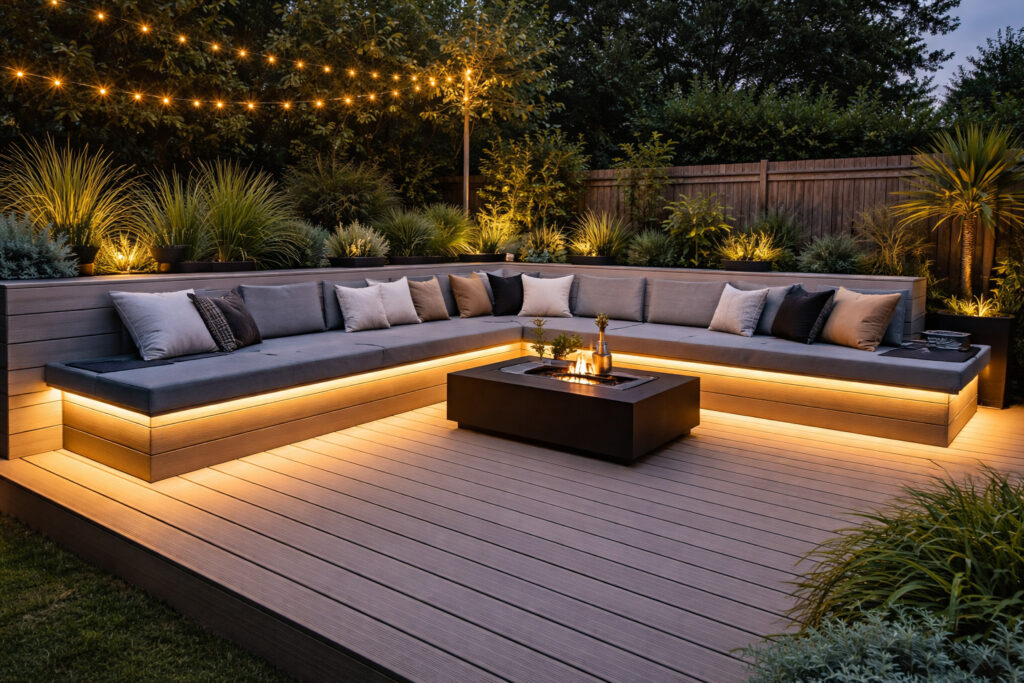
LED strip lighting for decking
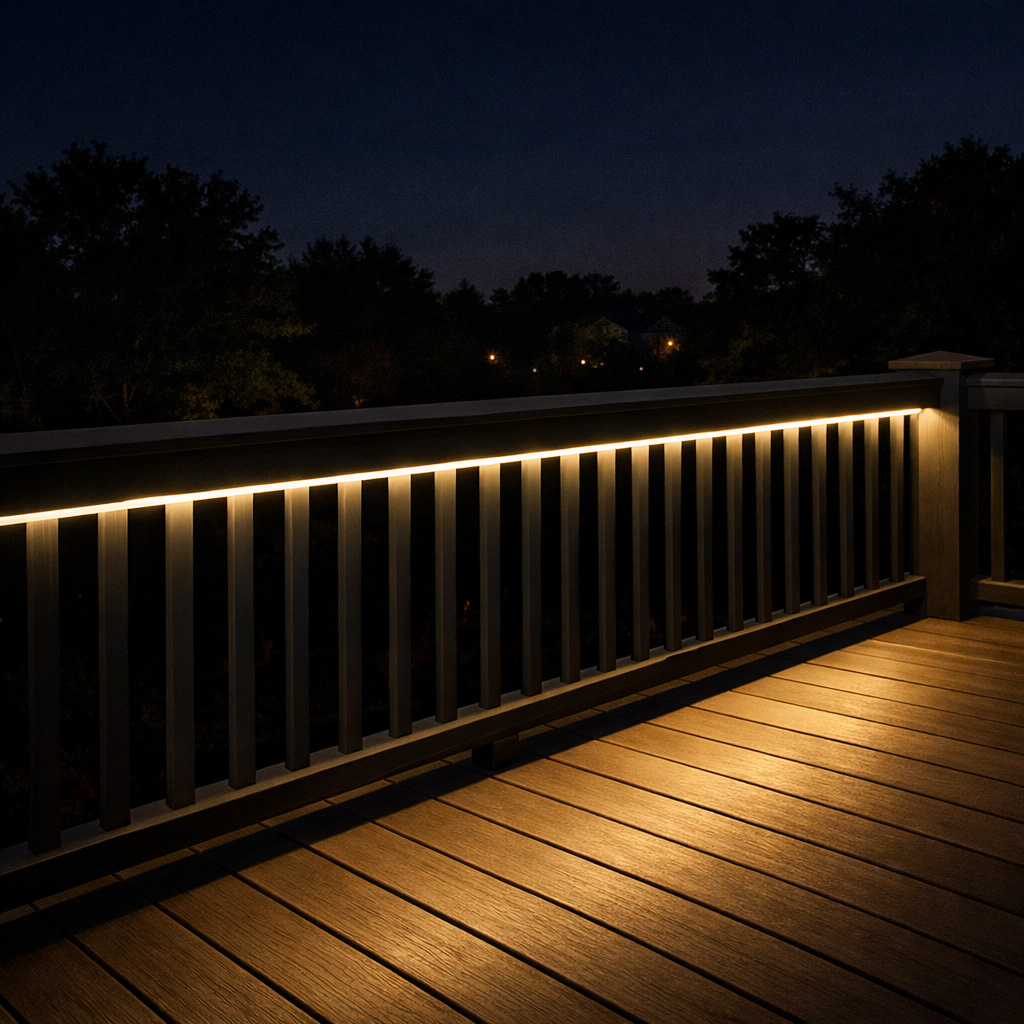
LED strip lighting creates a softer, more continuous glow and is ideal for modern or minimal decking designs.
Common strip lighting locations
- Under deck edges
- Beneath handrails
- Along fascia boards
- Under seating or built-in features
Why strip lighting works well
- Produces even, glare-free light
- Highlights structure and shape
- Creates strong visual impact without brightness
Concealment is key. The light source itself should not be visible, only the effect it creates.
Step lights for decking
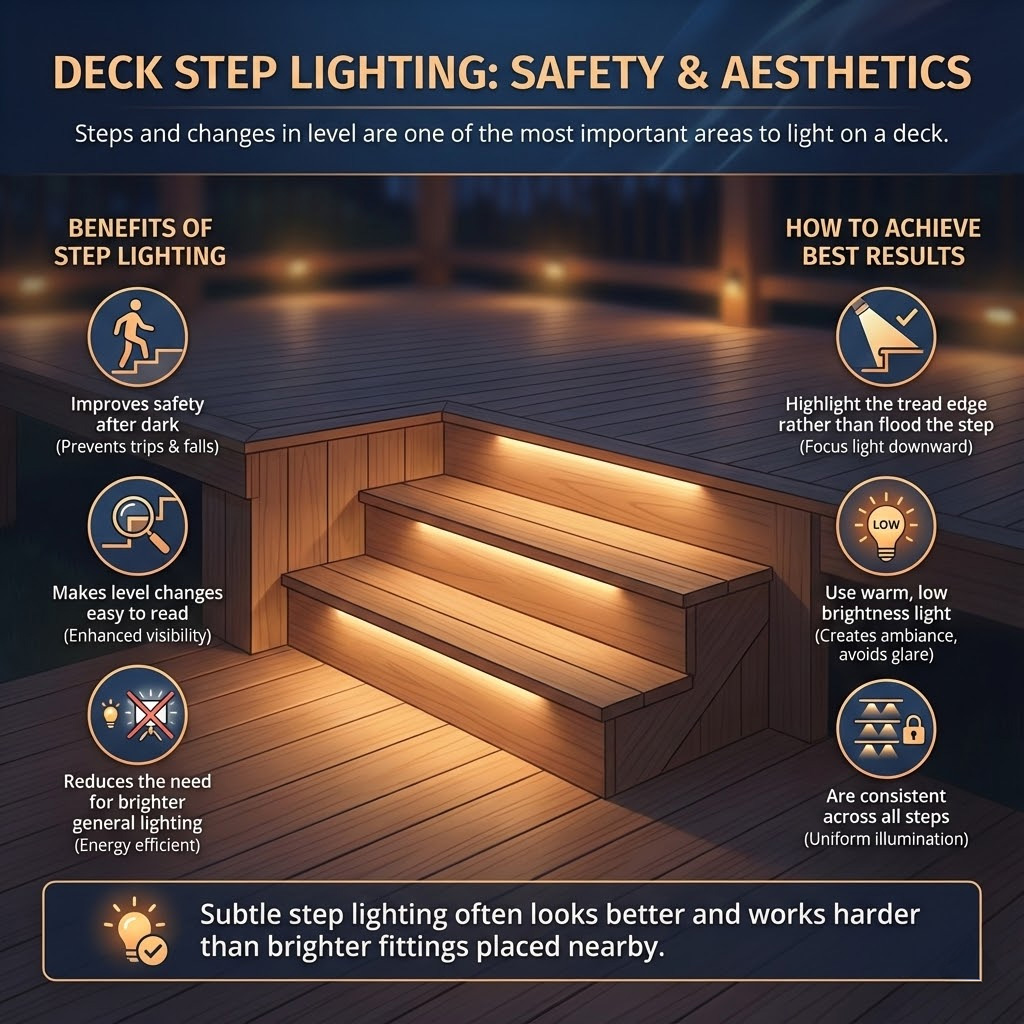
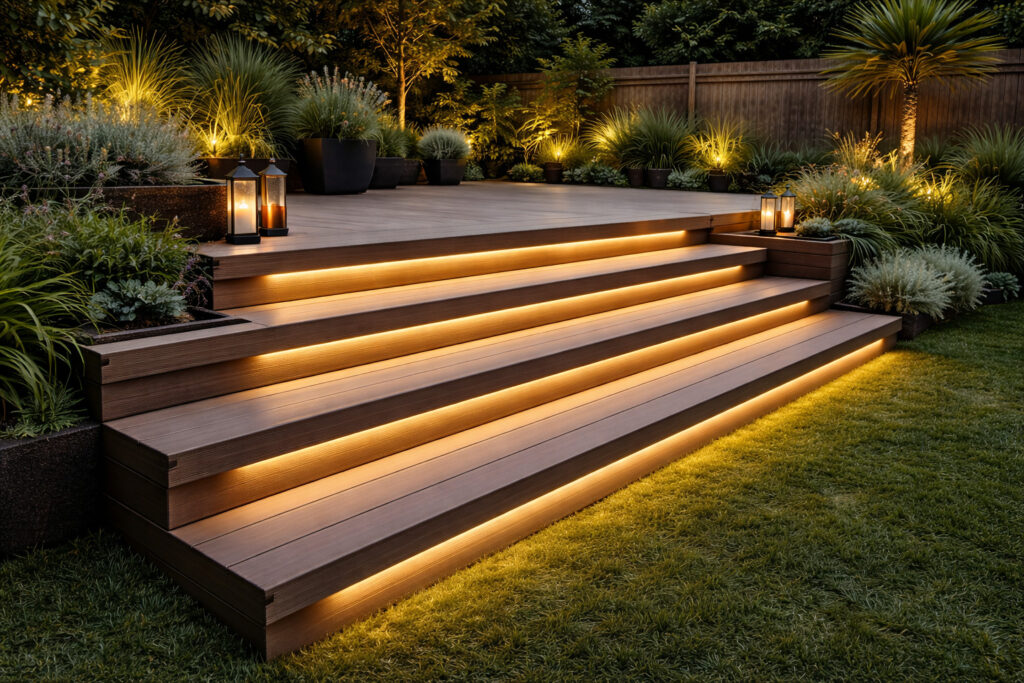
Steps and changes in level are one of the most important areas to light on a deck.
Benefits of step lighting
- Improves safety after dark
- Makes level changes easy to read
- Reduces the need for brighter general lighting
Step lights work best when they:
- Highlight the tread edge rather than flood the step
- Use warm, low brightness light
- Are consistent across all steps
Subtle step lighting often looks better and works harder than brighter fittings placed nearby.
How bright should deck lighting be?
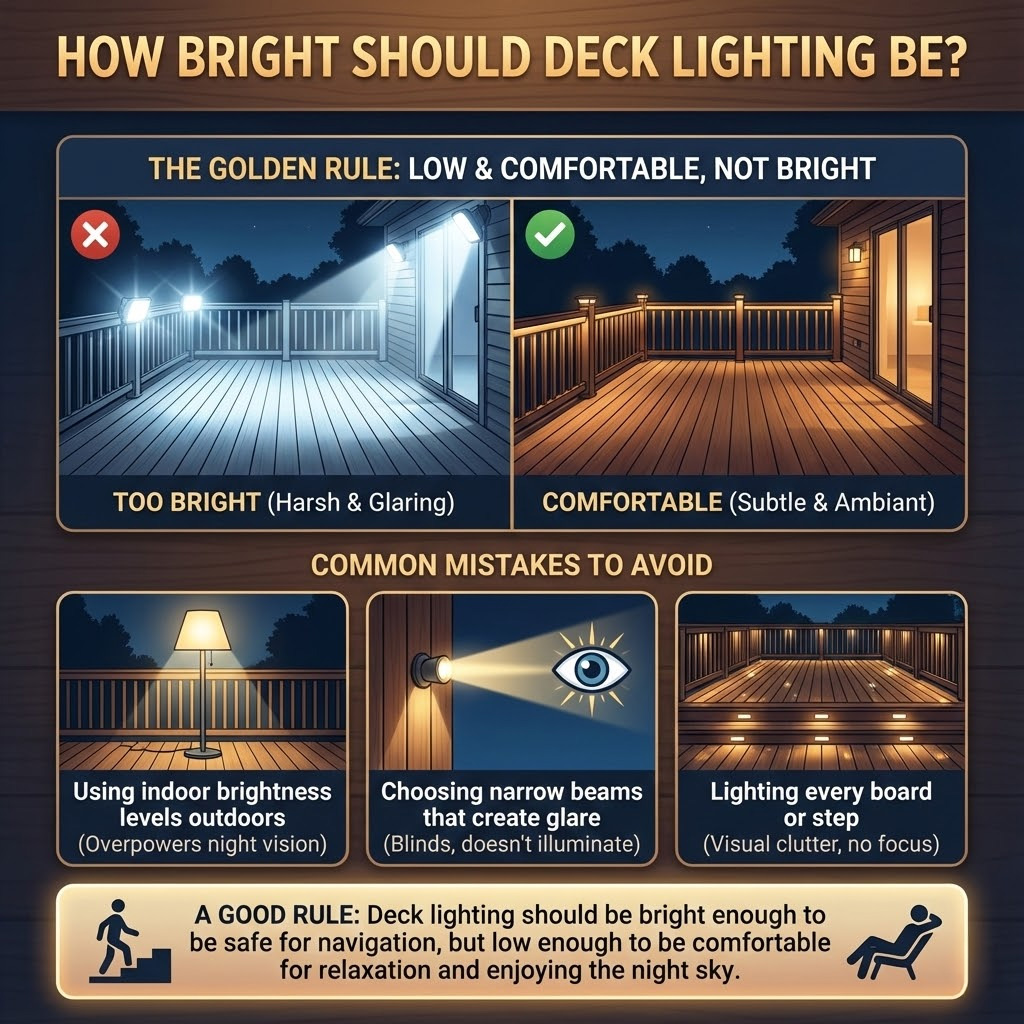
Deck lighting should feel low and comfortable, not bright.
Common mistakes include:
- Using indoor brightness levels outdoors
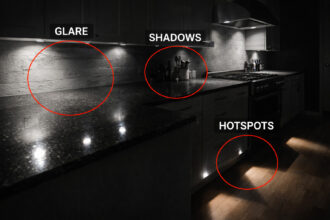
- Choosing narrow beams that create glare
- Lighting every board or step
A good rule is that deck lighting should be bright enough to see edges and surfaces clearly, but dim enough that eyes adapt comfortably when stepping outside.
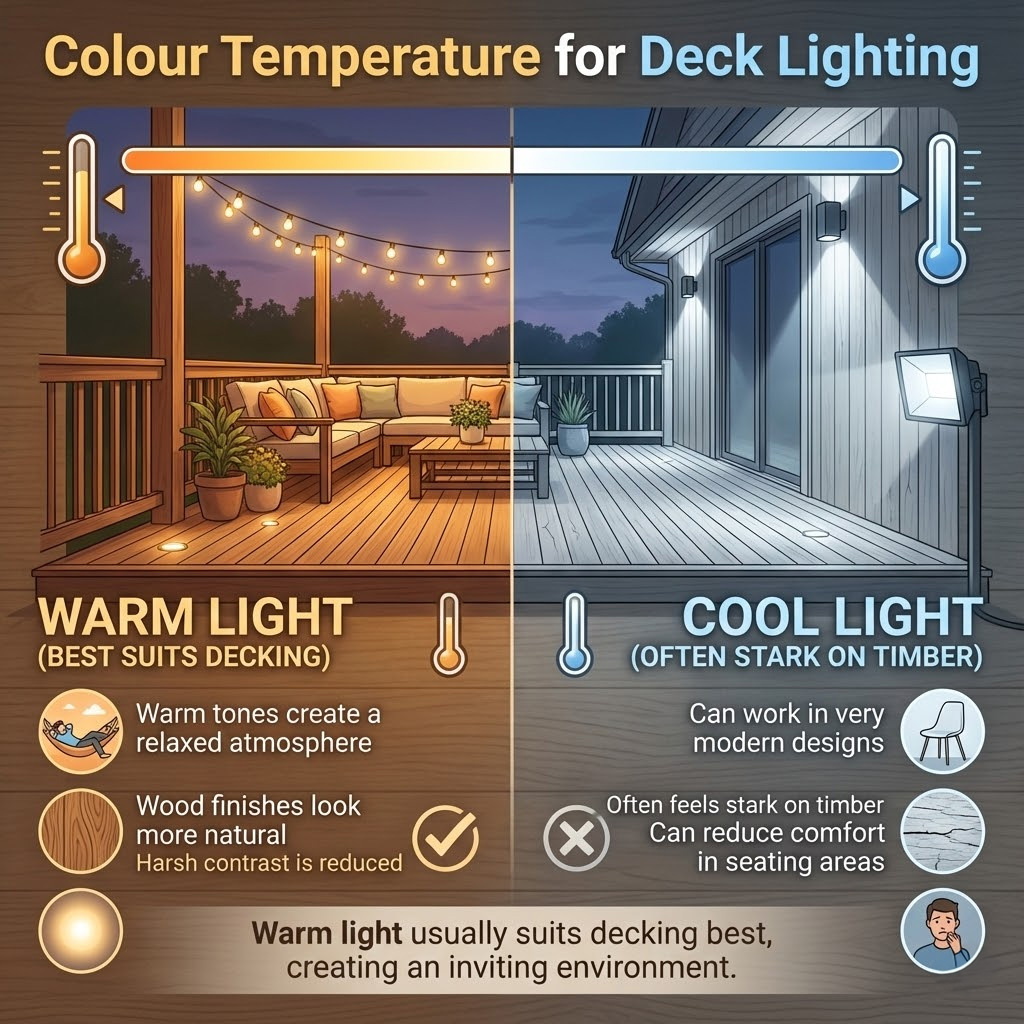
Colour temperature for deck lighting
Warm light usually suits decking best.
- Warm tones create a relaxed atmosphere
- Wood finishes look more natural
- Harsh contrast is reduced
Cool light can work in very modern designs, but it often feels stark on timber and can reduce comfort in seating areas.
Deck lighting layout tips
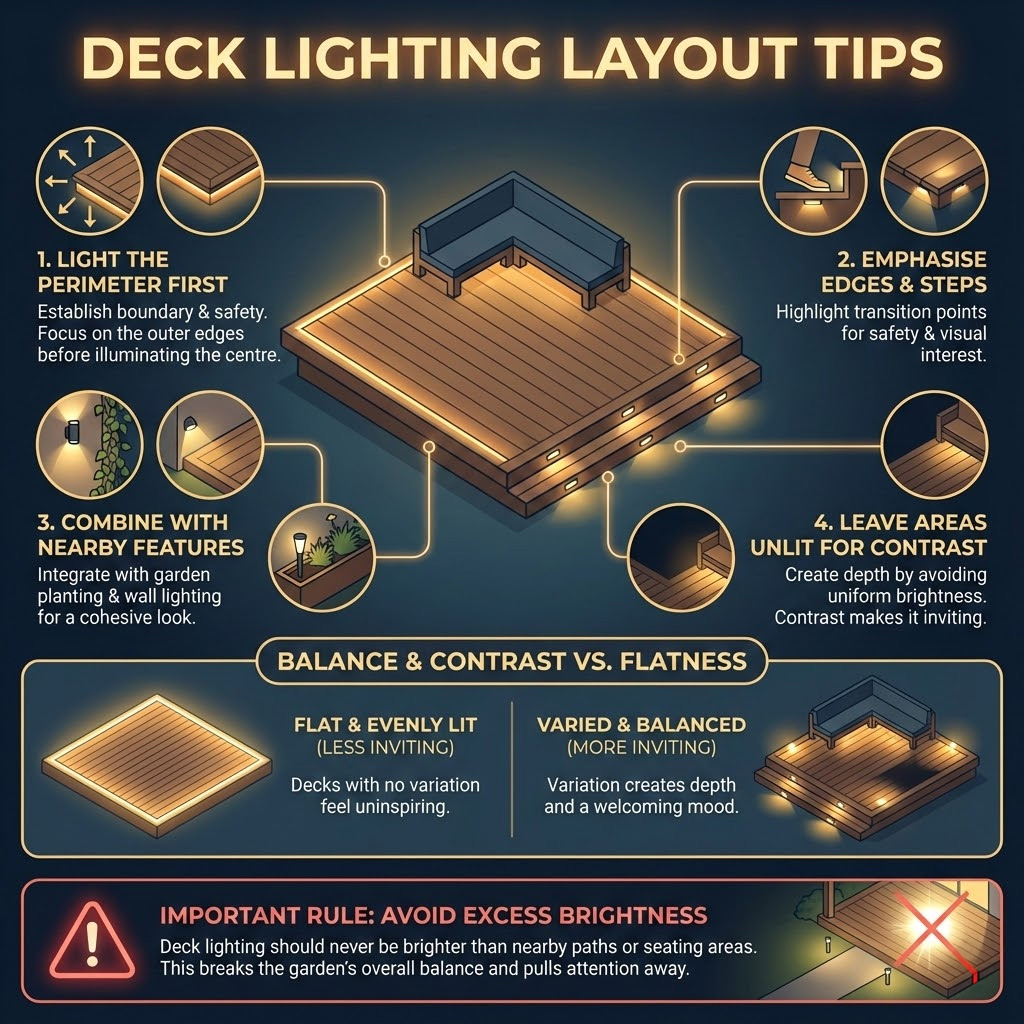
Deck lighting works best when planned as part of the overall garden lighting layout.
Helpful layout principles:
- Light the perimeter before the centre
- Emphasise edges and steps
- Combine deck lighting with nearby planting or wall lighting
- Leave some areas unlit for contrast
Decks that are evenly lit from edge to edge often feel flat and less inviting than decks with variation.
Deck lighting should never be brighter than nearby paths or seating areas, as this can pull attention away from the rest of the garden and break the overall lighting balance.
Deck lighting and safety considerations
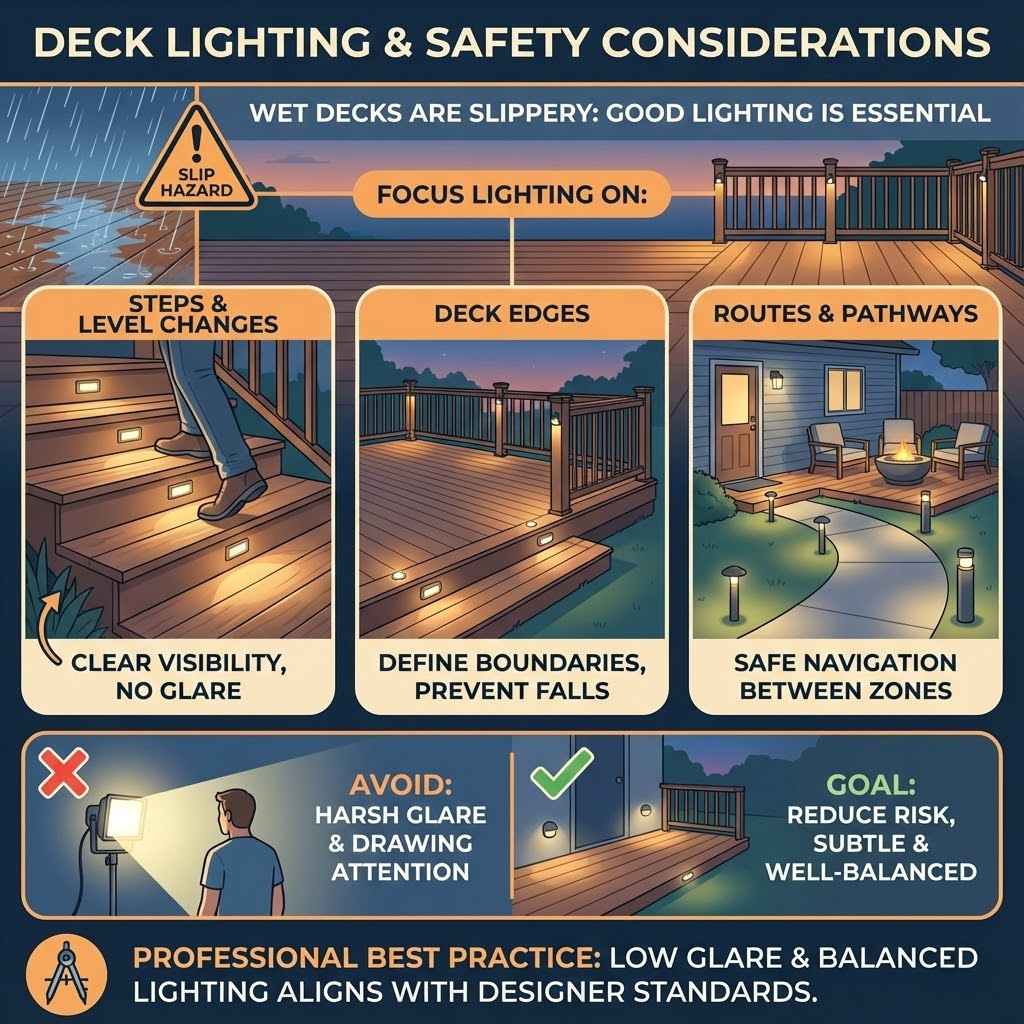
Decking becomes more slippery when wet, making good lighting essential.
Focus lighting on:
- Steps and level changes
- Deck edges
- Routes between the house and seating areas
Lighting should reduce risk without drawing attention to itself or creating glare.
Keeping deck lighting low glare and well balanced aligns with recognised lighting best practice used by professional designers.
IP ratings for deck lighting
Deck lighting sits close to the ground and is regularly exposed to rain, moisture, and debris, so choosing suitable protection is important. Most deck lights benefit from a higher level of water resistance, especially when installed flush with the surface or near planting.
As a general guide, deck lighting exposed to open weather or ground moisture should use fittings designed for outdoor conditions. Sheltered areas may require less protection, but anything installed at floor level should be chosen with long-term exposure in mind. Our guide to IP ratings for outdoor lighting explains how protection levels relate to different outdoor locations in more detail.
Common deck lighting mistakes to avoid
Using too many recessed lights
A very common mistake is installing recessed lights in every board or at very tight spacing. At night, this creates a dotted effect that feels harsh, especially when decking is wet and reflective.
Fix: Use fewer recessed lights and increase spacing. Deck lighting works best when it guides edges and movement, not when it dominates the surface.
Leaving strip lighting visible
LED strip lighting is meant to be indirect, but when the strip itself is visible, it becomes distracting and can look unfinished. The eye is drawn to the source instead of the effect.
Fix: Conceal strip lighting behind lips, fascias, or seating so only reflected light is seen.
Creating glare at seating height
Lights placed too close to benches, chairs, or low walls often shine directly into eyes when people sit down. This makes the space feel uncomfortable even if overall brightness is low.
Fix: Keep light sources out of direct sightlines and aim light toward edges, steps, or surfaces rather than toward people.
Treating deck lighting as a standalone feature
Deck lighting added without considering nearby wall lights, planting lights, or path lighting often feels mismatched and uneven.
Fix: Plan deck lighting as part of the wider garden lighting layout so all areas work together visually.
Frequently asked questions
Are recessed deck lights safe to walk on?
Yes, when designed for decking and installed correctly, they are made to be walked over.
Can deck lighting be left on all night?
It is usually better to use timers or sensors so lighting is only on when needed.
Is strip lighting better than spotlights for decks?
Neither is better overall. Strip lighting suits atmosphere, while spotlights suit guidance and edges.
Does deck lighting need to match the rest of the garden lighting?
Yes. Deck lighting should feel consistent in brightness and colour with nearby garden and wall lighting so the space feels connected rather than isolated.
Final thoughts
The best deck lighting ideas focus on subtlety rather than brightness. By lighting edges, steps, and structure carefully, decking becomes safer and far more inviting after dark.
Choose fittings that stay visually quiet, plan the layout before installation, and let the light enhance the space rather than dominate it.