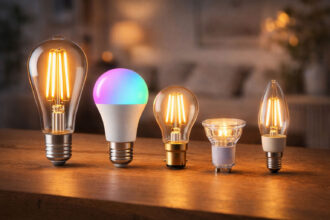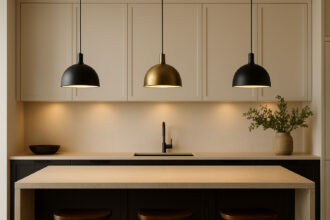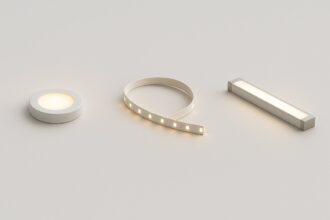
If you are planning a kitchen renovation or replacing old halogen downlights, you will face this choice almost immediately: GU10 fittings with replaceable bulbs, or integrated LED downlights where the light source is built into the unit.
Both are widely available, both work well in kitchens, and both have genuine advantages depending on your situation. The problem is that most of the advice online either oversimplifies the comparison or pushes one option without explaining the trade-offs properly.
This guide goes through every factor that actually matters — brightness, colour consistency, dimming performance, lifespan, cost, smart home compatibility, aesthetics, and fire safety — with honest assessments based on how these products perform in real UK kitchens. By the end you will know which type suits your project, your budget, and how you use your kitchen.
This guide focuses on one specific aspect of kitchen lighting design. For full room planning including layout, layering, and fixture types, see our complete kitchen lighting guide.
Table of Contents
- What Are GU10 Downlights
- What Are Integrated LED Downlights
- Brightness Comparison
- Colour Consistency
- Dimming Performance
- Lifespan and Reliability
- Cost: Upfront and Long Term
- Replaceability and Maintenance
- Fire Rating and Building Regulations
- Aesthetic and Design
- Smart Lighting Compatibility
- Installation
- Which Type Suits Your Kitchen
- Can You Mix Both Types
- Recommended Products
- FAQs
- Conclusion
What Are GU10 Downlights
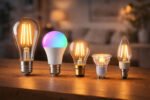
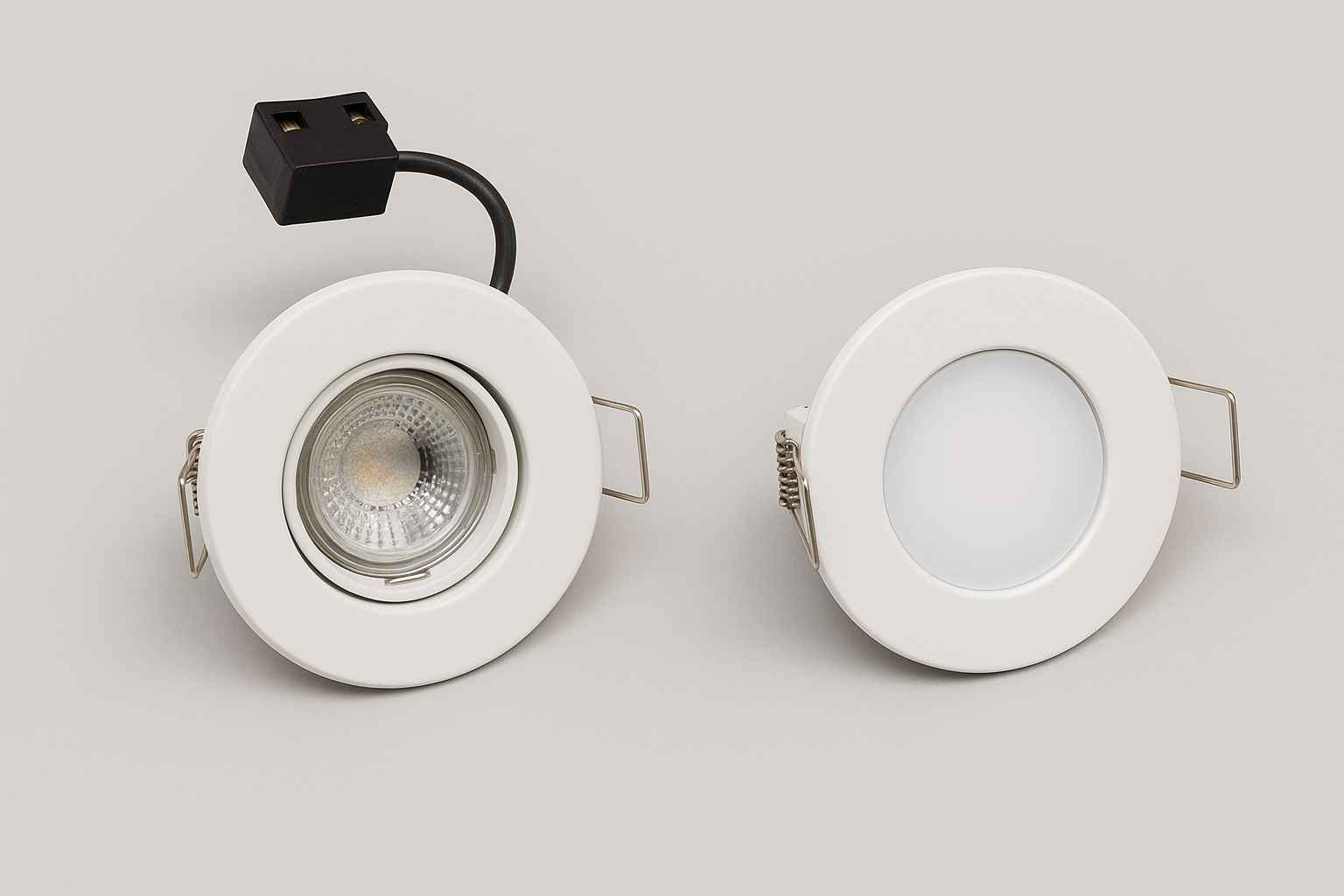
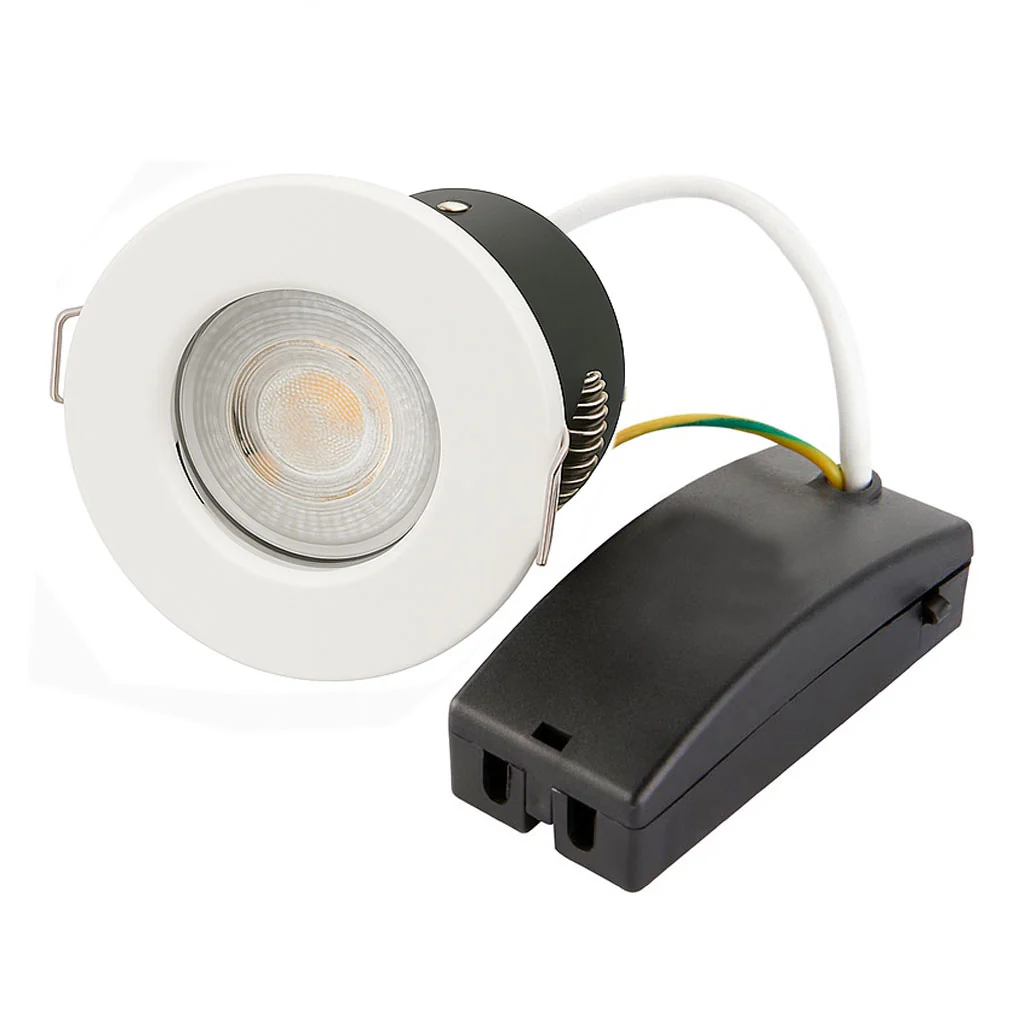
A GU10 downlight is a two-part system. The fitting (sometimes called the can or housing) is installed into the ceiling, and a separate GU10 bulb twists and locks into a socket inside the fitting. The bulb and the fitting are independent — when the bulb fails or you want to change the colour temperature, you simply twist the old bulb out and push a new one in.
GU10 has been the standard downlight format in UK homes for over twenty years. Originally designed for halogen bulbs, the same fittings now accept LED GU10 bulbs which use a fraction of the energy and last significantly longer. This backwards compatibility is one of the format’s biggest strengths — if you already have GU10 fittings from a previous renovation, upgrading to LED is as simple as swapping the bulbs.
The GU10 format uses mains voltage (240V), which means the bulb connects directly to the household supply without a separate driver or transformer. This keeps the system simple but means the electronics that regulate the LED are crammed into the small bulb body, which is one of the reasons quality varies so much between brands.
What Are Integrated LED Downlights
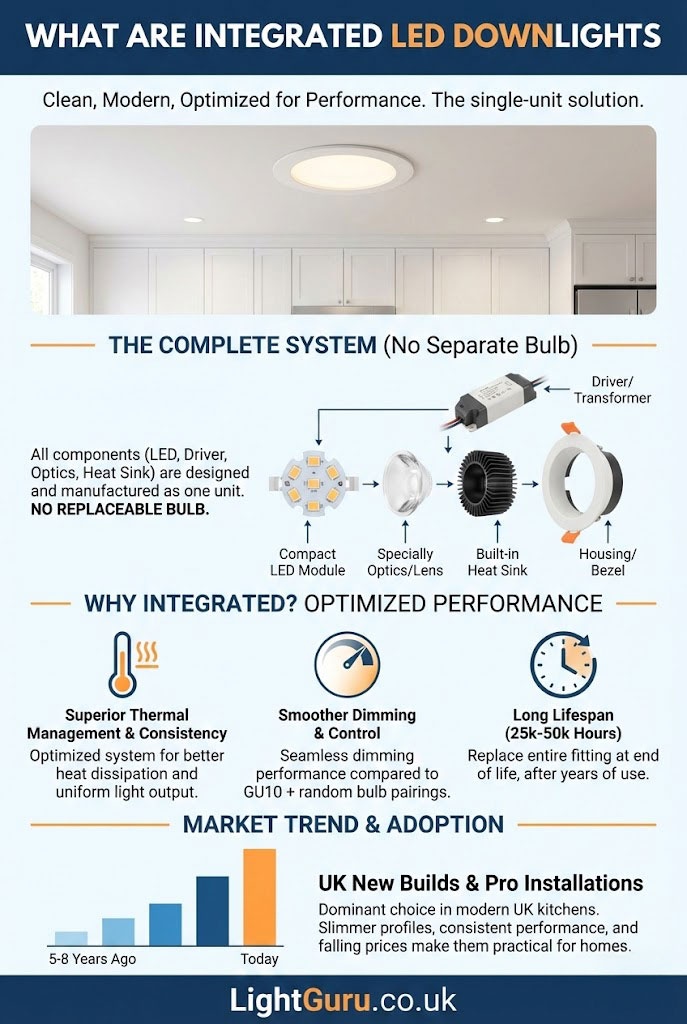
[Image: A slim integrated LED downlight installed in a white kitchen ceiling, showing the low-profile bezel sitting almost flush with the plasterboard. Clean, modern appearance.]
An integrated downlight is a single unit where the LED module, driver, optics, and housing are all designed and manufactured together. There is no separate bulb to replace. When the LED reaches end of life — which in a quality unit may be 25,000 to 50,000 hours of use — you replace the entire fitting.
Because the manufacturer controls every component, integrated downlights can be optimised as a complete system. The LED chip, the heat sink, the driver, and the lens all work together, which typically results in better thermal management, more consistent light output, and smoother dimming compared to a GU10 fitting paired with a random bulb.
Integrated downlights have become the dominant choice in UK new builds and professional kitchen installations over the past five to eight years. The slimmer profiles, more consistent performance, and falling prices have made them increasingly practical for domestic use.
Brightness Comparison
This is where integrated downlights have a clear technical advantage. Because the LED module and optics are designed together, integrated units generally deliver higher lumen output from a similar wattage, with better beam control and more even light distribution.
A typical LED GU10 bulb produces between 300 and 500 lumens, with some premium models reaching 600 lumens. A typical integrated kitchen downlight produces between 600 and 1,000 lumens, with high-output commercial models going even higher.
In practical terms, this means you may need fewer integrated downlights to achieve the same brightness level in a kitchen compared to GU10 fittings. A kitchen that needs eight GU10 downlights for adequate coverage might achieve the same result with six well-placed integrated units.
That said, for most standard UK kitchens, GU10 LEDs provide perfectly adequate brightness when properly spaced. The difference becomes more noticeable in larger kitchens, open-plan spaces, and rooms with dark worktops or cabinetry that absorb more light. For guidance on how much light your kitchen needs, see our lumens calculator.
Colour Consistency
This is the factor that bothers people most once they notice it, and it strongly favours integrated downlights.
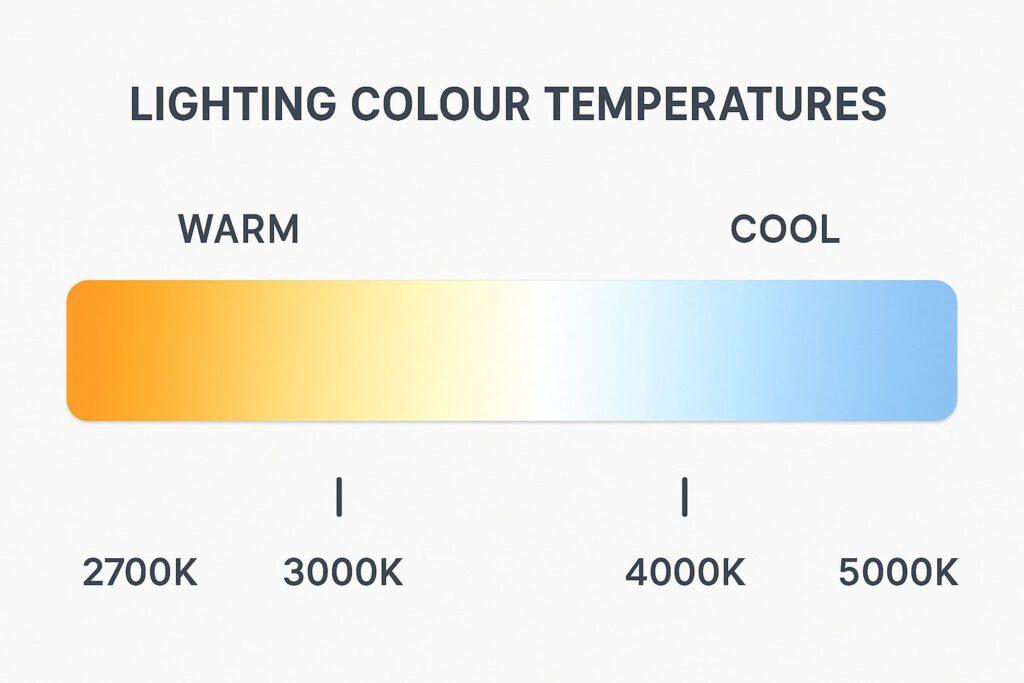
LED colour temperature is measured in Kelvin, and a bulb labelled 3000K should produce a warm white light. The problem is that manufacturing tolerances mean one brand’s 3000K can look noticeably different from another’s. Even within the same brand, batch variations can produce visible differences. In a kitchen with six or eight downlights, having one or two that are slightly warmer or cooler than the rest creates an uneven, patchy look that is difficult to fix without replacing all the bulbs from a single batch.
Integrated downlights avoid this problem almost entirely. Because the LEDs come from the same production run and the optics are matched to the module, the colour temperature is consistent from fitting to fitting. In a row of six integrated downlights, the light will look uniform across the ceiling.
If colour consistency matters to you — and in a modern kitchen with clean lines and light surfaces, it usually does — this is one of the strongest arguments for integrated units. For more detail on how colour temperature affects your kitchen, see our colour temperature guide.
Dimming Performance
Dimming is where the gap between the two types is most noticeable in everyday use.
GU10 LED bulbs have a well-documented history of dimming problems. Because the driver electronics are packed into the tiny bulb body, there is limited space for the circuitry that handles smooth dimming. Common issues include flickering at low levels, audible buzzing, abrupt drop-off where the light jumps from dim to off with no smooth transition, and inconsistent dimming across multiple bulbs on the same circuit where some bulbs dim at different rates.
These problems are not universal — premium GU10 bulbs from brands like Philips, Osram, and Megaman dim reasonably well with a compatible trailing-edge dimmer. But getting a flicker-free, smooth-dimming result with GU10 often requires careful matching of bulb brand, dimmer switch, and minimum load requirements.
Integrated downlights handle dimming significantly better. The driver is designed specifically for the LED module, with enough space for proper dimming circuitry. Most quality integrated units dim smoothly from 100 percent down to 5 or even 1 percent without flicker, buzz, or drop-off. This makes a real difference in a kitchen where you want bright light for cooking and a much softer level for dining.
If you plan to use dimmers — and in a kitchen, you should — integrated downlights will give you a noticeably better experience. Always pair them with a trailing-edge (LED-compatible) dimmer for the best results.
Lifespan and Reliability
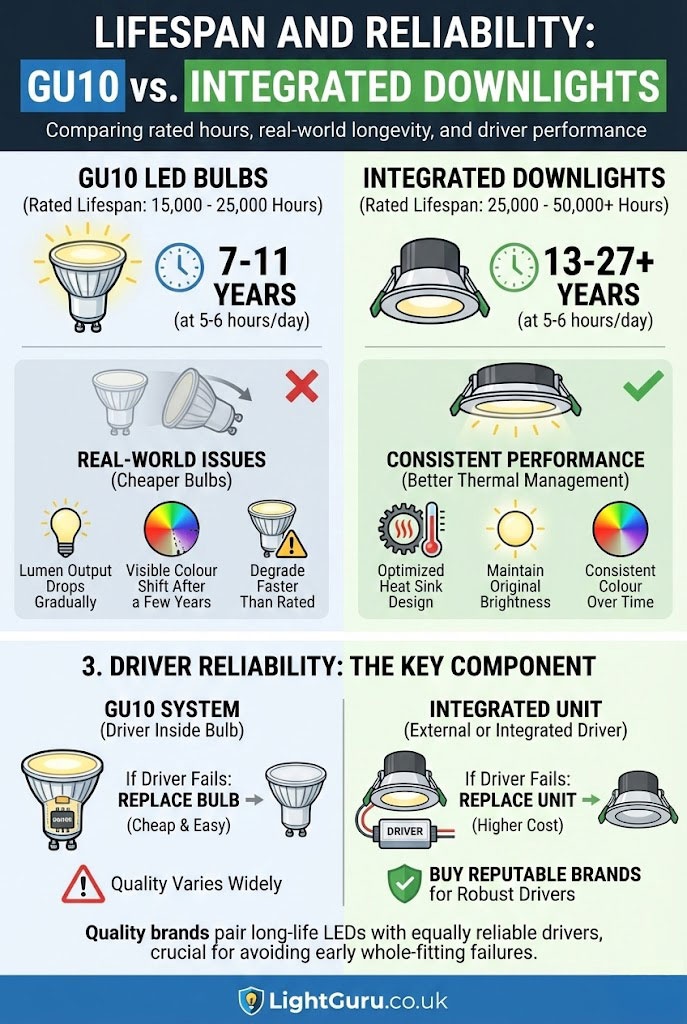
LED GU10 bulbs typically have a rated lifespan of 15,000 to 25,000 hours. In a kitchen that is lit for five to six hours a day, that translates to roughly seven to eleven years before the bulb needs replacing. In practice, cheaper GU10 bulbs often degrade faster than their rated lifespan suggests — lumen output drops gradually, and some budget bulbs develop a visible colour shift after a few years.
Integrated downlights are typically rated at 25,000 to 50,000 hours, with premium units claiming up to 60,000 hours. Using the same five to six hours per day, that is thirteen to twenty-seven years. Because the thermal management is better (the heat sink is designed for the specific LED module), integrated units tend to maintain their original brightness and colour more consistently over time.
The reliability equation also includes the driver. In a GU10 system, the driver is inside the bulb, so when the driver fails, you just replace a cheap bulb. In an integrated unit, if the driver fails before the LED, the whole fitting needs replacing. Quality brands mitigate this with robust drivers rated for the same lifespan as the LED, but cheaper integrated units sometimes have driver failures well before the LED reaches end of life. This is why buying from reputable brands matters more with integrated fittings.
Cost: Upfront and Long Term
Upfront cost
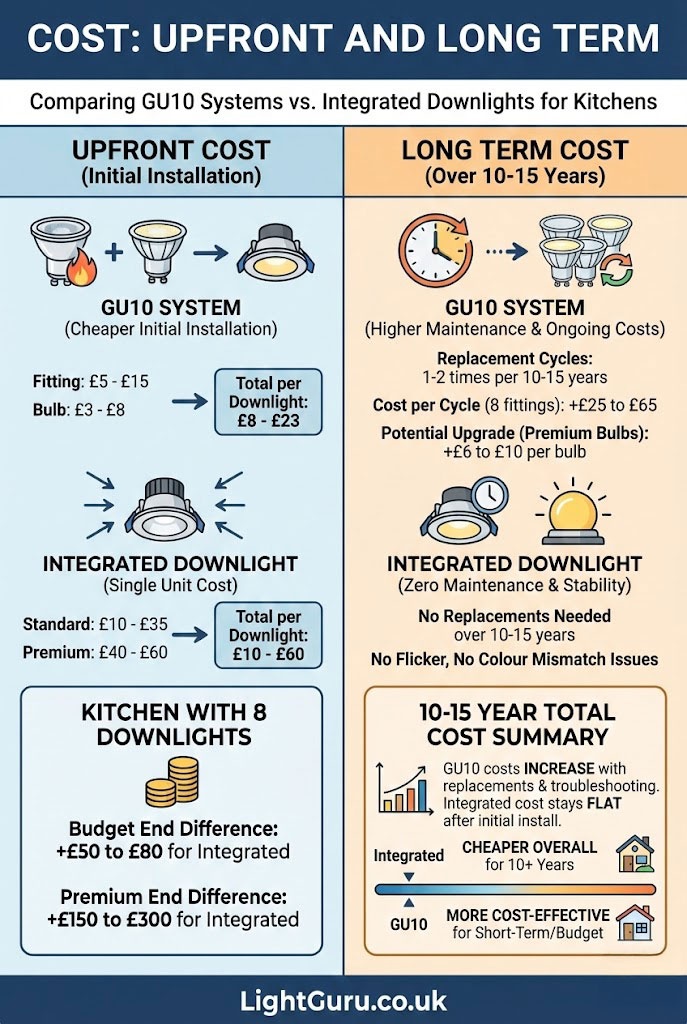
GU10 systems are cheaper to install initially. A fire-rated GU10 fitting costs between £5 and £15, and a decent LED GU10 bulb adds another £3 to £8. Total per downlight: roughly £8 to £23.
An integrated downlight costs between £10 and £35 for a standard domestic unit, with premium brands reaching £40 to £60. Total per downlight: £10 to £60.
For a kitchen with eight downlights, the difference at the budget end is modest — perhaps £50 to £80 across all fittings. At the premium end, the gap widens to £150 to £300.
Long term cost
Over ten to fifteen years, the calculation shifts. GU10 bulbs will likely need replacing once or twice during that period, adding £25 to £65 across eight fittings per replacement cycle. If you experience dimming issues and upgrade to premium GU10 bulbs, the per-bulb cost increases to £6 to £10.
Integrated downlights, assuming a quality brand, should not need any attention during the same period. No replacement bulbs, no troubleshooting flicker issues, no matching colour temperatures across a new batch.
For most homeowners doing a kitchen renovation that they expect to last ten years or more, integrated downlights work out cheaper overall. For a short-term rental or a budget project where the fittings may be replaced entirely in a few years, GU10 is the more cost-effective starting point.
Replaceability and Maintenance
This is the strongest argument in favour of GU10. When a bulb fails, you twist it out and push a new one in. No tools required, no electrician, no ladder drama beyond reaching the ceiling. The whole job takes thirty seconds.
With an integrated downlight, a failed unit means replacing the entire fitting. In many cases, this involves disconnecting the wiring from the junction box in the ceiling void and connecting a new unit. While some integrated downlights use plug-in connectors that a confident homeowner could handle, others are hardwired and should be replaced by a qualified electrician.
There is also the availability question. A GU10 bulb is a universal format — you can buy one from any hardware shop, supermarket, or online retailer and it will fit your existing fitting. If an integrated downlight from a specific manufacturer is discontinued, finding an exact replacement that matches the bezel style, cutout size, and colour temperature of your remaining fittings can be difficult. Buying one or two spare units at the time of installation is a sensible precaution.
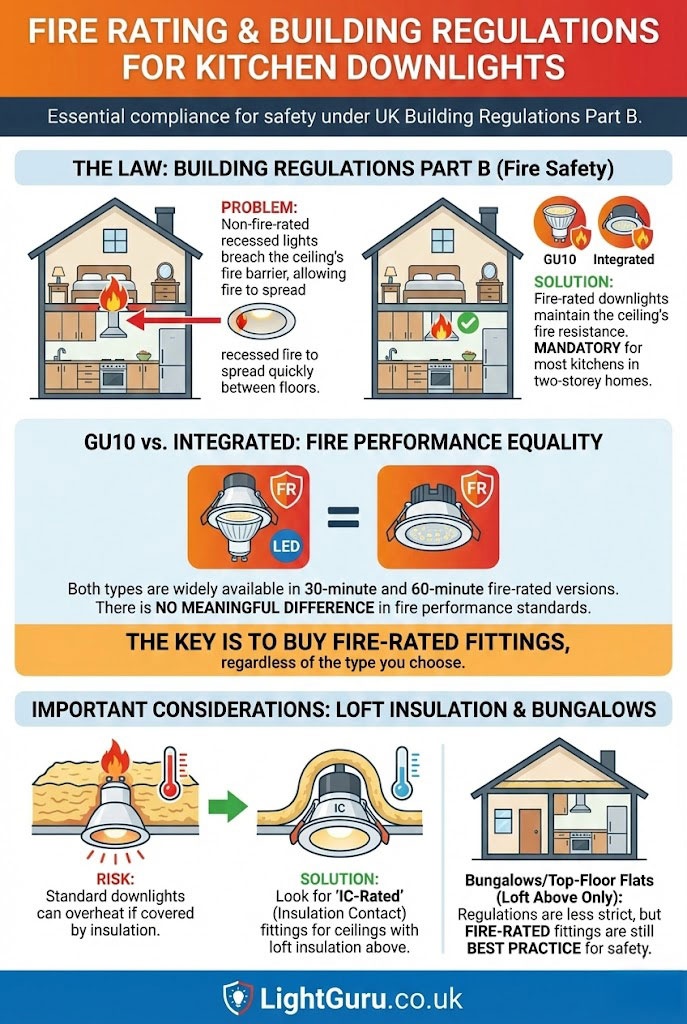
Fire Rating and Building Regulations
Both GU10 and integrated downlights are available in fire-rated versions, and in the UK, fire rating is not optional for most kitchen installations.
Under Part B of the Building Regulations, any recessed downlight that penetrates a ceiling separating two floors must be fire-rated to maintain the fire resistance of that ceiling. In practical terms, this means almost every kitchen in a two-storey house needs fire-rated downlights. Ground-floor kitchens in bungalows or top-floor flats where the ceiling leads only to a loft void have less strict requirements, but fire-rated fittings are still best practice.
Both types are widely available in 30-minute and 60-minute fire-rated versions. There is no meaningful difference between GU10 and integrated in terms of fire performance — both meet the same standards. The key is to make sure you buy fire-rated fittings rather than standard open-back downlights, regardless of which type you choose.
If your kitchen ceiling has loft insulation sitting directly above, also look for IC-rated (insulation contact) fittings that can be safely covered by insulation without overheating.
Aesthetic and Design
Integrated downlights generally offer a sleeker, more contemporary look. Because the LED module is built into the housing, manufacturers can make the fitting shallower and the bezel narrower. Some integrated units have bezels as slim as 2 to 3 millimetres, sitting almost perfectly flush with the ceiling. The result is a clean, minimal look where the light is visible but the fitting almost disappears.
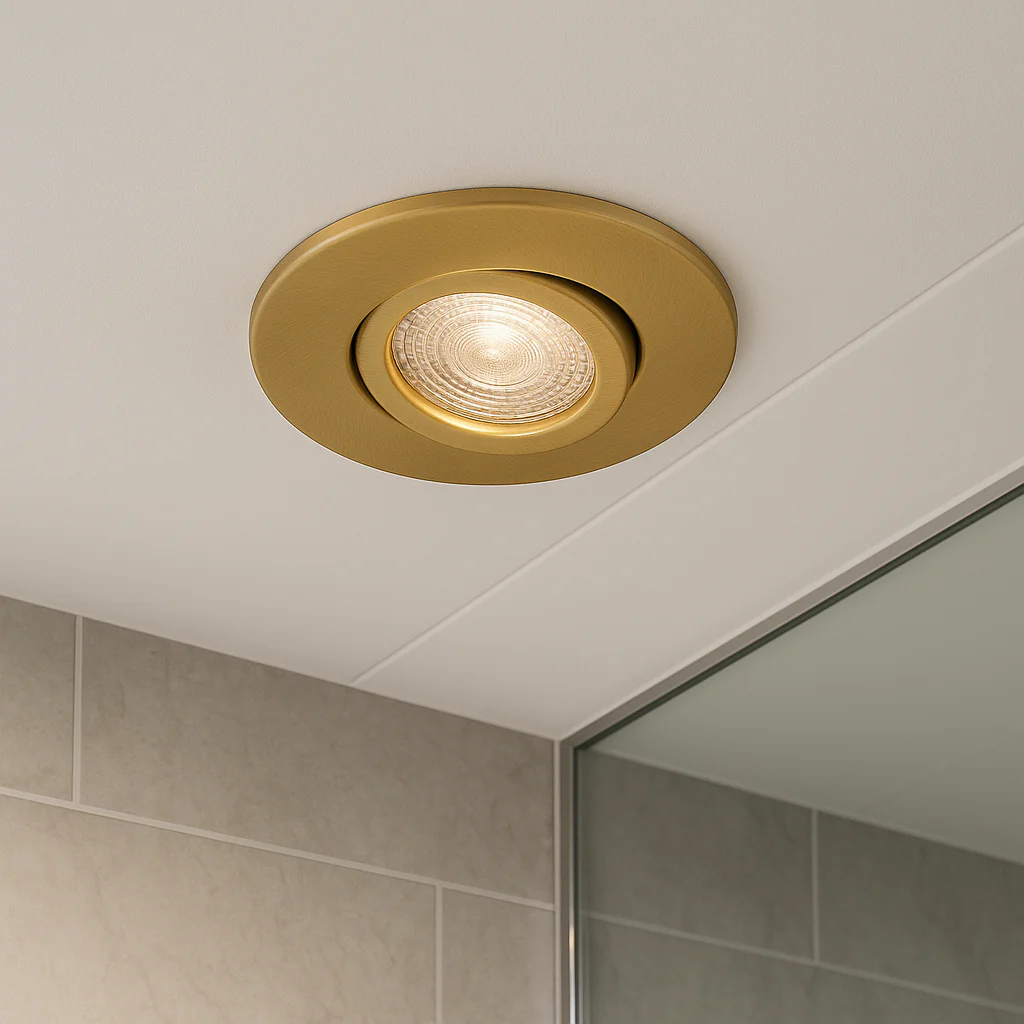
GU10 fittings tend to have slightly larger, more pronounced bezels because they need to accommodate the bulb socket and provide enough space for the GU10 to sit behind the ceiling line. This is not necessarily a negative — in a traditional or cottage-style kitchen, a visible chrome or brass bezel can look entirely appropriate. But in a modern, minimalist kitchen where you want the ceiling to look as clean as possible, integrated downlights have the edge.
Finish options are broadly similar for both types. White, matt white, brushed chrome, brushed nickel, antique brass, and satin chrome are available across both formats. Integrated units also offer some more contemporary finishes like gunmetal, matt black, and trimless (plaster-in) designs that sit completely flush with the ceiling.
Smart Lighting Compatibility
This is one area where GU10 currently has an advantage, though the gap is narrowing.
Smart GU10 bulbs are widely available from brands like Philips Hue, WiZ, TP-Link Tapo, and IKEA Tradfri. Because GU10 is a universal format, you can drop a smart bulb into any existing fitting and immediately gain app control, voice control, colour temperature adjustment, and scene integration. This makes GU10 the easier path to smart lighting, especially if you already have GU10 fittings installed.
Smart integrated downlights do exist, but the market is smaller and the options are more limited. Some manufacturers offer integrated units with built-in Wi-Fi or Zigbee connectivity, and others offer units with CCT switches that let you select between two or three colour temperatures (typically 3000K, 4000K, and 6500K) using a physical switch on the fitting before installation. These CCT-selectable units are not truly “smart” — they cannot be adjusted after installation without pulling the fitting down — but they do offer some flexibility.
For a kitchen where you want full smart control with tunable white, dimming scenes, and voice activation, GU10 with smart bulbs is currently the more practical and cost-effective route. For a kitchen where you want consistent, high-quality light without smart features, integrated is the stronger choice. See our smart kitchen lighting guide for more on building scenes with either type.
Installation
Installation complexity is similar for both types. Both GU10 and integrated downlights require a hole to be cut in the ceiling (typically 65mm to 85mm diameter), wiring to be connected, and the fitting to be pushed into the hole where spring clips hold it in place.
The wiring connection differs slightly. GU10 fittings use a lamp holder with flying leads that connect to a junction box or the circuit wiring via a connector block. Integrated units typically have a plug-in connector or a small junction box built into the fitting. Modern integrated downlights increasingly use push-fit or plug-in connectors that make installation faster.
In both cases, if you are installing new downlights where none existed before (cutting new holes, running new cables, adding a new circuit), the work should be carried out by a qualified electrician or registered competent person. If you are replacing existing downlights with new ones of the same type using the same wiring, a competent DIYer can handle GU10 bulb swaps, but integrated fitting replacements involving wiring are best left to a professional.
Which Type Suits Your Kitchen
New build or full renovation
Integrated is the natural choice. You are starting fresh, so there are no existing GU10 fittings to work with. The better dimming, colour consistency, and slimmer profiles make the most of a new kitchen design.
Replacing old halogen GU10 fittings
If the existing fittings are in good condition and properly positioned, the simplest upgrade is swapping halogen bulbs for LED GU10 bulbs. This costs very little and makes an immediate difference to brightness, energy use, and bulb life. If the fittings themselves are tired or poorly positioned, a full swap to integrated units is worth the extra investment.
Rental property or short-term project
GU10 makes the most sense. The fittings are cheap, the bulbs are universally available, and tenants can replace a failed bulb themselves without calling a landlord or electrician.
High-end kitchen with dimmers
Integrated is strongly recommended. The smooth dimming performance, consistent colour, and slim aesthetics justify the higher upfront cost in a kitchen where the finish quality matters.
Smart home kitchen
GU10 with smart bulbs gives you the most flexibility right now. If you want smart features without individual bulb management, a smart dimmer switch controlling a circuit of integrated downlights is a clean alternative — you lose the colour temperature adjustment but gain reliable dimming and scene control.
Budget-conscious DIY kitchen
GU10 keeps costs down and lets you upgrade incrementally. Start with a decent LED GU10 across all fittings, then swap individual bulbs for smart versions later if you decide you want smart control.
Can You Mix Both Types in the Same Kitchen
Yes, and this is more common than people realise. The key is to use each type where it works best and keep them on separate circuits so they can be controlled independently.
A practical combination is integrated downlights for the main ceiling grid (general and task lighting over worktops) with GU10 fittings used in pendant lights, wall lights, or track systems where bulb replaceability and smart compatibility are more useful. Because pendants and wall lights operate at different brightness levels and serve different purposes from the ceiling downlights, any slight colour temperature variation between the two types is rarely noticeable.
What you want to avoid is mixing GU10 and integrated downlights in the same visible row across a ceiling. The difference in bezel size, beam pattern, and potential colour temperature variation will be obvious and look inconsistent.
Recommended Products
GU10 bulbs for kitchens
Reliable everyday option: Philips CorePro LED GU10, 3000K, 4.6W, 390 lumens, dimmable. Consistent quality, good dimming performance, widely available. Around £3 to £5 per bulb.
Premium option: Osram Parathom GU10, 3000K, 5.5W, 500 lumens, CRI 90, dimmable. Excellent colour rendering and smooth dimming. Around £5 to £8 per bulb.
Smart option: Philips Hue White Ambiance GU10. Tunable from 2200K to 6500K, dimmable, app and voice control, works with Alexa, Google, and Apple HomeKit. Around £20 to £25 per bulb (requires Hue Bridge).
Integrated downlights for kitchens
Reliable standard: Saxby Lalo or Luceco FType, fire-rated, IP65, 3000K, dimmable, around 600 to 800 lumens. Excellent value at £8 to £15 each.
Premium option: Aurora Enlite E8, fire-rated, IP65, CRI 95, dimmable to 5 percent, multiple bezel options. Around £15 to £25 each.
CCT selectable: JCC V50, fire-rated, IP65, switchable between 3000K, 4000K, and 6500K. Useful if you are unsure which colour temperature you prefer. Around £12 to £20 each.
FAQs
Do integrated downlights last longer than GU10 bulbs?
Yes. Integrated units are typically rated at 25,000 to 50,000 hours compared to 15,000 to 25,000 hours for most LED GU10 bulbs. The difference comes from better thermal management — the integrated unit’s heat sink is designed specifically for its LED module, which helps it maintain brightness and colour accuracy for longer. In a kitchen used for five to six hours a day, a quality integrated downlight should last fifteen to twenty years before needing replacement.
Are GU10 downlights being phased out?
No. GU10 remains one of the most popular lamp formats in the UK and there are no plans to discontinue it. LED GU10 bulbs are widely manufactured and the format is likely to remain available for many years. What has happened is that integrated downlights have become the preferred choice for new installations and professional projects, so GU10 is gradually becoming more associated with replacement and retrofit situations rather than new builds.
Which type dims better?
Integrated downlights dim significantly better in most cases. The dedicated driver can handle smooth, flicker-free dimming from full brightness down to very low levels. GU10 bulbs can dim well too, but you need to be more careful about matching the bulb to a compatible trailing-edge dimmer, and cheap GU10 bulbs often produce flicker or buzz at low settings. If smooth dimming is important to you, integrated is the safer choice.
Can I replace my existing GU10 fittings with integrated downlights?
Yes, though it involves more than a simple bulb swap. The GU10 fitting needs to be removed from the ceiling, the wiring disconnected, and the new integrated unit connected and fitted into the same (or a newly cut) hole. The cutout sizes may differ — many GU10 fittings use a 75mm to 85mm cutout, while some integrated units use different sizes. Check compatibility before ordering. This work should ideally be carried out by a qualified electrician, especially if you are changing multiple fittings.
Do I need fire-rated downlights in my kitchen?
If your kitchen ceiling separates two floors (for example, a ground-floor kitchen with bedrooms above), fire-rated downlights are required under Part B of the Building Regulations. This applies to both GU10 and integrated types. If your kitchen is on the top floor with only a loft space above, fire-rated fittings are still recommended as best practice, particularly if the loft is boarded or used for storage. Always check with your electrician or building control if you are unsure.
Is it worth paying more for high CRI downlights in a kitchen?
Yes. CRI (Colour Rendering Index) measures how accurately a light source shows colours compared to natural daylight. In a kitchen, high CRI makes a visible difference — food looks more appetising, worktop colours appear true, and the overall feel of the room is more natural. Budget downlights with CRI below 80 can make everything look slightly washed out. For kitchens, aim for CRI 90 or above. Most quality integrated downlights meet this standard, while GU10 bulbs vary more widely, so check the specification before buying.
What beam angle should I choose for kitchen downlights?
For general kitchen lighting, a beam angle of 55 to 60 degrees gives good coverage across a wide area. For task lighting directly over worktops or an island, a narrower 36 to 40 degree beam provides a more focused, brighter pool of light. Some integrated downlights come with interchangeable reflectors that let you switch between beam angles, which is useful if you are not sure what will work best until the lights are installed. For full spacing and layout advice, see our downlight guide.
Can I use smart switches with integrated downlights instead of smart bulbs?
Yes, and this is often the best approach for integrated downlights. A smart dimmer switch replaces your existing wall switch and gives you app control, voice control, and scene integration across the whole circuit. You lose the ability to change colour temperature per fitting (since the integrated LEDs are fixed), but you gain smooth group dimming, scheduling, and automation. Brands like Lutron Caseta, Aqara, and Shelly make smart dimmers that work well with most LED integrated downlights.
Conclusion
The choice between GU10 and integrated downlights comes down to what matters most for your specific kitchen project. Integrated downlights win on brightness, colour consistency, dimming performance, lifespan, and aesthetics — making them the better choice for new builds, renovations, and any kitchen where you want a premium, low-maintenance result. GU10 wins on replaceability, upfront cost, smart bulb availability, and flexibility — making it the practical choice for rentals, budget projects, and smart home setups where you want individual bulb control.
In many kitchens, the answer is not strictly one or the other. Using integrated downlights for your main ceiling grid and GU10 fittings in pendants, wall lights, or track systems gives you the best of both formats without compromise.
For the full picture on planning your kitchen lighting, including layout, layering, and fixture types, see our complete kitchen lighting guide.