
Use our interactive Kelvin selector to compare warm, neutral, and cool white lighting before you buy.
Choosing the right colour temperature for LED lighting can completely change how a room looks and feels. From warm, cosy spaces to bright, functional areas, light colour affects comfort, mood, and visibility. The tool helps you compare warm white, neutral white, and cool white lighting so you can confidently choose the correct Kelvin rating before buying LED bulbs or light fittings.
This guide focuses on one specific aspect of lighting design. For full guidance on warm vs cool lighting and how colour temperature affects your space, see our complete Colour Temperature Guide.
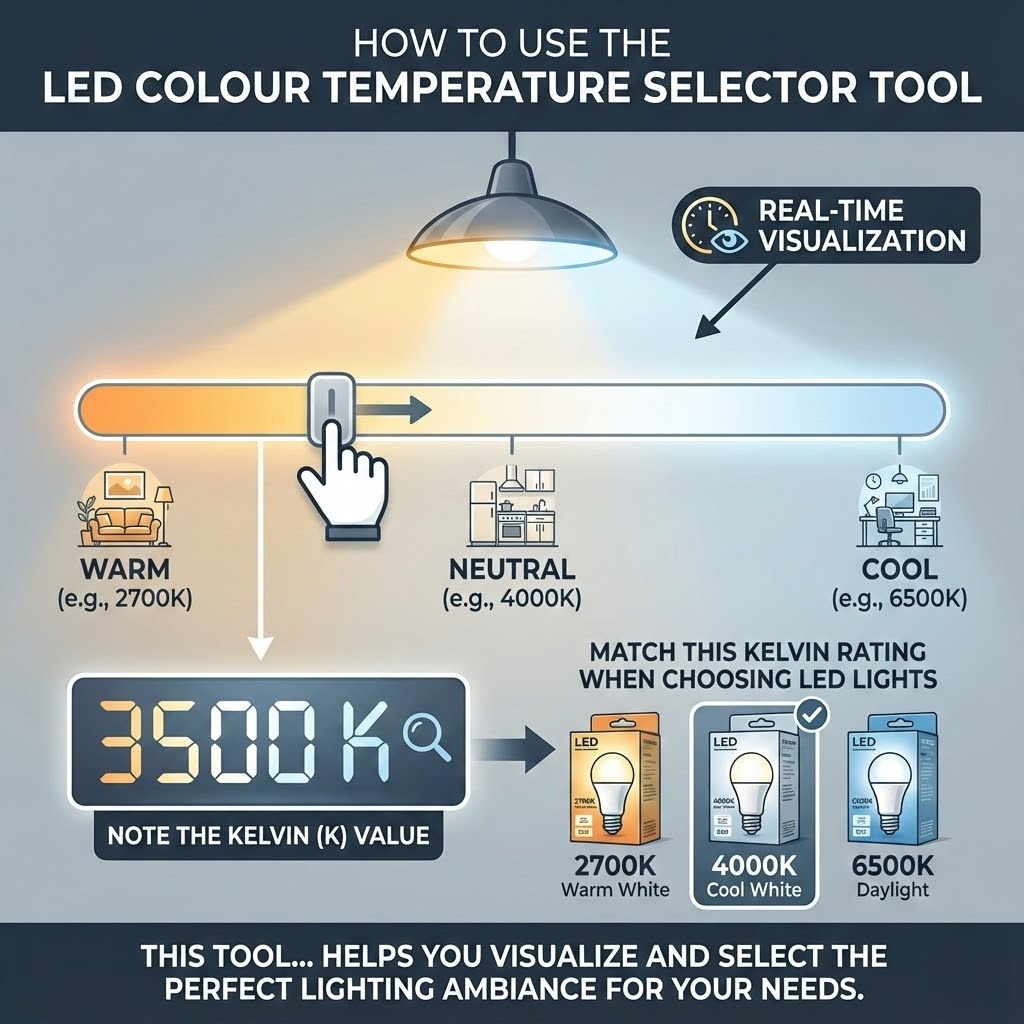
- Adjust the slider to change the LED colour temperature
- Watch how the light colour changes in real time
- Note the Kelvin (K) value that suits your space
- Match this Kelvin rating when choosing LED lights
This tool is designed for home lighting, outdoor lighting, and workspaces, making it easier to avoid costly mistakes.
Colour Temperature Selector
Visualize how different Kelvin ratings affect your space

💡 Brightness Control
100%Adjust brightness to see how dimming affects the colour temperature appearance
💡 Recommendation
A balanced neutral white that works well for most spaces.
What is colour temperature in lighting?
Colour temperature is measured in Kelvin (K) and describes how warm or cool a light appears. Lower Kelvin values produce warmer, more yellow light, while higher Kelvin values appear cooler and whiter. If you want a more technical explanation of how colour temperature works in lighting, Wikipedia provides a clear overview of the science behind it.
- Lower Kelvin values produce warmer light
- Higher Kelvin values create cooler, brighter light
Even a small change in colour temperature can significantly affect how a room feels.
If you want a deeper explanation of how warm and cool lighting affects a space, see our guide on what colour temperature means in lighting.
Warm white lighting (2700K–3000K)
Warm white LED lighting produces a soft, yellow toned glow that creates a comfortable and welcoming atmosphere.
Best rooms for warm white lighting:
- Living rooms
- Bedrooms
- Dining rooms
- Hallways
- Garden and patio lighting
Warm white is ideal when ambience and relaxation are the priority.

Neutral white lighting (around 4000K)
Neutral white lighting offers a balanced, clean light without feeling harsh or clinical. It is one of the most popular choices for modern homes.
Best rooms for neutral white lighting:
- Kitchens
- Bathrooms
- Utility rooms
- Retail and commercial spaces
Neutral white provides excellent clarity while still feeling natural.

Cool white lighting (5000K and above)
Cool white LED lighting is bright and crisp, making it ideal for visibility, accuracy, and task focused environments.
Best rooms for cool white lighting:
- Home offices
- Garages and workshops
- Commercial workspaces
- Security and flood lighting
Cool white lighting improves focus and reduces shadows in working areas.

Best colour temperature by room
Choosing the right LED colour temperature depends on how the space is used.
- Living rooms and bedrooms: 2700K–3000K warm white
- Kitchens and bathrooms: 4000K neutral white
- Offices and garages: 5000K+ cool white
- Outdoor lighting: warm white for ambience, cool white for security
Using consistent colour temperatures within the same room creates a more comfortable and professional lighting finish.
For room specific advice, our guide to the best colour temperature for kitchen lighting explains which Kelvin values work best for cooking and dining areas.

Common colour temperature mistakes to avoid
- Choosing cool white lighting in living areas
- Mixing warm and cool LEDs in the same room
- Confusing brightness (lumens) with colour temperature
Brightness controls how strong the light is. Colour temperature controls how the light feels.
Why use a colour temperature selector before buying LED lights?
A LED colour temperature selector helps you visualise lighting before installation. By choosing the right Kelvin value in advance, you reduce the risk of poor lighting choices and unnecessary replacements.
This simple step leads to better lighting results in homes, gardens, and workspaces.
Frequently asked questions about colour temperature
What is the best colour temperature for home lighting?
Most homes use warm white lighting for living areas and neutral white for kitchens and bathrooms.
Is 4000K too bright for a house?
4000K is not too bright but may feel less cosy in living rooms compared to warm white.
Can I mix colour temperatures in one house?
Yes, but avoid mixing them within the same room to maintain visual comfort.
Final tips for choosing LED colour temperature
Once you have found your preferred colour temperature using this tool, check product specifications carefully and match the Kelvin rating exactly. This ensures the lighting you buy looks the same as the lighting you visualised.
Understanding colour temperature is one of the easiest ways to improve your lighting without increasing energy use or cost.
Colour temperature controls the look of light, while CRI affects colour accuracy, which we explain in more detail in our guide to CRI vs colour temperature.