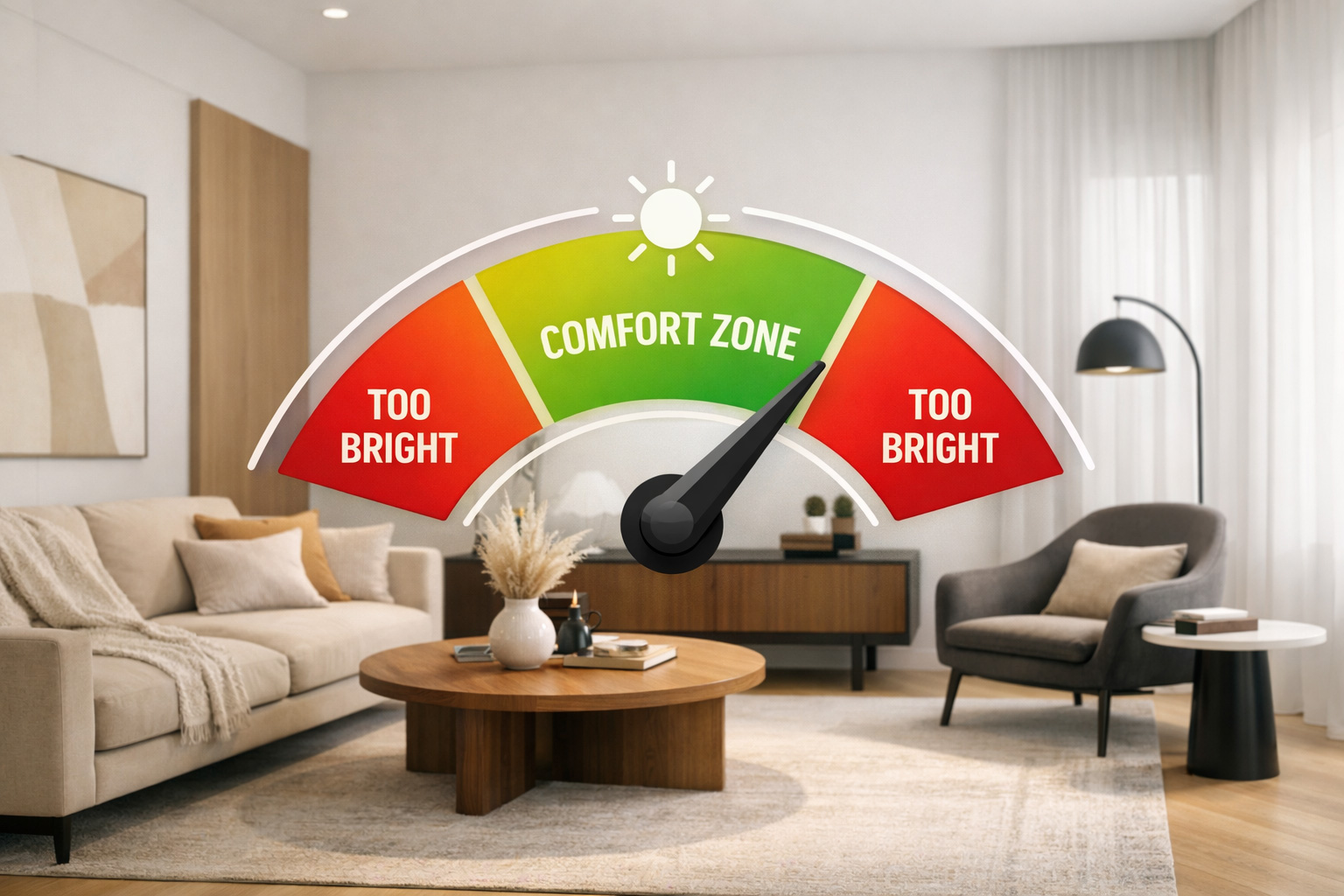
How bright should a living room be is one of the most common questions homeowners ask, and one of the most misunderstood. Many rooms feel uncomfortable at night not because the lights are wrong, but because the brightness level is out of balance with how the space is used.
This guide explains living room brightness in a practical way. You will learn how many lumens you actually need, how room size affects brightness, and why layout matters just as much as numbers.
This guide focuses on one specific aspect of lighting design. For full room planning, layout, and brightness guidance, see our complete Living Room Lighting Guide.
If you want broader inspiration and fitting ideas, you can also explore our complete living room lighting guide, which covers mood, styles, and design choices in more detail.
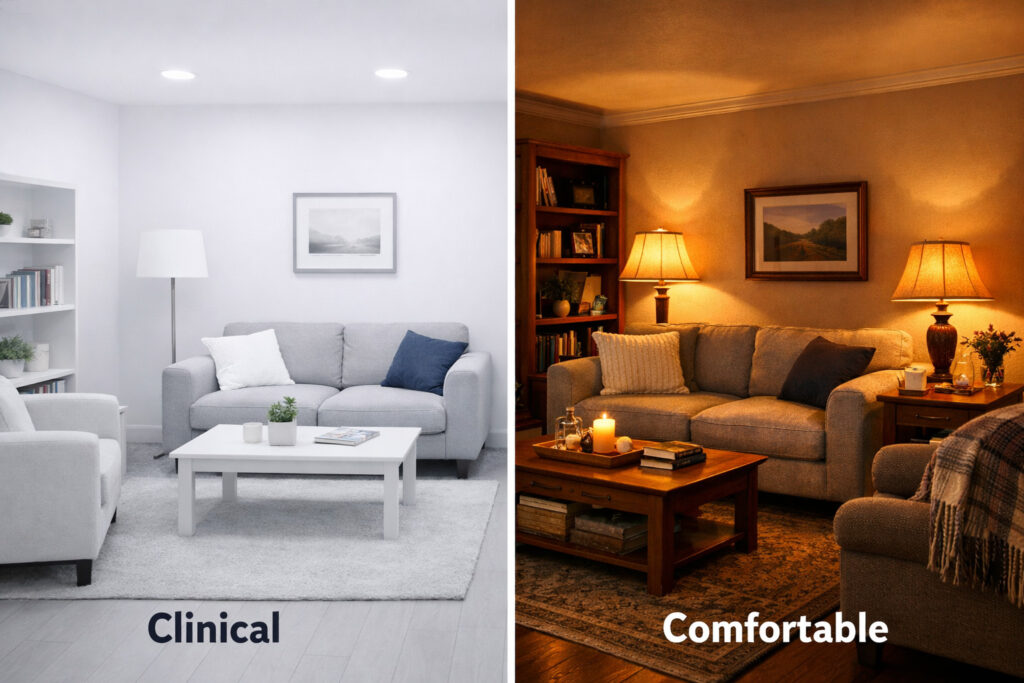
Table of Contents
What brightness really means in a living room
Brightness is measured in lumens, not watts. Lumens describe how much visible light a room receives in total, regardless of how many fittings you use.
In living rooms, brightness should feel:
- Comfortable, not clinical
- Flexible, not fixed
- Softer in the evening than during the day
This is why living rooms need different brightness levels at different times, rather than one permanently bright setting.
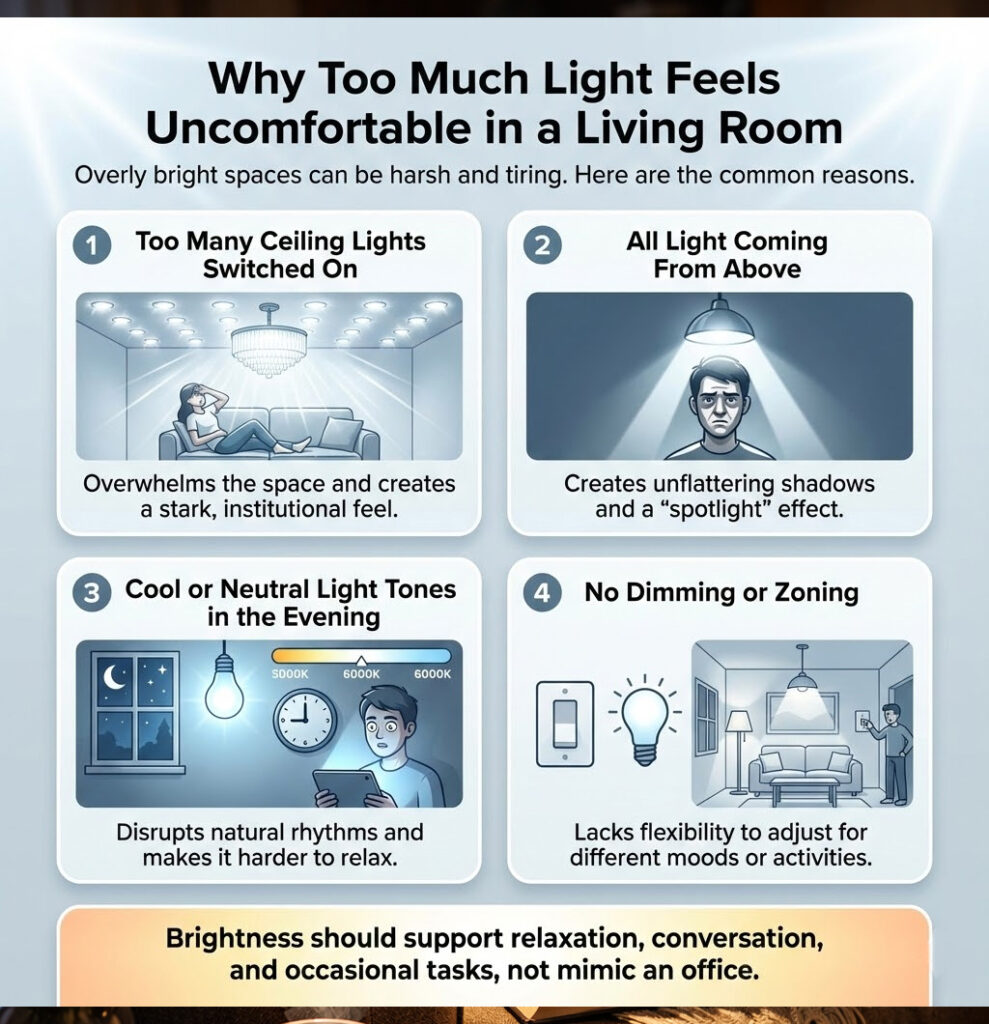
Why too much light feels uncomfortable
A living room that is too bright often feels harsh and tiring, even if the light fittings are high quality.
Common reasons include:
- Too many ceiling lights switched on at once
- All light coming from above
- Cool or neutral light tones used in the evening
- No dimming or zoning
Brightness should support relaxation, conversation, and occasional tasks, not mimic an office.
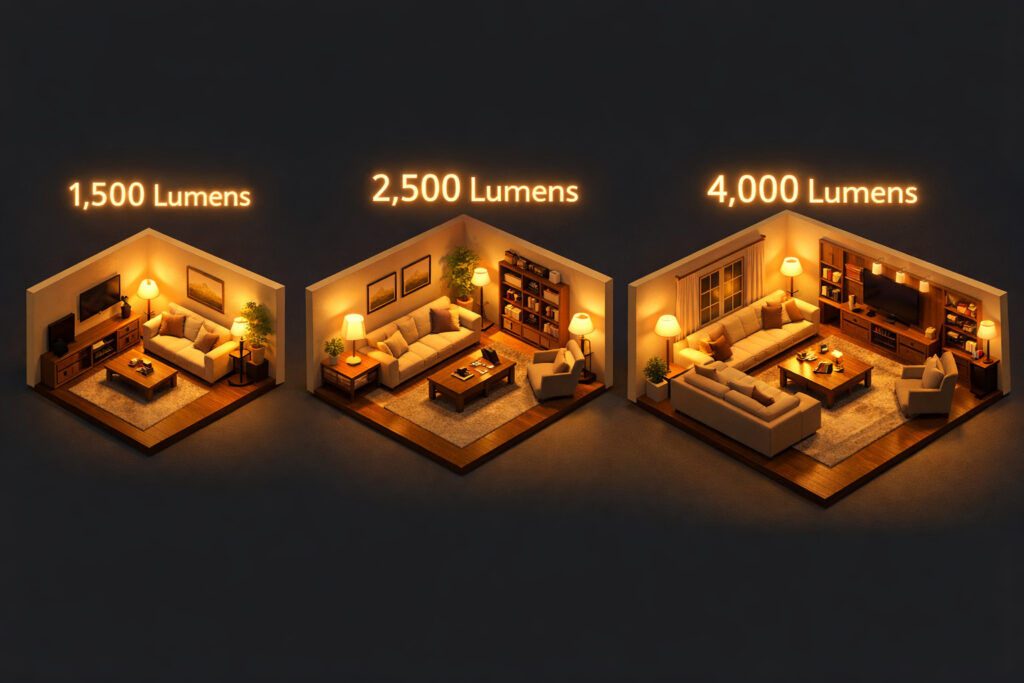
Living room brightness by room size (lumens guide)
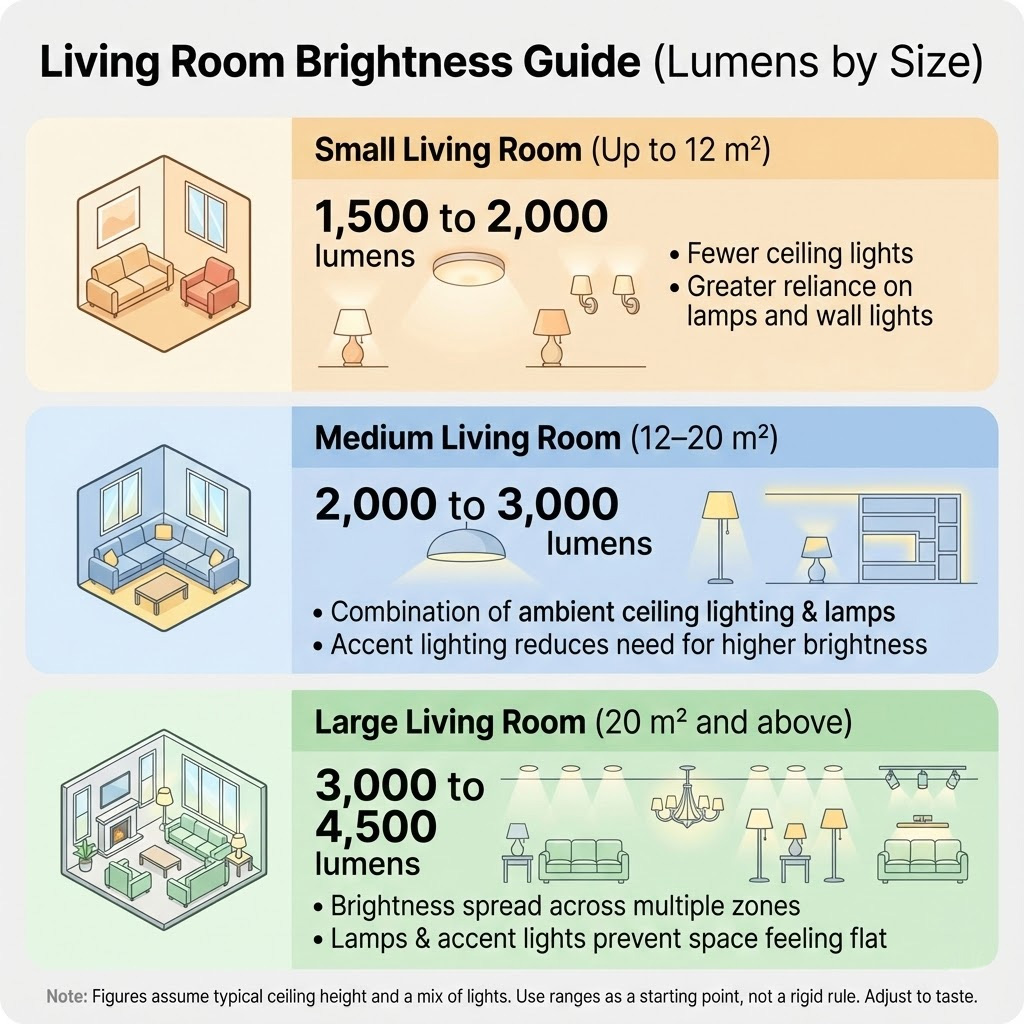
Use the ranges below as a starting point, not a rigid rule. These figures assume a typical ceiling height and a mix of ceiling lights and lamps.
Small living room (up to 12 m²)
- 1,500 to 2,000 lumens
- Fewer ceiling lights
- Greater reliance on lamps and wall lights
Medium living room (12–20 m²)
- 2,000 to 3,000 lumens
- Combination of ambient ceiling lighting and lamps
- Accent lighting helps reduce the need for higher brightness
Large living room (20 m² and above)
- 3,000 to 4,500 lumens
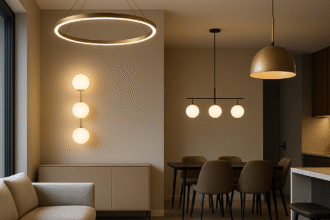
- Brightness spread across multiple zones
- Lamps and accent lights prevent the space feeling flat
If you want a more precise figure, you can calculate how bright your living room should be using room size and layout.
How lighting layout affects brightness needs
Two living rooms with the same size can need very different brightness levels depending on layout.
A room with:
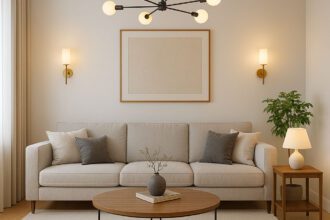
- Lamps near seating
- Wall lights for ambience
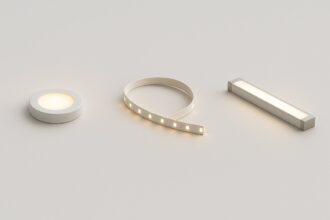
- Accent lighting on shelves or walls
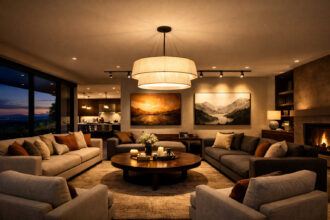
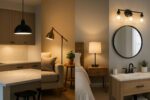
will feel brighter and more comfortable than a room relying on ceiling lights alone, even at lower total lumens.
This is why planning lighting layout for a living room is just as important as choosing brightness levels.
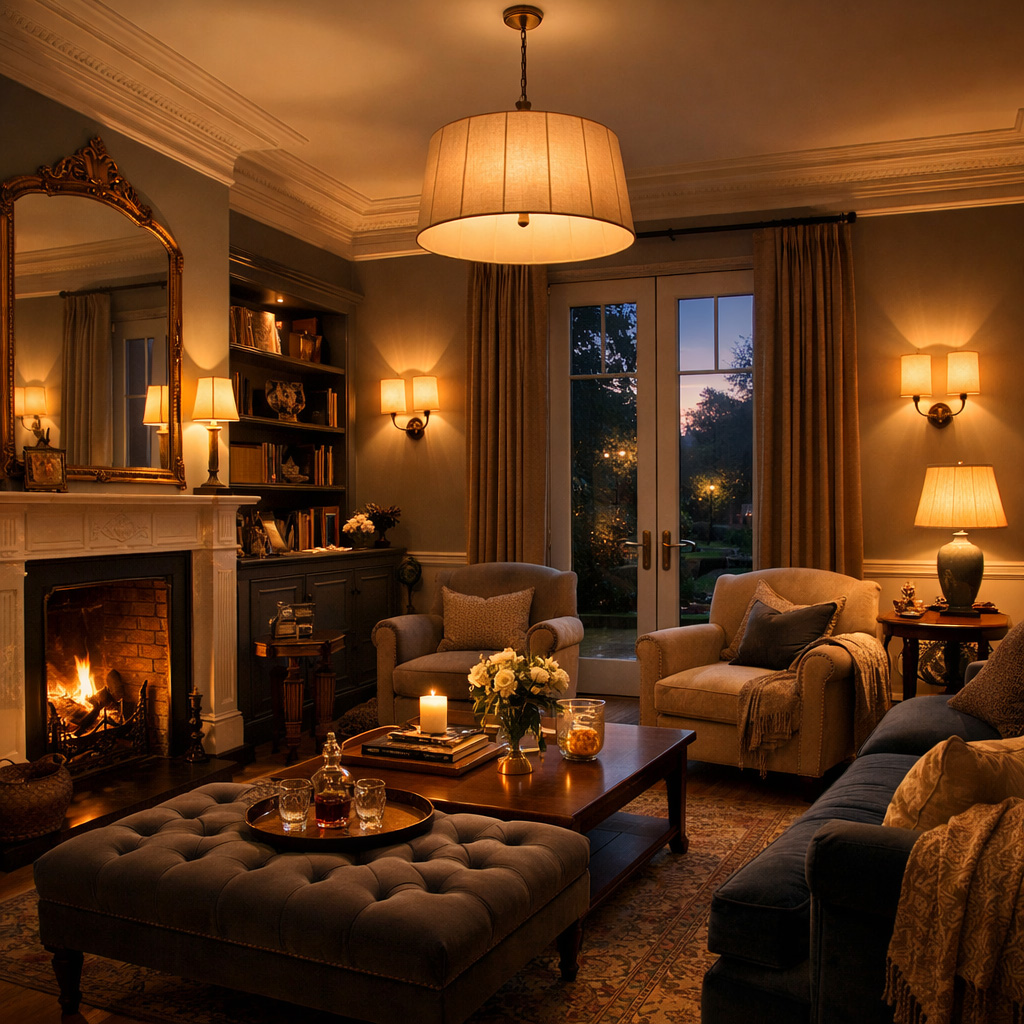
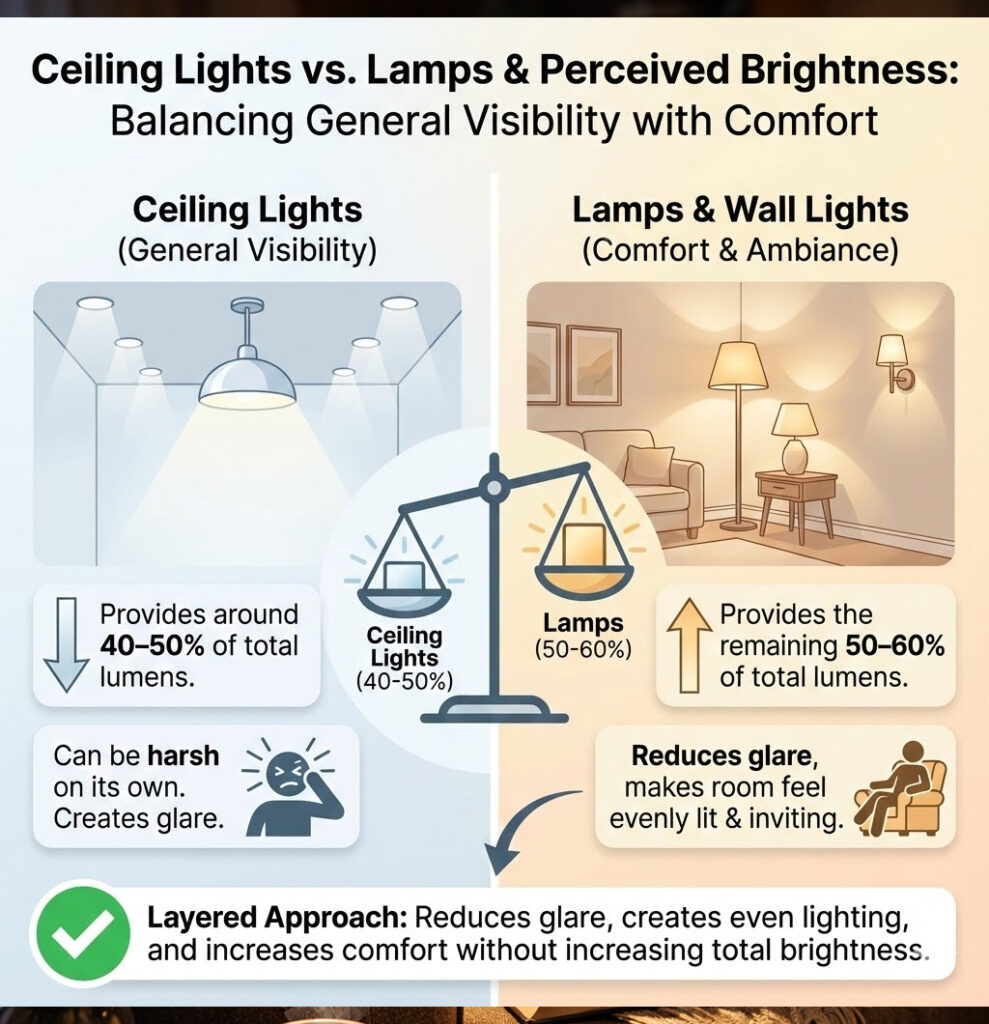
Ceiling lights vs lamps and perceived brightness
Ceiling lights provide general visibility, but lamps create comfort.
As a rough balance:
- Ceiling lighting should provide around 40–50% of total lumens
- Lamps and wall lights should provide the remaining 50–60%
This layered approach reduces glare and makes the room feel evenly lit without increasing total brightness.
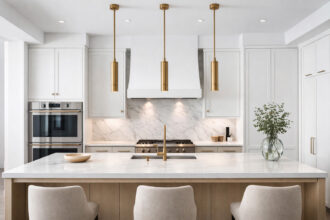
If you are using recessed fittings, understanding downlight spacing will help avoid harsh pools of light and uneven coverage.
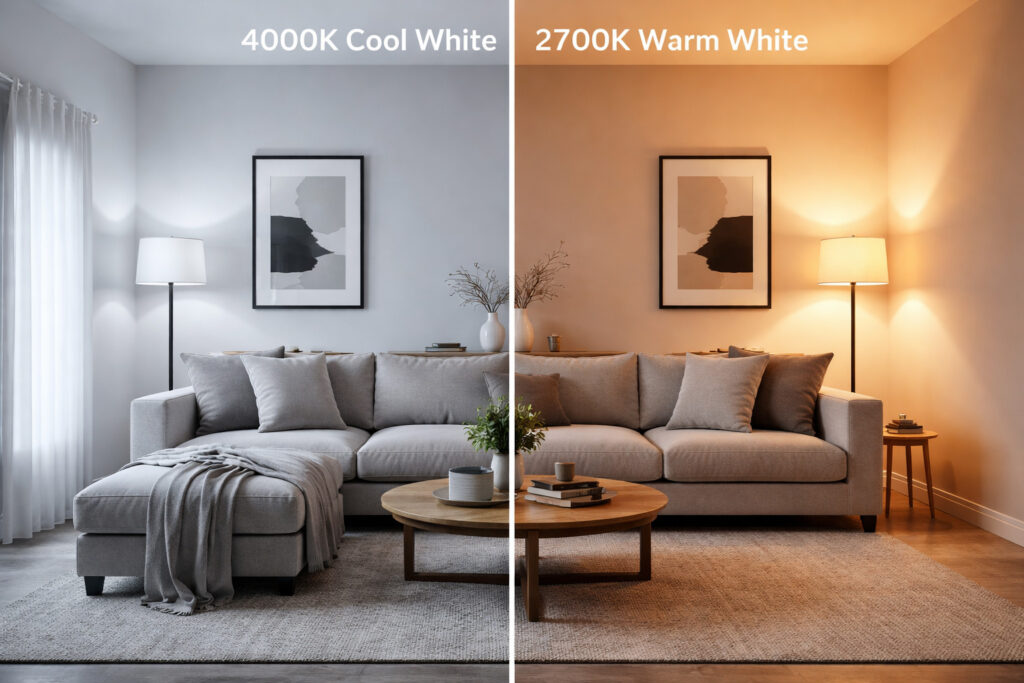
Colour temperature and brightness perception
Brightness and colour work together. Cool light feels brighter than warm light at the same lumen level, but it also feels less relaxing.
For living rooms:
- Warm tones feel softer and more inviting
- Brightness feels more comfortable in the evening
- Shadows appear gentler
Switching to a warm colour temperature often solves brightness problems without changing fittings or layout.
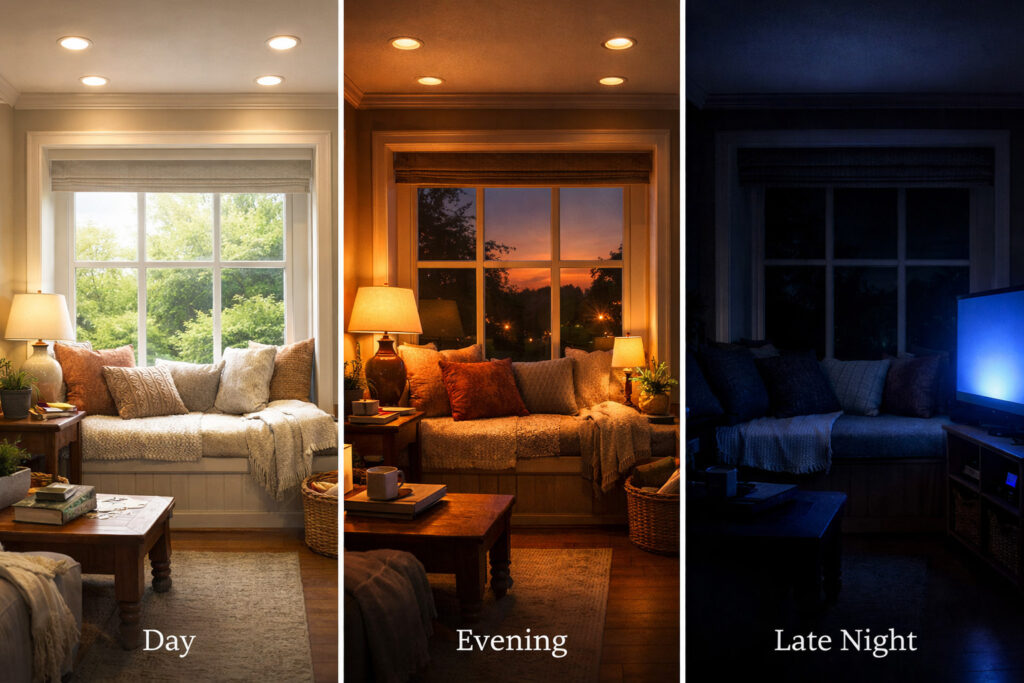
When brightness should change during the day
Living rooms benefit from different brightness levels depending on use.
- Daytime: slightly brighter to support activity and natural light balance
- Evening: lower brightness with more lamps and accent lighting
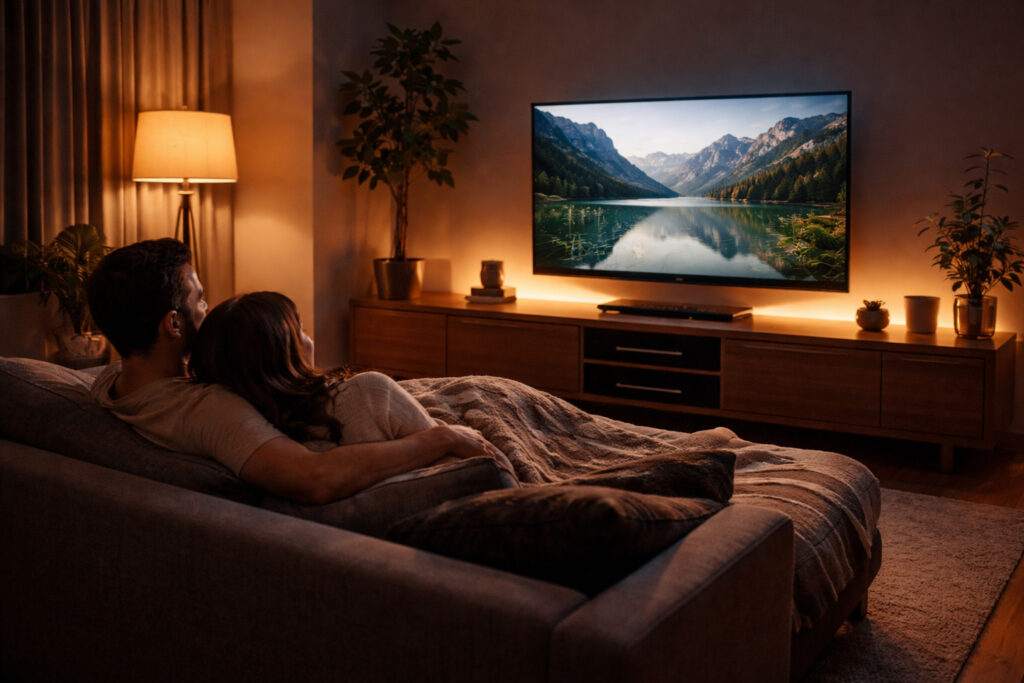
- TV or relaxing: minimal ceiling light, low level lamps only
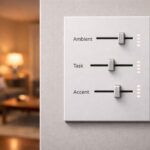
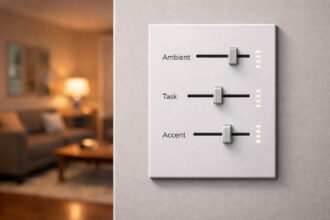
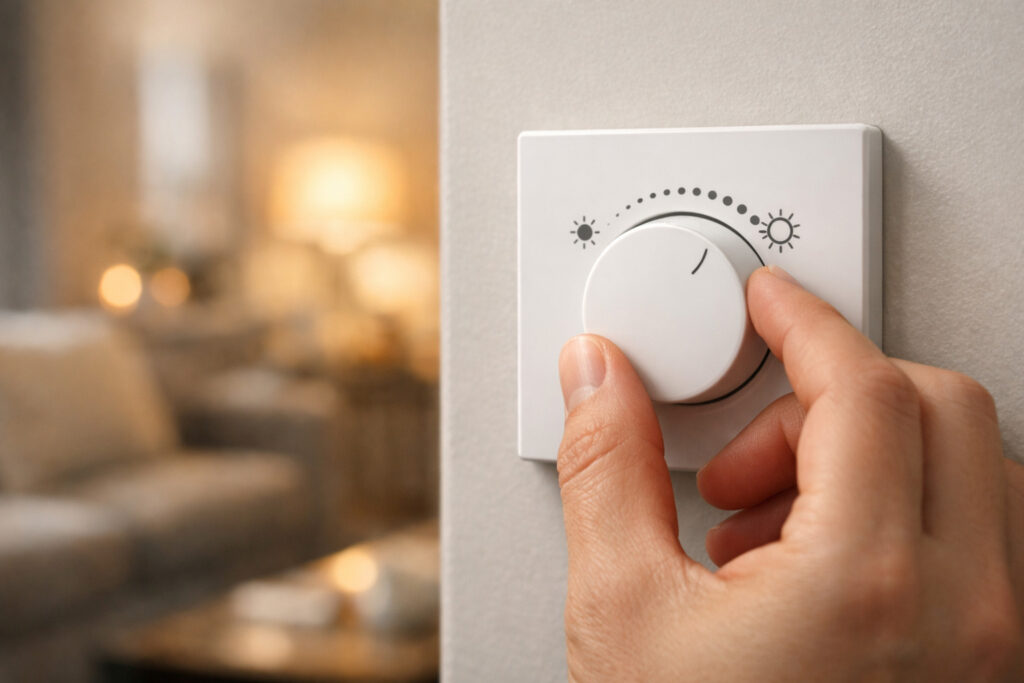
Dimmers and separate lighting circuits make this easy to achieve without compromise.
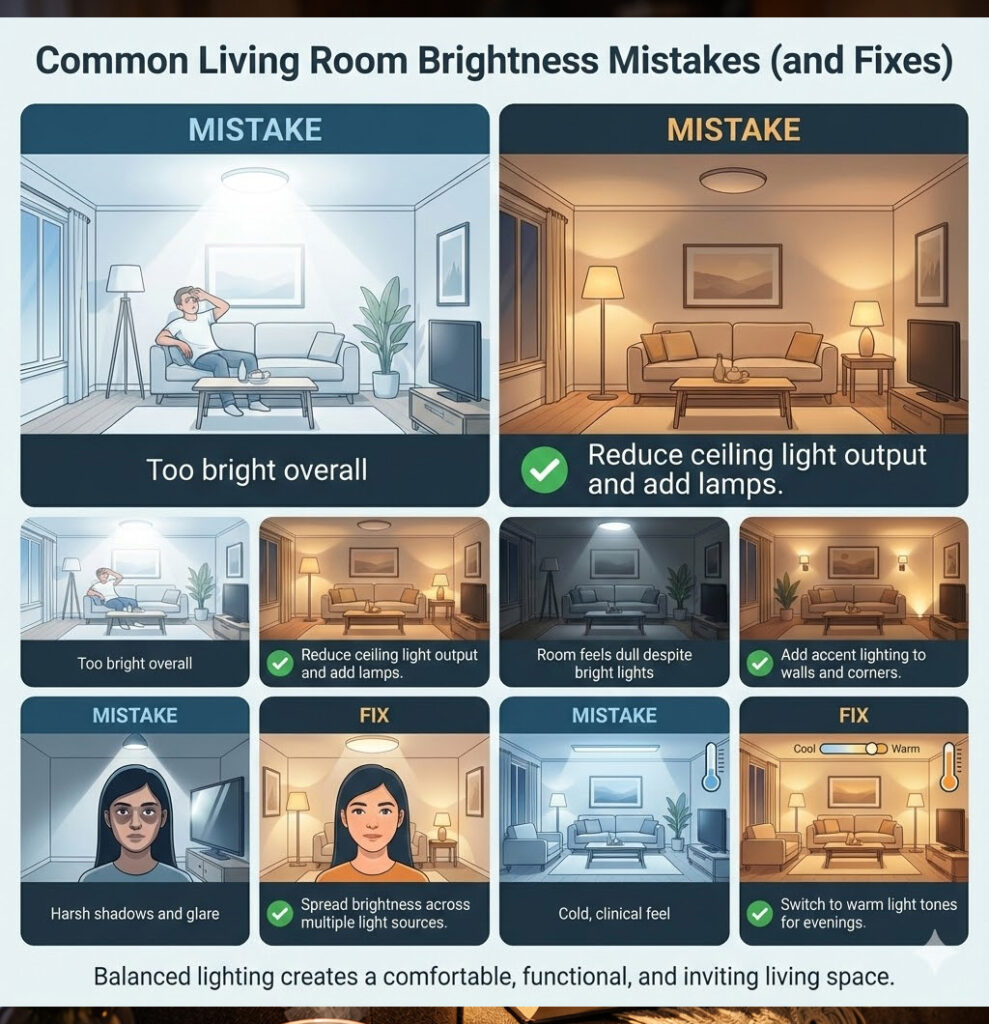
Common living room brightness mistakes (and fixes)
Too bright overall
Fix: Reduce ceiling light output and add lamps.
Room feels dull despite bright lights
Fix: Add accent lighting to walls and corners.
Harsh shadows and glare
Fix: Spread brightness across multiple light sources.
Cold, clinical feel
Fix: Switch to warm light tones for evenings.
Many of these fixes align with established lighting best practice used by professional designers and engineers, including guidance from the Chartered Institution of Building Services Engineers.
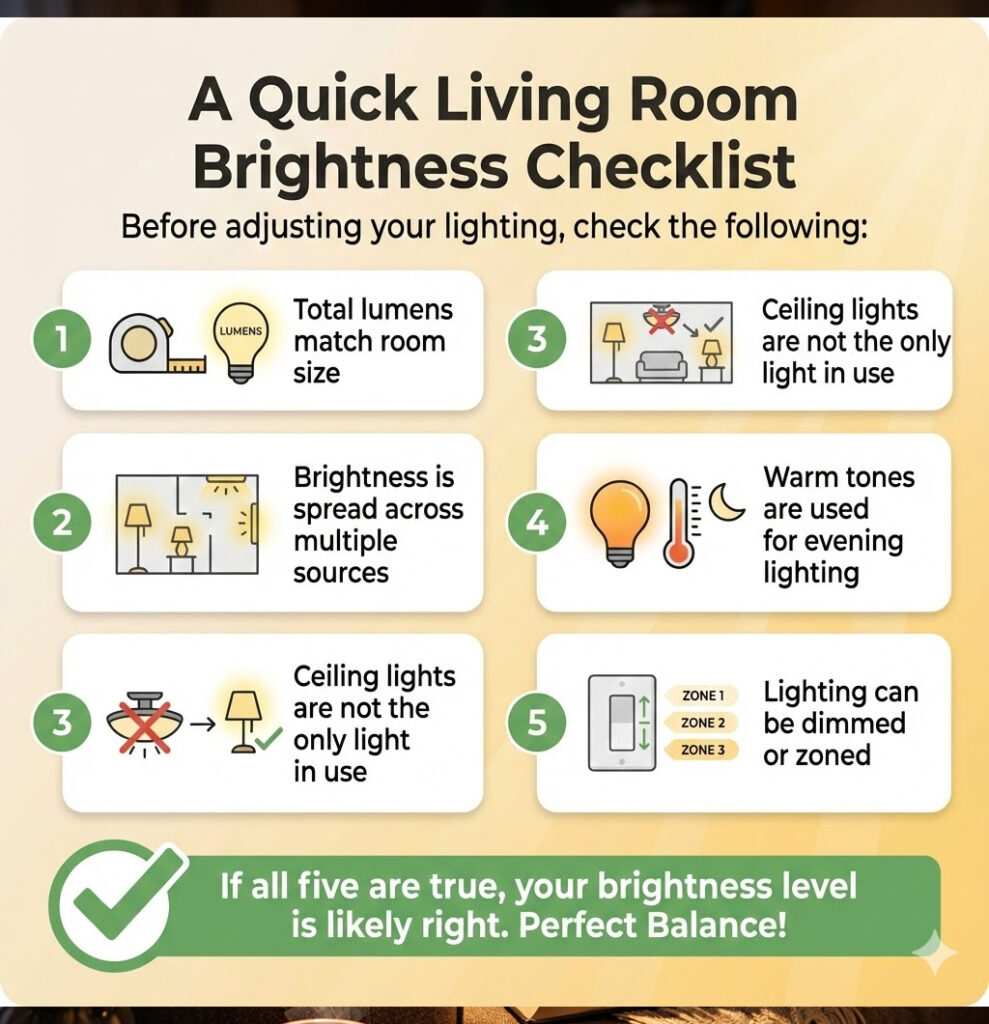
A quick living room brightness checklist
Before adjusting your lighting, check the following:
- Total lumens match room size
- Brightness is spread across multiple sources
- Ceiling lights are not the only light in use
- Warm tones are used for evening lighting
- Lighting can be dimmed or zoned
If all five are true, your brightness level is likely right.
Frequently asked questions
How many lumens is too much for a living room?
If the room feels harsh or uncomfortable in the evening, total brightness is likely too high or poorly distributed.
Is it better to have fewer bright lights or more dim ones?
More dim lights almost always feel better than fewer bright ones.
Do lamps really reduce the need for ceiling lights?
Yes. Lamps dramatically improve comfort and reduce perceived brightness needs.
Should brightness be the same throughout the room?
No. Living rooms benefit from varied brightness across different zones.
Final thoughts
Living room brightness is not about chasing a perfect number. It is about balance, placement, and control. When brightness matches room size and lighting is layered properly, the space feels calm, flexible, and comfortable at any time of day.
Start with the right lumen range, spread light across the room, and let layout do the hard work rather than relying on sheer brightness alone.