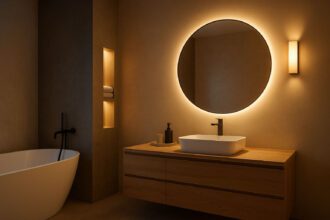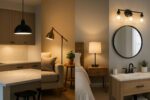
Bathroom wall lighting is often used to soften the overall feel of a bathroom and reduce the reliance on ceiling lights alone. When positioned thoughtfully, wall lights add visual depth and help balance brightness, particularly in spaces where tiled surfaces and downlights can feel harsh.
Homeowners often want bathroom lighting that feels warmer without compromising practicality or safety. This article explores how wall lighting can be used to add character and visual interest in UK bathrooms, with examples of common layouts, suitable fitting types, and key considerations to keep in mind.
This guide focuses on one specific aspect of bathroom lighting design. For full room planning, layout, and safety zones, see our complete Bathroom Lighting Guide.
Table of Contents
1. Why Bathroom Wall Lighting Matters
Wall lights sit closer to eye level than ceiling fittings, which helps soften shadows and create a more even distribution of light. In bathrooms, this can make the space feel more balanced and less clinical, especially in the evening.
In recent UK bathroom refurbishments we have seen, wall lighting is often added after homeowners find that ceiling downlights alone feel too bright at night.
Wall lighting can:
- Make a bathroom feel instantly warmer
- Add a more considered, finished look
- Boost evening relaxation vibes
- Balance the brightness from ceiling downlights
- Highlight texture and tile detail
They’re not just decorative – they’re functional mood-makers.
> Guide to Bathroom Wall Lighting Ideas
2. Sconces – The Flattering Glow Makers
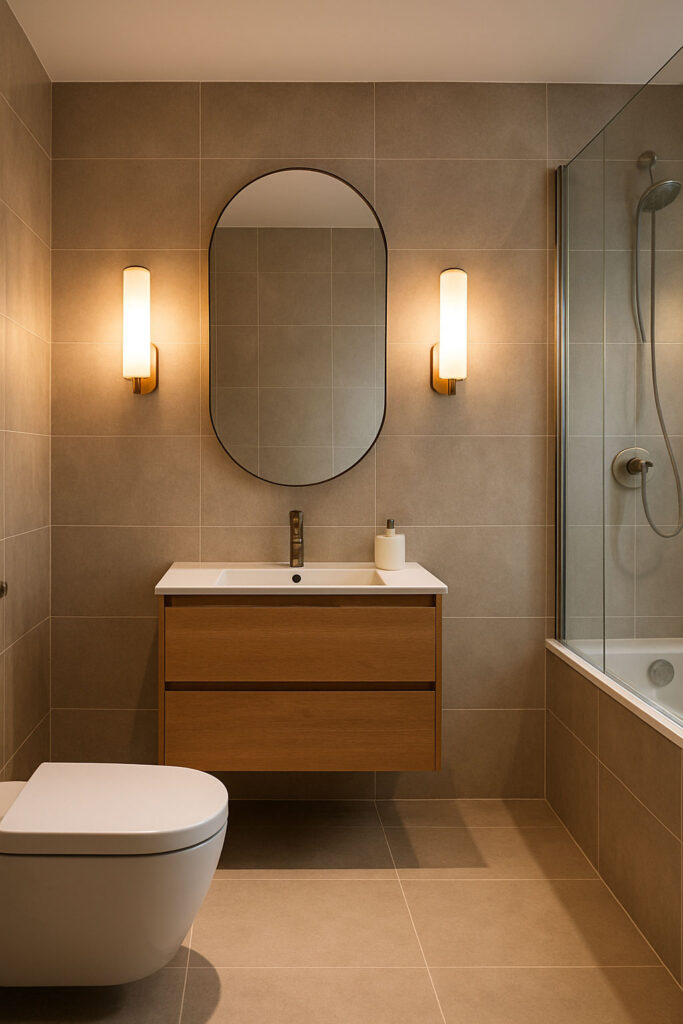
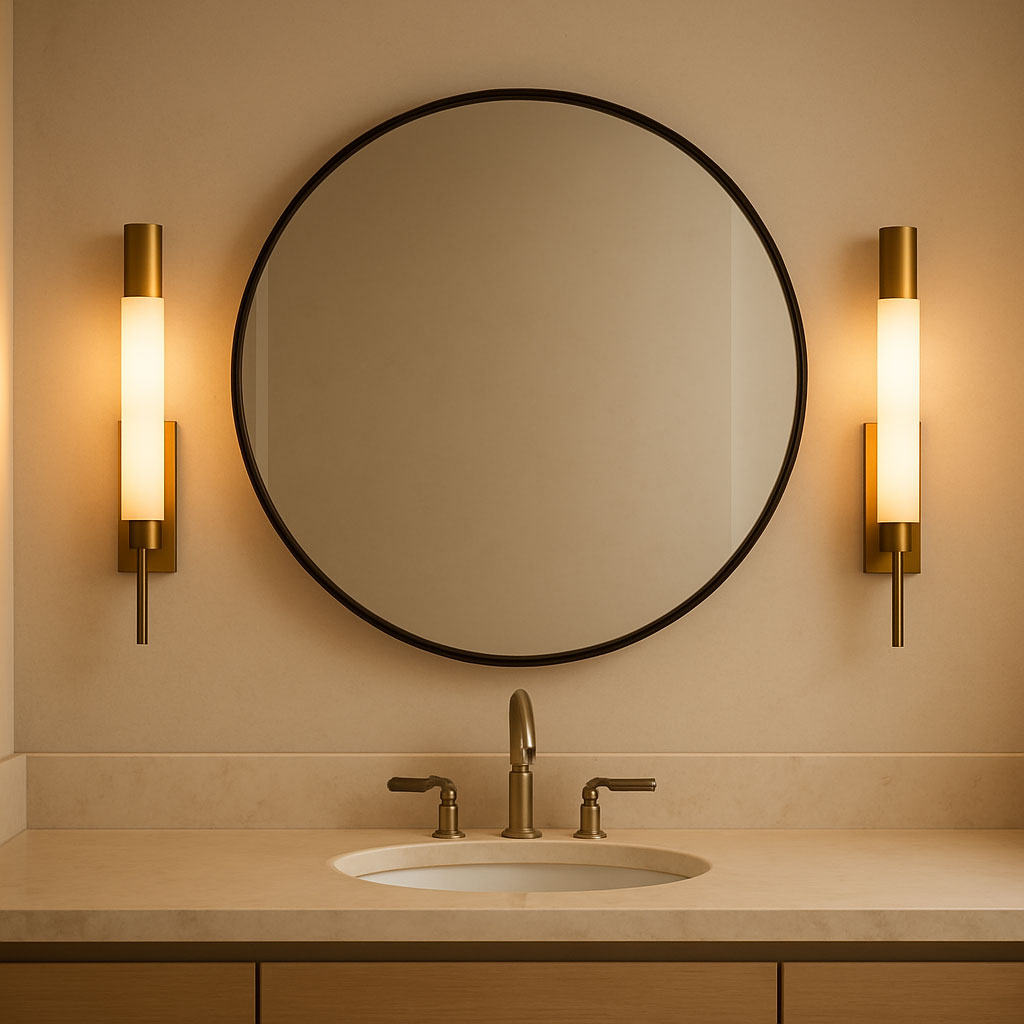
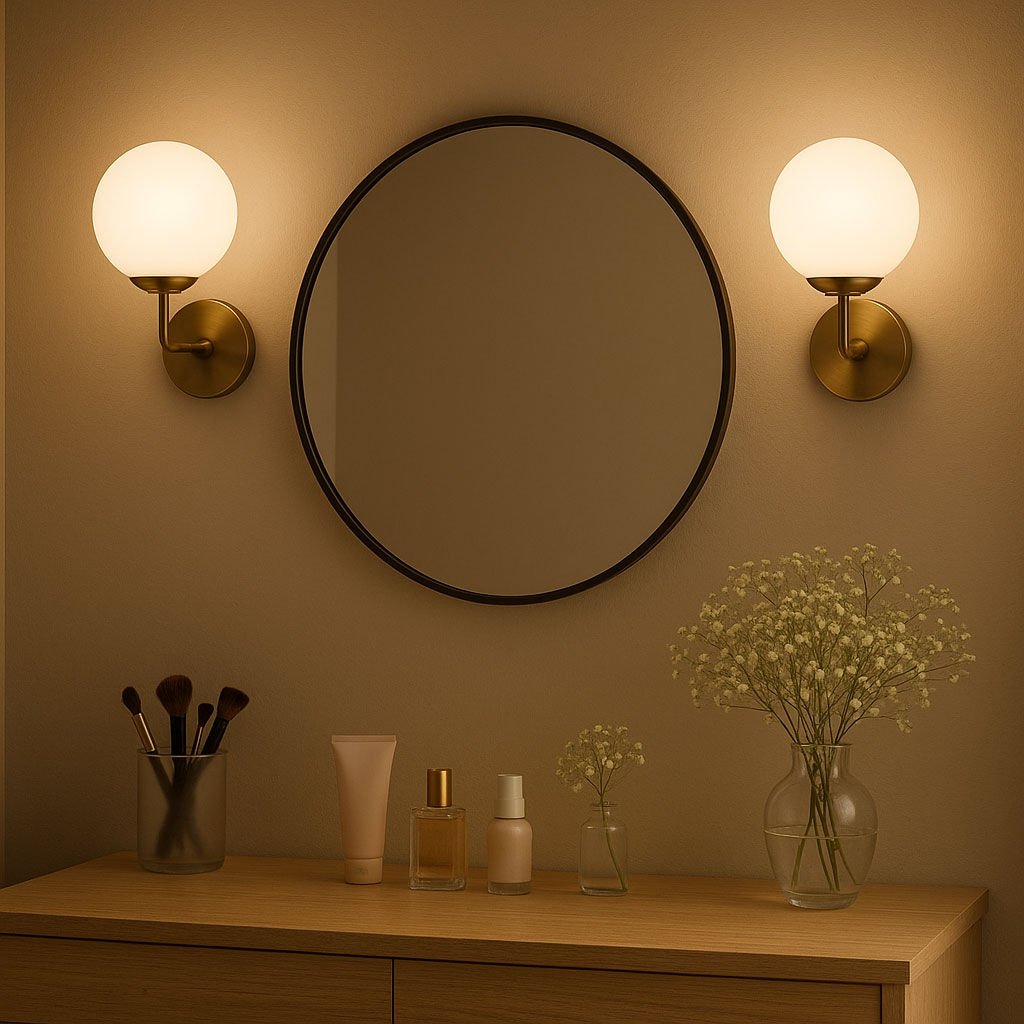
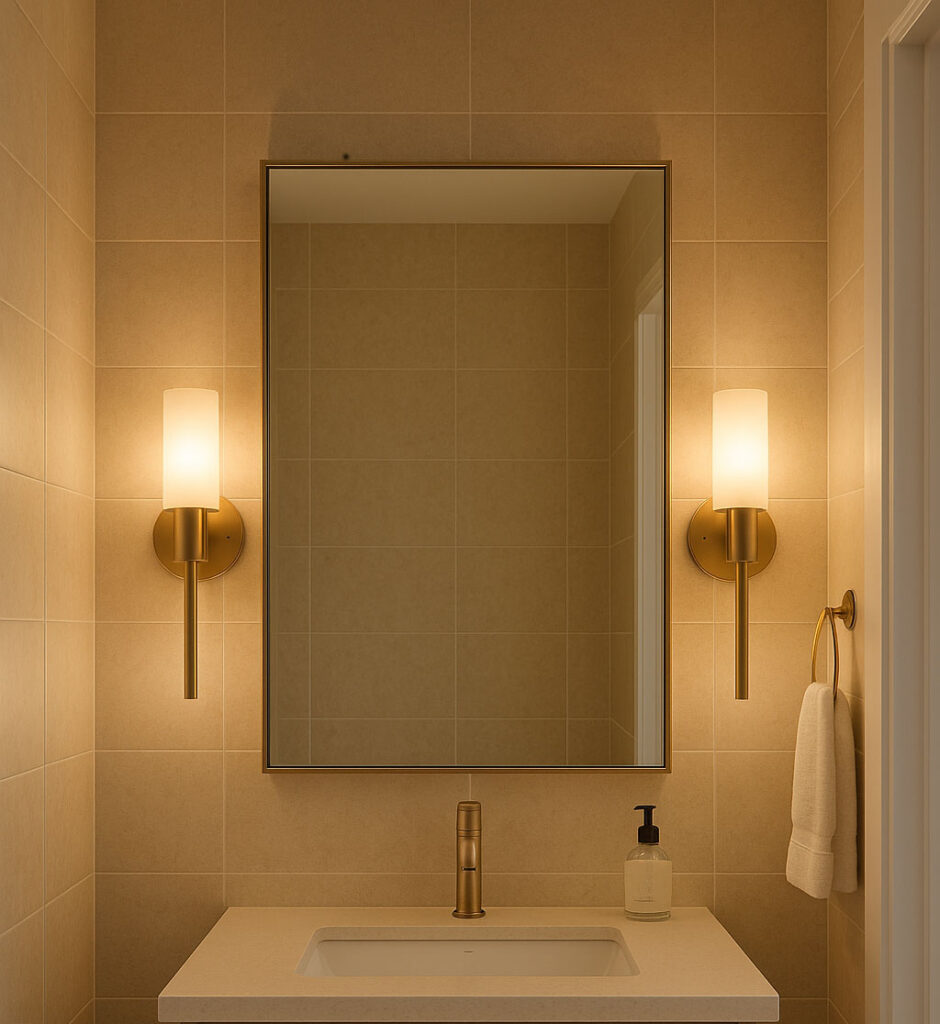
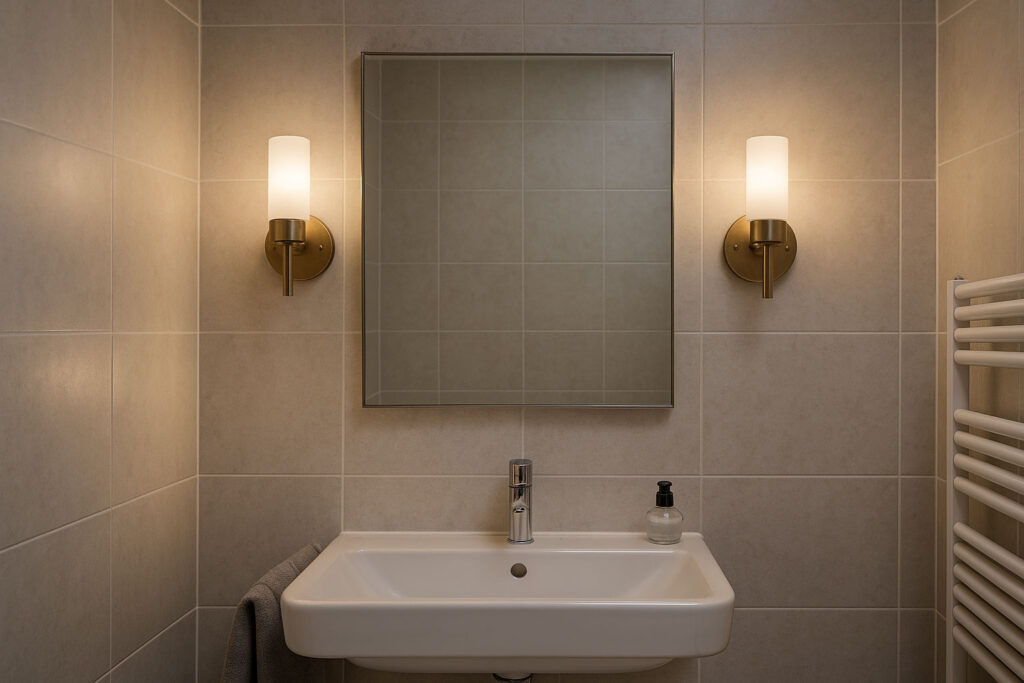
Wall sconces are beautiful around mirrors and basins. They produce soft, even lighting across your face, perfect for shaving, makeup and skincare.
Types of sconces that work well:
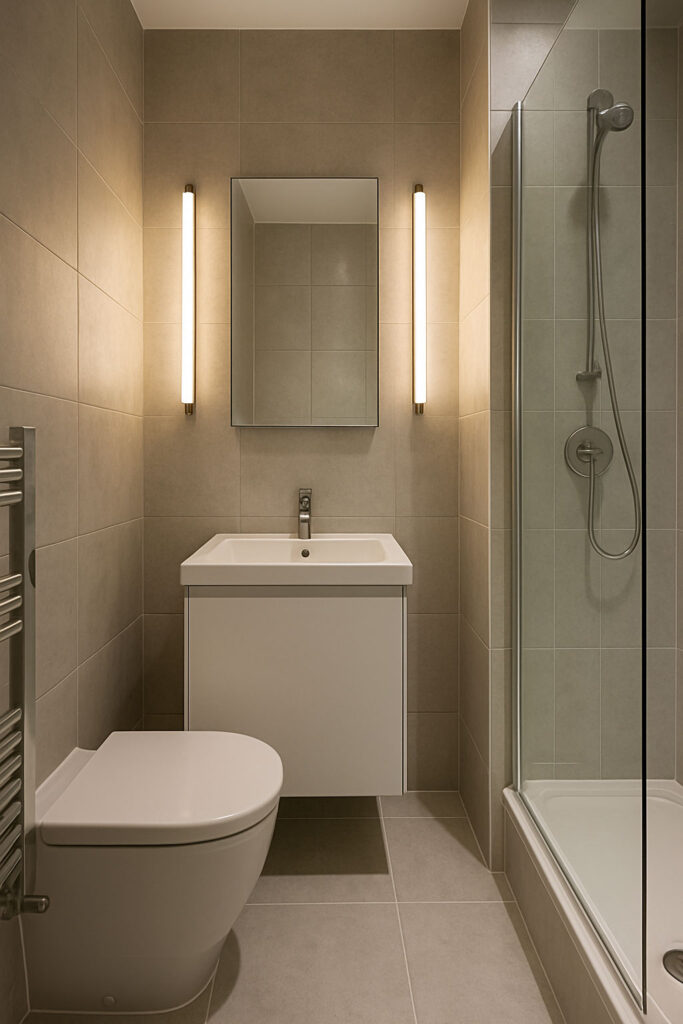
- Vertical bar sconces
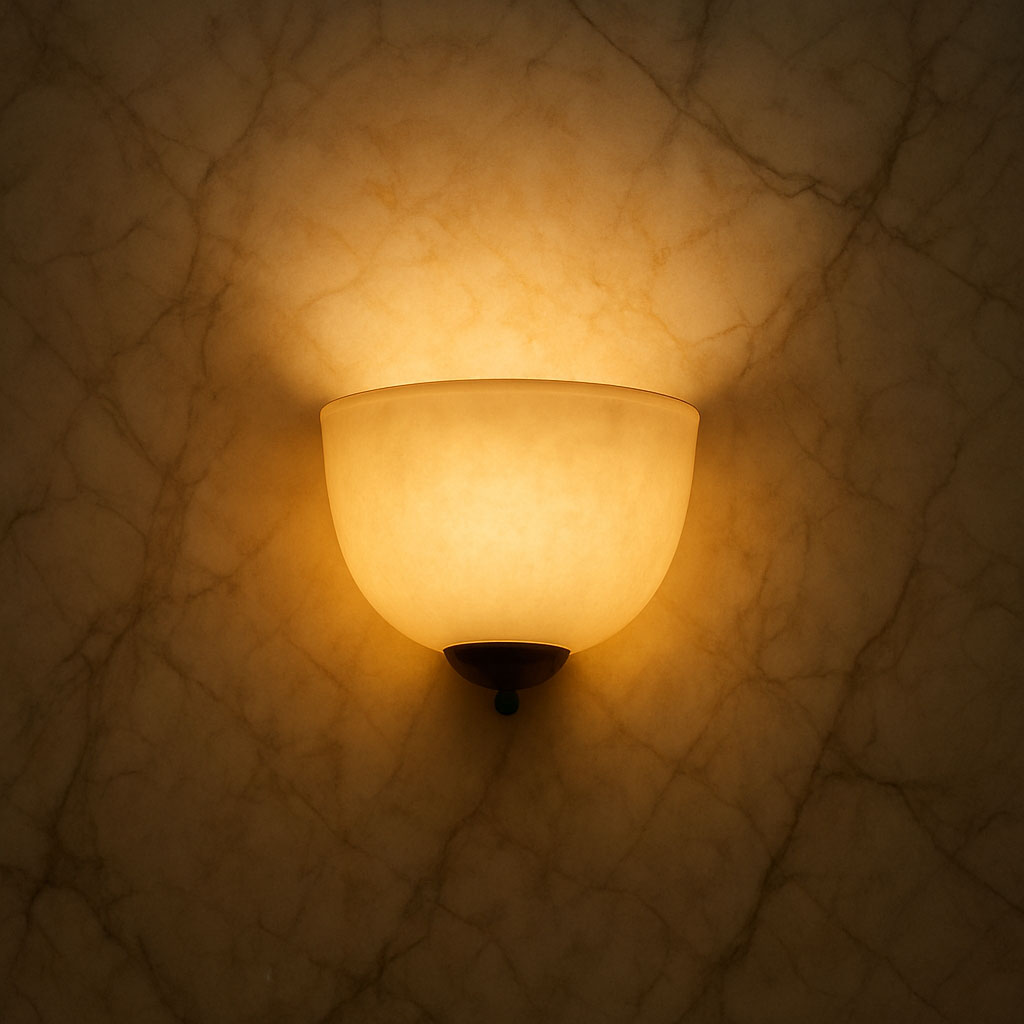
Slim, modern and ideal for either side of a mirror. - Opal glass globes
Diffuse light for a calm, soft glow. - Dual-light sconces
Throw light upwards and downwards at once.
Why side sconces are flattering:
- Light falls across the face evenly
- No harsh shadows under eyes or neck
- Elegant symmetry that elevates the whole bathroom look
Side-mounted sconces distribute light more evenly across the face, which is why they are commonly used around mirrors.
If you’re unsure which colour tone feels best in a bathroom, our guide to warm vs cool lighting explains it simply
> Guide to warm vs cool lighting
3. Up/Down Wall Lights for Height & Drama
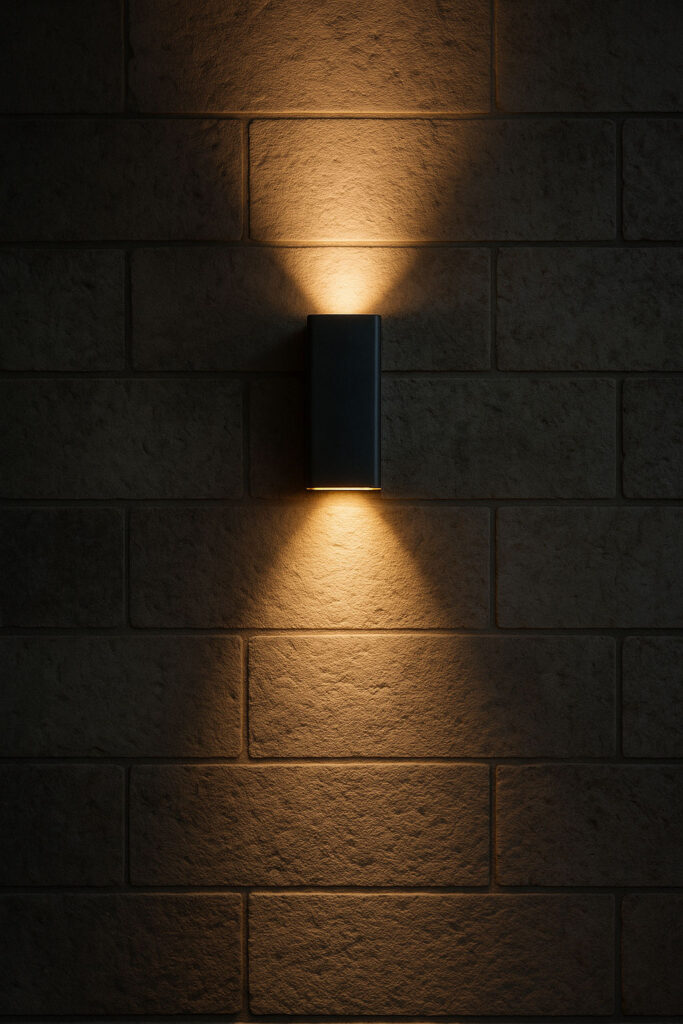
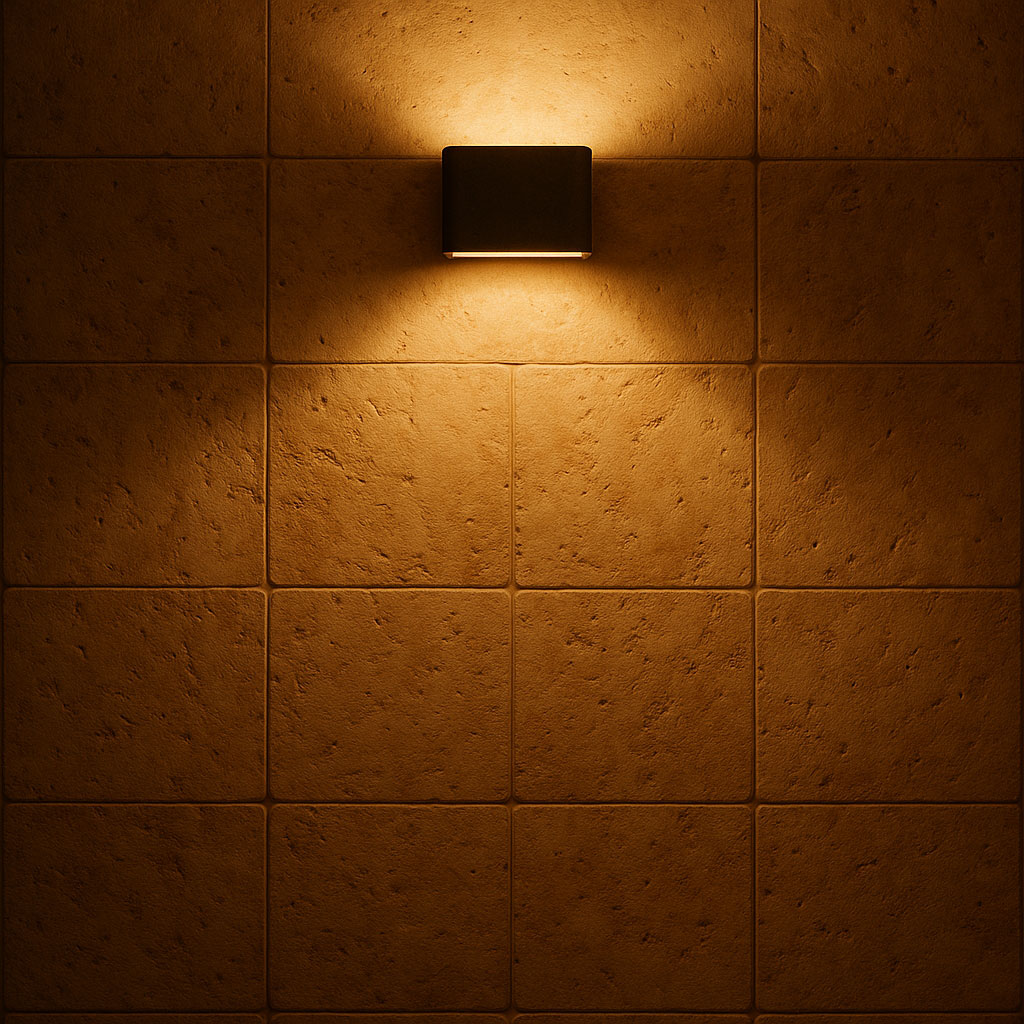
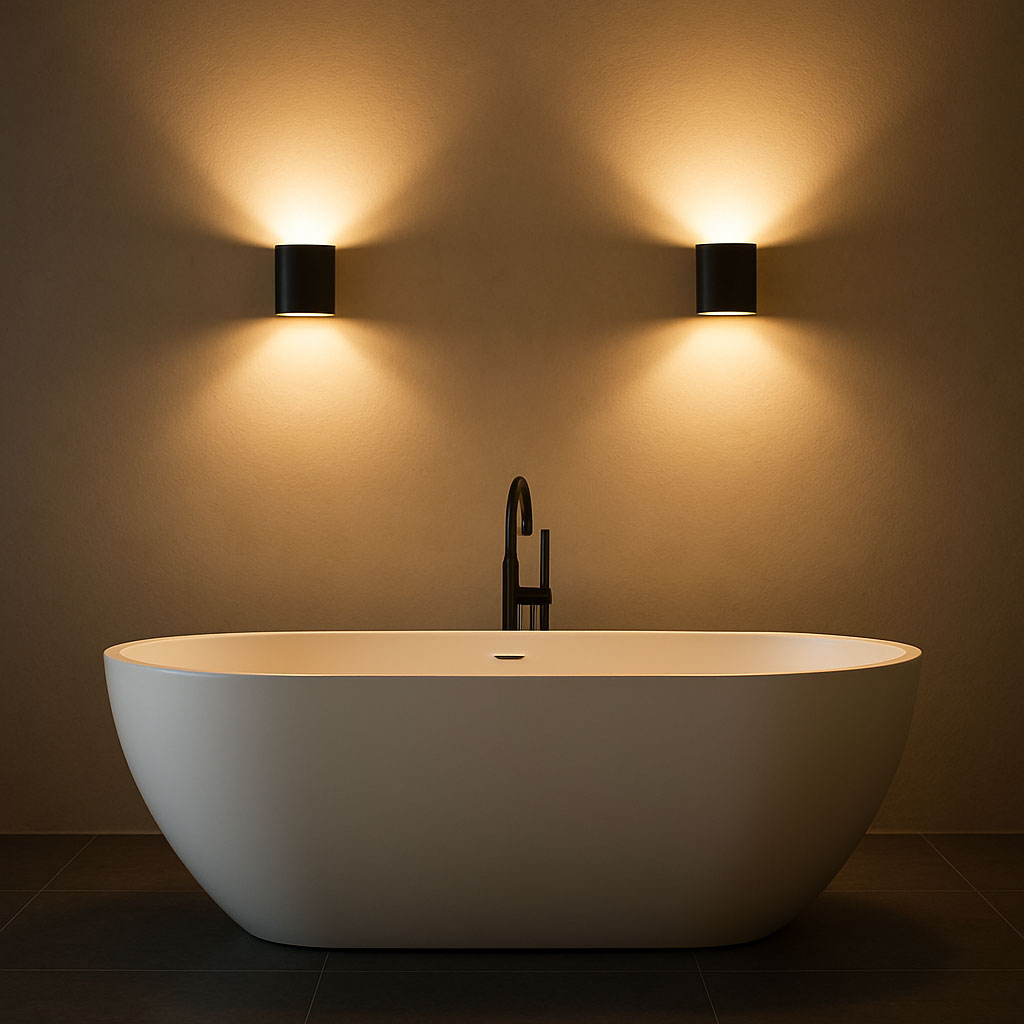
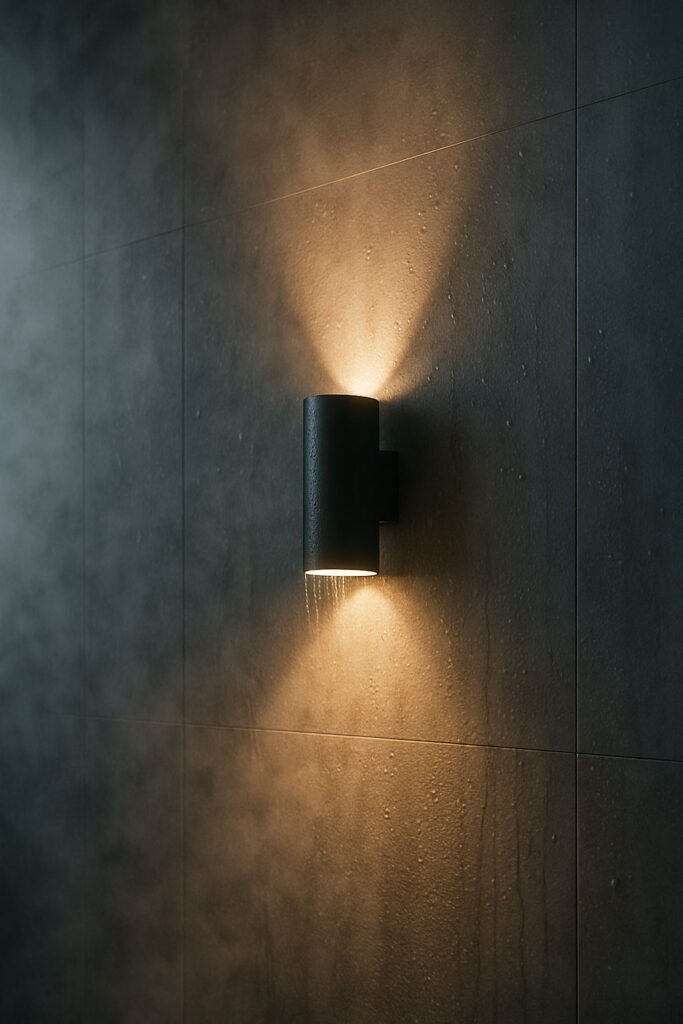
Up/down lights beam light both upwards and downwards, creating dramatic shadow patterns and adding height to the room – especially useful in smaller or lower ceiling UK bathrooms.
Benefits:
- Makes bathroom ceilings look higher
- Creates a calm, relaxing gradient of light
- Adds visual interest without clutter
- Perfect on feature tile walls
Great placements:
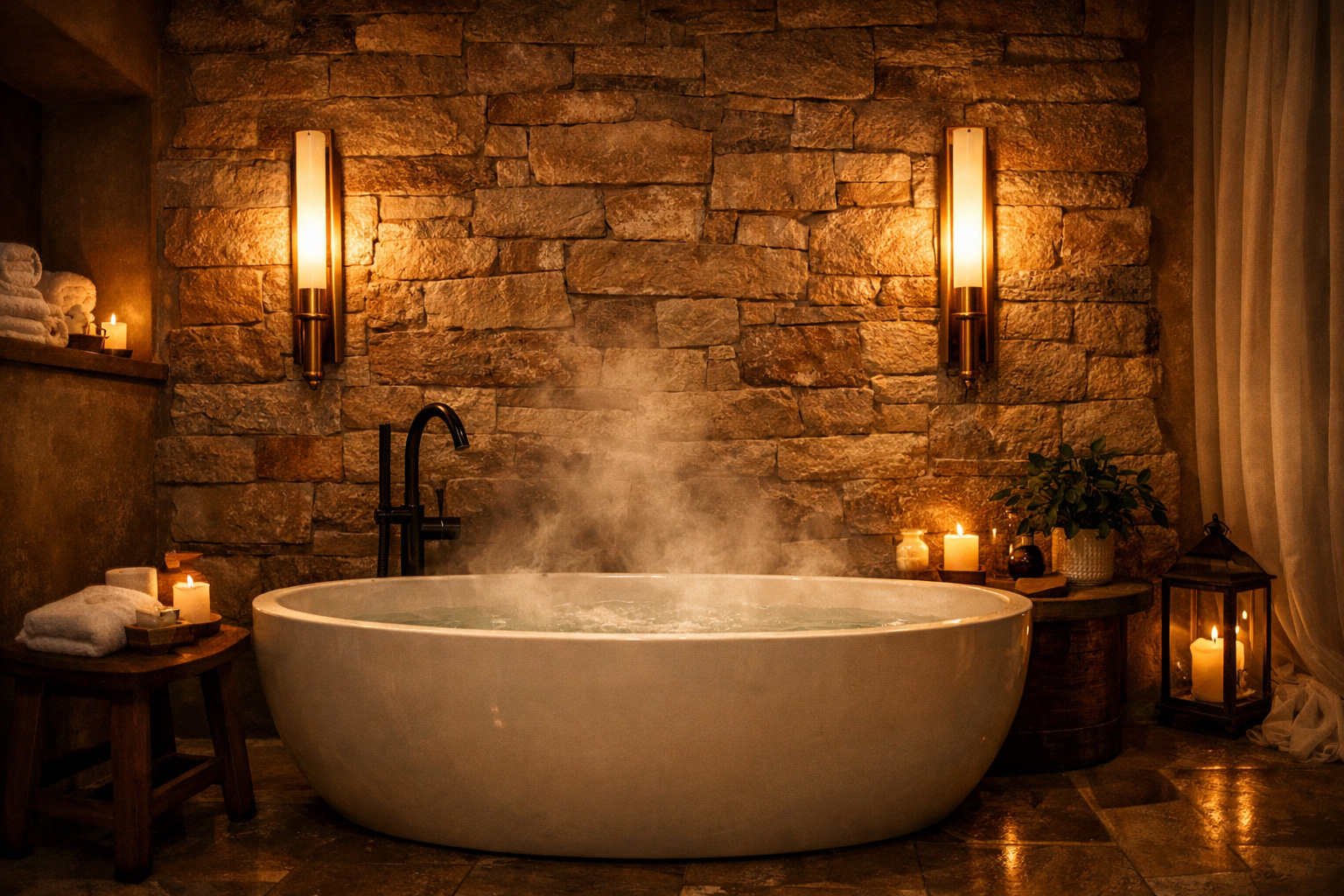
- Behind a freestanding bath
- Beside a textured tile wall
- Near a walk-in shower entrance
- Flanking a statement mirror
Up and down lights are best used on feature walls or where ceiling height needs visual emphasis, rather than as primary task lighting.
4. Soft Diffused Wall Lights for Spa Ambience
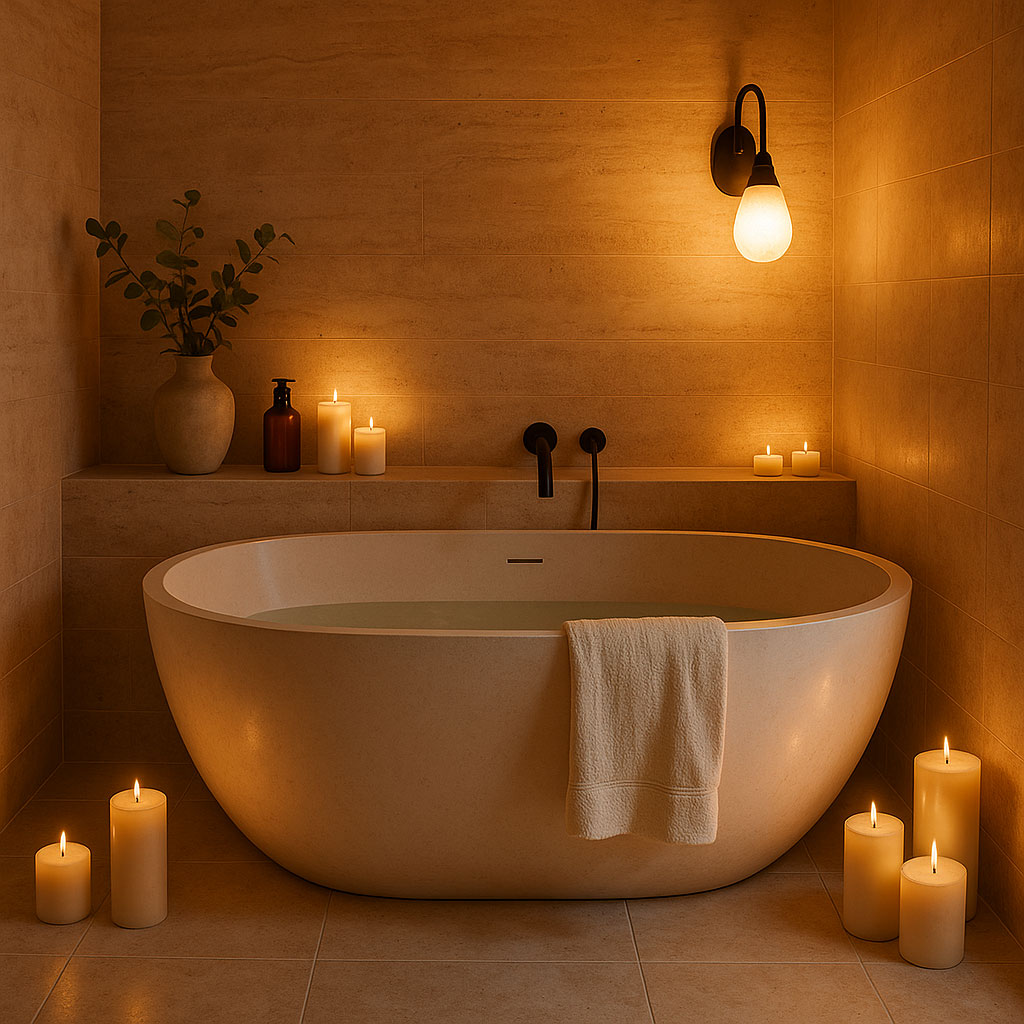
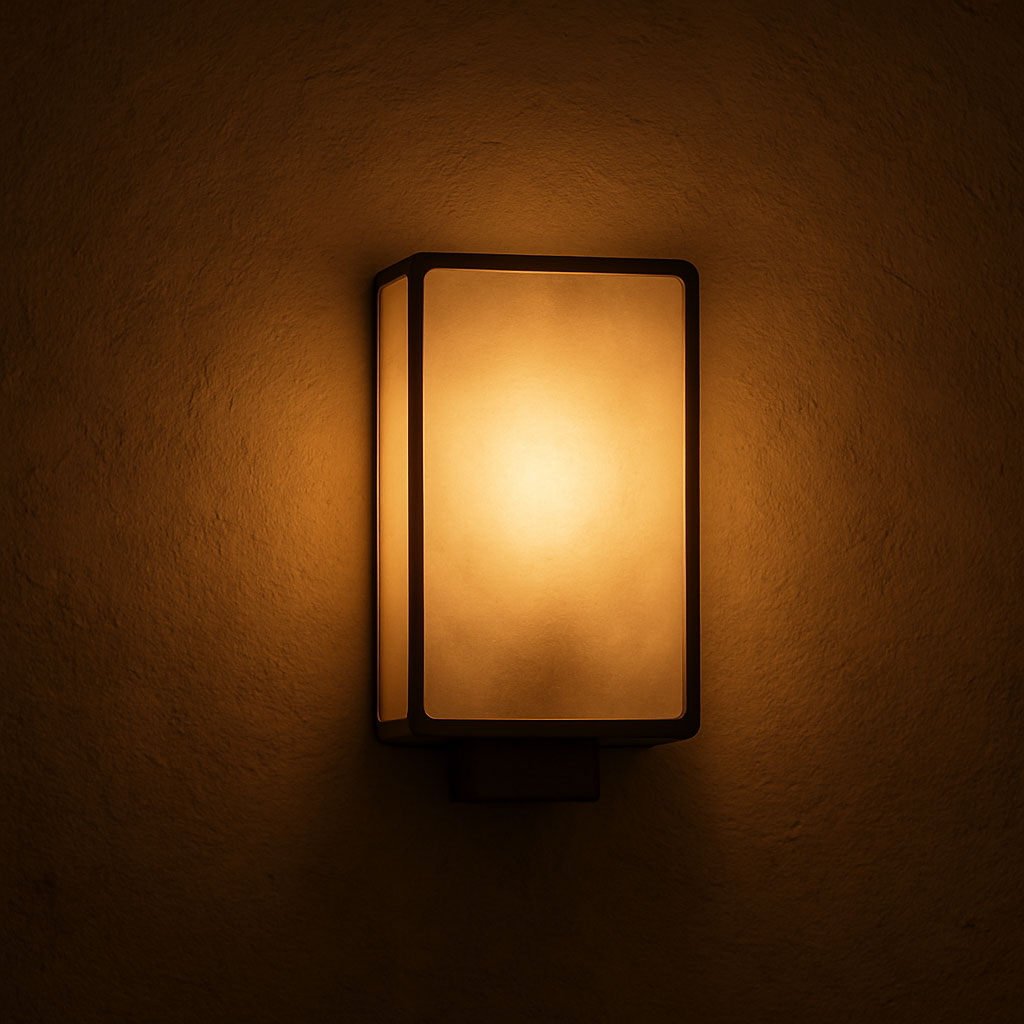
If you want your bathroom to feel like a spa retreat, diffused wall lighting is your best friend. These fixtures use frosted glass, fabric-style diffusers, or integrated LEDs to create a soft, cloud-like glow.
Diffused wall lights reduce contrast from downlights and soften reflective surfaces such as tiles and mirrors.
Perfect for:
- Evening baths
- Relaxation routines
- Offseting harsh downlights
- Softening tiled surfaces
Choose warm white LEDs (2700–3000K) to avoid the cold, blue light that makes bathrooms feel clinical or uninviting.
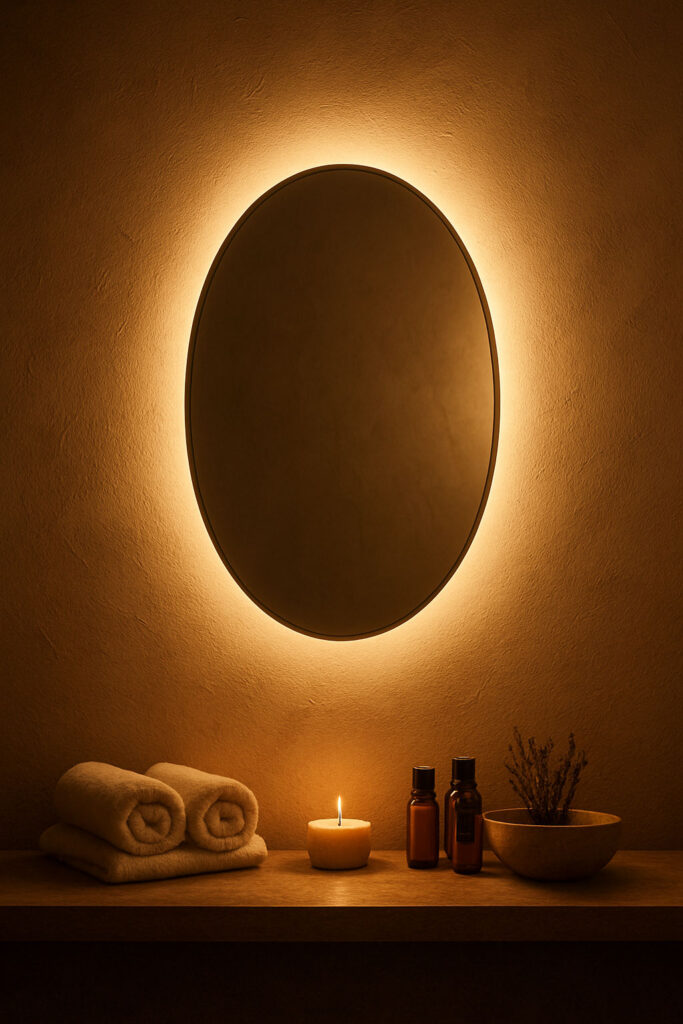
Pair diffused wall lights with a backlit mirror and your bathroom becomes a sanctuary.
> Guide to Bathroom Lighting Layouts
5. Practical UK Spacing & IP Rating Tips
Because this is a bathroom – safety matters just as much as style.
IP Ratings to follow:
Zone 0 (inside bath/shower): No wall lights here.
Zone 1 (above bath/shower): IP65 minimum
Zone 2 (near sinks, baths): IP44 minimum – Perfect for sconces near mirrors.
Outside zone: Standard or IP-rated fittings – Better durability in steamy rooms.
One common mistake is choosing decorative fittings that do not meet the required IP rating for their location.
Spacing tips:
- Place sconces at eye level (approx. 150–160cm)
- Keep around 10cm from mirror edge
- Avoid placing them too close to the ceiling — can look cramped
External approved safety source:
> Electrical Safety First
https://www.electricalsafetyfirst.org.uk/guides-and-advice/electrical-items/bathroom-electrics/
6. Room-by-Room Wall Lighting Ideas
Different bathrooms need different vibes – here’s what works beautifully:
Small Bathroom
- Use one or two sconces to add softness
- Keep shapes slim + vertical to save visual space
- Pair with perimeter LEDs for extra height
Ensuite
- Twin sconces for symmetrical elegance
- Warm white tones for cosy early mornings
- Combine with mirror backlight for extra calm
Family Bathroom
- One wall light paired with ceiling downlights
- Practical during morning rush
- Dim for bedtime bath routines
Wet Room
- Use IP65-rated up/down lights
- Highlight feature tile wall
- Creates subtle shadow effects when used in steamy environments.
> Helpful companion article: /ideas/bathroom-lighting-layouts/
FAQs
Are wall lights necessary in a bathroom?
Not essential, but they add warmth and balance – especially at night.
Do wall lights replace downlights?
No. They complement them for ambience and clarity.
Warm or cool light for wall fixtures?
Warm (2700–3000K) is much more flattering.
Can I install wall lights near the shower?
Yes – if IP65 rated and placed safely.
Do wall lights work in small bathrooms?
Absolutely. They add height and softness without taking floor space.
Conclusion
Bathroom wall lighting can add visual interest and soften the overall feel of a space when planned carefully. By choosing suitable fittings, positioning them correctly, and following UK safety guidance, wall lights can work alongside ceiling lighting to improve balance and comfort.
Considering layout, light output, and maintenance access early will usually lead to better long-term results.