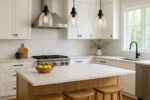
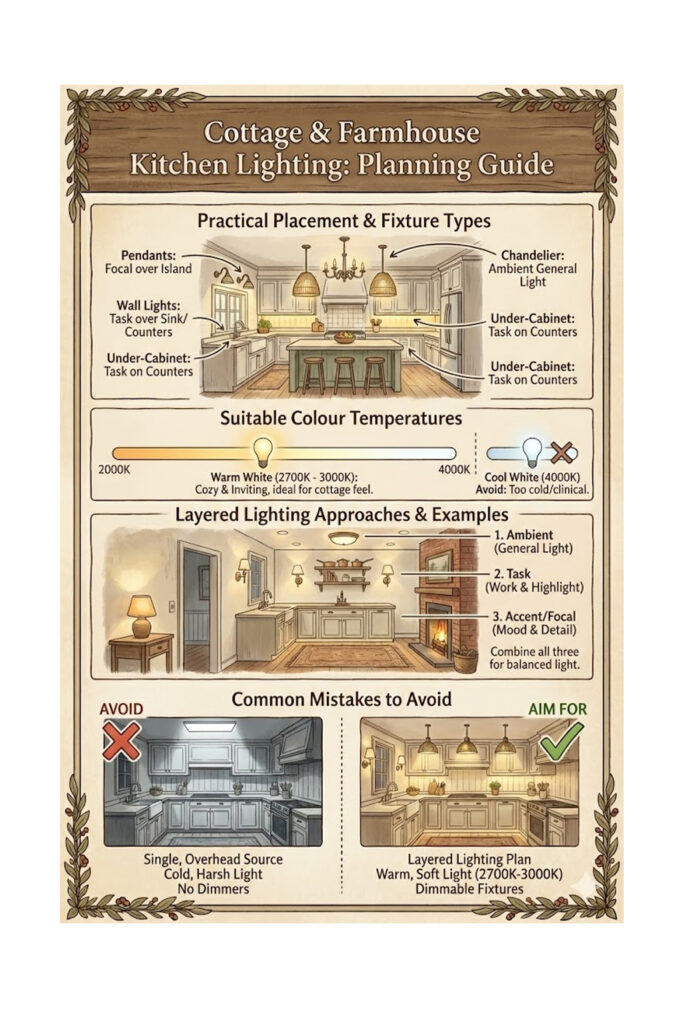
Cottage and farmhouse kitchens typically use warmer, softer lighting to complement traditional materials and finishes. Rather than relying on bright central fixtures, lighting is usually layered to support both everyday tasks and lower-level ambient use.
This guide explains how lighting is commonly planned in cottage and farmhouse kitchens, focusing on colour temperature, fixture placement, and practical layering rather than decorative styling.
This article explores lighting from a style and inspiration perspective. For technical layout, brightness, and placement guidance, see our main kitchen lighting guide.
Table of Contents

If you are planning a full kitchen refresh, this guide to kitchen lighting inspiration helps you see the bigger picture.
Characteristics of Cottage and Farmhouse Kitchen Lighting
This style is all about warmth and softness – never harsh light.
Think:
- Natural timber + grain
- Cream ceramics + glazed clay
- Warm golden CCT (2700K–3000K)
- Lamps, pendants, sconces — not just spots
- Patina + softness over shine
- Ambient glow layered with task function
Cottage and farmhouse lighting prioritises warmer colour temperatures and softer light distribution.
This contrasts with modern kitchens, which often rely on higher brightness and cooler tones.

Colour Temperature in Cottage Kitchens
Cooler colour temperatures are less commonly used in cottage and farmhouse kitchens.
The warmth you want is:
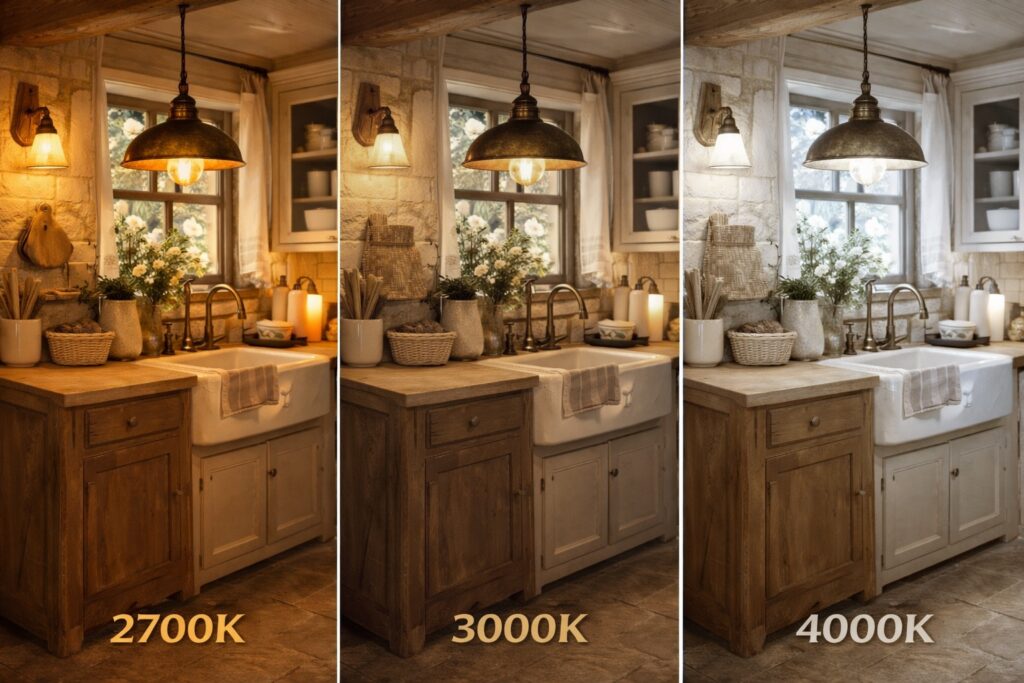
2700K for evenings & ambience
2700K is commonly used for ambient and evening lighting in cottage kitchens.
3000K for everyday use
Warm but slightly brighter
3000K is often used for general tasks where slightly higher brightness is needed.
4000K is less commonly used in traditional kitchen styles.
Explore the science here if needed – /guides/colour-temperature/
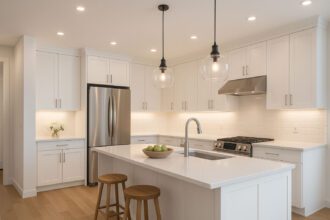
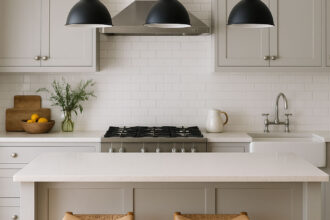
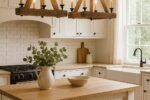
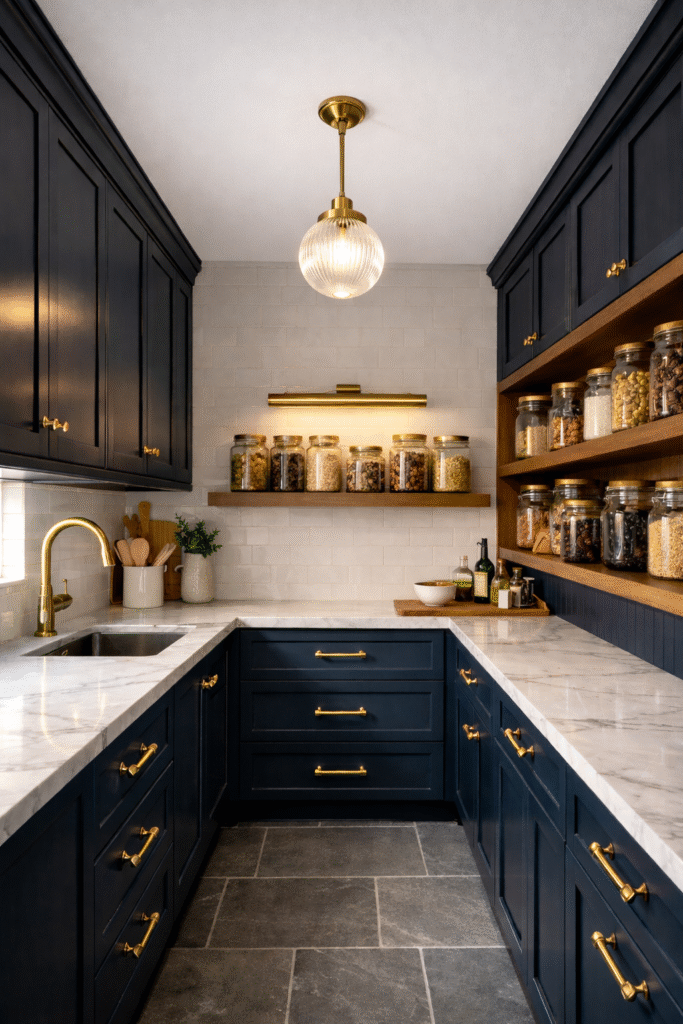
1) Pendant Lighting – Your Cottage Centrepiece
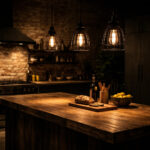
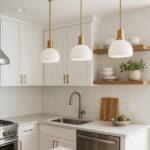
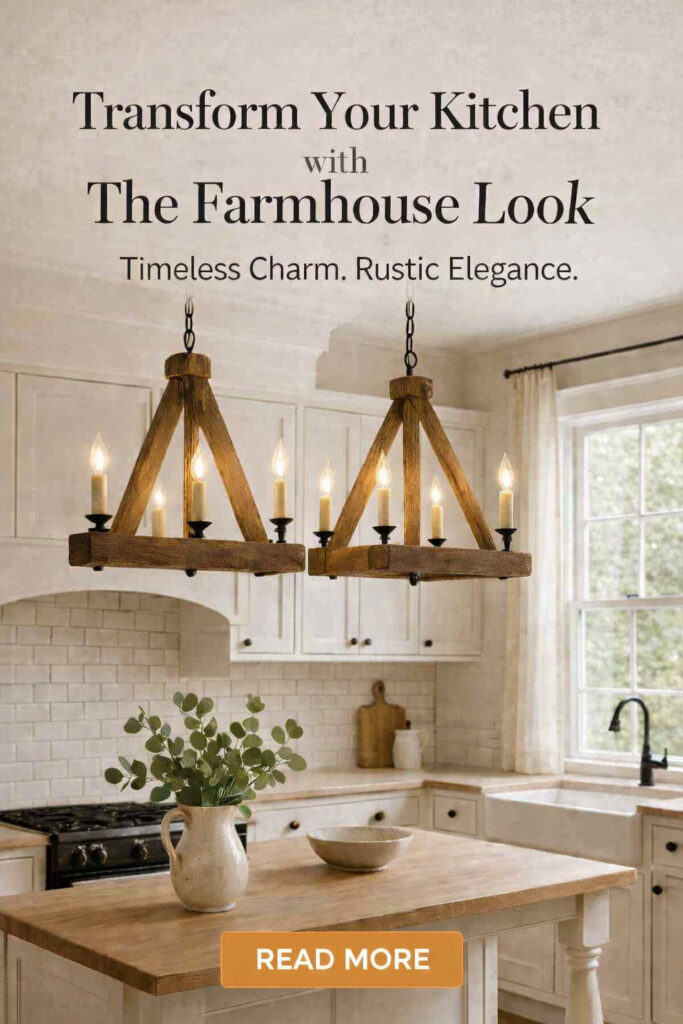
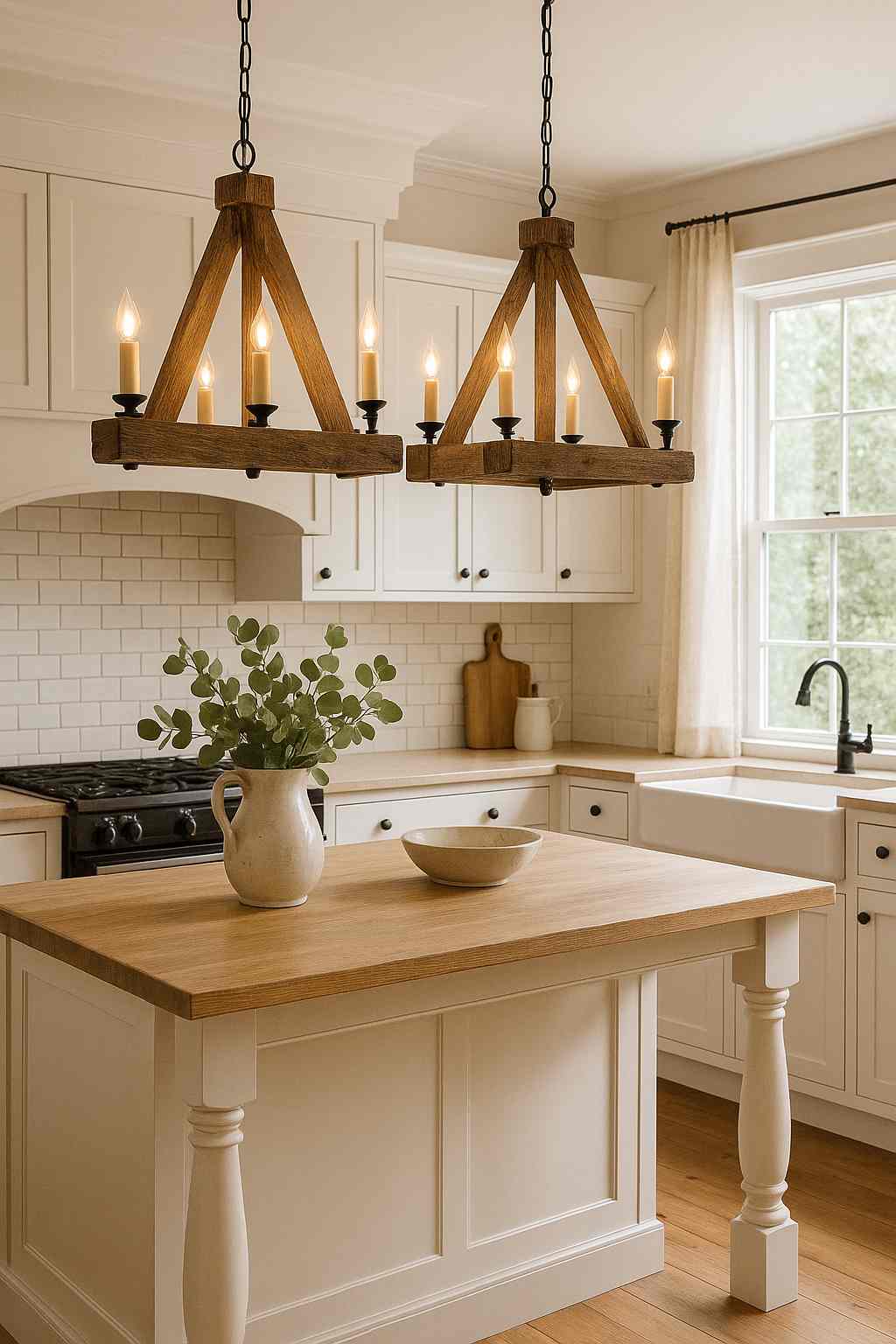
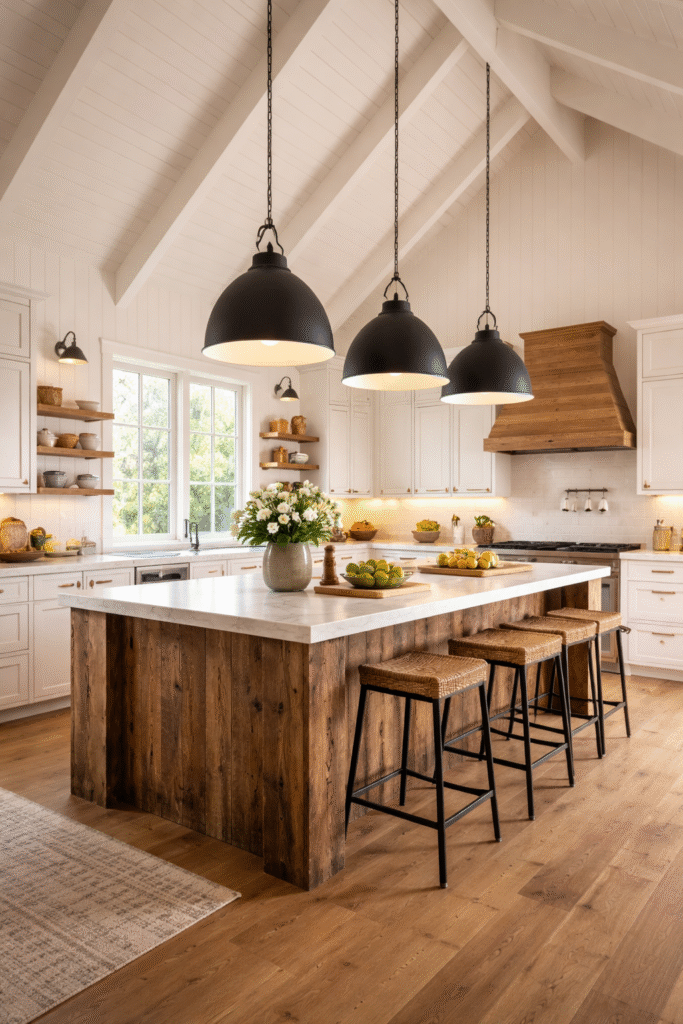
Pendants often act as focal lighting elements in cottage kitchens.
Best pendant styles for cottage kitchens:
- Ribbed or milk glass
- Wooden/linen shade pendants
- Aged brass or antique-look metal
- Ceramic bell pendants
- Warm frosted diffused glass
If you want to see all of these principles applied to one real room, Enso Lighting’s 7 Steps to Perfect Cottage Kitchen Lighting walks through a full layout step by step — and their hand-glazed Kiro ceramic wall lights are exactly the aged, tactile sort of fitting this style calls for.
Where to hang pendants:
- Over the island or butcher’s block
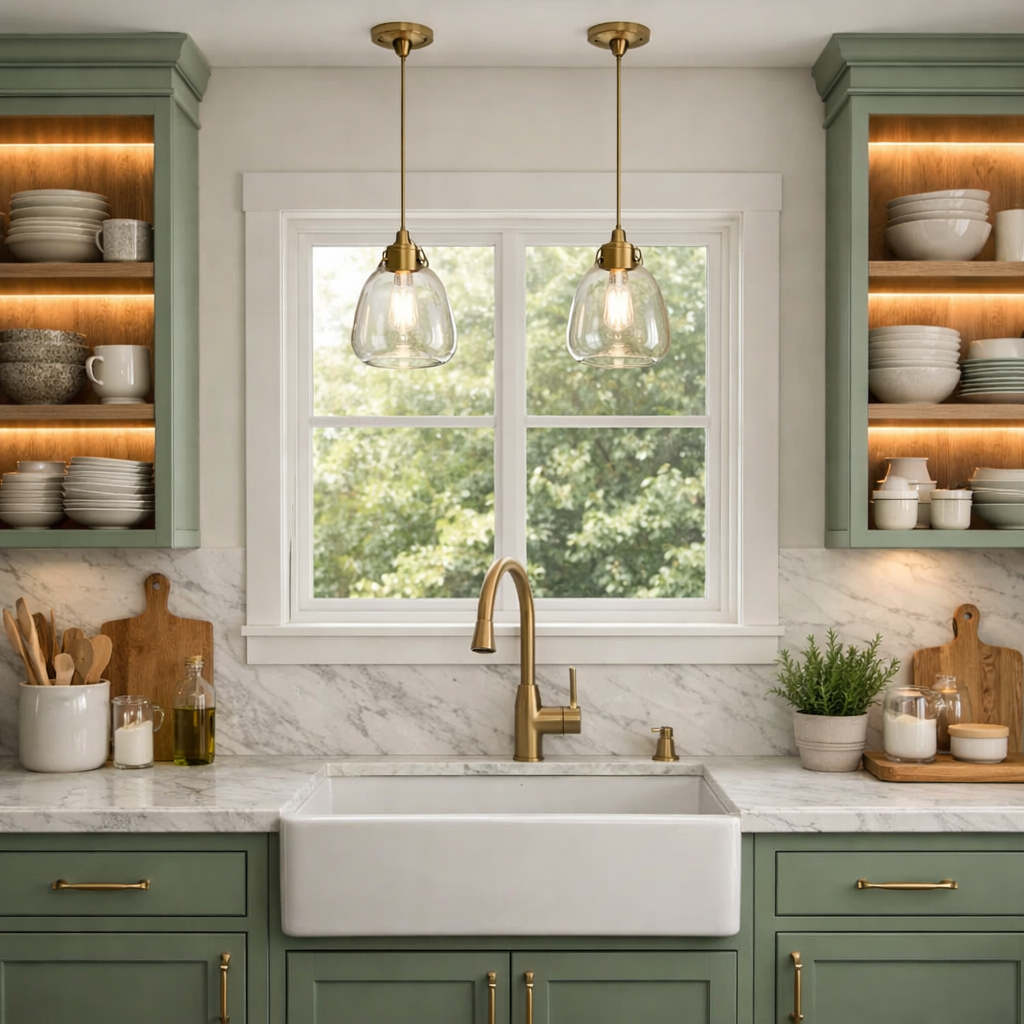
- Above the farmhouse sink
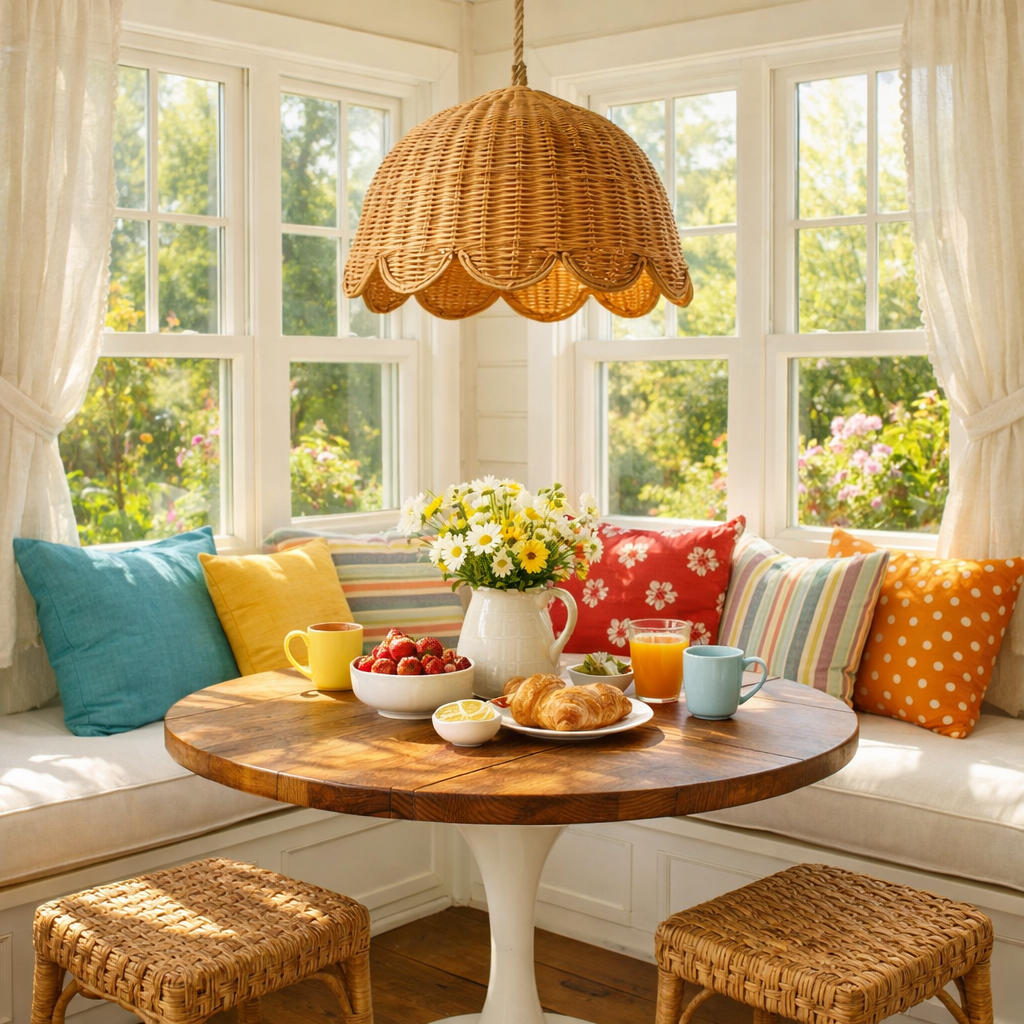
- Over a table or breakfast nook
Height guideline: 70–90cm above surfaces, adjusted based on table height and sightlines.
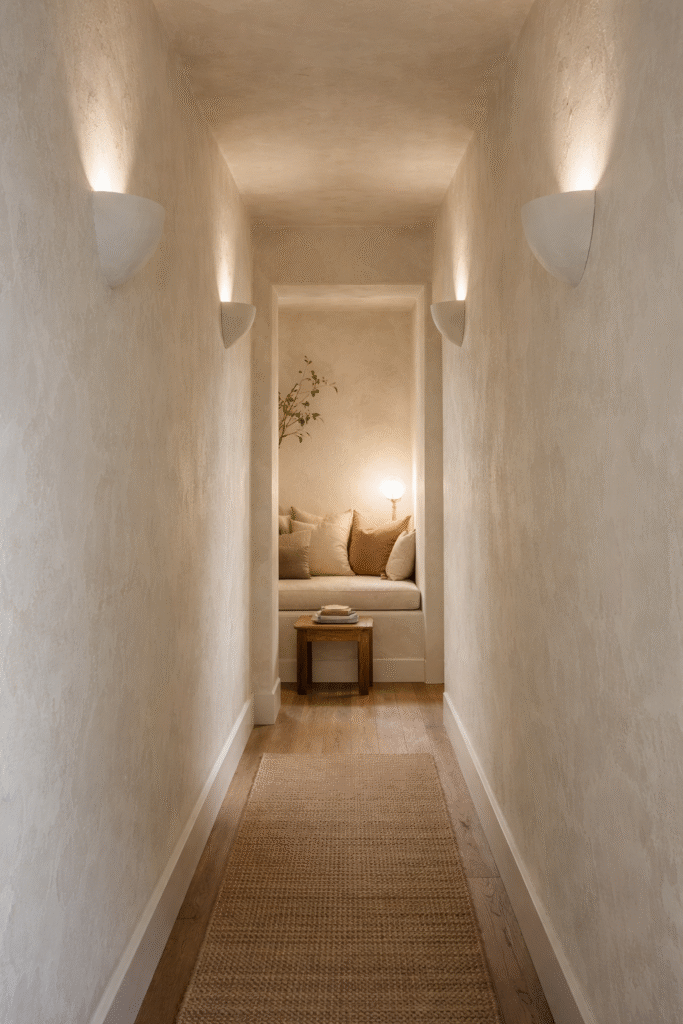
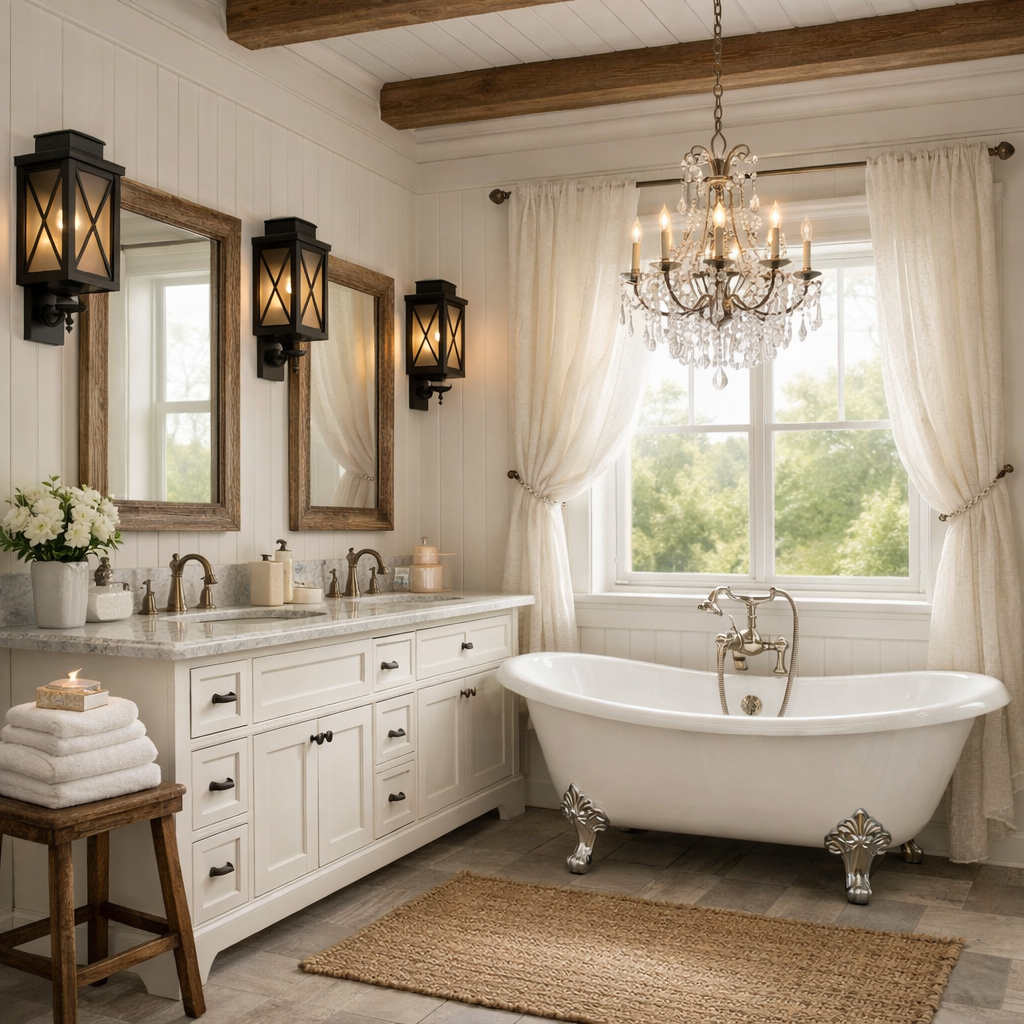
2) Wall Lights + Sconces – Rustic Atmosphere Layer
Wall lights provide additional ambient lighting and help reduce reliance on ceiling fixtures.
Best places to mount wall sconces:
- Beside open shelving
- Above a plate rack
- Over a coffee corner
- Flanking the range cooker
- Near a feature wall or dresser
Styles that suit the cottage look:
- Candle-style wall lamps
- Fabric shades
- Antique brass arms
- Timber accents
- Pleated linen drums
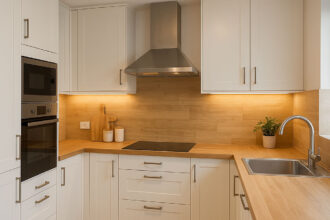
3) Warm Under-Cabinet Lighting – Task and Ambient Use
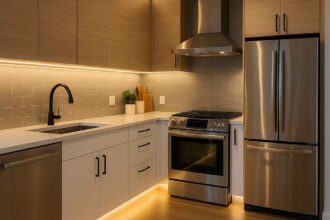
Cottage and farmhouse lighting is typically characterised by warmer colour temperatures, diffused light sources, and multiple lighting layers. These elements help avoid harsh contrast and support traditional materials such as timber, ceramics, and painted finishes.
LED strips make worktops appear bright but gentle.
Best specifications:
- 2700K–3000K
- Soft diffusion — no hot spots
- Run full length for even light
- Dimmable if possible
Placed 3–5cm back from cabinet front for perfect throw.

4) Plinth & Toe-Kick Lighting – Yes, Even Cottage Style
When used at low brightness levels, plinth lighting can provide subtle floor-level illumination in the evening.
Use low, soft light for:
- Low-level evening movement
- Reduced glare at floor level
- Visual separation between cabinetry and flooring
Brightness target: 50–150 lm/m only – subtle is key.
5) Ceiling Lights – Diffused and Warm
A central ceiling fixture is very cottage-coded if diffused and warm.
Choose:
- Frosted glass bowls
- Metal + opal dome combos
- Semi-flush linen or rattan
- Cream enamel farmhouse shades
Avoid cold chrome finishes or stark white LEDs, which are less commonly used in cottage kitchens.

6) Lamps in Kitchens
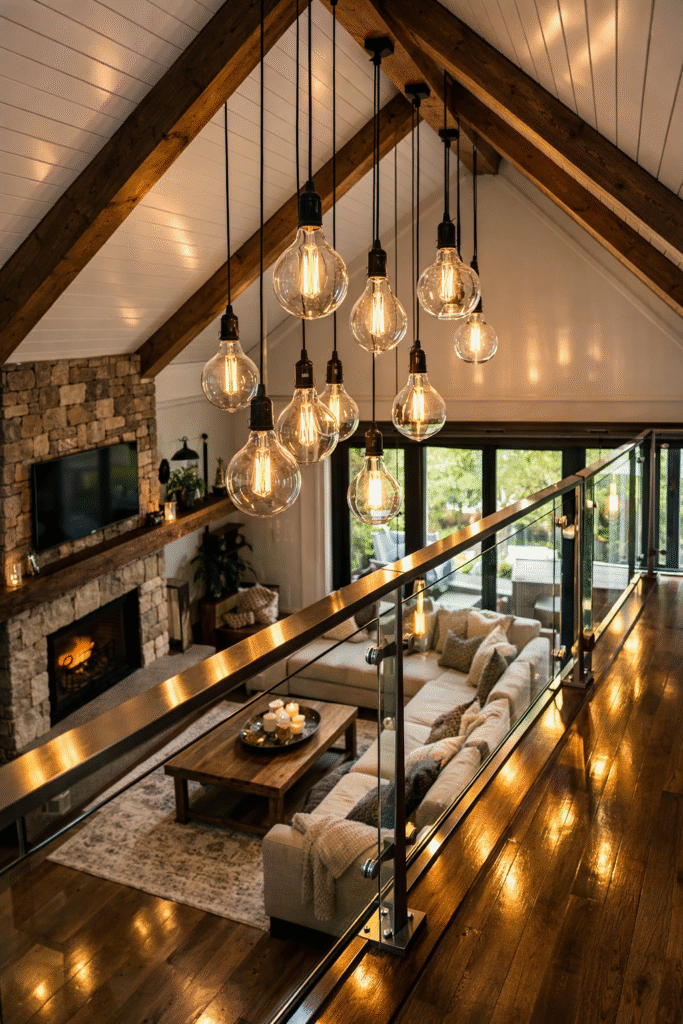
Table lamps are sometimes used as supplementary lighting in traditional kitchens.
Place one:
- On the counter near a tea tray
- On open shelves
- On a dresser or hutch
- Beside a fruit bowl in winter
2700K lamps are commonly used for evening lighting.

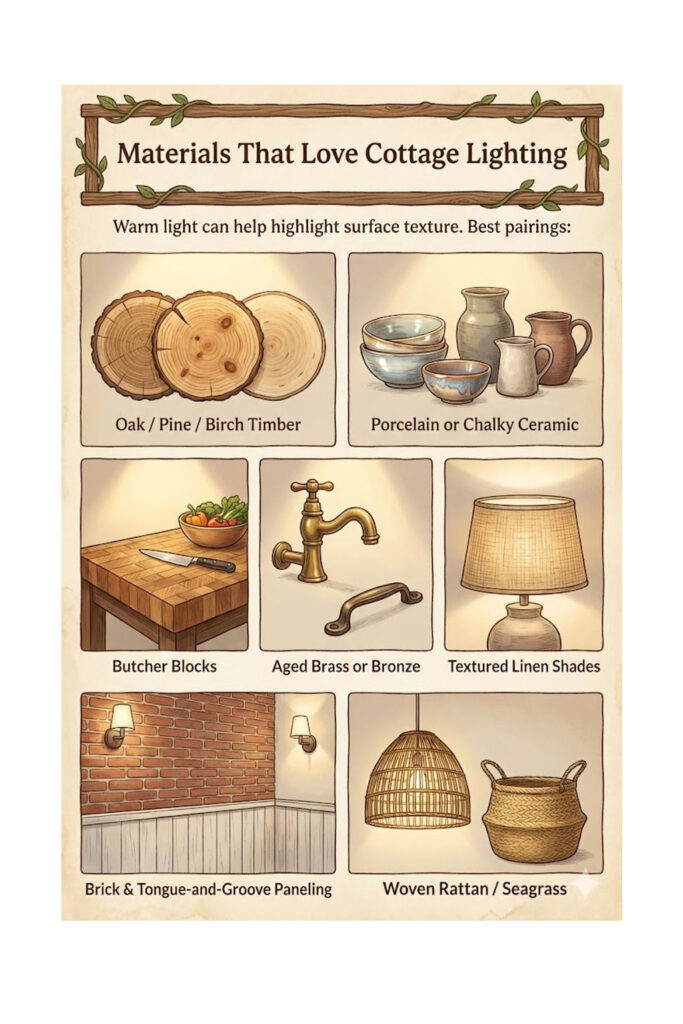
7) Materials That Love Cottage Lighting
Warm light can help highlight surface texture.
Best pairings:
- Oak / pine / birch timber
- Porcelain or chalky ceramic
- Butcher blocks
- Aged brass or bronze
- Textured linen shades
- Brick & tongue-and-groove paneling
- Woven rattan / seagrass
Handmade-style materials are commonly used in cottage kitchens.
Example Layered Lighting Plan
To light a cottage or farmhouse kitchen perfectly:
- Pendants → focal lighting
- Under-cabinet lighting → task lighting
- Wall lights → ambient lighting
- Lamps or plinth lighting → low-level evening lighting

Internal link back to the hub:
/ideas/kitchen-lighting/
Cottage Lighting Mistakes to Avoid
- Cool white LEDs can appear out of place in traditional kitchens.
- Only one central ceiling fixture
- Lack of dimming reduces flexibility.
- Bare bulbs with harsh glare
- Glossy chrome over warm metals
Maintaining appropriate colour temperature and diffusion helps preserve the intended style.
Quick Safety Notes
Safety considerations include:
- Fire-rated fittings for recessed lights
- IP ratings near sinks + taps
- Keep lamps clear of hob heat
- Drivers + transformers need airflow
Warm doesn’t mean unwise.
FAQ (People Also Ask)
What bulb colour suits cottage style best?
2700–3000K is commonly used in cottage kitchens. Warm, diffused LED strips are commonly used in traditional kitchens.
Do LED strips look too modern for farmhouse kitchens?
Not if they’re warm + diffused – they actually enhance rustic texture.
Are wall sconces essential?
Not essential, but often used to add additional ambient lighting.
Should pendants be bright or soft?
Soft and dimmable – not clinical task beams.
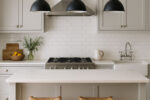
Can you mix black fixtures with farmhouse style?
Absolutely – black grounds softness and adds vintage weight.
Conclusion
Cottage and farmhouse kitchen lighting typically relies on warm colour temperatures and layered light sources rather than high overall brightness. Combining pendants, wall lights, task lighting, and low-level illumination helps maintain usability while supporting traditional kitchen styles.
Planning lighting layers carefully ensures the space remains practical throughout the day without relying on harsh or overly modern fittings.
Return to your pillar anytime:
/ideas/kitchen-lighting/