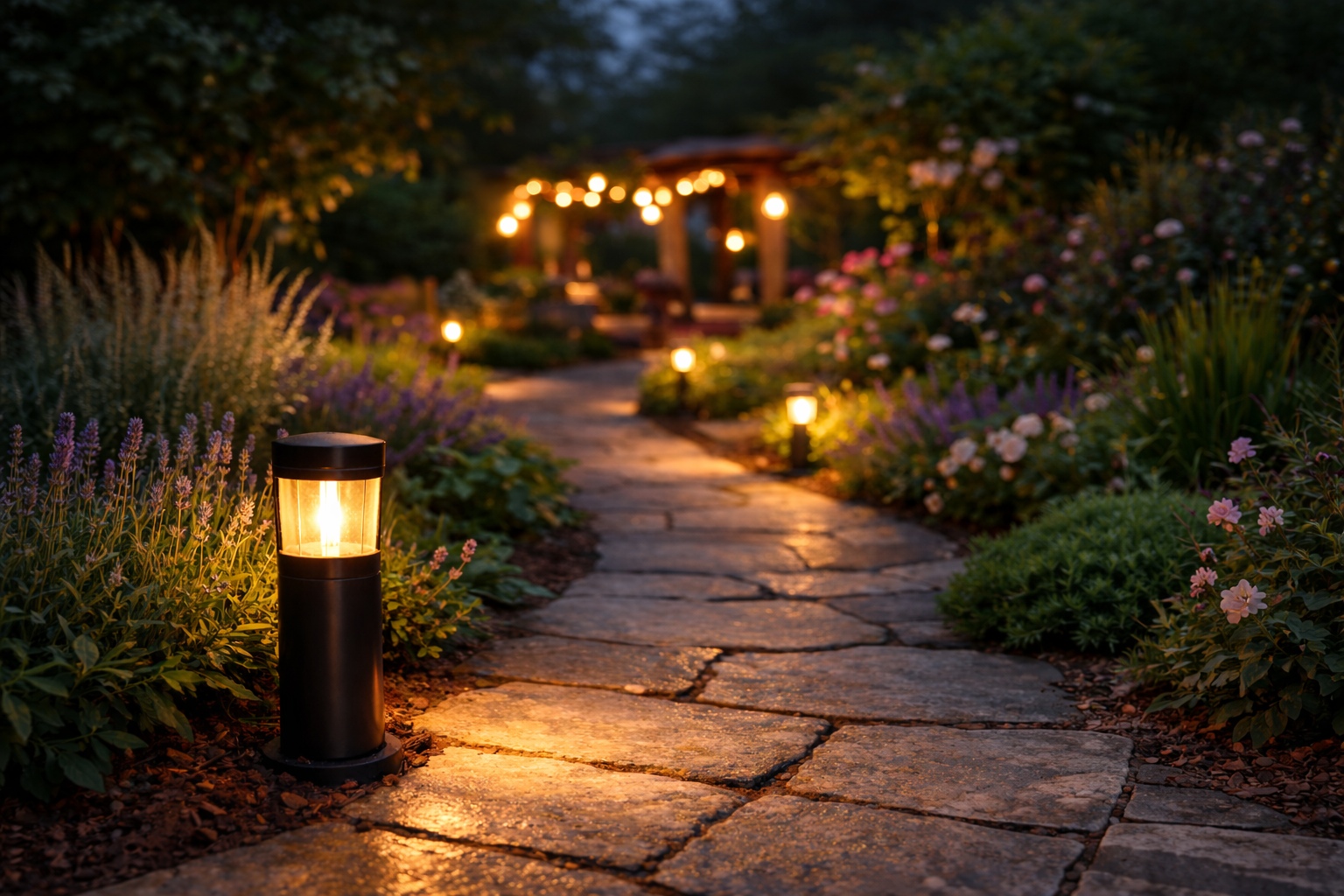
Pathway lighting ideas play a key role in how gardens, walkways, and driveways feel after dark, helping guide movement while enhancing safety, atmosphere, and overall outdoor design. The right lighting can transform a simple path into a welcoming feature, making outdoor spaces more usable and visually appealing long after sunset.
Whether you are lighting a garden walkway, a driveway edge, or the route to your front door, pathway lighting should balance practicality with style. Marker lights, bollard lights, and solar pathway lights all offer different benefits, and choosing the right option depends on how the space is used, the layout of your garden, and the look you want to achieve.
This guide explores practical and stylish pathway lighting ideas, explains where each type works best, and shows how to combine them for a polished, well planned result.
Pathway lighting works best when it complements other outdoor elements, especially wider garden lighting ideas that balance function and atmosphere.
Some articles on LightGuru may contain affiliate links. This does not affect the price you pay and helps support the site.
Why Pathway Lighting Matters More Than You Think
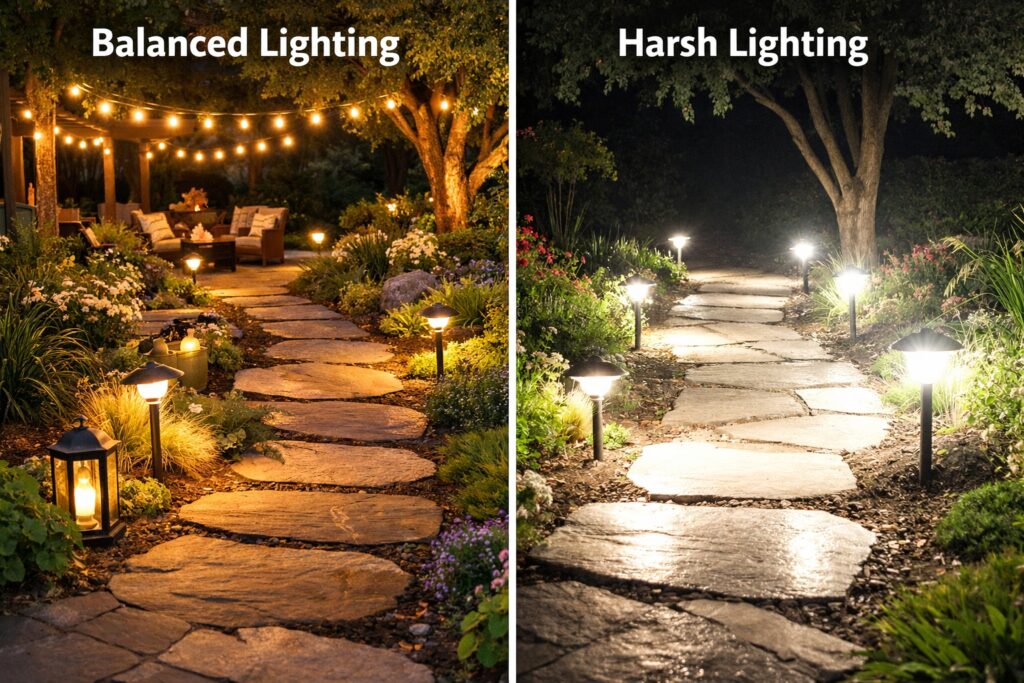
Pathway lighting is often treated as an afterthought, yet it has a significant impact on how safe and inviting an outdoor space feels. Poorly lit paths can become trip hazards, especially where there are steps, uneven paving, or changes in level. At the same time, harsh or overly bright lighting can ruin the calm atmosphere of a garden.
Good garden pathway lighting provides gentle guidance rather than full illumination. It defines the route, highlights edges, and helps people move confidently through the space without overpowering surrounding planting or architecture. When done well, pathway lighting blends seamlessly into the landscape, becoming part of the design rather than a distraction.
Pathway Lighting for Safety and Accessibility
One of the most important roles of pathway lighting is safety. Paths are often used in low light conditions when hazards are harder to see, particularly in autumn and winter.
Thoughtful pathway lighting ideas should consider:
- Steps, slopes, and level changes
- Narrow paths or tight corners
- Driveway edges and shared access routes
- Areas used by children, older adults, or guests unfamiliar with the layout
Low level lighting that directs light downward helps reduce glare and shadows. Even spacing is key, as dark gaps between lights can be just as problematic as no lighting at all. By prioritising visibility without excessive brightness, pathway lighting improves accessibility while maintaining a relaxed outdoor atmosphere.
Good pathway lighting also supports visibility around steps and uneven surfaces, which aligns with general outdoor lighting safety guidance for residential spaces.
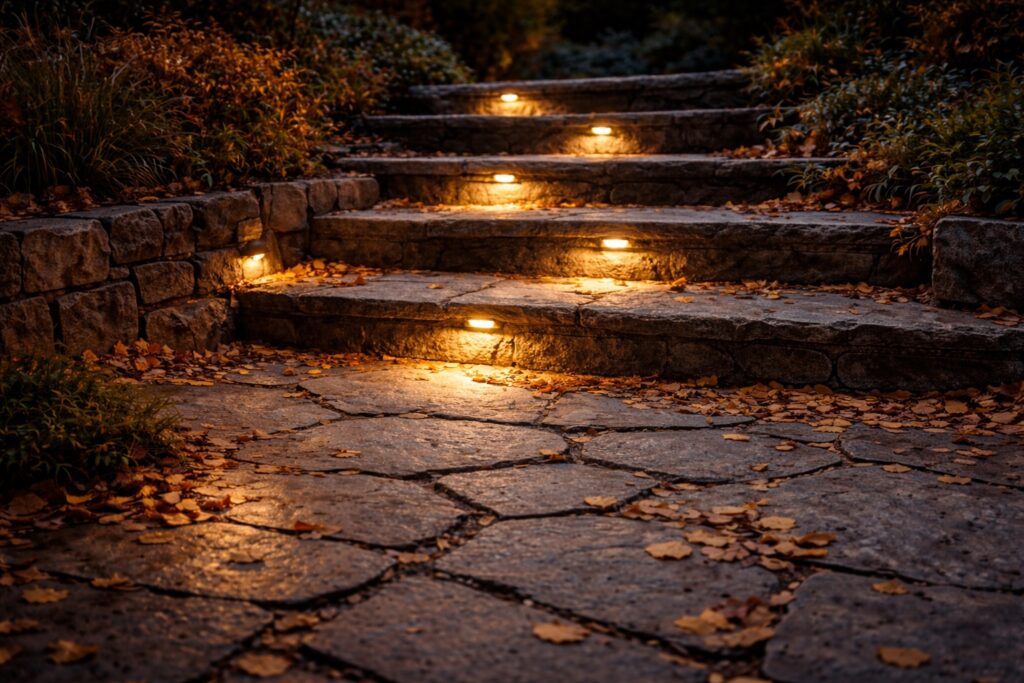
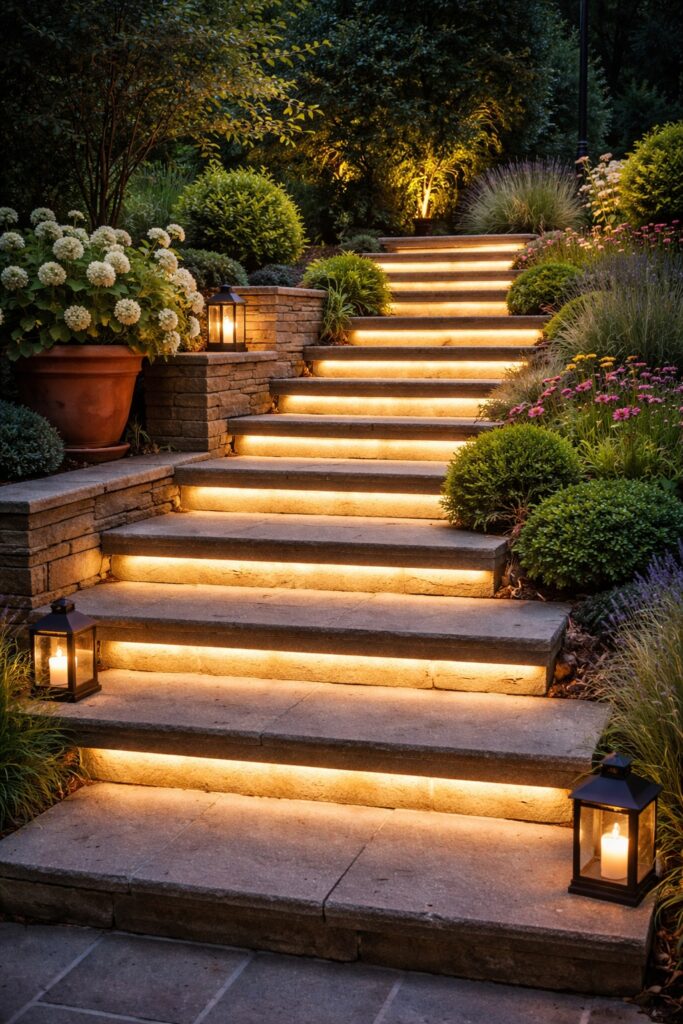
Marker Lights for Subtle, Modern Pathways
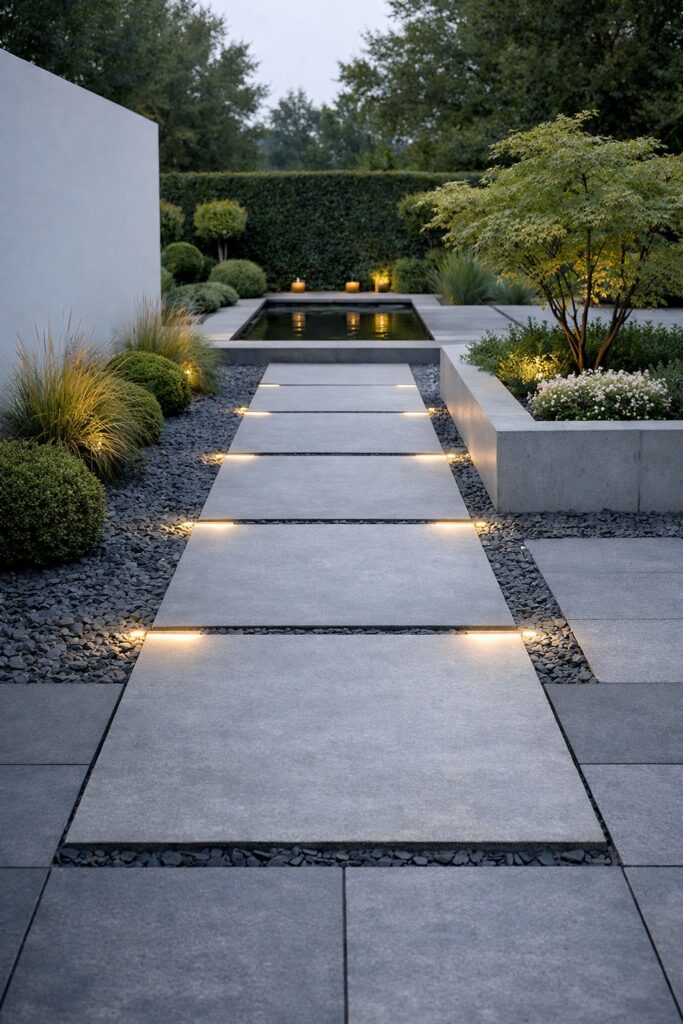
Marker lights are ideal for homeowners who want outdoor pathway lights that guide movement without distracting from planting or paving.
They are particularly popular in modern and minimalist gardens, where clean lines and subtle details matter.
Where marker lights work best
- Along garden path edges
- Recessed into steps or retaining walls
- Along driveway borders
- Around patios and transitions between areas
Marker lights are ideal if you want outdoor pathway lights that feel refined and understated. They allow planting, paving, and landscaping features to remain the focus.
Marker lights are often used alongside low level deck lighting ideas to create a seamless transition between pathways and seating areas.
Marker lights for steps, edges, and level changes
Steps and level changes are where marker lights truly shine. Installed into step risers or low walls, they clearly define each level without the need for overhead lighting. This reduces trip hazards and creates a soft, floating effect that feels both practical and stylish.
Warm white light works best for residential settings, creating a welcoming feel that does not look clinical or harsh.
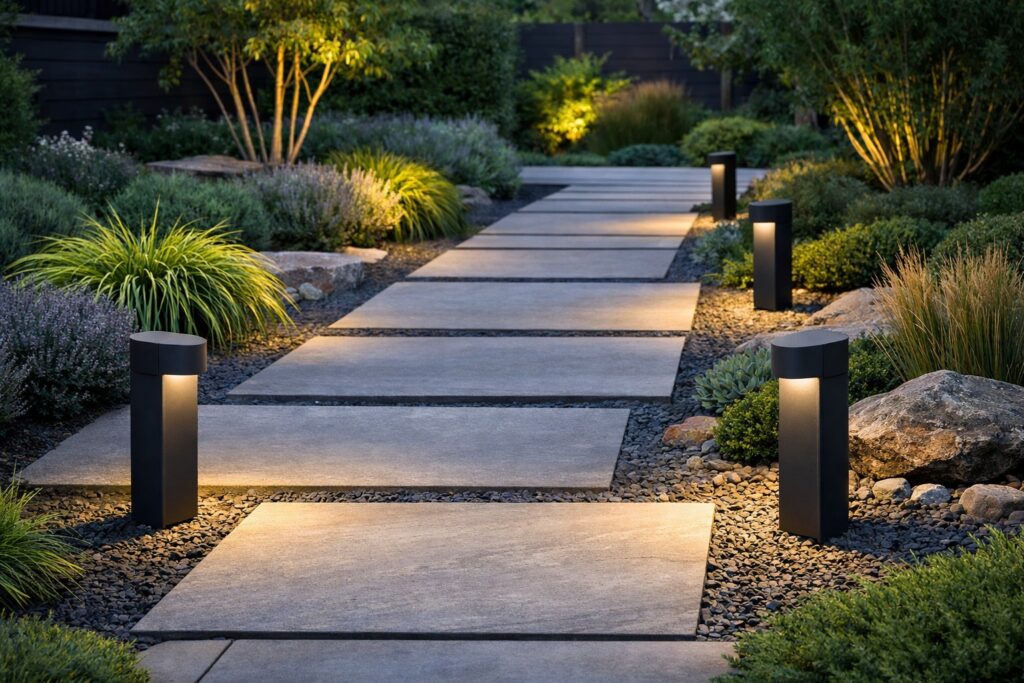
Bollard Lights for Statement Pathway Lighting
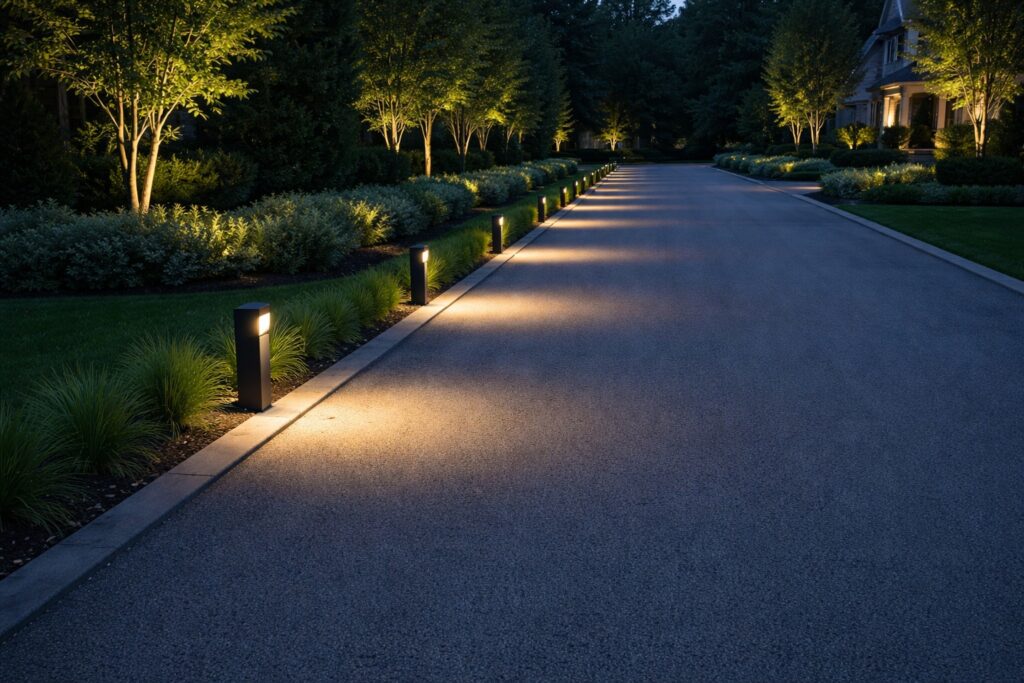
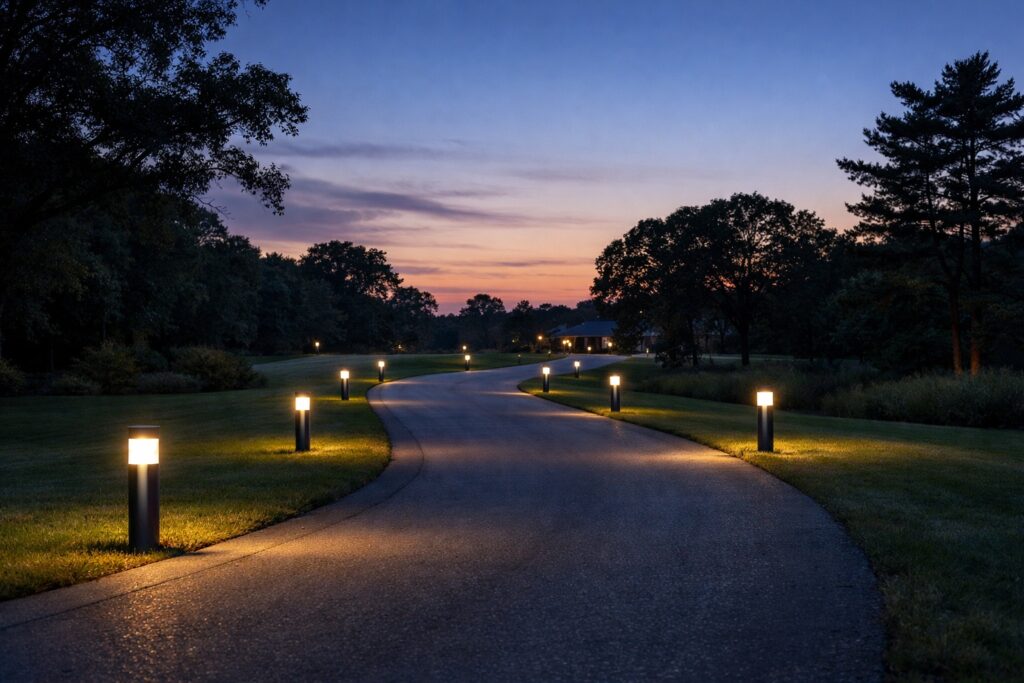
Bollard lights are taller fixtures designed to be seen. They create structure and rhythm along a path, making them a strong design feature as well as a functional one.
For longer walkways or driveways, garden bollard lights help define the route while adding a clear architectural presence to the space.
These lights suit larger gardens, longer paths, and driveways where visibility and presence are important.
Best uses for bollard pathway lights
- Long garden walkways
- Driveways and shared access routes
- Front garden paths leading to an entrance
- Landscapes with structured planting or symmetry
Bollard lights are especially effective in contemporary outdoor designs, where repetition and alignment play a key role.
Choosing the right height and beam spread
Not all bollard lights perform the same. Taller bollards provide a wider spread of light but can feel imposing in small gardens. Shorter bollards or designs with shielded light sources help direct light downward, reducing glare and light spill.
Spacing is crucial. Bollards should be placed far enough apart to avoid overlighting, which can make paths feel exposed rather than inviting. When used thoughtfully, bollard lighting adds confidence and clarity to outdoor navigation.
Solar Pathway Lighting for Easy, Flexible Design
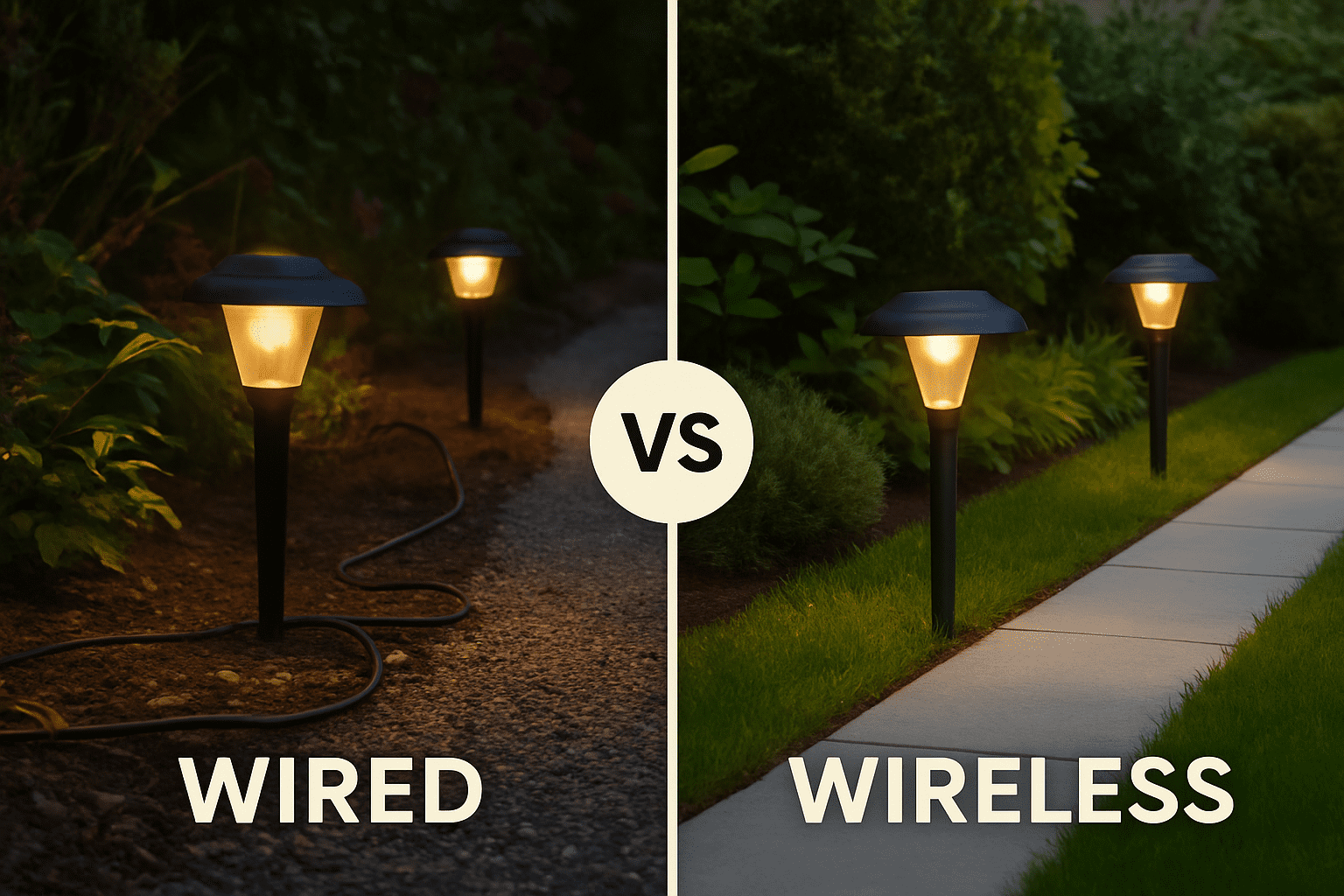
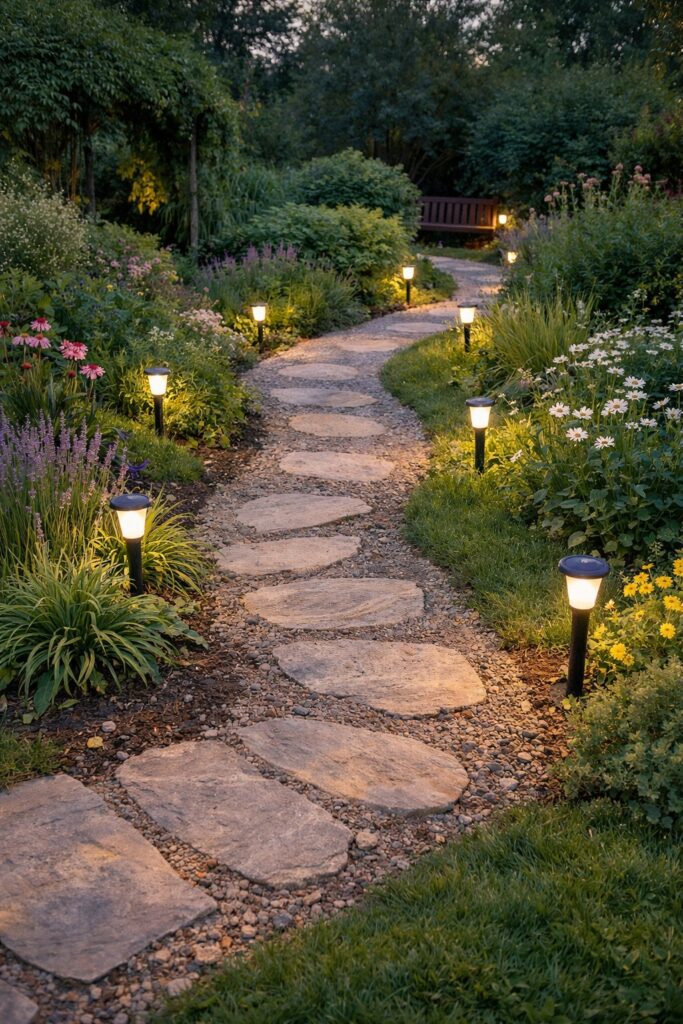
Solar pathway lights have become increasingly popular thanks to improvements in LED efficiency and battery technology. They offer a wire free solution that is easy to install and flexible to reposition.
When wiring is not practical, solar pathway lighting provides a flexible solution for informal garden paths and decorative walkways.
Solar lighting works particularly well for informal garden paths and decorative areas.
Why choose solar pathway lights
- No electrical wiring required
- Simple installation
- Lower running costs
- Ideal for rental properties or temporary layouts
Solar pathway lights are a practical option where running cables would be disruptive or impractical.
When solar pathway lighting is not the best choice
Despite their convenience, solar lights are not suitable for every situation. Shaded gardens, north facing paths, or areas surrounded by trees may not receive enough sunlight for consistent performance. Solar lights can also struggle during winter months when daylight hours are shorter.
For main access routes, driveways, or safety critical areas, wired lighting often provides more reliable brightness and longer operating times.
How to Plan a Pathway Lighting Layout
Successful pathway lighting ideas start with planning. Before installing any lights, it helps to walk the path during daylight and identify key areas that need illumination.
Consider:
- Where people naturally walk
- Any steps, slopes, or obstacles
- Entrances, gates, or focal points
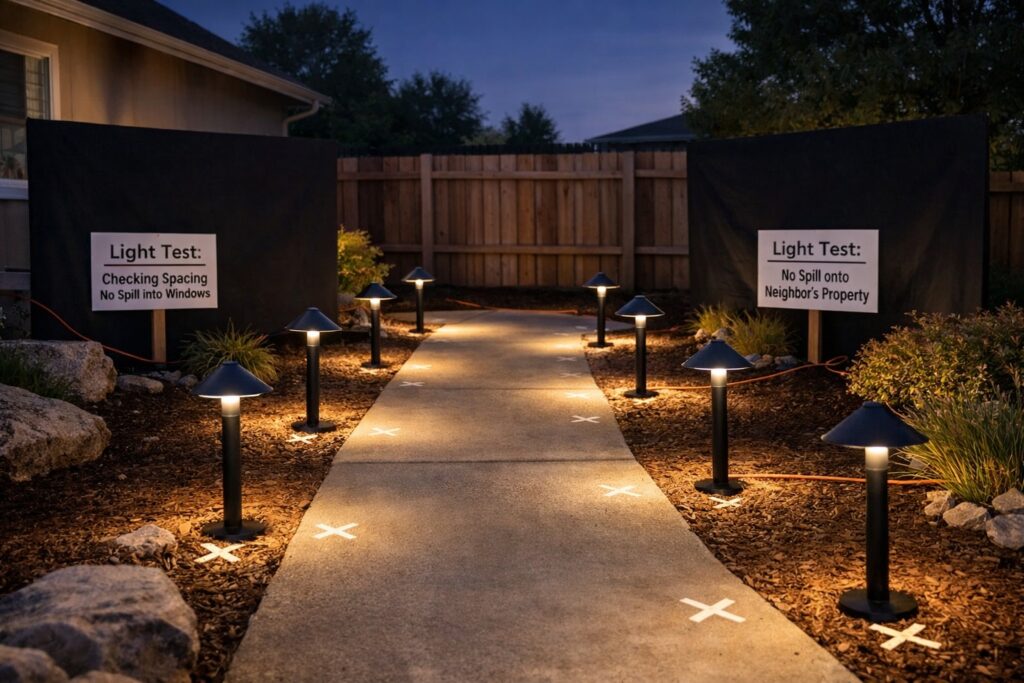
- Areas where light could spill into windows or neighbouring properties
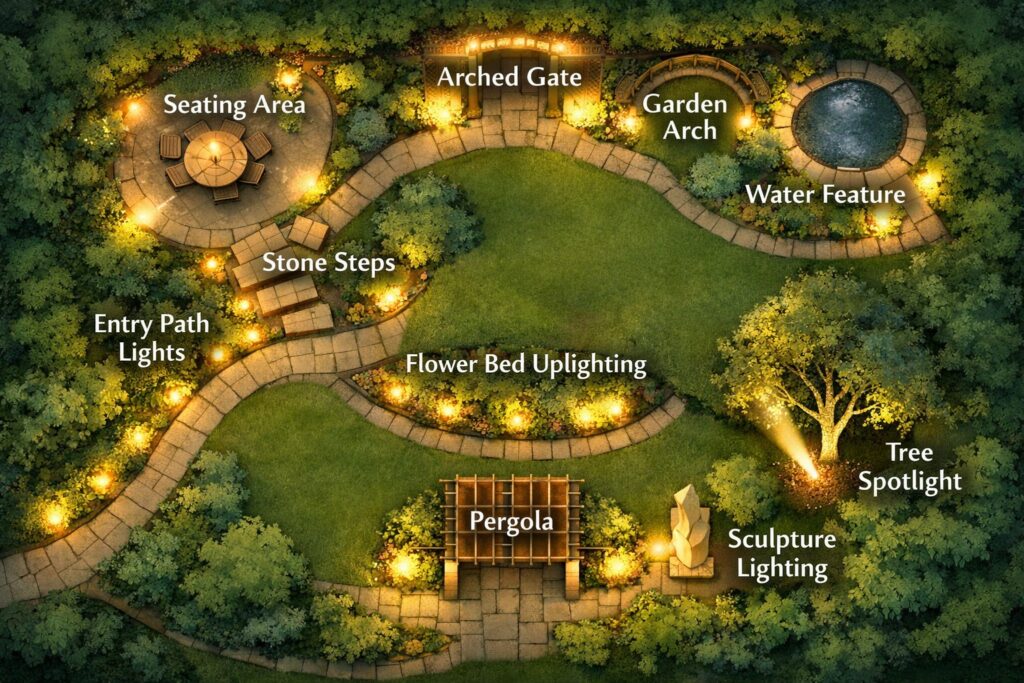
Planning pathway lighting as part of a wider garden lighting layout helps ensure paths, steps, and surrounding features are lit consistently without creating glare or dark patches.
Spacing should feel natural and balanced. Marker lights are usually placed closer together, while bollard lights require more distance between fittings. Testing light positions before permanent installation can help avoid common mistakes and ensure the final layout feels cohesive.
Following recognised lighting design best practices can help ensure pathways are evenly lit without glare or excessive brightness.
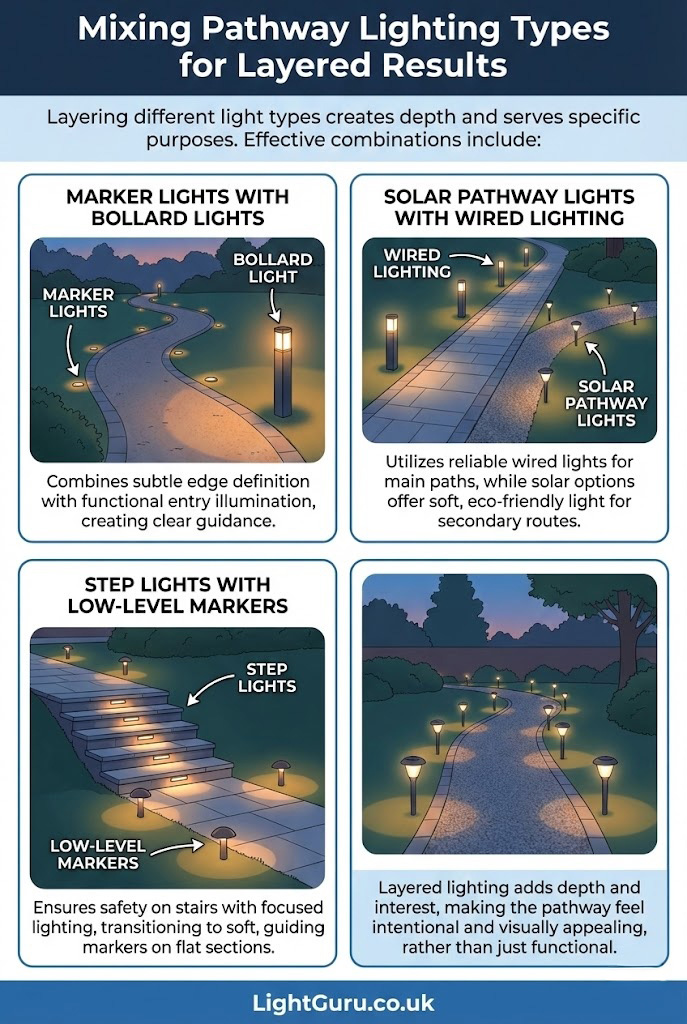
Mixing Pathway Lighting Types for Layered Results
Some of the most effective garden pathway lighting designs use more than one lighting type. Layering allows each light to serve a specific purpose.
Effective combinations include:
- Marker lights along edges with bollard lights at entrances
- Solar pathway lights on secondary routes with wired lighting on main paths
- Step lights combined with low level markers on flat sections
Layered lighting adds depth and interest, making the pathway feel intentional rather than purely functional.
Pathway Lighting Safety Tips
Thoughtful pathway lighting improves both appearance and safety, but a few simple considerations can make a big difference to how effective the lighting is.
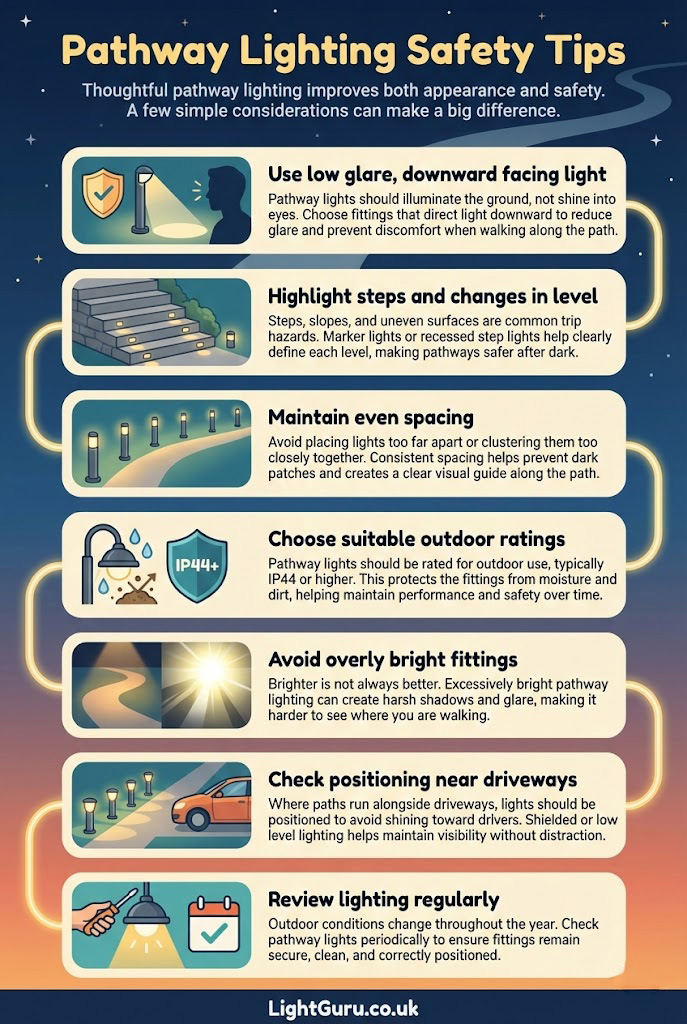
Use low glare, downward facing light
Pathway lights should illuminate the ground, not shine into eyes. Choose fittings that direct light downward to reduce glare and prevent discomfort when walking along the path.
Maintain even spacing
Avoid placing lights too far apart or clustering them too closely together. Consistent spacing helps prevent dark patches and creates a clear visual guide along the path.
Avoid overly bright fittings
Brighter is not always better. Excessively bright pathway lighting can create harsh shadows and glare, making it harder to see where you are walking.
Review lighting regularly
Outdoor conditions change throughout the year. Check pathway lights periodically to ensure fittings remain secure, clean, and correctly positioned.
Highlight steps and changes in level
Steps, slopes, and uneven surfaces are common trip hazards. Marker lights or recessed step lights help clearly define each level, making pathways safer after dark.
Choose suitable outdoor ratings
Pathway lights should be rated for outdoor use, typically IP44 or higher. This protects the fittings from moisture and dirt, helping maintain performance and safety over time.
Check positioning near driveways
Where paths run alongside driveways, lights should be positioned to avoid shining toward drivers. Shielded or low level lighting helps maintain visibility without distraction.
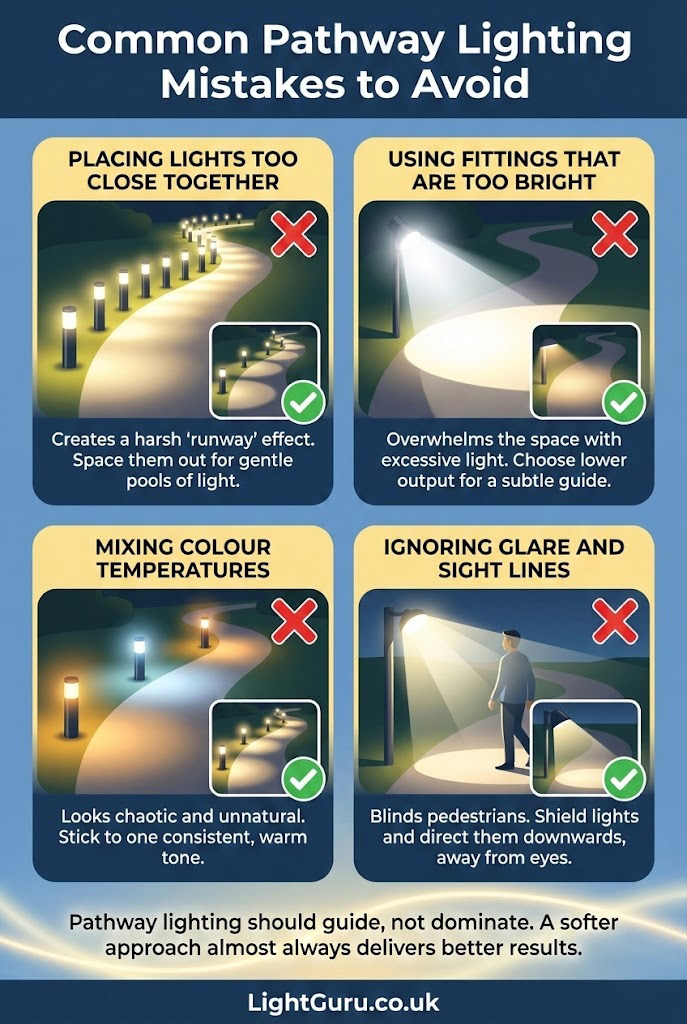
Common Pathway Lighting Mistakes to Avoid
Even well chosen lights can fall short if installed poorly. Common mistakes include:
- Placing lights too close together
- Using fittings that are too bright
- Mixing colour temperatures
- Ignoring glare and sight lines
Pathway lighting should guide, not dominate. A softer approach almost always delivers better results.
Shielded fittings and warm colour temperatures also help with reducing light pollution, keeping outdoor spaces comfortable for both people and wildlife.
FAQs: Pathway Lighting Ideas
What is the best lighting for garden pathways?
The best lighting for garden pathways depends on the space and its use. Marker lights suit subtle guidance, bollard lights provide structure and visibility, and solar pathway lights work well for informal or decorative paths.
How far apart should pathway lights be spaced?
Most pathway lights are spaced between 1.5 and 3 metres apart. Marker lights are typically closer together, while bollard lights require wider spacing to avoid overlighting.
Are bollard lights better than marker lights?
Neither option is better overall. Bollard lights create a stronger visual presence and provide more light, while marker lights are discreet and ideal for modern or minimal designs.
Are solar pathway lights bright enough?
Modern solar pathway lights are bright enough for secondary and decorative paths. For main access routes, wired lighting usually offers more consistent performance.
What colour temperature is best for pathway lighting?
Warm white light is generally best for residential pathways, as it feels welcoming and reduces glare.
Can different types of pathway lighting be mixed?
Yes, mixing lighting types often creates better results. Combining marker lights, bollards, and solar lights can improve usability and visual interest.
Do pathway lights need an IP rating?
Yes, outdoor pathway lights should have a suitable IP rating, usually IP44 or higher, to protect against moisture and dirt.
Conclusion
Effective pathway lighting ideas enhance both safety and visual appeal, helping gardens, walkways, and driveways feel welcoming and easy to navigate after dark. When chosen carefully, pathway lighting guides movement, highlights edges, and supports the overall outdoor layout without overwhelming the space.
Marker lights provide subtle direction for modern paths, bollard lights add structure and visibility to larger routes, and solar pathway lights offer a practical solution for informal or wire free gardens. The best results come from matching the lighting type to how the pathway is used and planning the layout with spacing, glare control, and consistency in mind.
By applying these pathway lighting ideas thoughtfully, outdoor paths become a natural extension of the landscape, delivering both function and atmosphere throughout the evening.