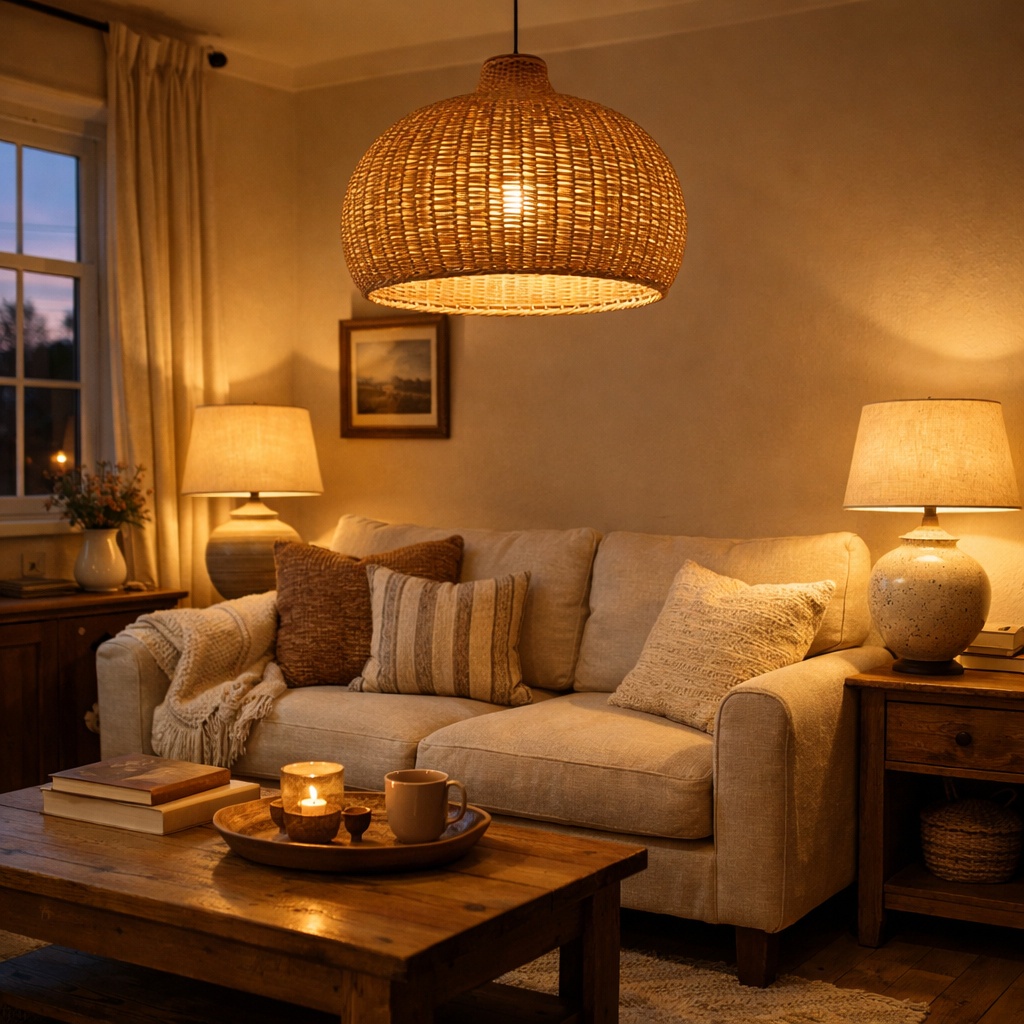
Cosy living room lighting comes from layered light sources, warm colour temperatures, and soft shadows — not a single bright fitting. The right combination transforms a living room from functional space to somewhere you actually want to spend your evenings.
This article explores lighting from a style and inspiration perspective. For technical layout, brightness, and placement guidance, see our main Living Room Lighting Guide.
This guide contains affiliate links. If you buy through them, we may earn a small commission at no extra cost to you.
Get the Look: Warm Layered Living Room Lighting
Want to recreate the cosy, layered lighting look? Here are the key pieces that make it work.
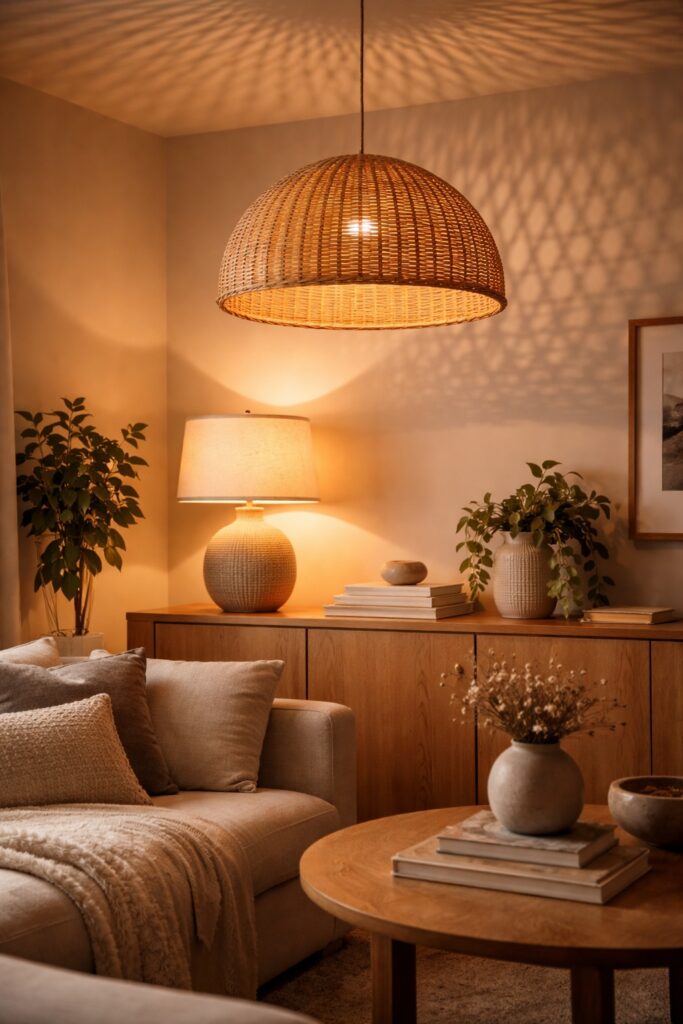
The pendant
A woven or rattan pendant creates soft, diffused light and adds natural texture. Look for shades with an open weave that lets light filter through the material, casting gentle patterns on the ceiling.

Woven Seagrass Ceiling Pendant Shade
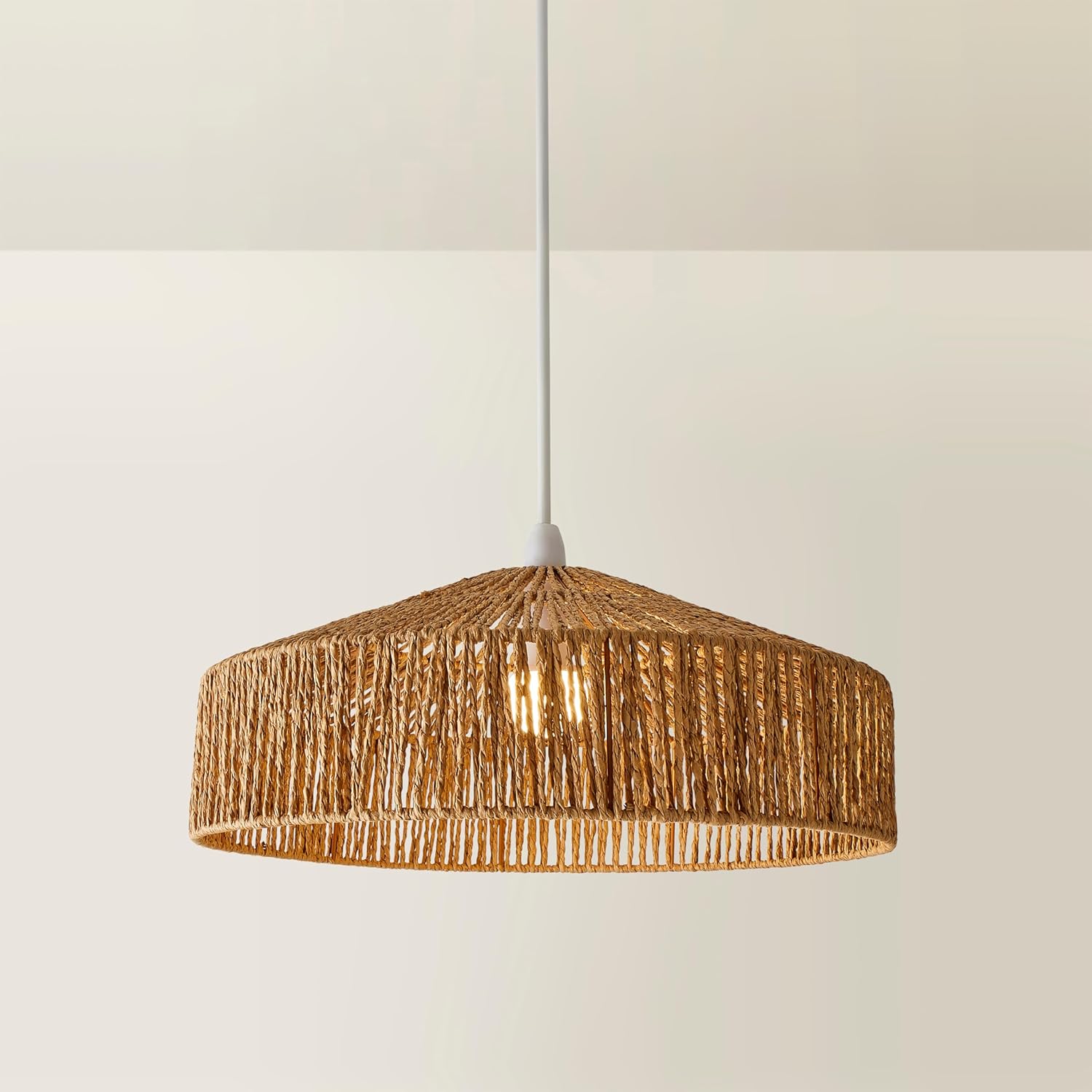
- 45cm diameter, adjustable drop height
- E27 fitting (bulb not included)
- Handwoven natural seagrass
Natural Rattan Dome Pendant Light Shade

- 40cm diameter dome shape
- E27 fitting (bulb not included)
- Natural rattan with warm honey tone
The table lamps
Matching or complementary table lamps on either side of the sofa anchor the seating area and create balanced pools of warm light. Ceramic or textured bases work well with neutral lampshades.
Woven Seagrass Ceiling Pendant Shade

- 45cm diameter, adjustable drop height
- E27 fitting (bulb not included)
- Handwoven natural seagrass
Woven Seagrass Ceiling Pendant Shade
- 45cm diameter, adjustable drop height
- E27 fitting (bulb not included)
- Handwoven natural seagrass
<!– AFFILIATE PLACEHOLDER: Pair of ceramic/textured table lamps with fabric shades. Price range £30-£60 each. Examples: Dunelm ceramic lamp, Amazon Basics ceramic set. –>
The bulbs
The warm glow comes from colour temperature, not the fitting. Swap cool white bulbs for 2700K warm white LEDs across all your lamps and pendants. <!– AFFILIATE PLACEHOLDER: 2700K LED bulbs (E27 and B22 options). Philips Warm Glow or similar dimmable warm LEDs. Multipacks preferred. –>
Table of Contents
Why Lighting Matters in a Cosy Living Room
Lighting plays a major role in how a living room feels emotionally. Bright, flat lighting can make a space feel cold or uninviting, while warm, layered lighting adds softness and depth.
Cosy living room lighting ideas focus on:
- Reducing harsh shadows
- Avoiding glare and overly bright fittings
- Creating visual warmth through tone and placement
- Supporting relaxation rather than task focused brightness
A well lit living room should adapt easily from daytime use to evening comfort, allowing lighting levels to change with the mood.
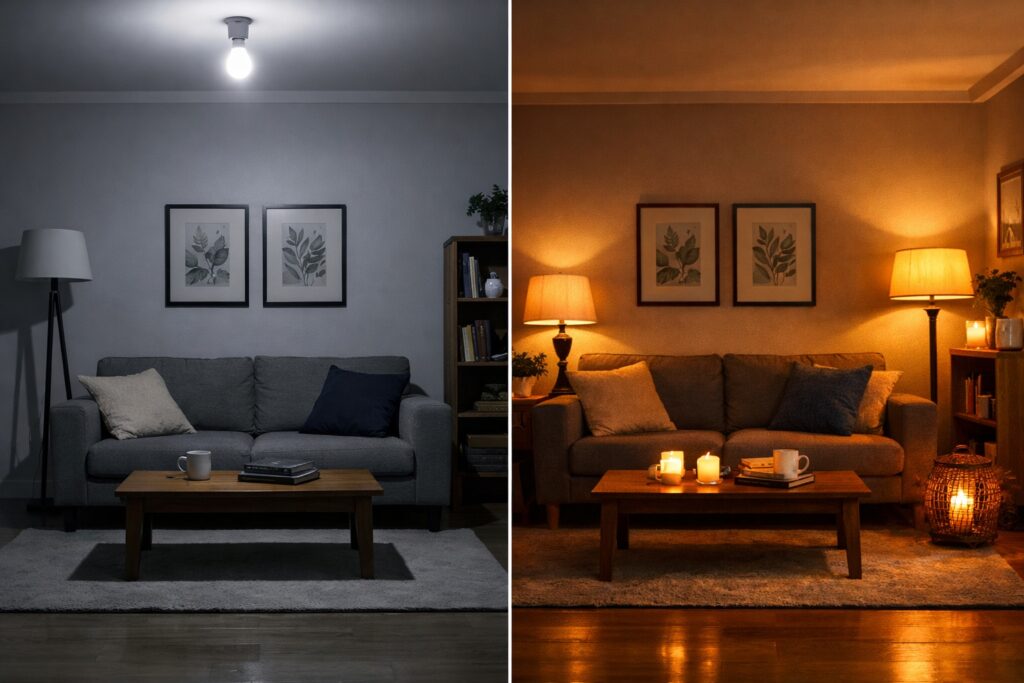

Use Warm Colour Temperatures for Comfort
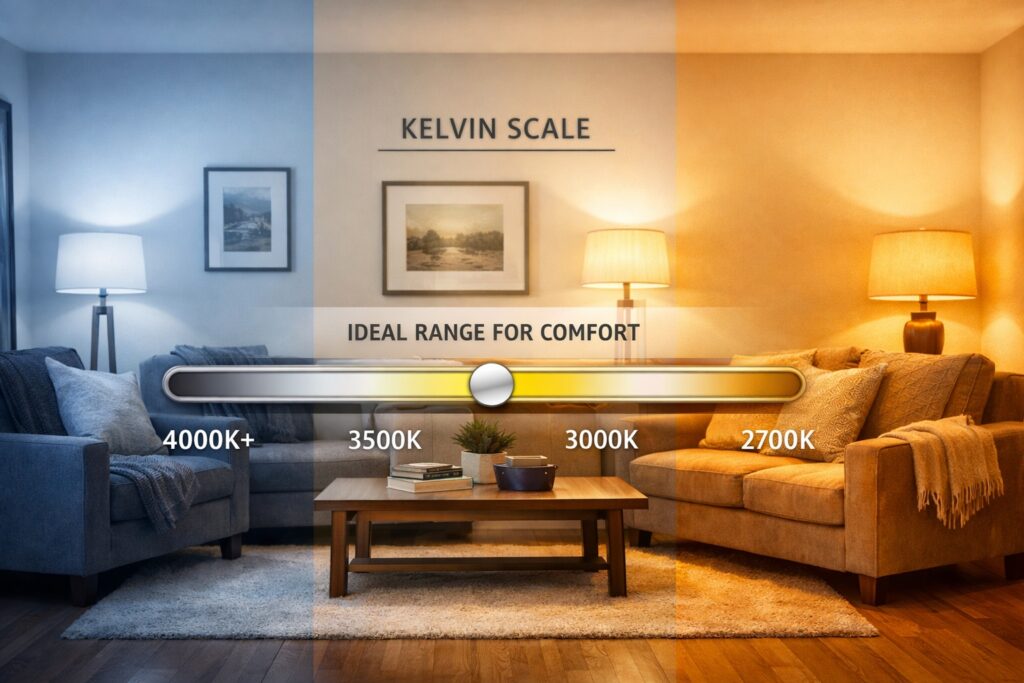
One of the easiest ways to make a living room feel cosy is to choose warm light sources. Cool white lighting can feel clinical in living spaces, while warm white creates a more relaxed environment.
Best colour temperatures for living rooms
- Warm white between 2700K and 3000K
- Avoid cool white above 4000K
- Use consistent tones throughout the room
Warm lighting enhances natural materials like wood, textiles, and soft furnishings, helping the space feel more grounded and comfortable.
Research into warm light for living spaces shows that lower colour temperatures can support relaxation and comfort in the evening.

Layered Lighting Is the Key to a Cosy Feel
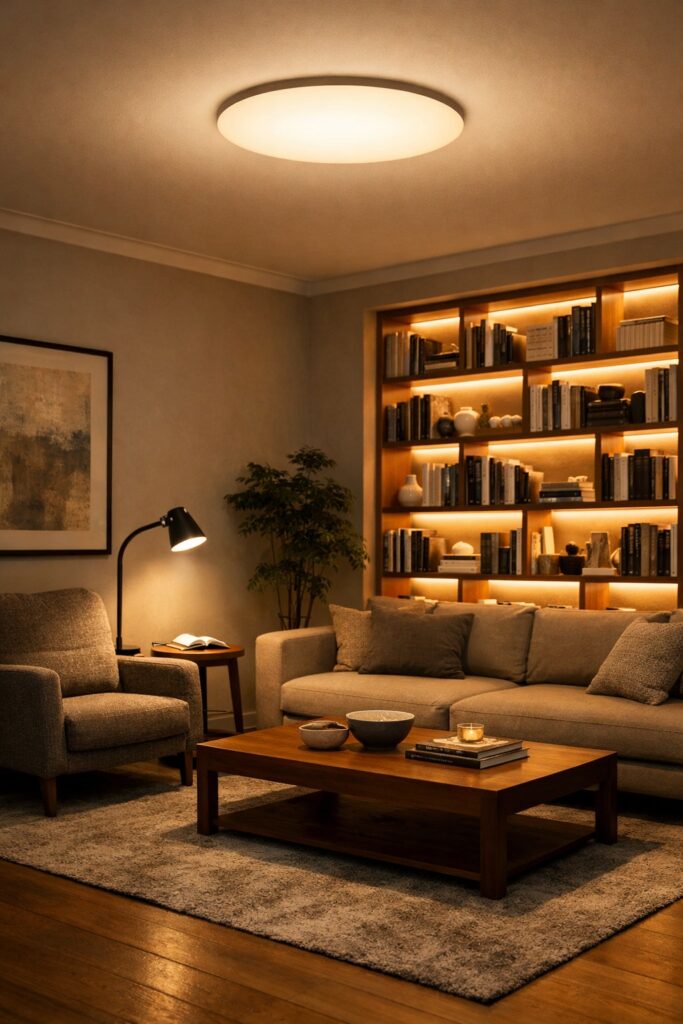
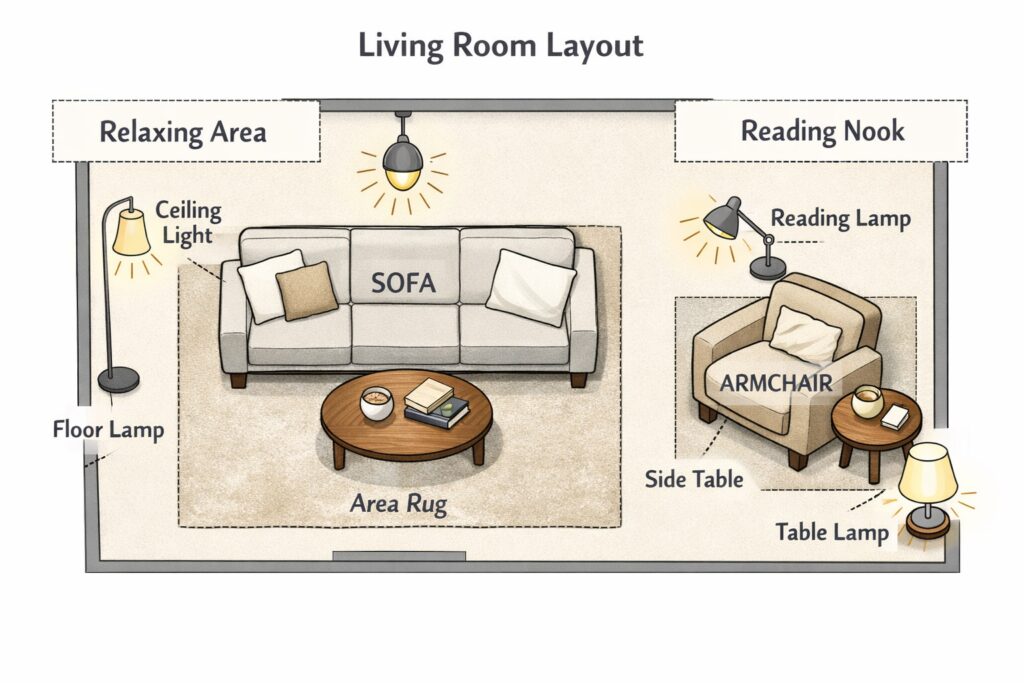
Cosy living room lighting relies on layers rather than a single central fitting. Each layer serves a purpose and contributes to the overall atmosphere.
Ambient lighting
Ambient lighting provides general illumination. In cosy spaces, this should be soft and evenly distributed rather than harsh. Ceiling lights can still be used, but dimmable fittings or diffused designs work best.
Accent lighting
Accent lighting adds depth and highlights features such as shelves, artwork, or textured walls. This creates gentle contrast and visual interest without overpowering the space.
Task lighting
Task lighting supports activities like reading or working, but should be localised rather than lighting the entire room. Table lamps and floor lamps are ideal for this purpose.
By combining these layers, the living room feels balanced and adaptable throughout the day and evening.
Using recognised layered lighting principles helps balance ambient, accent, and task lighting so living rooms feel comfortable rather than overlit.
Lamps for Soft Pools of Light
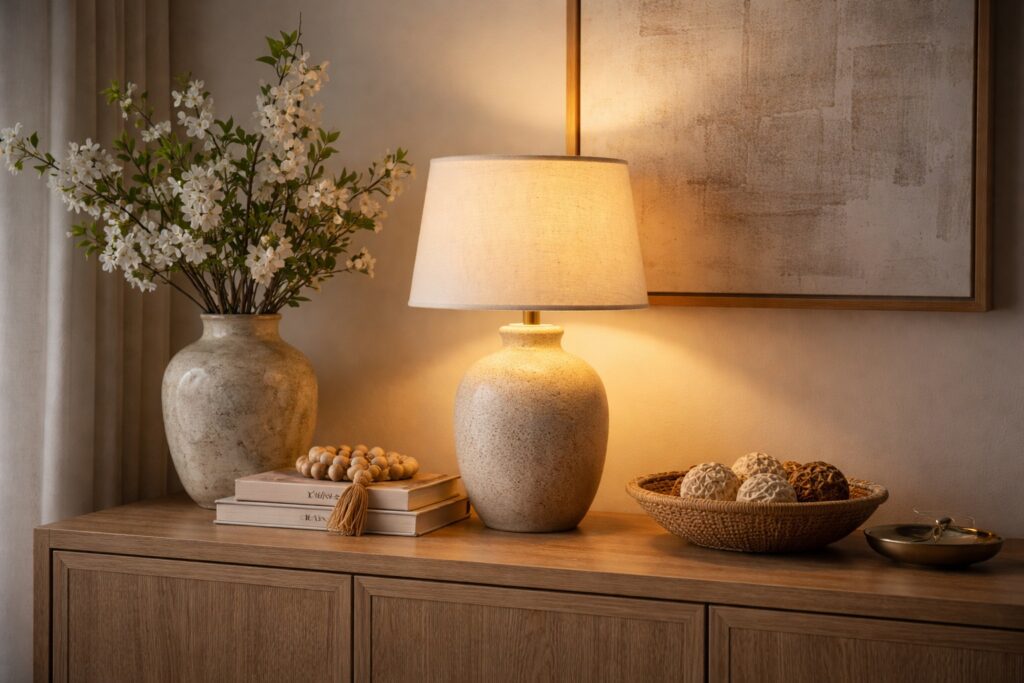
Table lamps and floor lamps are essential for cosy living room lighting ideas. They create small pools of light that feel intimate and relaxing.
Lamps work particularly well:
- In corners to soften dark areas
- Beside sofas or armchairs
- On sideboards or shelving
Using lamps instead of overhead lighting in the evening instantly changes the mood of the room, making it feel calmer and more inviting.
Table and floor lamps are a core part of cosy spaces, especially when choosing living room lamps that create soft, localised pools of light.
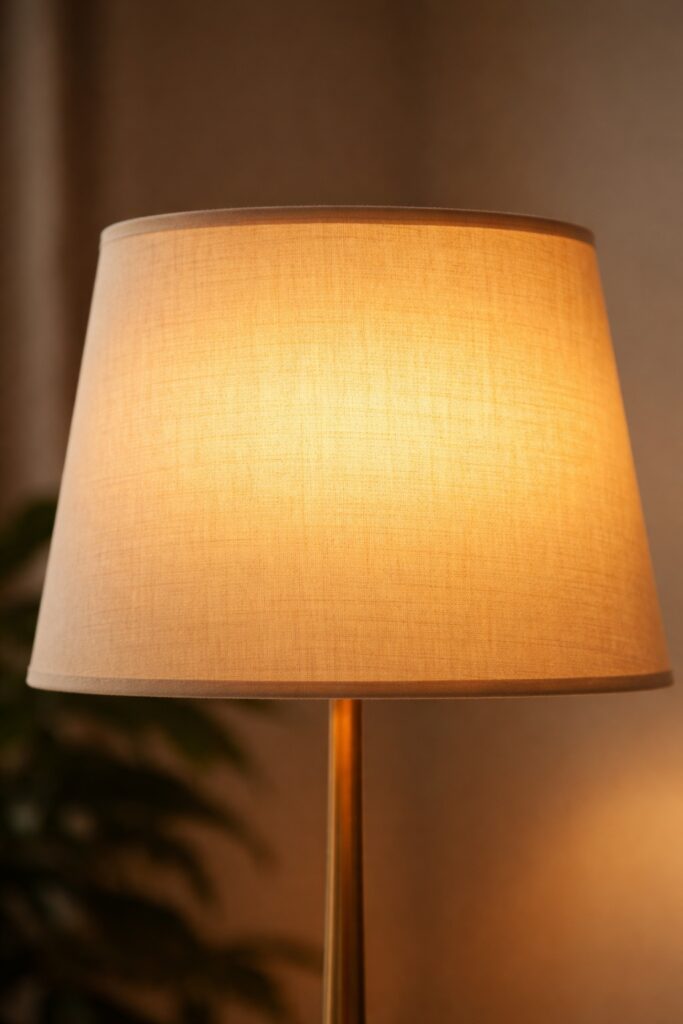
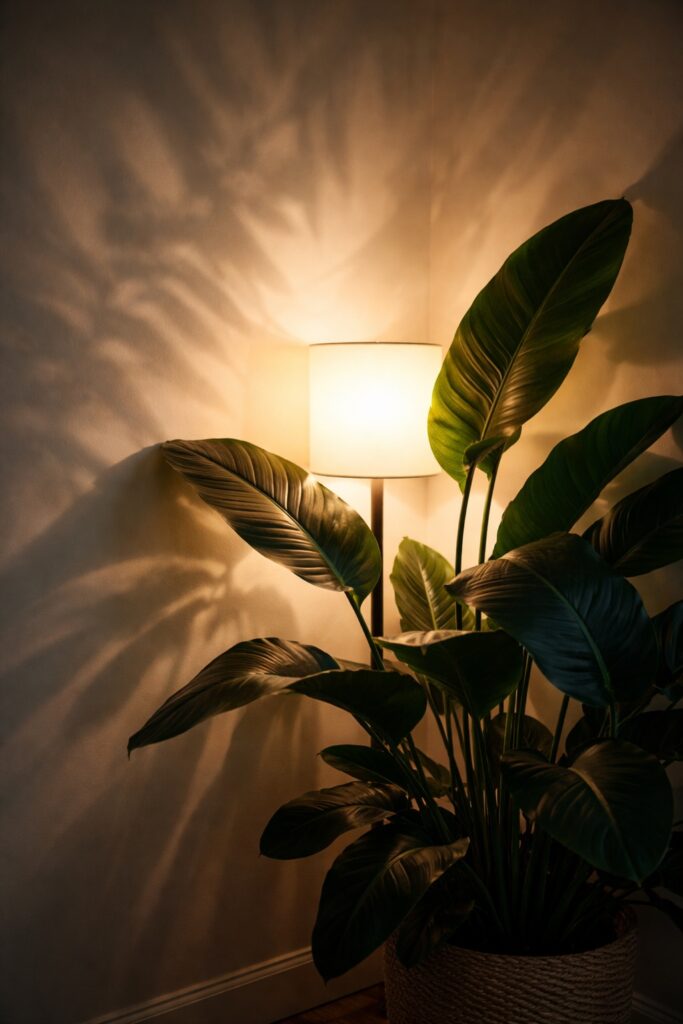
Creating Soft Shadows for Depth
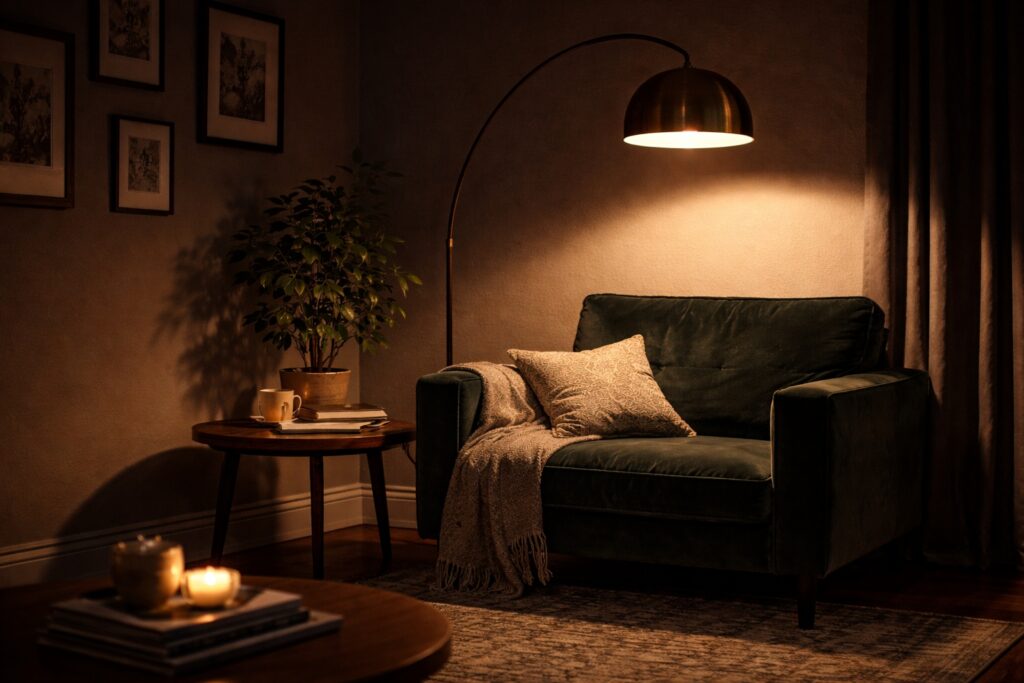
Soft shadows are just as important as light. A cosy living room should never feel flat or overlit.
Ways to introduce soft shadows include:
- Using lampshades to diffuse light
- Bouncing light off walls rather than directing it straight down
- Positioning lights behind furniture or plants
These techniques add depth and prevent the room from feeling stark or overly bright.
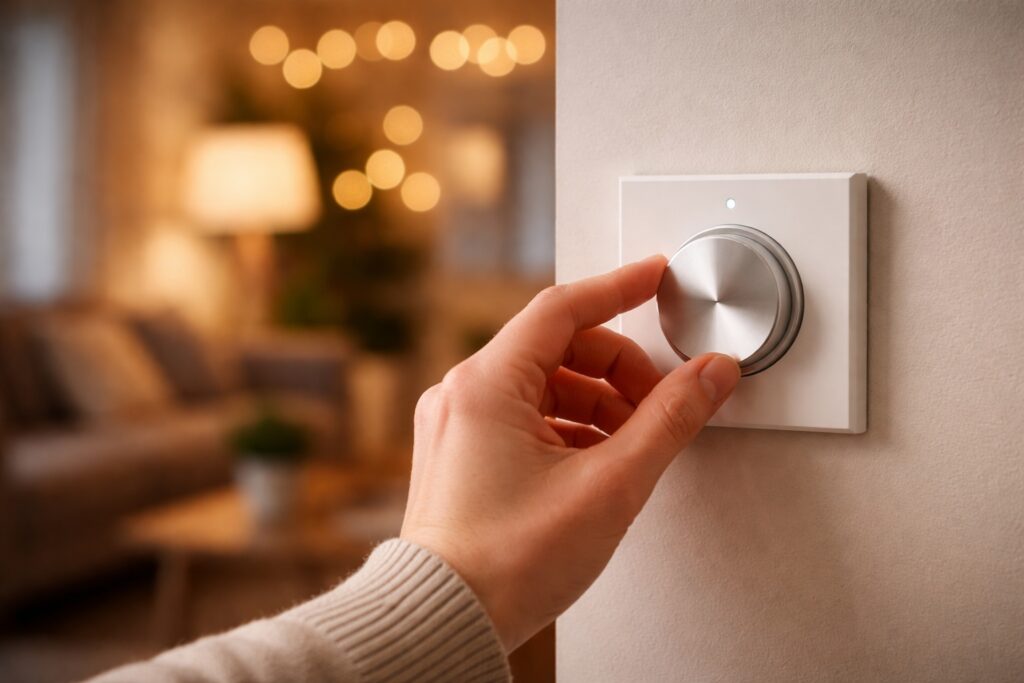
Dimmable Lighting for Flexible Atmosphere
Dimmers are one of the most effective tools for controlling the mood of a living room. They allow you to adjust brightness depending on the time of day or activity.
Dimmable lighting helps:
- Transition from daytime to evening
- Reduce eye strain
- Maintain warmth without losing visibility
Even small adjustments in brightness can dramatically change how cosy the space feels.
Adding dimmers to warm LED lighting allows the room to shift easily from functional brightness to a softer evening glow.
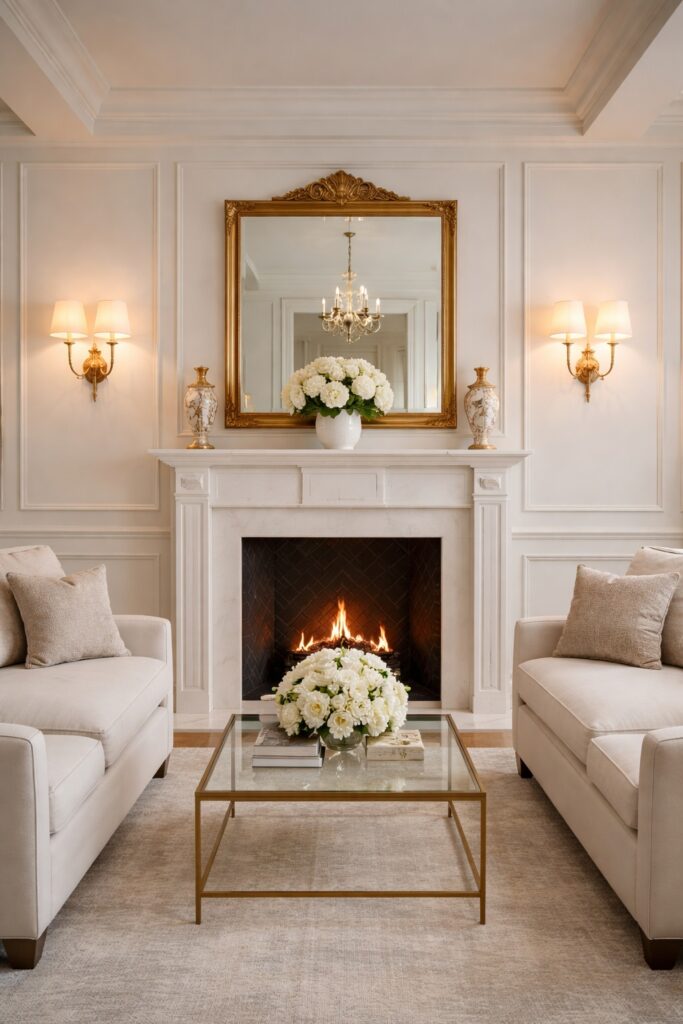
Wall Lighting for Gentle Background Glow
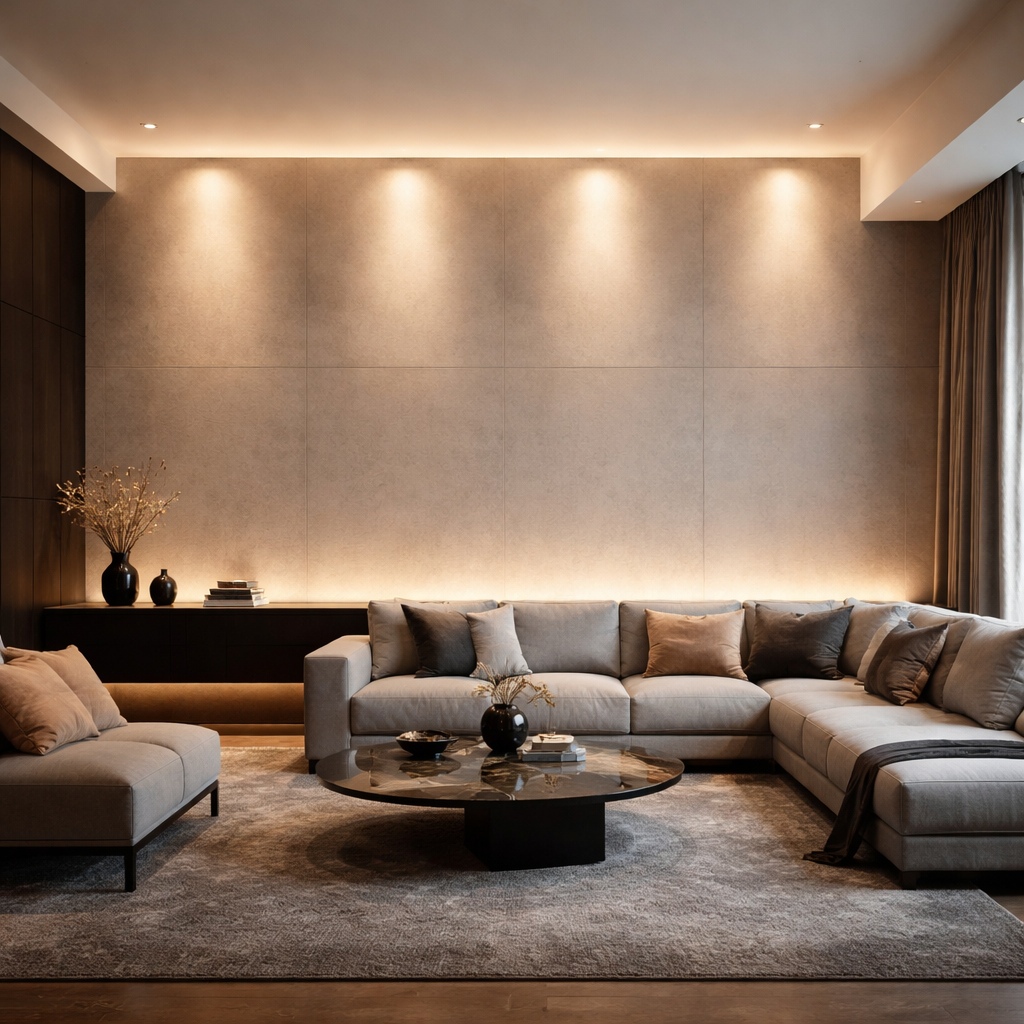
Wall lights are often overlooked in living rooms, yet they are ideal for creating background glow without glare. They help fill visual gaps between lamps and ceiling lighting.
Wall lights work well:
- Either side of a fireplace
- Along feature walls
- In seating areas where ceiling light feels too direct
Soft, indirect wall lighting supports layered lighting schemes and adds a subtle sense of luxury.
Subtle wall fittings work best when using living room wall lights that provide indirect illumination without glare.
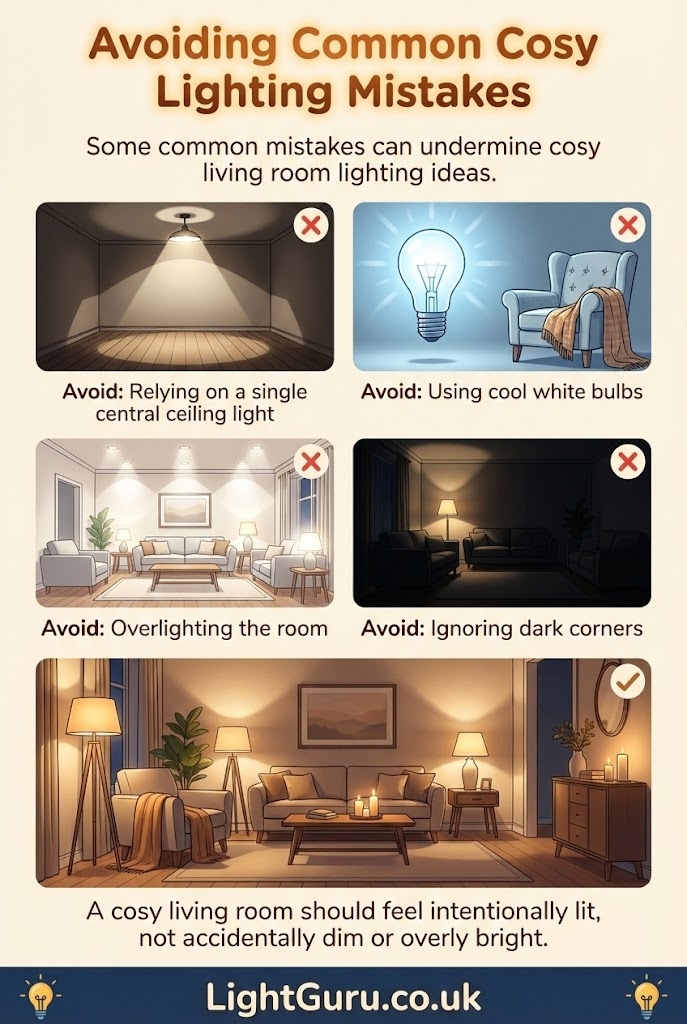
Avoiding Common Cosy Lighting Mistakes
Some common mistakes can undermine cosy living room lighting ideas.
Avoid:
- Relying on a single central ceiling light
- Using cool white bulbs
- Overlighting the room
- Ignoring dark corners
Avoiding glare and harsh contrasts also supports visual comfort in lighting, helping living rooms feel calm rather than tiring on the eyes.
A cosy living room should feel intentionally lit, not accidentally dim or overly bright.
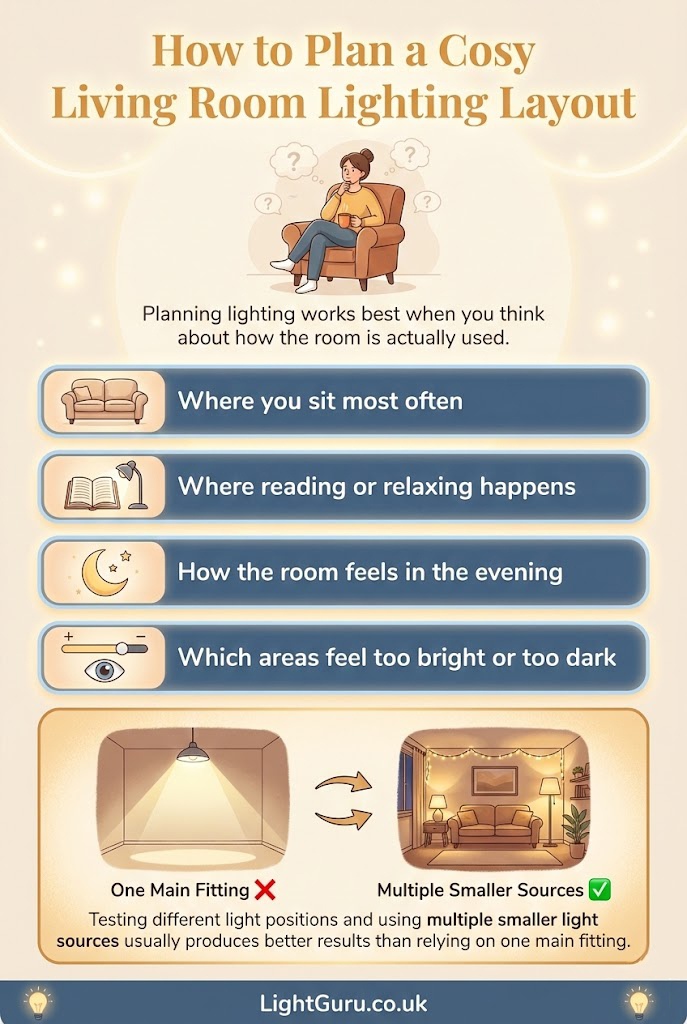
How to Plan a Cosy Living Room Lighting Layout
Planning lighting works best when you think about how the room is actually used.
Consider:
- Where you sit most often
- Where reading or relaxing happens
- How the room feels in the evening
- Which areas feel too bright or too dark
Testing different light positions and using multiple smaller light sources usually produces better results than relying on one main fitting.
FAQs: Cosy Living Room Lighting Ideas
What lighting is best for a cosy living room?
Warm white lighting combined with layered light sources such as lamps, wall lights, and dimmable ceiling lights creates the most cosy atmosphere.
How many light sources should a living room have?
Most cosy living rooms benefit from at least three to five light sources spread across the room to avoid harsh shadows and dark corners.
Are lamps better than ceiling lights for cosy spaces?
Lamps are often better for evening use because they create softer, more focused light. Ceiling lights still have a role but should ideally be dimmable.
What colour temperature makes a room feel cosy?
Warm white light between 2700K and 3000K is best for creating a cosy feel in living rooms.
Can wall lights help make a living room feel warmer?
Yes, wall lights add background glow and reduce reliance on overhead lighting, helping the room feel softer and more inviting.
Conclusion
Cosy living room lighting ideas are built around warmth, layering, and balance. By combining warm colour temperatures, multiple light sources, and soft shadows, a living room can feel comfortable and inviting without sacrificing practicality.
Layered lighting allows the space to adapt easily from day to night, while lamps, wall lights, and dimmers help create atmosphere rather than flat brightness. When planned carefully, living room lighting becomes an essential part of the room’s comfort, supporting relaxation and everyday living long after the sun goes down.