Garden lighting layout is not about choosing fittings, but deciding where light is actually needed. Even high-quality lights fail when the layout is wrong.
This guide focuses on layout first, fittings second. You will learn how to plan outdoor lighting step by step, how to balance beauty with safety, and how to avoid the most common layout mistakes homeowners make.
For inspiration and lighting types, our garden lighting ideas pillar explores styles, zones, and atmosphere in more detail.
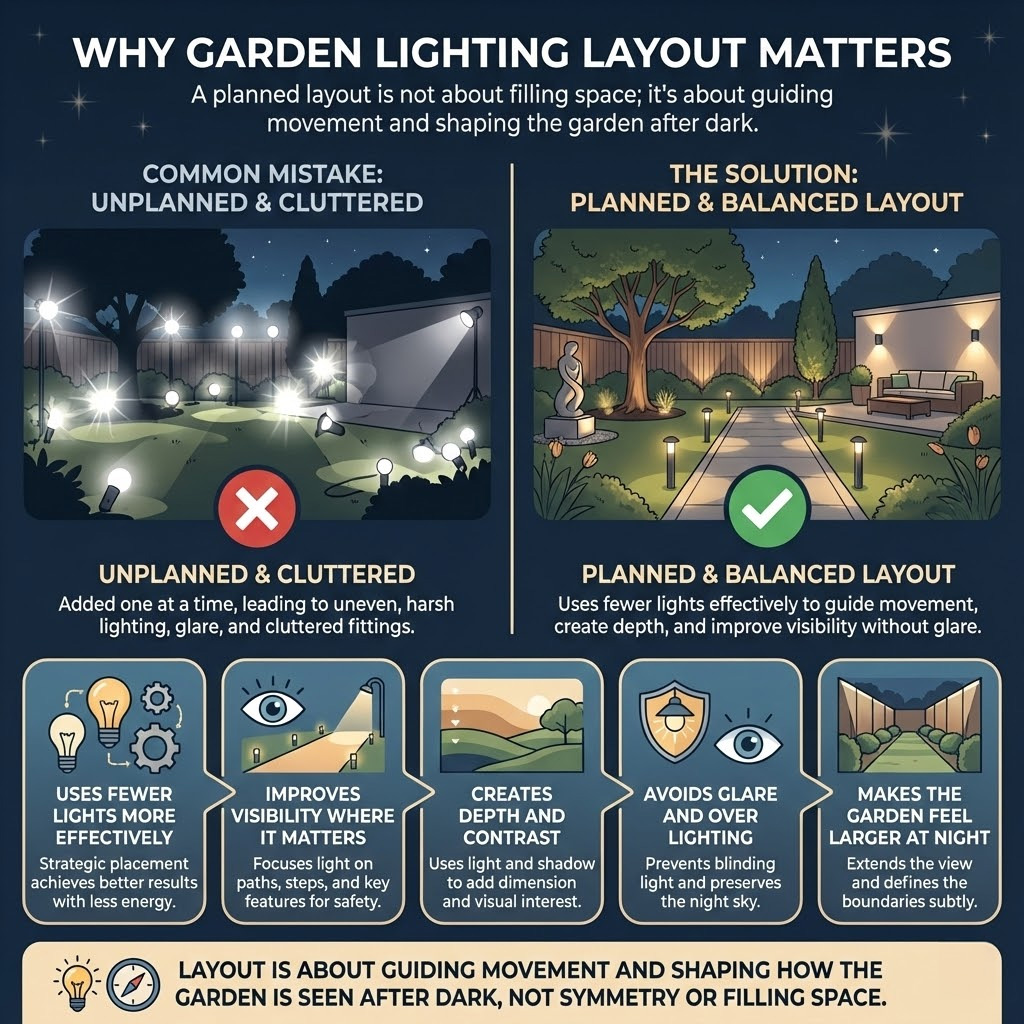
Why garden lighting layout matters
Outdoor lighting is often added one fitting at a time, usually in response to a dark spot or a safety concern. Over time, this approach leads to cluttered lighting that feels uneven and harsh.
A planned layout:
- Uses fewer lights more effectively
- Improves visibility where it matters
- Creates depth and contrast
- Avoids glare and over lighting
- Makes the garden feel larger at night
Layout is not about symmetry or filling space. It is about guiding movement and shaping how the garden is seen after dark.
Start with how the garden is used
Before thinking about light positions, start with people.
Ask:
- Where do people walk?
- Where do they sit or gather?
- Which routes are used most often?
- Which areas are rarely used at night?
Lighting should support real behaviour, not idealised plans. Paths, steps, and entrances usually come first, followed by seating and feature areas.
Gardens rarely need uniform lighting. Some areas should remain darker so that lit areas stand out naturally.

Think in lighting zones, not fittings
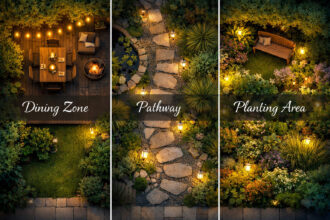
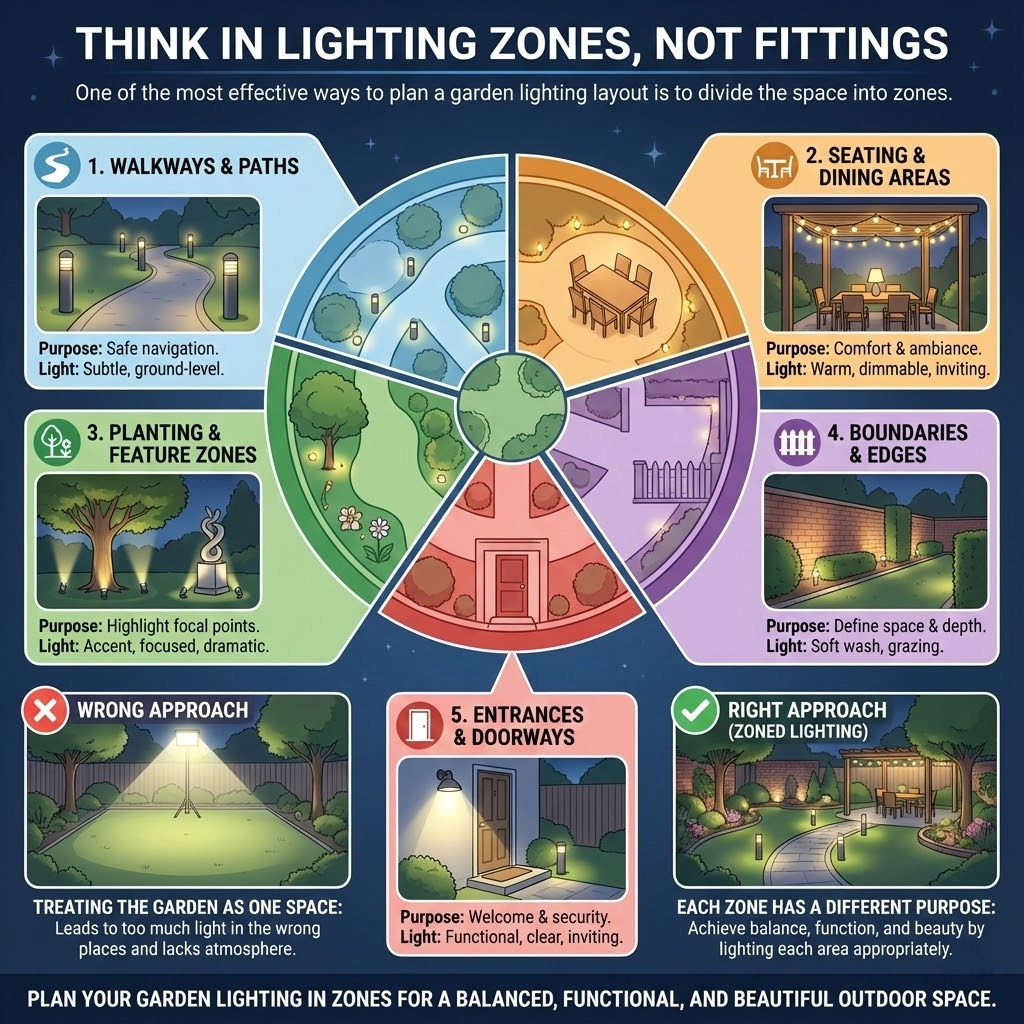
One of the most effective ways to plan a garden lighting layout is to divide the space into zones.
Common zones include:
- Walkways and paths
- Seating and dining areas
- Planting and feature zones
- Boundaries and edges
- Entrances and doorways
Each zone has a different purpose and should be lit differently. Treating the garden as one space almost always leads to too much light in the wrong places.
Layered lighting: the foundation of a good layout
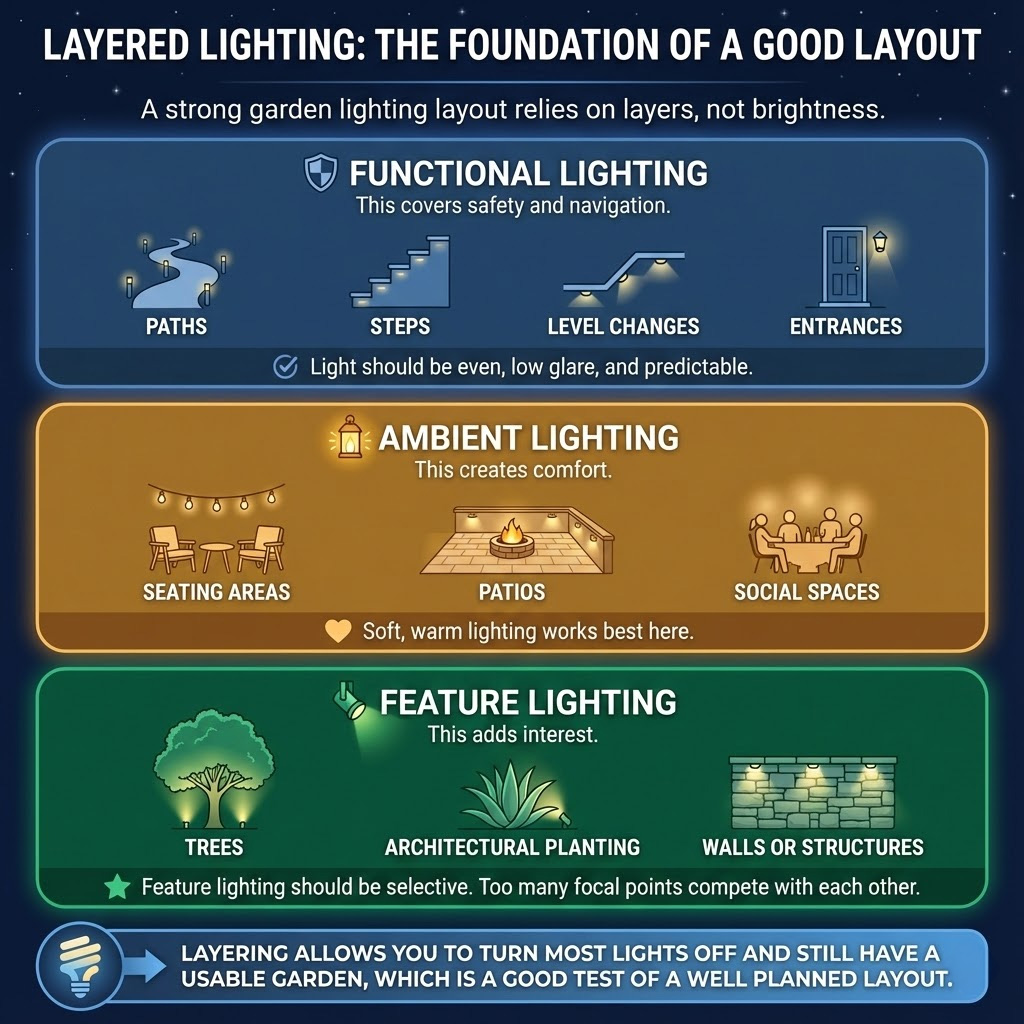
A strong garden lighting layout relies on layers, not brightness.
Functional lighting
This covers safety and navigation.
- Paths
- Steps
- Level changes
- Entrances
Light should be even, low glare, and predictable.
Ambient lighting
This creates comfort.
- Seating areas
- Patios
- Social spaces
Soft, warm lighting works best here.
Feature lighting
This adds interest.
- Trees
- Architectural planting
- Walls or structures
Feature lighting should be selective. Too many focal points compete with each other.
Layering allows you to turn most lights off and still have a usable garden, which is a good test of a well planned layout.
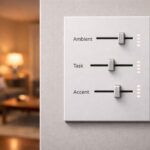
The same principles used for layered lighting indoors apply outdoors, with zones and contrast creating comfort.
Planning path and walkway lighting
Paths are the backbone of most garden lighting layouts.
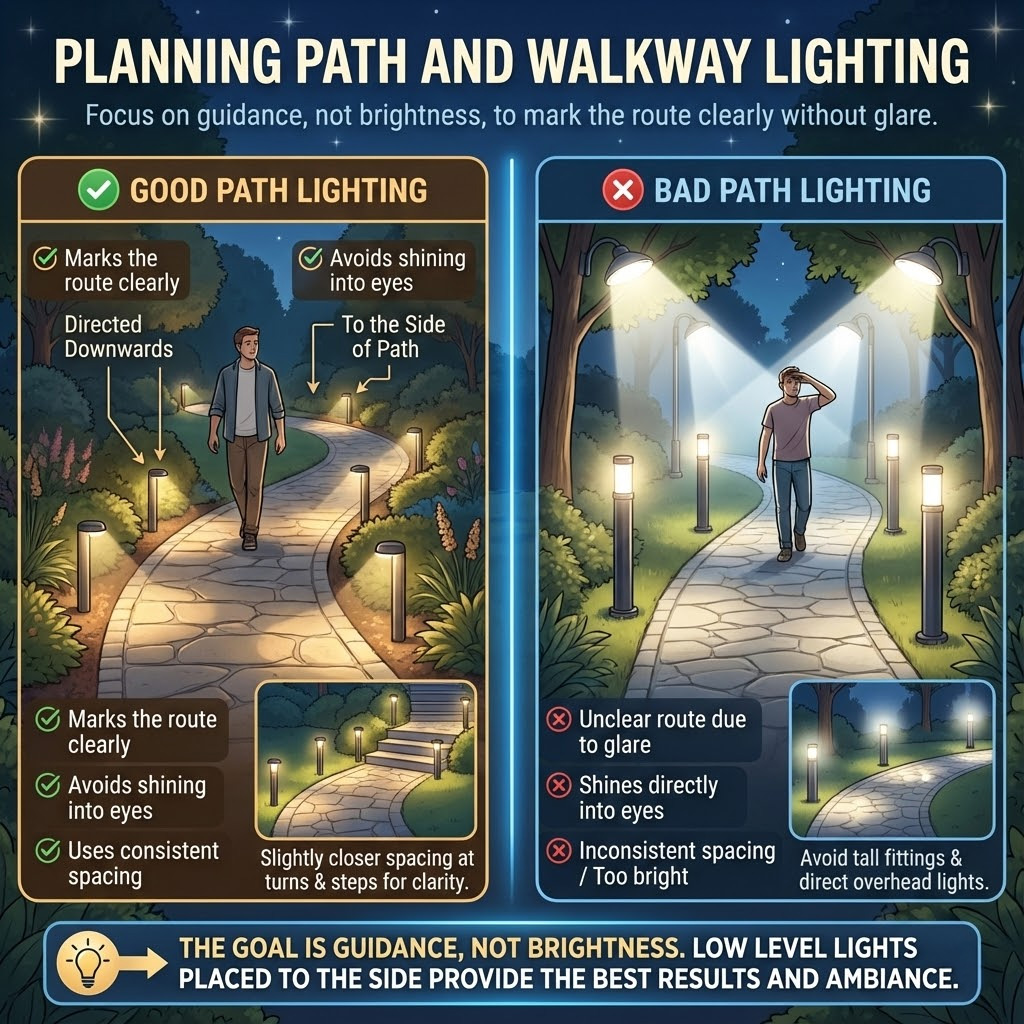
Good path lighting:
- Marks the route clearly
- Avoids shining into eyes
- Uses consistent spacing
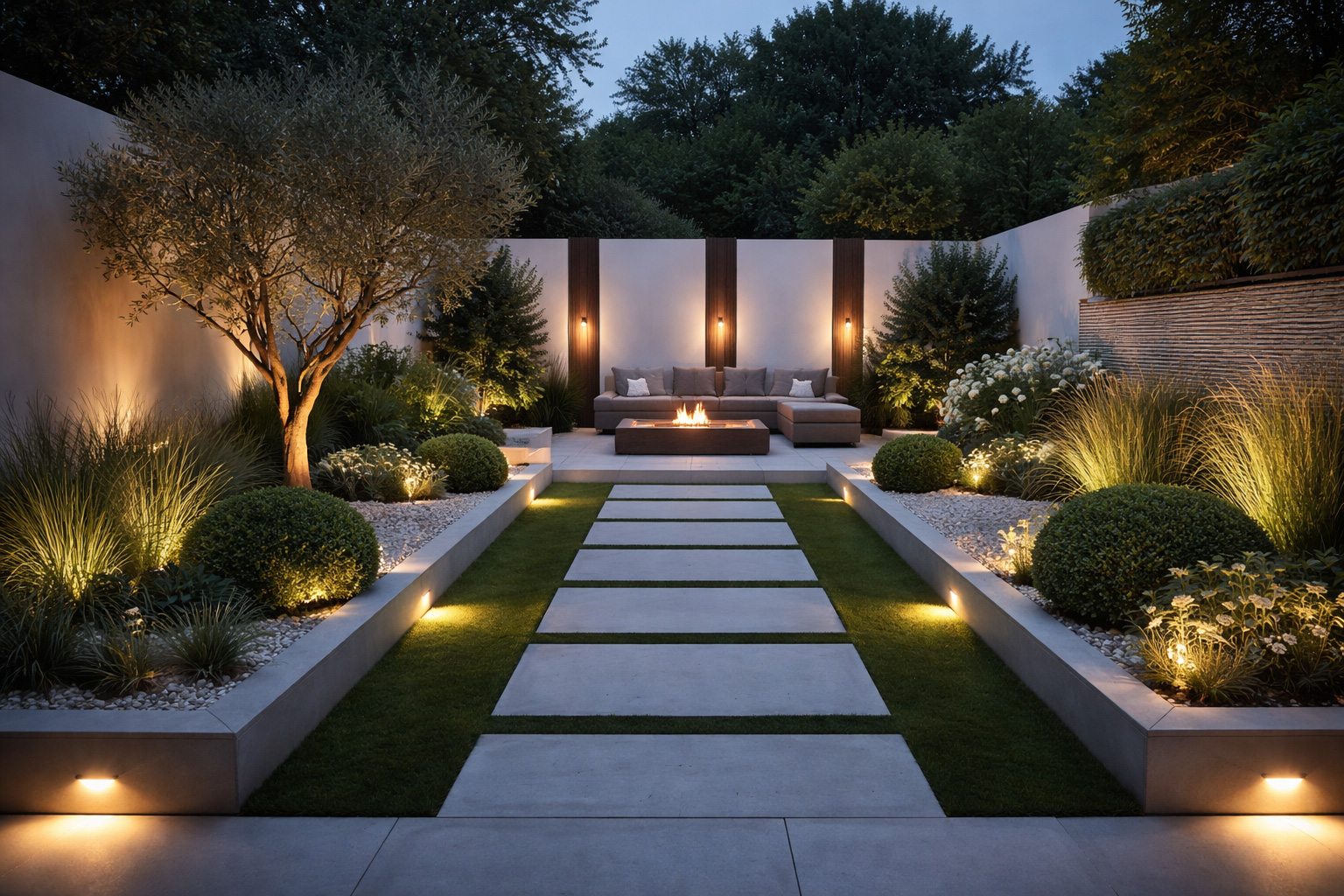
Low level lights placed to the side of paths usually work better than tall fittings or lights placed directly overhead. The goal is guidance, not brightness.
Where paths change direction or meet steps, slightly closer spacing improves clarity without increasing overall brightness.
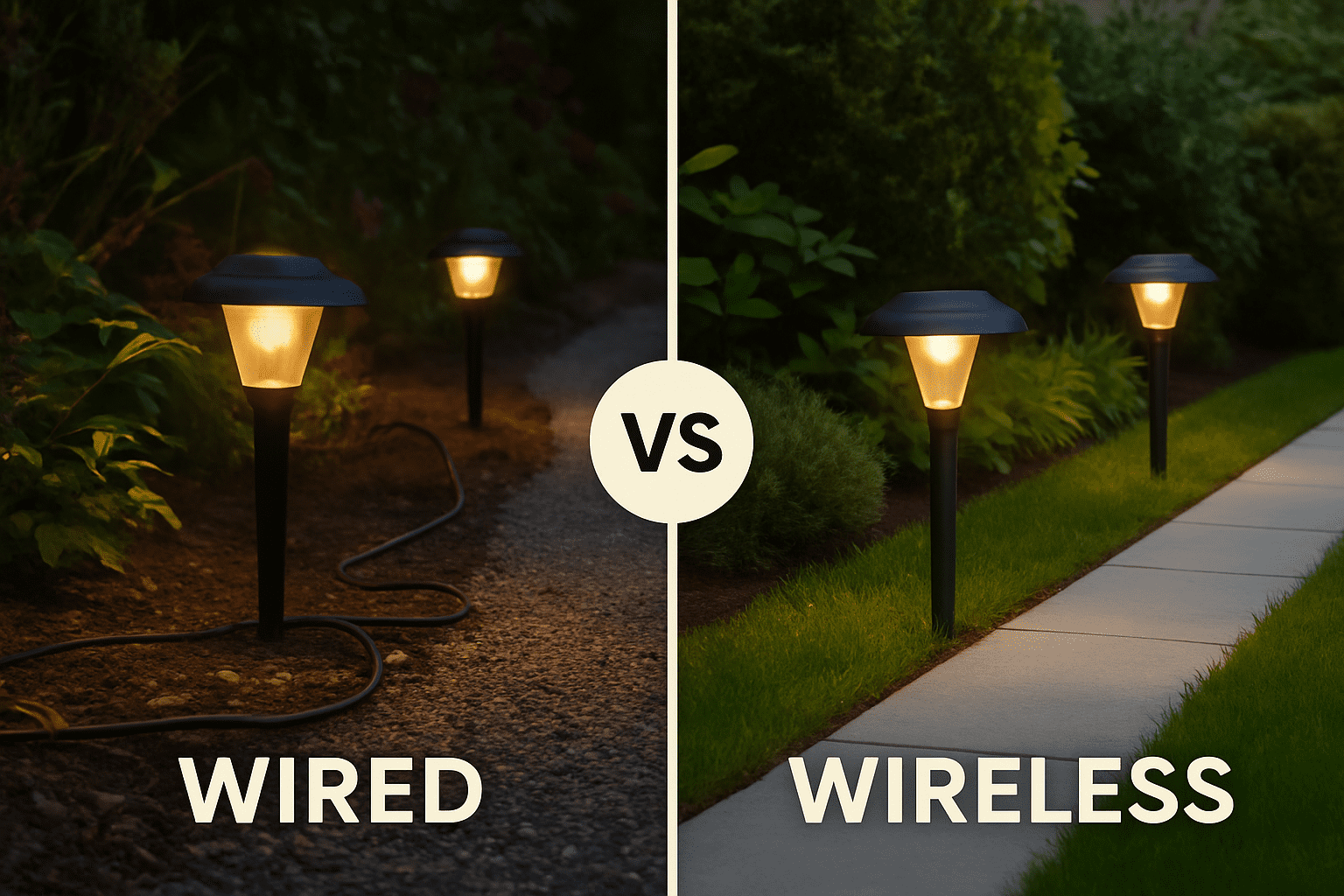
In some locations, solar garden lighting can work well for marking paths where wiring is impractical.
Lighting steps, slopes, and level changes
Steps and changes in level deserve special attention.
Effective layouts:
- Highlight step edges subtly
- Use multiple low level lights rather than one bright source
- Avoid lighting directly at eye height
Lighting should reveal the change in level without drawing attention to itself. This improves safety while keeping the garden visually calm.

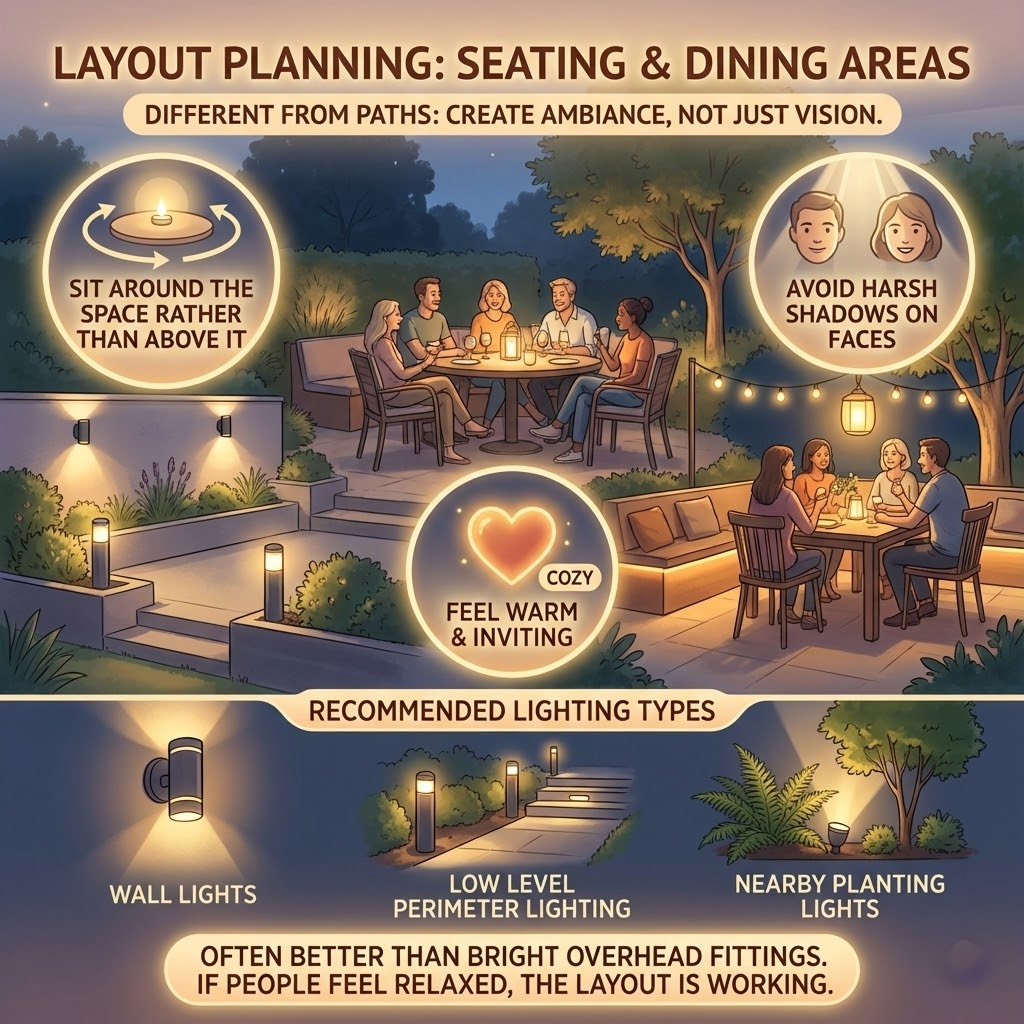
Layout planning for seating and dining areas
Seating areas need a different approach from paths.
Here, lighting should:
- Sit around the space rather than above it
- Avoid harsh shadows on faces
- Feel warm and inviting
Wall lights, low level perimeter lighting, and nearby planting lights often work better than bright overhead fittings. If people feel relaxed, the layout is working.
Thoughtfully placed outdoor wall lighting helps define seating areas without relying on overhead light.
Using planting and features to shape the layout
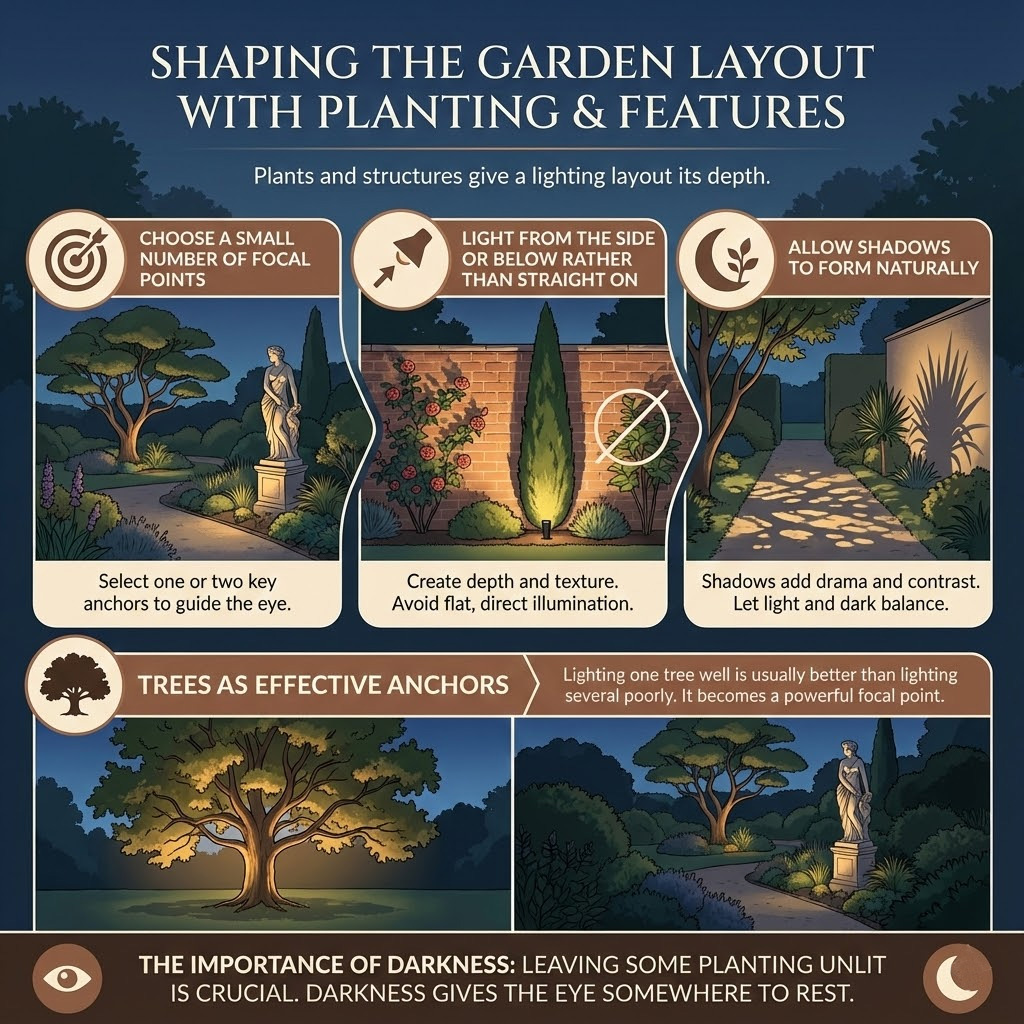
Plants and structures give a lighting layout its depth.
When planning feature lighting:
- Choose a small number of focal points
- Light from the side or below rather than straight on
- Allow shadows to form naturally
Trees are especially effective anchors in a layout. Lighting one tree well is usually better than lighting several poorly.
Leaving some planting unlit is important. Darkness gives the eye somewhere to rest.
Boundary and edge lighting in a layout
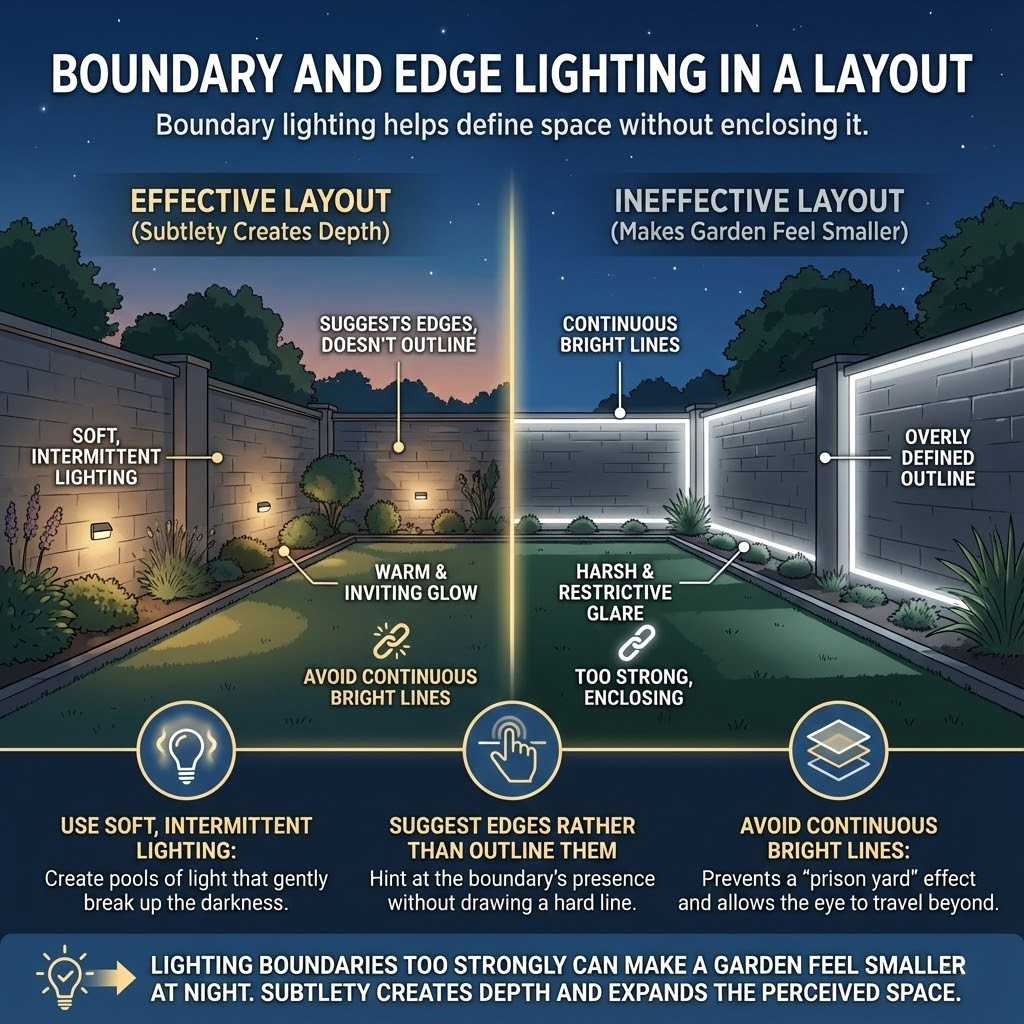
Boundary lighting helps define space without enclosing it.
Effective layouts:
- Use soft, intermittent lighting
- Avoid continuous bright lines
- Suggest edges rather than outline them
Lighting boundaries too strongly can make a garden feel smaller at night. Subtlety creates depth.
How the layout should look from inside the house
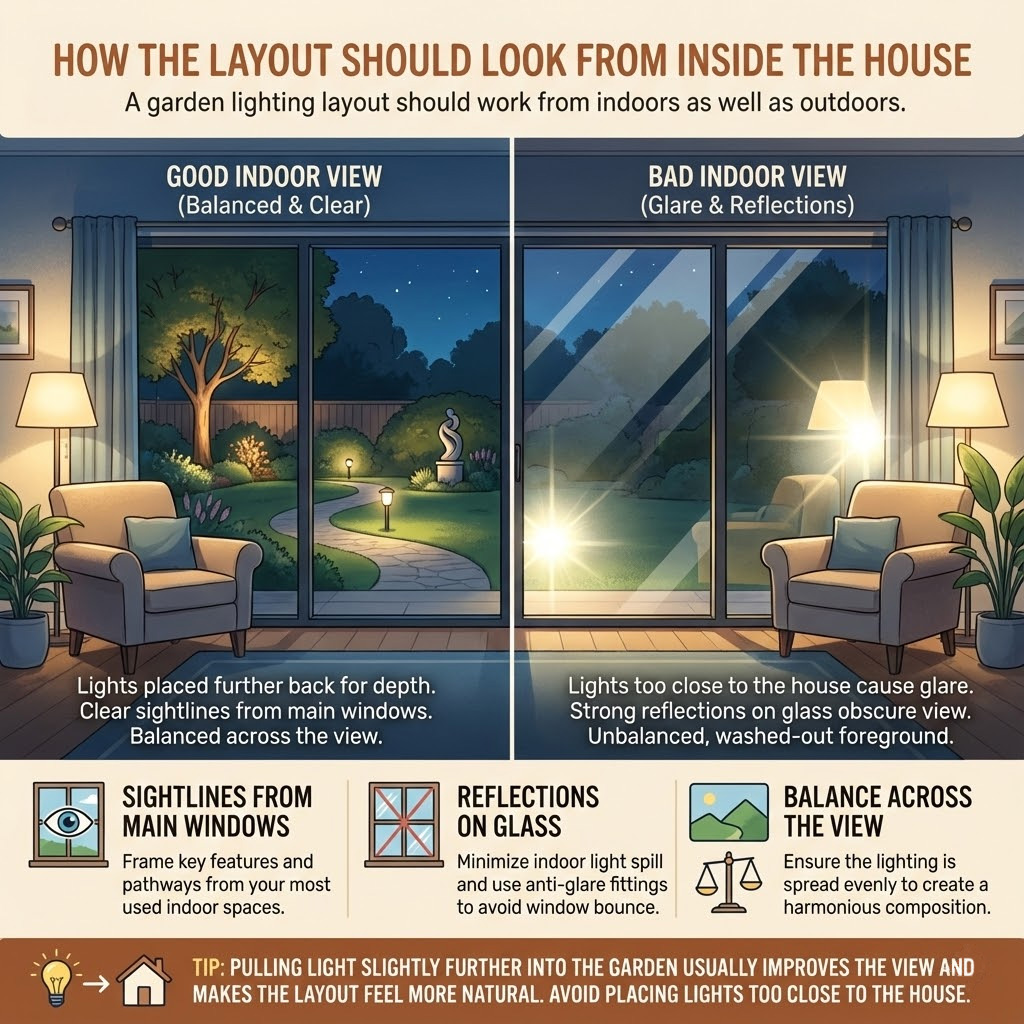
A garden lighting layout should work from indoors as well as outdoors.
Consider:
- Sightlines from main windows
- Reflections on glass
- Balance across the view
Lighting placed too close to the house often causes glare indoors. Pulling light slightly further into the garden usually improves the view and makes the layout feel more natural.
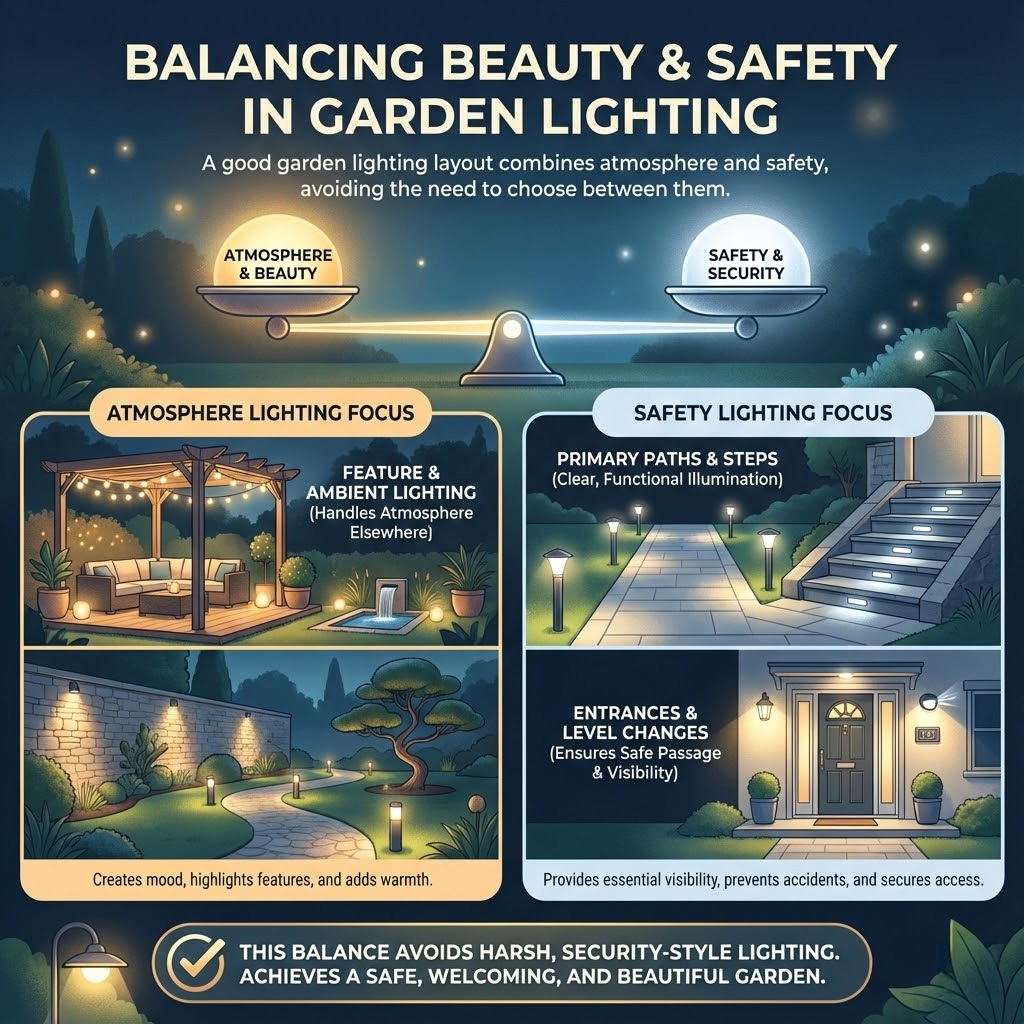
Balancing beauty and safety
A good garden lighting layout does not choose between atmosphere and safety. It combines both.
Focus safety lighting on:
- Primary paths
- Steps and level changes
- Entrances
Allow feature and ambient lighting to handle atmosphere elsewhere. This balance avoids the harsh, security style look that many gardens suffer from.
Keeping some areas darker also supports wildlife-friendly garden lighting, which benefits nocturnal species.
Following official light pollution guidance helps reduce glare and unnecessary spill beyond the garden.
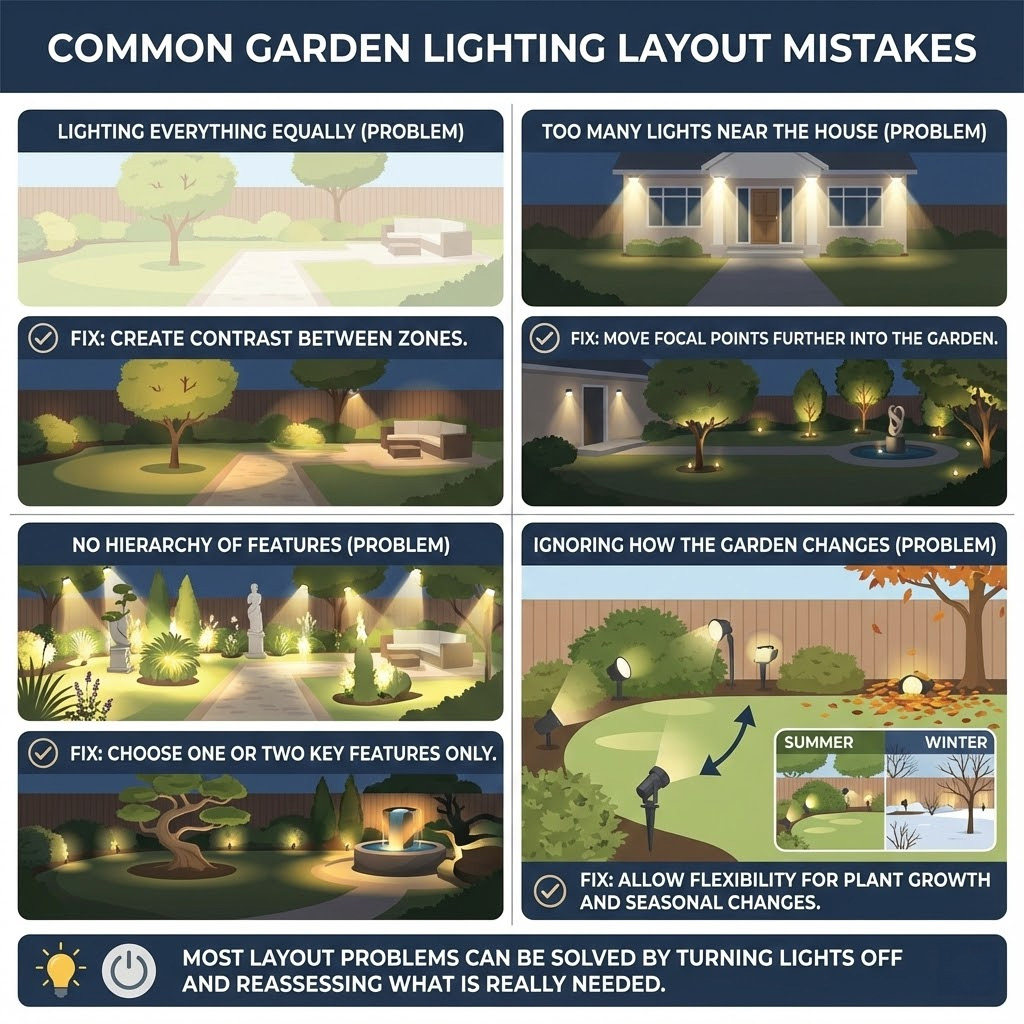
Common garden lighting layout mistakes
Lighting everything equally
Fix: Create contrast between zones.
Too many lights near the house
Fix: Move focal points further into the garden.
No hierarchy of features
Fix: Choose one or two key features only.
Ignoring how the garden changes
Fix: Allow flexibility for plant growth and seasonal changes.
Most layout problems can be solved by turning lights off and reassessing what is really needed.
Many layout problems are avoidable outdoor lighting mistakes that can be corrected without replacing fittings.
A simple garden lighting layout checklist
Before finalising your plan, check the following:
- Routes are clearly lit
- Steps and level changes are visible
- Seating areas feel comfortable, not bright
- Feature lighting is selective
- Some areas remain dark
If all five are true, your layout is likely balanced.
If you want to see how these principles work in practice, our garden lighting ideas guide shows how layout and atmosphere come together.

Frequently asked questions
Should garden lights be evenly spaced?
Even spacing works for paths, but not for the whole garden. Layout should respond to use and features.
Is it better to have fewer brighter lights or more subtle ones?
More subtle lights usually feel better and create more depth.
Can layout fix a garden that feels overlit?
Often yes. Repositioning and reducing lights can transform the space.
Can garden lighting layout reduce glare and light pollution?
Yes. Directing light toward paths and surfaces instead of open space reduces glare and unnecessary spill, making the garden more comfortable and responsible at night.
Do I need to plan garden lighting layout before installation?
Yes. Planning first helps avoid over lighting, poor placement, and costly changes later.
Final thoughts
A successful garden lighting layout is not about filling the garden with light. It is about placing light where it earns its place. When safety and beauty are planned together, the garden becomes usable, calm, and inviting after dark.
Start with how the space is used, build layers carefully, and let darkness play its role. That is the foundation of great garden lighting.