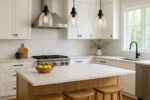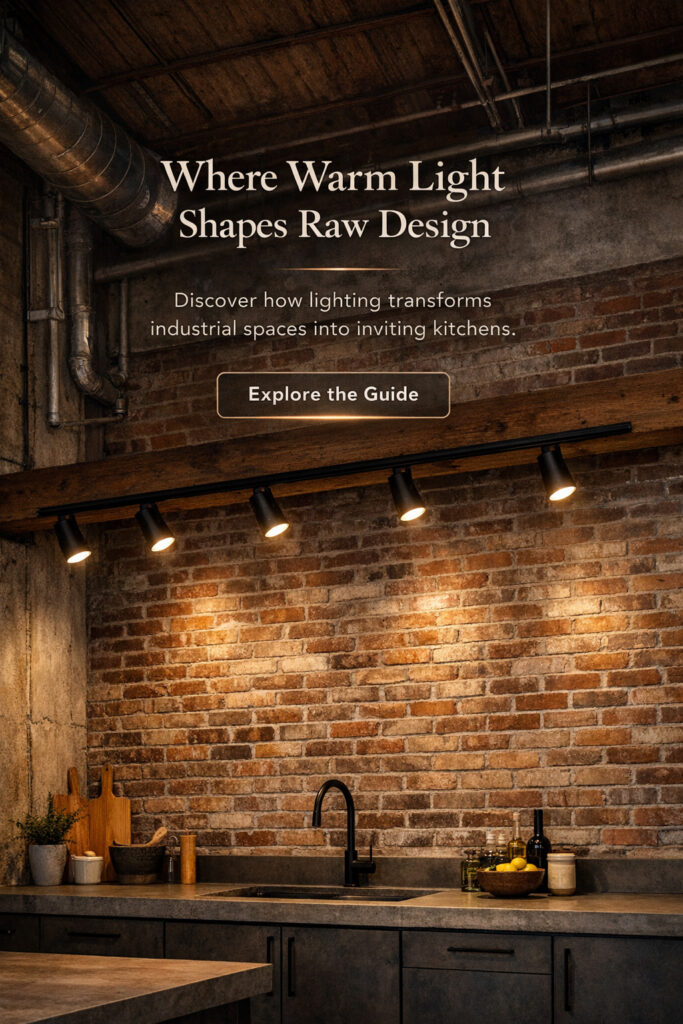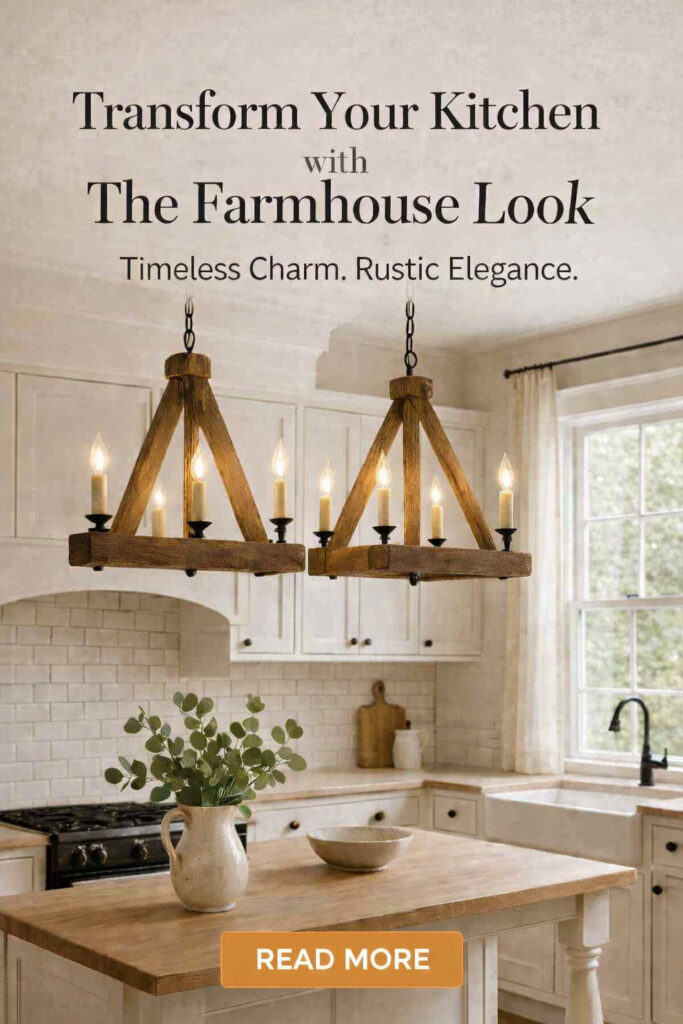
This article explores kitchen island pendants from a style and inspiration perspective. For technical layout, brightness, and placement guidance, see our complete kitchen lighting guide.
Kitchen island pendants can transform how your kitchen looks and feels, but getting the height, spacing, and style right often feels harder than it should. Hang them too low and they block sightlines. Too high and they lose their impact. Wrong spacing and the whole thing looks off.
The good news is that once you know a few straightforward rules, choosing kitchen island pendant ideas that work in real UK homes becomes surprisingly simple. Whether you are drawn to soft opal globes, ribbed glass, brass accents, or a single sculptural showstopper, this guide covers the practical rules and the style inspiration in one place.
For full kitchen lighting layout advice, including downlights, under-cabinet lighting, and task layers, our complete kitchen lighting guide covers everything from first fix to final switch-on.
Table of Contents
Kitchen Island Pendant Ideas That Always Work
Choosing the right layout is half the job, and the reassuring news is that some pendant arrangements look great in almost any UK kitchen, from compact galley layouts to large open-plan family spaces.
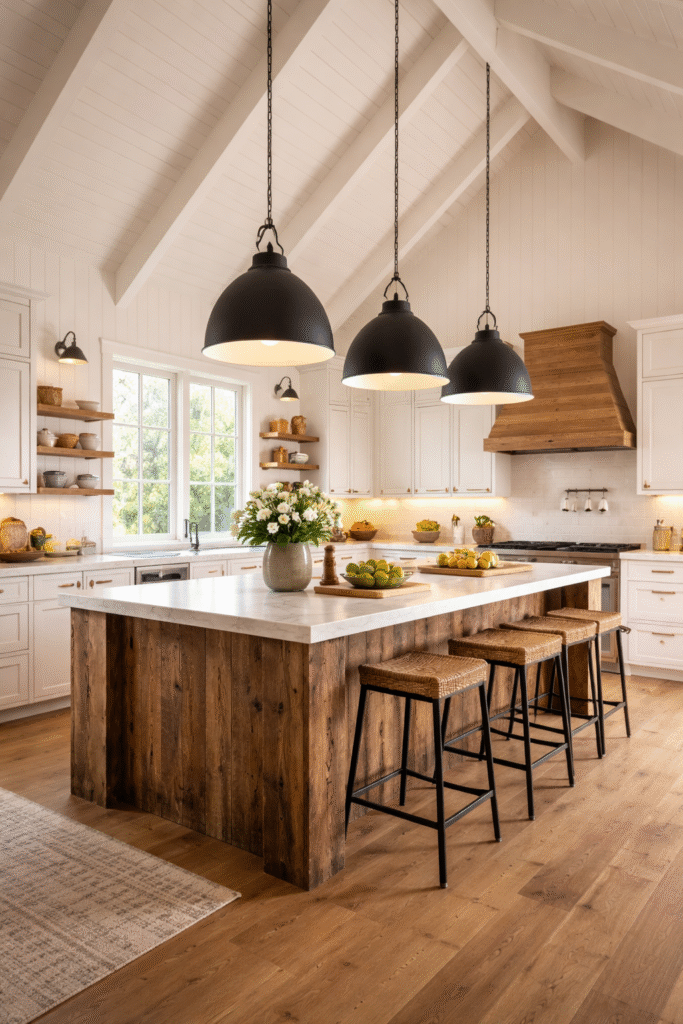
The classic trio (three pendants)
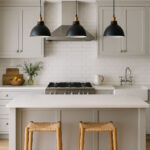
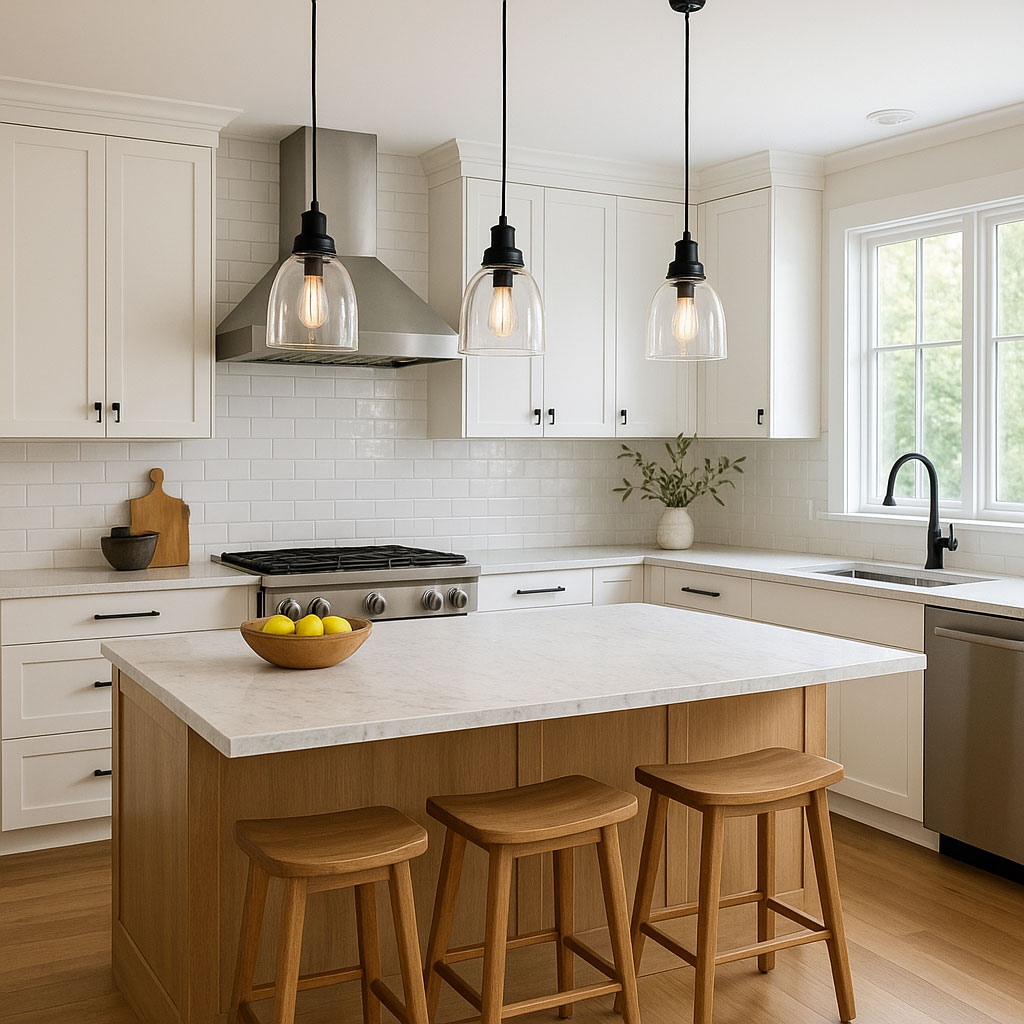
Three pendants create a balanced, rhythmic look across the island that suits the majority of UK kitchen sizes. This layout works particularly well in Shaker-style kitchens or any design with a sense of symmetry. It is the most popular kitchen island pendant idea for good reason – it rarely looks wrong.
The power pair (two larger pendants)
For islands around 120 to 180cm, two pendants give a calm, modern, and intentional feel. This works especially well with wider shades like opal globes or broad metal domes, where the scale of each fitting is enough to fill the space without a third light.
One statement pendant
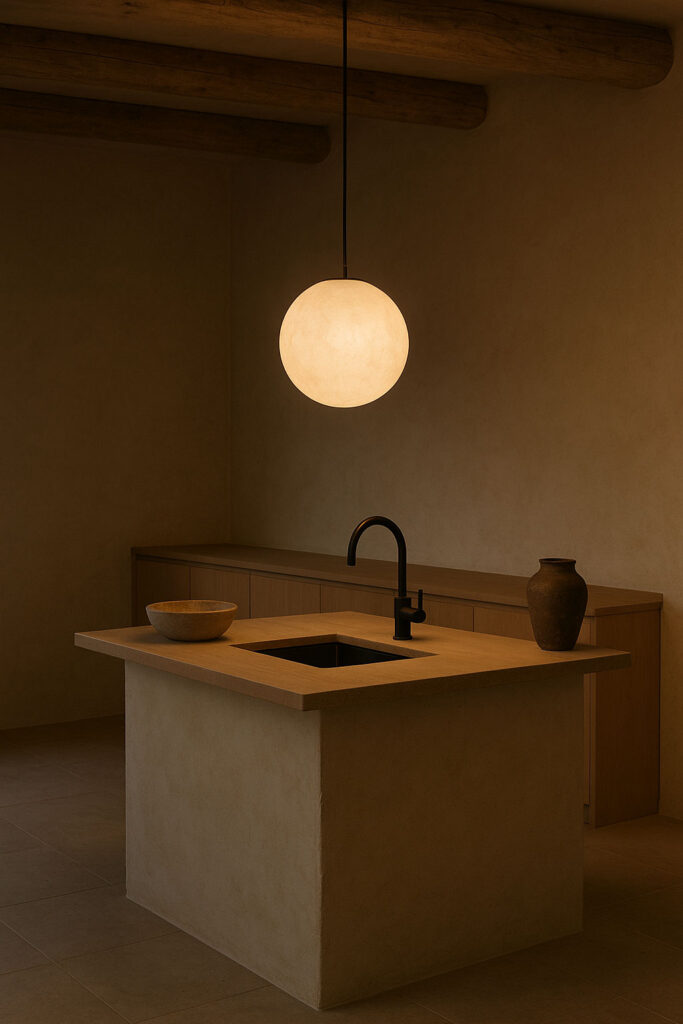
A single sculptural piece suits small kitchens, high ceilings, or anyone who wants a bold focal point. A well-chosen statement pendant draws the eye and simplifies the wiring, which your electrician will appreciate.
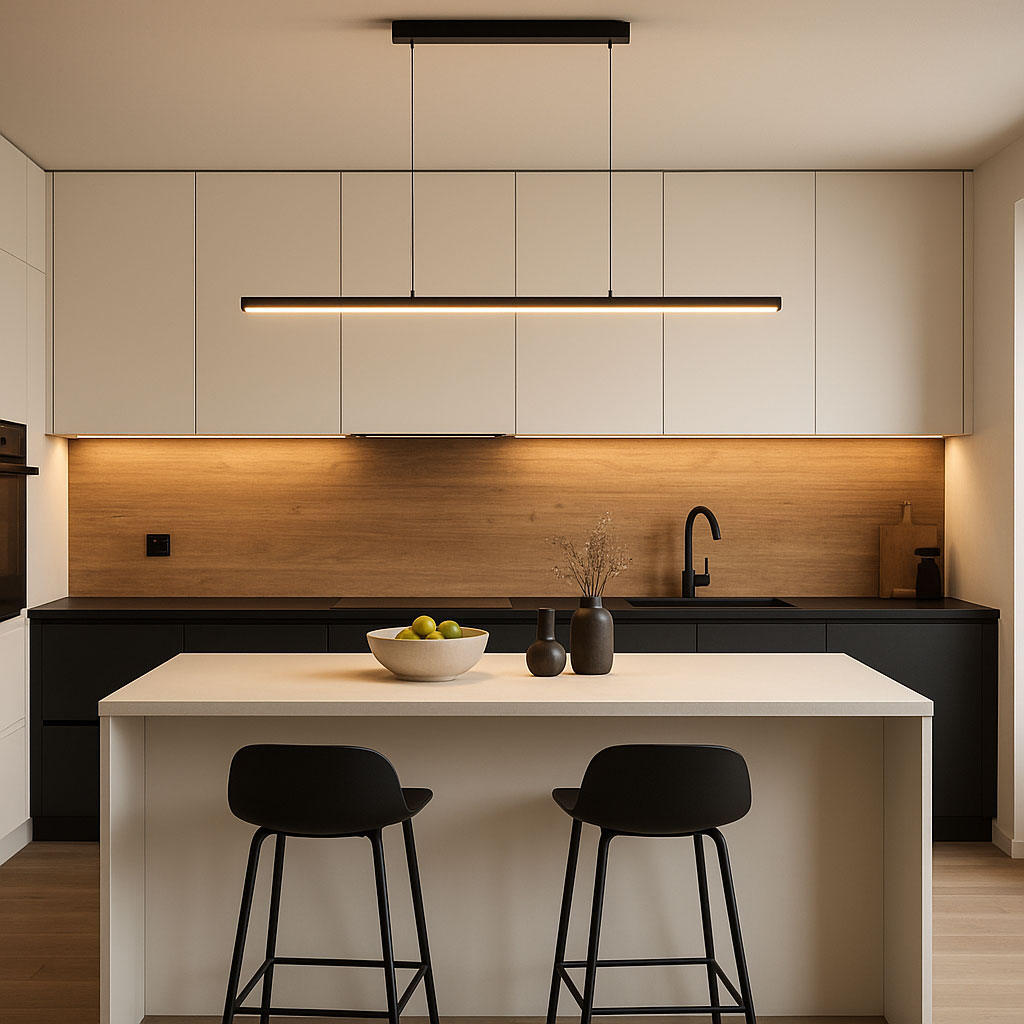
Linear bar lights
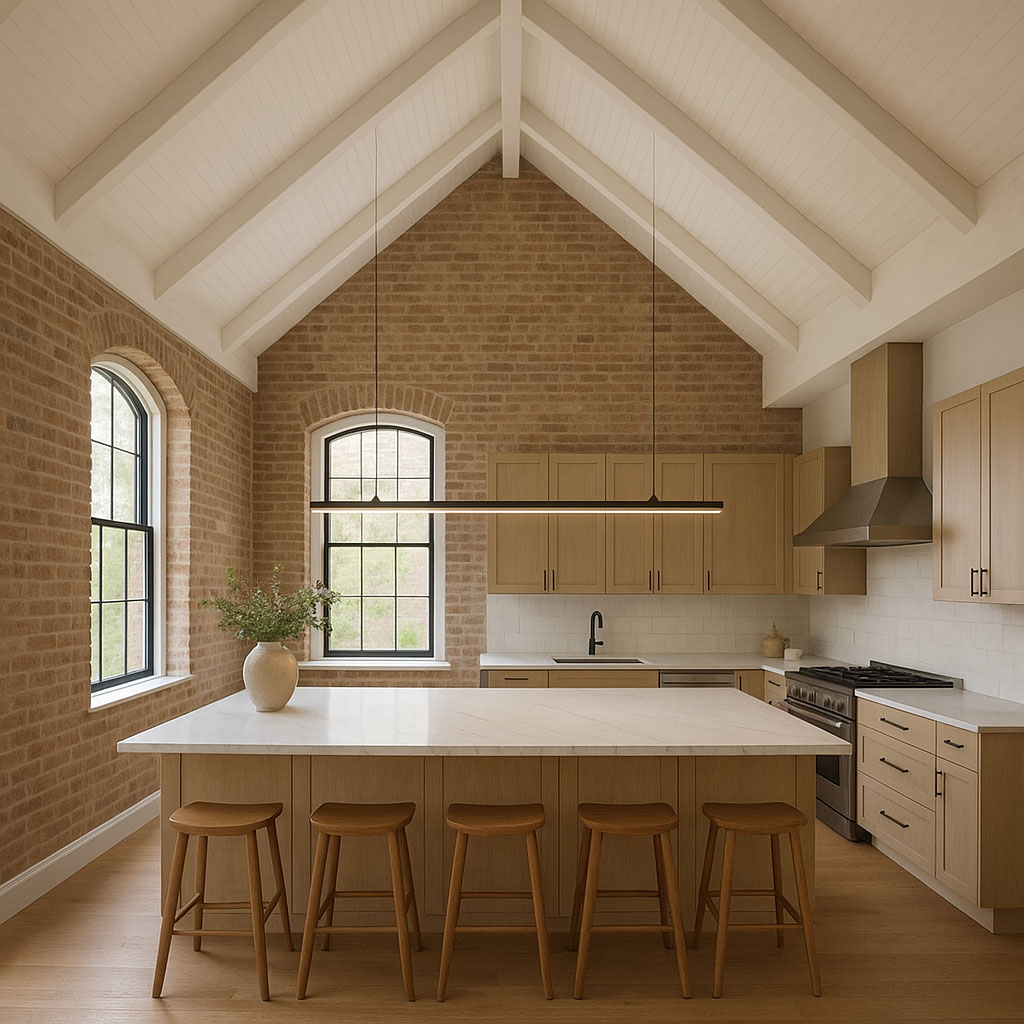
For islands over 240cm, a single linear pendant or LED bar offers even light distribution without the visual complexity of multiple fittings. Linear pendants are increasingly popular in contemporary UK kitchen designs and suit minimalist aesthetics particularly well.
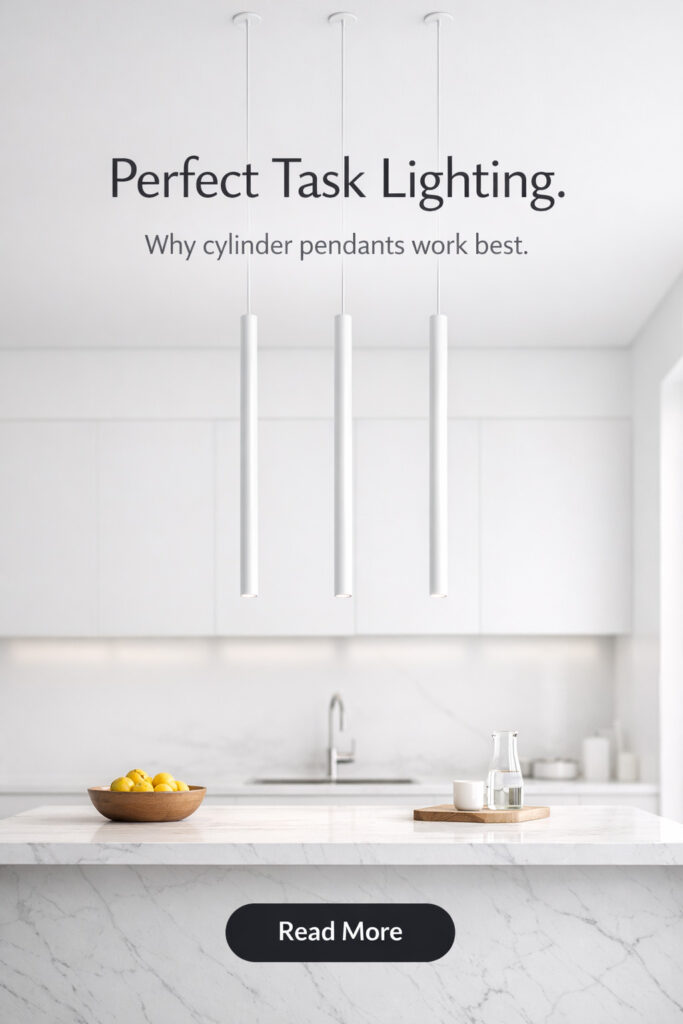
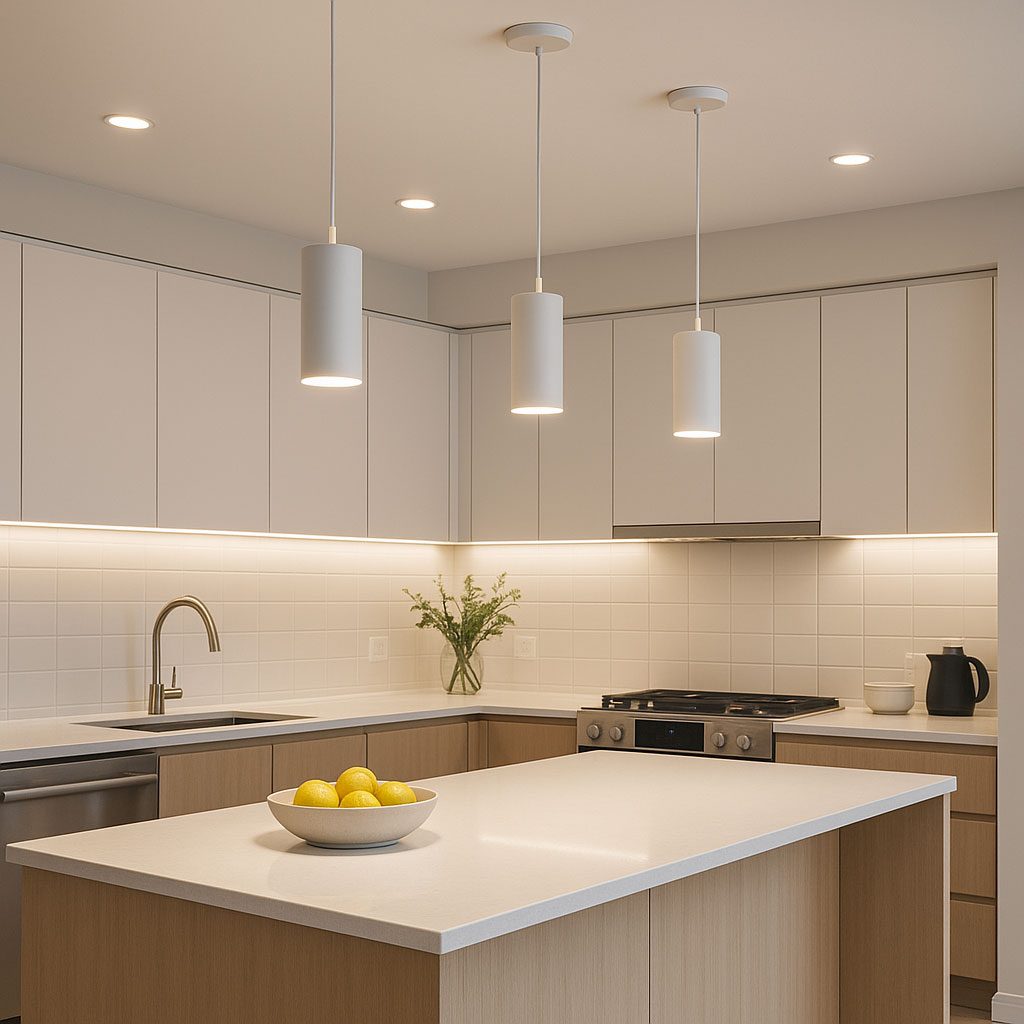
If you prefer a more minimalist approach with excellent task lighting, our guide to cylinder pendant lights for kitchen islands covers that style in detail.
How High to Hang Kitchen Island Pendants
This is the question that sends most people to Google late at night, and it has a reassuringly simple answer.
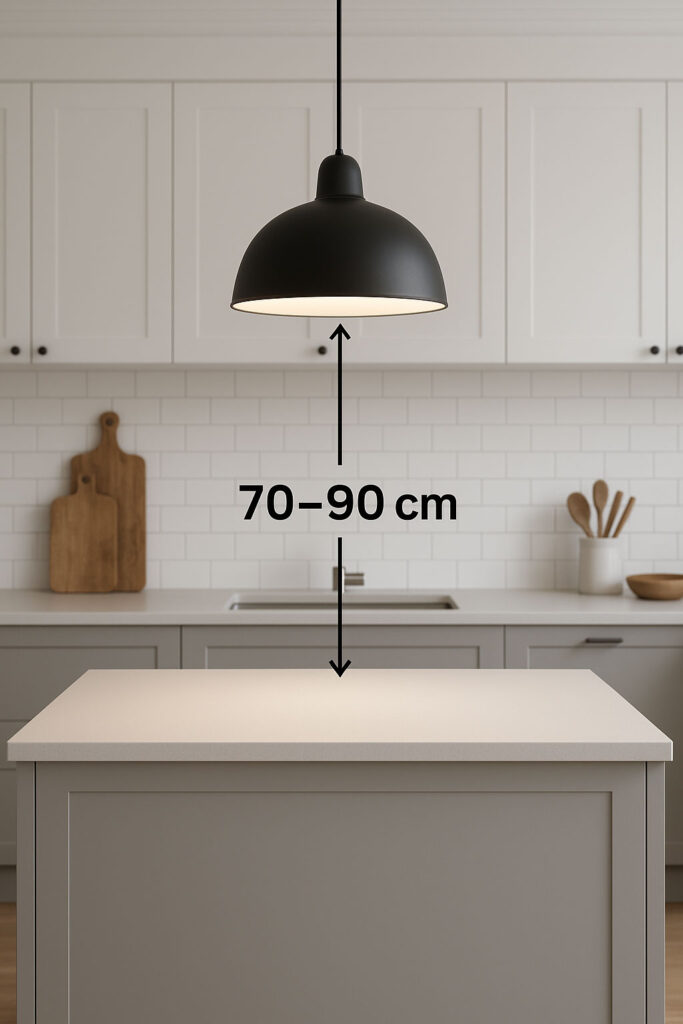
The standard UK rule: hang pendants 70 to 90cm above the worktop surface.
This range works in the vast majority of UK homes and provides the right balance between task lighting, visual impact, and keeping sightlines clear across the island.
Adjusting for your ceiling height
Standard 2.4m ceilings suit a pendant height of 75 to 80cm above the worktop. This keeps the fitting proportionate to the room without it feeling too low or too lost in the space.
Taller 2.7m ceilings work best at 85 to 90cm above the worktop. The extra height gives the pendant room to breathe and avoids the fitting looking cramped against the ceiling.
For 3m ceilings and above, go 90 to 100cm above the worktop, or consider pendants with decorative stems or long cables that fill the vertical space. High ceilings can swallow small fittings, so scale up accordingly.
The eye-line test
Sit on a stool at the island. If you can see the bare bulb, the pendant is too low. If you see a soft, diffused glow from the shade, the height is right. This quick test catches most height errors before the electrician leaves.
The light spread test
If you notice shadows on the chopping area directly below, try dropping the pendants by 5 to 10cm. This widens the light spread and improves task visibility without dramatically changing the look.
To complement pendant height with the right bulb tone, our colour temperature guide explains the difference between warm and cool light and which suits kitchen islands best. For wiring safety guidance, Electrical Safety First is a trusted UK resource.

How to Space Your Pendants
Good spacing is what separates kitchen island pendant ideas that look carefully considered from those that feel a bit off. The rules are simple once you see them.
The golden rule: 15 to 20cm from each end of the island
Start by keeping the outermost pendants inset from the edges of the island by at least 15cm. This prevents the fittings from looking squashed against the ends and gives the arrangement a balanced frame.
Gap between pendants: 60 to 80cm
This range produces a clean, evenly distributed look with no awkward dark spots between the lights. Closer than 60cm and the pendants crowd each other. Wider than 80cm and you start to get noticeable gaps in the light coverage.
Real UK island examples
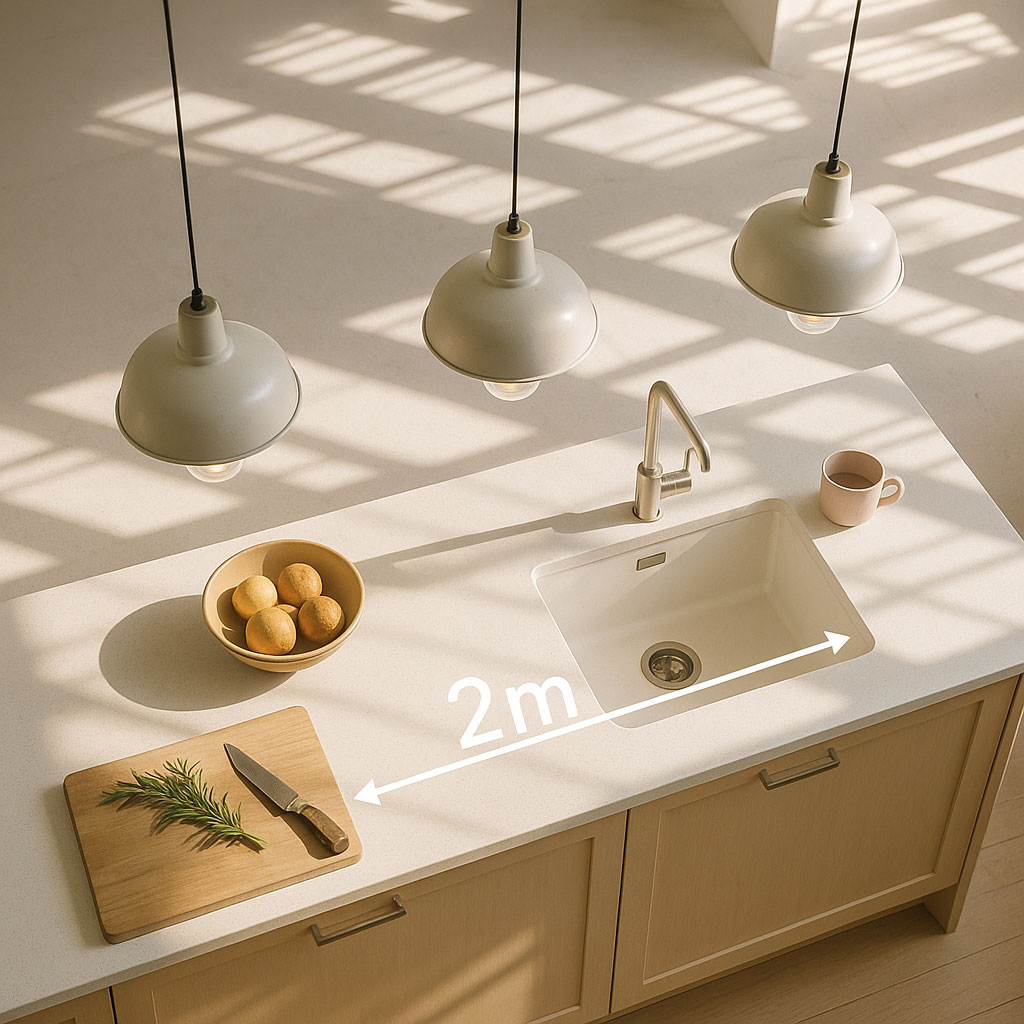
A 120cm island suits two pendants, spaced symmetrically with equal gaps from each end. A 180cm island works well with three pendants. At 240cm, three large pendants or four slimmer ones give good coverage. For islands over 300cm, a linear bar pendant is often the cleanest solution.
If you are planning your full kitchen downlight layout alongside pendants, our kitchen downlight spacing guide helps you get the ceiling lighting right so the pendants do not need to carry all the brightness.
For professional spacing standards, CIBSE provides industry-standard lighting design guidance.

Stylish Pendant Looks for UK Kitchens
These finishes and styles are consistently popular in UK kitchen renovations because they are warm, versatile, and look good in both modern and traditional settings.
Ribbed and fluted glass
Ribbed glass pendants catch the light beautifully during the day and produce a soft, patterned glow in the evening. They work especially well over seating areas where you want visual interest without glare.
Opal glow globes
Opal glass produces zero glare and a gentle, even light that flatters everything beneath it. These are an excellent choice for islands that double as dining or socialising spaces, where harsh shadows are unwelcome.
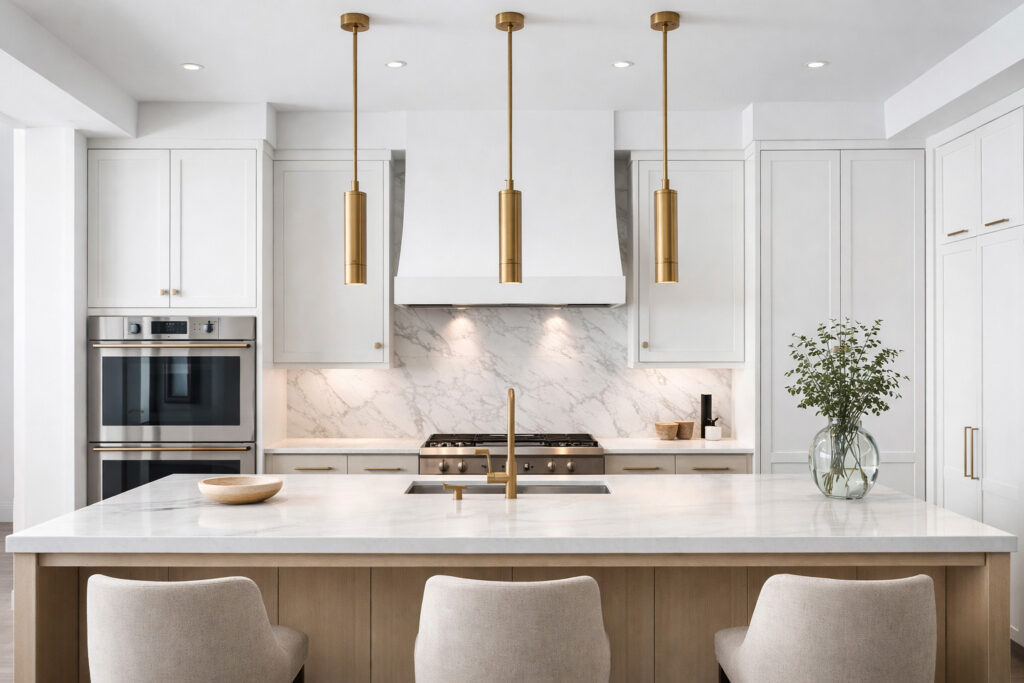
Brass and warm metal accents
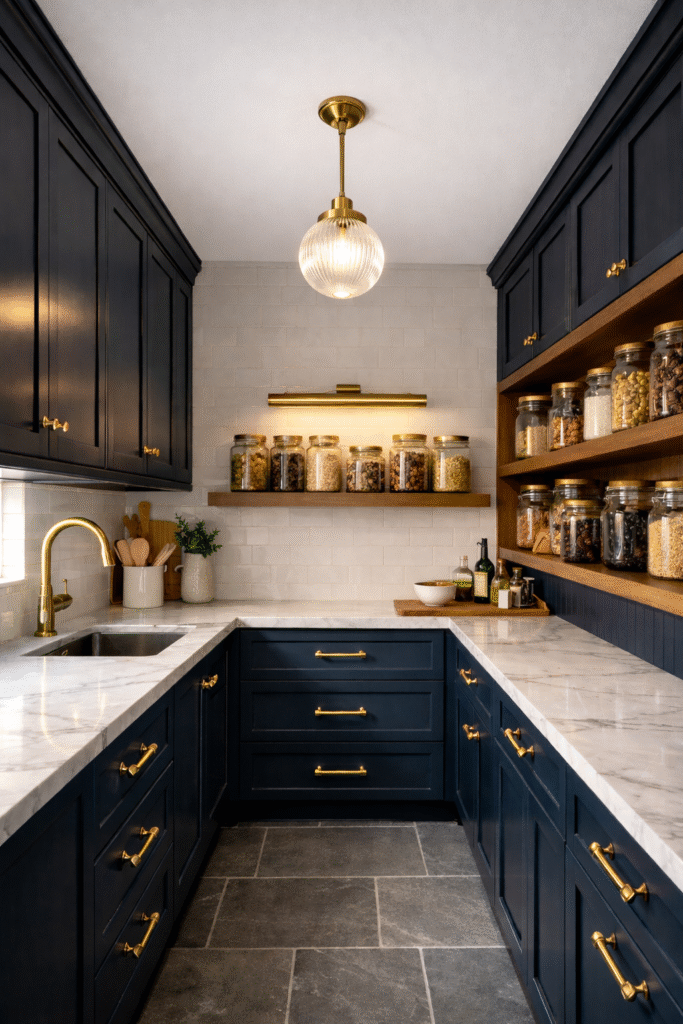
Brass pendants pair naturally with warm white lighting at 2700 to 3000K and add a sense of understated quality without feeling showy. Brushed brass and antique brass finishes are particularly popular in UK kitchens right now.
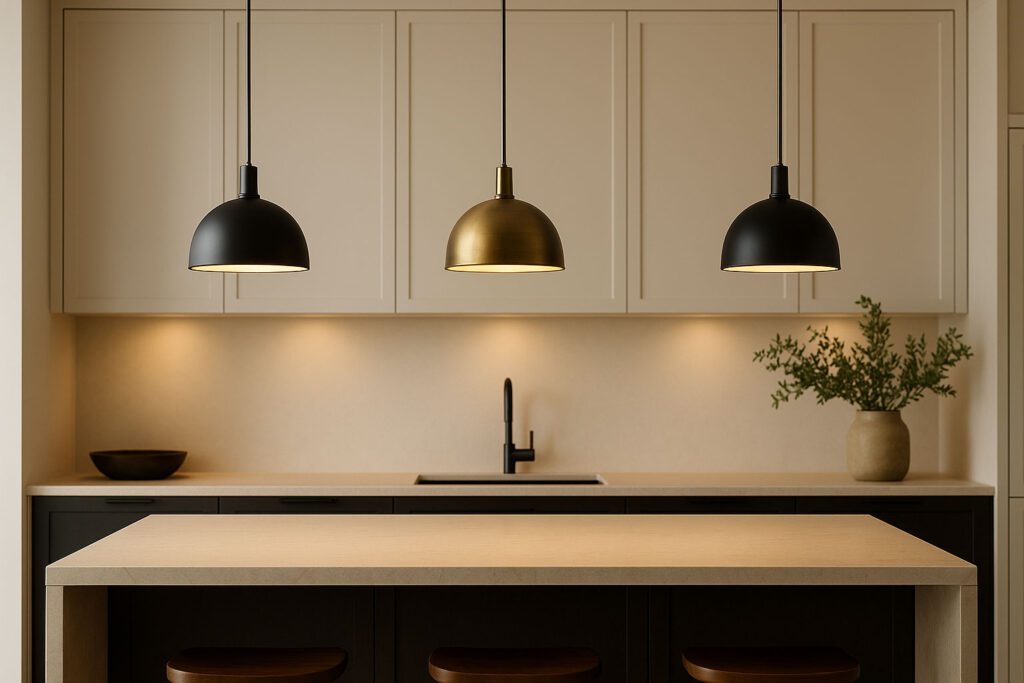
Matte black shades
Black metal shades create contrast and definition, especially effective against light-coloured cabinetry or white walls. They give a contemporary, architectural feel without needing anything dramatic.
Natural rattan or linen
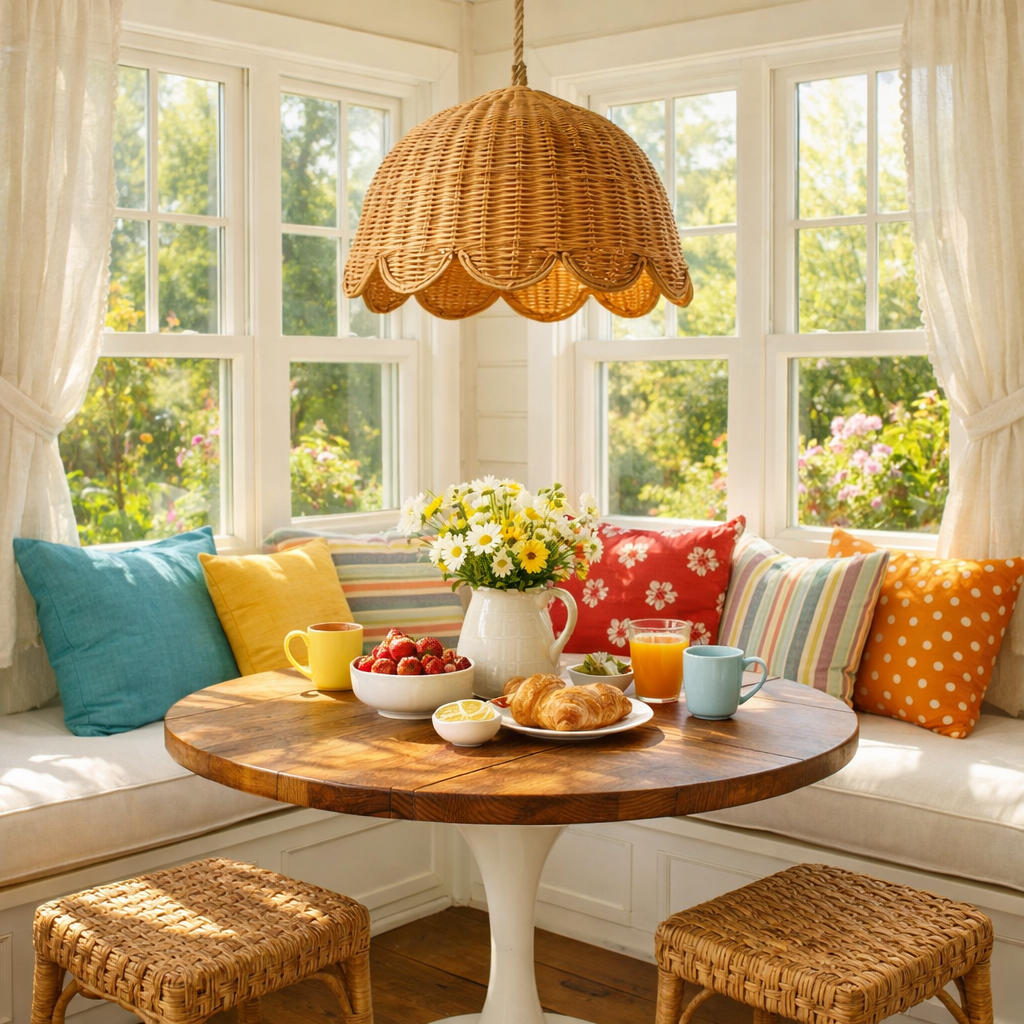
Rattan and linen shades bring instant warmth and texture. They look particularly at home in Scandi, cottage, Japandi, or any kitchen design that leans towards natural materials. For more on this aesthetic, our guide to Scandi and Japandi kitchen lighting covers the full approach.
For broader kitchen style inspiration, our kitchen lighting ideas guide has layout and fitting ideas for every UK kitchen style.
For advice on choosing low-energy bulbs to go inside your pendants, the Energy Saving Trust has straightforward guidance on LED options.

Practical UK Tips for Wiring, Heights, and Safety
These are the practical details that most people only discover after installation. Getting them right first time saves hassle and money.
Always fit a dimmer switch. Pendants on a dimmer give you bright, clear light for food preparation and soft, low light for evening socialising. This single upgrade transforms how flexible your island lighting feels. Our guide to smart kitchen lighting scenes shows how to set up presets for cooking, dining, and cleaning.
Keep colour temperatures consistent. Use 2700 to 3000K for your island pendants and, if your ceiling downlights run slightly cooler at 3500 to 4000K, keep the gap within 500K to avoid a jarring mismatch. Our kitchen colour temperature guide explains this in detail.
Check joist direction before wiring. Knowing which way the ceiling joists run before your electrician arrives avoids costly rerouting and makes first-fix wiring much smoother.
Avoid hanging pendants in walk-around zones. In busy households with children, make sure pendants are positioned directly over the island worktop rather than overhanging into circulation routes. Keep them high enough to avoid any head-height issues.
Keep pendants away from cooker hoods. Steam, grease, and heat from hobs and extraction units will damage pendant fittings over time. Position pendants at least 60cm away from any extraction zone.
For UK-approved electrical installation guidance, NICEIC is the industry-standard resource for finding certified electricians and checking compliance.
Pendants for Different Kitchen Layouts
Every kitchen layout has its own lighting personality, and the best kitchen island pendant ideas take the wider room into account.
Open-plan kitchens. Match or complement the colour temperature and finish of your living and dining area lighting so the whole space feels cohesive. If your living room uses 2700K warm white, carry that through to your island pendants.
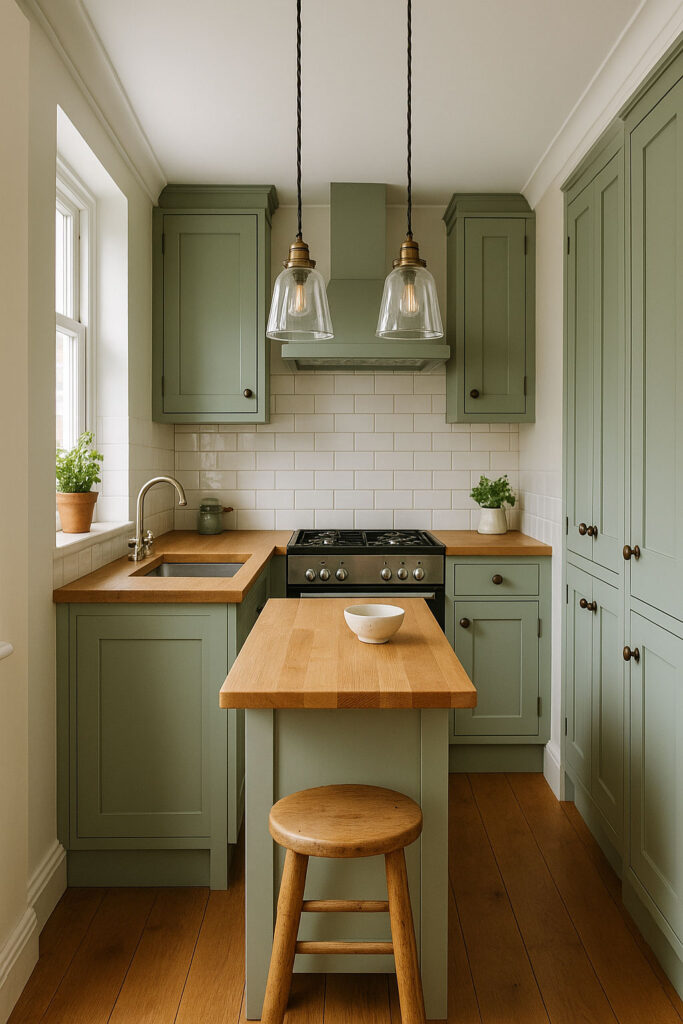
Small kitchens. Two modest pendants or one statement fitting keeps the space feeling open and airy. Oversized or overly busy arrangements can make a compact kitchen feel cluttered. For more small kitchen strategies, our small kitchen lighting ideas guide has specific advice.
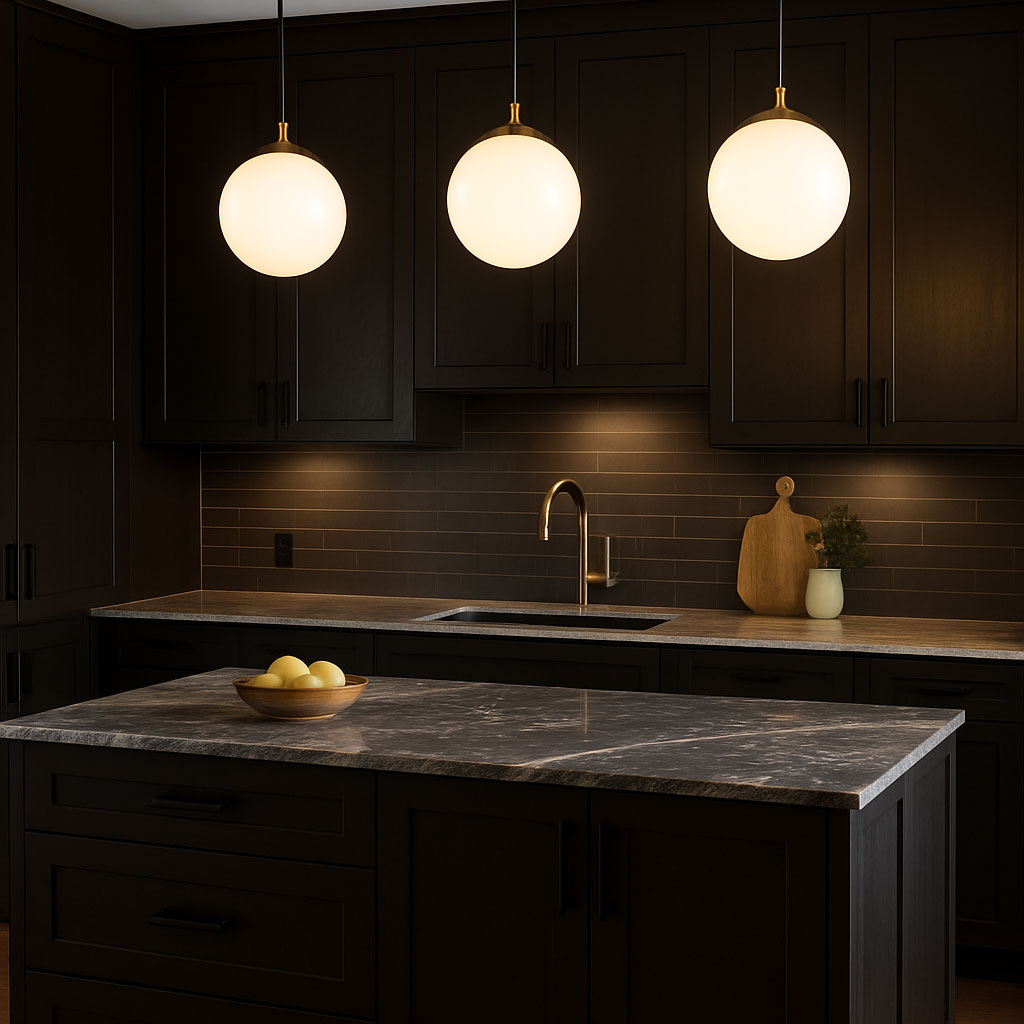
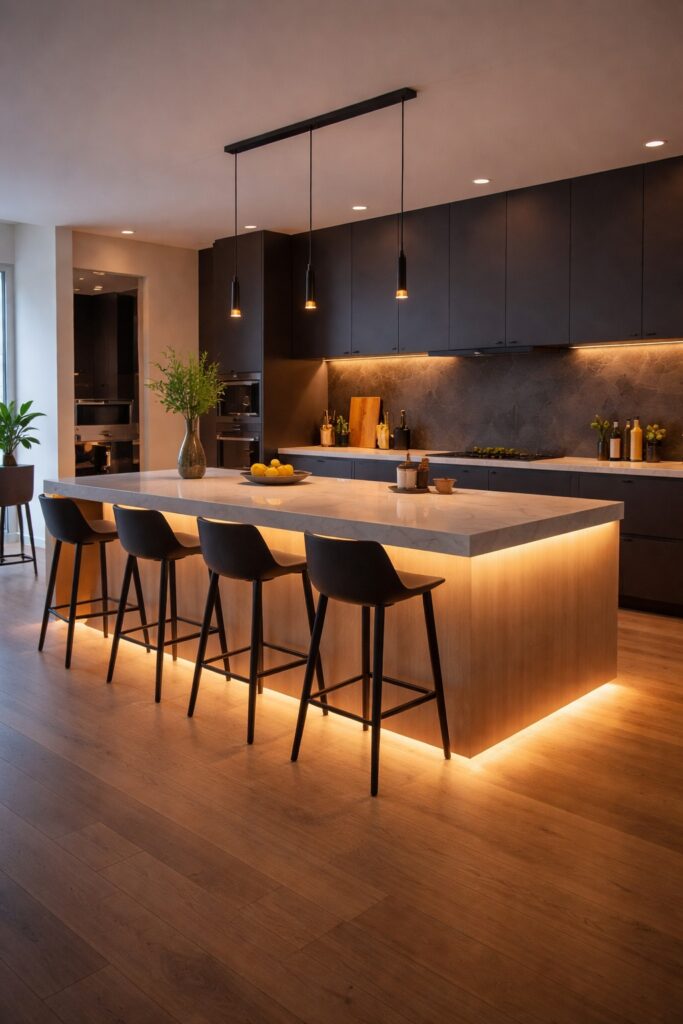
Dark cabinetry kitchens. Opal or ribbed glass pendants bounce and diffuse light, which is essential when dark surfaces absorb much of it. Avoid fully opaque downward-facing shades in dark kitchens as they create pools of light with heavy shadows between them. Our guide to lighting dark cabinetry kitchens goes deeper on this.
High-ceiling kitchens. Long stems, extended cables, or linear bar pendants fill the vertical space and bring the light source down to a useful height. In rooms with 3m ceilings or above, pendants with short drops can look lost and disconnected from the island below.
Low-ceiling kitchens. Slim, flush-friendly pendants or semi-flush fittings work better than long-drop designs when headroom is limited. Our low ceiling kitchen lighting guide covers the best options.
For lumen guidance on how bright your island pendants need to be alongside your other kitchen lighting, see our guide to lumens for kitchen lighting.
Frequently Asked Questions
How high should island pendants hang?
The standard UK recommendation is 70 to 90cm above the worktop surface, measured from the bottom of the pendant shade. For standard 2.4m ceilings, aim for 75 to 80cm. For taller ceilings, increase to 85 to 100cm to maintain proportion. Always do the eye-line test from a seated position to check the bulb is not directly visible.
How many pendants do I need over a kitchen island?
Two pendants suit islands up to about 150cm. Three work well for islands between 150 and 240cm. For larger islands, consider three oversized fittings, four slimmer ones, or a single linear bar pendant. The key is keeping each pendant spaced 60 to 80cm apart with at least 15cm clearance from each end of the island.
What colour temperature is best for kitchen island pendants?
Warm white at 2700 to 3000K is the most popular choice for island pendants because it creates a welcoming atmosphere, flatters food and skin tones, and suits both modern and traditional kitchens. If your ceiling downlights are cooler at 4000K, the contrast between task and pendant lighting actually works well, as long as the gap stays within 500K.
Do pendants need to match kitchen door handles and taps?
They do not need to match exactly, but coordinating finishes creates a polished, intentional look. Brushed brass pendants with brushed brass handles, for example, ties the design together without requiring everything to be identical. Mixing finishes deliberately, such as black pendants with brass hardware, can also look excellent when done with confidence.
Are LED pendants suitable for kitchen islands?
LED pendants are the standard recommendation for kitchen islands. They run cool, last significantly longer than halogen or incandescent alternatives, are available in every colour temperature, and most are dimmable. Look for pendants with integrated LEDs or those that accept standard E27 or GU10 LED bulbs for easy replacement.
Can I hang pendants over an island with no electrical point above it?
Yes, but it will require a first-fix wiring job. An electrician can route a new feed through the ceiling to the correct position above your island. This is standard work during a kitchen renovation and is best done before the ceiling is plastered or finished. It is significantly harder and more expensive to add after the kitchen is complete.
Should I use pendants or downlights over my kitchen island?
Most well-lit kitchens use both. Downlights provide the overall ambient light for the room, while pendants add focused task and accent lighting directly over the island. Pendants also serve a decorative purpose that downlights alone cannot achieve. For guidance on how to plan both layers together, our kitchen lighting ideas guide covers the full approach.
What size pendant is right for my island?
As a general rule, pendant shades between 25 and 40cm in diameter work well for most standard UK kitchen islands. Smaller shades suit arrangements of three or four, while larger shades of 40cm and above suit pairs or single statement pieces. The pendant should feel proportionate to the island surface beneath it without overwhelming the space.
Conclusion
Kitchen island pendants are one of the most visible and impactful lighting choices in any kitchen. With the right height (70 to 90cm above the worktop), proper spacing (60 to 80cm between fittings, 15 to 20cm from each end), and a style that suits your kitchen’s character, the result is a warm, well-lit focal point that looks intentional and works beautifully day to day.
Whether you are leaning towards a classic trio of ribbed glass pendants, a bold pair of opal globes, or one striking centrepiece, the practical rules in this guide apply across all styles. For your next step, explore our complete kitchen lighting guide for full layout planning, or use our colour temperature selector to preview how different light tones will look in your space.