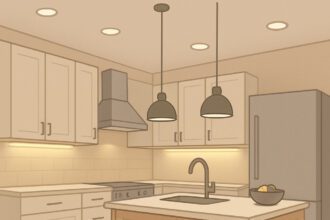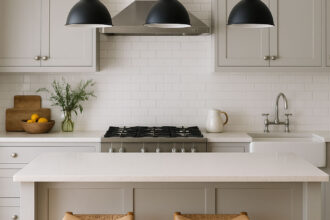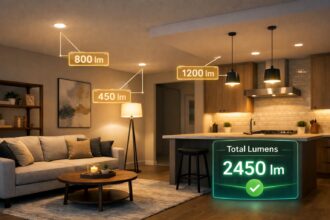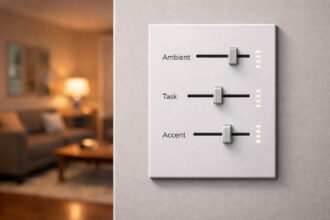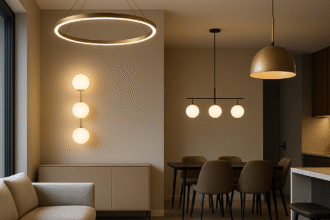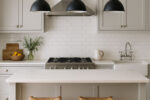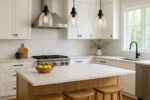

Tunable white kitchen lighting allows colour temperature to be adjusted between warmer and cooler tones to suit different tasks and times of day. This makes it possible to use different light settings for food preparation, general use, and evening conditions without changing fittings.
This guide focuses on one specific aspect of lighting design. For full guidance on warm vs cool lighting and how colour temperature affects your space, see our complete Colour Temperature Guide.
Table of Contents
What Does Warm→Cool Lighting Actually Mean?
Tunable white lets you shift colour temperature of your kitchen lighting between:
| Kelvin (K) | Appearance | Lighting Effect |
|---|---|---|
| 2700K | Warm amber candlelight | Lower brightness, warmer appearance |
| 3000K | Warm bright white | Modern + friendly, all-day |
| 3500–4000K | Neutral, crisp daylight | Focused, clean, fresh |
Warm = lower contrast
Cool = higher clarity
Mid = general use

2700K – When Warm Ambience Wins
2700K is typically used for evening lighting and lower-level illumination where brightness is not the priority.
Use 2700K for:
- Dinner lighting
- Open-plan evening relaxation
- Evening use
- Low natural light conditions
- Lower brightness, warmer appearance
Best placements:
- Pendants over island/table
- Plinth & toe-kick lighting
- Under-cabinet strips for late-night glow
- Lamps + wall sconces in open-plan areas
Warm light is commonly preferred in the evening.

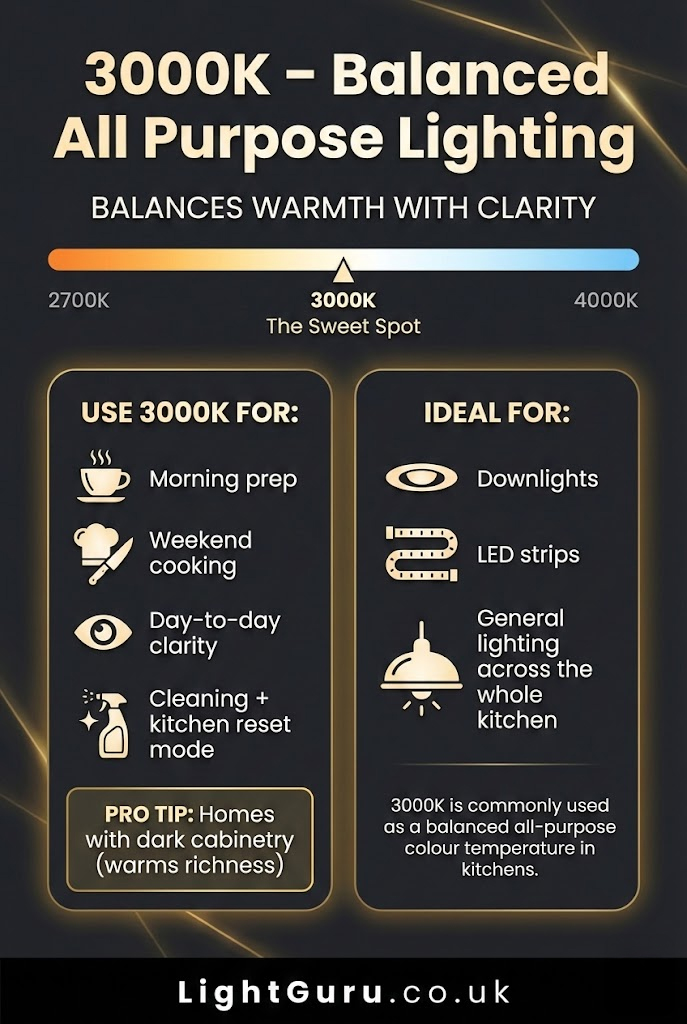
3000K – Balanced All Purpose Lighting
3000K is commonly used for general kitchen lighting because it balances warmth with clarity. 3000K sits between warm and cool tones and is commonly used as a general-purpose colour temperature in kitchens.
Use 3000K for:
- Morning prep
- Weekend cooking
- Day-to-day clarity
- Cleaning + kitchen reset mode
- Homes with dark cabinetry (warms richness)
Ideal for:
- Downlights
- LED strips
- General lighting across the whole kitchen
3000K is commonly used as a balanced all-purpose colour temperature in kitchens.
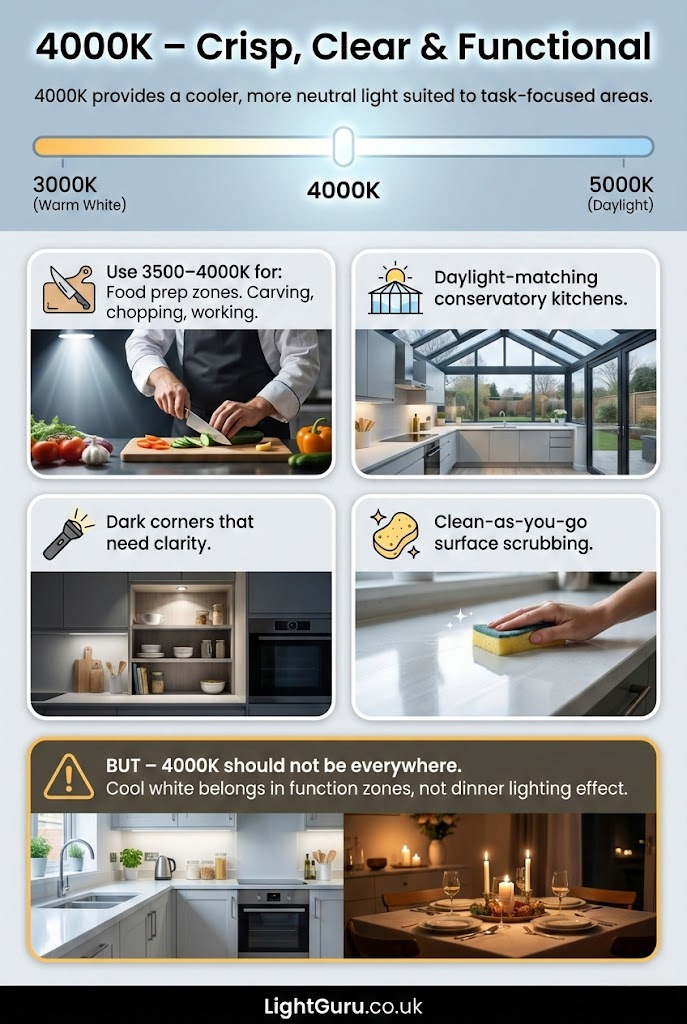
4000K – Crisp, Clear & Functional
4000K provides a cooler, more neutral light suited to task-focused areas
Use 3500–4000K for:
- Food prep zones
- Carving, chopping, working
- Daylight-matching conservatory kitchens
- Dark corners that need clarity
- Clean-as-you-go surface scrubbing
BUT –
4000K should not be everywhere.
Cool white belongs in function zones, not dinner lighting effect.
Tunable White allows Multiple Colour Temperatures.
Instead of choosing just one Kelvin, you get them all.
Morning?
Bright + crisp = 4000K
Midday cooking?
Clear & friendly = 3000K
Dinner or cosy evening?
Golden glow = 2700K
Where Tunable Light Works Best in Kitchens
This article explains how tunable white kitchen lighting is typically used across preparation, cooking and evening settings.
Different colour temperatures are used in kitchens for different purposes, depending on how the space is used and how much natural light is available.
| Location | Warm (2700K) | Neutral (3000K) | Cool (4000K) |
|---|---|---|---|
| Downlights | 🟡 | 🟢 | 🟡 (for task areas only) |
| Under-cabinet strips | 🟡 | 🟢 | 🟢 (if prepping often) |
| Pendants | 🟡 | 🟢 | 🔴 generally unsuitable for this application |
| Plinth lighting | 🟡 | 🟢 | 🔴 less commonly used in this position |
| Shelves/accent | 🟡 | 🟢 | 🔴 can produce high contrast in this position |
Legend:
🟢 = Commonly suitable
🟡 = Situational use
🔴 = Less commonly used
These recommendations reflect typical usage patterns rather than strict rules, and mixed colour temperatures are often used within the same space.
Warm below eye level.
Neutral at work height.
Cool only where you food prep.
Scene-Based Tunable Lighting Settings
Morning Suggestions
- 3500–4000K strips ON
- Downlights bright
- Pendants low or off
- Higher brightness with increased visual clarity
Day Mode Suggestions
- 3000K everywhere
- Strips strong + shadow-free
- Pendants mid-brightness
- Common daytime configuration
Evening Suggestions
- 2700K only
- Plinth glow ON
- Pendants dimmed warm
- Under-cabinet lighting set to lower brightness at warmer colour temperature
Different colour temperature settings are often used at different times of day depending on how the kitchen is being used.

Common Colour Temperature Mistakes
- All cool white everywhere – kills lighting effect
- No independent control – one scene fits none
- Big Kelvin jumps – 2700 → 4000K is harsh
- Using 4000K over dining – sterile
- Not using dimmers – evenly bright = flat
These are common mistakes to avoid when choosing colour temperature.

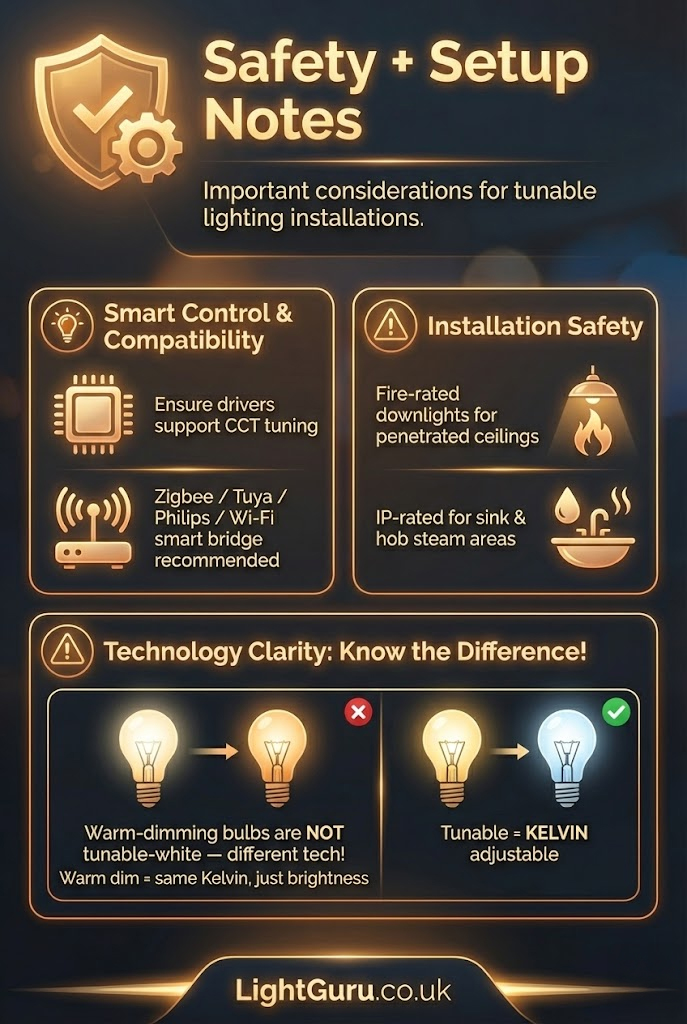
Safety + Setup Notes
- Ensure drivers support CCT tuning
- Zigbee / Tuya / Philips / Wi-Fi smart bridge recommended
- Fire-rated downlights for penetrated ceilings
- IP-rated for sink & hob steam areas
- Warm-dimming bulbs are NOT tunable-white — different tech!
Tunable = KELVIN adjustable
Warm dim = same Kelvin, just brightness
FAQ
Is 2700K too warm for a kitchen?
Commonly used in the evening.
For daily tasks, blend with 3000K.
Do I need tunable white everywhere?
No – strips and pendants provide most of the benefit
Is 4000K bad?
No – it’s commonly used for task lighting only.
Which Kelvin is most commonly used in kitchens?
3000K is widely used for general kitchen lighting.
If I choose only one – which?
3000K is often preferred for general kitchen lighting.
Conclusion
Tunable white kitchen lighting allows different colour temperatures to be used for different tasks and times of day. Warmer settings are often preferred in the evening, while cooler tones support food preparation and cleaning.
Understanding how 2700K, 3000K, and 4000K behave makes it easier to choose lighting that remains practical and comfortable throughout the day.
For colour temperature deep-dive:
/guides/colour-temperature/