Low ceiling kitchen lighting needs a different approach. Light spreads less, fixtures hang closer to eye level, and glare becomes a real problem. Standard advice doesn’t always apply.
This guide covers what actually matters when your ceiling height is under 2.4m — fixture choices, spacing adjustments, and how to avoid the “interrogation room” effect.
This guide also focuses on solutions for rooms with limited height. For broader layout planning and fixture choices, see our complete Kitchen Lighting Guide.
We include affiliate links in this article. Purchases made through these links help support LightGuru at no additional cost to you.
Table of Contents
What Counts as a Low Ceiling?
In the UK, standard ceiling height is 2.4m (8 feet). Anything below that — especially 2.2m or under — creates specific lighting challenges.
Common low-ceiling situations:
- Victorian/Edwardian houses with lowered ceilings (often hiding original features)
- Basement or lower-ground-floor kitchens
- Loft conversions with sloped or restricted headroom
- 1960s–70s builds with lower ceiling standards
- Extensions with flat roofs and shallow ceiling voids
If your ceiling is 2.4m or above, standard advice applies. If it’s below that, read on.
Best Fixtures for Low Ceiling Kitchen Lighting
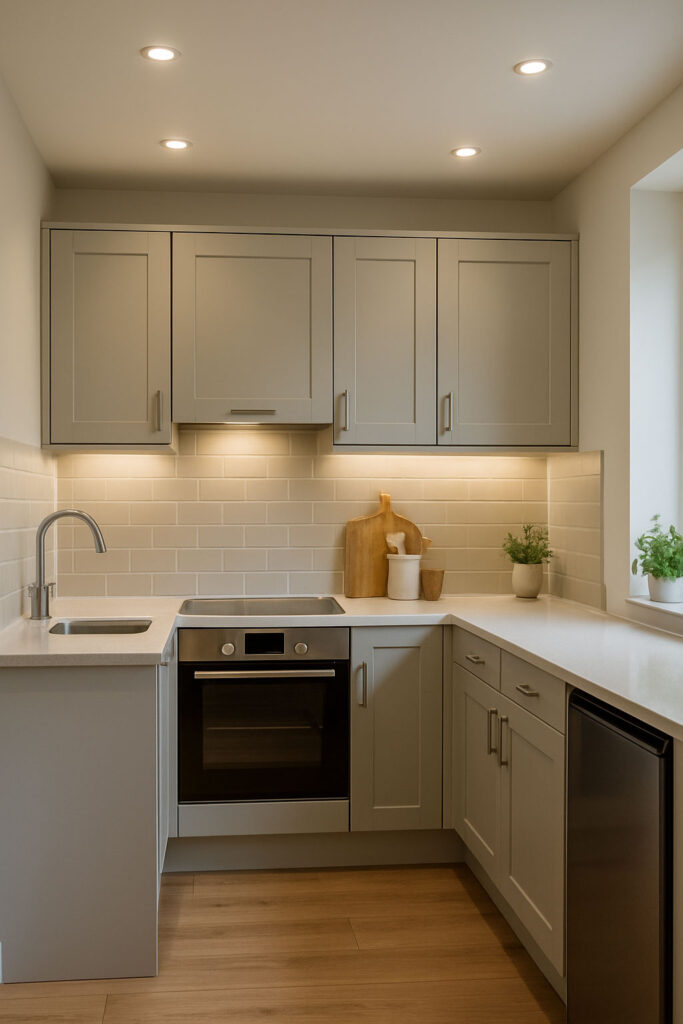
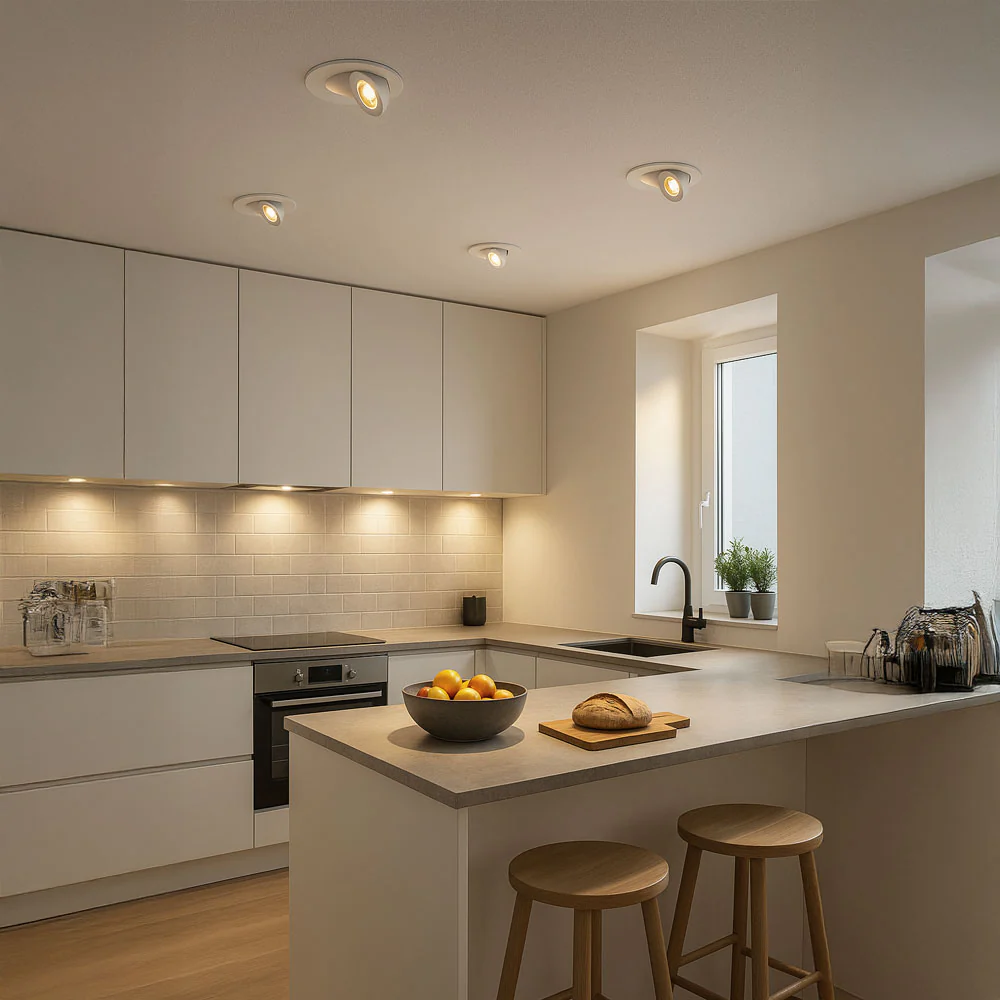
Slim-Profile Recessed Downlights
Look for: Total depth under 50mm. Some ultra-slim models fit in as little as 30mm.
Standard downlights need 100mm+ of ceiling void. If you don’t have that, you need slim-profile or surface-mounted alternatives.
Our Recommendation: Ultra-slim downlight (30-40mm depth)
Surface-Mounted Downlights
If your ceiling void is too shallow for any recessed option, surface-mounted downlights sit below the ceiling rather than inside it. They add 30-50mm to your ceiling height visually, but they work where nothing else will.
Look for low-profile designs — some are only 20-30mm tall.
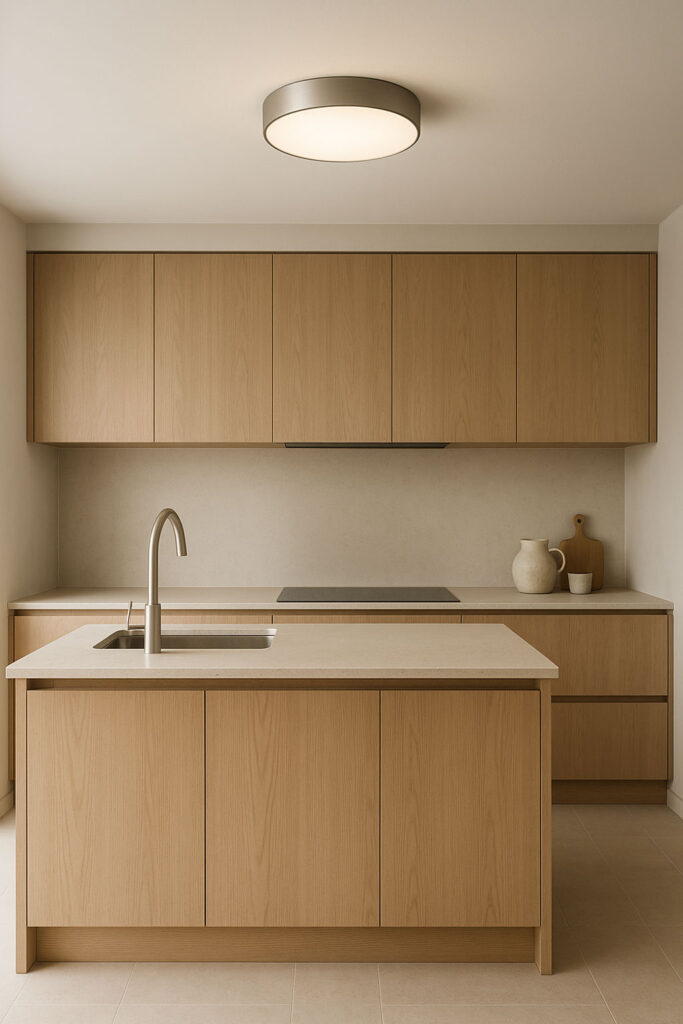
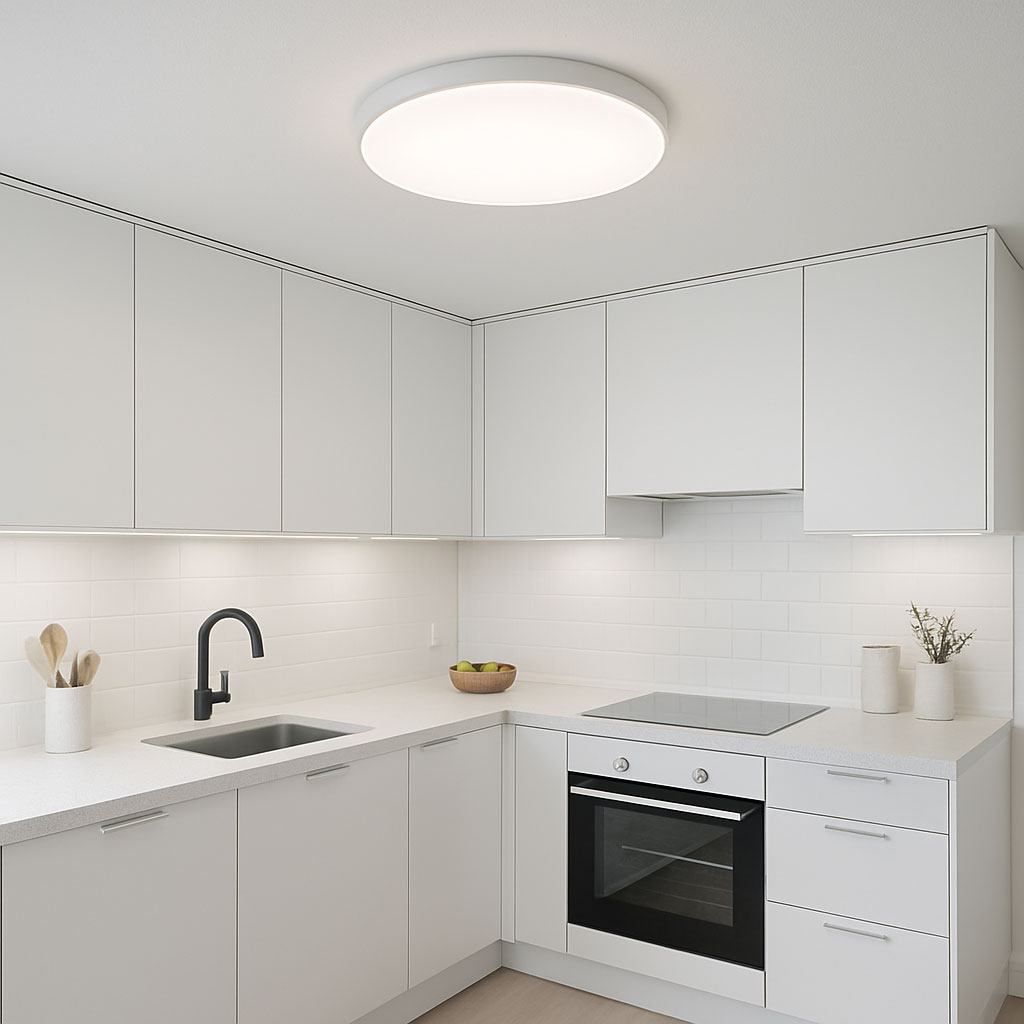
Flush Ceiling Lights
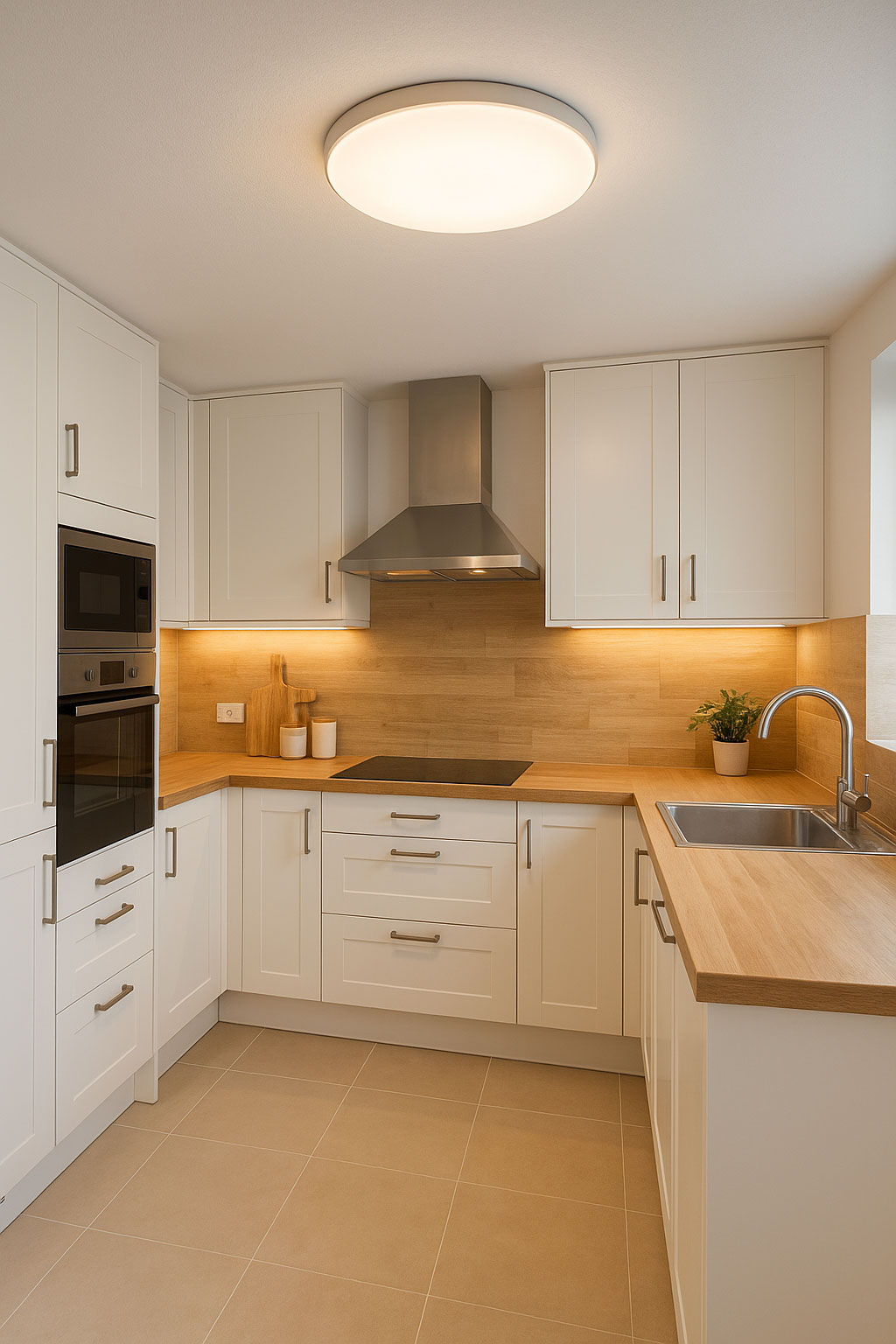
For very low ceilings (under 2.2m), a single flush-mount light may be safer than multiple downlights. Choose one with a wide, diffused output rather than a bare bulb design.
Not ideal for task lighting, but works for general coverage. Pair with under-cabinet strips for prep zones.
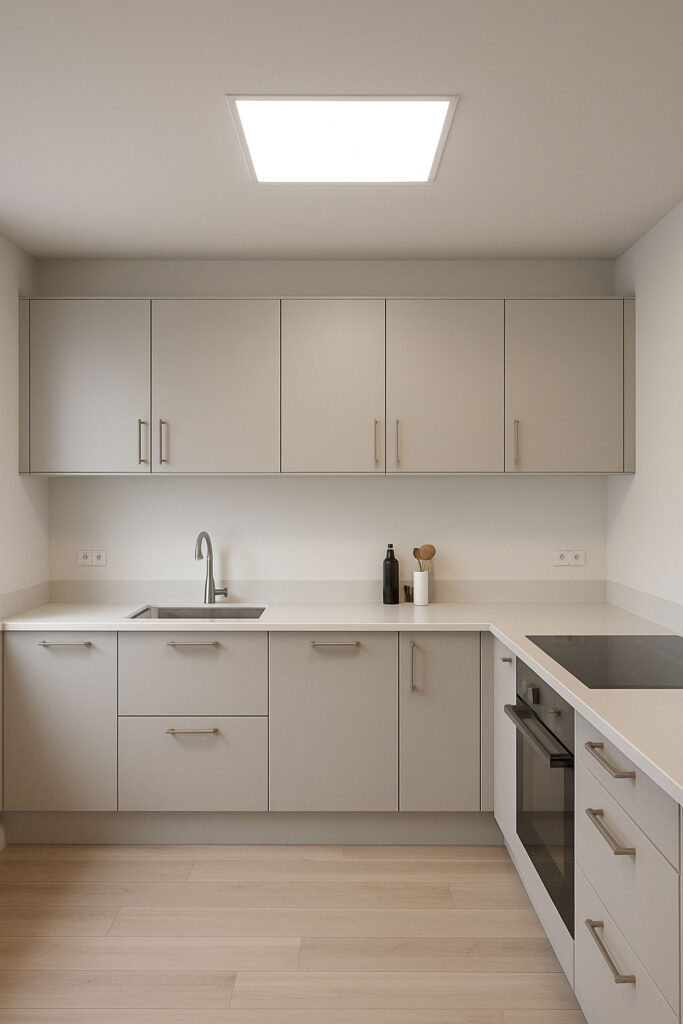
LED Panels
Flat LED panels (the type used in offices) work surprisingly well in low-ceiling kitchens. They’re typically 10-15mm thick, produce even light with no glare, and cover a large area with a single fixture.
Not to everyone’s taste aesthetically, but functionally excellent.
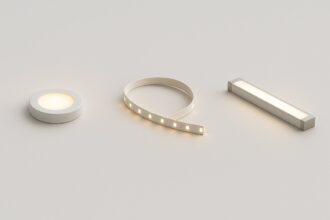
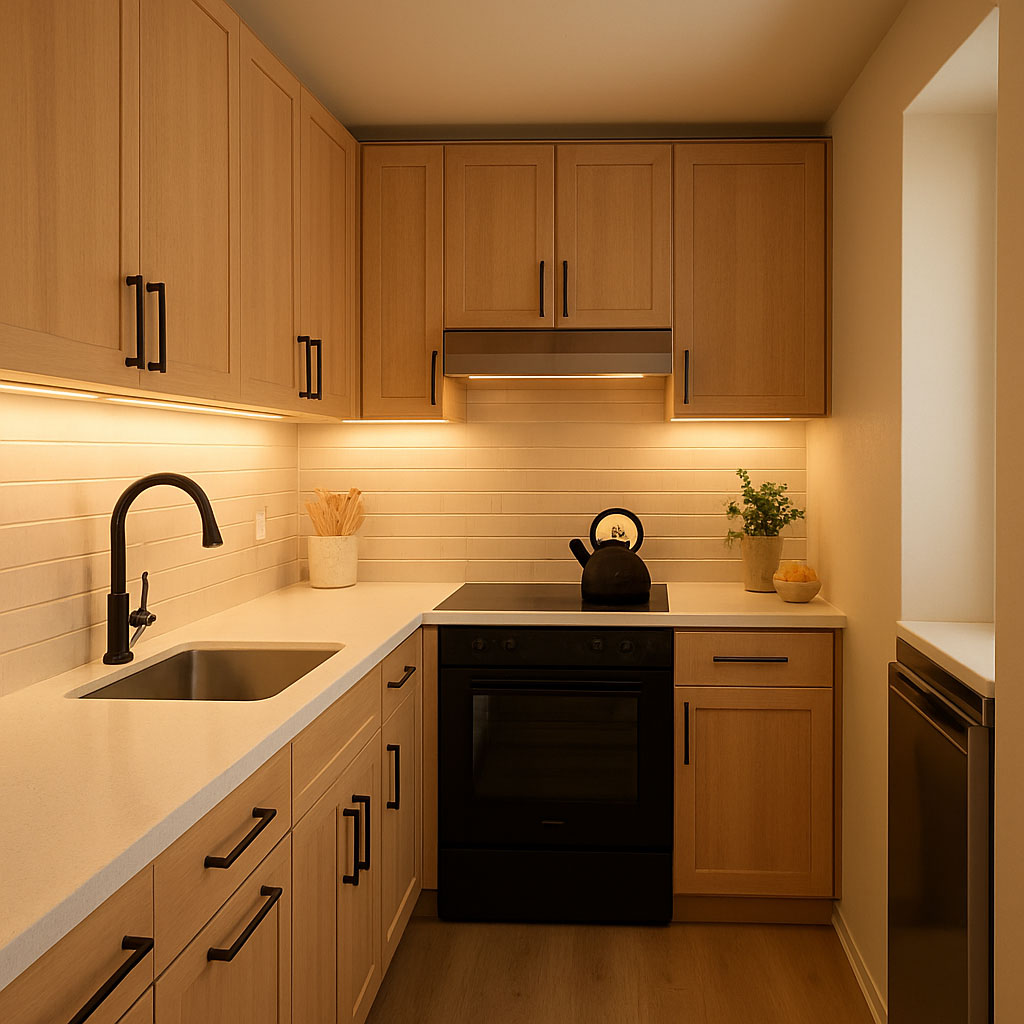
Under-Cabinet Lighting
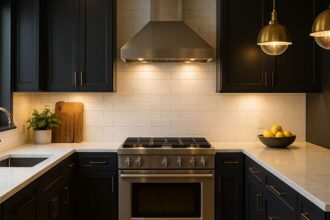
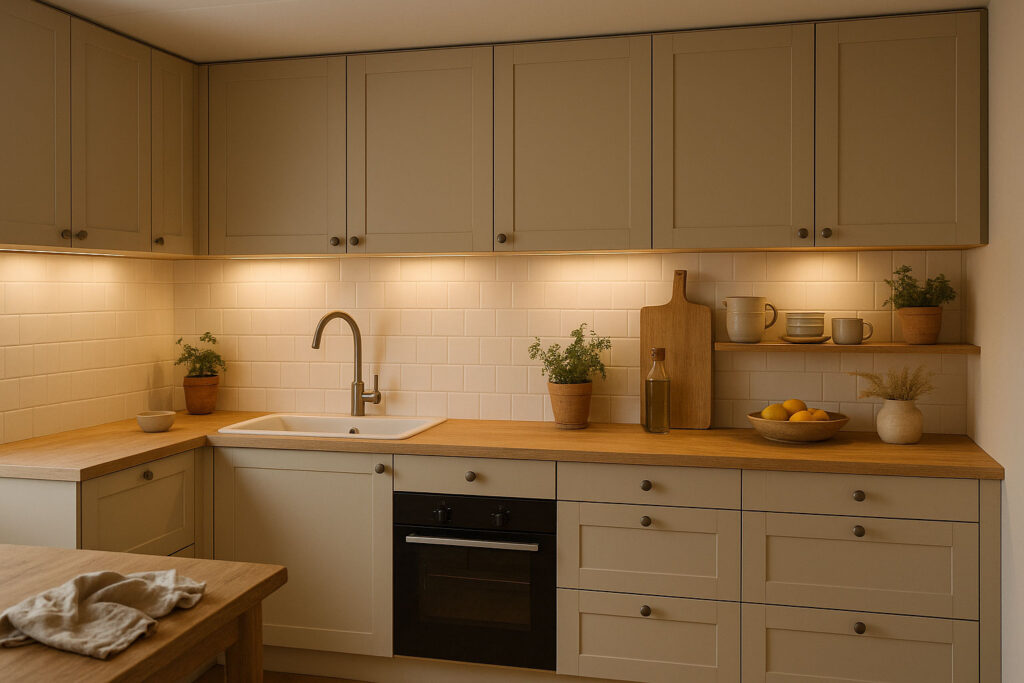
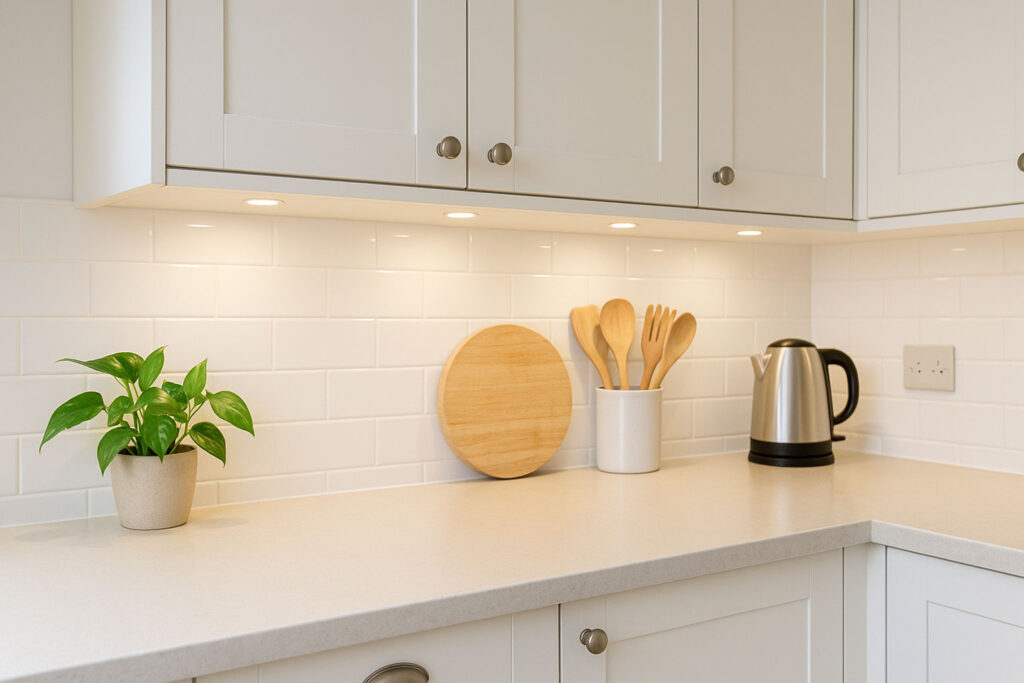
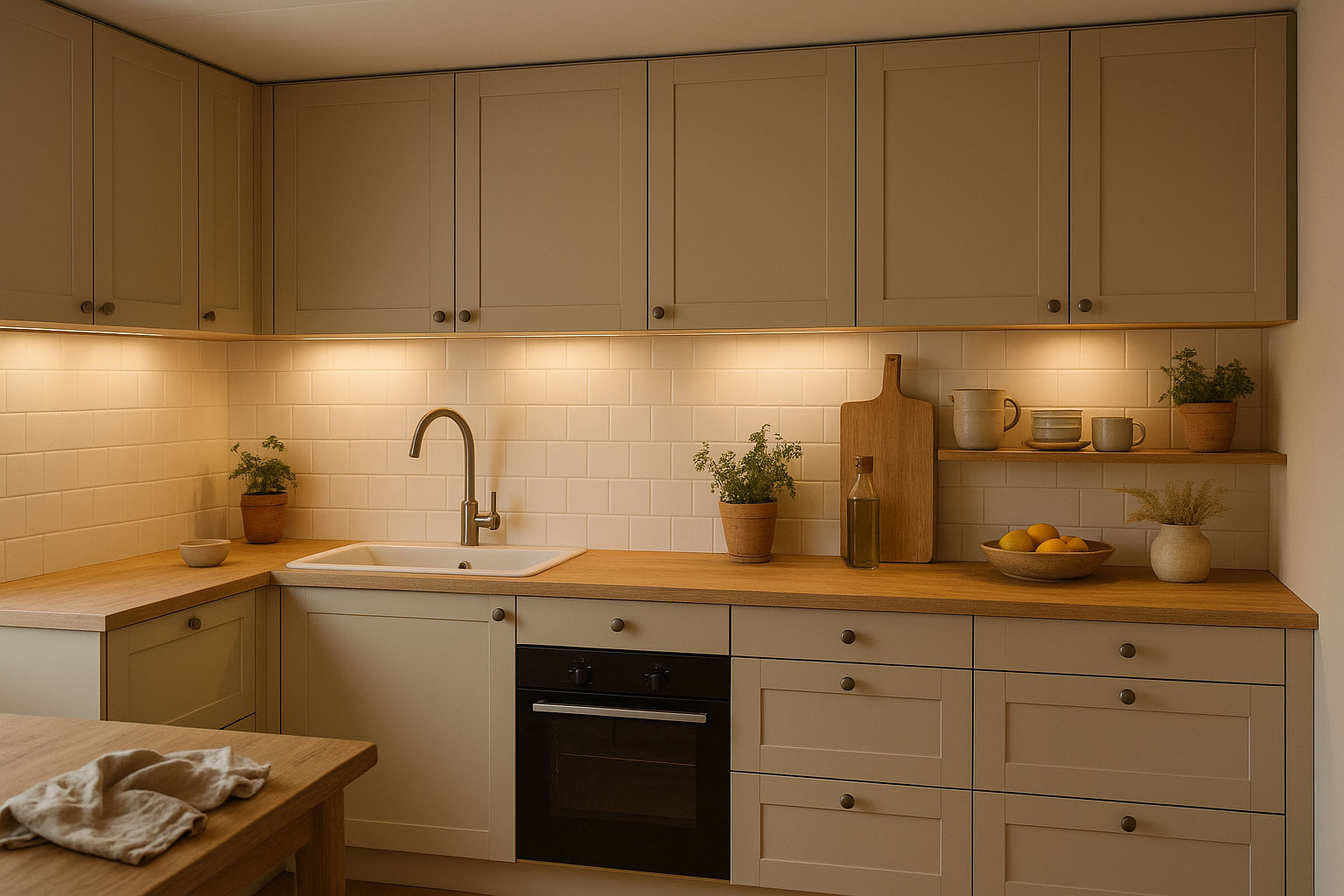
This matters even more in low-ceiling kitchens. Ceiling-mounted fixtures will be closer to your body, casting more shadows on worktops. Under-cabinet strips fill in what the ceiling lights miss.
Spacing Adjustments for Low Ceilings
The standard rule is: spacing = ceiling height × 1.2
At 2.4m ceiling height, that gives 2.88m spacing between downlights. But at 2.1m, it drops to 2.52m.
The practical adjustment: Reduce your spacing by 10-15% compared to standard recommendations. This compensates for reduced spread.
For full spacing calculations and layout patterns, see our Kitchen Downlight Spacing Guide.
For safety, Electrical Safety First has excellent guidance
Lumen Adjustments
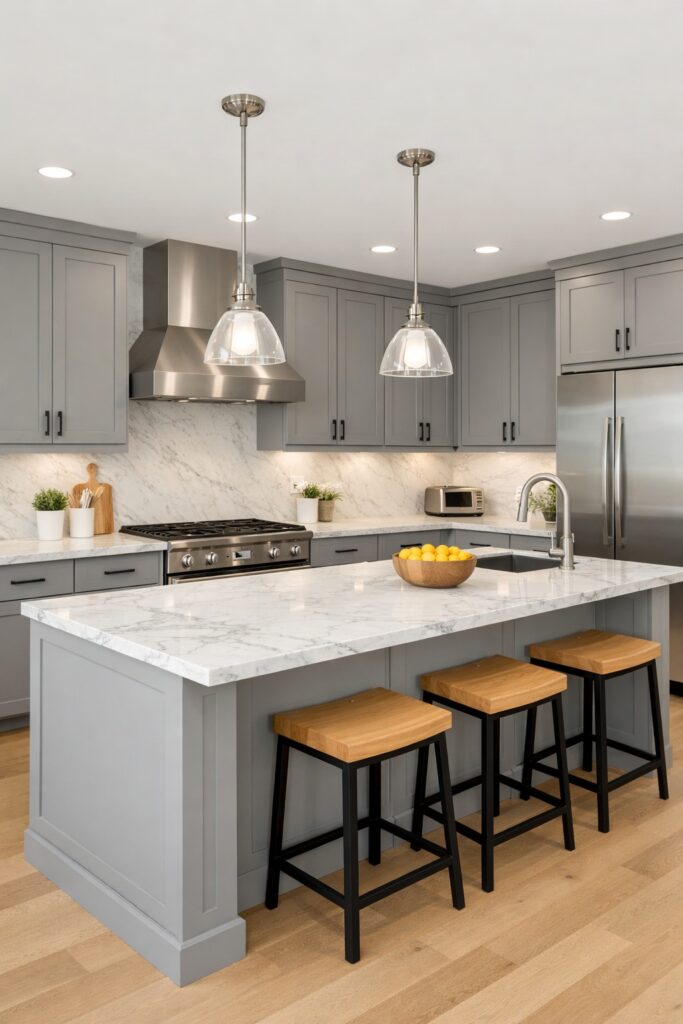
Low ceilings don’t change how much light you need — they change how that light behaves.
Because light spreads less, you may find dark patches between fixtures even if your total lumen count is correct.
The fix: Increase your lumen target by 10-15%, or add more fixtures at lower output each.
For full lumen calculations by room size, see our Kitchen Lumens Guide.

Avoiding Glare
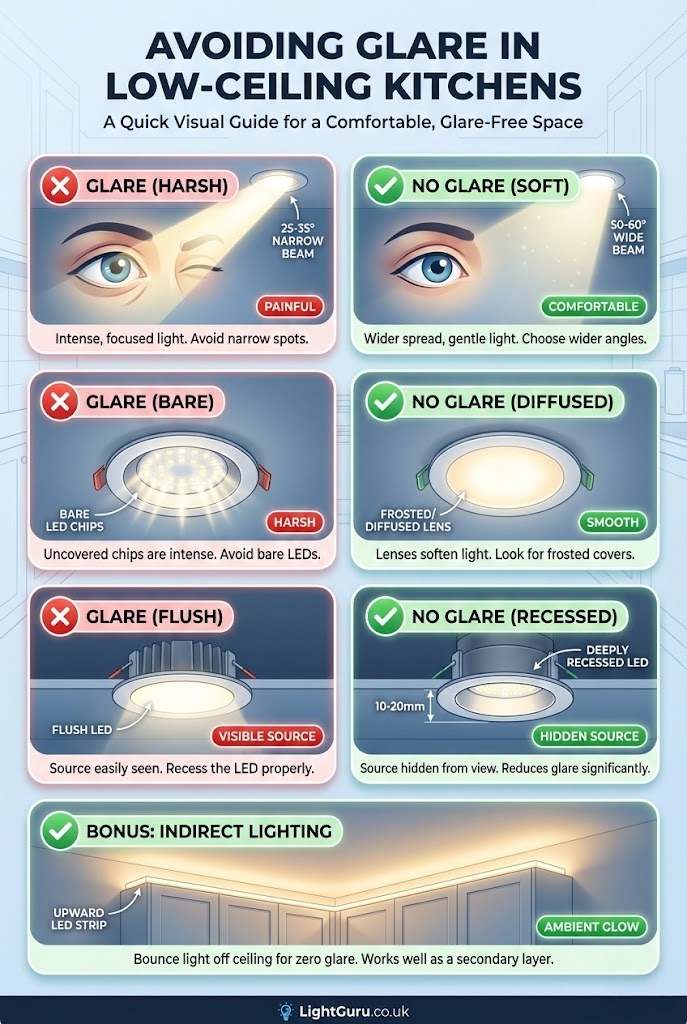
Glare is the biggest issue with low ceiling kitchen lighting. Here’s how to manage it:
Choose wider beam angles — 50-60° spreads light more gently than 35-40°. The wider spread is less intense at any single point, reducing the “spotlight in your eyes” effect.
Use frosted or diffused lenses — Bare LED chips are harsh at close range. Look for fixtures with frosted covers or recessed LEDs that aren’t directly visible.
Recess the LED properly — Some downlights have the LED chip flush with the ceiling surface. Others recess it 10-20mm inside the housing. The recessed type reduces glare significantly because you can’t see the light source unless you’re directly underneath.
Avoid narrow spots — 25° beam angles are useful for accent lighting, not kitchens with low ceilings. The concentrated beam is uncomfortable at close range.
Consider indirect lighting — LED strips on top of wall cabinets (pointing up) bounce light off the ceiling, providing ambient light with zero glare. Works well as a secondary layer.
What to Avoid
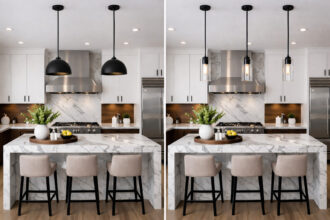
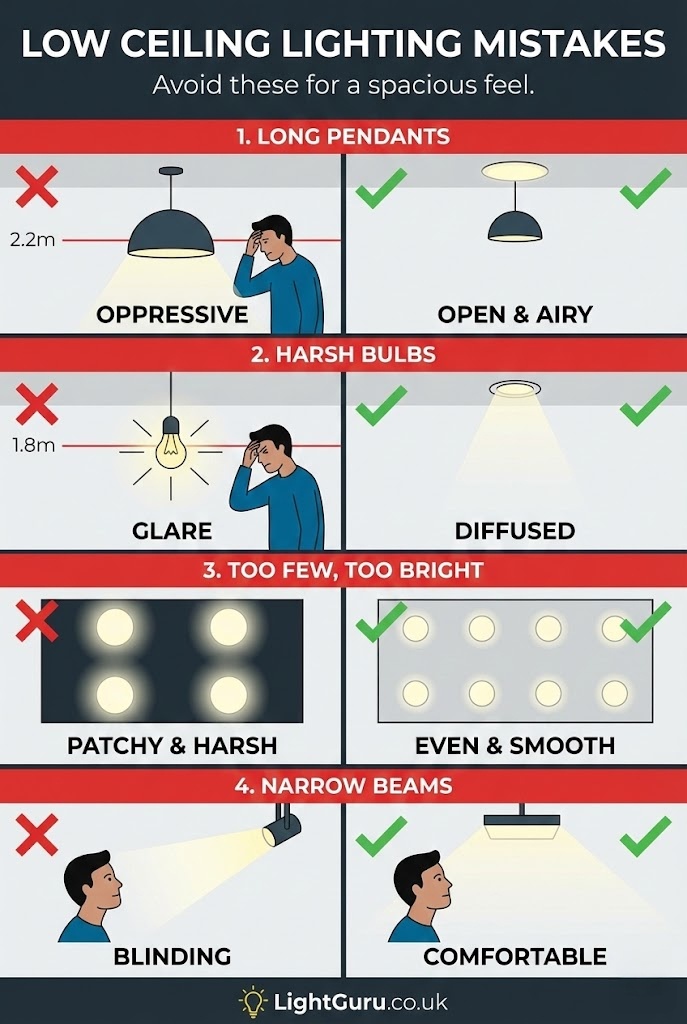
Long pendant drops — Anything hanging more than 200mm below the ceiling will feel oppressive at 2.2m ceiling height. If you want pendants, keep them short or choose semi-flush designs.
Exposed filament bulbs — Trendy, but uncomfortable when they’re 1.8m from your eyes. Save these for rooms with more headroom.
Too few, too bright — Four 1,200-lumen downlights will create harsh pools of light with dark gaps. Eight 600-lumen downlights spread the same total output more evenly and more comfortably.
Narrow beam angles in your eyeline — If you can see a fixture while standing normally, make sure it’s wide-beam or diffused.
Related guides:
Open-Plan Kitchen Lighting — if your low ceiling extends into a larger space
Quick Checklist for Low Ceiling Kitchen Lighting
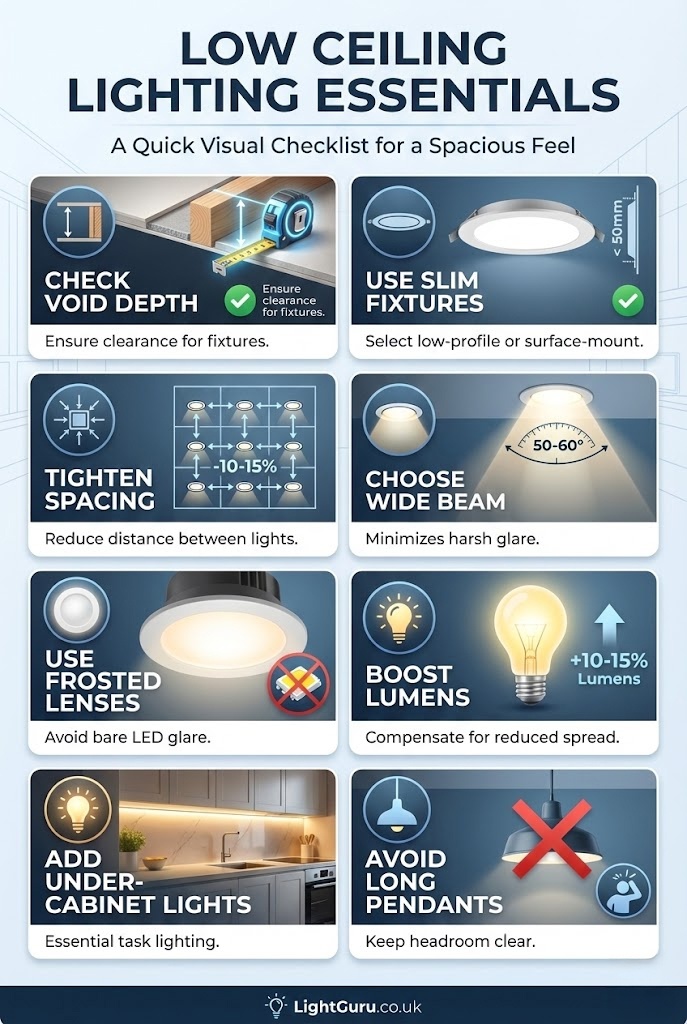
- Check ceiling void depth before buying recessed fixtures
- Use slim-profile downlights (under 50mm) or surface-mounted options
- Reduce spacing by 10-15% compared to standard calculations
- Choose beam angles of 50-60° to reduce glare
- Use frosted/diffused lenses, not bare LED chips
- Increase lumen target by 10-15% to compensate for reduced spread
- Under-cabinet lighting is essential, not optional
- Avoid long pendant drops and exposed bulbs
FAQs
What’s the minimum ceiling height for recessed downlights?
It depends on the fixture depth, not the ceiling height. Standard downlights need 100mm+ ceiling void. Slim-profile models work in 30-50mm. If your void is shallower than that, use surface-mounted fixtures instead.
Can I use pendant lights with low ceilings?
Yes, but keep the drop under 200mm or use semi-flush designs. Anything longer will feel cramped and may obstruct movement.
Why do my downlights cause glare in my low-ceiling kitchen?
Likely narrow beam angles (under 40°) or LEDs that aren’t recessed inside the housing. Switch to wider beam angles (50-60°) with frosted lenses.
How many downlights for a low-ceiling kitchen?
More than you’d use in a standard-height room. The reduced spread means each light covers less area. Use the standard calculation, then add 15-20% more fixtures.
Are LED panels too “office-like” for a kitchen?
Modern LED panels come in warm colour temperatures (3000K) and can look perfectly fine in a contemporary kitchen. They’re worth considering if glare is a major concern — they produce very even, diffused light.