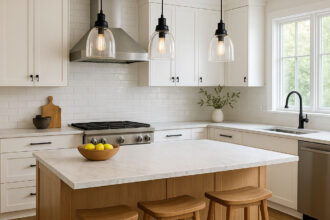
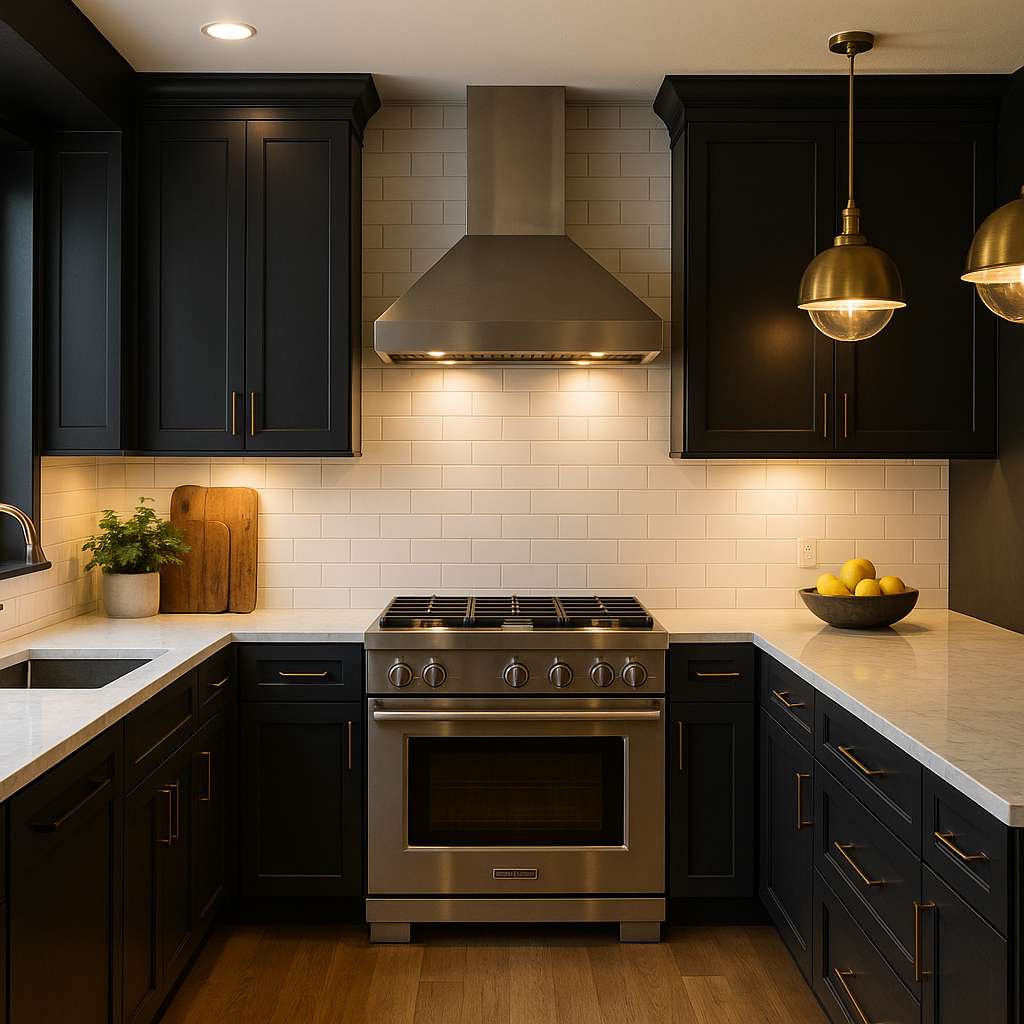
Dark cabinetry lighting ideas rely on careful placement and layering to prevent kitchens from feeling visually heavy.
This guide explains how lighting is commonly used to balance dark cabinetry, focusing on placement, colour temperature, and layering rather than increasing overall brightness.
This article explores lighting from a style and inspiration perspective. For technical layout, brightness, and placement guidance, see our main kitchen lighting guide.
Table of Contents
Step 1 – Choose an Appropriate Colour Temperature
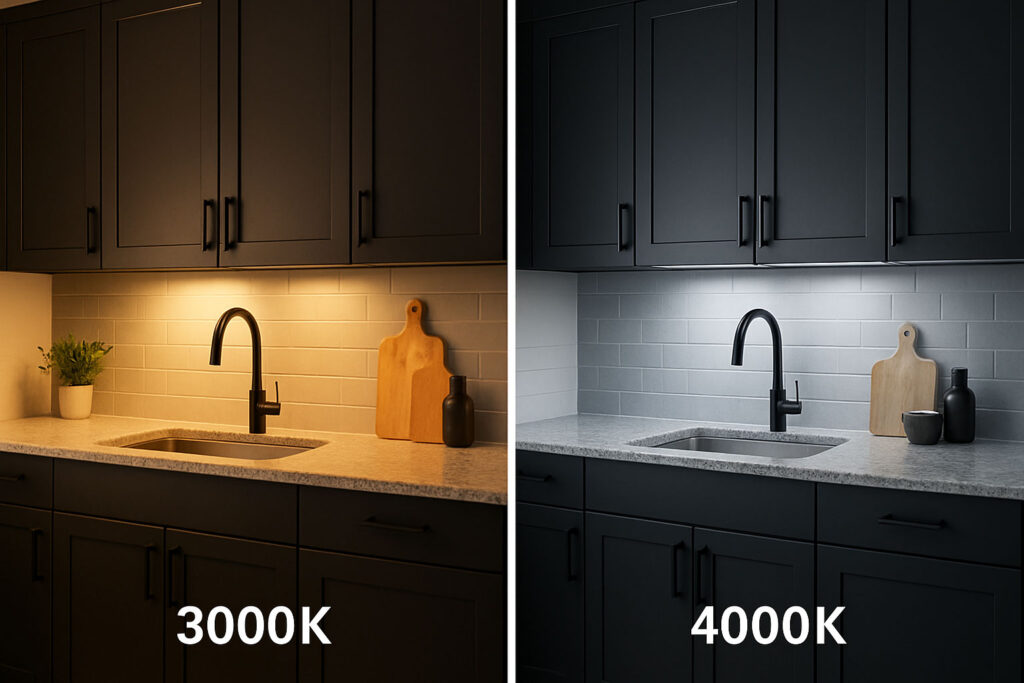
Dark cabinetry generally works better with warmer colour temperatures.
Cool white lighting can appear harsh against dark cabinetry.
Warm white lighting generally complements dark cabinetry more effectively than cooler tones.
Best colour temperatures:
| Look | CCT |
|---|---|
| Warm appearance | 2700K |
| Balanced appearance | 3000K |
| Less commonly used with dark cabinetry | 4000K+ |
Cooler light can reduce depth in dark finishes, while warmer light tends to enhance surface variation.
If you are looking for broader kitchen lighting ideas across different styles and layouts, this guide pulls everything together.
/ideas/kitchen-lighting/
Learn colour temp deeper here:
/guides/colour-temperature/.
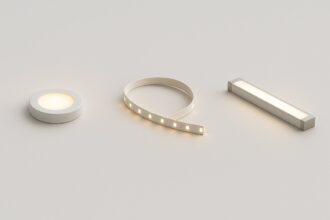
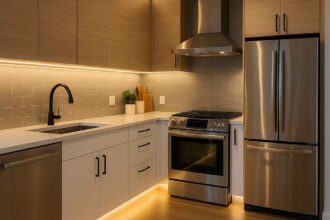
Step 2 – Under-Cabinet LEDs – Improved task visibility and surface definition
Dark kitchens absorb light instead of reflecting it — so shadows build quickly.
Under-cabinet strips stop that instantly.
Benefits for dark kitchens:
- Illuminates deep surfaces
- Highlights texture + grain
- Adds brightness without glare
- Makes prep safe (no knife-in-shadow moments)
- Helps separate work surfaces from surrounding cabinetry
Specifications:
- 3000K day / 2700K evening
- CRI 90+ so colours stay rich
- Diffused channel — never dots
- 350–500 lm/m brightness for prep

Step 3 – Add Above-Cabinet Lighting to Lift the Ceiling
Dark cabinetry benefits from vertical light distribution. If the top of the room is dark, the whole space compresses visually.
Above-cabinet strip lighting:
- Bounces light up the walls
- Makes ceilings feel taller
- Softens contrast line at the top
- Creates a soft transition between cabinetry and ceiling.
Colour temperature: 2700–3000K only
Cool white up-lighting can appear flat against dark finishes.
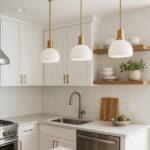
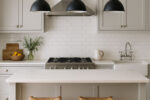
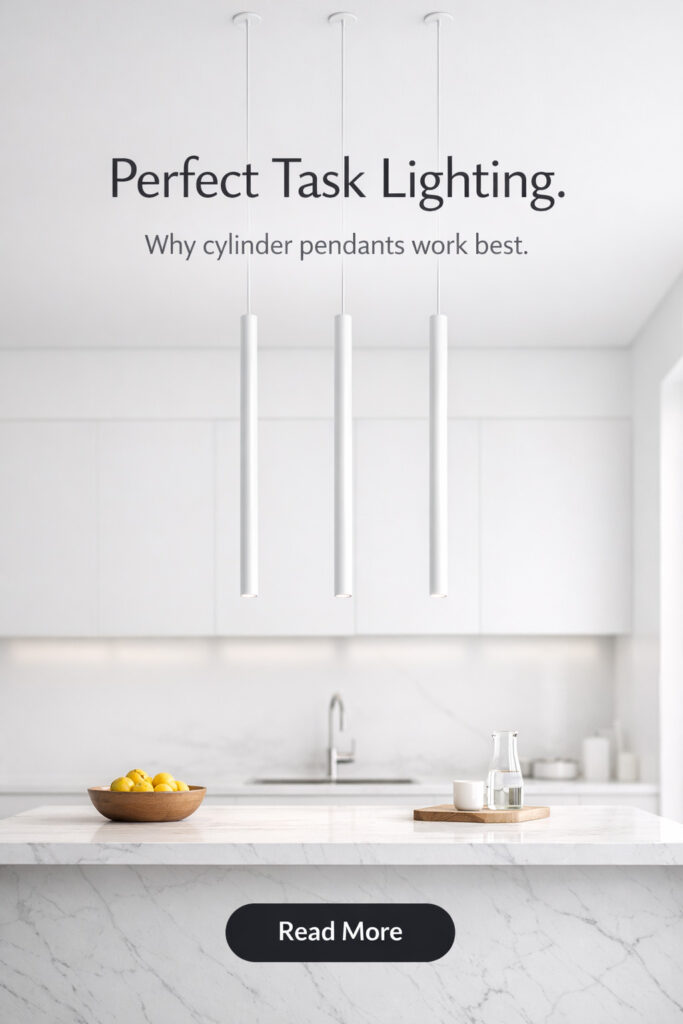
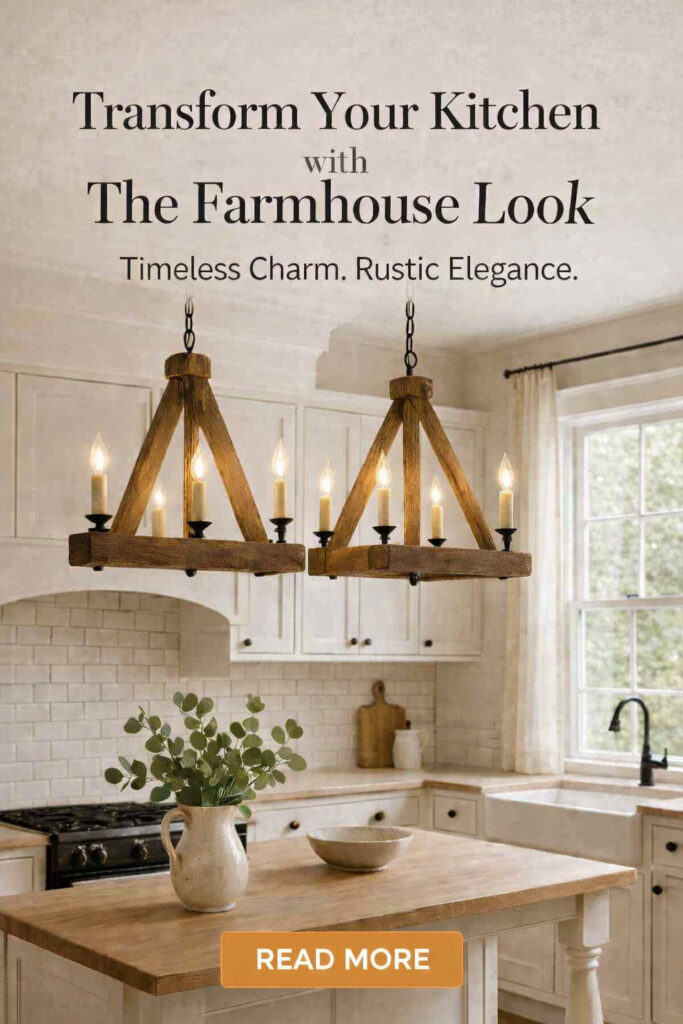
Step 4 – Pendants Bring Sculptural Warmth
Dark kitchens thrive with focal light.
Pendants provide focused light and visual separation.
Best pendant styles for dark cabinetry:
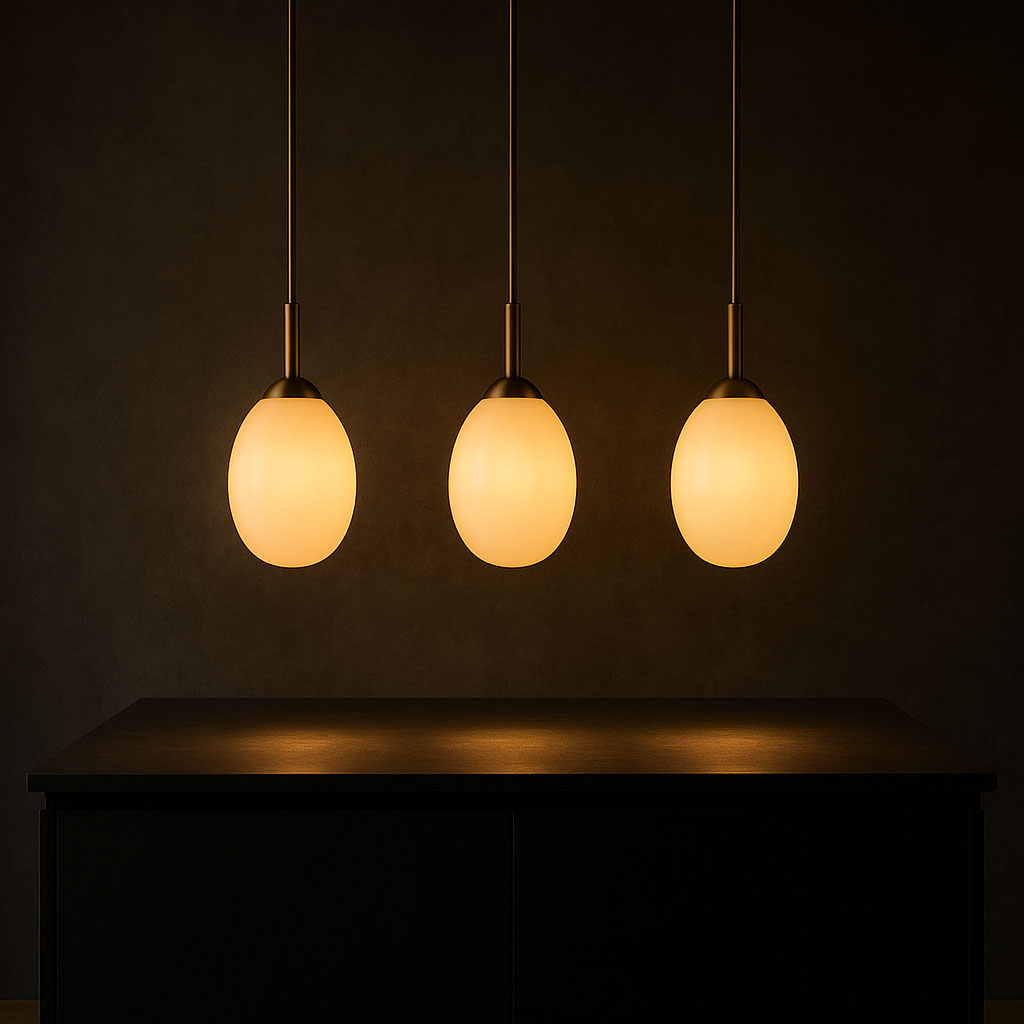
- Opal glass globes (soft + cloud-like)
- Brass, bronze or brushed gold domes
- Matte black over matte cabinetry
- Timber/woven shades for balance
- Smoked glass = elegant drama
Ideal placements:
- Over the island
- Over a breakfast bar
- In a dining nook
- Over the sink (compact pendants can be used where space allows.)
Height sweet spot: 70–90cm above counter
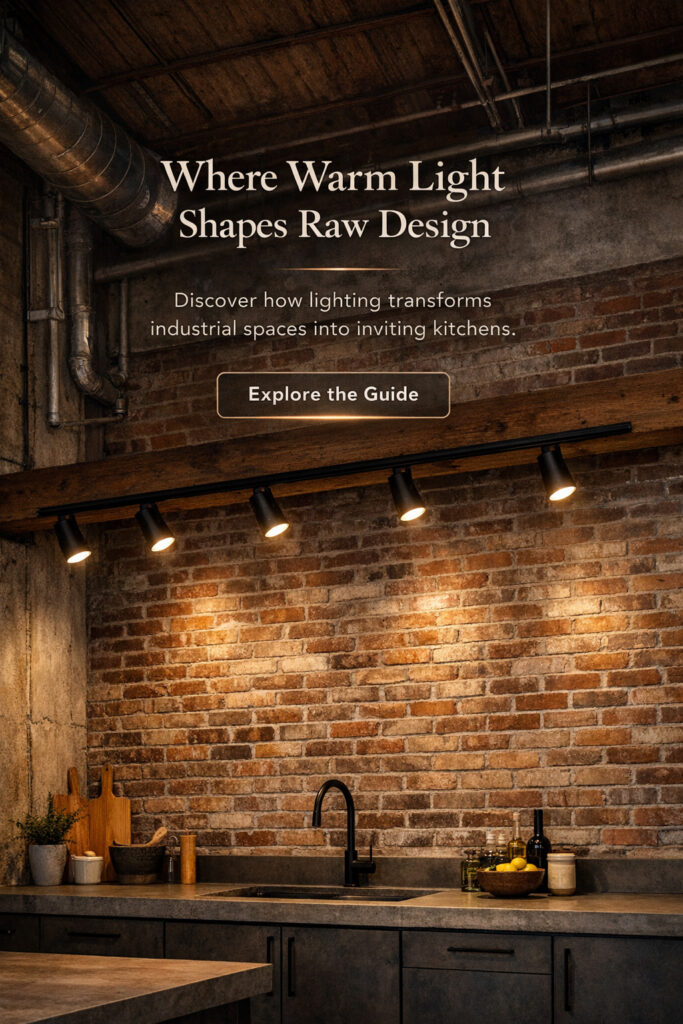
Step 5 – Track Lighting for Highlights + Drama
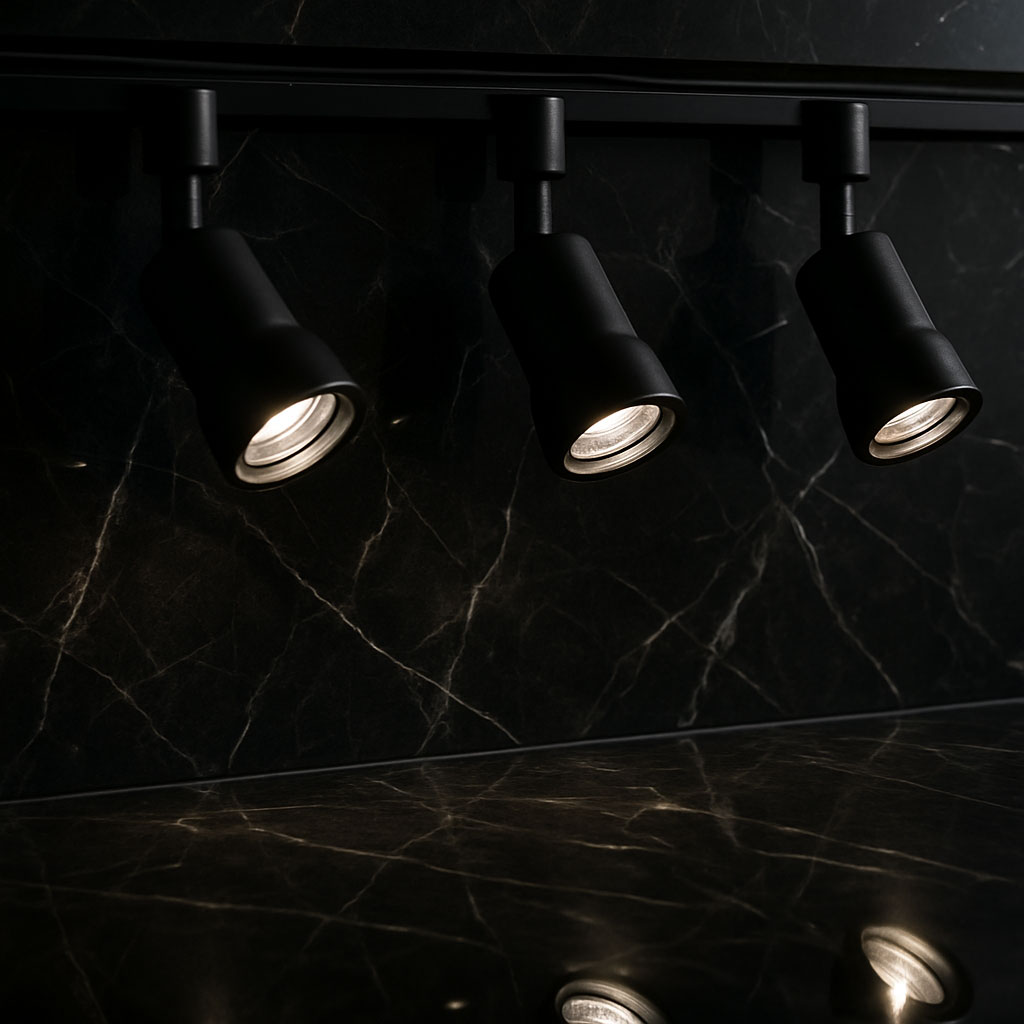
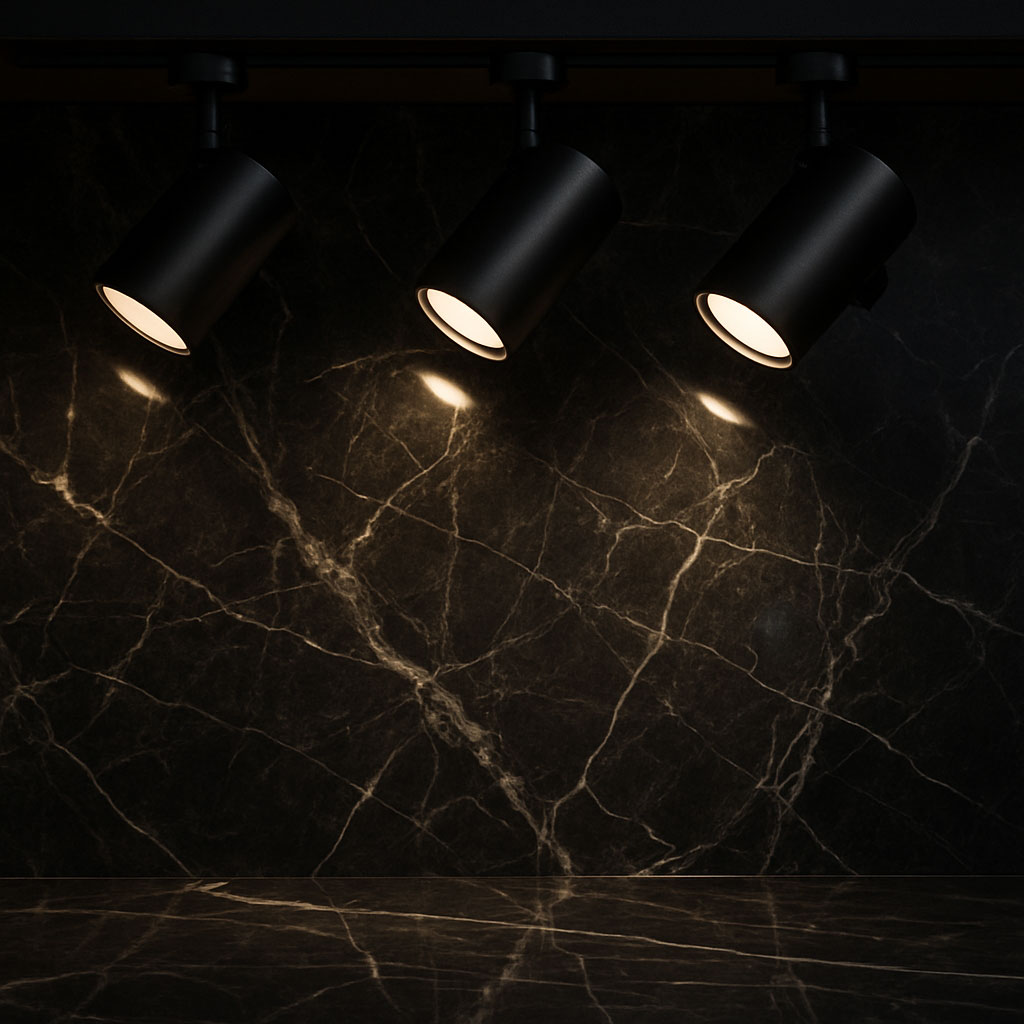
Track lighting = targeted spotlighting.
This allows light to be directed toward specific surfaces or features.
Angle heads at:
- Splashback texture
- Handle lines
- Timber or stone grain
- Shelving displays
- Artwork, pottery, steel rails
Directional lighting helps draw attention to specific areas. Use matte black tracks for a seamless ceiling blend.
Internal link for track guidance later:
/reviews/best-track-lights/
Step 6 – Plinth Lighting
Toe-kick lighting makes dark cabinetry look weightless.
This can visually separate cabinetry from the floor.
Use warm strips at low brightness:
- 50–150 lm/m only
- Dimmer essential
- Warm light reflecting onto the floor surface.
This detail is often used in higher-spec installations.
Step 7 – Bounce Light Off the Right Surfaces
Dark kitchens absorb light – so make them reflect selectively.
Materials that glow beautifully:
- Honed stone with subtle sheen
- Zellige or glazed tile backsplash
- Polished quartz or microcement
- Brushed brass, bronze or copper hardware
- Matte fluted glass
- Light timber stools or shelves
Highly reflective finishes are less suitable than softer reflective surfaces.

These dark cabinetry lighting ideas focus on balance rather than increasing brightness.
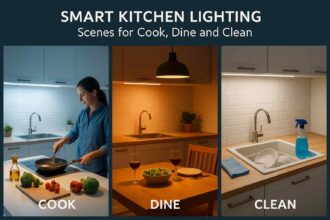
Step 8 – Mix Task + Ambient + Accent
One type of lighting = flat & heavy.
Using multiple lighting types improves balance and coverage.
Your layering blueprint:
- Task → Under-cabinet strips
- Ambient → Downlights / uplights
- Accent → Pendants, wall wash, plinth lighting
Layered lighting helps prevent dark kitchens from appearing flat.
Mistakes That Make Dark Kitchens Oppressive
- Cool white bulbs (kills richness)
- No under-cabinet lighting (shadow city)
- One bright ceiling light only
- No wall or ceiling bounce = crushing visually
- Too matte + no warm reflection
Addressing these issues can significantly improve usability
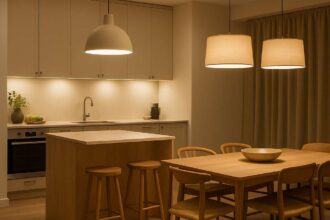
Evening Lighting Settings
Evening lighting is particularly important in dark kitchens.
In the evening, lighting is often adjusted as follows:
- Pendants dimmed
- Plinth glow only
- Under-cabinet strips low
- Track lights grazing backsplash
This reduces glare and overall brightness.
FAQ – Quick Answers for Real People
What lighting is best for dark kitchens?
Warm 2700–3000K layered lighting with under-cabinet strips is essential.
How do you stop dark cabinetry feeling heavy?
Add top lighting, wall washing and plinth LEDs to lift visually.
Do dark cabinets need brighter lights?
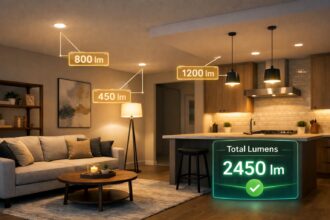
Not brighter – better placed.
Shadow-free > high lumens.
Can you mix brass with black cabinetry?
Brass finishes are commonly used to offset darker cabinetry.
Do cool white LEDs ever work here?
Cooler colour temperatures are less commonly used unless an industrial style is intended.
Conclusion
Dark cabinetry can work well in kitchens when lighting is planned to support depth, visibility, and balance. Using a combination of task, ambient, and accent lighting helps prevent spaces from feeling visually heavy.
Careful placement and appropriate colour temperature selection allow dark kitchens to remain practical and comfortable throughout the day.
Return to the hub for more:
For guidance on electrical and lighting safet