This article contains affiliate links. If you purchase through these links, we may earn a small commission at no extra cost to you.
A well lit garden path transforms your outdoor space. It looks welcoming, helps you navigate safely after dark, and adds real kerb appeal to your property. The good news is you do not need to dig trenches or hire an electrician to achieve it.
Solar, battery and rechargeable LED options make it simple to illuminate walkways without any mains wiring. This guide covers the seven best methods, with practical advice on choosing, positioning and maintaining wireless path lights.
This guide focuses on one specific aspect of lighting design. For full garden planning, layout, and safety guidance, see our complete Garden & Outdoor Lighting Guide.
Table of Contents
Why Choose Garden Path Lighting Without Wiring?
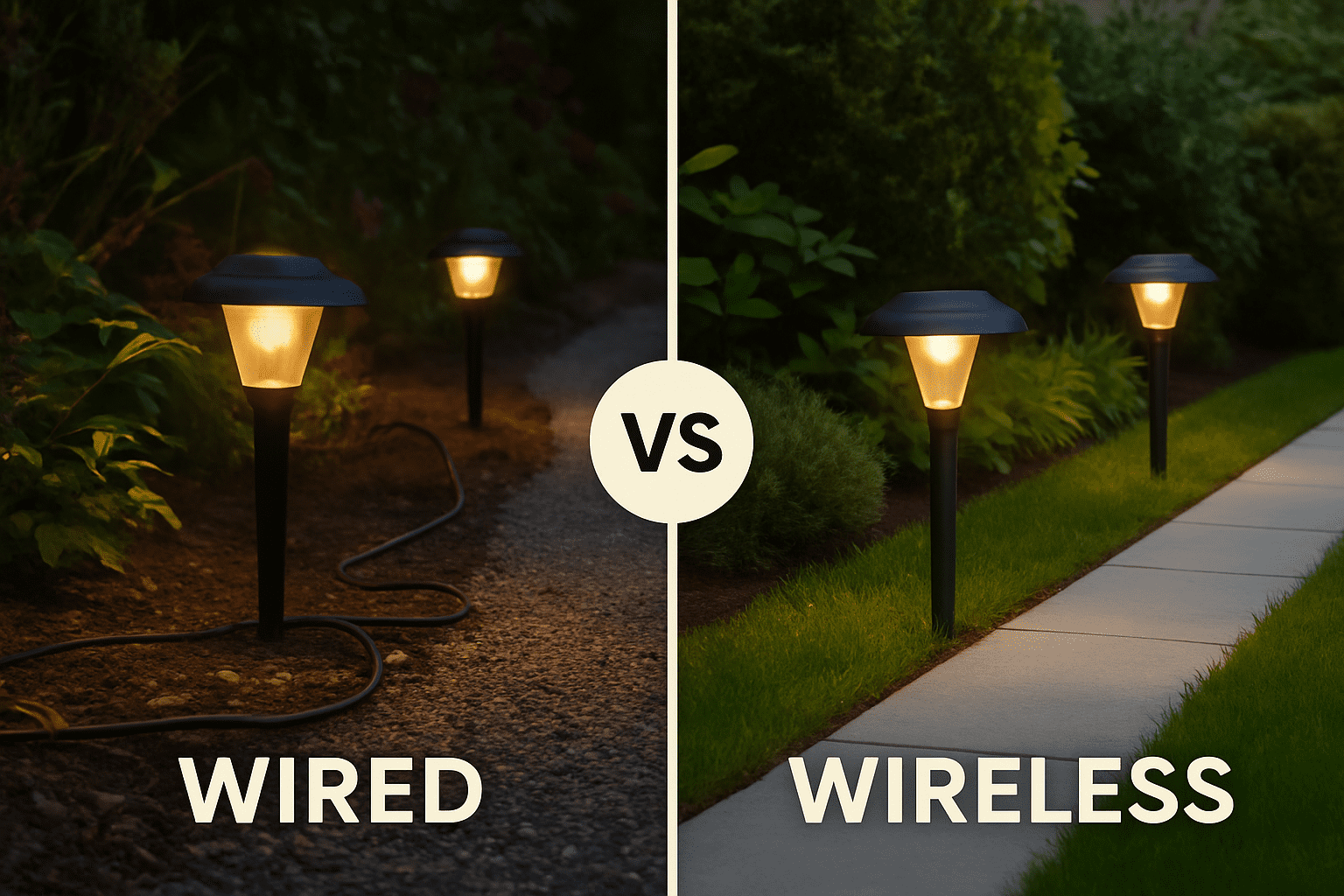
Traditional wired garden lighting requires buried cables, outdoor junction boxes and often professional installation. Wireless alternatives avoid all of that while still delivering attractive, functional results.
No installation hassle. Most wireless path lights simply push into the ground. You can set up an entire pathway in under an hour with no tools required.
Zero running costs with solar. Solar powered lights charge during the day and run for free every night. According to the Energy Saving Trust, LED lighting uses up to 90% less energy than traditional bulbs, and solar takes that saving even further.
Complete flexibility. Not happy with the layout? Move them. Want to add more lights next year? No problem. Wireless systems let you adapt and expand without ripping up cables.
Safer for families and pets. No buried wires means no risk of accidentally cutting through cables when gardening, and no exposed connections that could become dangerous over time.
Works anywhere. Wired systems need a route back to a power source. Wireless lights work in the middle of the garden, along distant boundaries, or anywhere else you need them.
For a complete overview of outdoor lighting options, see our [Garden and Outdoor Lighting Guide].
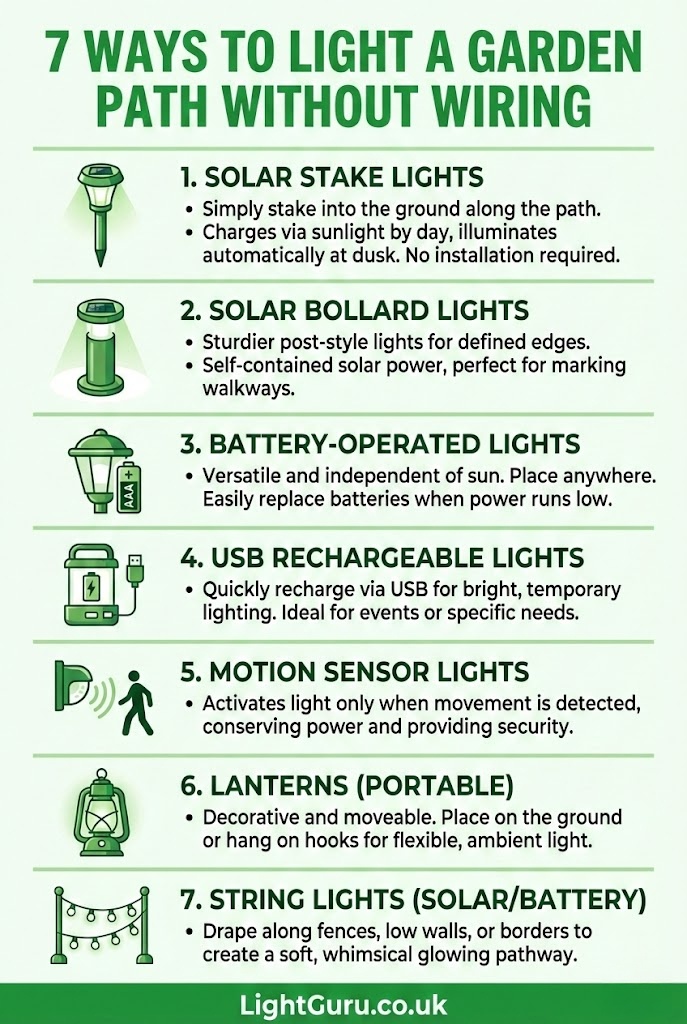
1. Solar Stake Lights
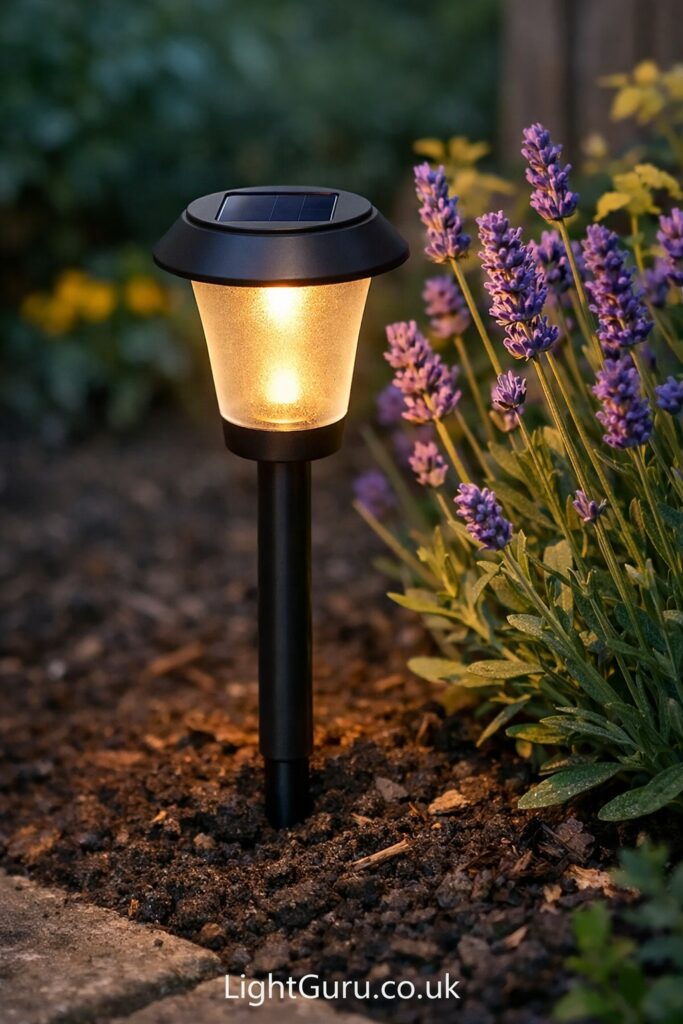
Solar stake lights are the most popular choice for path lighting. They are cheap, widely available and genuinely easy to install.
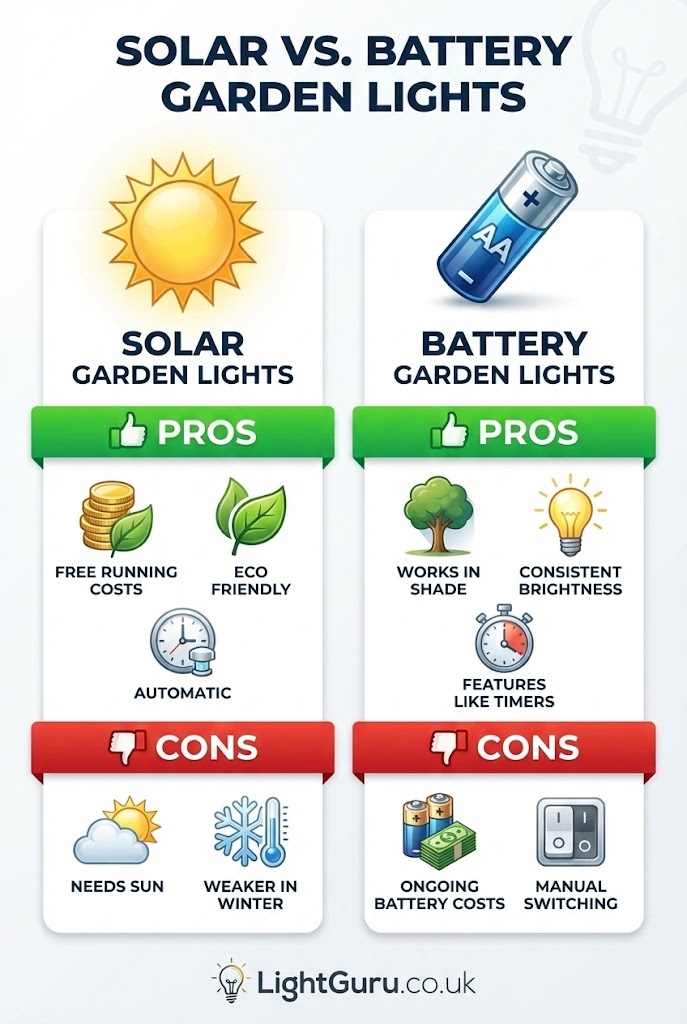
Each light has a small solar panel on top that charges an internal battery during daylight hours. At dusk, a light sensor triggers the LED to switch on automatically. By dawn, they switch off and the charging cycle starts again.
Best for: Sunny gardens, long pathways, budget friendly projects.
What to look for:
- Choose lights with a lumen output of at least 10 to 20 lumens per unit. Cheaper models with very dim output look disappointing in practice.
- Check the IP rating. IP44 is the minimum for outdoor use, but IP65 gives better protection against rain and jet washing. See our [Outdoor IP Ratings Guide] for full details.
- Look for replaceable batteries. After two to three years, the rechargeable battery will lose capacity. Models with replaceable batteries last much longer overall.
Positioning tips:
- Space lights 1.5 to 2 metres apart for even coverage without dark gaps.
- Ensure each solar panel receives direct sunlight for at least four to six hours daily. Lights positioned under trees or against north facing walls will underperform.
- Angle stakes so the solar panel faces south where possible.
Browse solar stake path lights on Amazon →
2. Solar Bollard Lights
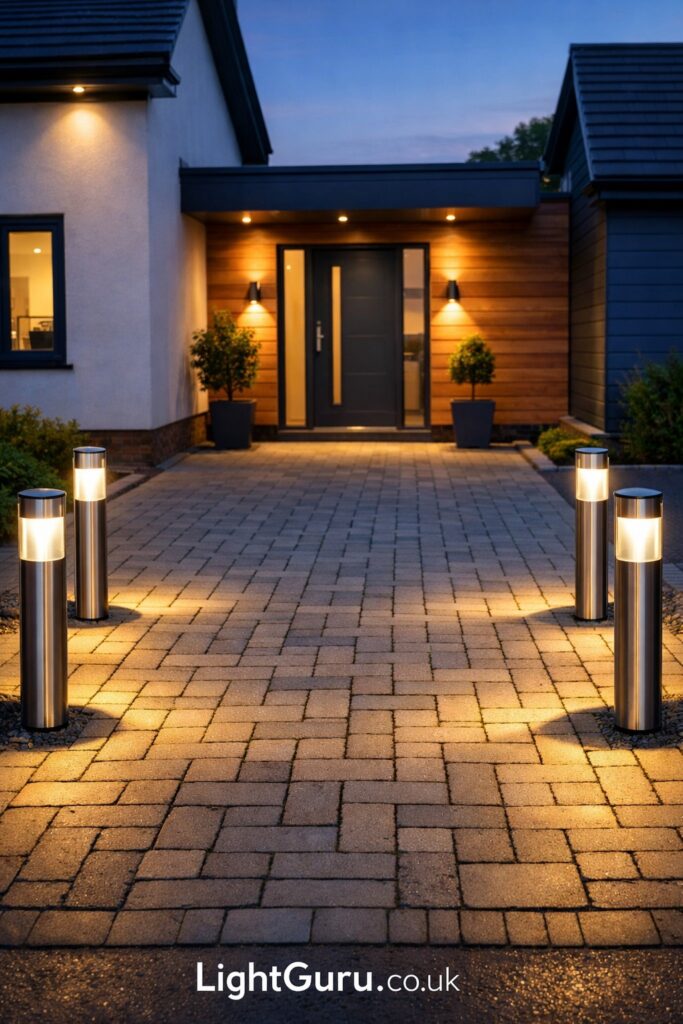
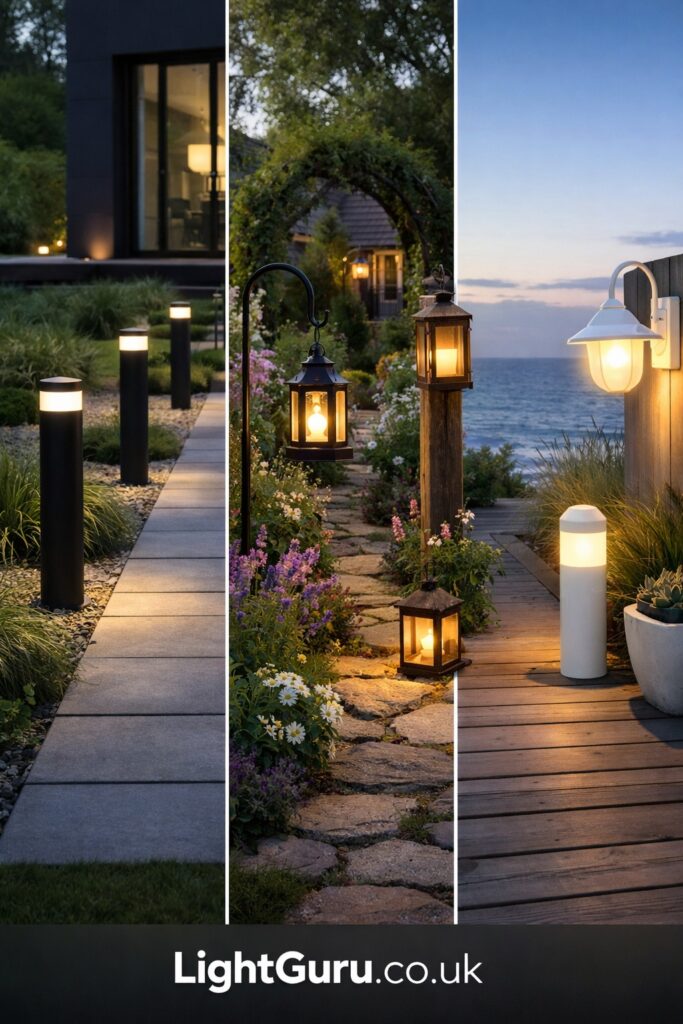
Bollard lights stand taller than stake lights, typically 30cm to 60cm high. They cast light over a wider area and create a more architectural look.
And if you can get a cable to the path after all, wired bollards give far more consistent light through a British winter — Enso Lighting’s Halden bollard comes in three heights, and their guide How to Light a Garden Path (Without It Looking Like a Runway) covers spacing and height properly.
The extra height means light spreads further across the path rather than pooling in small circles. This makes bollards particularly effective for wider paths and driveways.
Best for: Driveways, wide paths, contemporary gardens.
What to look for:
- Stainless steel or powder coated aluminium housings resist corrosion better than plastic. For UK weather, durability matters.
- Choose warm white (2700K to 3000K) for a welcoming look, or neutral white (4000K) for a more modern feel. Avoid cool white (5000K+) unless you specifically want a stark, commercial appearance.
- Higher lumen output matters more with bollards since you are paying more per unit. Aim for 50 to 100 lumens minimum.
Positioning tips:
- Bollards work well in pairs flanking an entrance or spaced evenly along a straight path.
- Because they are more visible during the day, choose a style that complements your garden design. Black, anthracite and stainless steel suit contemporary spaces. Bronze and lantern styles suit traditional gardens.
Browse solar bollard lights on Amazon →
3. Battery Powered Path Lights
If your path runs through a shaded area, under trees or along a north facing wall, solar lights will struggle to charge properly. Battery powered lights solve this problem.
They use standard or rechargeable batteries and work regardless of how much sunlight the location receives. Many also include features that solar lights lack, such as adjustable brightness, timers and remote controls.
Best for: Shaded paths, areas under trees, winter reliability.
What to look for:
- Models using AA or AAA rechargeable batteries keep running costs low. Expect to replace or recharge batteries every few weeks depending on usage.
- Look for lights with auto off timers (four, six or eight hours) to extend battery life rather than running all night.
- Motion sensor models use power only when needed, making batteries last significantly longer.
Positioning tips:
- Battery lights give you complete freedom since they do not need sun exposure. Place them in the darkest spots where solar would fail.
- Consider using battery lights to fill gaps in an otherwise solar powered setup.
Browse battery powered garden lights on Amazon →
4. Rechargeable LED Path Lights
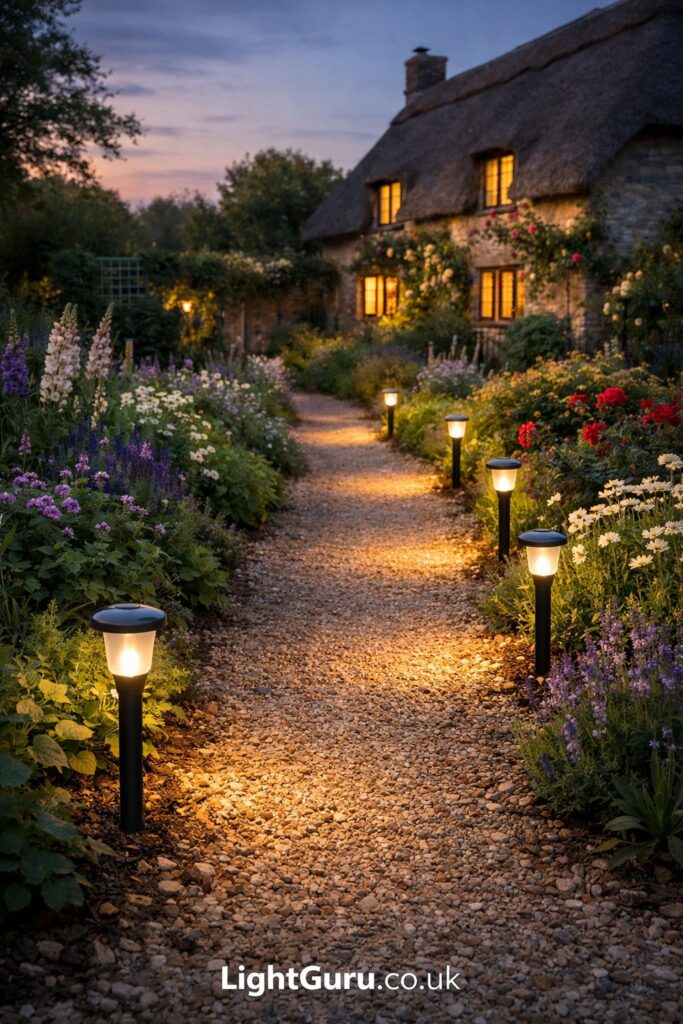
Rechargeable LED lights bridge the gap between solar and battery options. You charge them indoors via USB or a magnetic dock, then place them outside.
This approach guarantees a full charge regardless of weather conditions. Many rechargeable lights also offer higher brightness than comparable solar models.
Best for: UK winters, inconsistent sunlight, higher brightness needs.
What to look for:
- Check the run time from a full charge. Quality models offer 8 to 12 hours, which covers even the longest winter nights.
- Look for IP65 rating or higher since you will be moving these lights between indoors and outdoors regularly.
- Magnetic charging docks are more convenient than fiddly USB ports, especially when the light is wet or muddy.
Positioning tips:
- These work well as portable accent lights you can move around for entertaining, then return to set positions afterwards.
- Keep a rotation of lights so some are always charging while others are in use.
Browse rechargeable LED garden lights on Amazon →
5. Motion Sensor Path Lights
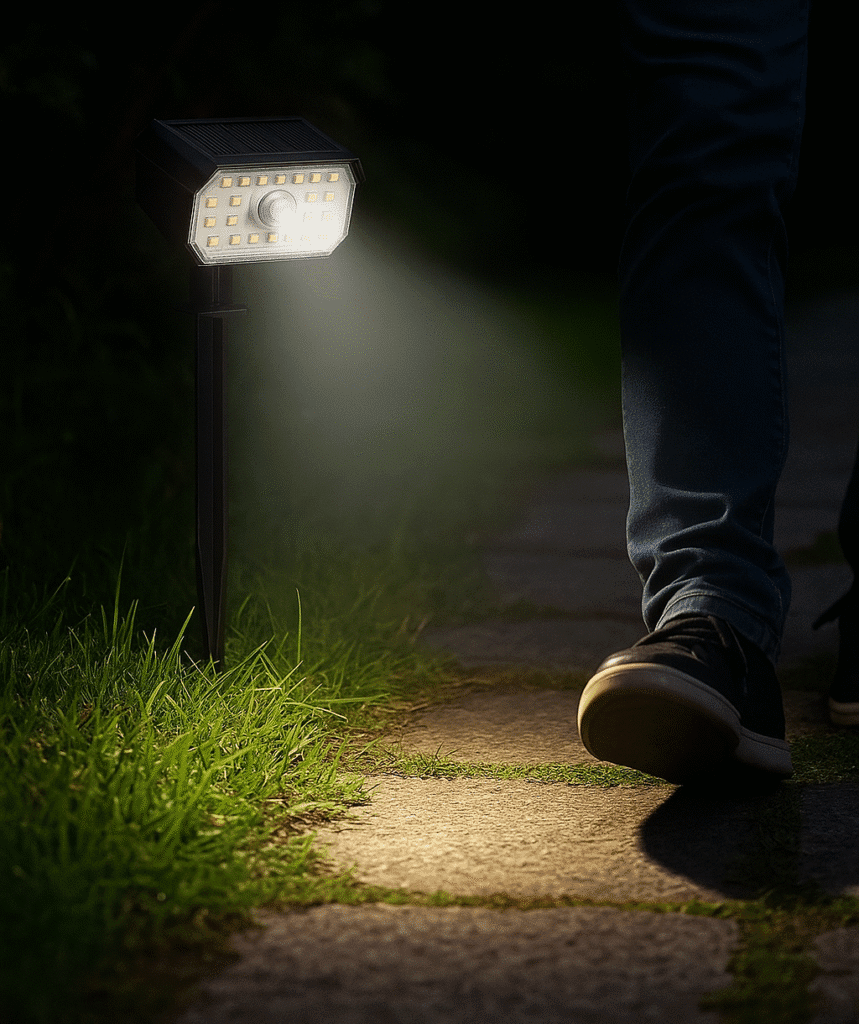
Motion sensor lights stay dark until someone approaches, then illuminate automatically. This saves energy and adds a security benefit.
They are particularly useful at entrances, steps and gates where you need light at specific moments rather than all night.
Best for: Entrances, steps, security conscious households.
What to look for:
- Adjustable sensitivity helps avoid false triggers from cats, foxes or moving branches.
- Look for adjustable duration settings so you can choose how long the light stays on after activation (typically 10 seconds to two minutes).
- PIR (passive infrared) sensors are most common and work well for path lighting. Microwave sensors offer wider detection but are usually overkill for residential paths.
Positioning tips:
- Aim the sensor toward the direction of approach, not across the path.
- Avoid pointing sensors at busy roads or neighbouring properties to prevent constant triggering.
- Position lights at ankle to knee height for paths, or higher for steps where you need to illuminate the treads.
For more on motion sensor lighting, see our [Motion Sensor Outdoor Lights Guide].
Browse motion sensor path lights on Amazon →

6. Solar Lanterns
Solar lanterns offer decorative appeal alongside functional lighting. They suit cottage gardens, patios and informal paths where ambience matters more than maximum brightness.
Available as hanging lanterns, tabletop versions and stake mounted designs, they bring character that utilitarian path lights lack.
Best for: Cottage gardens, patios, decorative accent lighting.
What to look for:
- Warm white LEDs (2700K) create the most authentic lantern glow. Avoid models with bluish or stark white light.
- Flickering flame effect LEDs mimic real candles and look particularly effective in traditional lantern housings.
- Metal and glass construction lasts longer than all plastic models, though quality plastic can be surprisingly durable.
Positioning tips:
- Mix heights and styles for a collected, informal look rather than matching sets.
- Cluster lanterns near seating areas and at path junctions where they create focal points.
- Hang lanterns from shepherd hooks along path edges for a magical evening effect.
Browse solar lanterns on Amazon →

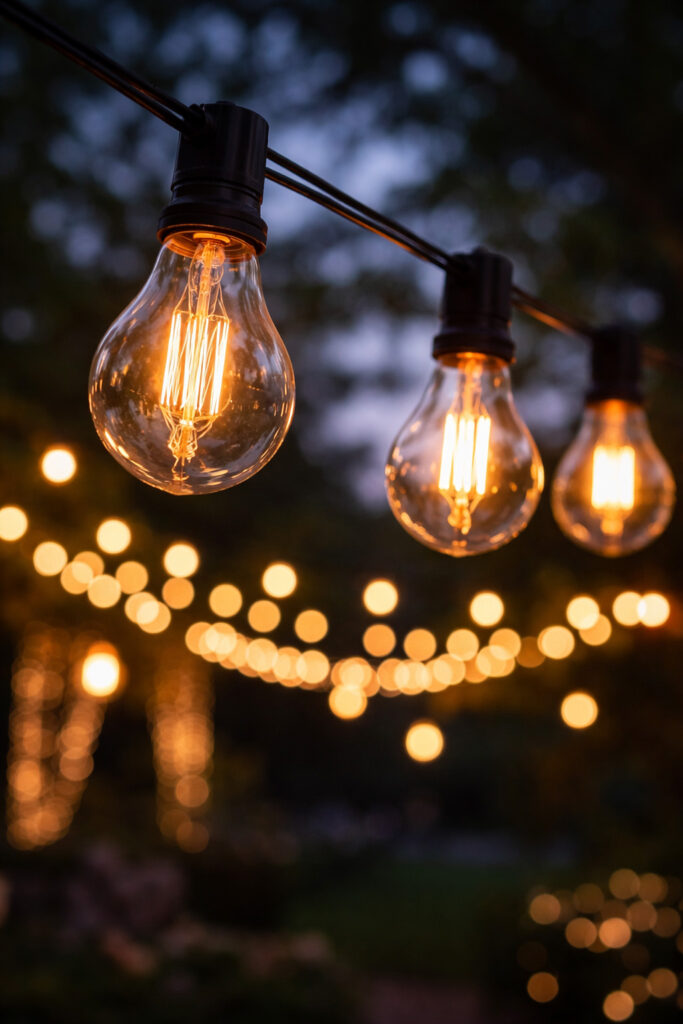
7. Solar String Lights
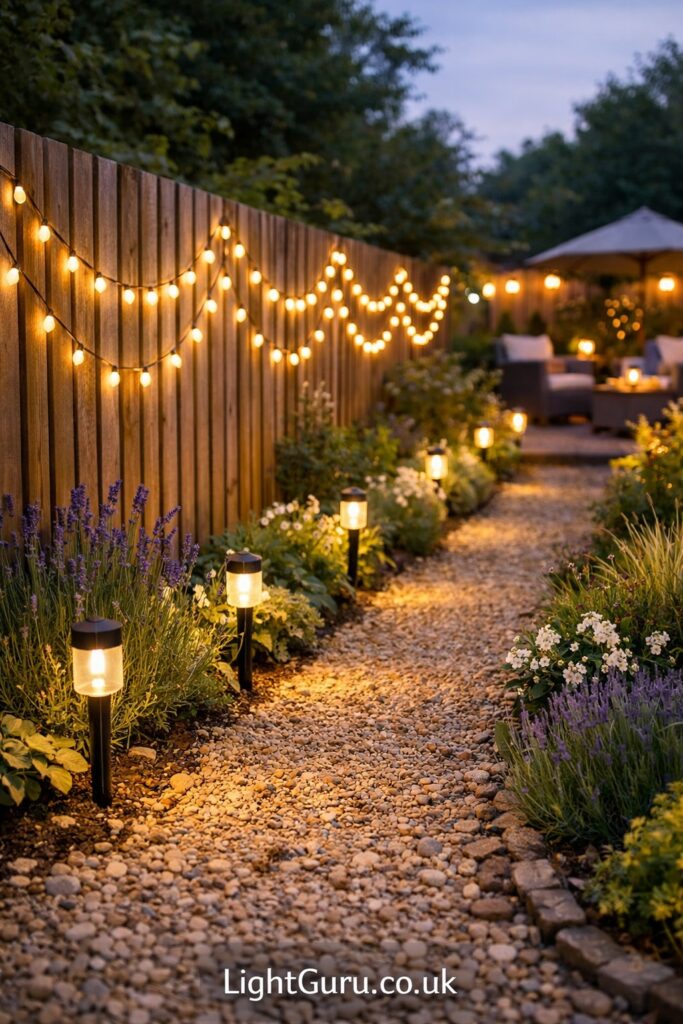
String lights transform garden paths into something special. Draped along fences, wound through pergolas or hung between posts, they create atmosphere that individual path lights cannot match.
Modern solar string lights are surprisingly bright and reliable, with many models running for 8 to 10 hours on a full charge.
Best for: Entertaining spaces, festive occasions, cottage and boho garden styles.
What to look for:
- Look for solar panels with 2m or 3m cables so you can position the panel in full sun while the lights run through shadier areas.
- Warm white (2700K to 3000K) looks best for most gardens. Multicolour options suit parties but can look garish for everyday use.
- Check the total length and LED spacing. 10m with 100 LEDs is fairly standard and covers a decent run.
Positioning tips:
- Fix the solar panel where it receives maximum sunlight, typically on top of a fence post or south facing wall.
- Create gentle swoops rather than tight straight lines for a more natural look.
- Combine with stake lights at ground level for layered lighting that looks intentional rather than sparse.
Browse solar string lights on Amazon →
How to Plan Your Path Lighting Layout
Before buying anything, spend time planning the layout. A few minutes of preparation prevents disappointment.
Walk the path at night. Identify dark spots, potential trip hazards and areas where you want to draw attention. Take photos or make notes.
Count the length. Measure or pace out your path. For stake lights spaced 1.5 to 2 metres apart, a 10 metre path needs roughly 5 to 7 lights.
Check sun exposure. Walk the path at midday on a sunny day. Any areas in deep shade will not suit solar lights.
Consider the view from inside. You will see your path lighting from windows and doors. Think about how it will look from those angles, not just from the path itself.
Plan for power. If using battery or rechargeable lights, think about how you will access them for charging or battery changes. Lights at the far end of a long garden become tedious to maintain.
Use our [Garden Lighting Layout Planner] to visualise different arrangements before you commit.

Installation Tips for Wireless Path Lights
Wireless lights are simple to install, but a few techniques improve results.
Prepare the ground. If pushing stake lights into hard soil, use a screwdriver or metal rod to create a pilot hole first. This prevents cracking the plastic stake.
Check stability. Wobbly lights look untidy and fall over in wind. Push stakes in fully and firm the soil around them.
Test before fixing. For lights that mount to walls, posts or fences, hold them in position after dark to check the effect before drilling.
Leave adjustment room. Do not expect your first layout to be perfect. Live with it for a week, then move any lights that are not working in their current position.
Clean solar panels regularly. Dust, bird droppings and fallen leaves reduce charging efficiency. Wipe panels every few weeks during summer and monthly during winter.

Matching Path Lights to Your Garden Style
Different light styles suit different gardens. Here is a quick guide:
Modern and minimalist: Choose black or stainless steel bollards with clean lines. Keep spacing symmetrical. Use neutral white (4000K) LEDs.
Traditional and cottage: Go for lantern styles, warm white light and mixed heights. Bronze, copper and black finishes work well. Asymmetric placement looks more natural.
Coastal and contemporary: Choose corrosion resistant materials like polycarbonate or marine grade stainless steel. Stick to whites, greys and natural tones. Soft warm light suits relaxed seaside aesthetics.
Wildlife friendly: Opt for lower brightness, warm white lights and motion sensors that activate only when needed. Constant bright lighting can disturb nocturnal wildlife. The Bat Conservation Trust recommends minimising light spill into hedgerows and trees.

Maintaining Wireless Garden Lights
Wireless lights need minimal maintenance, but a little care extends their life significantly.
Clean solar panels. This is the single most important maintenance task. Dirty panels cannot charge properly. Wipe them with a damp cloth every few weeks.
Replace batteries when needed. If your solar lights are dimmer than they used to be or switch off early, the rechargeable battery is probably failing. Most use standard AA NiMH batteries that cost a few pounds to replace.
Check seals and gaskets. Over time, rubber seals can perish, allowing water ingress. Inspect lights annually and replace any that show internal condensation.
Store or protect in extreme weather. Most wireless lights tolerate normal UK weather, but severe frosts, heatwaves or storms can cause damage. Bringing lights indoors during extreme conditions extends their life.
Clean housings. Algae and dirt build up on plastic and metal housings over time. A wipe down with soapy water keeps them looking fresh.

Frequently Asked Questions
How many solar lights do I need for my path?
It depends on spacing and path length. For stake lights, space them 1.5 to 2 metres apart. A 10 metre path typically needs 5 to 7 lights for even coverage. Bollards can be spaced further apart (2 to 3 metres) because they cast light over a wider area.
Do solar path lights work in winter?
Yes, but with reduced performance. Shorter days and lower sun angles mean less charging time and weaker charge. Expect winter run times to be roughly half of summer performance. Choosing lights with larger solar panels and higher capacity batteries helps.
How long do wireless garden lights last?
Quality solar lights typically last 3 to 5 years. The LED itself can last 25,000+ hours, but the rechargeable battery usually fails first. Replacing the battery (if the model allows) can extend life significantly. Cheaper lights may only last 1 to 2 seasons.
Are solar lights bright enough for safety?
For marking path edges and preventing trips, yes. For security lighting, probably not. Solar path lights typically produce 10 to 50 lumens each. For security, you need motion activated floodlights producing 700 to 1500 lumens. The two serve different purposes.
Can I use wireless lights on steps and decking?
Yes. Many wireless lights come with mounting brackets for walls, steps and deck posts. Surface mounted lights work better on steps than stake lights. Look for IP65 rated models if mounting on decking where they may be exposed to standing water.
What IP rating do I need for garden path lights?
IP44 is the minimum for outdoor use, protecting against rain and splashing water. IP65 is better, offering protection against heavy rain and jet washing. IP67 allows temporary immersion, useful for lights in areas that may flood briefly. See our [Outdoor IP Ratings Guide] for details.
Final Thoughts
You do not need mains wiring to create beautifully lit garden paths. Solar stake lights handle most situations. Bollards add architectural presence. Battery and rechargeable options solve shading problems. Motion sensors add security. Lanterns and string lights bring decorative charm.
Start by assessing your path, checking sun exposure and choosing a style that suits your garden. Then experiment with positioning before committing to permanent placement.
For more outdoor lighting ideas, see our [Garden Path Lighting Ideas] and [Patio Lighting Ideas] guides.
Related guides:
- [Garden and Outdoor Lighting Ideas]
- [Outdoor IP Ratings Explained]
- [Solar Garden Lights Guide]
- [Motion Sensor Outdoor Lights Guide]
- [Garden Lighting Layout Planner]