
Ceiling lighting plays a central role in how bright, balanced and usable a bathroom feels throughout the day. In UK bathrooms, ceiling fittings often provide the primary light source, making placement and specification particularly important.
But getting it right is not just about brightness. The wrong ceiling lights can create harsh shadows on your face, make a small room feel smaller, or look completely out of place with your design style.
This guide looks at the main ceiling lighting options for bathrooms including recessed downlights, flush fittings, adjustable spots and perimeter lighting. We cover where each type works best, how to position them for the most flattering light, and what you need to know about safety and IP ratings in wet spaces.
Whether you are planning a new bathroom from scratch or updating tired fittings in an existing space, these ideas will help you create ceiling lighting that looks good and works hard.
This guide focuses on one specific aspect of bathroom lighting design. For full room planning including mirrors, wall lights and layering, see our complete bathroom lighting ideas guide.
Table of Contents
1. Recessed Downlights for a Clean Modern Look
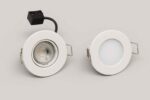
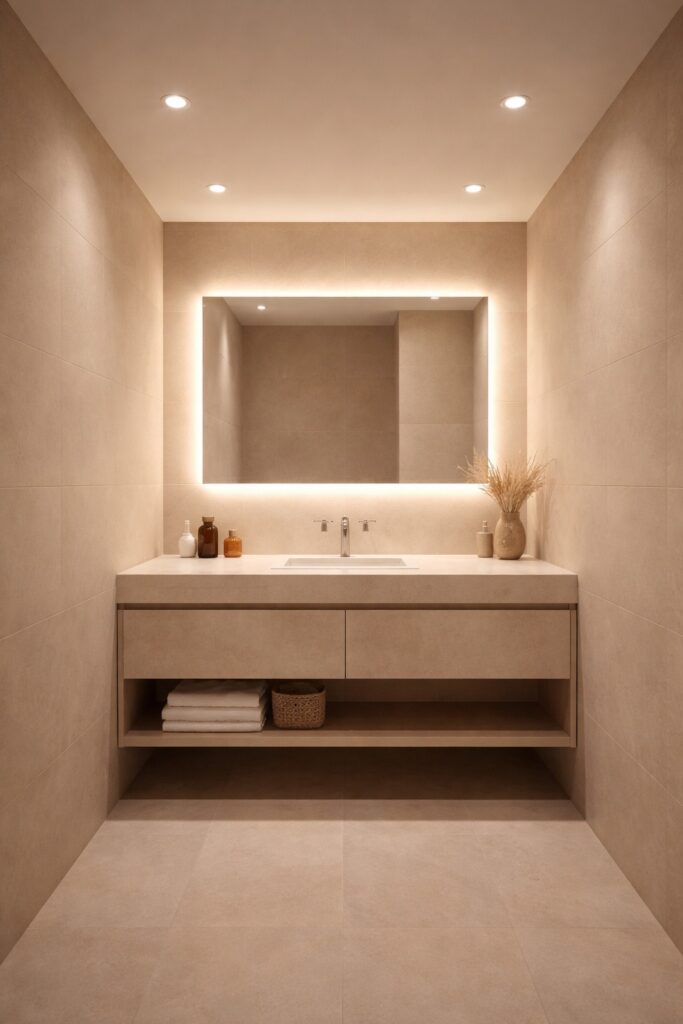
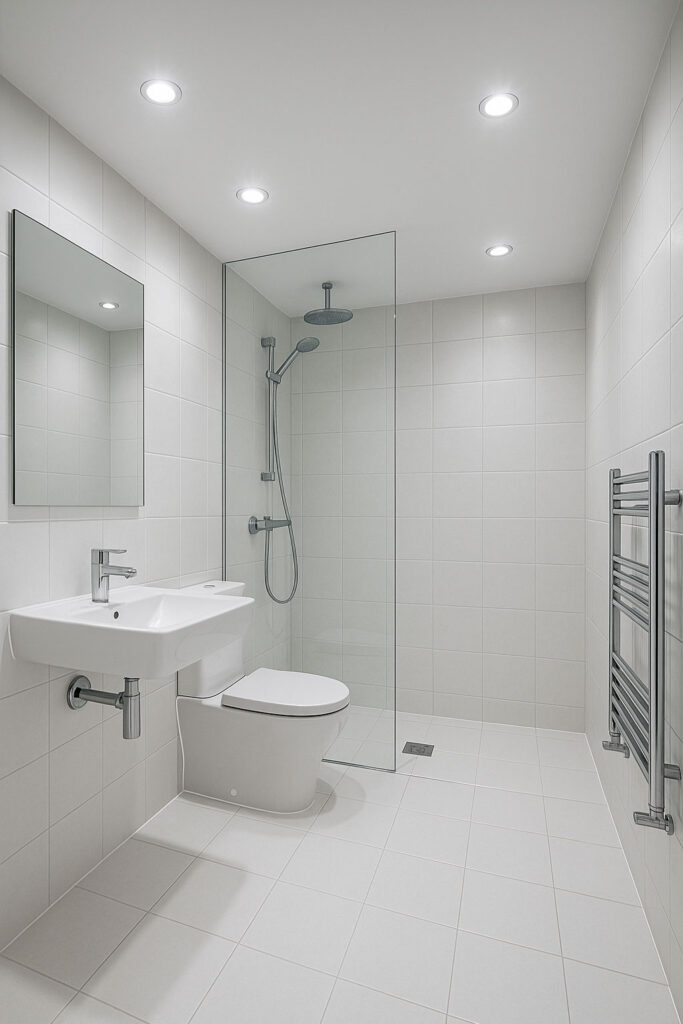
Recessed downlights are the most popular ceiling lighting choice in UK bathrooms for good reason. They sit flush with the ceiling, creating a clean and uncluttered look that lets your tiles, vanity and other design elements take centre stage.
Unlike pendant lights or decorative fittings, recessed spots disappear into the architecture. You notice the light they create, not the fitting itself. This makes them perfect for modern bathrooms where simplicity is the goal.
When spaced correctly, recessed downlights wash light across your walls, reduce shadows and visually lift the ceiling height. This is especially valuable in smaller UK bathrooms where every detail affects how spacious the room feels.
Why recessed downlights work well in bathrooms:
They keep the ceiling clear and uncluttered which suits compact rooms. The light spreads evenly when positioned correctly. They handle steam and humidity well when you choose the right IP rating. Most are dimmable so you can shift from bright morning light to soft evening glow.
Placement tips:
The biggest mistake people make is putting a single downlight in the centre of the ceiling. This creates shadows on your face when you stand at the mirror and leaves the corners of the room feeling dark.
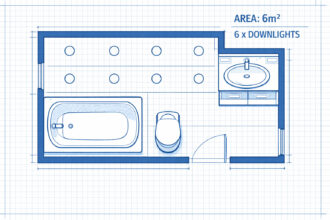
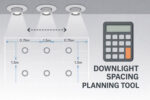
Instead, position downlights closer to the walls. Aim for around 60cm from the wall and roughly 1m apart from each other. This creates a wash of light across the walls and makes tiles glow rather than casting harsh shadows under your chin.
For a typical small bathroom, four downlights arranged in a rectangle pattern often works better than one or two in the middle.
If you are unsure how many you need, our guide on how many downlights for a bathroom breaks down the numbers for different room sizes.

2. Flush Ceiling Lights for Low Rooms and Cosy Spaces
Not every bathroom has the ceiling height for recessed fittings. Many UK homes, particularly Victorian terraces, 1930s semis and loft conversions, have compact bathrooms where headroom is limited and ceiling voids are shallow.
This is where flush ceiling lights come into their own.
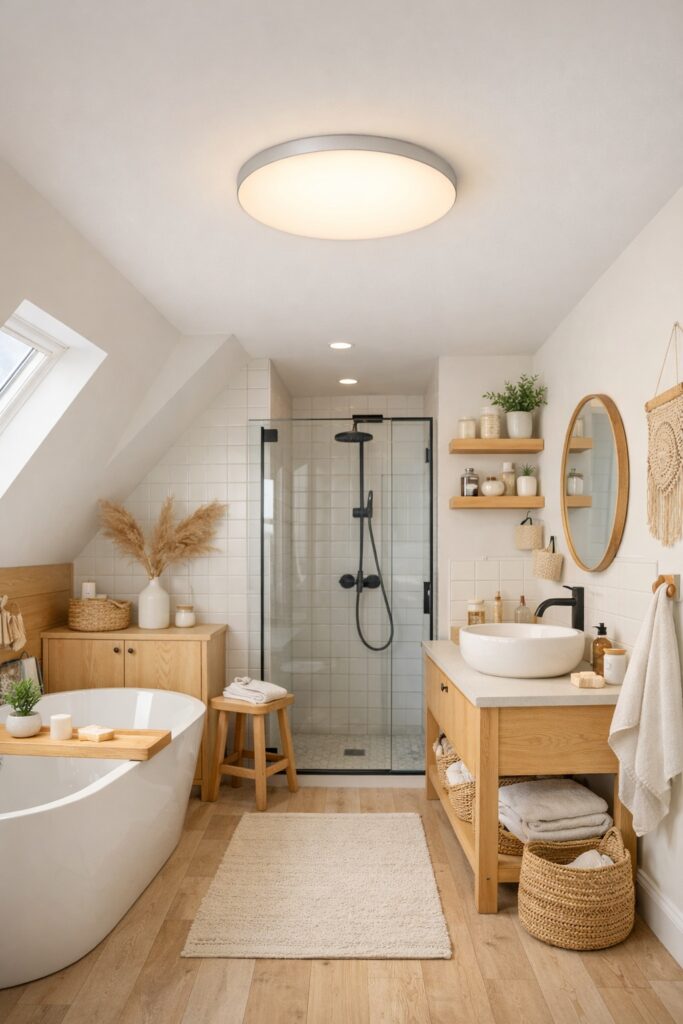
A flush fitting mounts directly against the ceiling surface with no hanging drop and minimal depth. You get good overall illumination without the fitting intruding into the space or making a low ceiling feel even lower.
Where flush ceiling lights work best:
Small bathrooms with ceilings under 2.4m. Loft bathrooms with sloped or angled ceilings. Rental properties where you cannot cut into the ceiling for recessed fittings. Family bathrooms that need easy cleaning and minimal fuss.
Choosing the right flush fitting:
Look for something with a diffused cover rather than exposed bulbs. This spreads the light more evenly and avoids harsh glare when you look up. Opal glass or frosted plastic diffusers work well.
Size matters too. A fitting that is too small will look lost on the ceiling and may not throw enough light. As a rough guide, a bathroom of 4 to 6 square metres suits a flush light around 30 to 40cm in diameter.
Colour temperature:
Stick to warm white between 2700K and 3000K. Cool white light above 4000K can feel clinical and unflattering in a bathroom, especially in a small space where the light reflects off tiles and creates a stark atmosphere.
If you want flexibility, look for tuneable white flush fittings that let you adjust the colour temperature to suit different times of day.
3. Adjustable Spots for Feature Walls and Design Detail
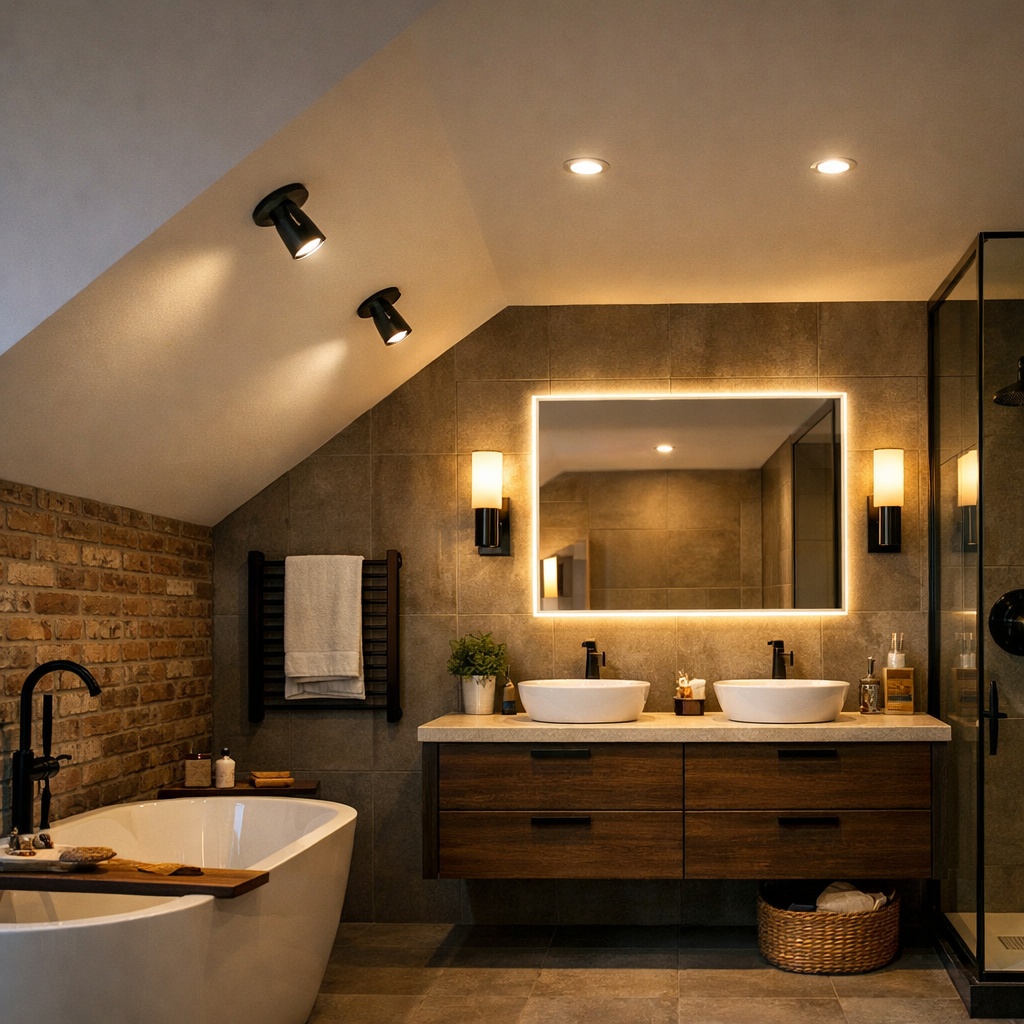
If you have invested in a beautiful feature tile, textured stone, statement wallpaper or a freestanding bath, why not light it properly? Adjustable ceiling spots let you direct light exactly where you want attention to fall.
Unlike fixed downlights that only point straight down, adjustable spots can be tilted and rotated to highlight specific areas. A gentle angle towards a feature wall grazes across the texture and makes it come alive. The same technique works for a rainfall shower, a alcove shelf or even a statement plant.
What to highlight with adjustable spots:
A freestanding bath as a focal point. A feature tile wall behind the bath or in the shower. A rainfall shower corner. Open shelving with towels or plants. Artwork or a decorative mirror frame.
How to use them without overdoing it:
The key is restraint. One or two adjustable spots feels curated and intentional. Too many and the bathroom starts to look like a retail showroom with light pointing in every direction.
The best approach is to combine one or two adjustable spots with a layout of fixed recessed downlights. The fixed lights provide your general illumination while the adjustable spots pick out the details you want to celebrate.
Beam angles:
For highlighting texture and features, choose a narrower beam angle around 24 to 36 degrees. This creates a focused pool of light rather than a wide flood. The contrast between the lit feature and the surrounding space is what creates the drama.

4. Perimeter Lighting for a Soft Hotel Atmosphere
If you have ever stayed in a high end hotel and noticed how the bathroom felt calm and luxurious without any obvious light fittings, chances are they used perimeter lighting.
Perimeter lighting distributes light around the edges of the ceiling rather than from the centre. The light source is usually hidden in a coving, shadow gap or recessed channel, so you see the glow but not the fitting.
This technique does several things at once. It softens the corners of the room, reduces harsh contrast between light and dark areas, and visually lifts the ceiling by washing light upward. The overall effect is calm, even and surprisingly flattering.
Ways to create perimeter lighting:
LED coving is the most common approach. An LED strip is fitted into a plaster coving or aluminium channel that runs around the edge of the ceiling. The light bounces off the ceiling and walls, creating soft ambient illumination.
Recessed shadow gaps work in modern bathrooms with clean lines. A narrow gap is left between the ceiling and wall, with LED strip hidden inside.
Floating ceiling panels create a similar effect by mounting a lower ceiling section with lighting hidden around the perimeter.
Practical considerations:
Perimeter lighting is usually best as ambient or mood lighting rather than your only light source. The soft indirect glow is perfect for a relaxing bath in the evening but may not be bright enough for tasks like shaving or applying makeup.
Combine perimeter lighting with recessed downlights or a backlit mirror so you have options. Use a dimmer for the perimeter strip so you can adjust the mood.
Stick to warm white around 2700K for the most relaxing effect. Make sure any LED strip used near the ceiling in a bathroom is rated IP65 or higher if it could be exposed to steam.
Our bathroom LED strip lighting guide covers the technical details of choosing and installing strip lighting in wet areas.


5. Practical Spacing and Safety in UK Bathrooms
Ceiling lighting in a bathroom needs to look good, but it also needs to be safe. Bathrooms are classified as special locations in UK wiring regulations because of the combination of water, steam and electricity. Getting the safety side right is not optional.
IP ratings explained simply:
IP stands for Ingress Protection and the rating tells you how well a fitting resists water and dust. In bathrooms, you need to pay attention to the second digit which relates to water resistance.
IP44 means the fitting is protected against splashing water from any direction. This is acceptable for ceiling areas outside the shower zone in most bathrooms.
IP65 means the fitting is protected against water jets. This is the minimum you should use directly above a shower, bath or anywhere that gets direct water spray.
For wet rooms where the entire ceiling may be exposed to steam and spray, IP65 across all fittings is the safest approach.
Our full guide on bathroom zones and IP ratings explains exactly which rating you need for each part of your bathroom.
Spacing guidelines:
For recessed downlights, aim for approximately 1m spacing between fittings and around 60cm from the walls. Positioning lights closer to the walls creates a better wash of light across surfaces and avoids the unflattering effect of a single central light.
In a typical small bathroom around 2m by 2.5m, four downlights arranged in a rectangular pattern usually provides even coverage without over lighting.
Other safety points:
All bathroom lighting circuits should be protected by an RCD (residual current device) which cuts the power instantly if a fault is detected.
Good ventilation extends the life of LED fittings in bathrooms. Steam and condensation can affect electronics over time, so an extractor fan helps protect your investment.
If in doubt about electrical work in a bathroom, always use a qualified electrician. Bathroom electrics fall under Part P of the Building Regulations and certain work requires certification.

6. Room by Room Ceiling Layout Ideas
Every bathroom is different. Ceiling height, room shape, natural light and how you use the space all affect which lighting layout works best. Here are practical starting points for common UK bathroom types.
Small bathroom (under 4 square metres):
Keep it simple. Four recessed downlights positioned towards the walls in a rectangular layout, plus a backlit mirror for task lighting at the vanity. Avoid anything hanging or bulky. Warm white around 2700K keeps the space feeling cosy rather than clinical. Add a dimmer if you can so you have the option of softer light for evening.
Ensuite bathroom:
Ensuites are often compact and used mainly for quick showers and getting ready. Two IP65 rated downlights over the shower area plus one or two flush or recessed fittings over the main space works well. A backlit mirror at the vanity handles task lighting. Keep everything sleek and minimal.
Family bathroom:
Family bathrooms need to work for everyone from early morning rush to kids bath time to relaxing evening soaks. A combination approach works best. Recessed downlights for general brightness, a perimeter LED strip or coving on a separate dimmer circuit for ambient evening light, and good mirror lighting for the adults. Consider warmer colour temperatures for the ambient lighting and slightly brighter neutral white for task areas.
Wet room:
Wet rooms need IP65 rated fittings throughout since the entire space is essentially a splash zone. A grid of recessed downlights provides even coverage. Consider adding niche lighting in shower recesses or a backlit mirror panel. Because wet rooms are often fully tiled, the reflective surfaces can make the room feel brighter so you may not need as many fittings as you think.
Loft bathroom:
Sloped ceilings make recessed downlights tricky or impossible in some areas. Use flush fittings on the sloped sections and save recessed spots for any flat ceiling areas. Adjustable spots can work well on the slope to direct light where you need it. Wall lights and mirror lighting become more important when ceiling options are limited.
FAQs
How many downlights do I need in my bathroom?
It depends on the room size, but most UK bathrooms work well with four to six recessed downlights. A small ensuite might only need three or four. A larger family bathroom could need six to eight. The key is positioning them towards the walls rather than clustering them in the centre. Our guide on how many downlights for a bathroom has more detailed calculations.
What is the best colour temperature for bathroom ceiling lights?
Warm white between 2700K and 3000K suits most bathrooms. It feels relaxing and flattering without being too yellow. Avoid anything above 4000K as it can feel harsh and clinical, especially in a small tiled space. If you want flexibility, look for tuneable white fittings that let you adjust between warm and cool.
What IP rating do I need for bathroom ceiling lights?
IP44 is acceptable for ceiling areas outside the shower zone. IP65 is the minimum for fittings directly above a shower, bath or in a wet room. When in doubt, go higher. Our bathroom zones and IP ratings guide explains exactly which zones need which ratings.
Can I use pendant lights in a bathroom?
Yes, but only outside Zone 2 and with sufficient ceiling height clearance. Pendants need to be at least 2.25m from the floor if they are above a bath, and they still need an appropriate IP rating if within 60cm horizontally of a bath or shower. In most UK bathrooms, recessed or flush fittings are safer and more practical choices.
Can I mix spotlights and LED strips on the ceiling?
Absolutely. Combining recessed downlights for general light with LED strip for ambient perimeter lighting is a popular approach that gives you flexibility. Put them on separate switches or dimmers so you can use them independently. Bright downlights for morning, soft strip lighting for evening.
How do I avoid shadows on my face from ceiling lights?
The trick is positioning. A single ceiling light in the centre of the room casts shadows downward onto your face when you stand at the mirror. Position ceiling lights towards the walls instead and add dedicated mirror lighting at face level for tasks like shaving or makeup. Our bathroom mirror lighting guide covers this in detail.
Are LED downlights suitable for steamy bathrooms?
Yes, as long as you choose fittings with the correct IP rating and ensure good ventilation. Steam and condensation can shorten the lifespan of LED drivers over time, but a decent extractor fan makes a big difference. Look for downlights specifically rated for bathroom use.
Do I need a qualified electrician for bathroom lighting?
For anything beyond a simple like for like swap, yes. Bathroom electrical work falls under Part P of the Building Regulations in England and Wales. New circuits, moving fittings or adding extra lights should be done by a qualified electrician who can certify the work.
Conclusion
Good bathroom ceiling lighting comes down to three things: choosing the right type of fitting for your space, positioning them to create even and flattering light, and making sure everything is safe for a wet environment.
Recessed downlights suit most modern bathrooms and keep the ceiling clean and simple. Flush fittings work well where ceiling height is limited. Adjustable spots add drama when you have features worth highlighting. And perimeter lighting creates that soft hotel glow for relaxing evenings.
Whatever approach you choose, remember that ceiling light alone rarely does the whole job. Layering with mirror lighting, wall lights or LED strips gives you flexibility and makes the bathroom work for every mood and time of day.
For full guidance on planning bathroom lighting from start to finish, see our complete bathroom lighting ideas guide.