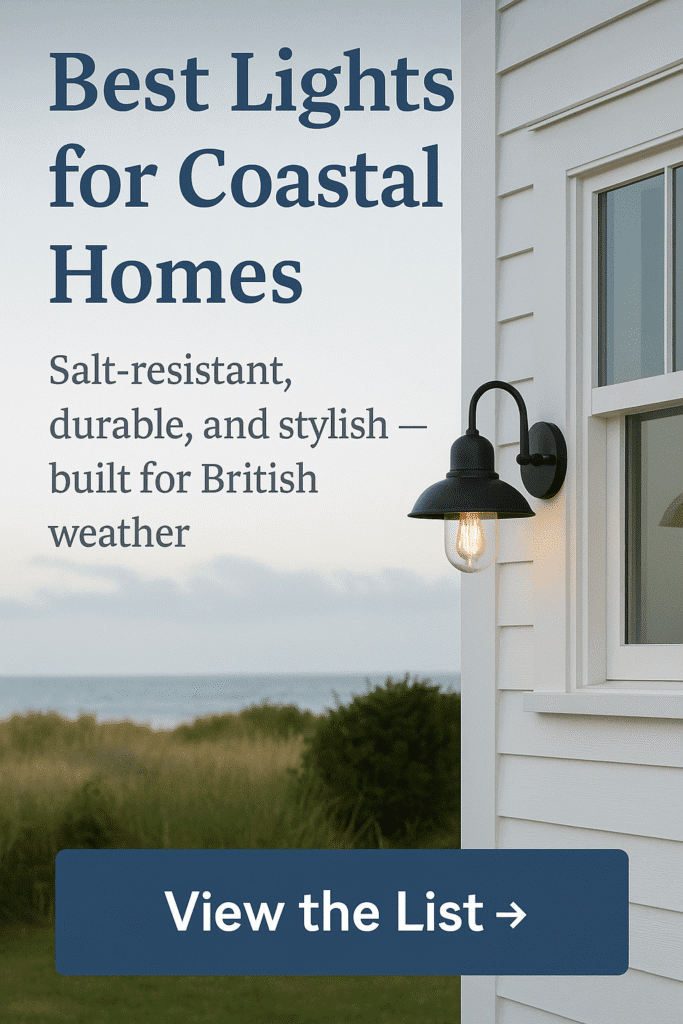
What’s New for 2026? Coastal lighting has moved beyond just “avoiding rust.” We are now seeing the rise of Smart Polycarbonate – app-controlled lights made from high-impact plastic that looks exactly like matte metal but can never corrode.
Living near the coast brings undeniable appeal. Fresh air, open views, and the calming presence of the sea all shape how a home feels. But coastal living also comes with challenges that many homeowners only discover after their first winter by the water, especially when it comes to outdoor lighting.
Salt-laden air, high humidity, and strong coastal winds are far harsher on outdoor lights than standard British weather. Fittings that perform well inland can begin to rust, fade, or fail entirely within months when exposed to sea air. For many homeowners, replacing outdoor lights becomes a frustrating and expensive cycle.
Choosing the right outdoor lights for a coastal home is less about chasing styles and more about understanding materials, construction, and placement. With the right approach, it is possible to install lighting that looks good and continues to perform year after year, even in exposed seaside locations.
This guide focuses on one specific aspect of lighting design. For full garden planning, layout, and safety guidance, see our complete Garden & Outdoor Lighting Guide.
Disclosure: This article contains affiliate links. If you choose to buy through these links, we may earn a small commission at no extra cost to you.
Top 3 Quick Picks
| Category | Product | Description | Why We Chose It | Price |
| Best Modern |  | National Lighting Marine Grade Outdoor Up Down IP65 Spot Light | The “Tea-Stain” Killer. Unlike cheaper 304-grade steel, this uses 316L Marine Grade with Molybdenum to prevent brown rust spots. | £££ |
| Best Traditional |  | CGC Rectangular Polycarbonate Down Lantern | The “Stealth” Plastic Choice. It looks like expensive aluminium but is made of rust-proof polycarbonate. Uses replaceable GU10 bulbs for easy maintenance. | ££ |
| Best Utility | 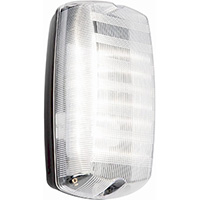 | AVIT Polycarbonate Rectangle Bulkhead Light | Sharp lines, zero rust. The heavy-duty ABS plastic body is impervious to salt, making it the perfect “set and forget” choice for modern sea-facing homes. | ££ |
Table of Contents

Why Coastal Homes Need Different Outdoor Lights
Outdoor lights near the sea face a unique combination of conditions that accelerate wear and corrosion. Salt particles carried on the wind settle on metal surfaces, drawing in moisture and slowly breaking down protective finishes. Over time, this leads to rust, flaking paint, seized fixings, and electrical failures caused by trapped moisture.
Even properties that are not directly on the shoreline can be affected. In many coastal areas, prevailing winds can carry salt spray several miles inland, particularly during storms. This means standard “weatherproof” outdoor lights often do not last as long as expected.
Common issues seen in coastal lighting include:
- Rust appearing within the first year
- Discolouration and fading caused by UV exposure
- Moisture ingress leading to flickering or complete failure
- Corrosion around screws, fixings, and cable entry points
Outdoor lights for coastal homes must be designed to cope with salt, moisture, and wind as a constant presence rather than an occasional challenge.
Coastal environments expose exterior materials to higher levels of moisture and airborne salt, which accelerates corrosion compared to inland locations, as explained by the UK Met Office.

The Most Durable Materials for Coastal Outdoor Lighting
Material choice is the single most important factor when selecting outdoor lights for a coastal property. Not all outdoor-rated materials perform equally near the sea, and some commonly used finishes deteriorate far faster than expected.
Marine-grade stainless steel is specifically formulated to resist pitting and corrosion in salt-rich environments, which is why it is commonly recommended for coastal applications.
British Stainless Steel Association
Polycarbonate: The Most Maintenance-Free Option
Polycarbonate is one of the most reliable materials for coastal outdoor lighting. It is completely rustproof, lightweight, and highly resistant to impact and UV exposure.
Because it contains no metal, polycarbonate fittings are unaffected by salt corrosion. This makes them especially suitable for highly exposed areas such as seafront walls, side passages, garages, and outbuildings.
Polycarbonate lights are often chosen for bulkheads, wall lights, and security fittings where durability matters more than decorative detailing.
If you want to explore examples, you can view a selection of polycarbonate outdoor wall lights designed for coastal conditions on Amazon UK.

Marine-Grade Stainless Steel (316 Grade)
Not all stainless steel is suitable for coastal use. Marine-grade stainless steel, often referred to as 316 grade, is specifically designed to resist corrosion in salty environments.
This alloy contains higher levels of chromium and molybdenum, which significantly improve resistance to pitting and rust. When properly manufactured, marine-grade stainless steel can perform very well in coastal settings while offering a clean, modern appearance.
Lower grades of stainless steel may look similar but tend to rust quickly near the sea, making grade selection critical.
Expert Note: The “Tea Staining” Warning If you buy standard (304 Grade) stainless steel, you will see brown spots called “Tea Staining” within weeks. This looks like rust, but it’s actually a surface reaction.
The Fix: For 2026, strictly filter for “316 Marine Grade”. It contains Molybdenum, a chemical element specifically added to resist salt pitting. If the box doesn’t say 316, put it back.
For coastal properties, it’s worth viewing marine-grade stainless steel outdoor wall lights specifically made for salt-air environments.

Powder-Coated Aluminium
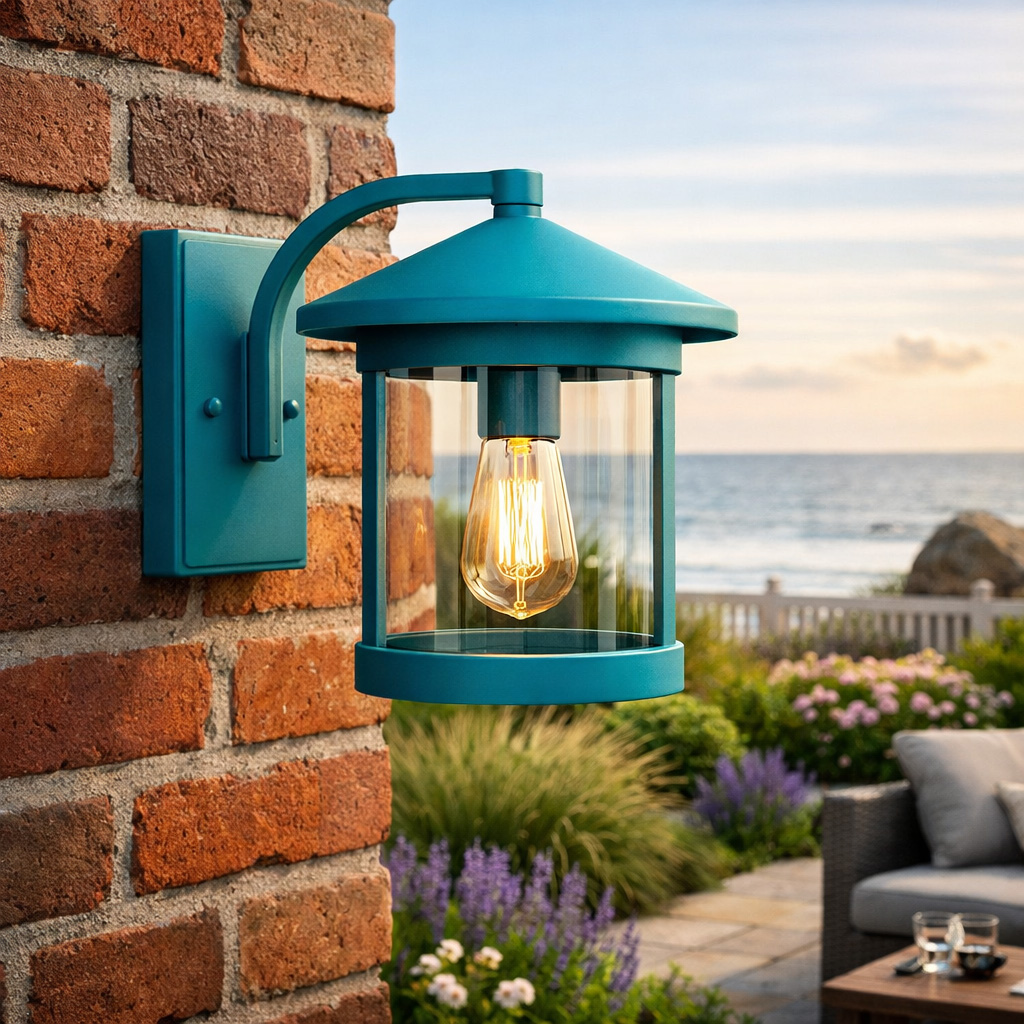
Aluminium does not rust in the same way as steel, but it can still degrade if finishes are poorly applied. High-quality powder-coated aluminium performs well in coastal environments when the coating fully seals the surface.
This material is commonly used for decorative wall lights, up-and-down fittings, and contemporary lantern styles. It offers a good balance between durability and design flexibility, particularly for homeowners who want more choice in colour and form.
You can browse powder-coated aluminium outdoor wall lights that are commonly used in coastal settings on Amazon UK.
Galvanised Steel for Traditional Coastal Homes
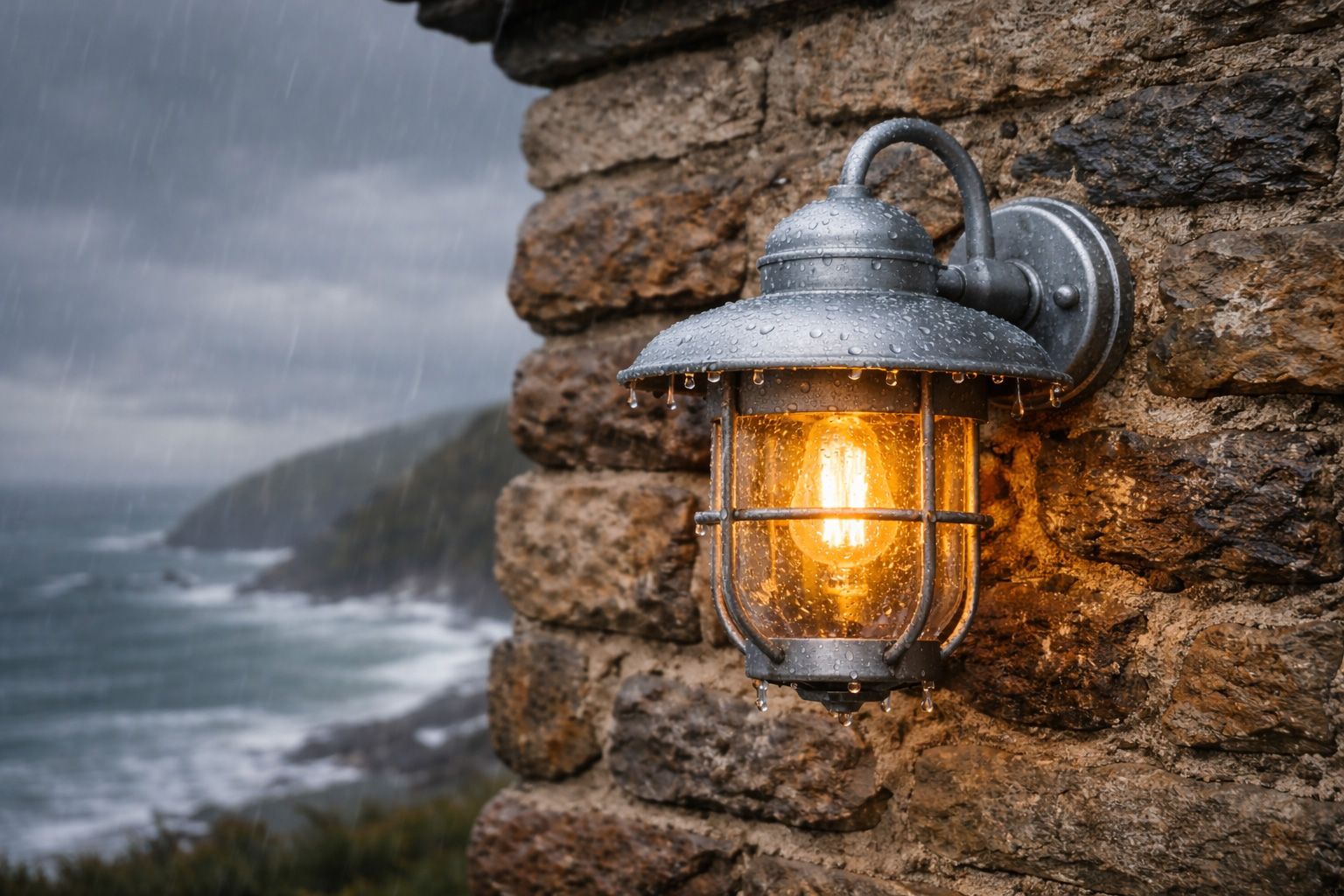
Hot-dip galvanised steel is coated in a protective layer of zinc, creating a strong barrier against moisture and salt. Over time, galvanised fittings develop a soft, matte patina that suits traditional and rustic coastal properties particularly well.
These fittings are often used on cottages, heritage-style homes, and properties where a weathered aesthetic complements the surrounding landscape.
For coastal properties, it’s worth viewing marine-grade stainless steel outdoor wall lights specifically made for salt-air environments.

Choosing the Right Types of Outdoor Lights for Coastal Homes
Once materials are understood, the next step is choosing light types that suit both the environment and how the space is used.
Wall lighting also plays a key role in shaping how outdoor spaces feel after dark, particularly around seating areas and entrances.
Patio Lighting Ideas to Transform Your British Garden for 2026
Coastal Wall Lights
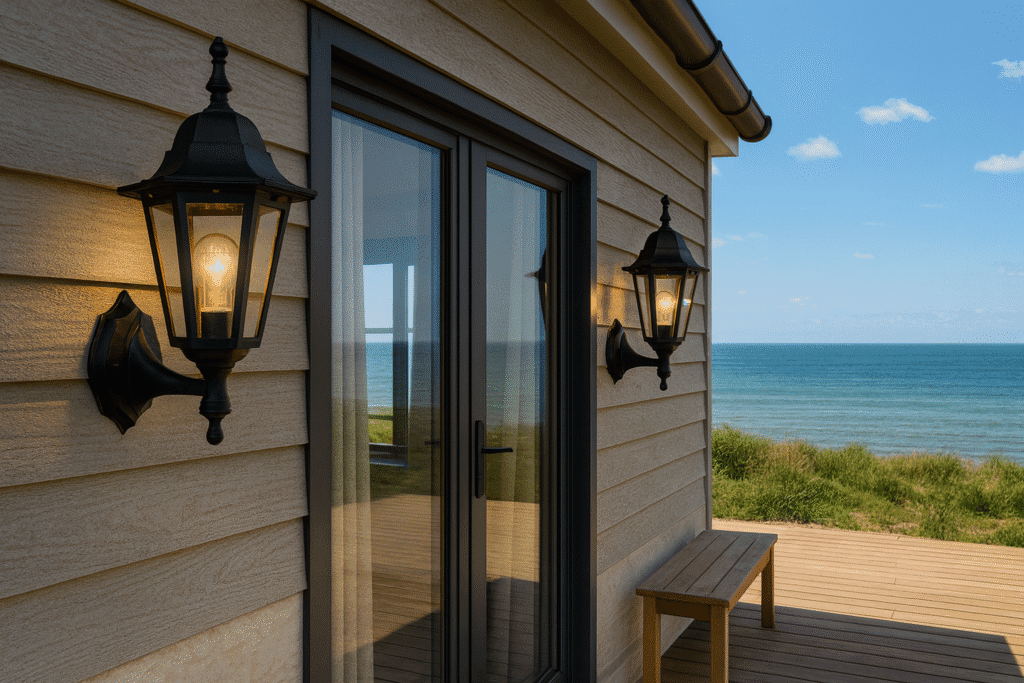
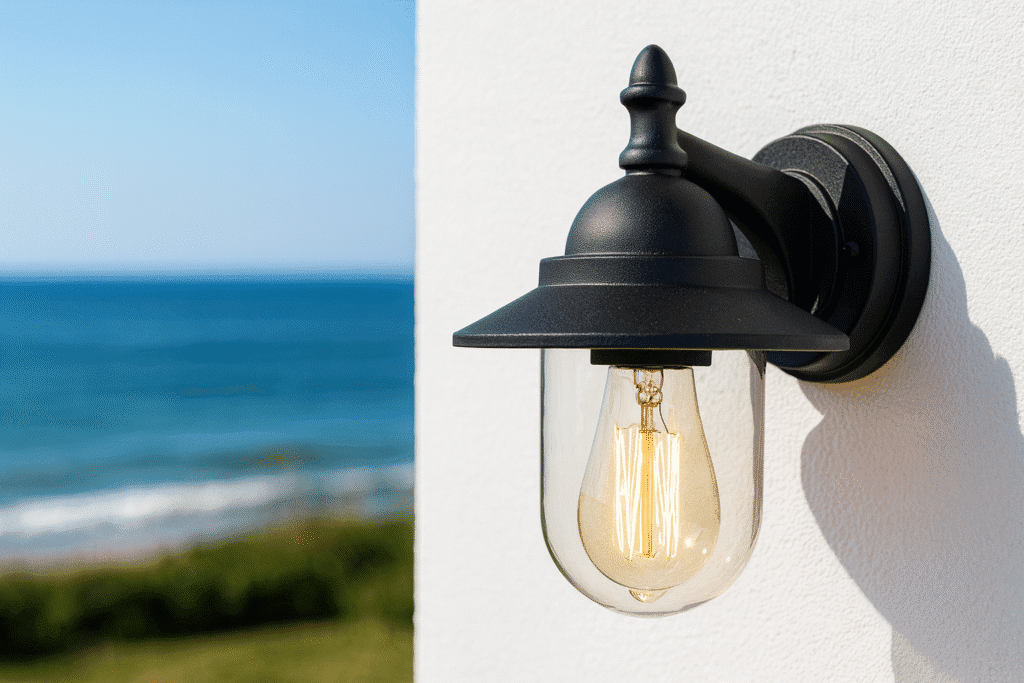
Wall lights are among the most exposed outdoor fittings on a coastal home. Positioned on exterior walls, they receive constant wind-driven moisture and salt spray.
For coastal use, wall lights benefit from corrosion-resistant housings, sealed construction, and designs that prevent water from pooling around the lamp holder. Both modern and traditional styles can work well, provided the materials are suited to marine conditions.
Wall lighting plays a key role in entrances, patios, and walkways, making durability particularly important.
For coastal properties, it’s worth viewing marine-grade stainless steel outdoor wall lights specifically made for salt-air environments.

Bulkhead Lights for High-Exposure Areas
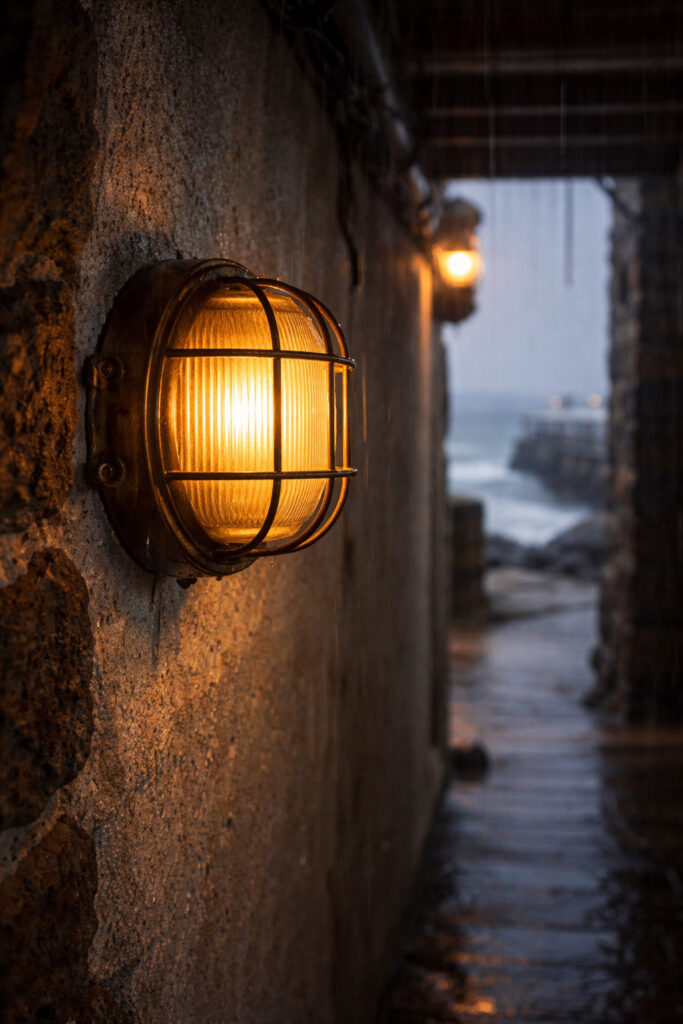
Bulkhead lights are designed to be tough and sealed, making them ideal for coastal conditions. Their enclosed construction protects internal components from moisture, while robust housings resist corrosion and impact.
These fittings work well for garages, side passages, utility areas, and outbuildings where reliability is more important than decorative detail. In coastal settings, bulkheads often outlast more decorative alternatives.
For coastal properties, it’s worth viewing marine-grade stainless steel outdoor wall lights specifically made for salt-air environments.
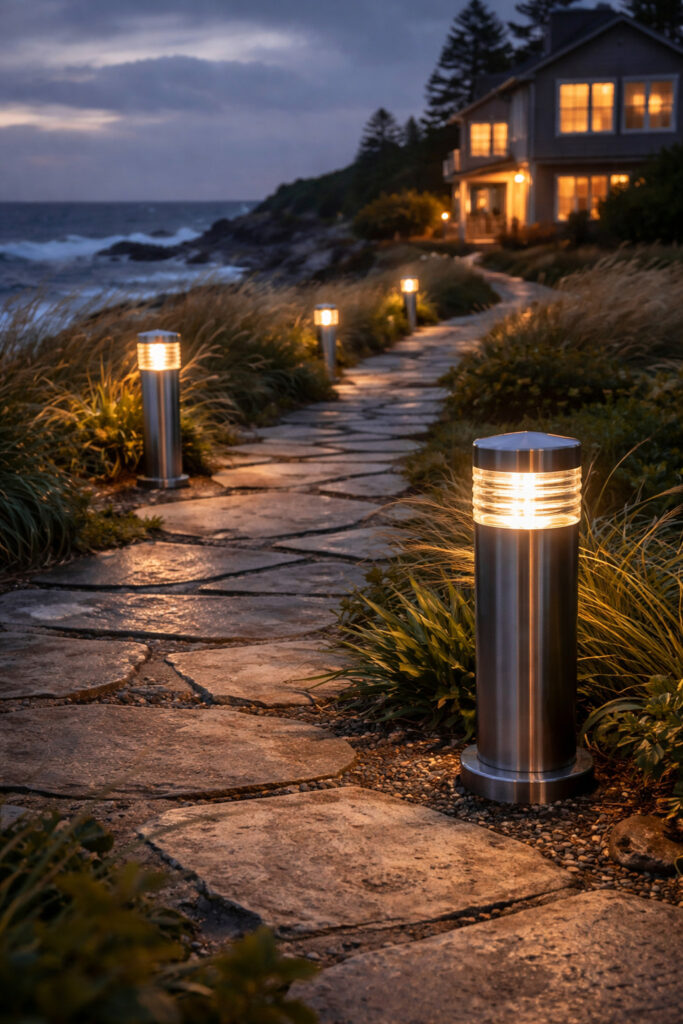
Pathway and Garden Lights Near the Sea
Lighting pathways and gardens around coastal homes requires careful material selection. Bollards and low-level lights should be corrosion-resistant and stable enough to withstand strong winds.
Polycarbonate and marine-grade stainless steel are commonly used here, while solar options can be suitable if light quality and build standards are high. Proper sealing helps prevent moisture ingress from ground-level exposure.
For coastal properties, it’s worth viewing marine-grade stainless steel outdoor wall lights specifically made for salt-air environments.
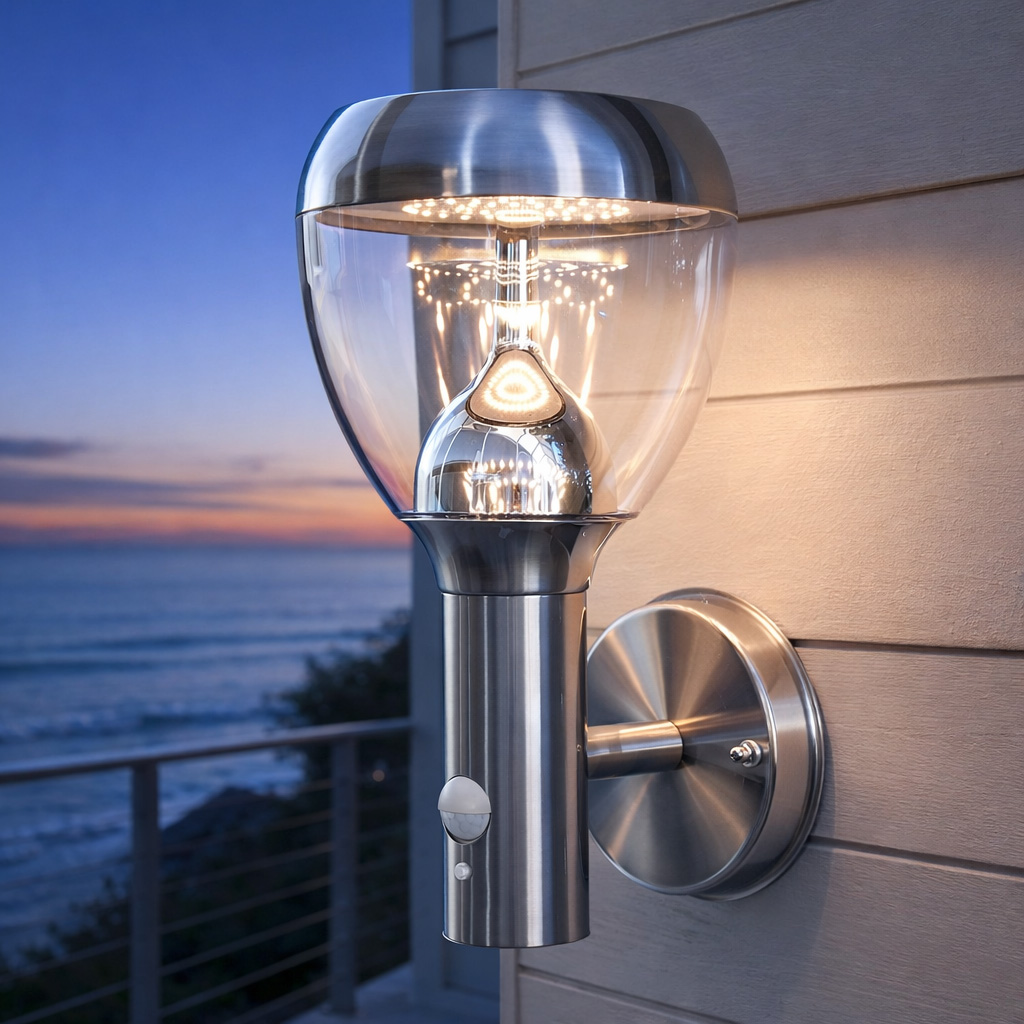
Motion Sensor Security Lights
Coastal mist and reduced visibility make reliable security lighting particularly important. Motion sensor lights for coastal homes should use corrosion-resistant housings and sealed sensor units to prevent moisture damage.
Integrated LED designs are often preferred, as they reduce heat build-up and minimise the risk of internal condensation. Well-designed motion lighting improves safety without dominating the exterior with excessive brightness.
For coastal properties, it’s worth viewing marine-grade stainless steel outdoor wall lights specifically made for salt-air environments.
Understanding IP Ratings in Coastal Environments
Ingress Protection ratings indicate how well a fitting resists water and dust. For coastal homes, this rating matters more than many homeowners realise.
For sheltered areas, an IP44 rating may be sufficient. In exposed locations where fittings face direct rain, wind, or salt spray, higher ratings such as IP65 offer better long-term protection.
Choosing a higher IP rating adds resilience and reduces the likelihood of moisture-related failure over time.

While durability is critical outdoors, light quality also plays a role in how exterior spaces are experienced.
What Is Colour Temperature? Warm vs Cool Lighting Explained
Installation Tip for Coastal Wall Lights
Pro Tip: The Drip Loop Secret
In damp or coastal environments, moisture can track along a cable faster than direct rain. Never run a cable straight down into an outdoor light fitting.
What to do: Form a small ‘U’ shaped drip loop in the cable just below the entry point. This allows water to drip off the lowest point of the loop rather than travelling into the fitting and compromising the seal.
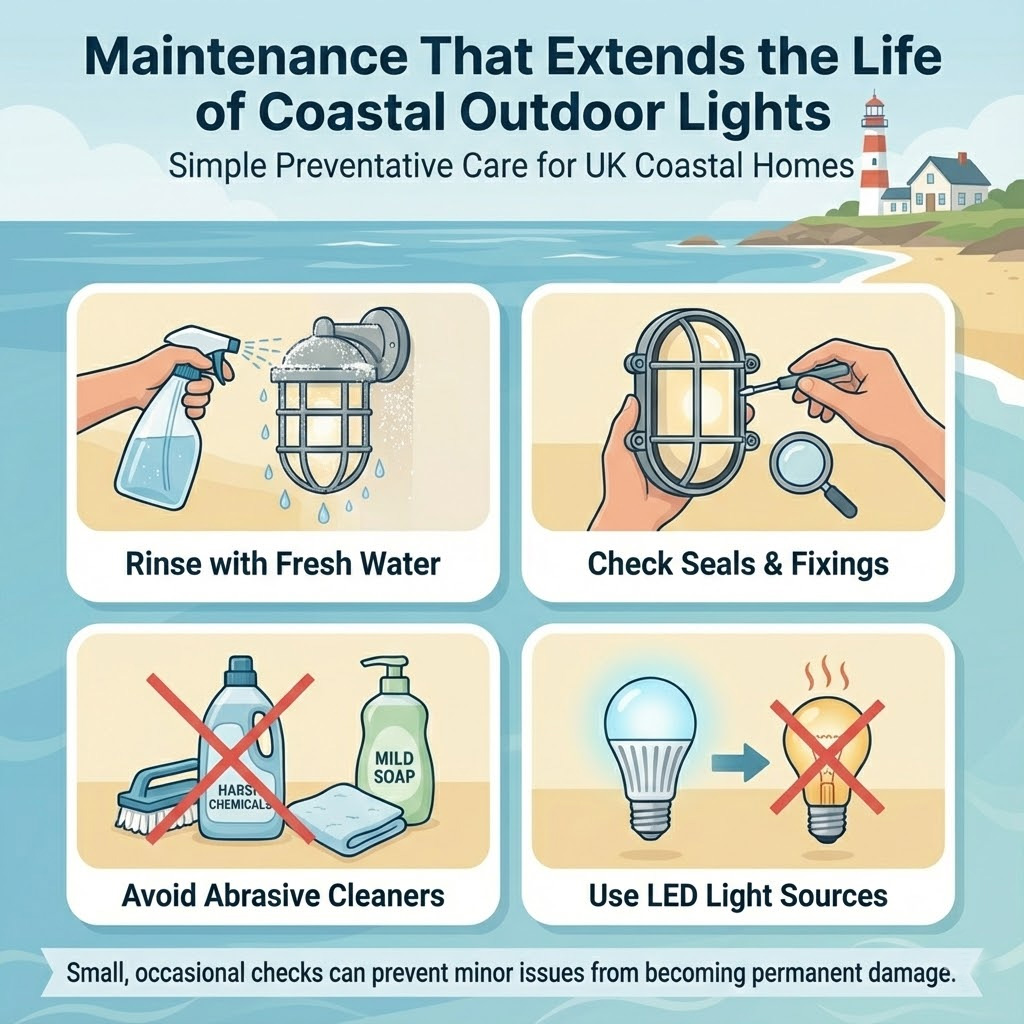
Maintenance That Extends the Life of Coastal Outdoor Lights
Even the best coastal lighting benefits from simple preventative care. Regular maintenance does not need to be time-consuming, but it can significantly extend the lifespan of outdoor fittings.
Helpful practices include:
- Rinsing fittings occasionally with fresh water to remove salt deposits
- Checking seals and fixings for early signs of corrosion
- Avoiding abrasive cleaners that damage protective finishes
- Using LED light sources to reduce heat and internal moisture
Small, occasional checks can prevent minor issues from becoming permanent damage.
Common Questions About Outdoor Lights for Coastal Homes
Do outdoor lights rust near the sea?
Yes, many standard outdoor lights rust quickly in coastal environments if they are not made from corrosion-resistant materials.
How far inland do coastal lighting rules apply?
Salt exposure can affect homes several miles inland, particularly in areas with strong coastal winds.
Are galvanised lights suitable for coastal areas?
Yes, galvanised steel performs well and develops a natural patina over time, making it popular for traditional seaside properties.
Is stainless steel always safe near the coast?
Only marine-grade stainless steel is suitable. Lower grades often corrode quickly in salty air.
What IP rating should coastal outdoor lights have?
Look for IP44 minimum for general use and IP65+ for direct exposure to rain or sea spray.
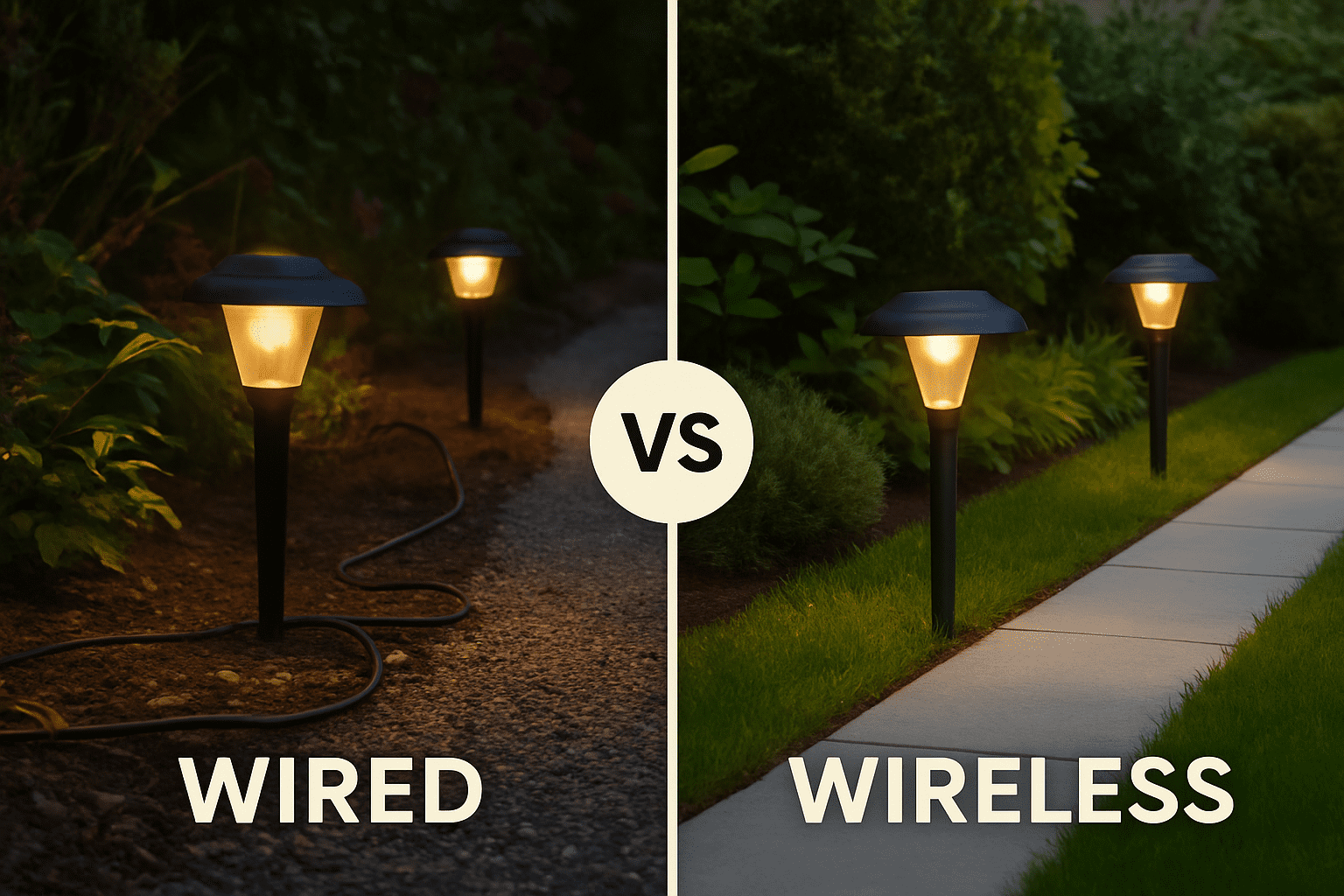
For homes where wiring is difficult or exposure is high, alternative lighting approaches can also be worth exploring.
How to Light a Garden Path Without Wiring: 7 Easy Ways
Choosing Outdoor Lighting That Lasts
Outdoor lighting for coastal homes is an investment in both appearance and reliability. When materials are chosen with coastal conditions in mind, outdoor lights become something that can be installed once and trusted for years, rather than replaced season after season.
By understanding how salt, moisture, and wind affect fittings, homeowners can make confident choices that balance durability, safety, and design. In coastal settings, thoughtful lighting does more than illuminate a space. It quietly supports how the home is used and enjoyed, whatever the weather brings.
For coastal properties, it’s worth viewing marine-grade stainless steel outdoor wall lights specifically made for salt-air environments.
Shop rust-resistant outdoor wall lights on Amazon UK – featuring polycarbonate, marine-grade stainless steel, and galvanised options ideal for coastal weather.