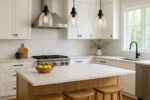
This guide focuses specifically on pendant height. For a wider look at pendant styles, layouts, and spacing, see our kitchen island pendant ideas guide. For full kitchen lighting planning, see our complete kitchen lighting guide.
Knowing how high to hang kitchen island pendants is one of those details that feels strangely stressful until you know the rule. Hang them too low and they block sightlines across the island. Too high and they lose their warmth, turning what should be a cosy focal point into a harsh overhead spotlight.
The good news is that pendant height follows a simple formula that works in the vast majority of UK homes, whether you have standard ceilings, low ceilings, high ceilings, or an open-plan layout. This guide covers the core rule, how to adjust it for your specific situation, and the practical tests you can do before your electrician leaves.
For full kitchen lighting layout advice including downlights, under-cabinet lighting, and task layers, our complete kitchen lighting guide covers the whole picture.
Table of Contents
The Standard UK Pendant Height Rule
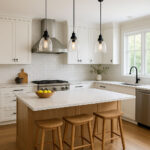
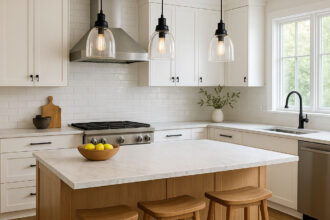
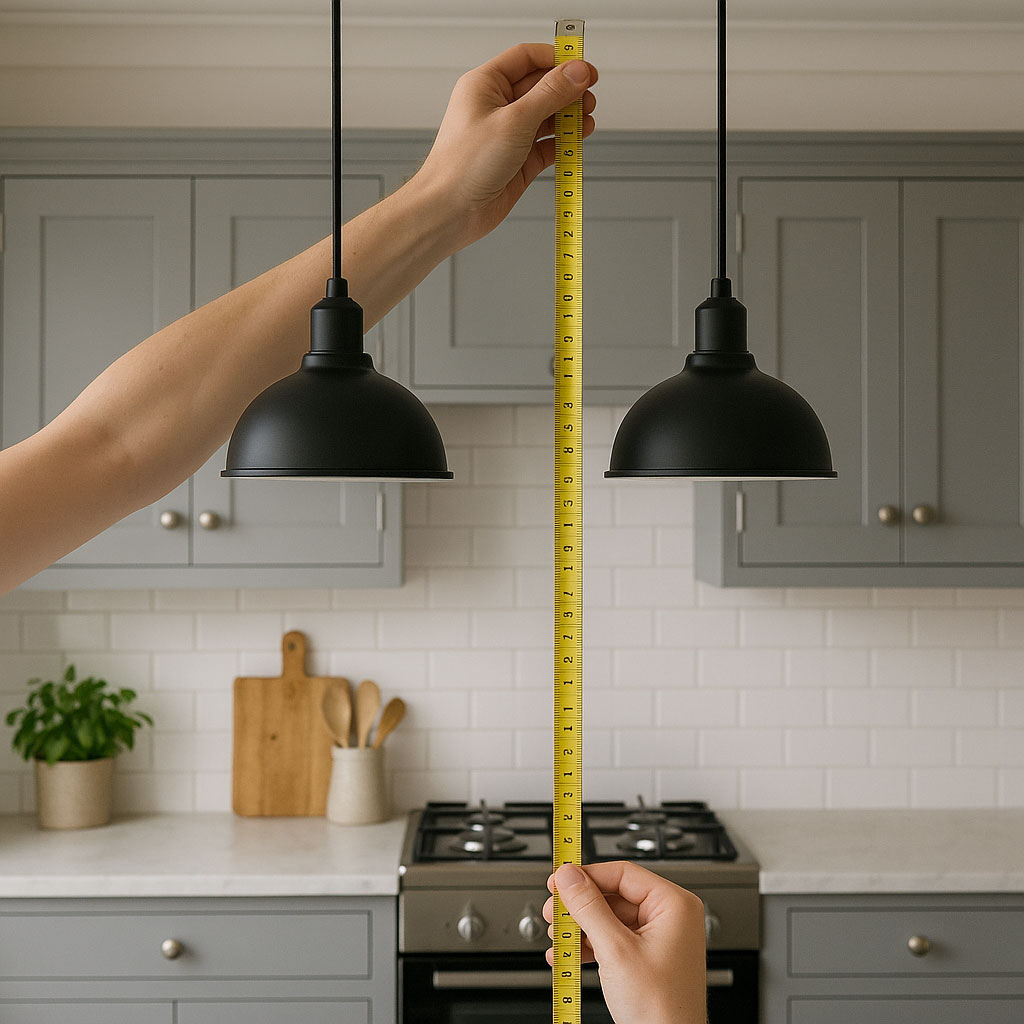
The ideal height to hang kitchen island pendants is 70 to 90cm above the worktop surface, measured from the bottom of the pendant shade to the top of the island.
This range works so consistently because it balances three things at once. It keeps the light close enough to illuminate the worktop properly, high enough to avoid blocking sightlines when you are seated or standing opposite someone, and positioned to create a warm pool of light rather than a harsh overhead glare.
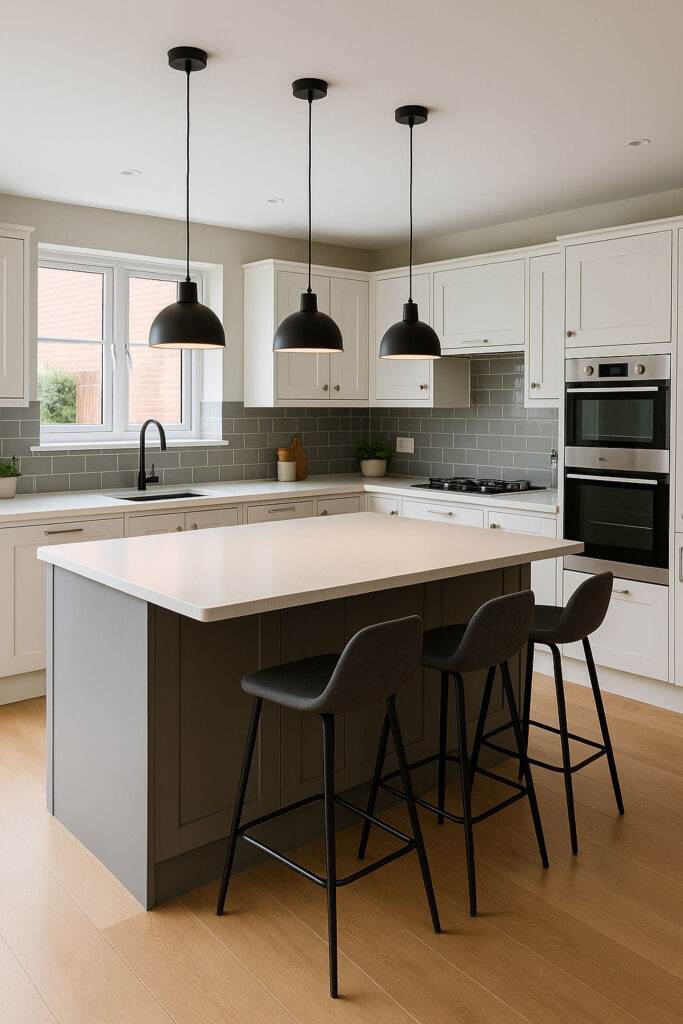
For the majority of UK kitchens with standard 2.4m ceilings, 75 to 80cm is the sweet spot that gets the balance right without needing any further adjustment. Think of 70 to 90cm as your safe range, and the sections below will help you fine-tune within it.
If you are still choosing your pendant style, our kitchen island pendant ideas guide covers layouts, spacing, and finishes that work well in UK homes.
Adjusting Height for Different Ceilings
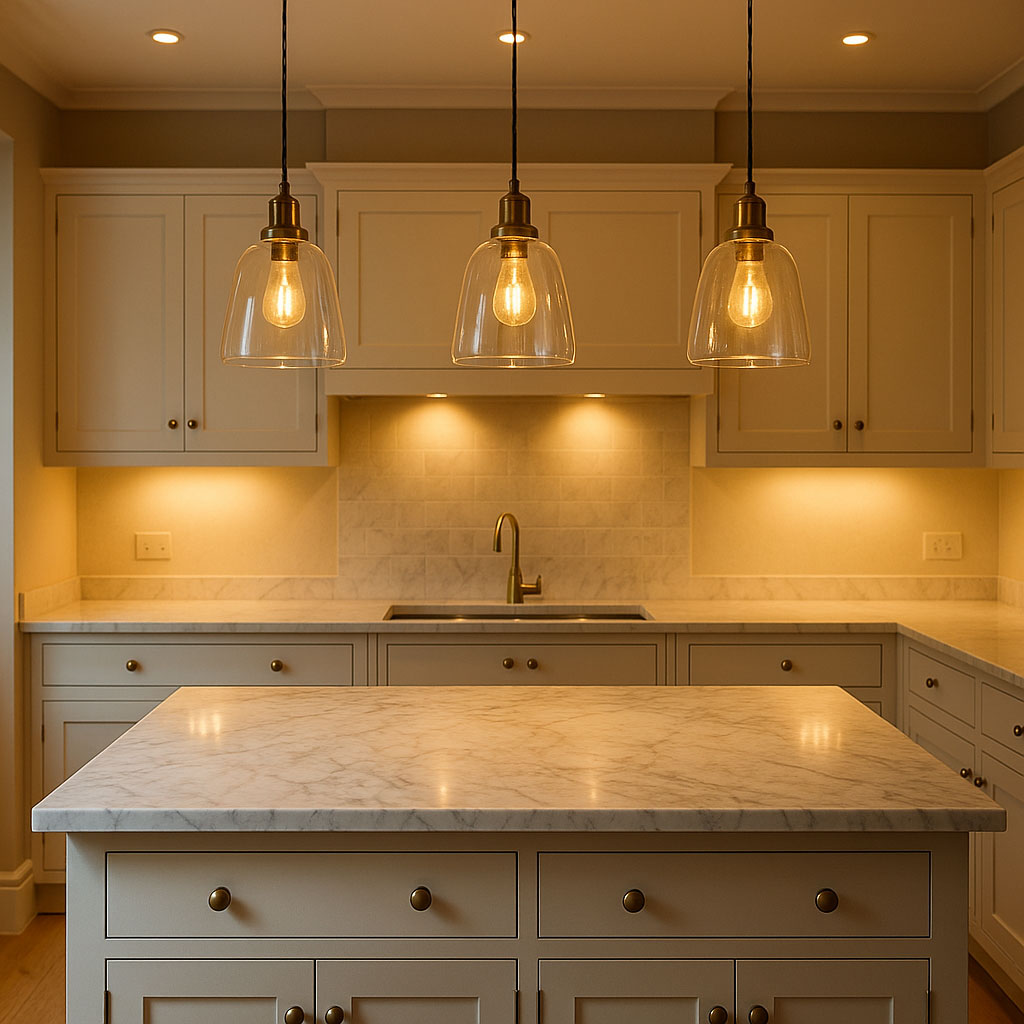
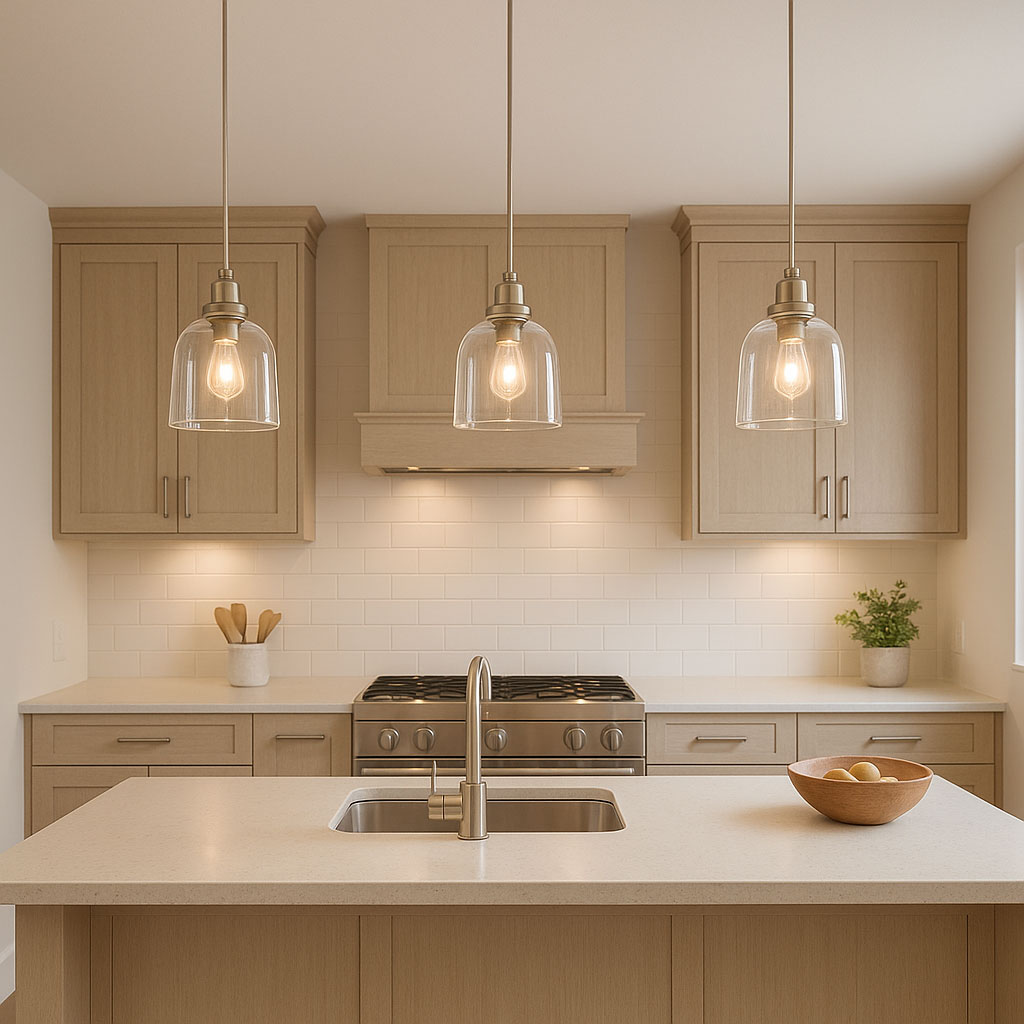
Not all UK homes share the same ceiling height, and understanding how high to hang kitchen island pendants means accounting for the gap between ceiling and pendant as much as the gap between pendant and worktop. A pendant that looks perfectly placed in a room with 2.4m ceilings can look cramped or lost in a room with different proportions.
Standard UK ceilings (2.3 to 2.4m). The 75 to 80cm rule works without adjustment here. This is the most common ceiling height in UK new builds and most post-war housing, and the standard recommendation is calibrated around it.
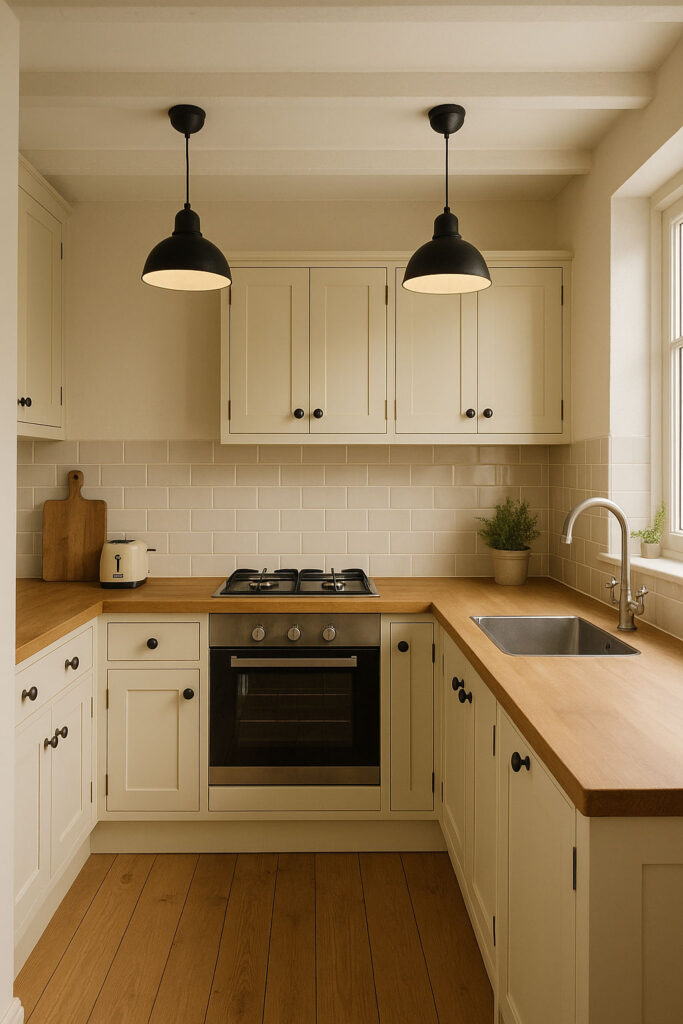
Low ceilings (below 2.3m). In older terraced houses and cottages with lower ceilings, pendants can feel oppressive if hung at the standard height. Aim for the higher end of the range, around 85 to 90cm above the worktop, to keep the fitting feeling light and airy. If even 90cm feels too low, consider slim pendants or semi-flush fittings that sit closer to the ceiling. Our low ceiling kitchen lighting guide covers the best options for rooms where headroom is limited.
Taller ceilings (2.7 to 3m). With more vertical space, pendants need to drop lower to stay visually connected to the island. Aim for 85 to 95cm above the worktop. At this height the pendant still reads as part of the island zone rather than floating in the middle of the room.
High ceilings (3m and above). In converted spaces, barn conversions, and Victorian homes with high ceilings, go 90 to 100cm above the worktop and consider pendants with long stems or extended cables that fill the vertical gap between ceiling and island. Without that visual connection, the cable can look like a thin thread lost in a large space. A decorative rod or chunky braided cable helps here.
Sloped and vaulted ceilings. Use a sloped ceiling adapter or adjustable rod fitting so the pendant hangs vertically even though the ceiling is angled. Without this, the pendant will hang at an angle and the light distribution will be uneven. Most UK lighting suppliers stock slope adapters as standard accessories.
Our colour temperature guide explains how to match the warmth of your pendant bulbs to the rest of your kitchen lighting.
Height for Seating vs Prep Areas
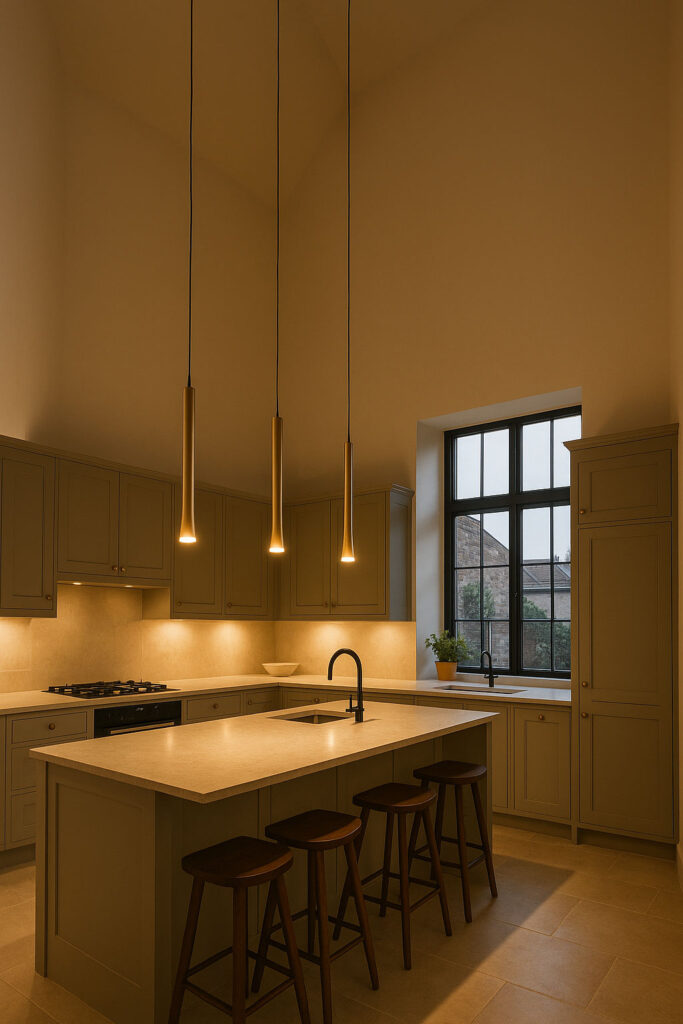
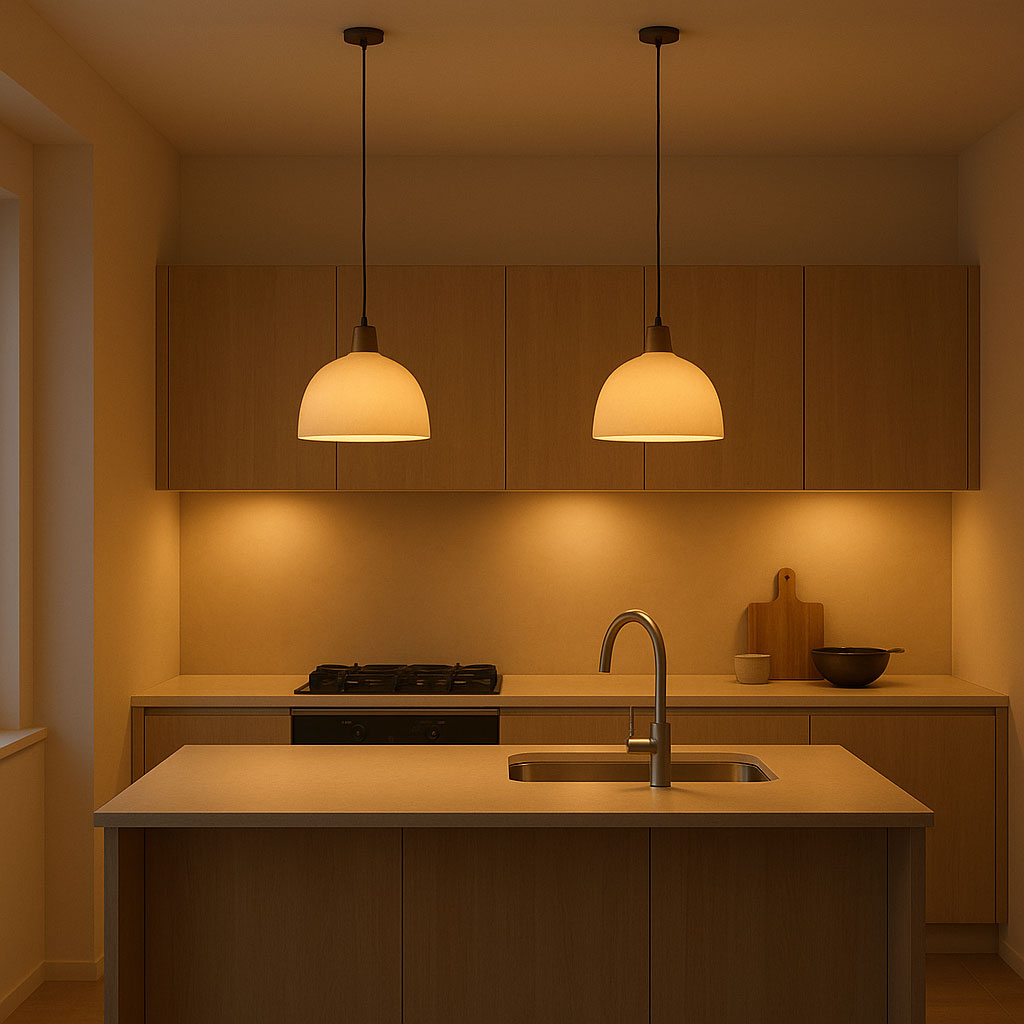
How you use your island should influence how high to hang kitchen island pendants within the 70 to 90cm range. An island used mainly for food preparation has different lighting needs to one used primarily for eating and socialising.
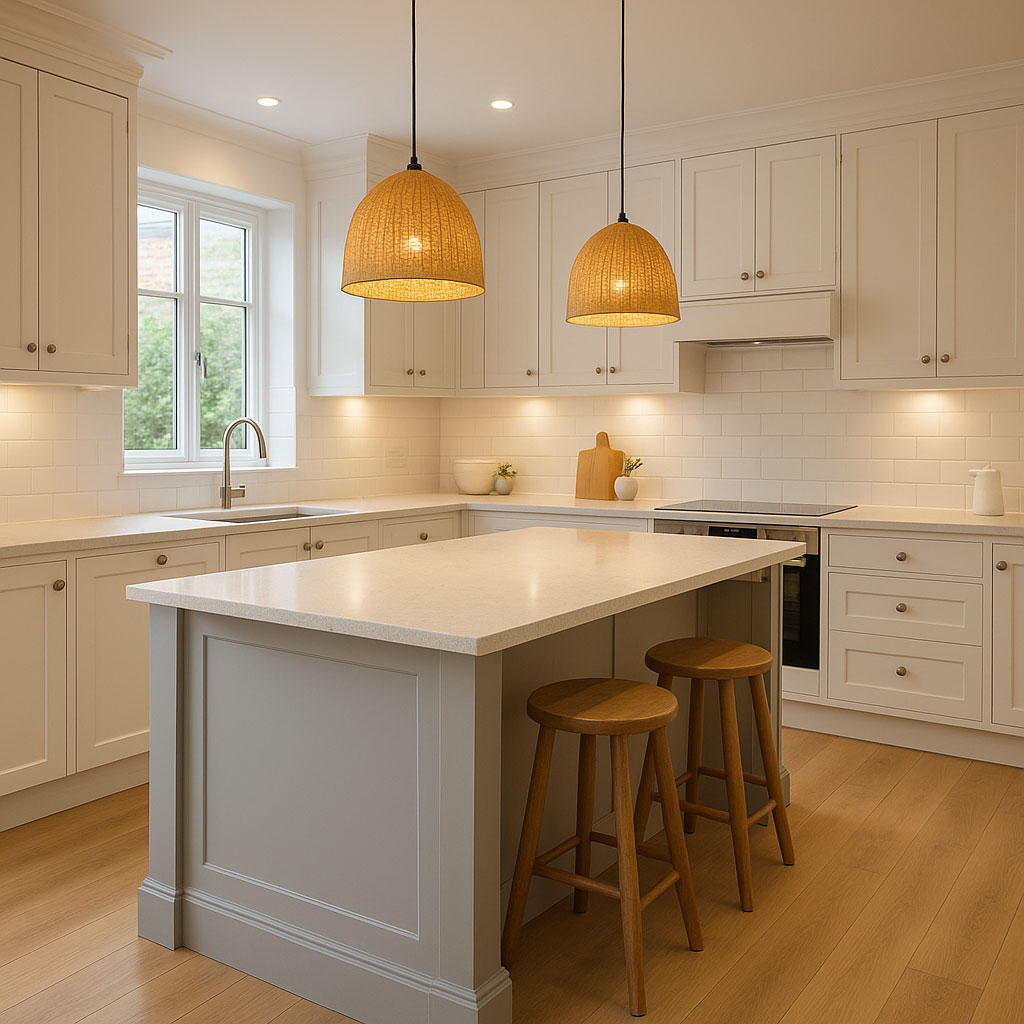
Islands with seating. When the island doubles as a breakfast bar or dining area, keep pendants at the lower end of the range, around 70 to 80cm above the worktop. This creates a more intimate, enclosed feeling over the seating area, similar to how restaurant lighting draws you into the table. The lower height also means the light is softer and more diffused when you are seated, which is more comfortable for conversations and meals.
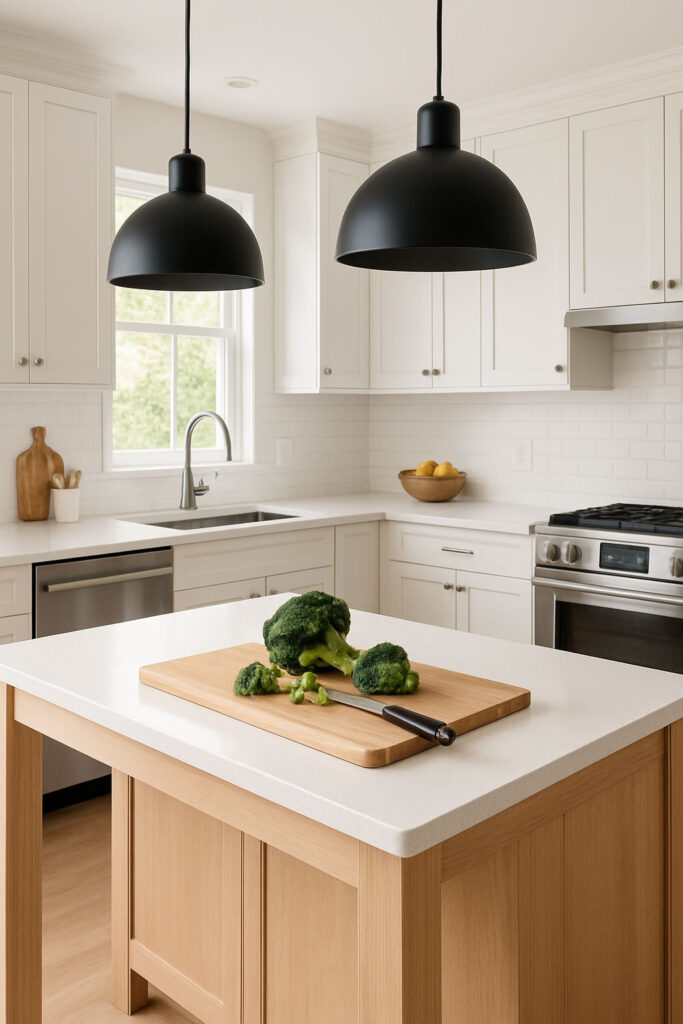
Islands used mainly for prep work. For prep-focused islands, the higher end of the range works better, around 80 to 90cm. The extra height reduces the chance of shadows falling across your chopping area when you lean over the worktop, and it keeps the bulb further from your eye line, reducing glare during detailed tasks.
Islands that serve both purposes. Most UK kitchen islands do both, which is exactly why the 70 to 90cm range exists. Splitting the difference at around 75 to 85cm works well, and adding a dimmer switch lets you brighten the light for cooking and soften it for dining. Our guide to smart kitchen lighting scenes explains how to set up presets for different activities.
How to Test Your Pendant Height
Before your electrician fixes the final cable length, use these two quick tests to check the height is right. Both take less than a minute and can save you from living with a pendant that is slightly off for years.
The eye-line test. Sit on a stool or chair at the island in your normal seated position. Look straight ahead across the island. If you can see the bare bulb inside the pendant, the fitting is too low and will cause glare during meals. If you see only the shade or a soft glow from the diffuser, the height is right. This test is the single most reliable way to check pendant height before committing.
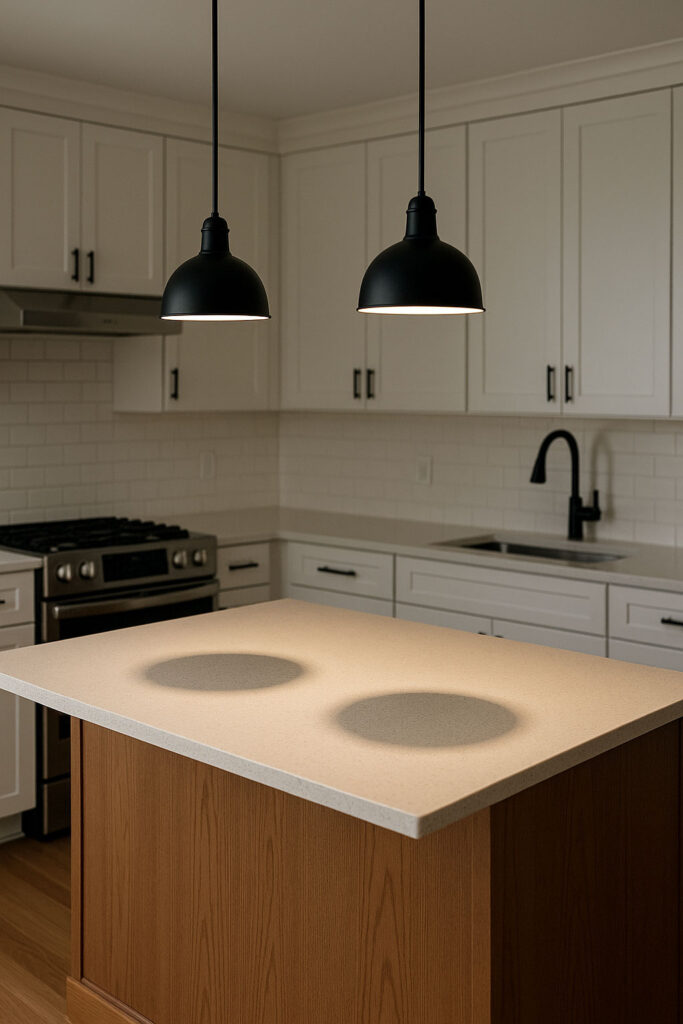
The light spread test. With the pendant switched on, stand at the worktop and check whether the light pool covers your main prep area. If there are dark shadows directly beneath where you chop or prepare food, the pendant may need to drop 5 to 10cm lower to widen the light spread. Conversely, if the light feels too concentrated in a small pool, raising it slightly will spread the beam wider.
The tape measure check. Before testing with the actual fitting, temporarily hang the pendant at your target height using string or tape and live with it for an evening. Walk around it, sit at the island, cook a meal. This is the cheapest way to confirm the height feels right before the wiring is fixed.
Common Pendant Height Mistakes and How to Fix Them
These are the errors that come up most often when people work out how high to hang kitchen island pendants in UK kitchens. All of them are fixable, and most require only a small adjustment.
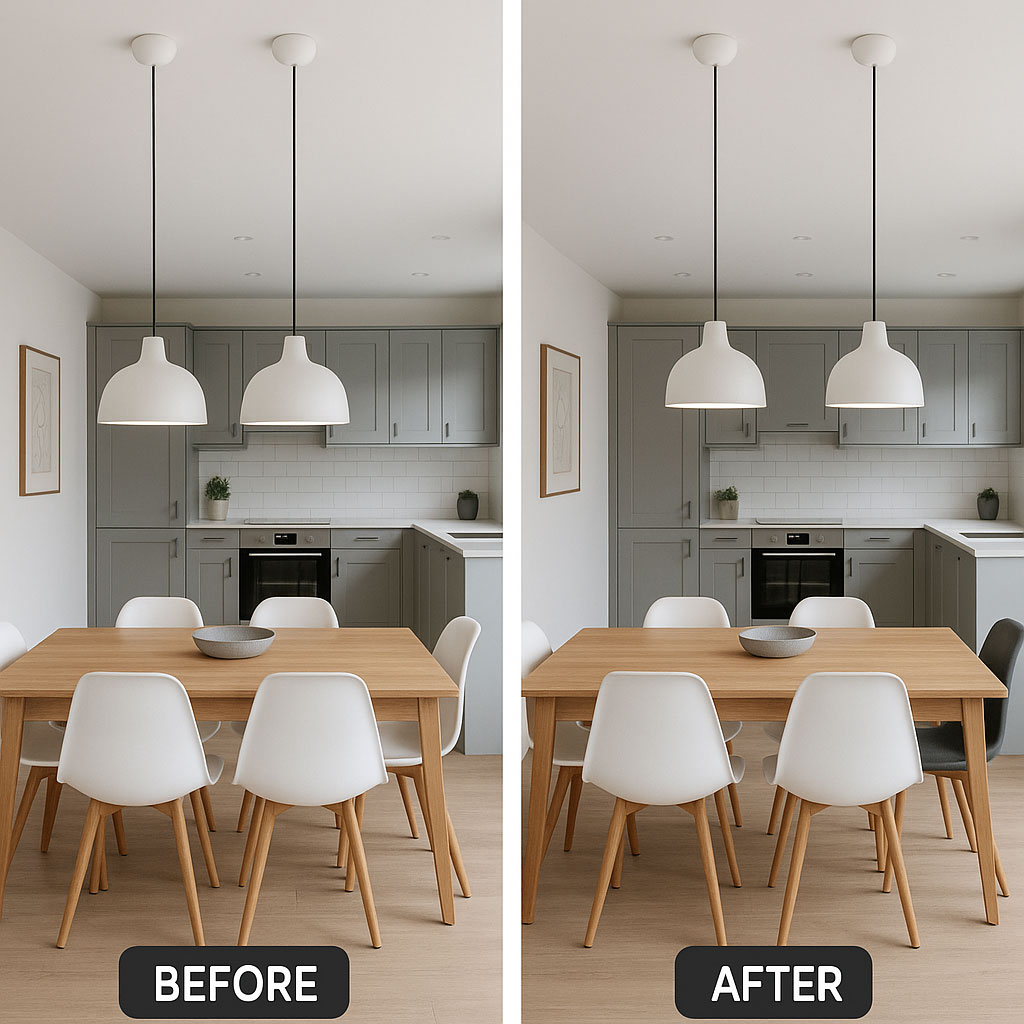
Pendants hung too low. This is the most common mistake. The pendant blocks sightlines across the island, creates glare when seated, and makes the space feel cramped. The fix is straightforward: raise the pendant by 5 to 10cm. If the cable has already been trimmed, most pendants allow you to add a small section of matching cable or adjust the internal mechanism.
Pendants hung too high. Less common but equally problematic. When pendants are too high they produce a harsh, overhead-spotlight effect with hard shadows on the worktop. The island loses its warm, inviting quality and the pendant looks disconnected from the surface below. Lower by 5 to 8cm and reassess.
Uneven heights across multiple pendants. When two or three pendants hang at slightly different heights, the eye picks it up immediately and the arrangement looks careless. Always measure and mark each drop point before wiring, using a laser level or a long spirit level held across the island at the target height. Measure from the worktop up rather than from the ceiling down, as ceiling surfaces are rarely perfectly level.
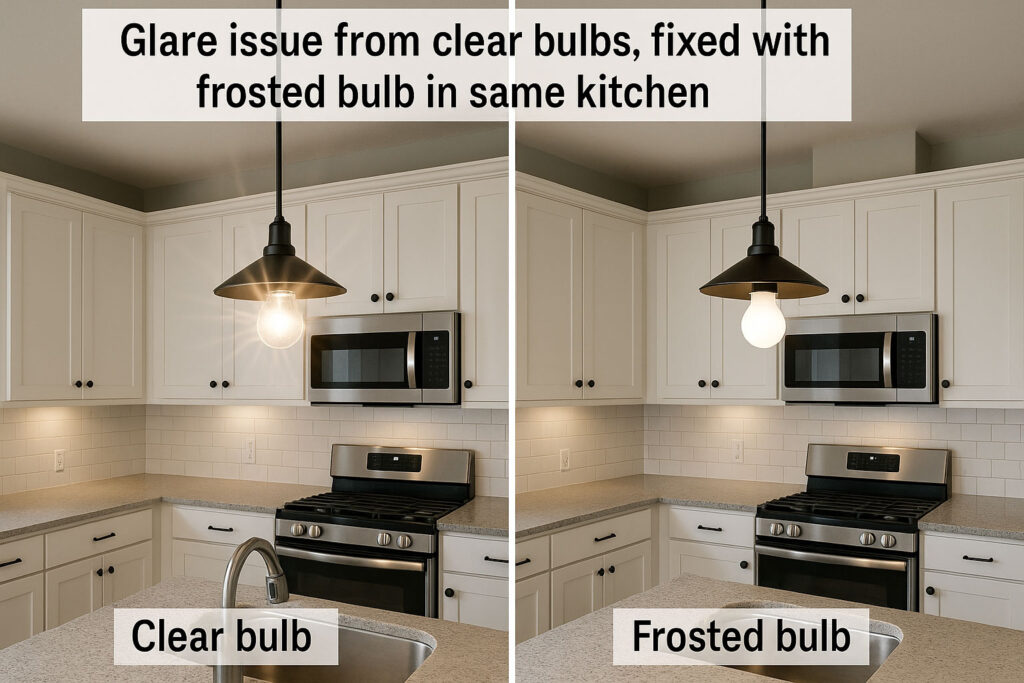
Wrong bulb type for the pendant height. A clear glass pendant with an exposed filament bulb looks beautiful, but if the pendant is at the lower end of the height range, the bare bulb can cause uncomfortable glare. Switching to a frosted or opal bulb eliminates the problem without changing the pendant height. Our guide to the best LED bulbs UK covers bulb types and their glare characteristics.
For a broader look at kitchen lighting mistakes, our guide to 10 kitchen lighting mistakes and how to fix them covers the full range.
Practical UK Tips for Getting Height Right
These practical details make the difference between a smooth installation and an expensive callback.
Ask your electrician to leave extra cable. Having 10 to 15cm of spare cable tucked inside the ceiling rose gives you adjustment room after installation. Trimming cable short before testing the height at night, under real conditions, is a common regret. It is much easier to shorten cable later than to extend it.
Check joist direction before wiring. Your electrician can only route cables and install ceiling roses where the joists allow. Checking joist direction before the first fix avoids discovering on installation day that the ideal pendant position sits between joists with no easy fixing point.
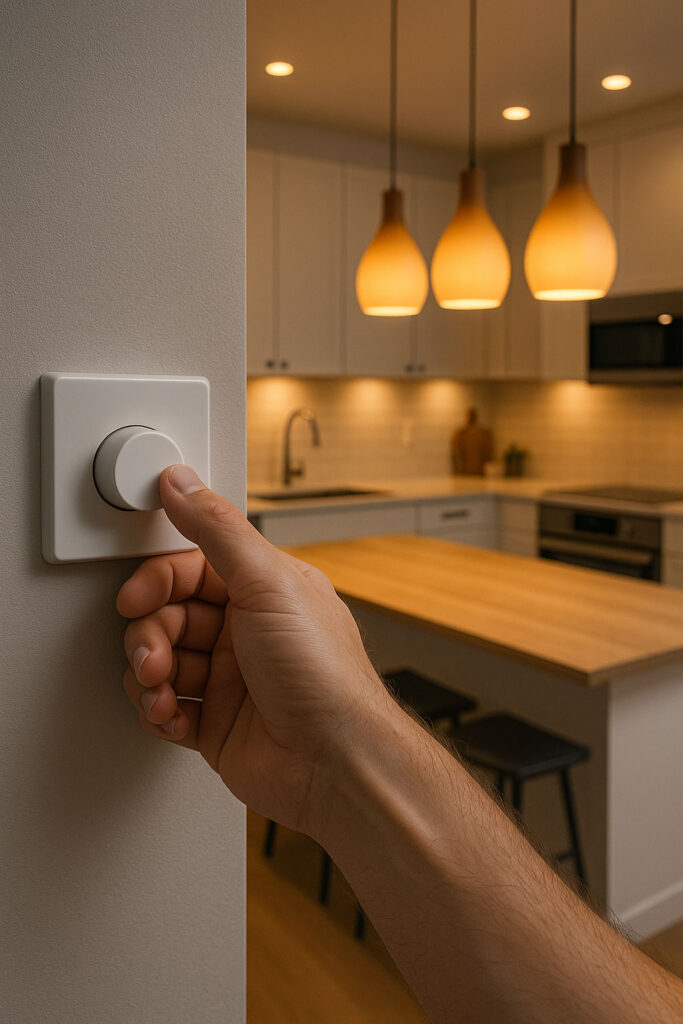
Always install a dimmer switch. A dimmer transforms how flexible your pendant height feels in practice. At full brightness, the light works for food preparation. Dimmed to 30 to 40 percent, the same fitting creates a soft, ambient glow for evening meals. Our guide to smart kitchen lighting scenes covers dimmer setup in detail.
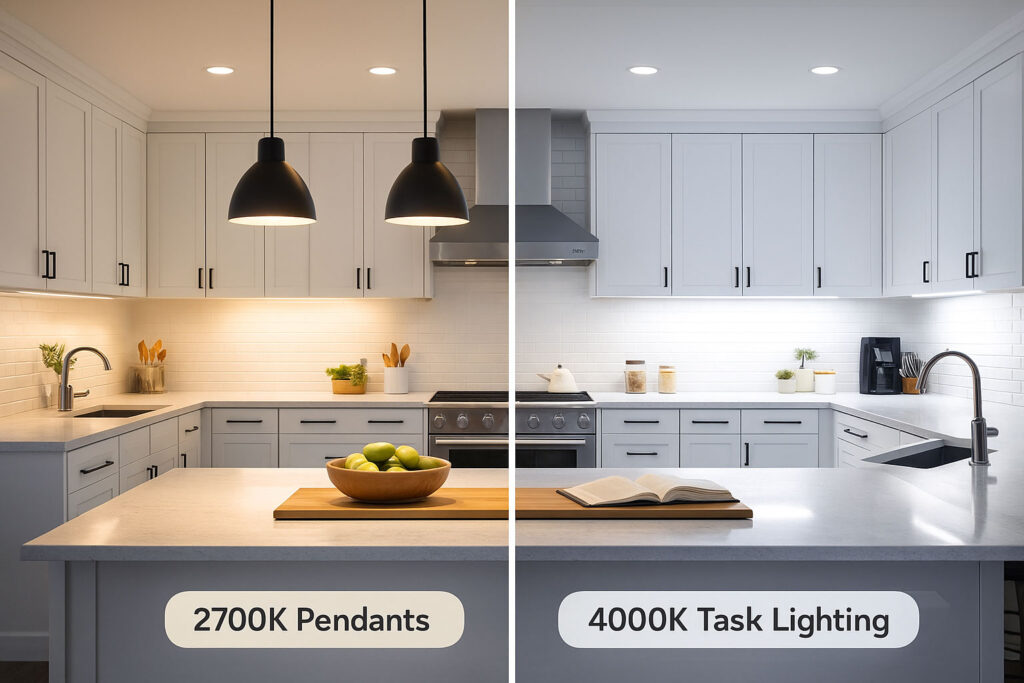
Match colour temperatures with the rest of the room. Use 2700 to 3000K warm white for your island pendants. If your ceiling downlights run slightly cooler at 3500 to 4000K, that is fine, as long as the gap stays within 500K to avoid a jarring mismatch. Our kitchen colour temperature guide explains how to keep things cohesive.
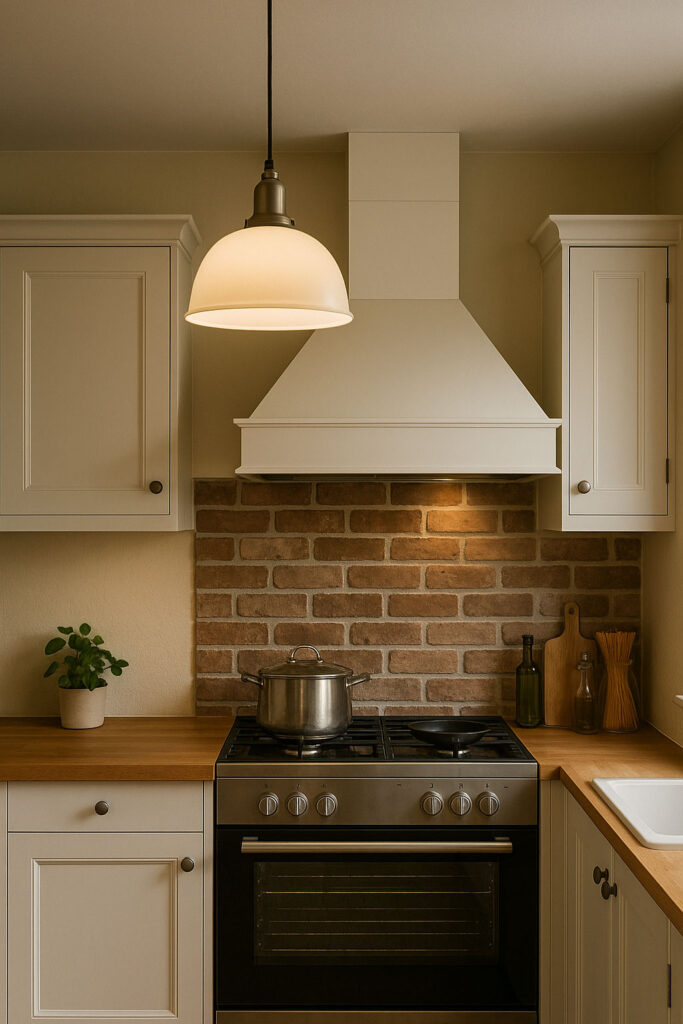
Keep pendants away from cooker hoods. Steam, grease, and heat from extraction units damage pendant fittings over time. Position pendants at least 60cm away from any extraction zone. If your island includes a hob, pendants should be positioned over the seating or prep end rather than directly over the cooking zone.
For UK-approved electrical installation guidance, NICEIC is the standard resource for finding certified electricians. For general electrical safety advice, Electrical Safety First covers domestic wiring standards.
Pendant Height by Kitchen Style
Kitchen style can influence how high to hang kitchen island pendants within the 70 to 90cm range, because different design aesthetics create different visual expectations.
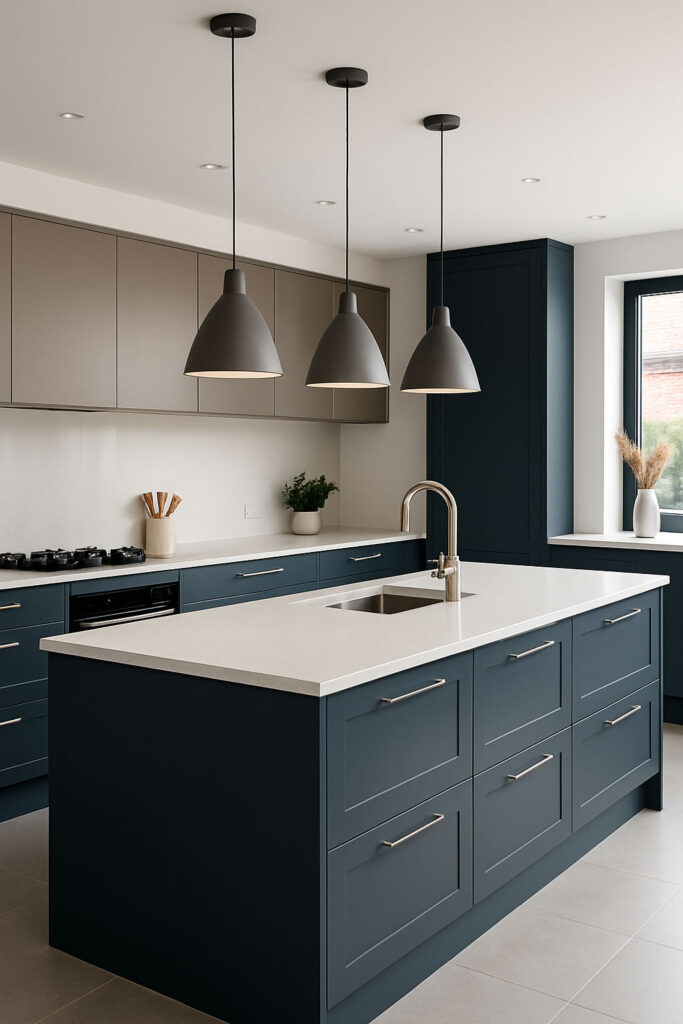
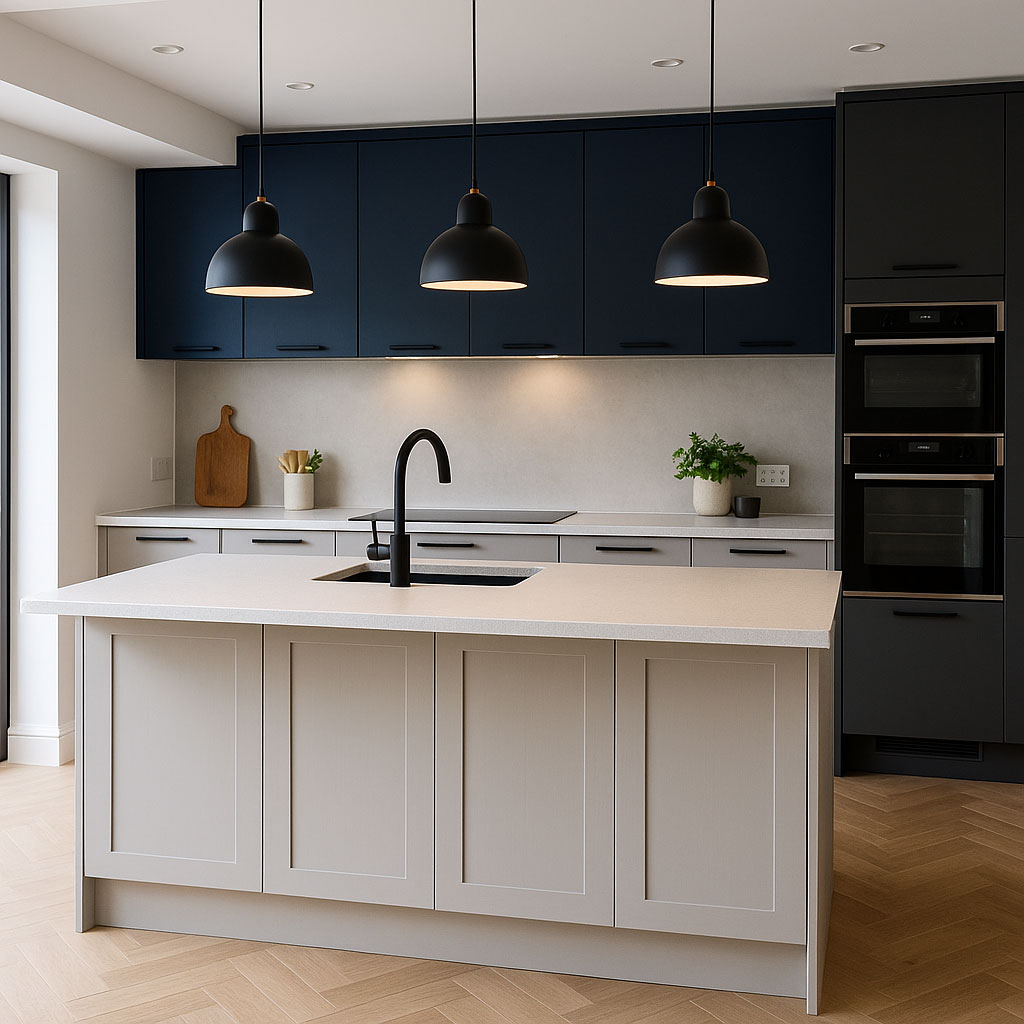
Modern and contemporary kitchens. Sleek, minimal kitchens often suit pendants at the lower end of the range, around 70 to 78cm, where the fitting becomes a deliberate design statement. Lower heights feel more intentional and designer-led in these spaces.
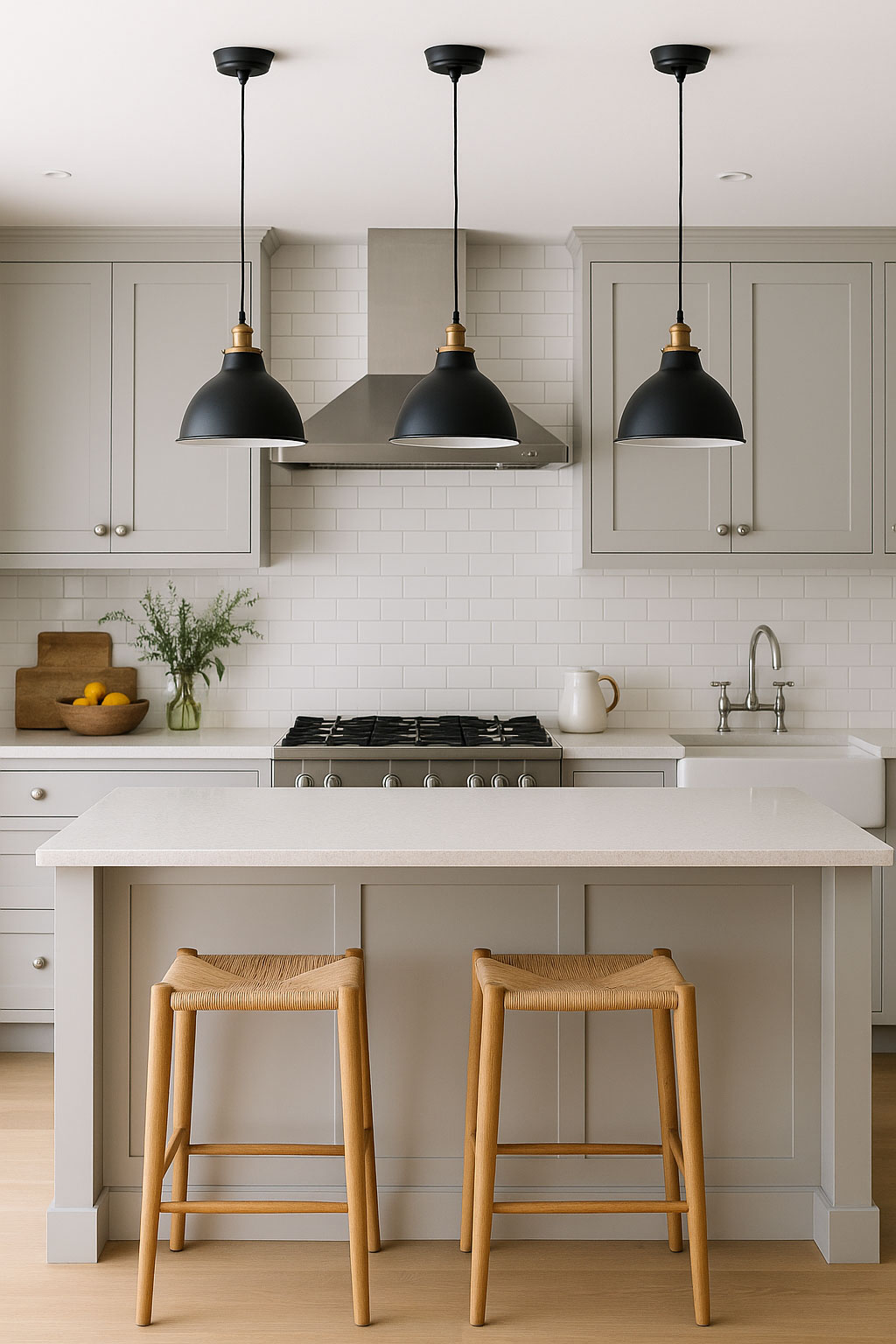
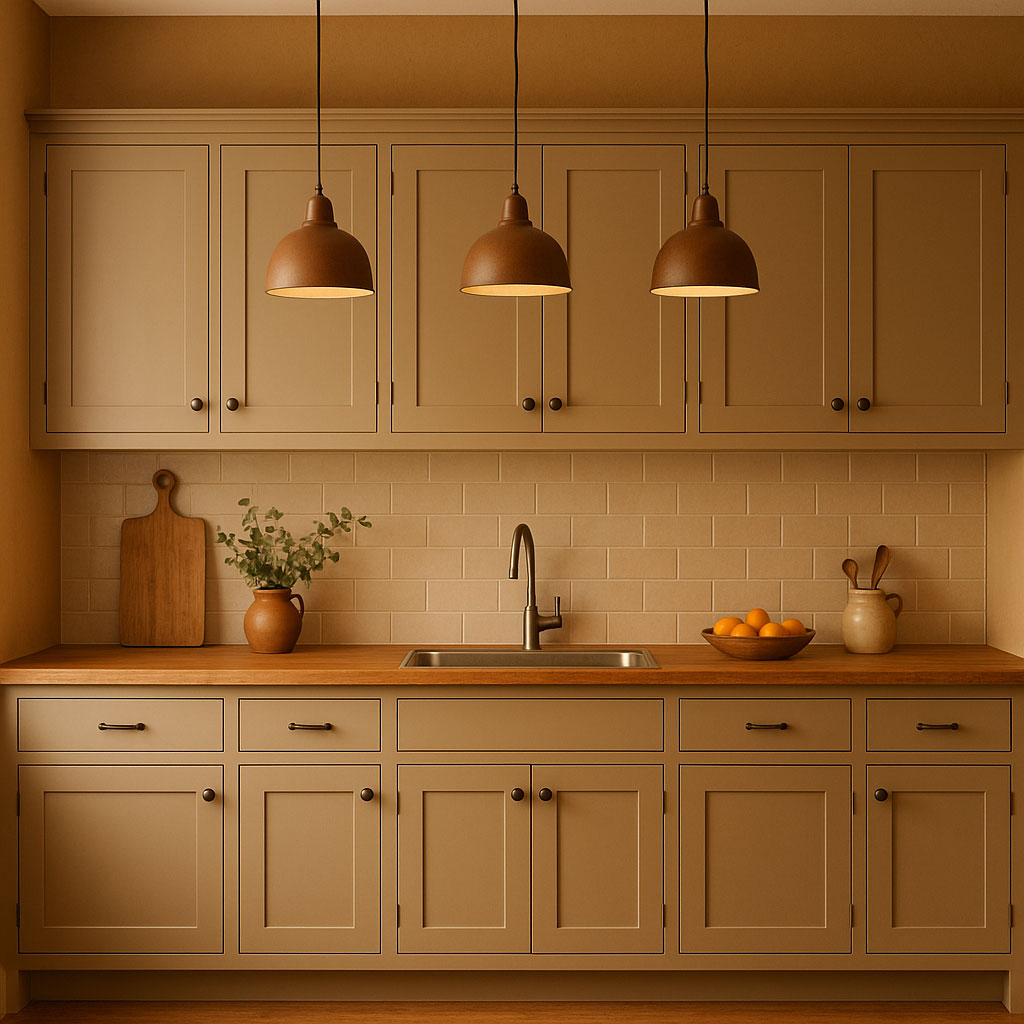
Shaker and traditional kitchens. The mid-range of 75 to 85cm suits the balanced, symmetrical character of Shaker kitchens. Avoid going too low, as it can feel at odds with the classic proportions that define this style.
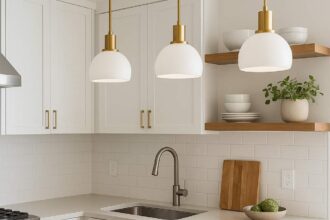
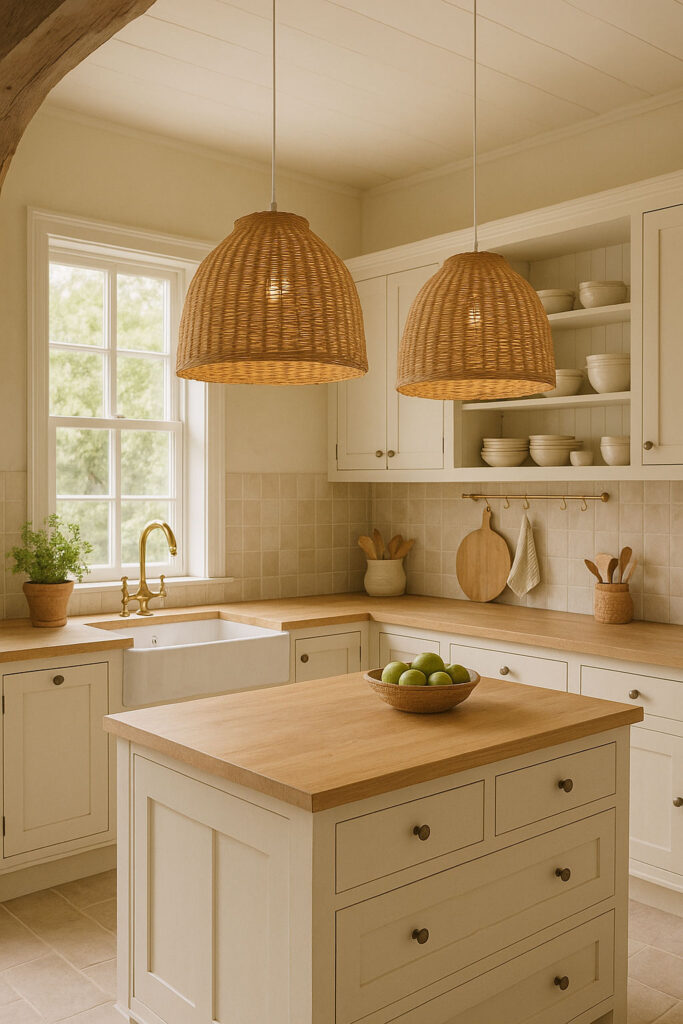
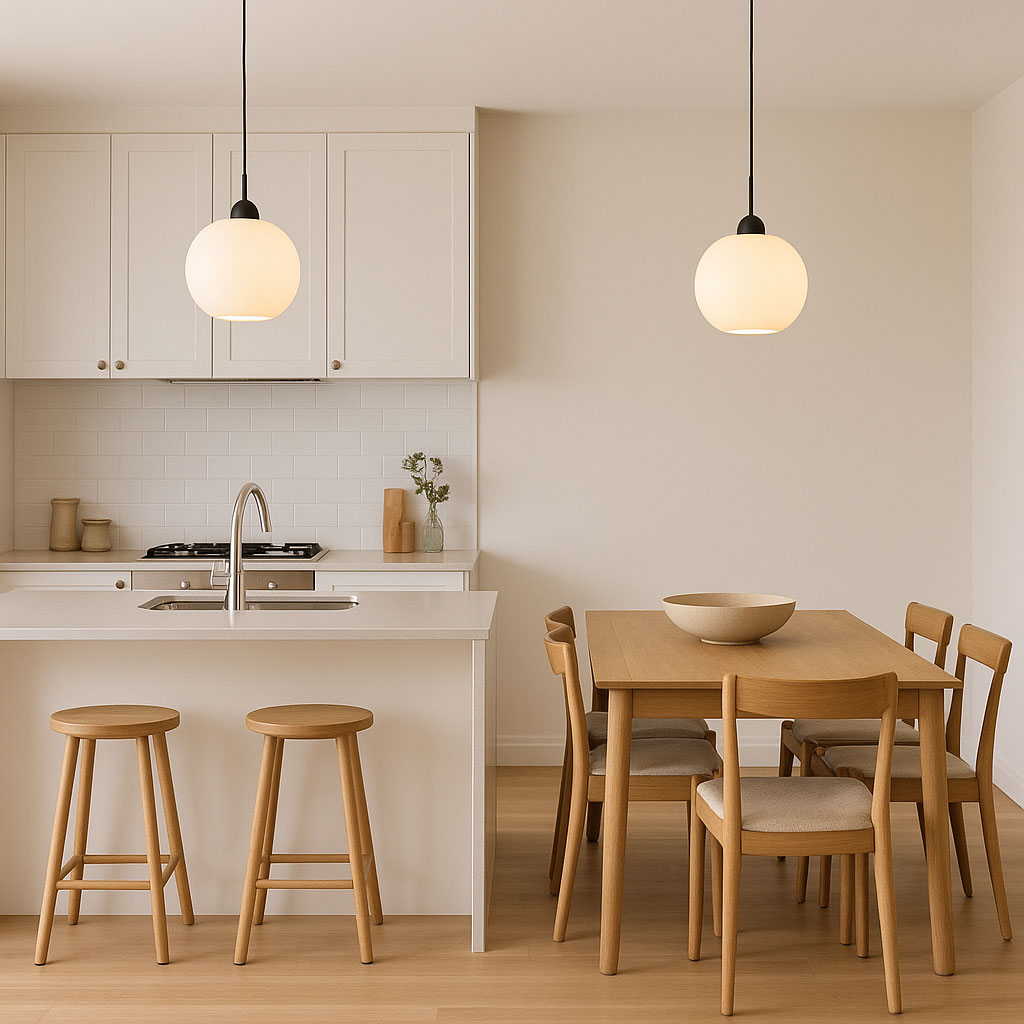
Cottage and Scandi kitchens. Rattan, linen, and opal glass pendants look particularly warm when hung slightly lower, around 70 to 80cm. The closeness enhances the cosy, wrapped feeling that these styles aim for.
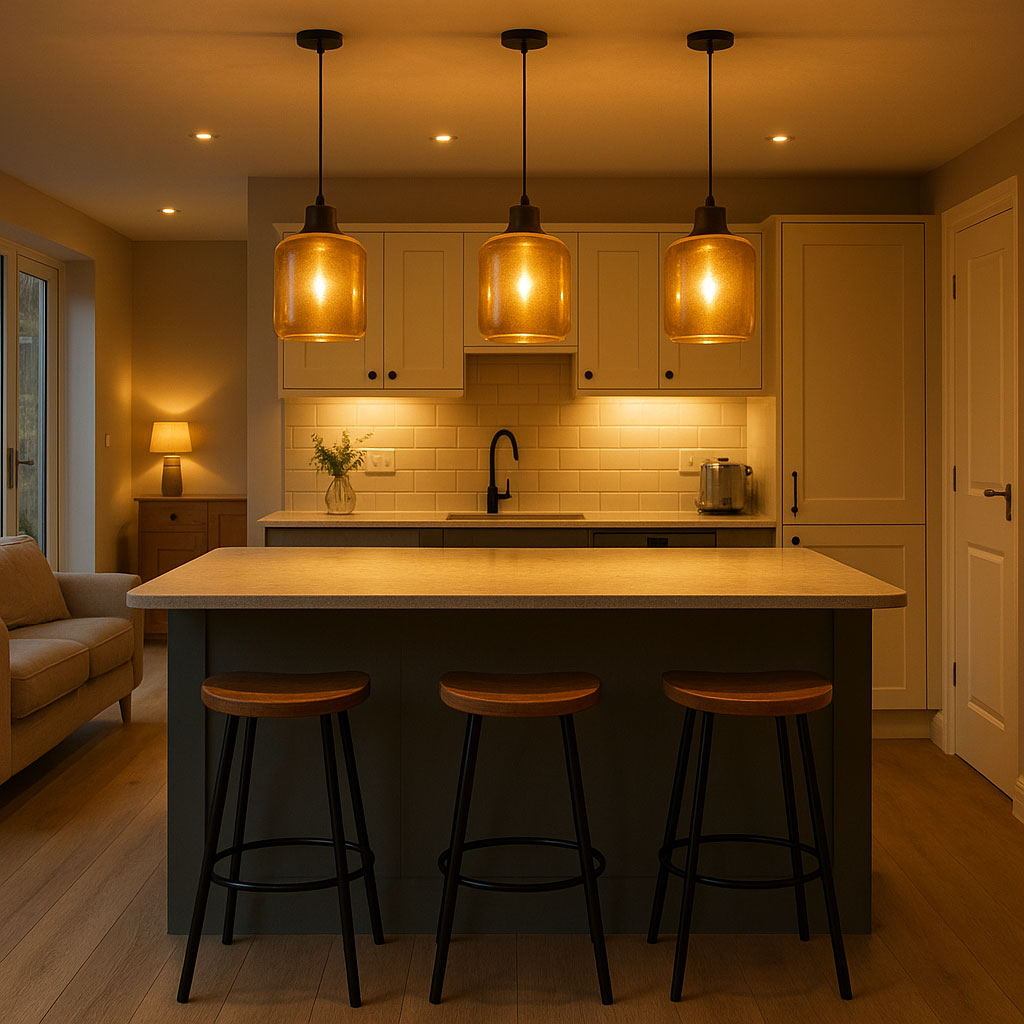
Open-plan kitchens. In open-plan spaces, match your island pendant height with nearby dining or living area pendants to create visual continuity. If the dining table pendants hang at 75cm, keep the island pendants within 5cm of that to avoid an uneven look across the room.
Small kitchens. Higher pendants, around 85 to 90cm, help small kitchens feel more open and airy. Low-hanging pendants in a compact space can feel oppressive and visually crowd the room. For more small kitchen strategies, our small kitchen lighting ideas guide covers the full approach.
For broader style inspiration, our kitchen lighting ideas guide covers pendant selection for every UK kitchen style.
Frequently Asked Questions
How high should pendants hang above a kitchen island?
The standard UK recommendation is 70 to 90cm above the worktop surface, measured from the bottom of the pendant shade. For standard 2.4m ceilings, 75 to 80cm is the most reliable starting point. Adjust up or down within the range based on your ceiling height, how you use the island, and the style of pendant you have chosen.
Should I measure pendant height from the ceiling or the worktop?
Always measure from the worktop up to the bottom of the pendant shade. Ceiling surfaces are rarely perfectly level, especially in older UK homes, so measuring from above can result in pendants that look level relative to the ceiling but visibly uneven relative to the island. The worktop is the reference point your eye uses.
Can I hang pendants at different heights for a staggered look?
Deliberately staggered heights can work over a dining table, but over a kitchen island they tend to look unintentional and uneven. The island surface is a strong horizontal line, and pendants at matching heights reinforce that line. If you want visual variety, choose pendants of different sizes or shapes at the same height instead.
How high should pendants hang over an island with a hob?
If your island includes an integrated hob, position pendants over the non-cooking end of the island rather than directly above the hob. Steam and cooking grease will damage pendant fittings, and the extraction unit needs clear space above the cooking zone. Keep pendants at least 60cm away from any extraction hood.
Do larger pendants need to hang higher?
Generally yes. A large pendant shade with a diameter of 40cm or more benefits from an extra 5cm of height compared to a smaller fitting, because the wider shade brings the visual mass closer to eye level. For very large pendants, aim for 80 to 90cm rather than 75 to 80cm to keep the proportions balanced.
What if my pendants are already too low but the cable has been cut?
Most pendant fittings have some adjustment built into the ceiling rose or canopy. Check whether the internal mechanism allows you to take up more cable. If not, an electrician can usually extend the cable by 5 to 10cm without replacing the full run. This is a common and inexpensive fix.
Should I hang pendants higher if I have a kitchen island extractor?
Yes. An island extractor (downdraft or overhead) changes the positioning. For overhead extractors, keep pendants at least 60cm to either side of the unit. For downdraft extractors, you have more freedom as the extractor does not compete for ceiling space above the island.
How does pendant height affect brightness on the worktop?
Lower pendants concentrate light in a smaller, brighter pool directly below. Higher pendants spread light over a wider area at lower intensity. If your island is primarily a work surface and you need strong task lighting, the lower end of the range (70 to 80cm) gives more useful light. If the island is more social, the higher end (80 to 90cm) gives a softer, wider glow.
Conclusion
Getting pendant height right comes down to one core rule: how high to hang kitchen island pendants is 70 to 90cm above the worktop, adjusted within that range based on your ceiling height, how you use the island, and the style of your kitchen. Use the eye-line test to check for glare and the light spread test to confirm adequate coverage, and ask your electrician to leave spare cable for fine-tuning.
For pendant style ideas, spacing rules, and layout inspiration, see our kitchen island pendant ideas guide. For full kitchen lighting planning, our complete kitchen lighting guide covers every layer from first fix to final switch-on.