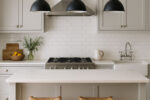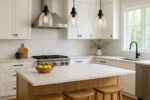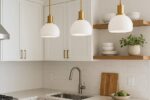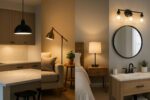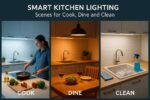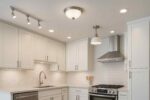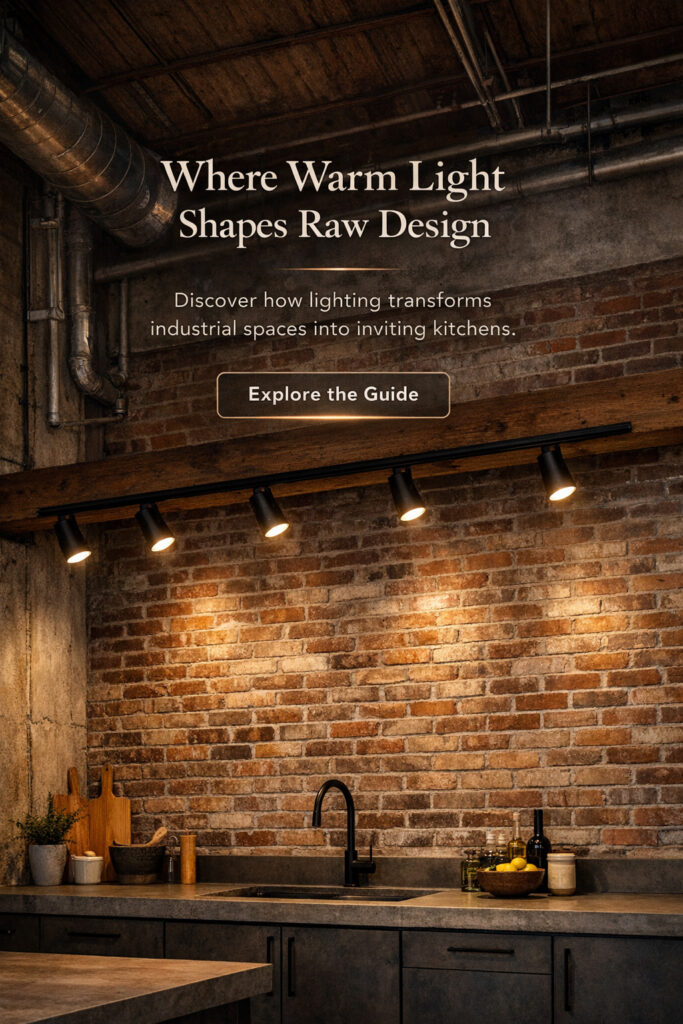
Small kitchen lighting ideas focus on improving brightness, reducing shadows, and making compact spaces feel more visually balanced.
This guide explains how lighting is commonly used in small kitchens to improve brightness distribution, reduce shadows, and make compact layouts feel more visually balanced.
This guide focuses on specific layouts for compact spaces. For full kitchen lighting planning, see our complete Kitchen Lighting Ideas guide.
Quick Rules for Small Kitchens:
Lumens: Aim for 300-500 lm/m on worktops.
Spacing: Place downlights 50-60cm from the wall to wash cabinets.
Colour: Use 3000K to keep it crisp but cosy.
This guide is your complete lighting roadmap for compact kitchens:
- Lighting placement strategies for small kitchens
- Where to put downlights vs strips
- Shadow-free prep tips
- Mistakes to avoid (so it never feels cramped)
- Common layout patterns and brightness guidance
The sections below outline practical lighting approaches for compact kitchens.
Table of Contents
Why Small Kitchens Need Clever Lighting (Not More Space)
When a kitchen is small, the lighting doesn’t just help you see —
it influences how open or enclosed the space appears.
Shadows = cramped
Even lighting = open + calm
Bright walls = lifted + airy
Warm lighting is commonly used to soften small kitchen spaces.
Improving lighting placement is often more effective than adding fittings.
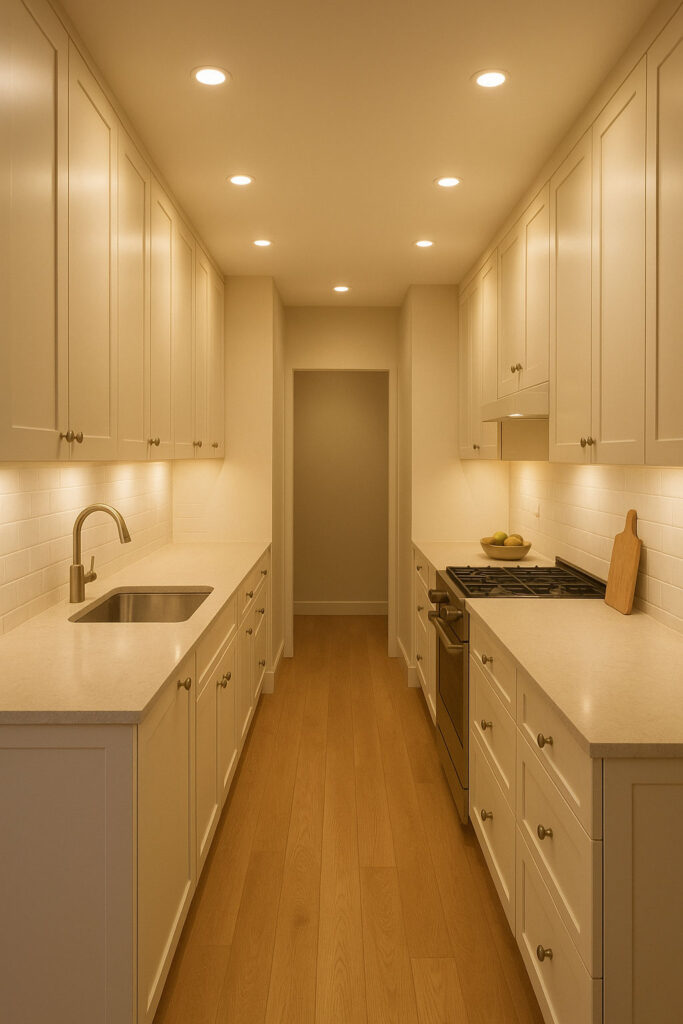
1) Recessed Downlights to Clear the Ceiling
Recessed downlights are commonly used in small kitchens because they keep the ceiling tidy — no clutter, no bulk, just clean space and even, unobtrusive light distribution.
Why they’re perfect:
- No visual weight
- Makes ceilings feel higher
- No dangling shades blocking sightlines
- Beautiful over worktops
- Great in rentals + refurbs
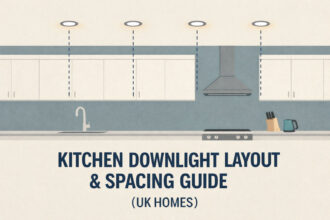
Placement Tips (Super Easy)
- Line over worktops — not the walkway
- Space approx. half your ceiling height apart – 2.4m ceiling → ~1.2m spacing
- Keep 50–60cm from the wall to wash cabinets
- Use 3000K for day, 2700K for evenings
Downlights help reduce visual clutter at ceiling level.
2) Small Kitchen Lighting Ideas using LED Strip Lights
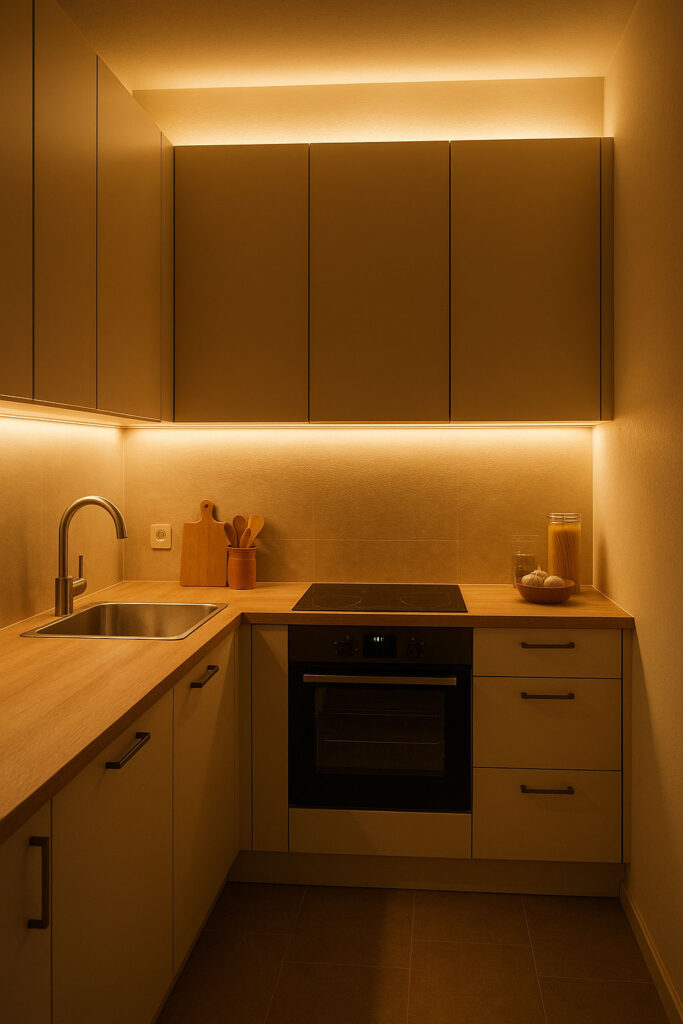
LED strips are a commonly used solution in compact layouts — they eliminate shadows instantly.
Where to put them:
- Under cabinets → prep safely, no shadows
- Above cabinets → makes ceiling rise visually
- Inside shelves → accent lighting
- Under plinths → visual separation from the floor
Brightness Sweet Spot
| Placement | Best Brightness |
|---|---|
| Worktop strips | 350–500 lm/m |
| Above units | 300–450 lm/m |
| Shelf accent | 150–300 lm/m |
| Plinth/Toe kick | 50–150 lm/m |
Use diffuser channels to ensure even light distribution.
3) Skip the One-Central-Bulb Lighting Trap
One ceiling light = one bright zone + everywhere else shadow.
Uneven lighting can make small spaces feel enclosed.
Small kitchens benefit from layered lighting rather than a single bright source.
Better options:
- Downlights + strips
- Track lighting + pendants
- Flush mount + under-cabinet lighting
Aim to distribute light evenly rather than relying on a single source.
4) Light the Walls to Improve Visual Balance
Lighting isn’t just about downward brightness — it’s about vertical illumination.
When walls are bright, rooms open up visually.
Try:
- Track heads angled at splashback texture
- LED strip above units to graze ceiling
- Wall sconces to deepen visual layers
- Shelf lighting highlighting jars/plants
Wall lighting can improve the perception of space.

5) Reflective Surfaces = More Light for Free
Reflective surfaces help increase perceived brightness in small kitchens – they double brightness without adding fittings.
Best light-reflective finishes:
- Glazed tile splashback
- Gloss/semi-gloss doors
- Brushed metallic fixtures
- Mirrored or tinted glass
- Polished stone/laminate
- Subtle pearl/eggshell paint
This can increase perceived brightness without structural changes.
6) Colour + Lighting Work Together
Lighting looks its best when the colour palette supports it.
Best small-kitchen tones:
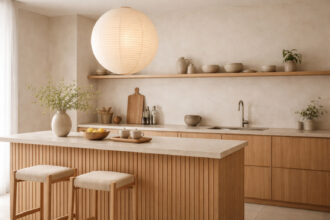
- Warm off-white
- Pale oak / ash wood
- Oatmeal + linen beige
- Soft greige
- Sage or dusty sky blue
- Clay + buttercream
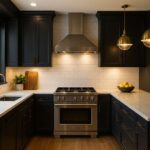
Dark kitchens can work –
but only with excellent under-cabinet lighting or feature strips.
7) Add Dimmers for Flexible Lighting Control
A small kitchen may be compact, but it plays many roles:
- Breakfast prep
- Lunch chopping
- Family dinner
- Evening use
- Midnight snack run
Dimmers allow brightness levels to be adjusted for different uses.
Where dimmers make magic:
- Downlights
- Strips
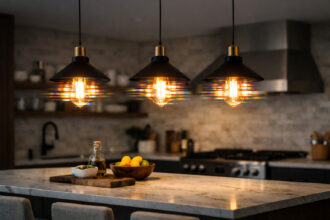
- Pendants over breakfast bars
Bright when working, soft when resting.
Lower light levels are commonly used in the evening.
8) Ready-Made Layouts You Can Copy
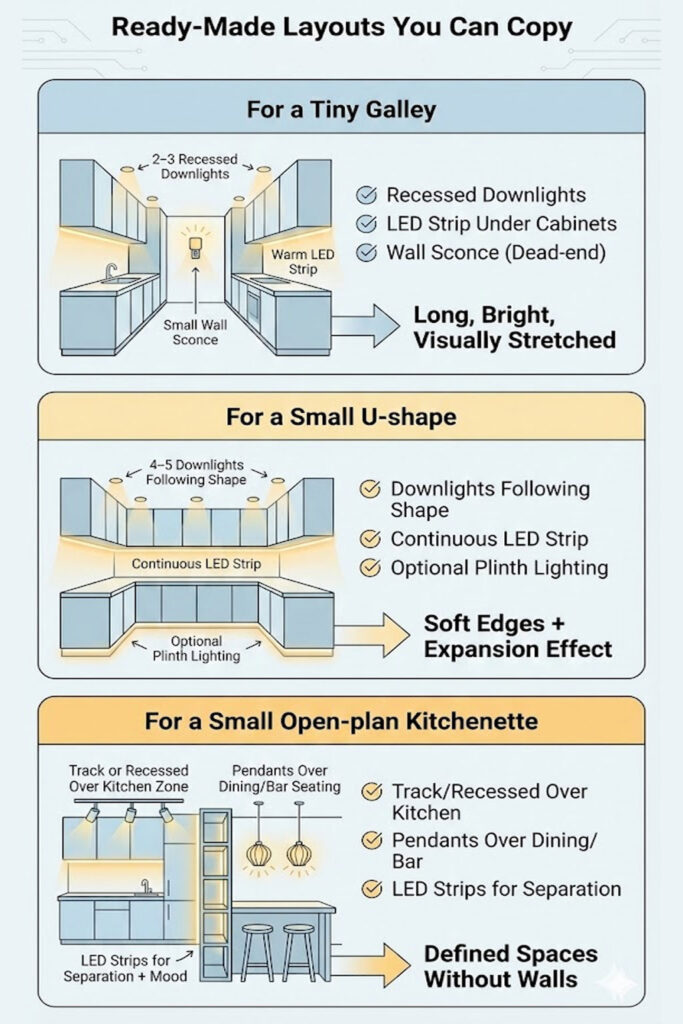
For a tiny galley
- 2–3 recessed downlights above each counter
- Warm LED strip under cabinets
- Small wall sconce at the dead-end for depth
= Long, bright, visually stretched
For a small U-shape
- 4–5 downlights following worktop shape
- Continuous LED strip under cabinets
- Optional plinth lighting for night glow
= Soft edges + expansion effect
For a small open-plan kitchenette
- Track or recessed over kitchen zone
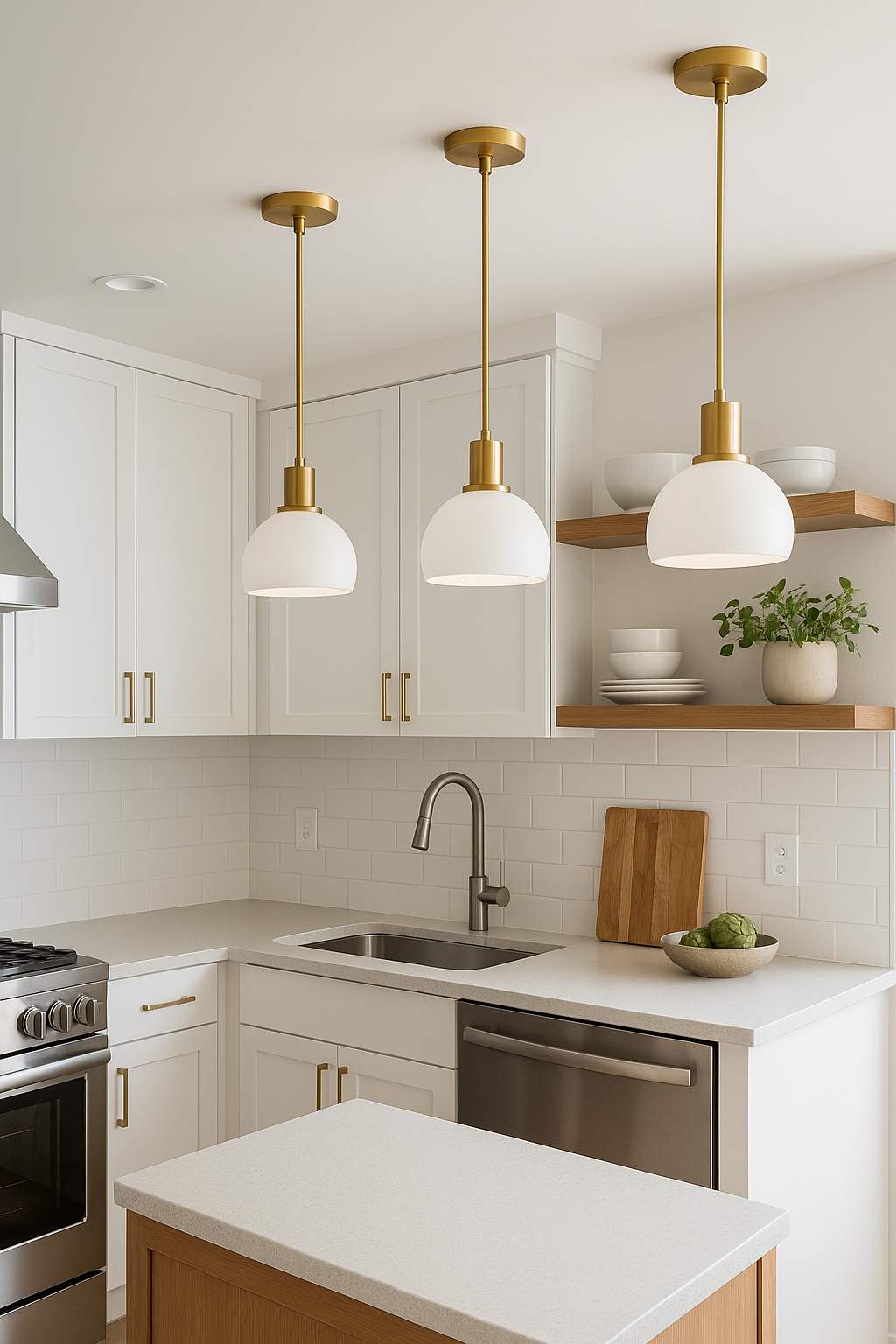
- Pendants over dining/bar seating
- LED strips for separation + mood
= Defined spaces without walls
Small Kitchen Lighting Mistakes
- Cold white bulbs (looks harsh + clinical)
- No task lighting at worktops (shadows everywhere)
- Only one ceiling light (flat + dark corners)
- Oversized pendants (visually heavy)
- Too little total brightness (small looks smaller)

Evening Lighting Settings
For cosy night glow, try:
- Under-cabinet lights on low
- Plinth lighting only
- Any pendants dimmed to amber
- Maybe even a small countertop lamp (yes!)
Lower brightness and warmer colour temperatures are commonly used at night.
FAQ – Small Kitchen Questions Answered
What lighting makes a small kitchen feel bigger?
Layered lighting – especially under-cabinet strips + wall washing.
Best colour temperature for small kitchens?
3000 K daytime, 2700 K evening.
Warmer colour temperatures are more commonly used in small kitchens than cooler tones.
Are downlights good in tiny kitchens?
Absolutely – they clear ceiling clutter and open sightlines.
How many lights does a small kitchen need?
Usually more than you think – use the calculator:
/tools/room-lumens-calculator/
Can strip lights replace ceiling lights?
Not alone – but they boost brightness dramatically when layered.
Small kitchens do not require more fittings, but they do benefit from better lighting placement and control. By focusing on layered lighting, appropriate brightness levels, and reduced shadowing, compact kitchens can remain practical and visually balanced.
Planning lighting early helps ensure small spaces remain comfortable to use throughout the day.
Lighting plays a significant role in how small kitchens function and feel.
Internal hub link:
/ideas/kitchen-lighting/
Some helpful external links for more knowledge:
UK Government Building Regulations (Part P)
NICEIC (UK electrical standards)