Getting lumens for kitchen lighting right is simpler than most people think — but kitchens are less forgiving than other rooms. Most UK kitchens are under-lit, and in a space where you’re handling sharp knives, hot pans, and raw meat, poor lighting isn’t just annoying. It’s a safety issue.
This guide gives you exact lumen targets by room size, zone-by-zone recommendations, and the specific specs that matter for kitchens — including why CRI matters more here than anywhere else in your home.
For other rooms in your house, use our Room Lumens Calculator. This page focuses specifically on kitchen requirements.
Why Kitchens Need More Light Than Other Rooms
Kitchens demand higher brightness than living rooms or bedrooms for three reasons:
Safety — You’re working with knives, graters, and hot surfaces. Shadows on a chopping board aren’t just inconvenient; they’re dangerous.
Food preparation — You need to see the colour of meat (is that chicken actually cooked through?), spot bruising on fruit, and judge when vegetables are properly chopped.
Precision tasks — Reading recipes, measuring ingredients, checking use-by dates. All require clear, even light.
This is why kitchens need 250–350 lumens per square metre, compared to 100–150 lm/m² for a living room.
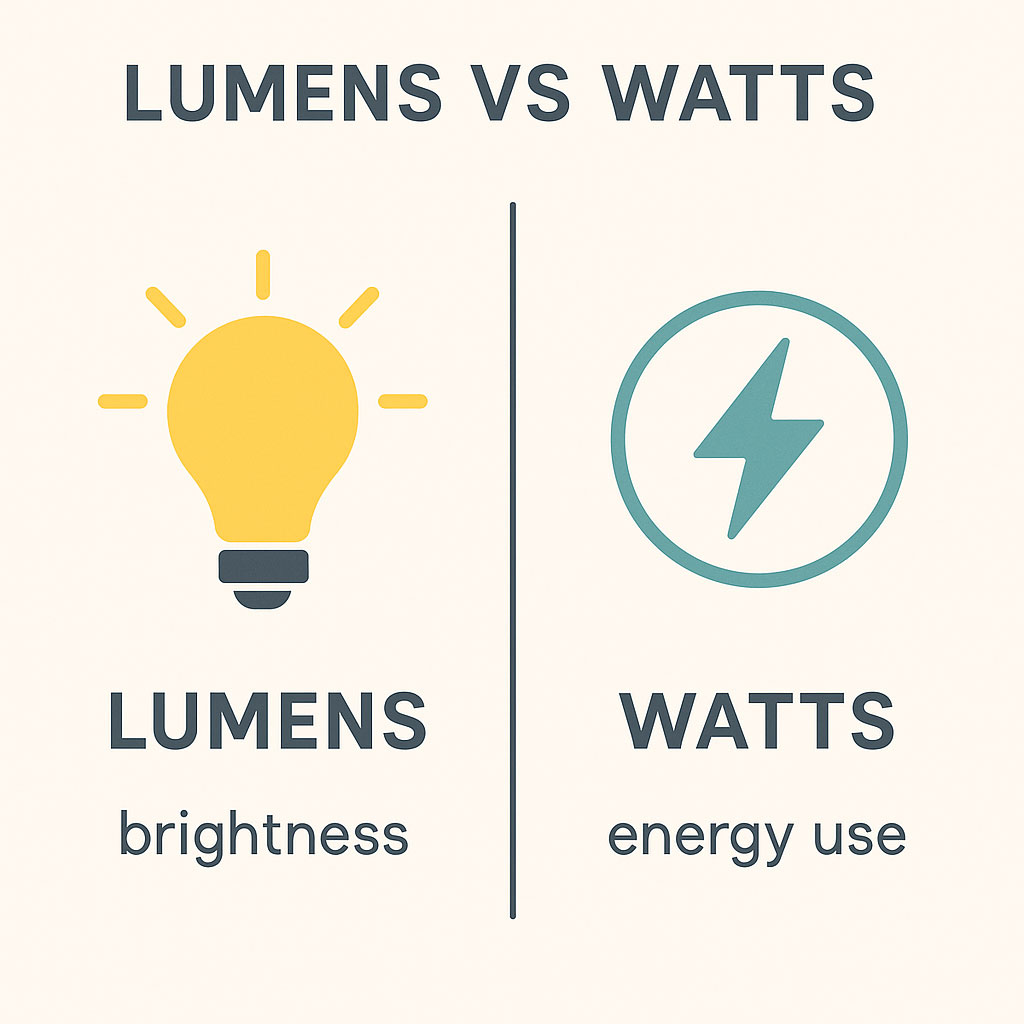
Lumens vs Watts: The Quick Version
Lumens measure brightness. Watts measure energy consumption.
An 8W LED can be brighter than a 60W incandescent. When planning kitchen lighting, ignore wattage — focus on lumens.
Quick reference:
- 350–450 lm: accent and mood lighting
- 450–800 lm: general ambient lighting
- 800–1,100+ lm: task lighting for prep areas
How Many Lumens Does Your Kitchen Need?
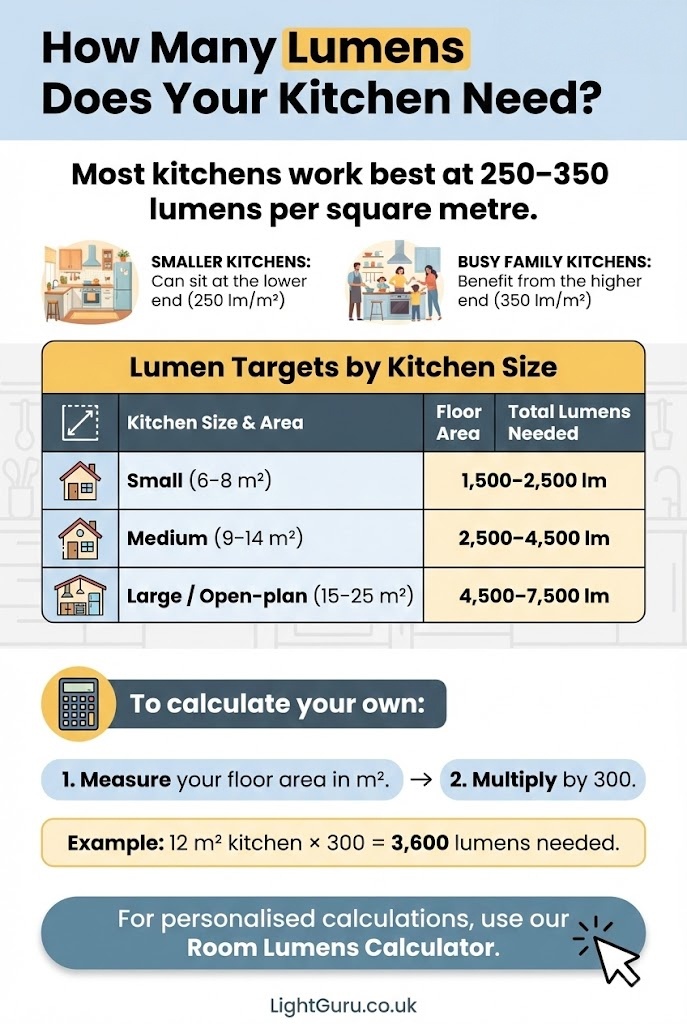
Most kitchens work best at 250–350 lumens per square metre.
Smaller kitchens can sit at the lower end. Busy family kitchens with lots of prep work benefit from the higher end.
Lumen Targets by Kitchen Size
| Kitchen Size | Floor Area | Total Lumens Needed |
|---|---|---|
| Small | 6–8 m² | 1,500–2,500 lm |
| Medium | 9–14 m² | 2,500–4,500 lm |
| Large / Open-plan | 15–25 m² | 4,500–7,500 lm |
To calculate your own: Measure your floor area in m², then multiply by 300.
Example: 12 m² kitchen × 300 = 3,600 lumens needed.
For personalised calculations, use our Room Lumens Calculator.
Zone-by-Zone Brightness Targets
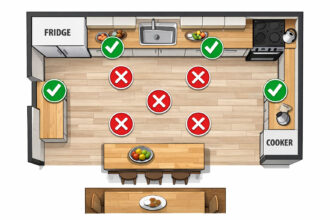
Getting the total lumens right is only half the job. You also need to distribute them properly across different zones. Once you’ve calculated your total lumens for kitchen lighting, the next step is distributing them properly across zones.
Prep Zones (Worktops, Sink, Hob)
Target: 700–1,100 lumens per metre of worktop
This is the most critical zone. You’re chopping, slicing, and handling raw ingredients here. Shadows on prep surfaces make it harder to see what you’re doing — and that’s when accidents happen.
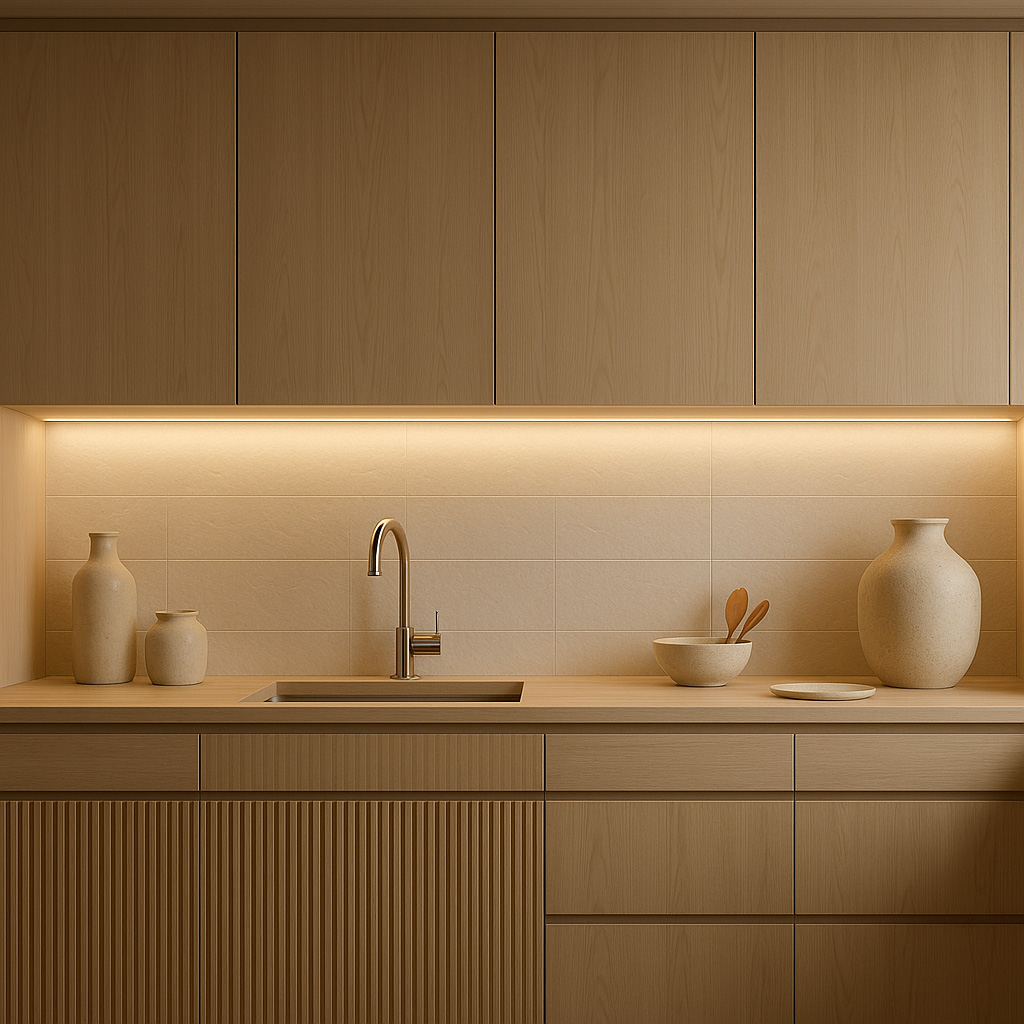
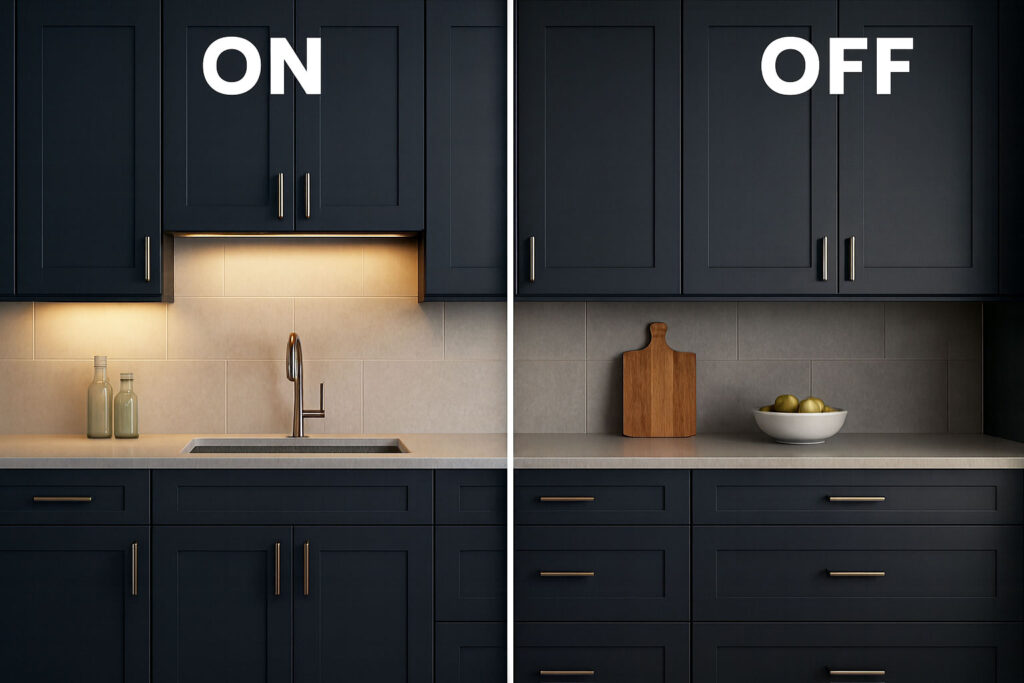
Under-cabinet lighting is essential, not optional. Position it towards the front of the cabinet (not against the wall) so light falls on your hands and the chopping board, not on the splashback behind.
For the best results, use high-density LED strips rather than standard dot-style strips. Standard strips can create visible “dots” that reflect off knife blades and wet surfaces.
Kitchen Island
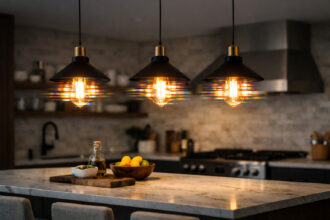
Target: 600–900 lumens over the island
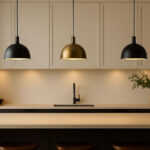
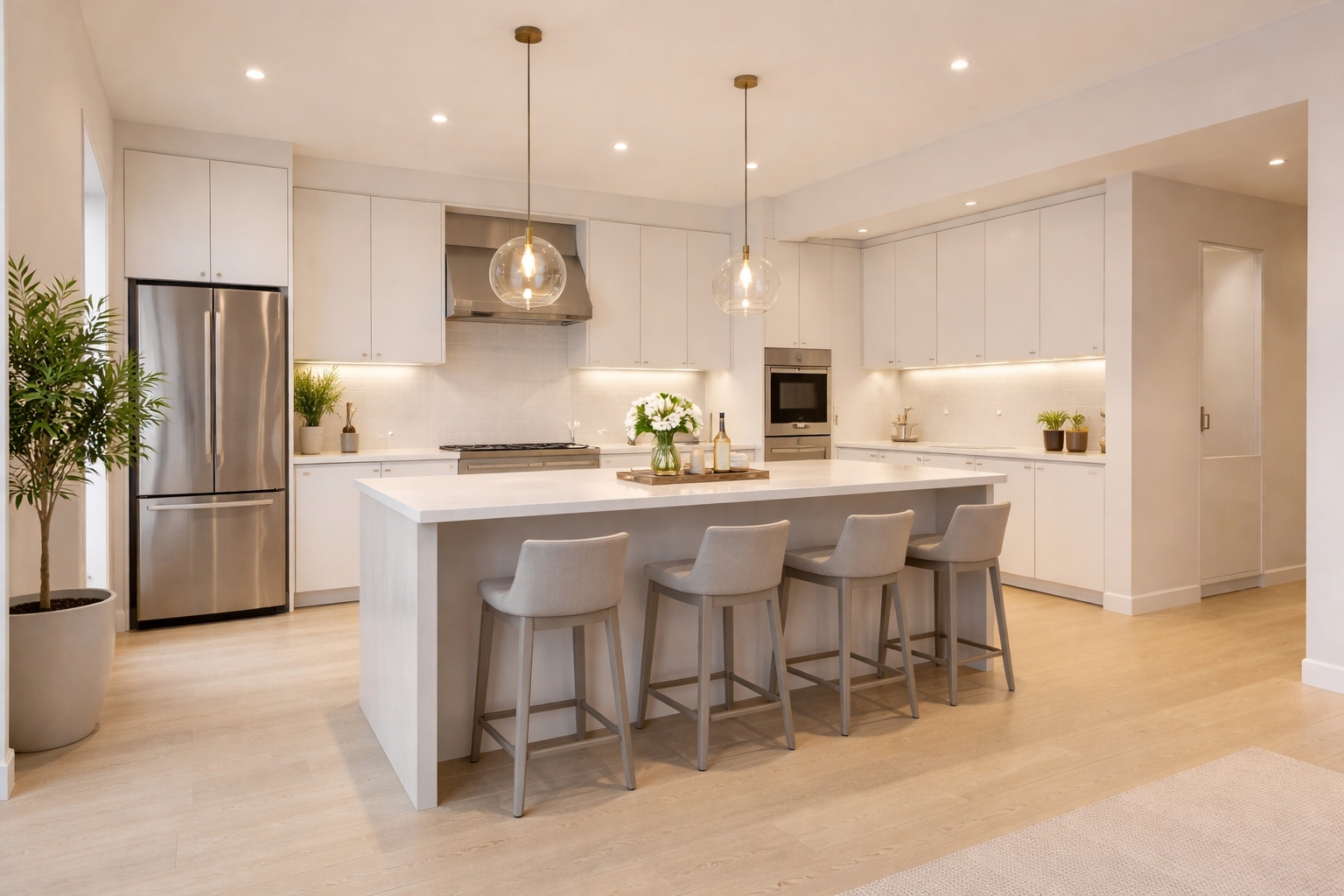
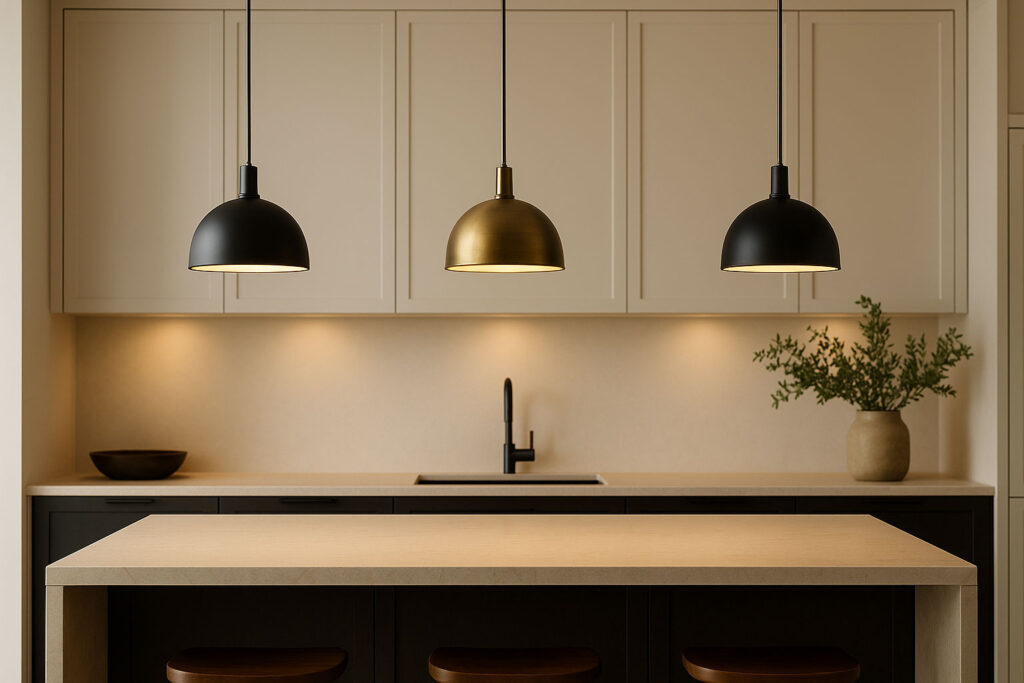
Islands serve multiple purposes — prep, eating, socialising. Pendants work well here, but they’re primarily decorative. If you use the island for serious prep, add downlights around the perimeter too.
General Ceiling Coverage
Target: 200–300 lumens per m²
This provides the base layer of light that fills the room. Downlights or flush ceiling lights work well. Don’t rely on this layer alone — it won’t give you enough light on worktops.
Dining Area (if open-plan)
Target: 300–500 lumens
Dining areas need softer, warmer light than prep zones. A pendant on a dimmer gives you flexibility — bright enough to see your food, dim enough for atmosphere.
Why CRI Matters More in Kitchens
CRI (Colour Rendering Index) measures how accurately a light source shows colours compared to natural daylight. It’s scored out of 100.
In a living room, CRI 80 is fine. In a kitchen, it’s not enough.
Why it matters here:
- Raw chicken should look pink, not grey
- Vegetables should look fresh, not washed out
- You need to spot when meat is properly browned
- Ripe vs unripe fruit should be obvious
Our Recommendation: Use CRI 90+ LEDs in kitchen task lighting. CRI 95+ is even better for serious cooks such as the Philips ExpertColor CRI 97
Standard “daylight” LEDs from budget brands often have CRI 70-80, which makes food look unappetising and makes it harder to judge whether meat is cooked.
Real UK Kitchen Examples
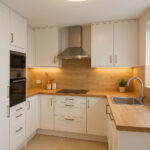
Example 1: Small Galley Kitchen (9 m²)
Target: 2,250–3,150 lumens
Typical setup:
- 4–6 downlights at 500–600 lm each (2,000–3,600 lm total)
- LED strip under wall cabinets for task lighting
This works because the under-cabinet strips handle prep lighting, so the ceiling downlights can focus on general coverage.
Example 2: Family Kitchen (12 m²)
Target: 3,000–4,200 lumens
Typical setup:
- 6 downlights at 600 lm each (3,600 lm)
- Under-cabinet LED strips along main prep run
- Optional plinth lighting for evening ambience
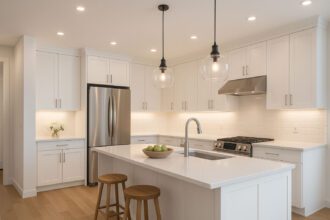
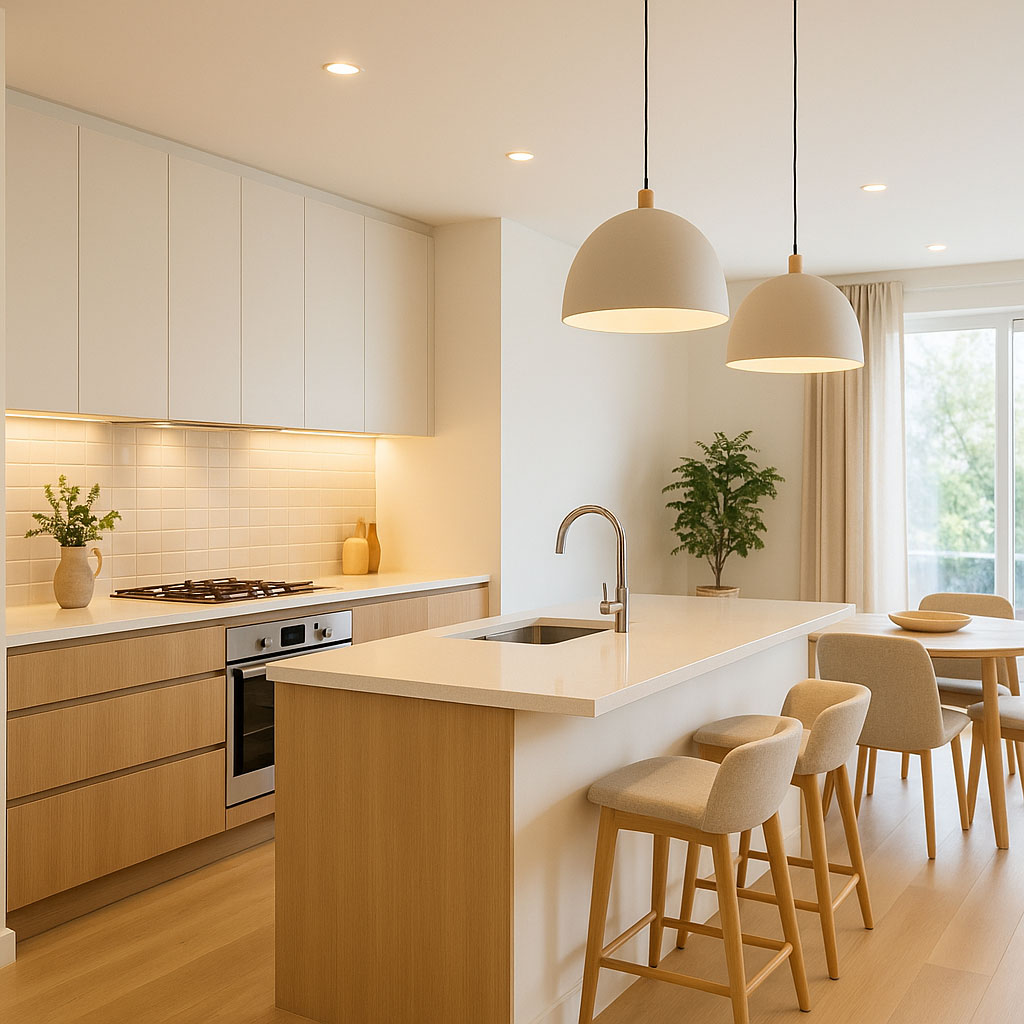
Example 3: Open-Plan Kitchen-Diner (20 m²)
Target: 5,000–7,000 lumens
Typical setup:
- 8–10 downlights in the kitchen zone (4,800–6,000 lm)
- 2–3 pendants over island or dining table
- Under-cabinet strips
- Accent lighting (plinth, shelf, or cabinet top)
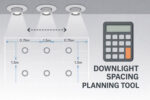
For layout and spacing guidance on larger kitchens, see our Kitchen Downlight Spacing Guide.
What Affects Perceived Brightness
You can hit your lumen targets perfectly and still end up with a kitchen that feels dim. These factors absorb or waste light:
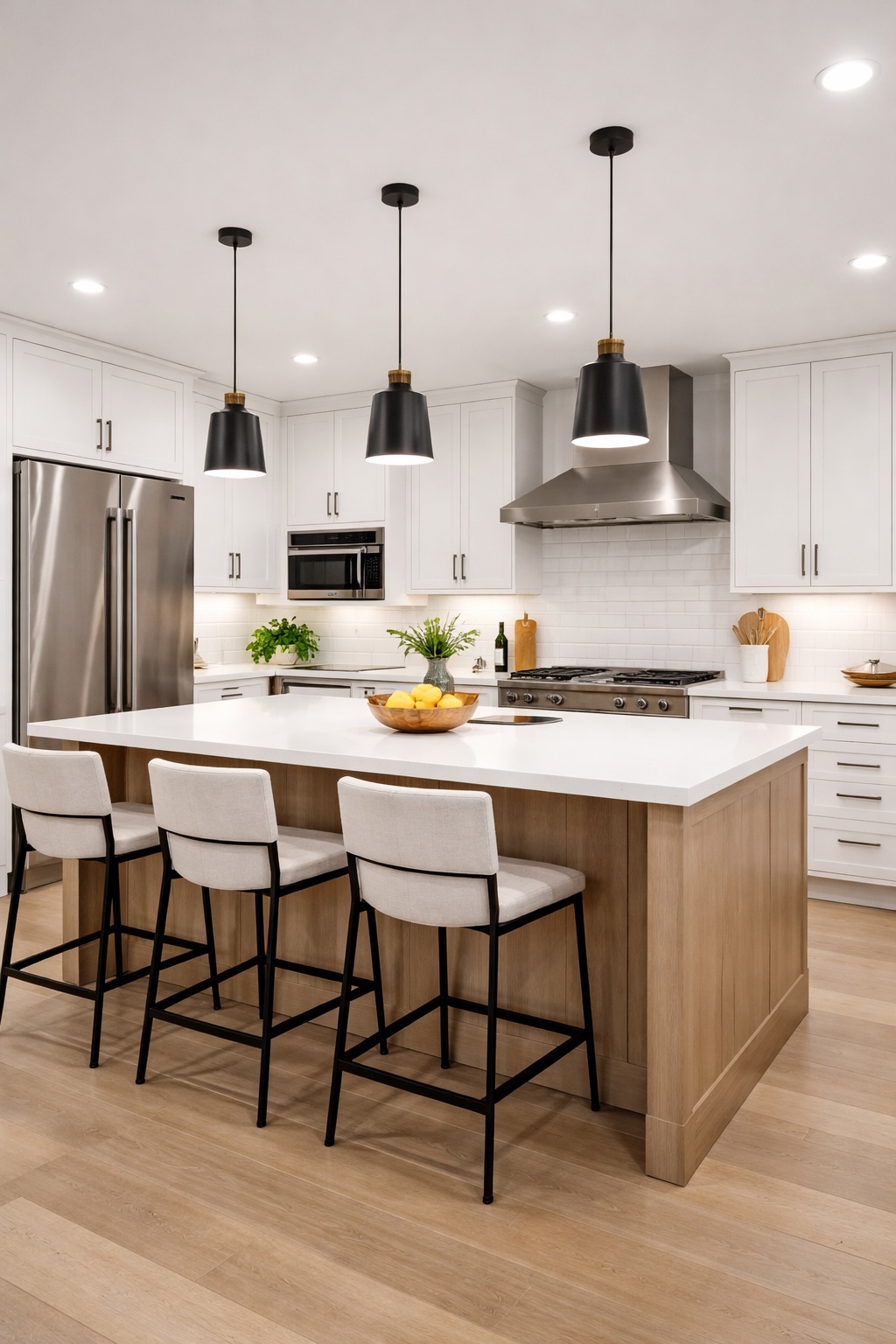
Dark cabinets — Matt black or dark grey cabinets absorb significantly more light than white or cream. If you have dark cabinetry, increase your lumen target by 15–20%.
Matt surfaces — Gloss worktops and splashbacks reflect light back into the room. Matt surfaces absorb it.
Deep wall unit overhangs — Standard 600mm deep wall cabinets cast shadows on worktops. Under-cabinet lighting solves this.
Low ceilings — Light spreads less in low-ceiling rooms. You may need more fixtures or higher output per fixture. See our Low Ceiling Kitchen Lighting Guide for specific advice.
Beam angle — Narrow beam downlights (25–35°) create pools of light with dark gaps between them. Wide beam (50–60°) spreads more evenly but with less intensity. For kitchens, 40–50° is usually the sweet spot.
Which Bulbs Hit Which Targets
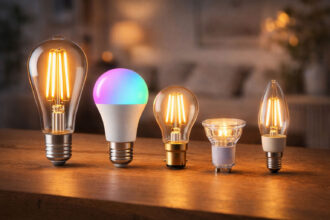
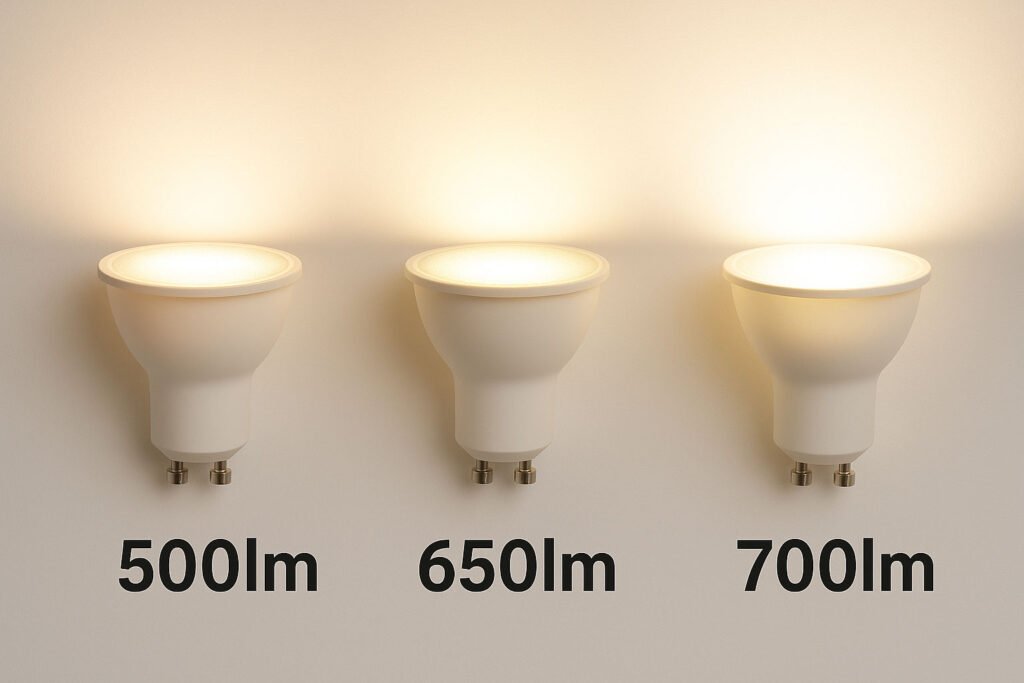
GU10 LEDs: 350–700 lumens typically. Good for retrofitting existing downlight cans. You’ll need more of them to hit your targets.
Integrated LED downlights: 700–1,200 lumens. Brighter per fitting, so you need fewer. Better colour consistency across multiple fittings.
LED strip lighting: 300–600 lumens per metre for task strips. Essential for under-cabinet prep lighting.
High CRI LEDs (90+): Same lumen output, but colours look more accurate. Worth it in kitchens where you want food to look appetising.
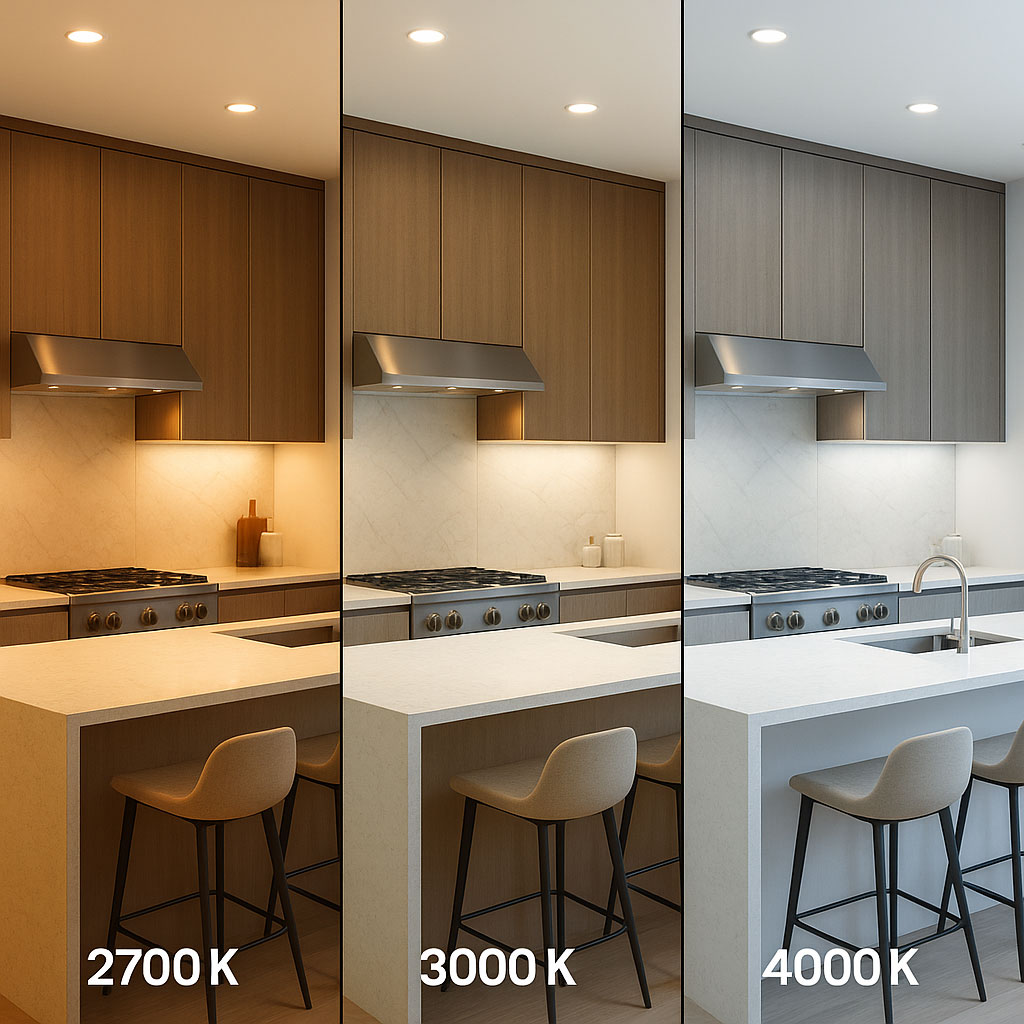
For colour temperature guidance (warm white vs cool white), see our Colour Temperature Guide.
Energy Saving Trust has a good LED lighting overview.
Quick Checklist
For spacing and layout, see our Kitchen Downlight Spacing Guide
- Calculate total lumens: floor area × 300
- Don’t rely on ceiling lights alone — add under-cabinet task lighting
- Prep zones need 700–1,100 lm per metre
- Dark cabinets need 15–20% more light
- Use 40–50° beam angles for even coverage
FAQs
How many lumens per square metre for a kitchen?
250–350 lm/m² for general coverage. Prep zones need more — around 400–500 lm/m² on the worktop surface.
Why does my kitchen feel dark even with lots of lights?
Usually one of three things: lights positioned in the wrong place (illuminating cabinet doors instead of worktops), low CRI bulbs making everything look flat, or dark surfaces absorbing too much light.
Is 3000K bright enough for a kitchen?
3000K refers to colour temperature (warmth), not brightness. You can have a very bright 3000K kitchen. For most UK kitchens, 3000K provides a good balance — warm enough to feel welcoming, neutral enough for food prep.
Do dark cabinets need more light?
Yes. Dark colours absorb light rather than reflecting it. Increase your lumen target by 15–20% and make sure you have good under-cabinet lighting to compensate.
What CRI should kitchen lights be?
Minimum CRI 90 for task lighting. CRI 95+ is better if you cook regularly and want to see true food colours. Avoid budget bulbs with CRI below 80.
How many downlights for a 10m² kitchen?
Using 600 lm downlights: 10 m² × 300 lux = 3,000 lumens needed. 3,000 ÷ 600 = 5 downlights. Add under-cabinet strips for task areas.