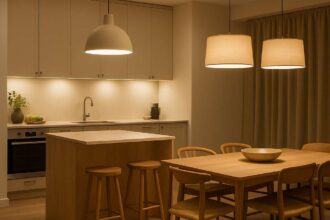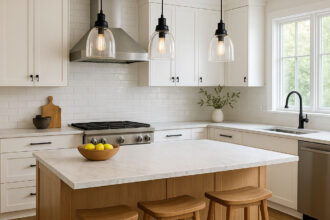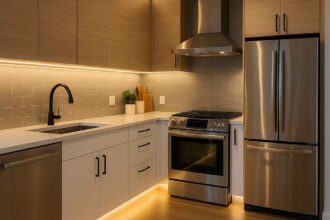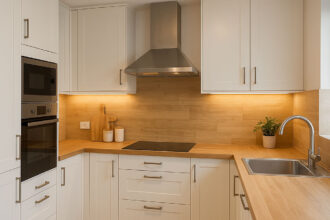

Ceiling lighting ideas for living rooms often get reduced to one question: which fitting should I choose? In reality, the more important question is how that ceiling light works with the rest of the room.
Flush lights, pendants, and track lighting all suit living rooms, but each behaves very differently in terms of brightness, comfort, and layout. This guide explains when each type works best, where to use them, and how to avoid common mistakes that make living rooms feel harsh or poorly balanced.
If you want a complete overview of layered lighting beyond the ceiling, our complete living room lighting guide covers wall lights, lamps, and mood lighting in more detail.
This guide focuses on one specific aspect of lighting design. For full room planning, layout, and brightness guidance, see our complete Living Room Lighting Guide.
Start with the role of ceiling lighting in a living room
Ceiling lighting should provide general ambient light, not do all the work on its own.
In well lit living rooms:
- Ceiling lights provide background illumination
- Lamps and wall lights add comfort
- Accent lighting creates depth
Relying entirely on ceiling lighting is one of the most common reasons living rooms feel flat at night. This is why planning the lighting layout for a living room is more important than choosing a single standout fitting.
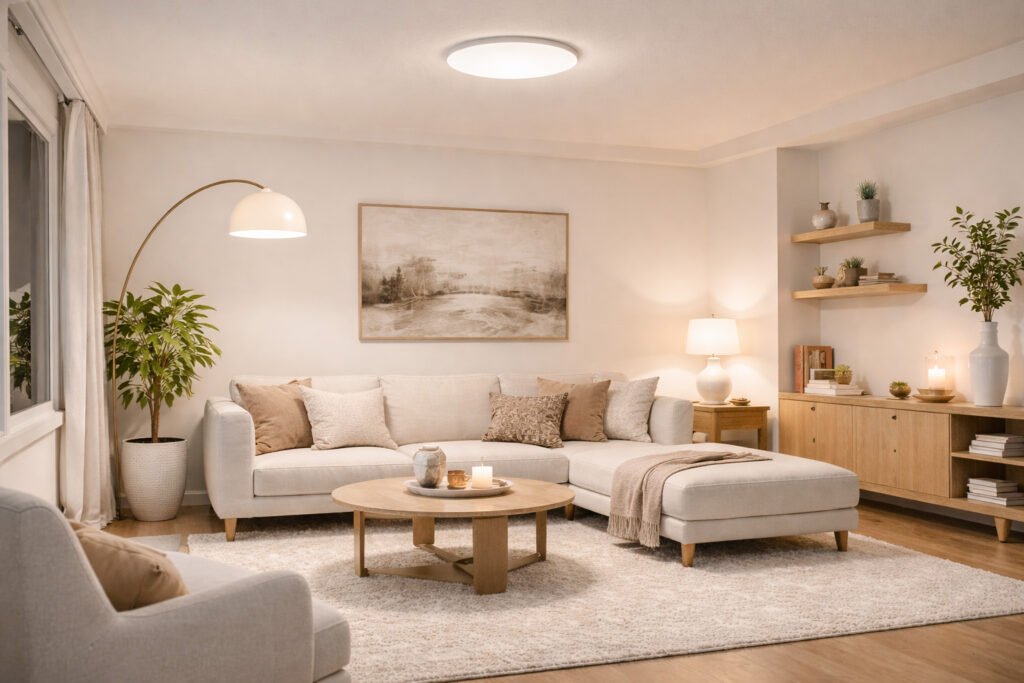
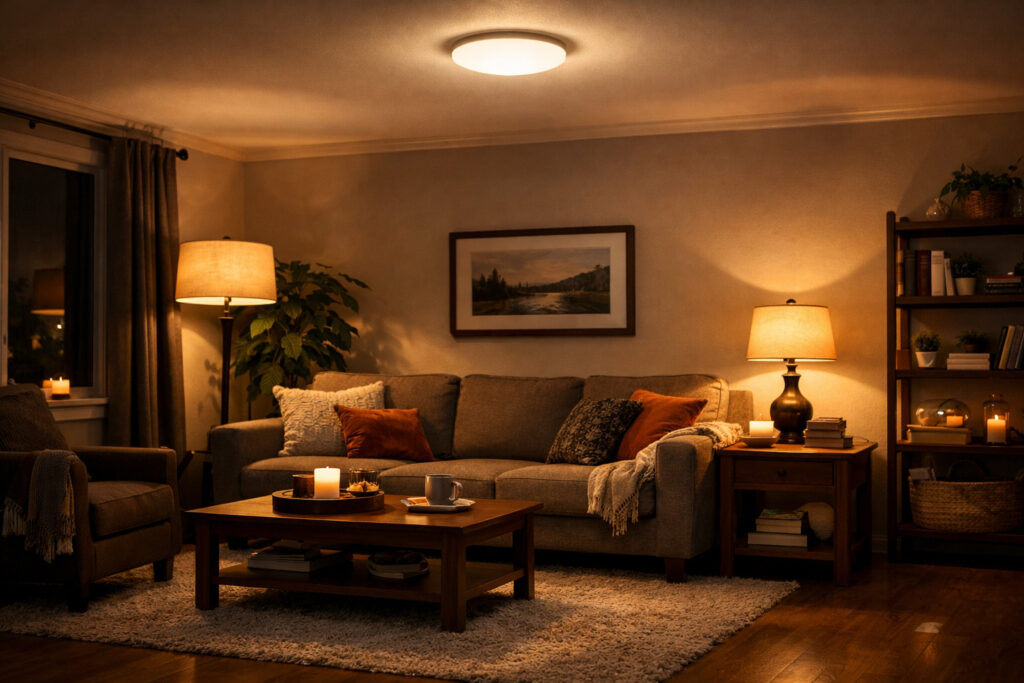
Flush ceiling lights: simple, subtle, and practical
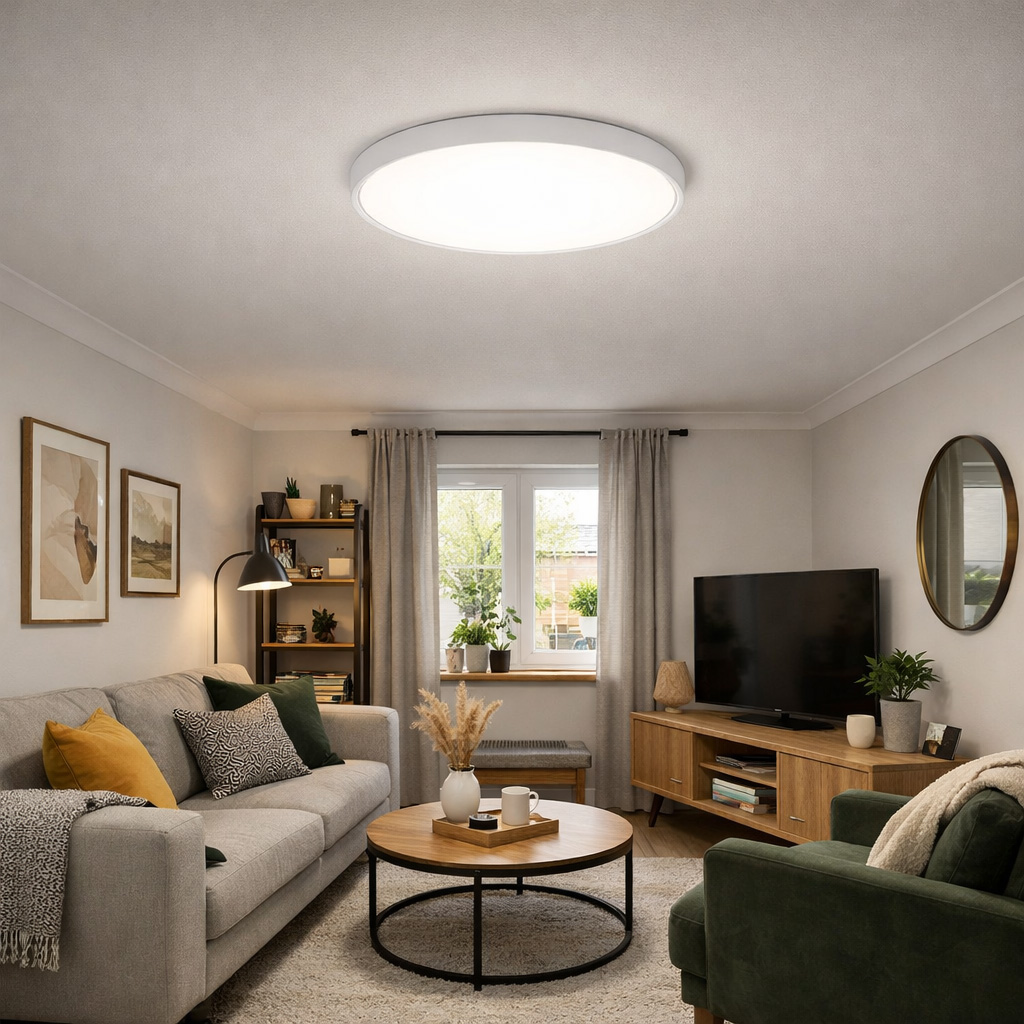
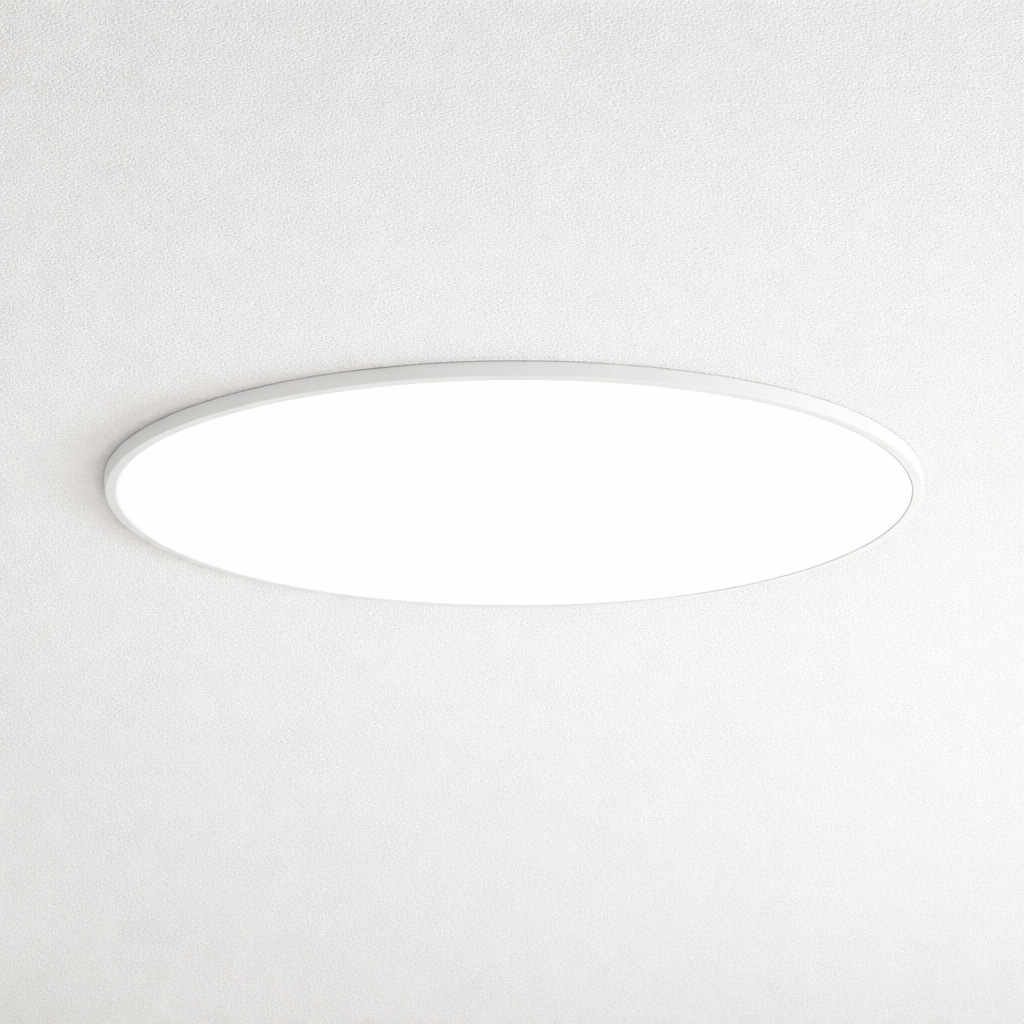
Flush ceiling lights sit close to the ceiling and provide even, unobtrusive illumination.
When flush lights work best
- Low or standard height ceilings
- Smaller living rooms
- Minimal or modern interiors
- Rooms where head height clearance matters
Advantages
- Clean, discreet appearance
- Even light spread
- Less visual clutter than pendants
A flush fitting doesn’t have to mean a plain disc, either: ribbed-glass designs such as Enso Lighting’s Halo flush light in antique brass fragment the light into soft bands across the ceiling — far more considered than a panel. Their flush ceiling lights range is a good place to see what the format can do.
Common mistakes
- Choosing overly bright fittings
- Using flush lights as the only light source
- Ignoring dimming
Flush ceiling lights work best when paired with lamps and wall lighting to soften the room in the evening.
Pendant lights: visual impact with careful placement
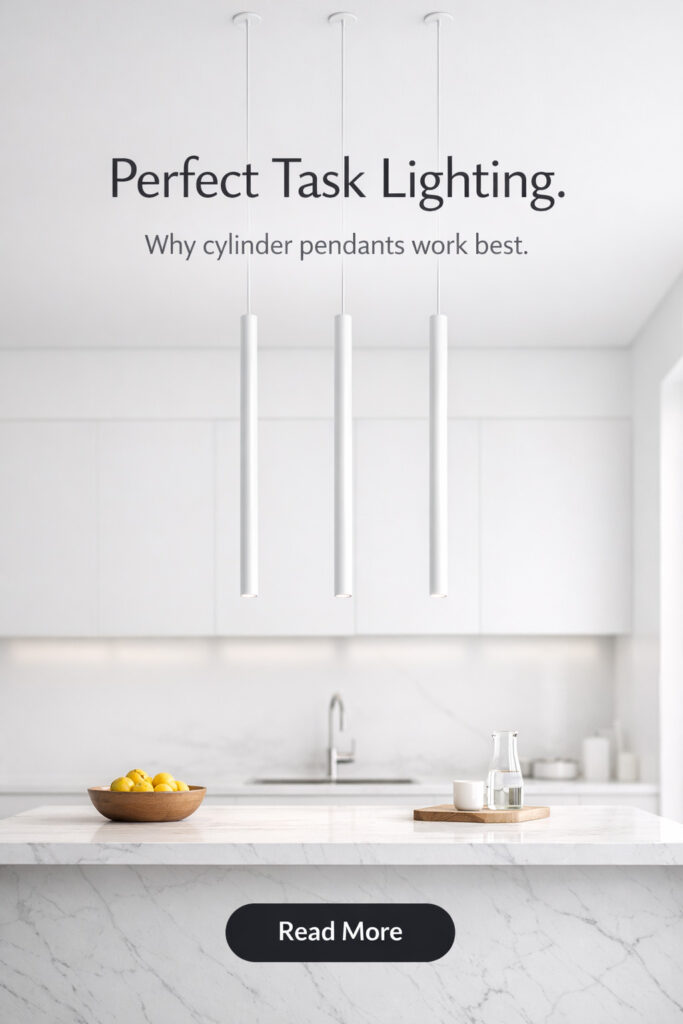
Pendant lights make a statement, but they must be chosen and positioned carefully in living rooms.
When pendants work well
- Higher ceilings
- Larger living rooms
- Defined seating areas
- Homes where lighting is part of the décor
Placement tips
- Keep pendants centred over seating zones, not walkways
- Maintain comfortable head clearance
- Avoid placing pendants directly above sofas
Common mistakes
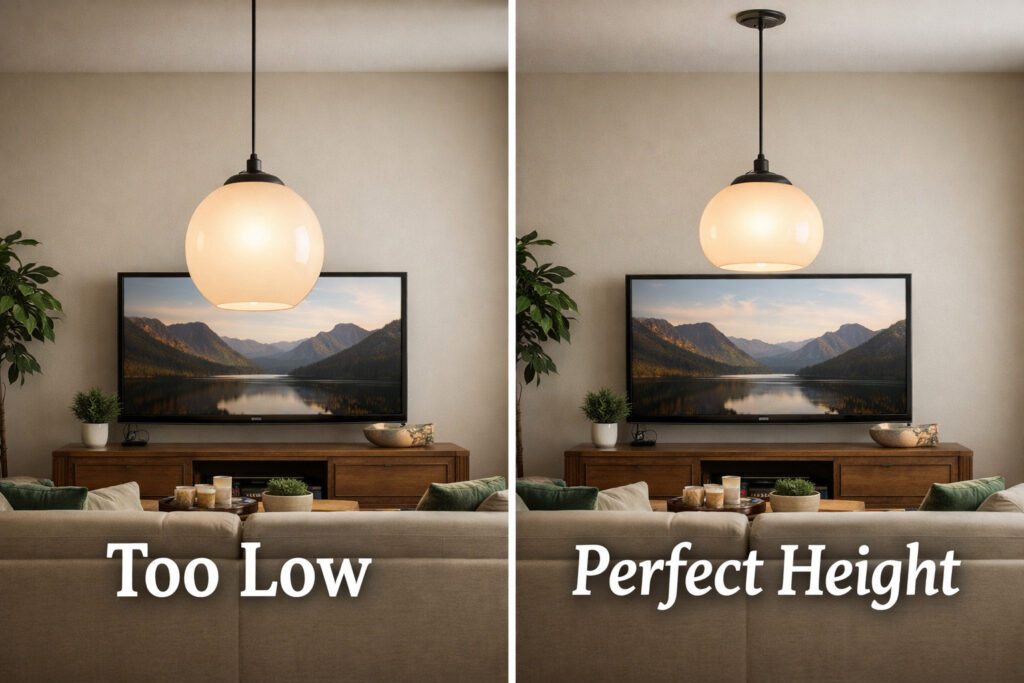
- Pendants hung too low
- Oversized fittings overpowering the room
- Using pendants without additional lighting layers
Pendants should add character without becoming a visual obstacle.
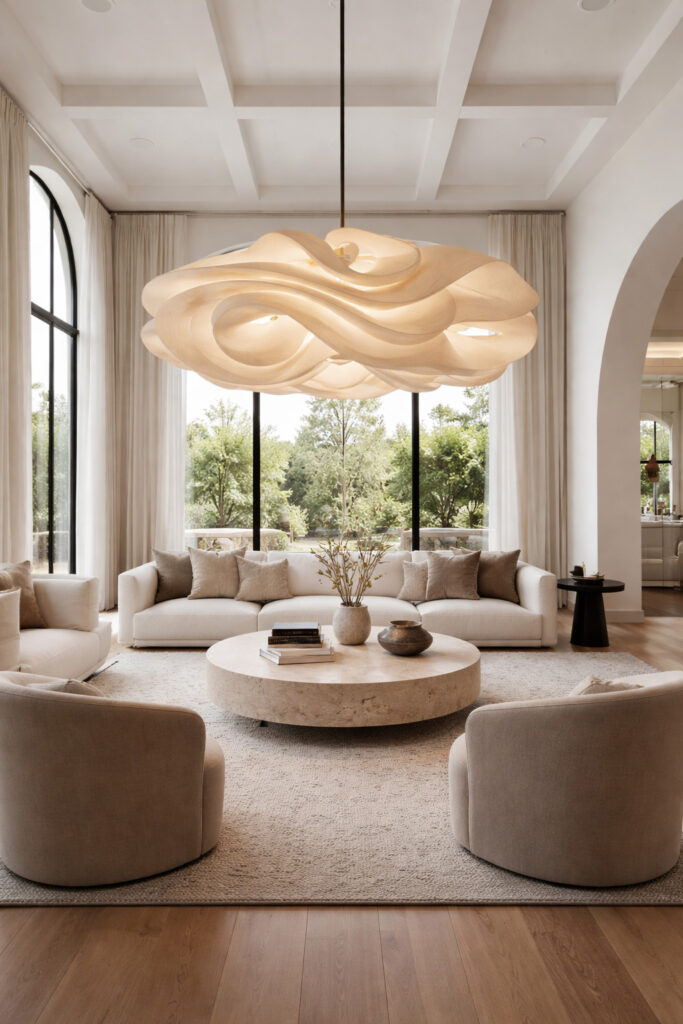
Track lighting: flexible and functional
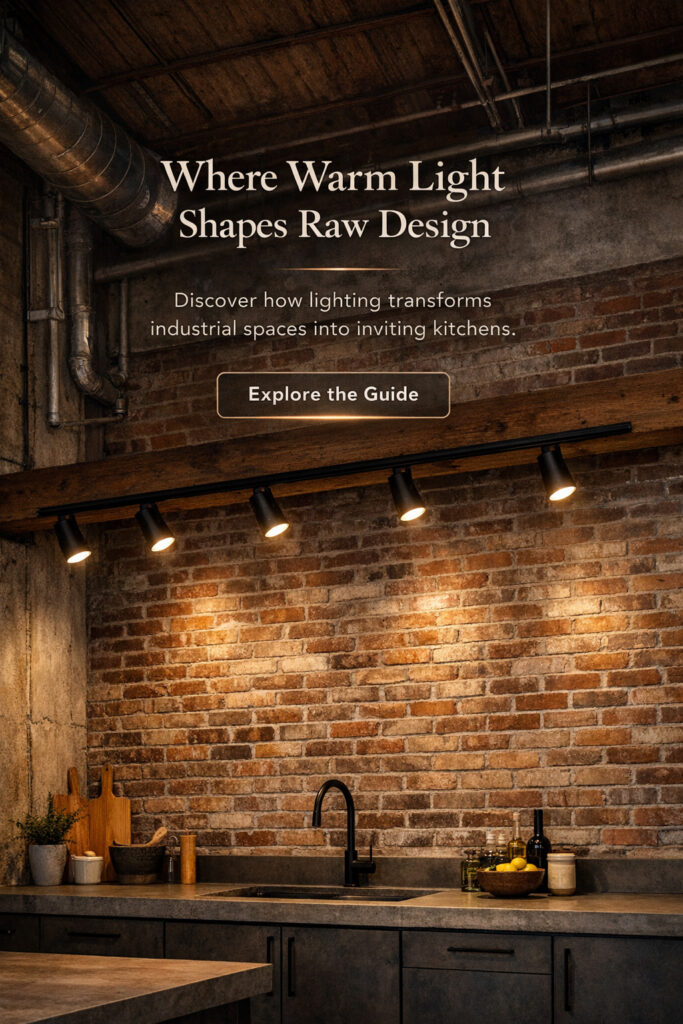
Track lighting offers flexibility and works especially well in modern or open plan living rooms.
When track lighting is a good choice
- Open plan layouts
- Multi use living spaces
- Rooms with artwork or features to highlight
- Modern or industrial interiors
Why it works
- Adjustable light direction
- Ability to highlight zones
- Clean, architectural appearance
Watch outs
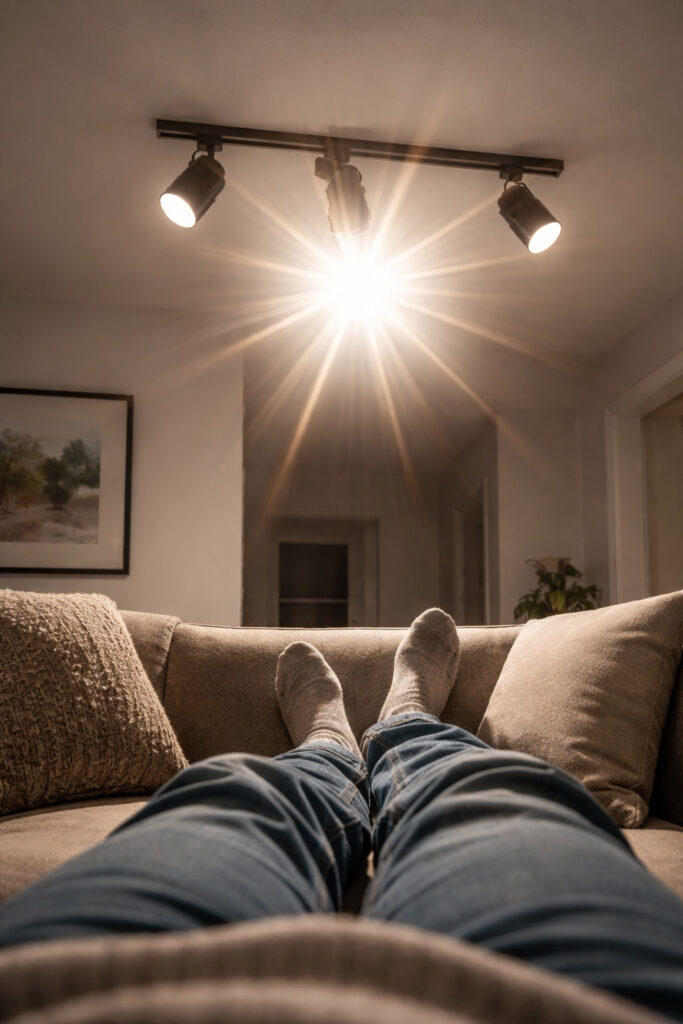
- Too many spot heads increase glare
- Narrow beam angles can feel harsh
- Track lighting still needs lamps for balance
Used thoughtfully, track lighting can replace multiple downlights while offering more control.
Track lighting works best when beams are aimed at walls or features rather than seating areas, helping maintain visual comfort in lighting throughout the room.


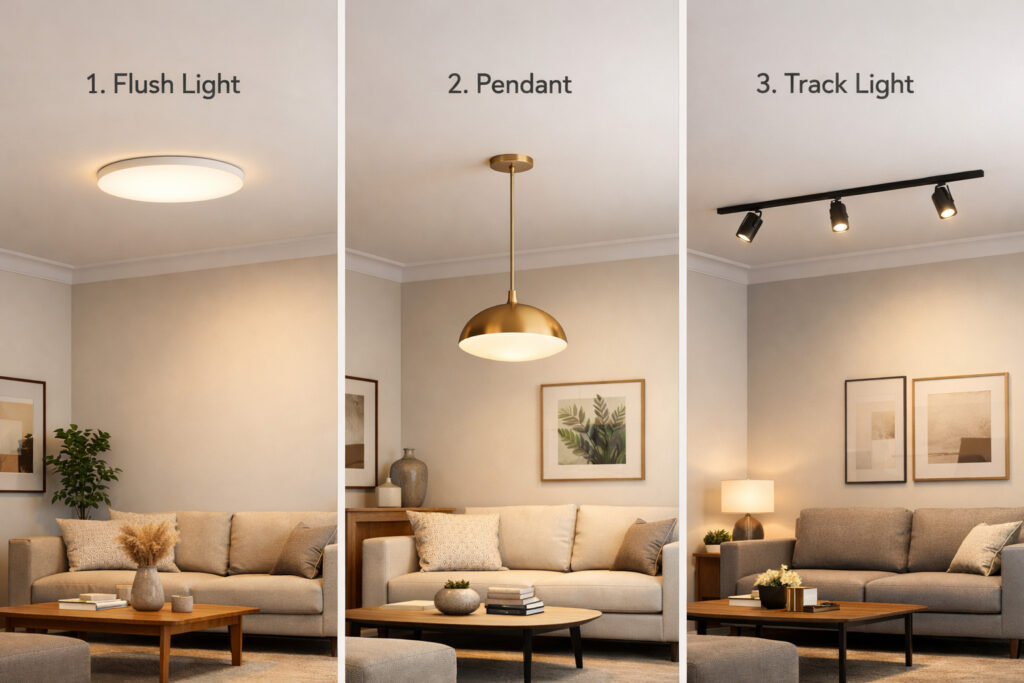
Ceiling lighting ideas for living rooms: flush vs pendant vs track
Choosing the right ceiling lighting depends on ceiling height, room size, and layout, not trends.
A simple guide
- Low ceilings → flush lighting
- High ceilings → pendants or track
- Open plan spaces → track lighting
- Small living rooms → flush with lamps
- Statement interiors → pendants with support lighting
No option is universally better. The best choice is the one that supports the room’s use and scale.
Ceiling lighting for small vs large living rooms
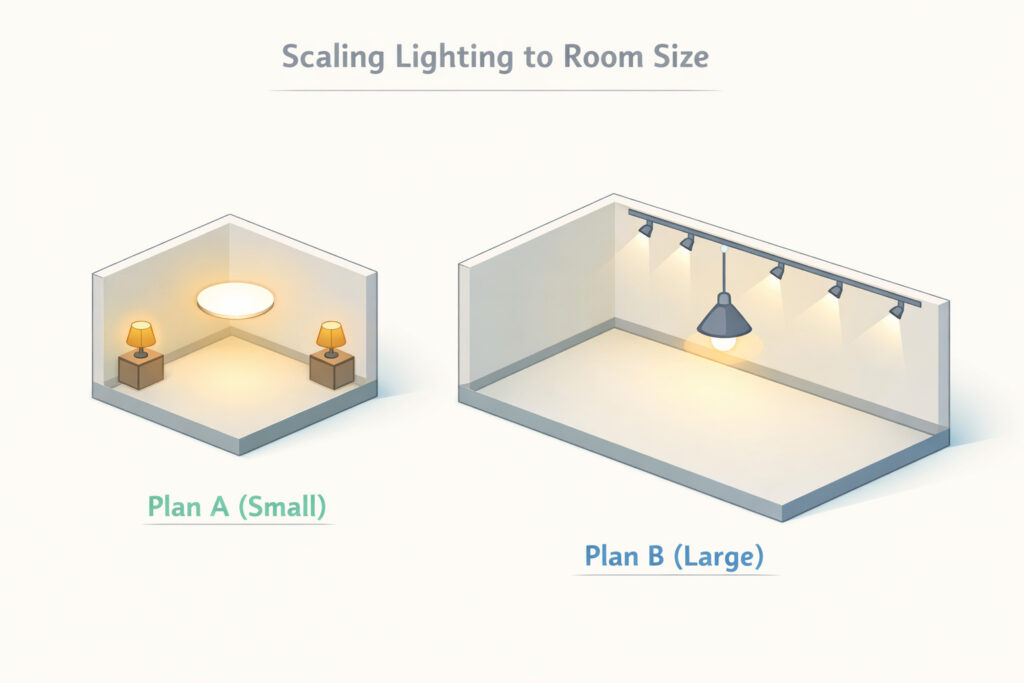
Ceiling lighting needs to respond to the scale of the room, not just personal style. What works beautifully in a large living room can quickly overwhelm a smaller space.
Small living rooms
In smaller living rooms, ceiling lighting should stay visually quiet and space efficient.
Flush ceiling lights are usually the best choice because they:
- Sit close to the ceiling and preserve head height
- Spread light evenly without dominating the room
- Work well alongside lamps and wall lighting
Using fewer ceiling fittings at lower brightness helps avoid a cramped or overlit feel. In compact spaces, adding lamps and accent lighting often improves comfort more than increasing ceiling light output.

Large living rooms
Larger living rooms allow more freedom, but also require more planning.
Pendant and track lighting work well because they:
- Help visually anchor seating zones
- Break up large ceiling areas
- Allow light to be directed where it is actually needed
In bigger rooms, ceiling lighting should be divided into zones rather than relying on one central fitting. This keeps brightness balanced and prevents the space feeling flat or uneven at night.
Ceiling lights and brightness balance
Ceiling lights should usually provide no more than half of the room’s total brightness.
If you are unsure how bright your living room should be overall, you can calculate how bright your living room should be before finalising ceiling fittings.
For rooms using recessed fittings alongside ceiling lights, understanding downlight spacing helps avoid uneven brightness and glare.

Colour temperature and ceiling lighting comfort
Ceiling lights strongly influence how a room feels because they illuminate large areas.
- Warm tones feel calmer and more inviting
- Cool tones feel brighter but less relaxing
- Even light distribution reduces harsh shadows
Switching to a warm colour temperature often improves comfort without changing fittings.
Do ceiling lights need dimmers?
In living rooms, dimmers are strongly recommended.
They allow you to:
- Adjust brightness through the day
- Balance ceiling lights with lamps
- Avoid harsh lighting in the evening
Without dimming, even well chosen ceiling lights can feel overpowering at night.

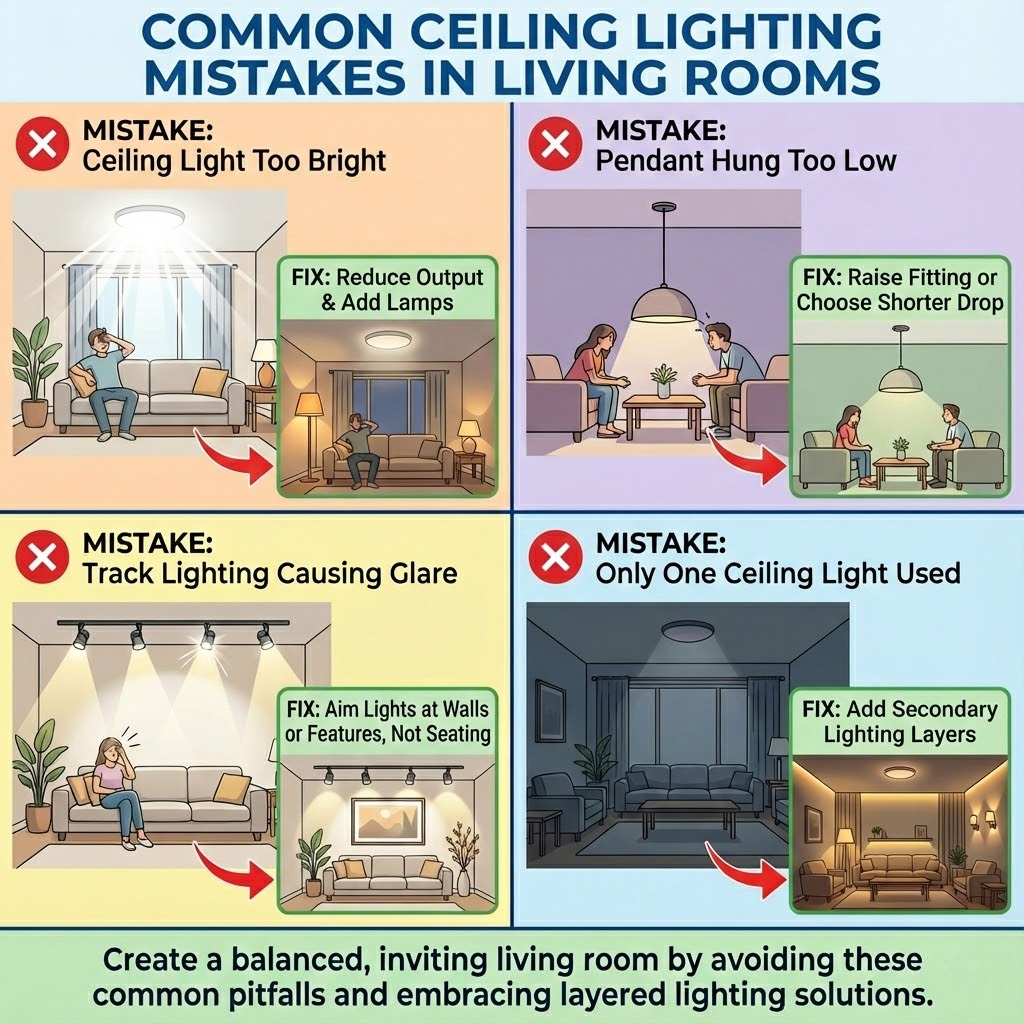
Common ceiling lighting mistakes in living rooms
Ceiling light too bright
Fix: Reduce output and add lamps.
Pendant hung too low
Fix: Raise the fitting or choose a shorter drop.
Track lighting causing glare
Fix: Aim lights at walls or features, not seating.
Only one ceiling light used
Fix: Add secondary lighting layers.
Many of these principles align with recognised lighting best practice followed by professional designers and engineers, including guidance from the Chartered Institution of Building Services Engineers.
A quick ceiling lighting checklist
Before choosing a ceiling light, check the following:
- Ceiling height suits the fitting
- Light output matches room size
- Dimming is included
- Additional lighting layers are planned
- The fitting supports the room layout
If all five are true, your ceiling lighting choice is likely right.

Frequently asked questions
Is flush lighting better than pendants in living rooms?
Neither is better overall. Ceiling height and room size matter more than style.
Can track lighting replace downlights?
Yes, in many layouts track lighting can replace multiple downlights while offering more flexibility.
Should ceiling lights be centred?
Not always. Layout and furniture placement matter more than symmetry.
Do ceiling lights need to match lamps?
They do not need to match exactly, but they should feel cohesive in tone and finish.
Final thoughts
Ceiling lighting sets the foundation for how a living room feels, but it should never work alone. Whether you choose flush, pendant, or track lighting, the goal is balance rather than brightness.
Choose fittings that suit your ceiling height and layout, keep brightness flexible, and let lamps and accent lighting complete the space.