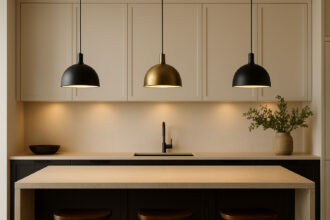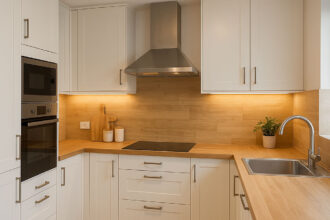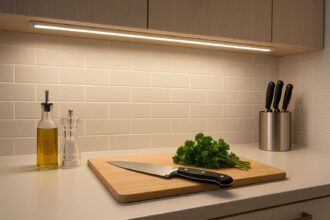
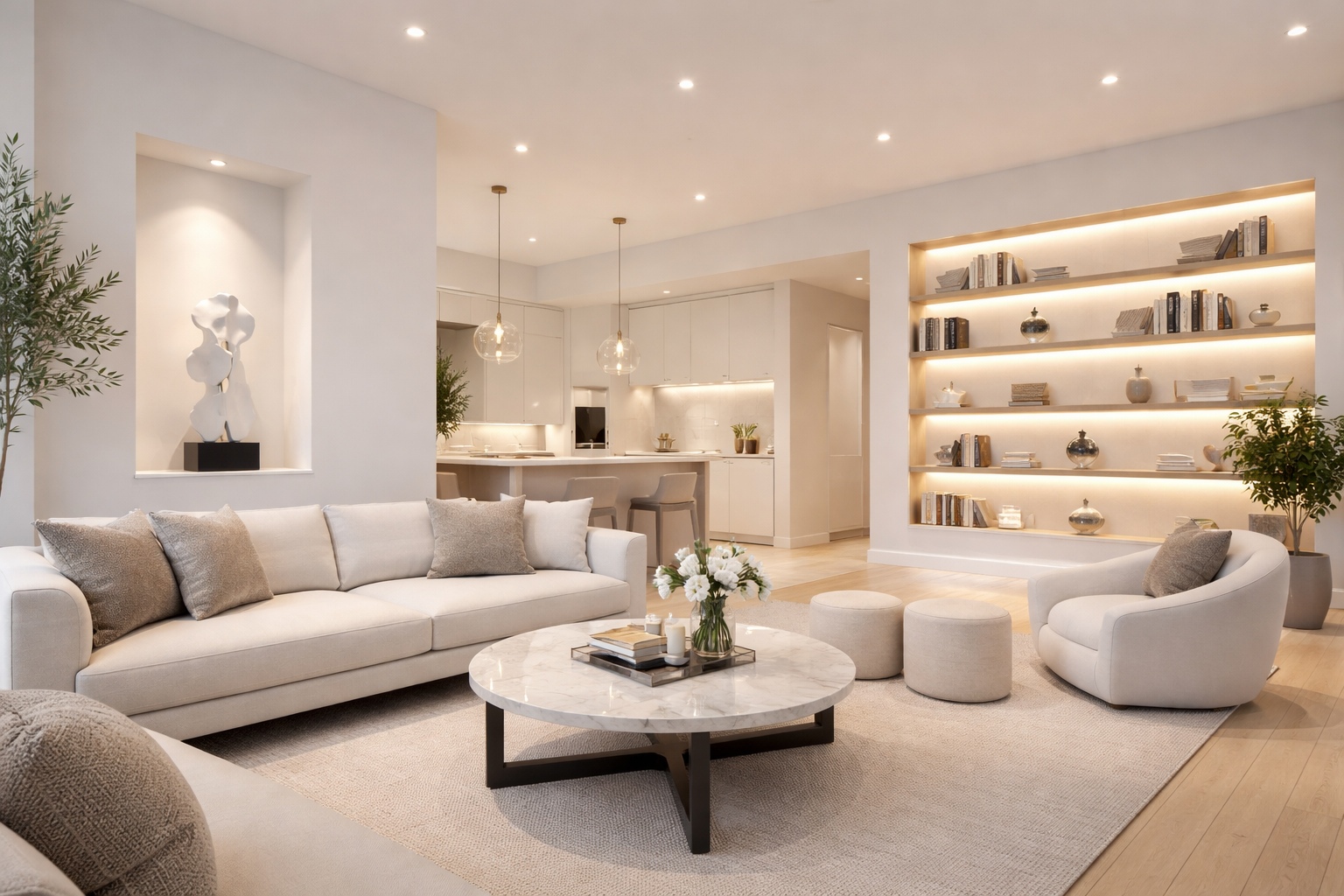
Accent lighting for art, shelves, and alcoves adds depth, character, and visual interest to interiors by drawing attention to specific features rather than lighting the entire room evenly. When used well, accent lighting highlights what matters most, creating atmosphere while making spaces feel more intentional and layered.
Unlike general lighting, accent lighting is about contrast. It uses controlled light to enhance artwork, shelving displays, and architectural details such as alcoves, turning them into focal points without overpowering the room.
This guide explores how to use accent lighting effectively, where it works best, and how to avoid common mistakes so your lighting feels subtle, balanced, and well planned.
Some links in this post are affiliate links. If you buy through them, we may earn a commission. Safety Note: All fixed electrical work should be carried out by a qualified electrician in accordance with the latest IET Wiring Regulations (BS 7671).
Accent lighting works best when planned as part of wider interior lighting ideas that balance function, atmosphere, and visual interest throughout the home.
What Is Accent Lighting and Why It Matters
Accent lighting is designed to highlight features rather than provide overall illumination. It sits alongside ambient and task lighting as part of a layered lighting scheme.
In living rooms, dining spaces, hallways, and bedrooms, accent lighting helps:
- Create visual hierarchy
- Add depth and shadow
- Highlight personal items and artwork
- Make spaces feel more considered and refined
By directing light with purpose, accent lighting brings warmth and interest to areas that might otherwise feel flat or underused.
Following recognised accent lighting principles helps ensure features are highlighted without overwhelming the space.
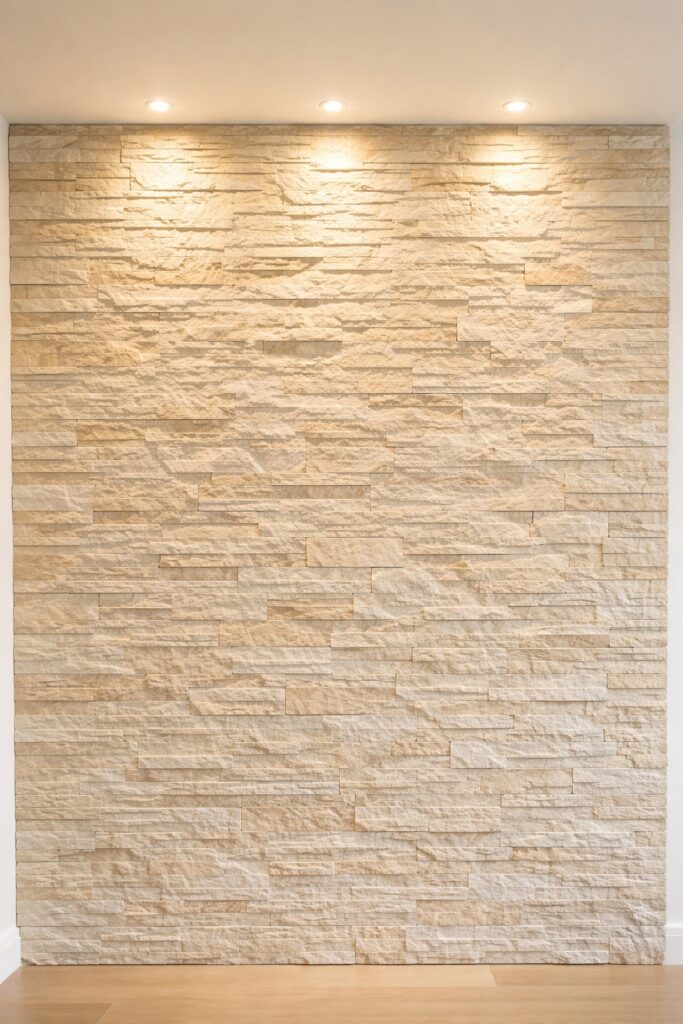
Accent Lighting for Artwork
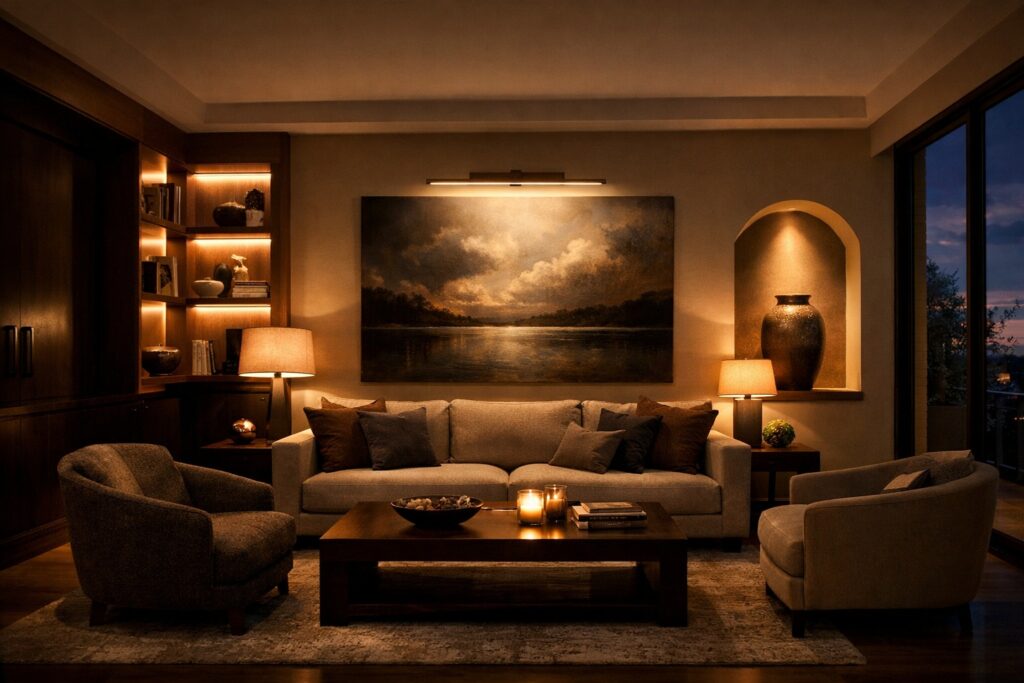
Lighting artwork correctly enhances colour, texture, and detail while preventing glare or damage.
Best lighting options for art
- Picture lights mounted above frames
- Adjustable spotlights
- Directional wall lights
- Discreet ceiling mounted fittings
Directional fittings such as picture lights or battery-operated picture lights allow artwork to be evenly illuminated while reducing glare and harsh shadows.
The goal is even illumination across the artwork without harsh hotspots.
Artwork lighting is often most effective when coordinated with overall living room lighting ideas to maintain a balanced and cohesive look.
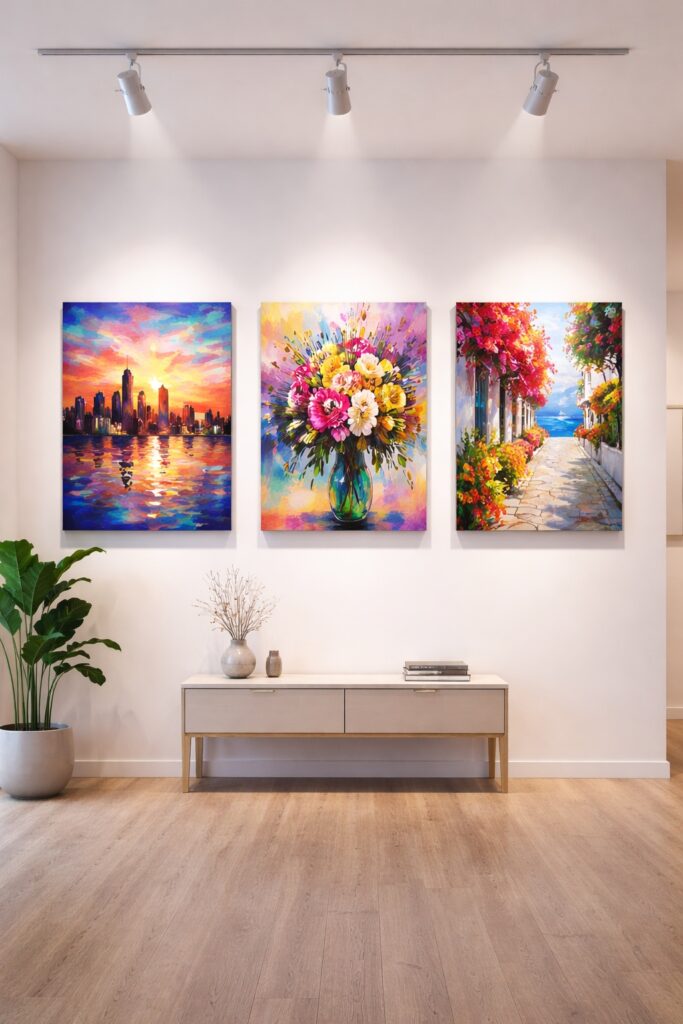
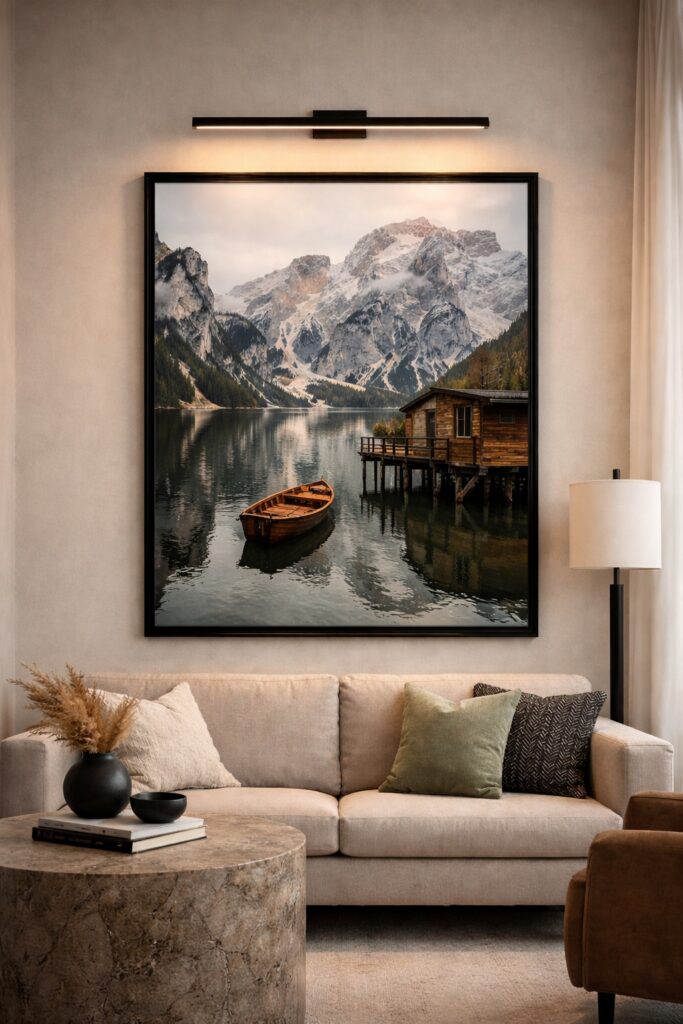
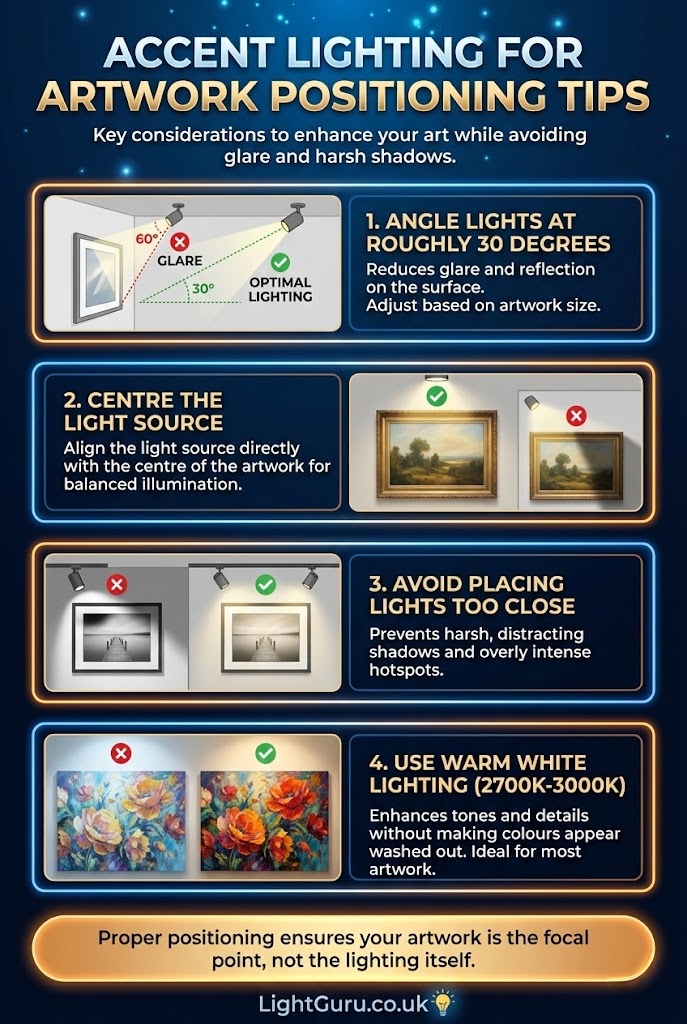
Positioning tips
- Angle lights at roughly 30 degrees to reduce glare
- Centre the light source with the artwork
- Avoid placing lights too close, which can create harsh shadows
Warm white lighting works well for most artwork, as it enhances tones without making colours appear washed out.
Shelf Lighting for Display and Depth
Shelves are ideal candidates for accent lighting, especially when displaying books, ceramics, plants, or decorative objects.
Why shelf lighting works so well
- Adds depth to flat walls
- Creates gentle background glow
- Highlights textures and shapes
- Makes shelving feel intentional rather than purely functional
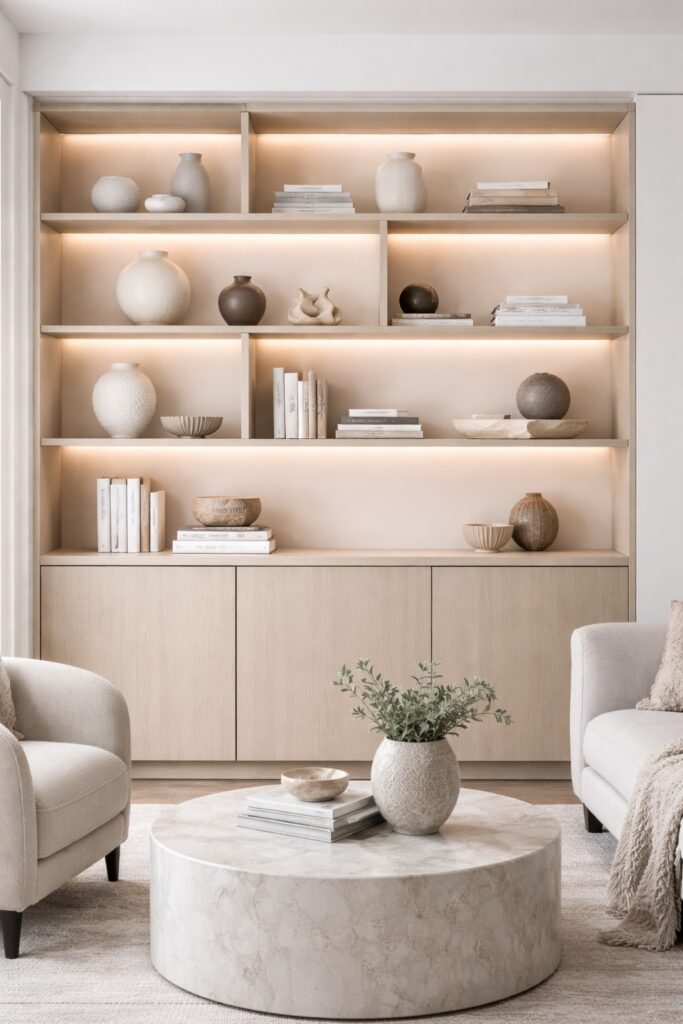
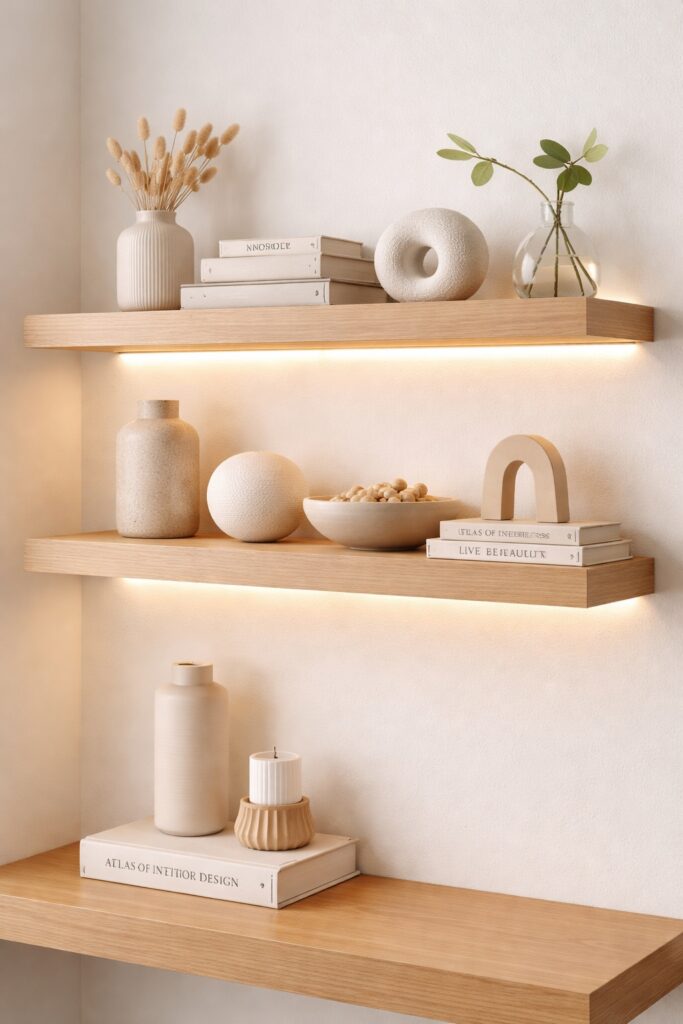
LED strip lighting is commonly used for shelves due to its low profile and flexibility. When concealed properly, it creates a soft wash of light without revealing the source.
To avoid the ‘dotted’ look, always use LED aluminium profiles with diffusers or COB (Chip-on-Board) strips.
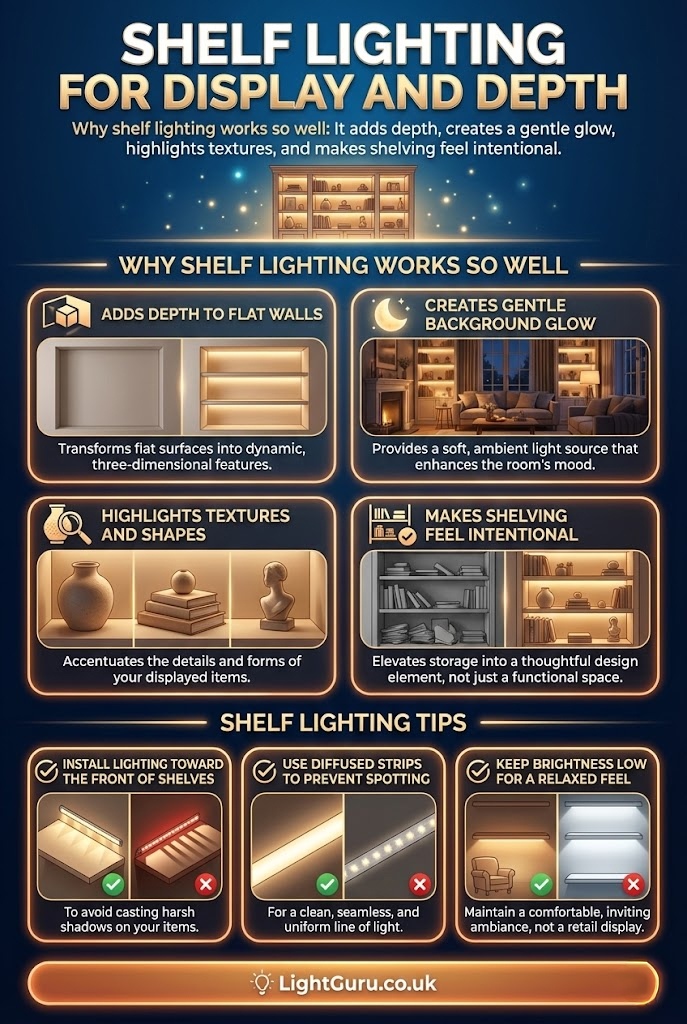
Shelf lighting tips
- Install lighting toward the front of shelves to avoid shadows
- Use diffused strips to prevent spotting
- Keep brightness low to maintain a relaxed feel
Shelf lighting works particularly well in living rooms, home offices, and dining spaces where visual interest matters.
Low profile LED strip lighting works particularly well for shelves, creating soft illumination without visible fittings.
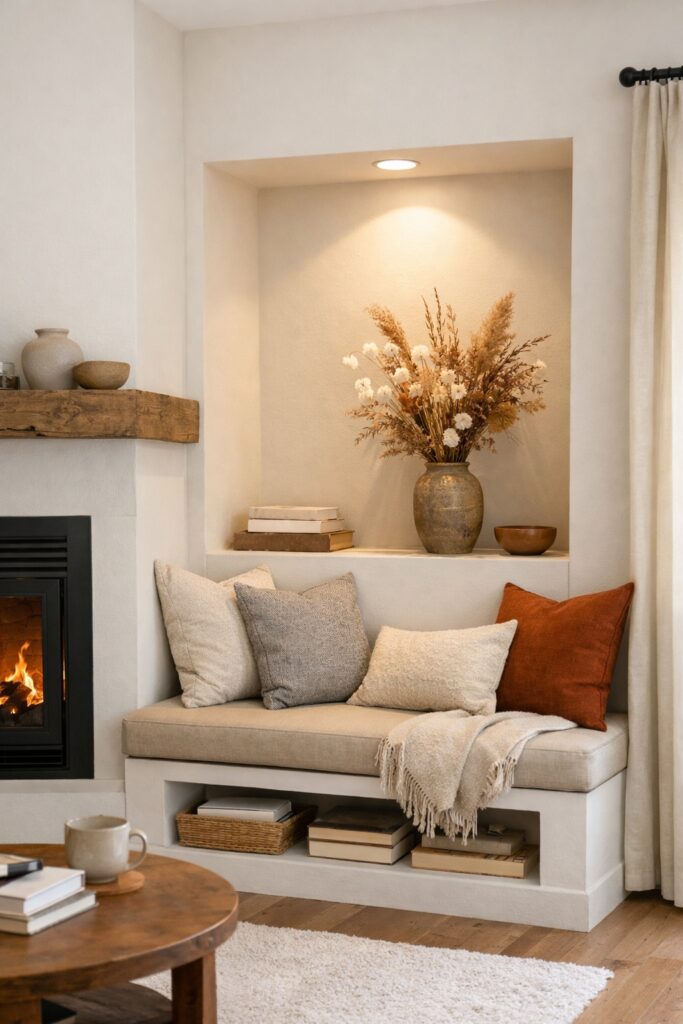
Lighting Alcoves to Create Warmth
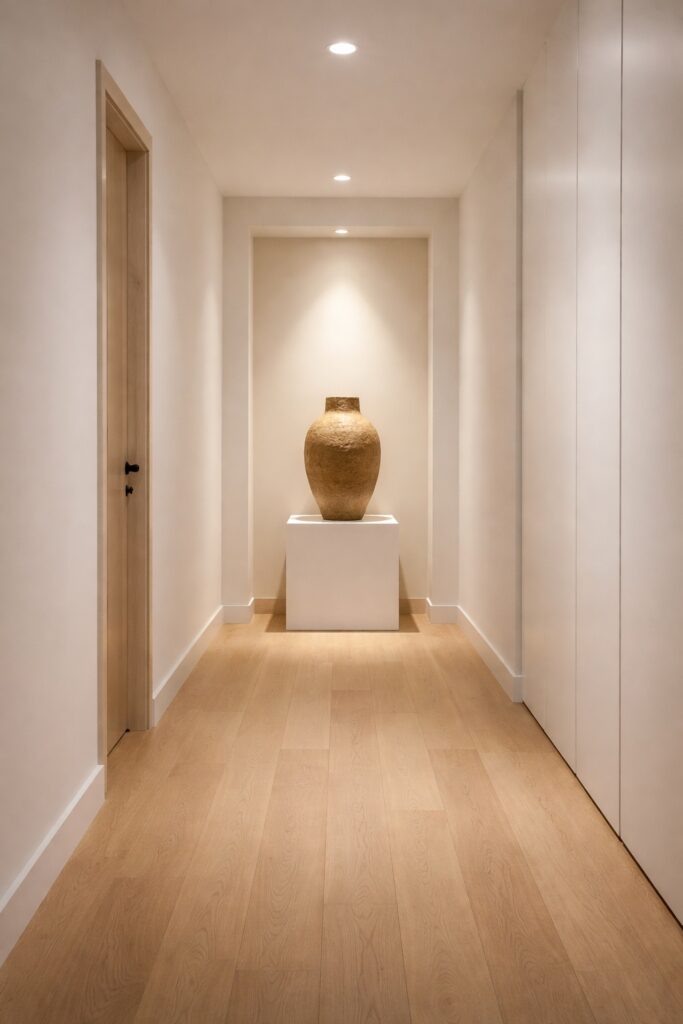
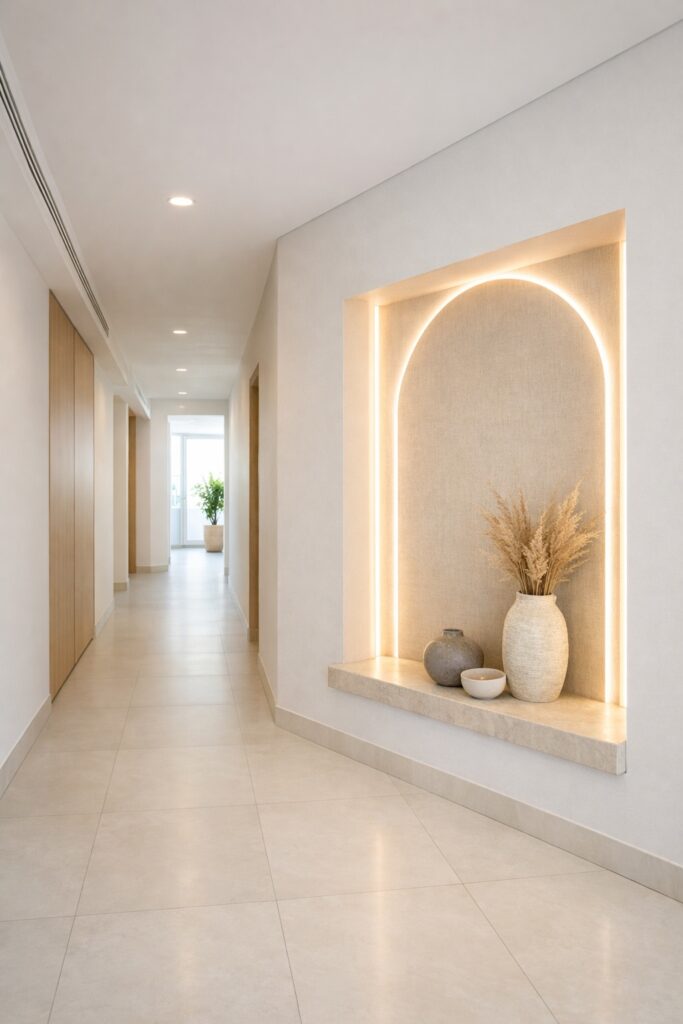
Alcoves often become dark or underused areas unless they are lit intentionally. Accent lighting helps turn alcoves into features rather than recesses.
Effective alcove lighting ideas
- Recessed spotlights in the ceiling
- LED strip lighting along the top or sides
- Wall lights positioned just outside the alcove
Soft, indirect light from recessed spotlights helps alcoves feel intentional rather than dark or unused.
Alcove lighting is especially effective in living rooms, bedrooms, and hallways, where it can highlight shelving, artwork, or architectural depth.
Choosing the Right Colour Temperature
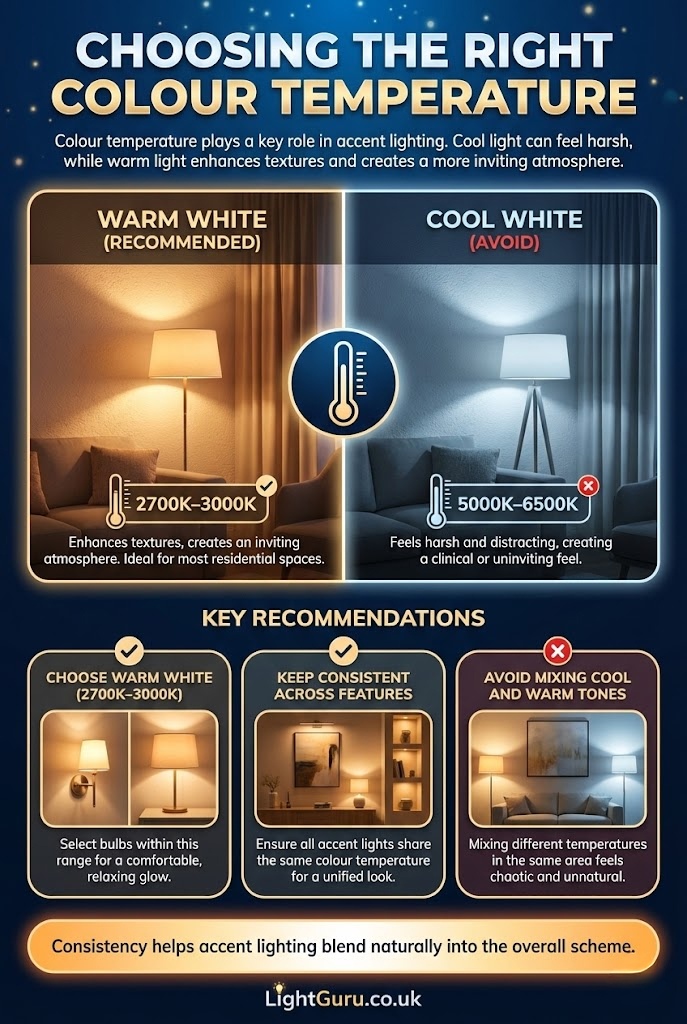
Colour temperature plays a key role in accent lighting. Cool light can feel harsh and distracting, while warm light enhances textures and creates a more inviting atmosphere.
For most residential spaces:
- Choose warm white between 2700K and 3000K
- Keep colour temperature consistent across features
- Avoid mixing cool and warm tones in the same area
Consistency helps accent lighting blend naturally into the overall scheme.
Layering Accent Lighting with Other Light Sources
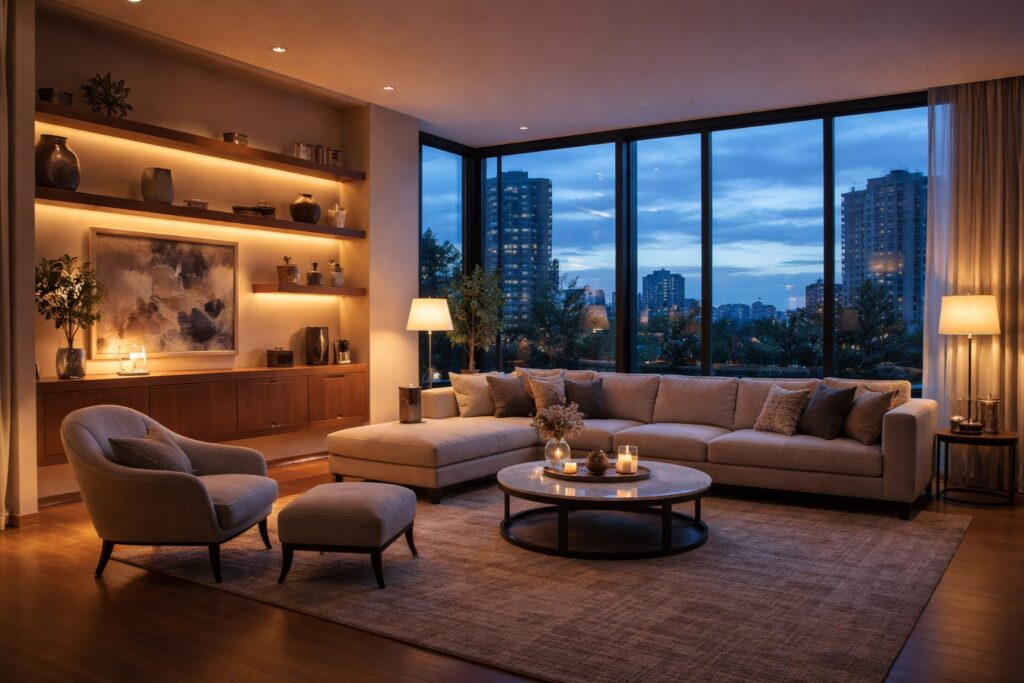
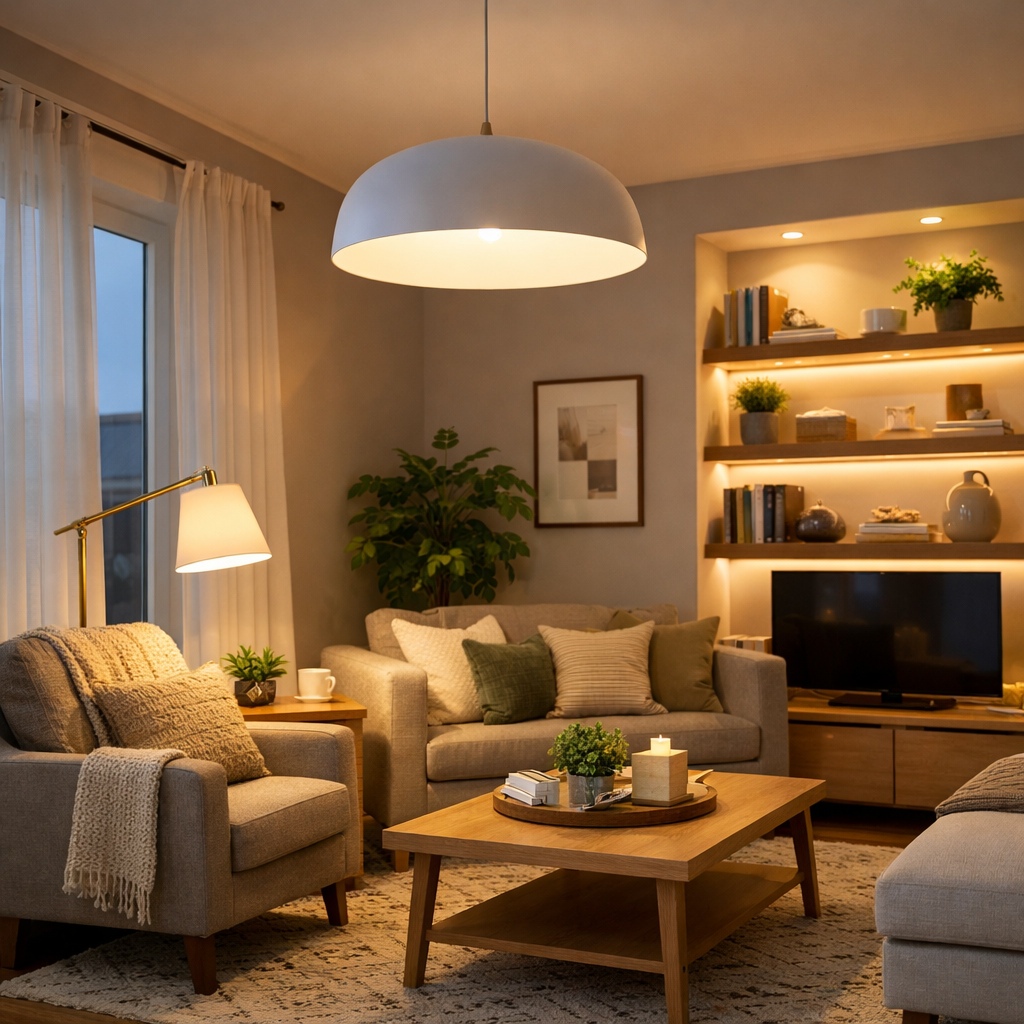
Accent lighting works best when it complements ambient and task lighting rather than competing with them.
A balanced lighting scheme includes:
- Ambient lighting for overall brightness
- Task lighting for practical activities
- Accent lighting for visual interest
When these layers work together, the space feels comfortable, functional, and visually engaging.
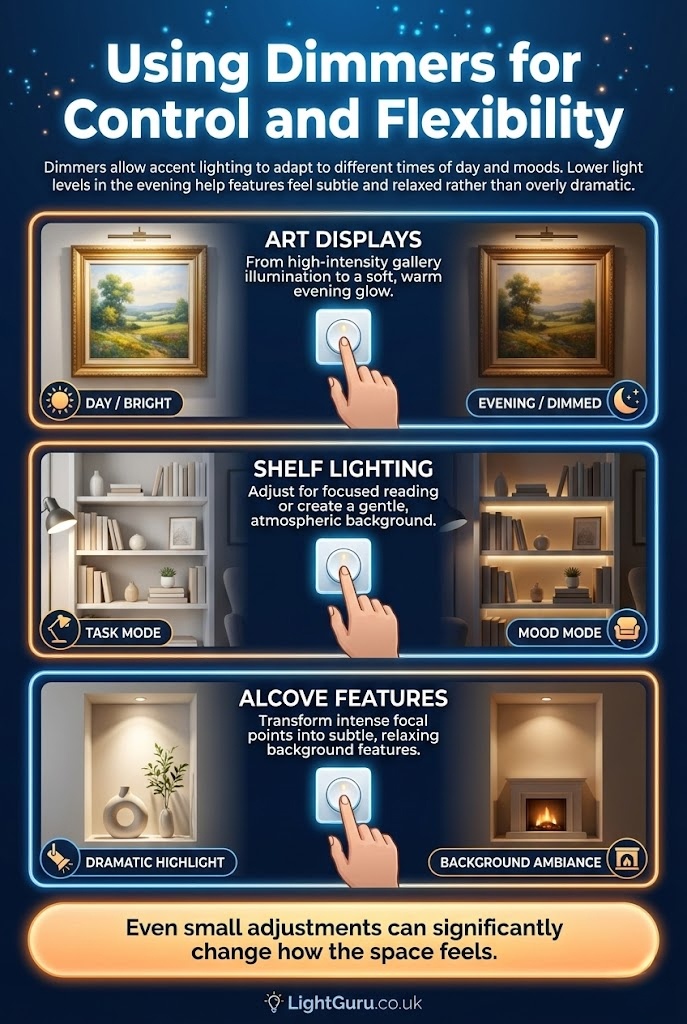
Using Dimmers for Control and Flexibility
Dimmers allow accent lighting to adapt to different times of day and moods. Lower light levels in the evening help features feel subtle and relaxed rather than overly dramatic.
Dimmable accent lighting is particularly useful for:
- Art displays
- Shelf lighting
- Alcove features used as background lighting
Even small adjustments can significantly change how the space feels.
Common Accent Lighting Mistakes to Avoid
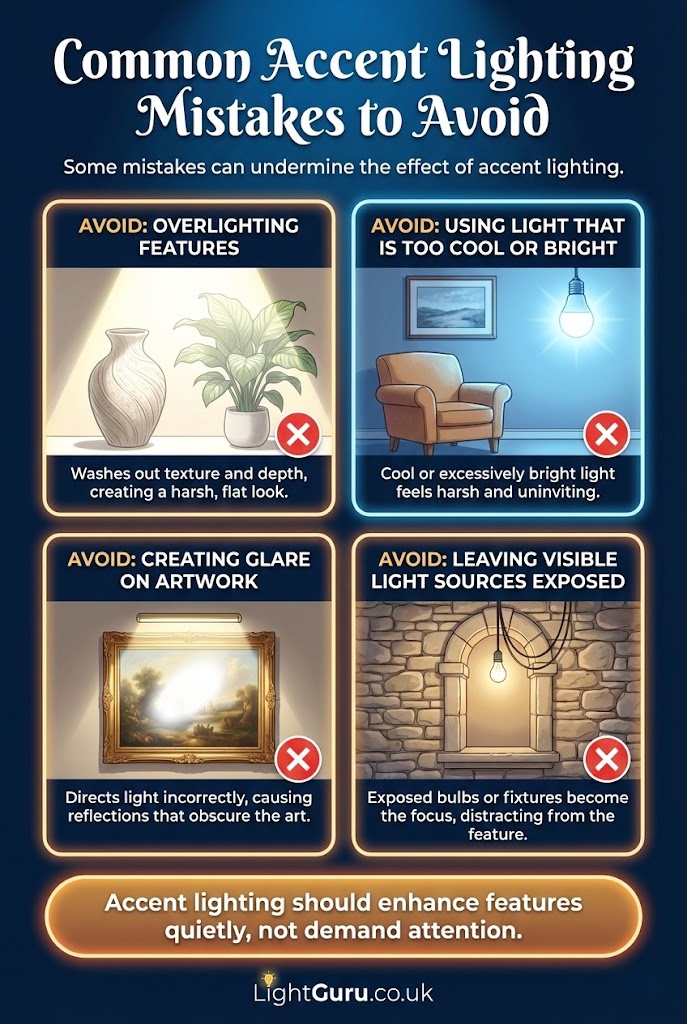
Some mistakes can undermine the effect of accent lighting.
Avoid:
- Overlighting features
- Using light that is too cool or bright
- Creating glare on artwork
- Leaving visible light sources exposed
Accent lighting should enhance features quietly, not demand attention.
Managing glare and contrast is essential for visual comfort in lighting, particularly when highlighting artwork or reflective surfaces.
How to Plan Accent Lighting in Your Home
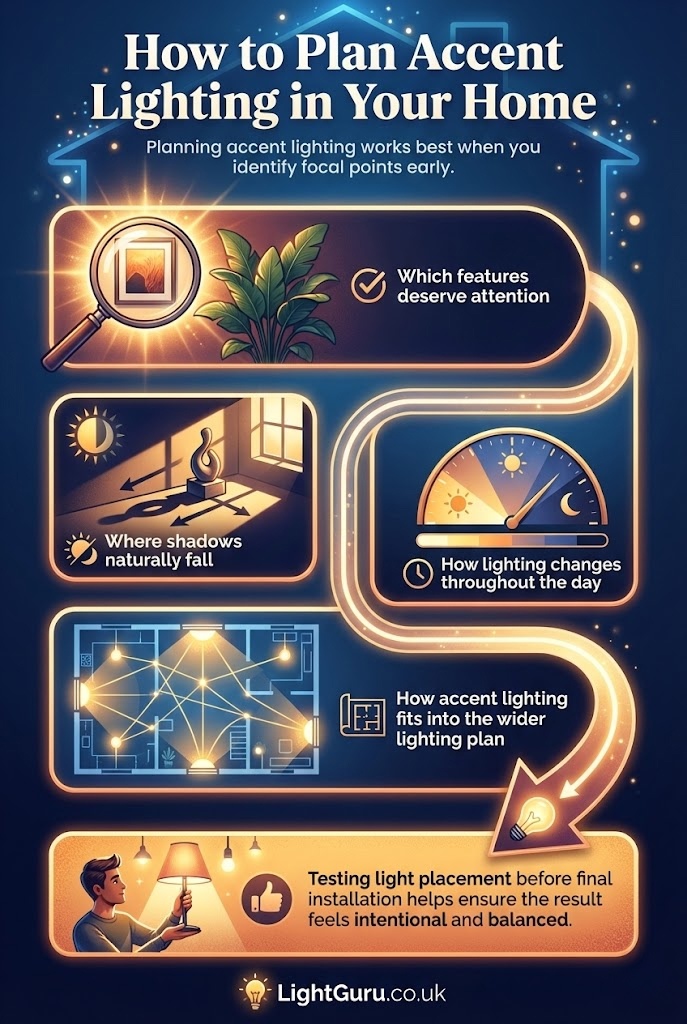
Planning accent lighting works best when you identify focal points early.
Consider:
- Which features deserve attention
- Where shadows naturally fall
- How lighting changes throughout the day
- How accent lighting fits into the wider lighting plan
Testing light placement before final installation helps ensure the result feels intentional and balanced.
Accent lighting also supports cosy home lighting by introducing soft highlights and gentle shadows that make spaces feel warmer and more inviting.
FAQs: Accent Lighting for Art, Shelves & Alcoves
What is accent lighting used for?
Accent lighting is used to highlight features such as artwork, shelving, alcoves, and architectural details, adding depth and visual interest to a space.
What type of lighting is best for artwork?
Adjustable spotlights and picture lights are commonly used for artwork, as they allow precise positioning and even illumination.
Can LED strip lights be used for shelves?
Yes, LED strip lighting is ideal for shelves when concealed properly, providing soft, even illumination without visible fittings.
Should accent lighting be brighter than ambient lighting?
Accent lighting is usually slightly brighter than ambient lighting in the area it highlights, but should not overpower the room.
What colour temperature works best for accent lighting?
Warm white light between 2700K and 3000K works best for most residential accent lighting applications.
Conclusion
Accent lighting for art, shelves, and alcoves adds depth, warmth, and character to interiors when used with care. By highlighting key features and introducing soft contrast, accent lighting helps spaces feel more layered and thoughtfully designed.
Whether illuminating artwork, enhancing shelving displays, or bringing alcoves to life, subtle lighting choices make a significant difference. When planned as part of a wider lighting scheme, accent lighting becomes an essential tool for creating inviting, visually balanced homes.