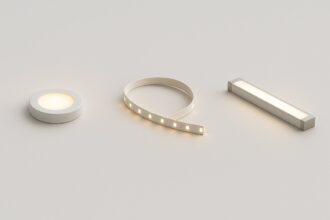
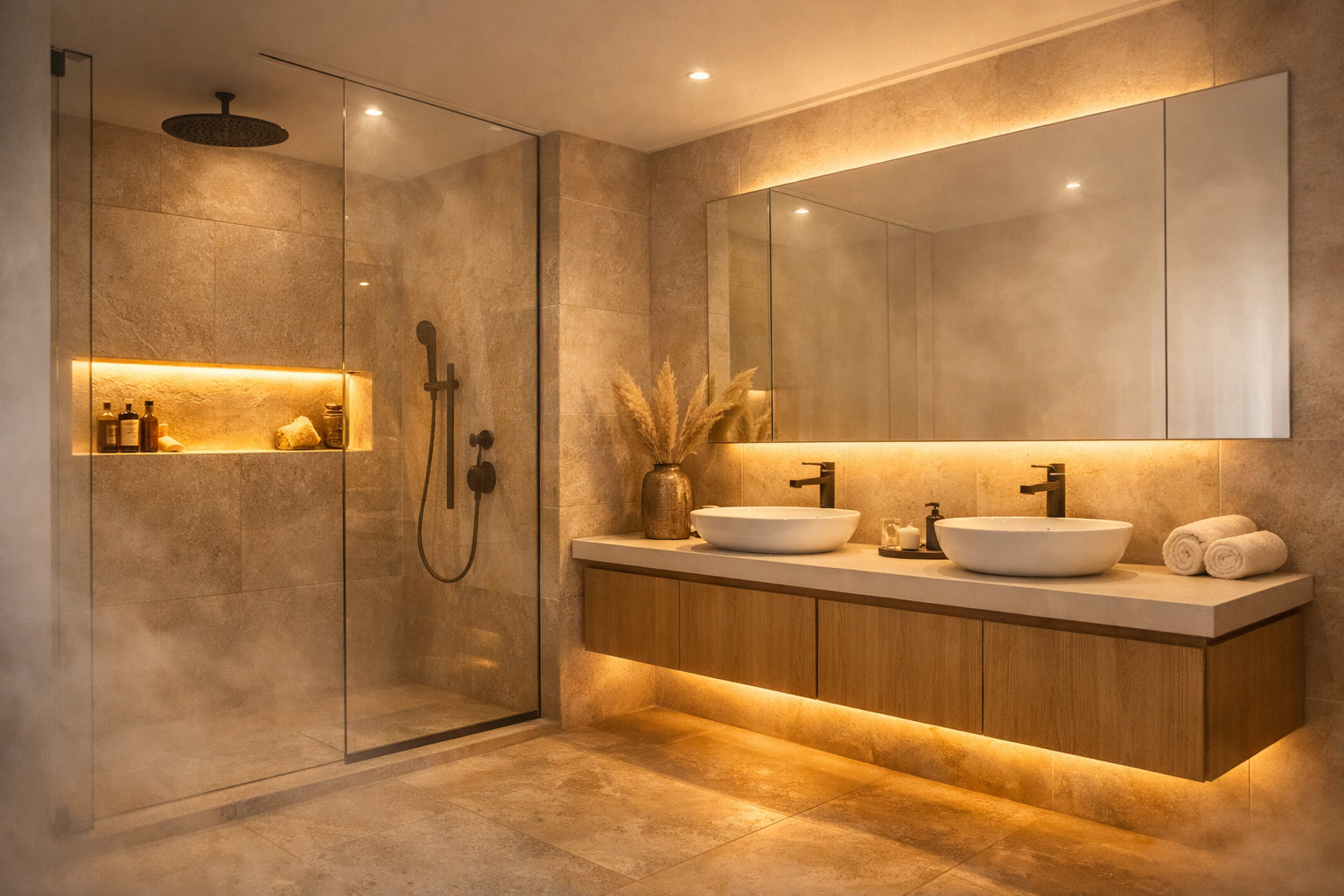
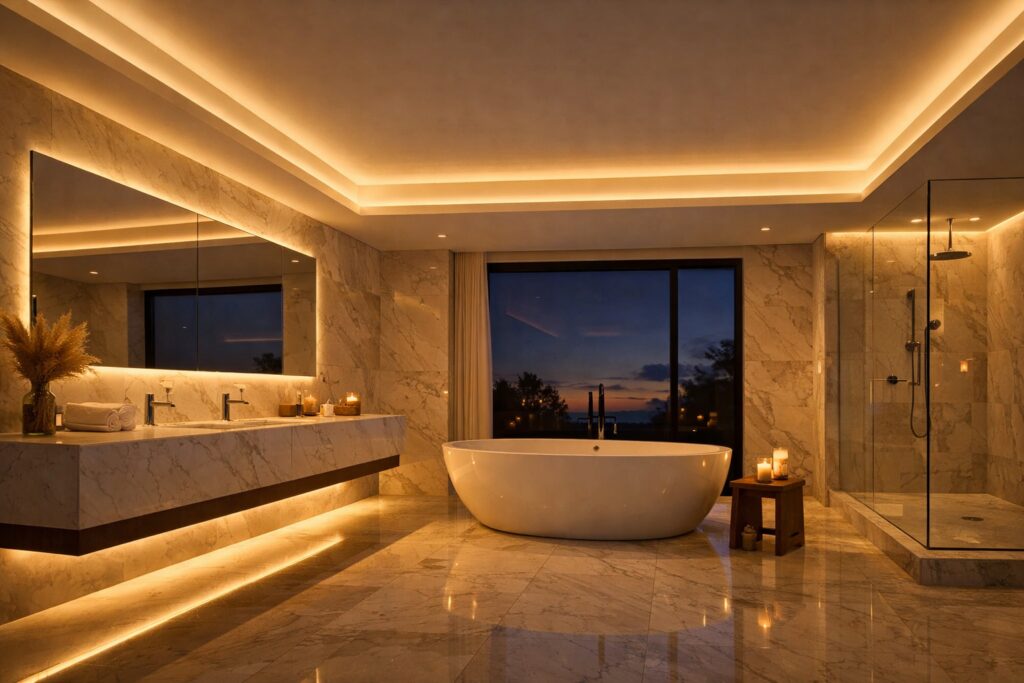
LED strip lighting has become a popular way to soften bathroom lighting and add a more contemporary feel to the space. When placed behind mirrors, beneath a vanity or around a ceiling perimeter, the light spreads gently and helps the room feel calmer and more welcoming.
Many homeowners worry about whether strips are safe in a bathroom, and the answer is yes – as long as the correct IP rating and bathroom zone rules are followed. This guide explains where LED strips can be used safely, what ratings to look for and the placements that work well in typical UK bathrooms.
This guide focuses on one specific aspect of bathroom lighting design. For full room planning, layout, and safety zones, see our complete Bathroom Lighting Guide.
Table of Contents
1. Why LED strips work well in bathrooms
In recent bathroom renovations we’ve seen across the UK, LED strips are often used to soften the light between fixed downlights, helping to reduce shadows and make small rooms feel larger.
LED strips create a type of light that no downlight or sconce can match.
Instead of a single beam, they produce a long, soft line of illumination that glows gently across tiles, mirrors and textures.
They’re perfect for:
- Evening baths
- Highlighting features
- Creating soft, indirect ambience
- Making small bathrooms feel bigger
- Adding luxury without big renovation costs
LED strips can make even a standard UK bath feel like a spa hotel. And because the light is tucked away, the room feels cleaner, calmer and far less clinical.
If you are unsure where lighting can be installed safely, it helps to understand bathroom electrical zones and what they mean for lighting placement before choosing LED strips.
Moisture protection is equally important, so knowing how IP ratings apply to bathroom lighting can prevent premature failures and safety issues.
2. Safe places to use LED strips in a bathroom
Installers often recommend testing the strip position with a temporary LED tape before fixing it in place. It’s an easy way to see how the light falls on tiles or mirrors.
LED strips are flexible, discreet and easy to hide – which opens up lots of placement possibilities.
Here are the most popular safe places to install them:
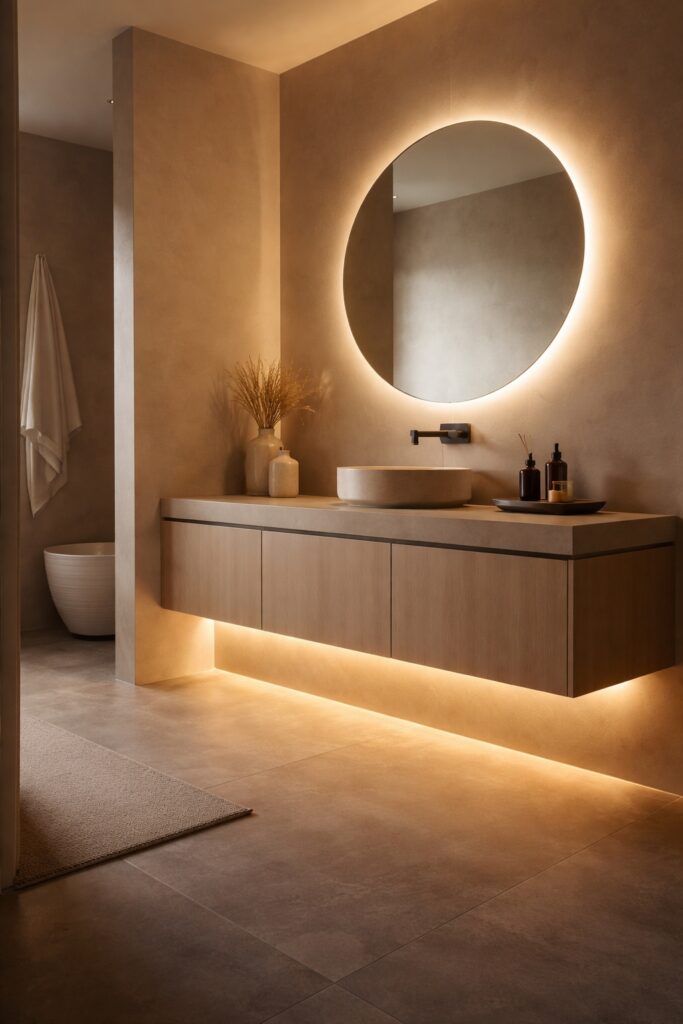
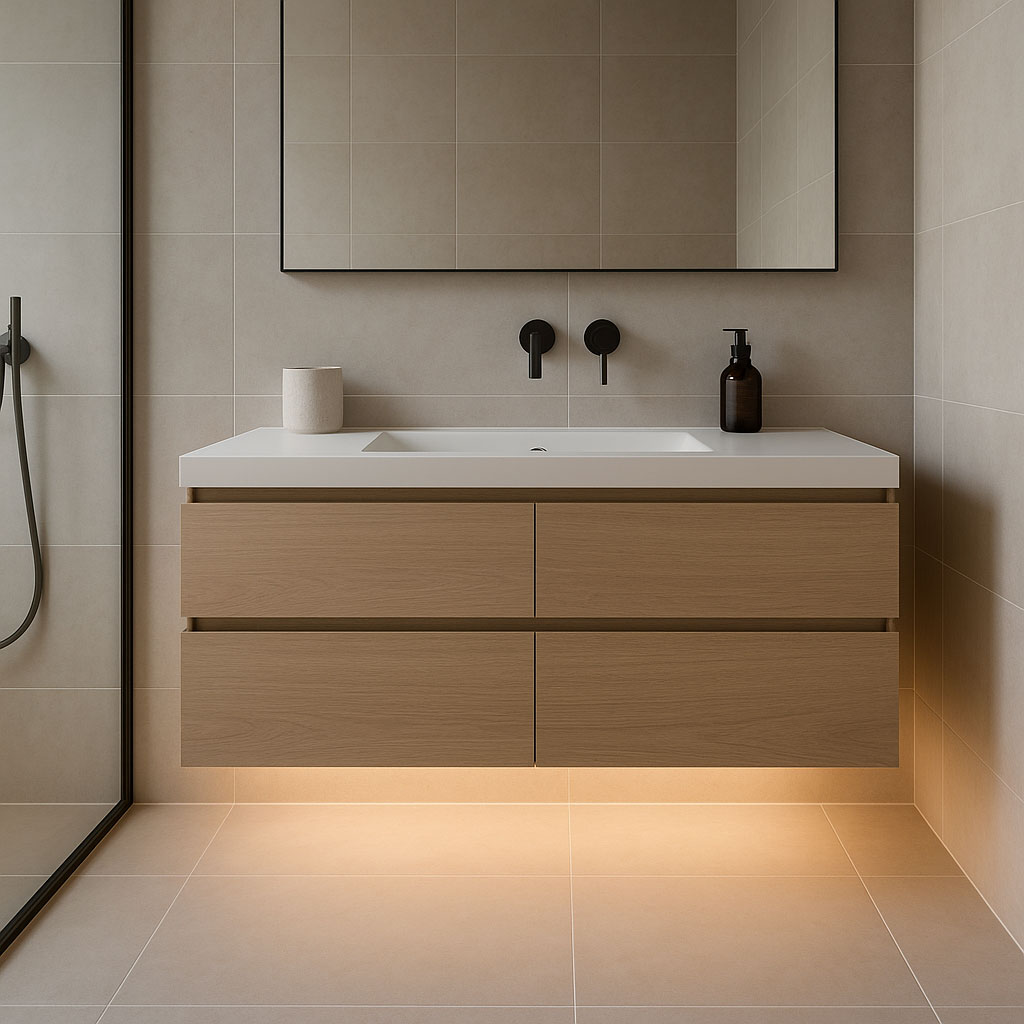
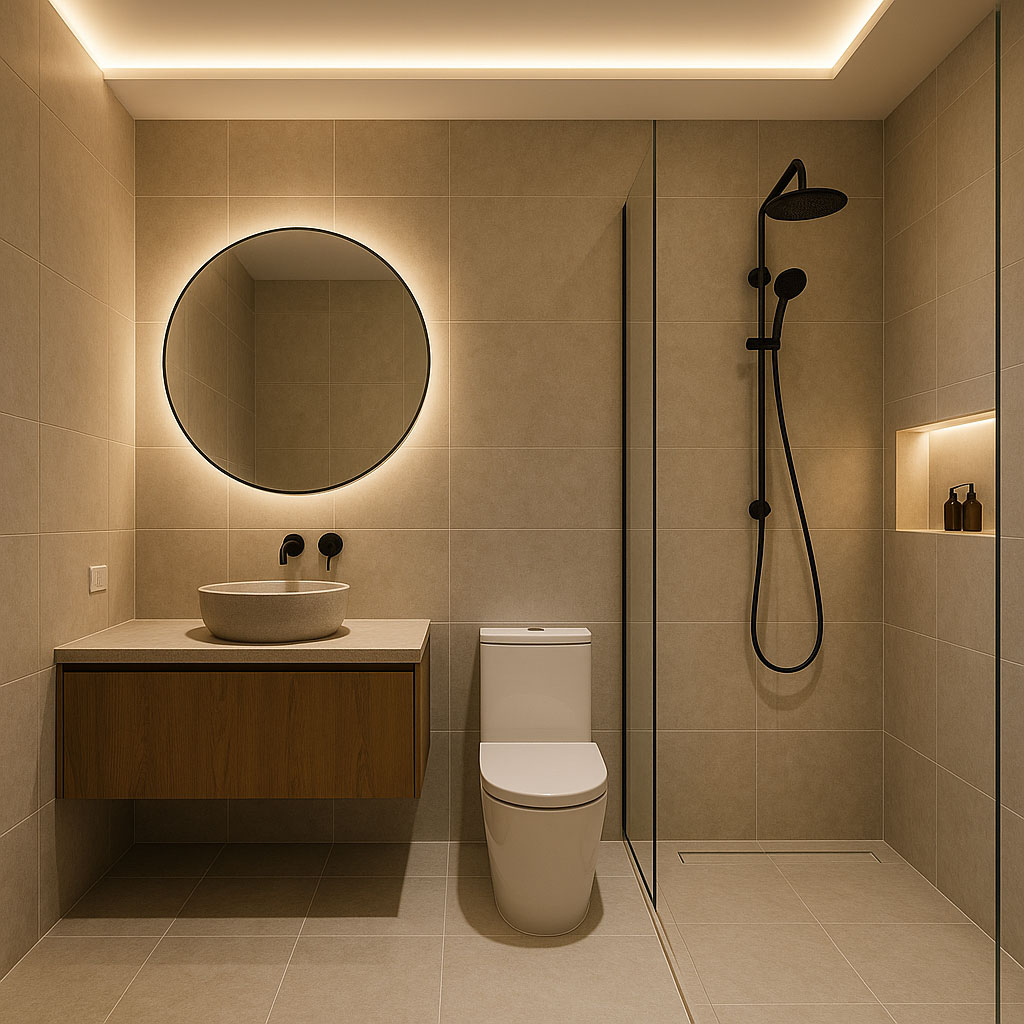
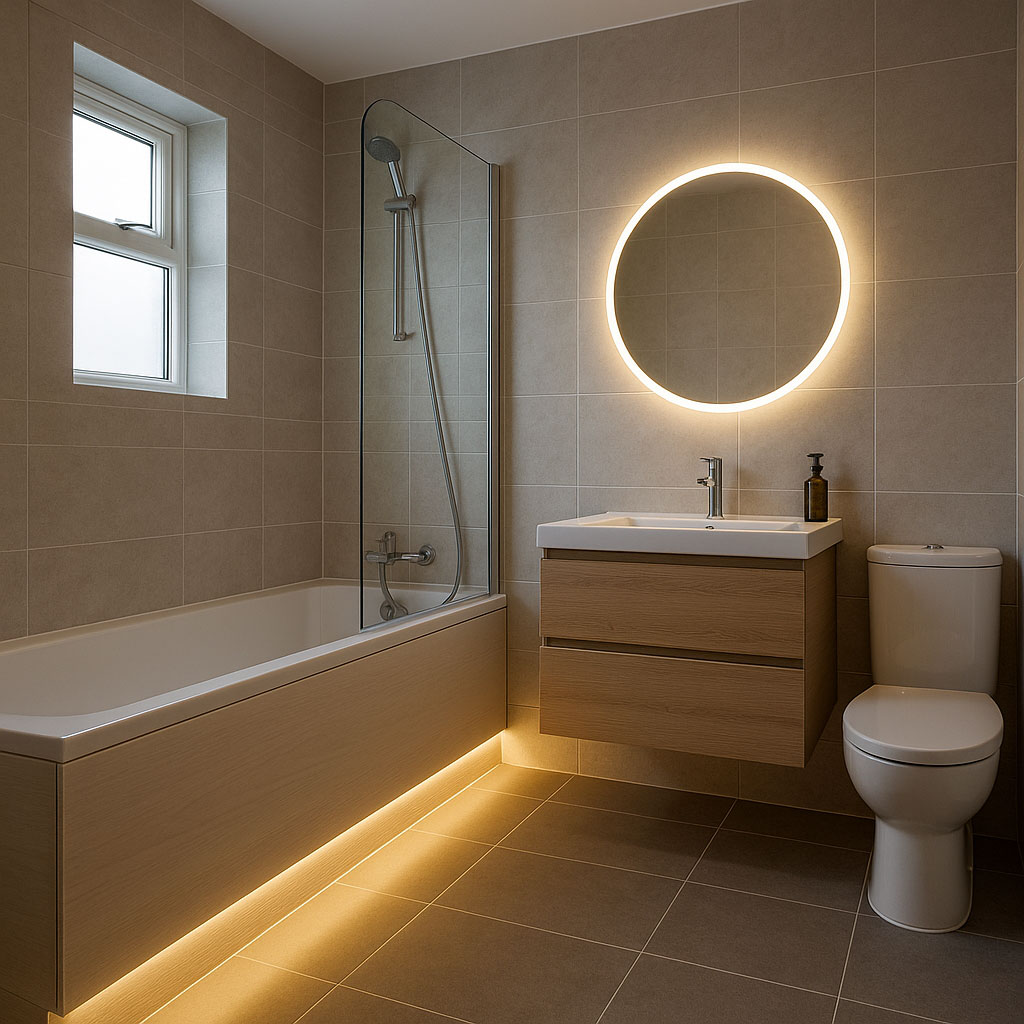
- Under a floating vanity
Creates a gentle night-time glow and makes the room feel lighter. - Behind or around a mirror
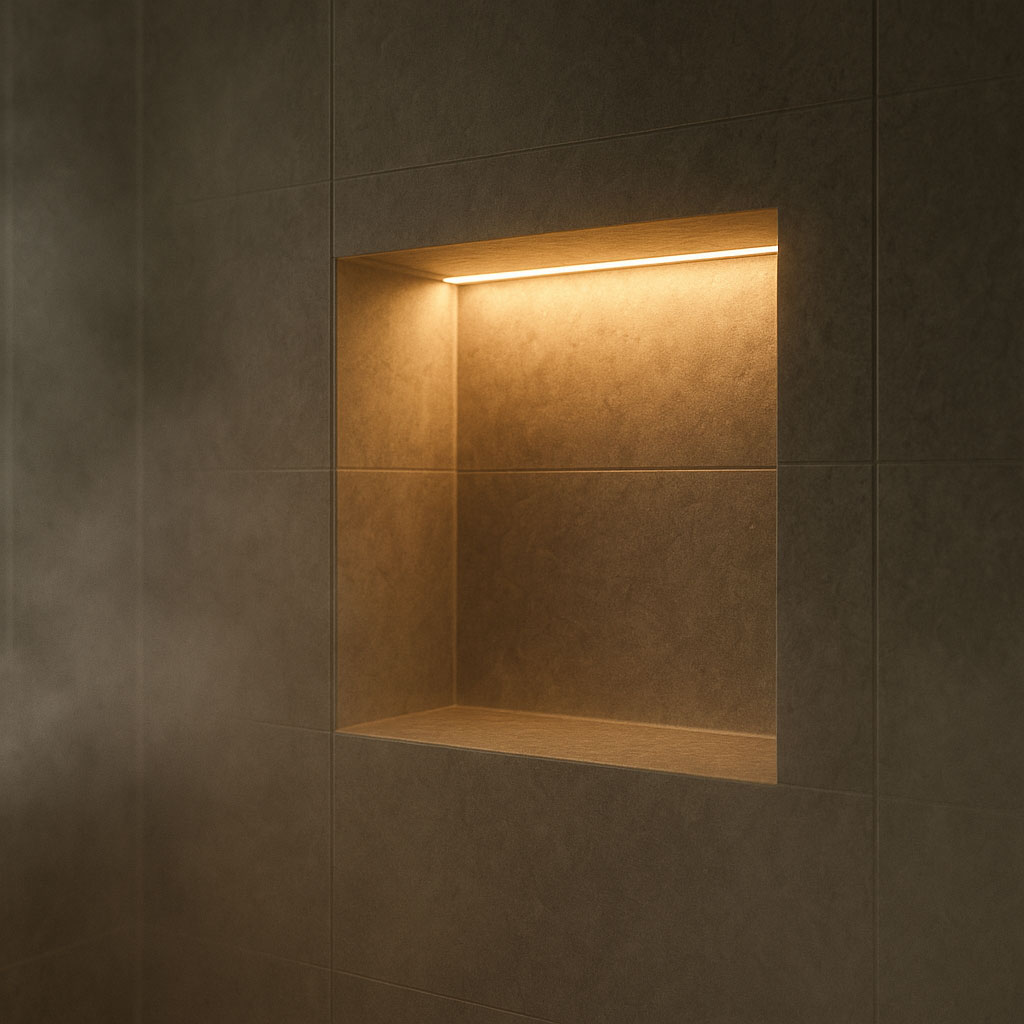
Perfect for a bright yet shadow-free face light. - Inside shower niches (IP-rated only)
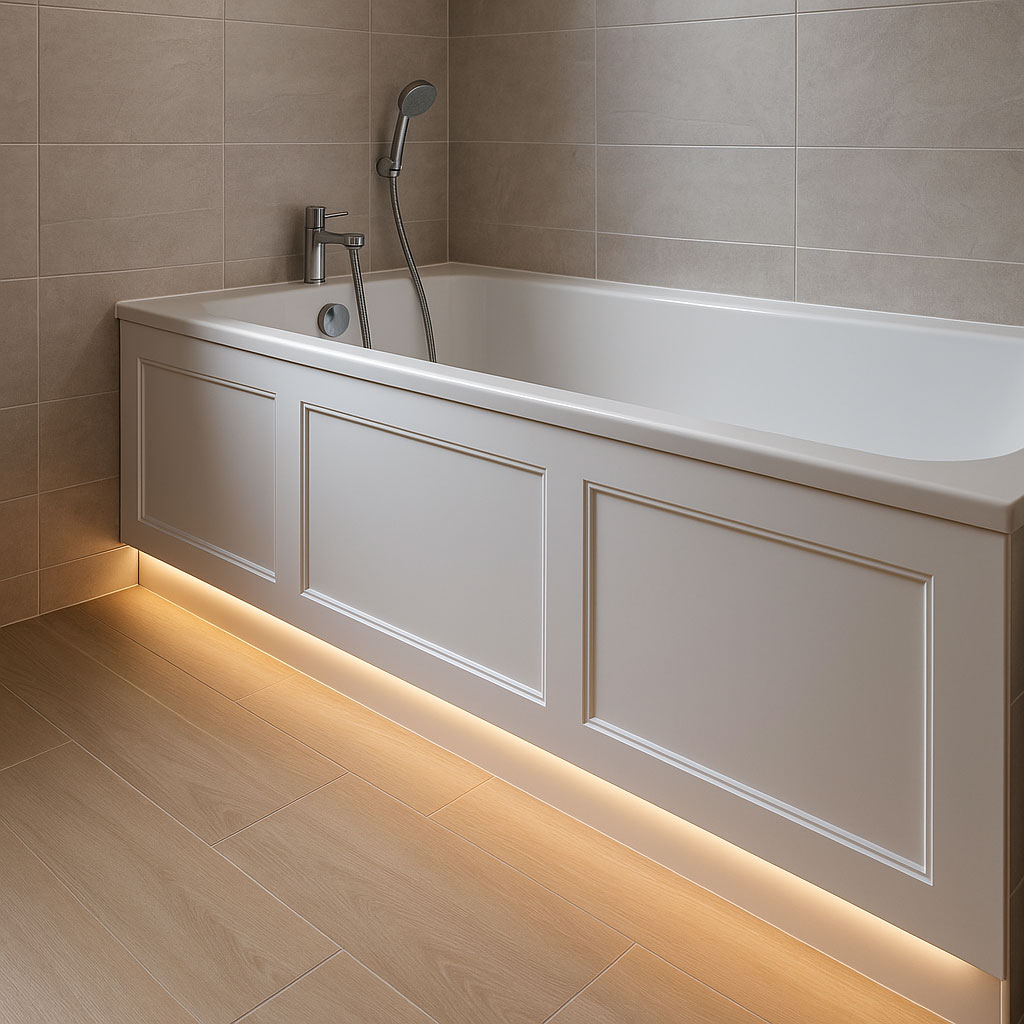
Creates mood and makes shelves practical at night. - Along the bath panel
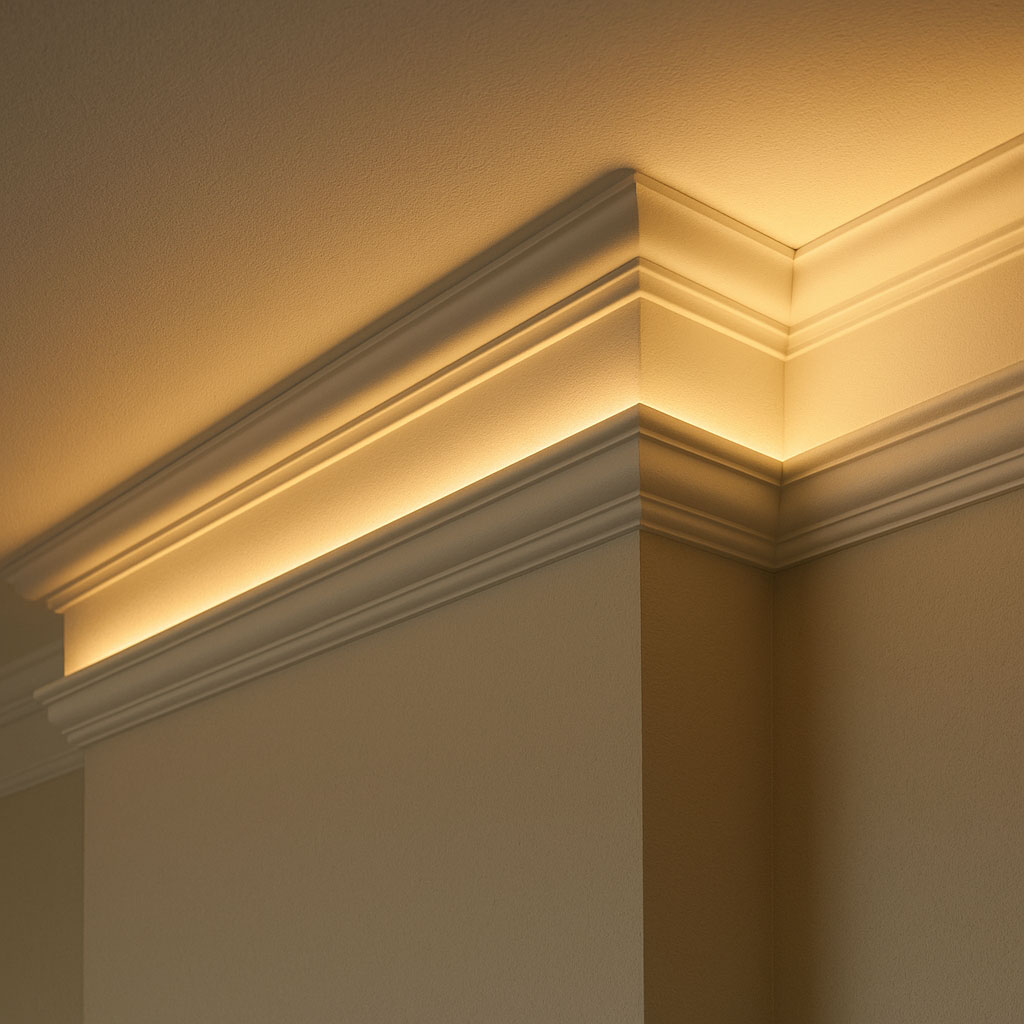
Beautiful for evening relaxation. - Ceiling coving or perimeter
Adds height and soft, indirect light. - Under seating or shelving
Enhances texture and creates cosy zones.
Where NOT to install them:
- Directly inside Zone 0 (inside a bath or shower base)
- In open splash zones unless correctly IP-rated
- On porous surfaces where adhesives may fail
Ceiling perimeter strips help lift the space visually and are often used in bathroom ceiling lighting for smaller rooms.
3. Choosing the correct IP rating
One mistake we regularly see is homeowners choosing IP20 strips for areas that get more steam than expected. Bathrooms fluctuate in humidity, so waterproof coatings help maintain longevity even outside strict zone areas.
IP ratings matter, especially for flexible strip lighting, because strips often sit close to water.
This is where understanding bathroom IP ratings and moisture protection levels becomes essential for long term reliability.

Here’s the simple rule:
Zone 0:
Inside a bath or shower enclosure floor
> LED strips generally not recommended unless specialist IP68 systems.
Zone 1:
Above a bath or shower, up to 2.25m
> Use IP65 waterproof LED strips.
Zone 2:
60cm around baths, basins and showers
> Use IP44 or IP65 if close to spray.
Outside zones:
Anywhere else not exposed to direct water
> Standard or IP44 strips are fine, but IP65 lasts longer in steamy rooms.
Look for these key labels:
- Silicone-coated strips (water-resistant)
- Fully encapsulated strips (waterproof)
- Aluminium channels with diffusers (protect against steam)
A diffuser also makes the light smoother and reduces visible “dotting”.
Always keep drivers accessible and follow bathroom lighting electrical safety guidance when planning concealed installations.

4. Bathroom LED strip lighting ideas
Here are some practical placement ideas that work well in different styles of bathrooms.
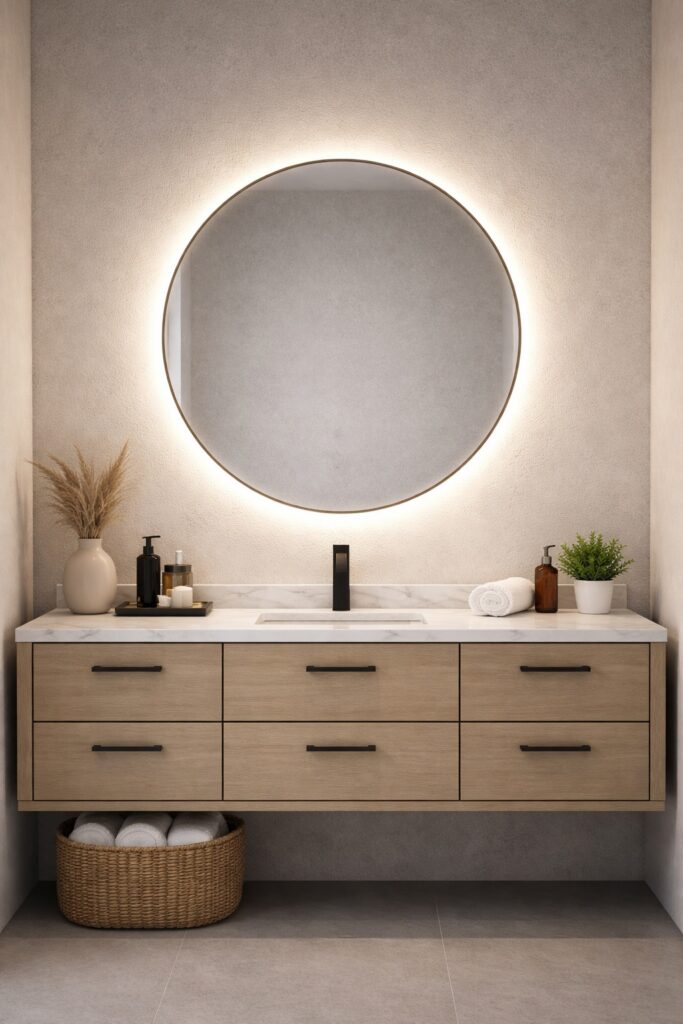
Mirror Backlighting
Creates a halo effect that eliminates harsh shadows. Amazing for makeup and shaving.
Warm 3000K strips work particularly well for this because they soften shadows around the face.
For most bathrooms, warm white tones work best, and choosing the right colour temperature for bathroom lighting makes a noticeable difference.
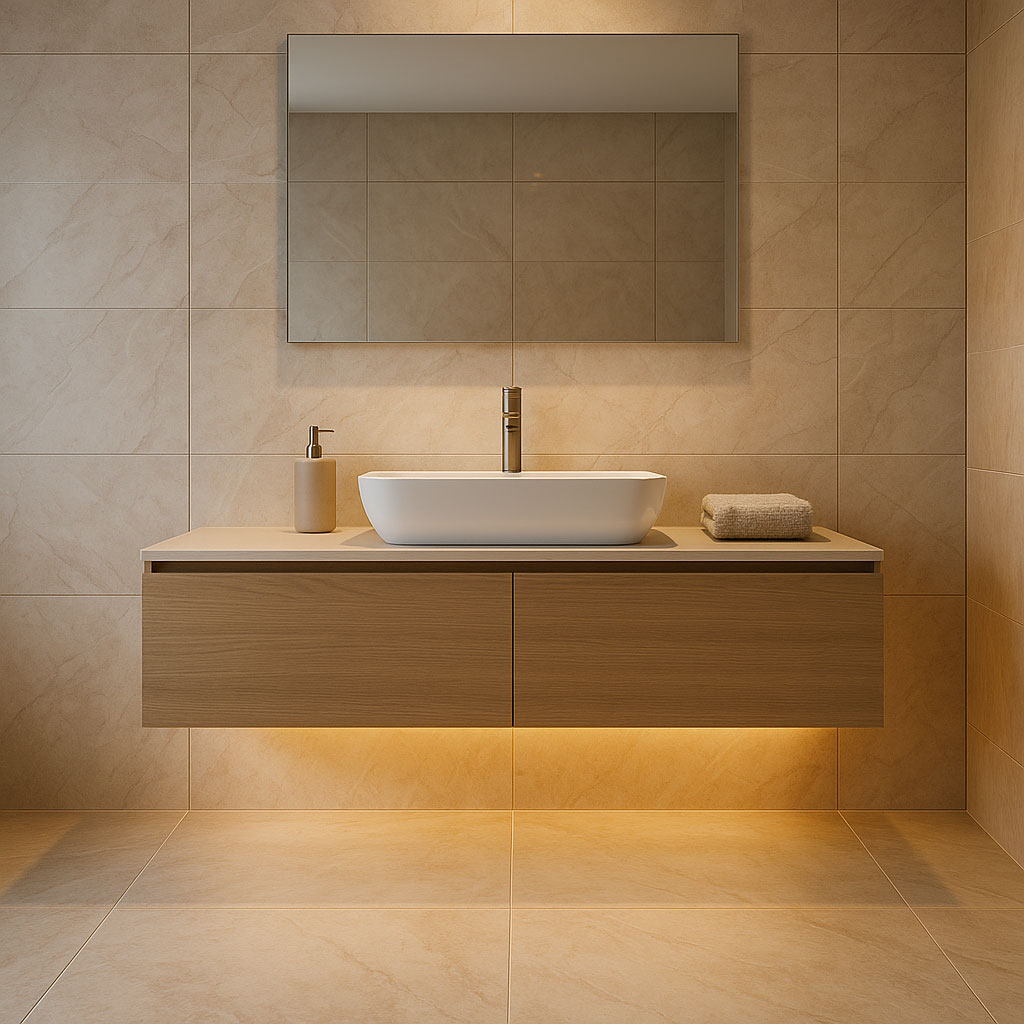
Under-Vanity Glow
Lift a floating vanity visually and create a night-time path light.
On textured tiles, the glow tends to emphasise the surface rather than flatten it.


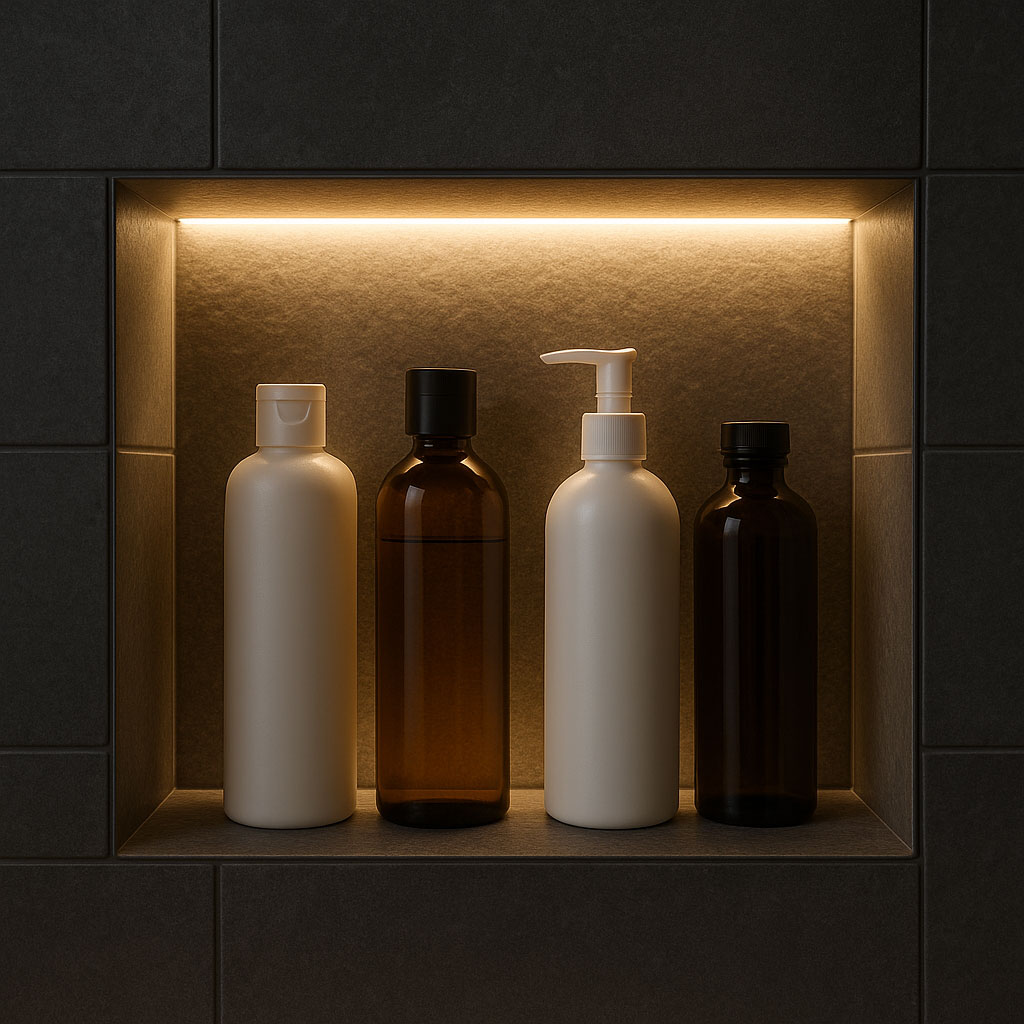
Shower Niche Lighting
Highlight your shampoo, tiles and tone.
Use IP65 or IP67 for full waterproofing.
Bath Panel Strip
Adds hotel-style glow for evening baths.
Warm white is key – cool white makes water look grey.

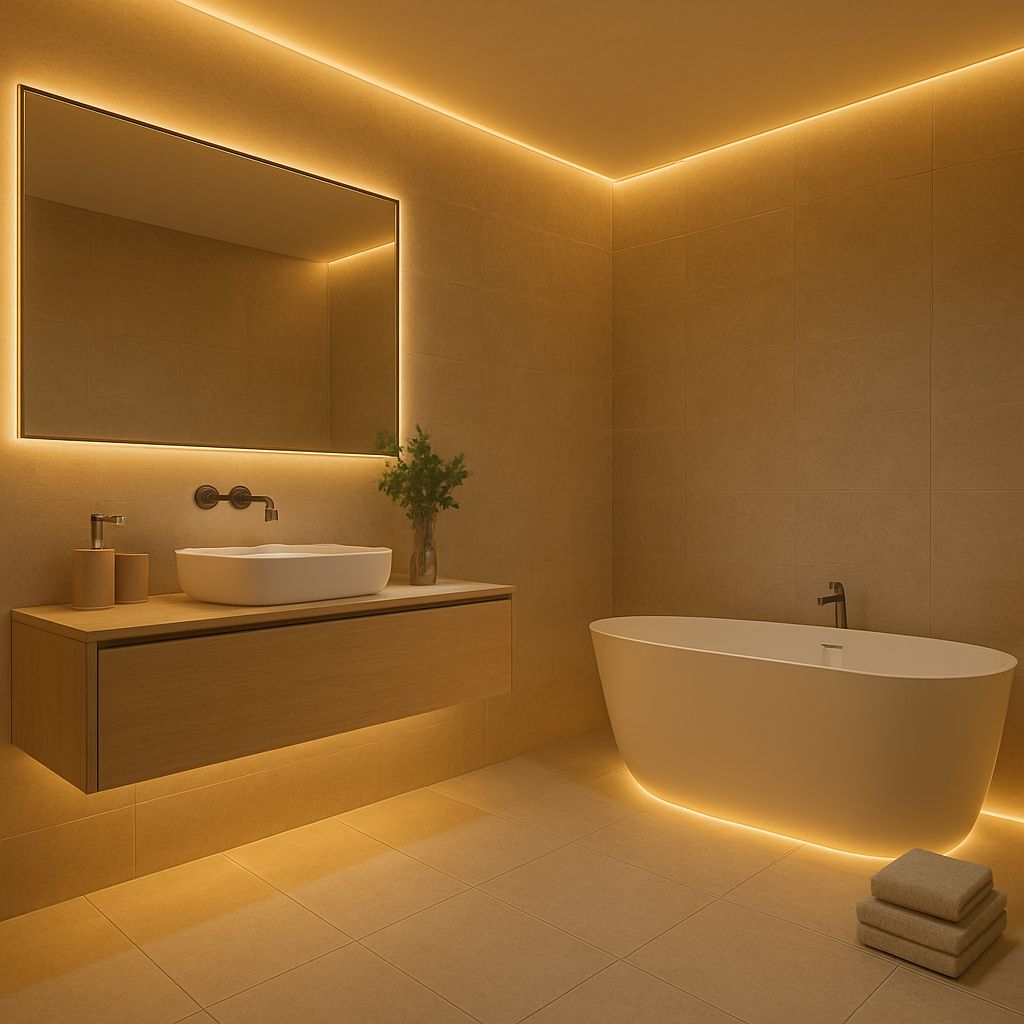
Ceiling Perimeter Glow
Lifts the ceiling and makes small bathrooms feel taller.
Perfect for anyone wanting a soft, indirect spa vibe.
Under Bench or Shelf Lighting
Great in wet rooms or luxury ensuites.
Adds depth and clean shadow play.
5. Practical installation tips for UK homes
LED strips look simple, but small details matter for safety and longevity.
- Always use aluminium channels
They improve heat dissipation and protect strips from steam.
- Avoid visible dots
Use diffusers for a smooth, seamless glow.
- Choose warm white (2700–3000K)
Flattering, cosy, spa-style
- Use a proper LED driver
Don’t run strips directly from the mains. - Keep drivers accessible
Never bury drivers behind tiles or in sealed voids – they must be reachable for replacement. - Use RCD protection
UK bathroom essential for electrical safety.

6. Examples for different types of bathrooms
Small Bathroom
- Backlit mirror
- Under-vanity strip
- Makes the room feel taller and lighter.
We often see this combination used in new-build flats where natural light is limited.
Ensuite
- Shower niche glow
- Perimeter ceiling strip
- Adds romance and warmth without clutter.
Family Bathroom
- Under-bath glow
- Soft mirror lighting
- Works beautifully for bedtime bath routines.
Wet Room
- IP67 niche strip
- Under-bench glow
- Transforms steam into atmosphere.
FAQs – Frequently Asked Questions
Are LED strips safe in showers?
Yes – use IP65 or IP68 strips and follow correct zoning.
Can LED strips go behind tiles?
Only if placed in accessible channels, never sealed inside walls.
Warm or cool light?
Warm white 2700–3000K feels calm and flattering.
Do LED strips need a diffuser?
Highly recommended – avoids harsh dots and looks more premium.
Can I dim bathroom LED strips?
Absolutely – it creates beautiful evening ambience.
Conclusion
LED strips can add gentle, indirect lighting to a bathroom when installed with the correct IP rating and placed thoughtfully. They work well behind mirrors, beneath vanities and inside niches, helping to create a more comfortable atmosphere without relying solely on overhead fittings.
If you’re planning a renovation, consider how the strips will look at night as well as during the day, and always ensure drivers and electrical components remain accessible for future maintenance.
If you are planning a renovation, taking time to plan a bathroom lighting layout properly will help ensure LED strips enhance the space without compromising safety.