Bathroom lighting layouts affect how evenly light is distributed across the room and how practical the space feels for everyday use. In UK bathrooms, a single light source is often not enough to provide both functional and comfortable lighting throughout the day.
This guide focuses on one specific aspect of bathroom lighting design. For full room planning, layout, and safety zones, see our complete Bathroom Lighting Guide.
Table of Contents
1. The three layer rule
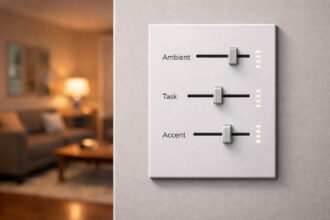
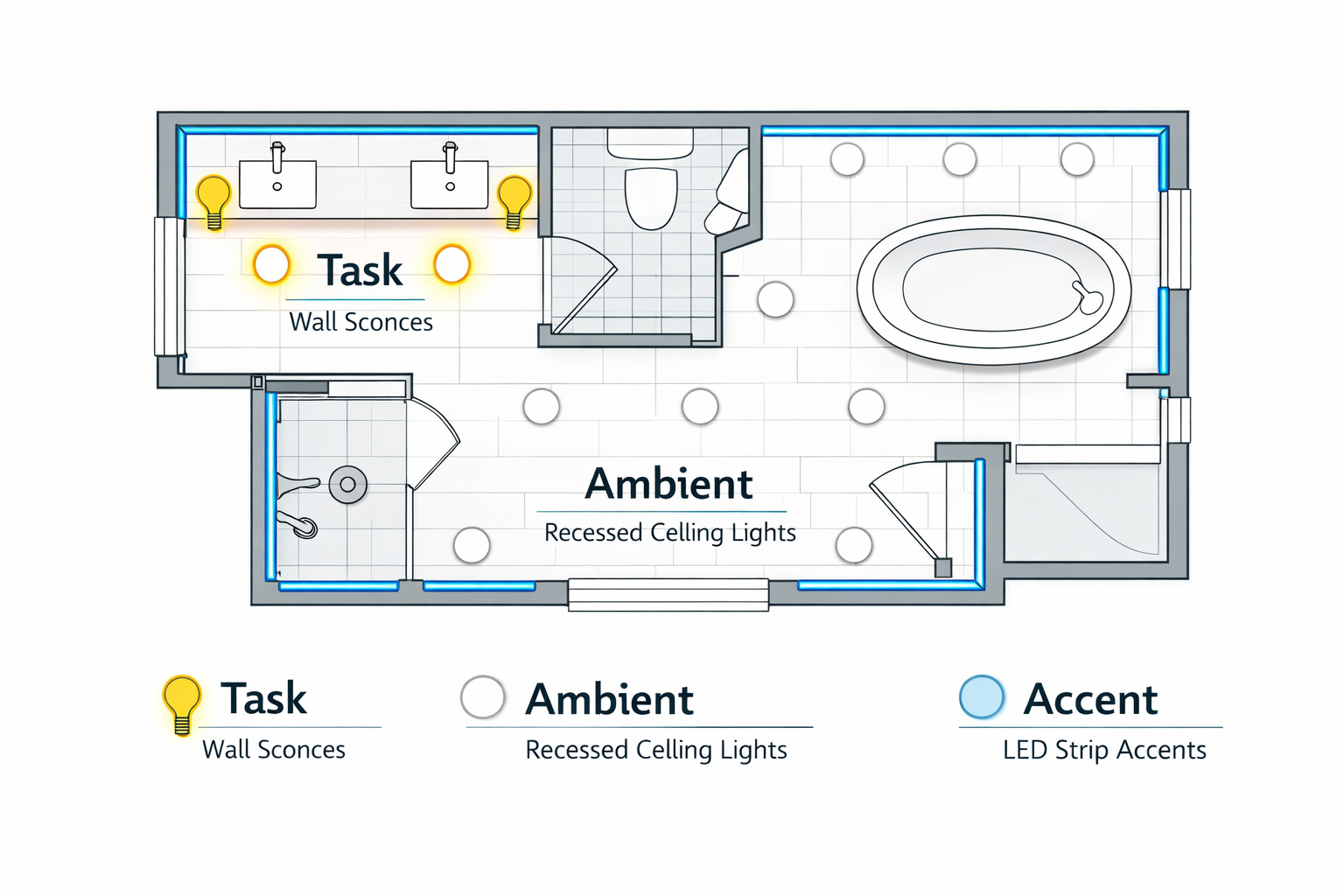
If you remember only one thing from this article, let it be this. A bathroom feels best when lighting comes from more than one place. One bright ceiling light can feel harsh. One mirror light feels flat. Combining these layers helps create more even and usable lighting.
The three layers you need:
- Ambient – main light, usually ceiling
- Task – face level mirror lighting
- Accent – mood lights, niches, plinths, LED strips
Many UK bathrooms only include the first layer, but adding task and accent lighting can significantly improve balance.
Make sure you check our Bathroom Zones & IP Ratings Guide before buying
2. Ceiling layout that always works
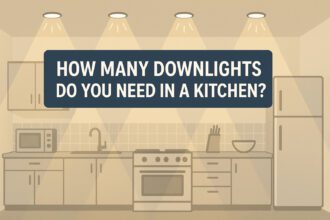
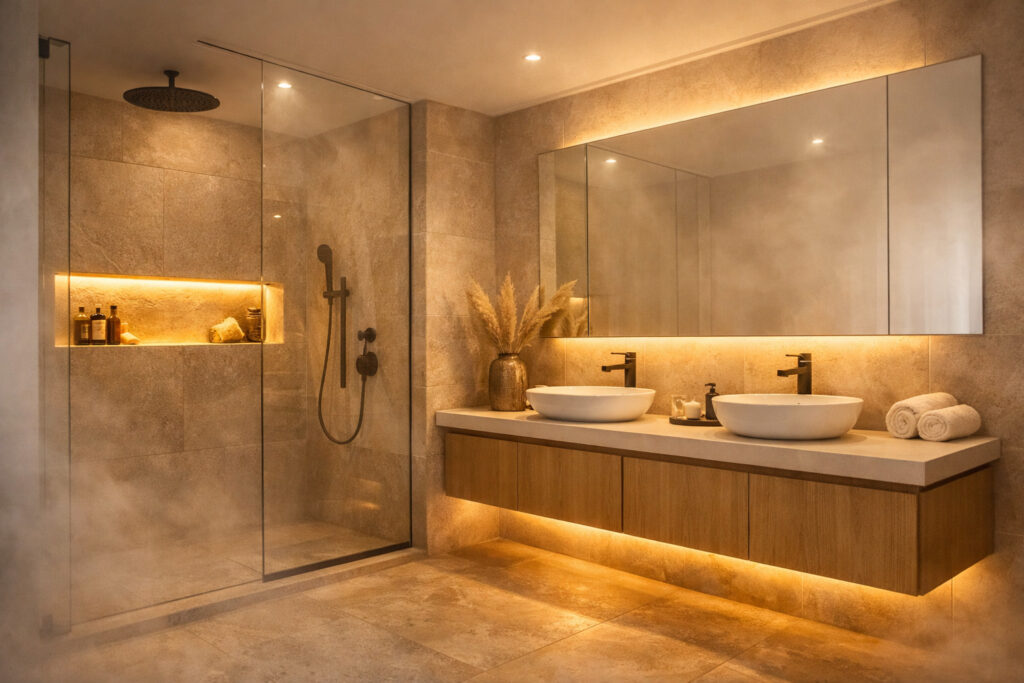
The ceiling is your foundation layer – get it right and everything else builds beautifully. A layout that works in almost every UK bathroom is perimeter spacing rather than one intense centre spotlight. This washes light down the walls, makes the room feel taller and removes harsh overhead shadows.
A layout that rarely fails:
- Two downlights over the shower zone
- Two more in line with the vanity or walkway
- Optional centre light or pendant if the room is large
Try to avoid a single bright point overhead. It can create harsh downward shadows that feel uncomfortable. Soft, even lighting is your friend.
More layout tips: /how-to/plan-bathroom-lighting/
3. Mirror & vanity placement for clear light
This area has the greatest impact on task lighting quality. It’s where you check your skin, trim your beard, apply mascara, wash your face after a long day – Lighting here should provide even illumination across the face.
Two styles that always look good:
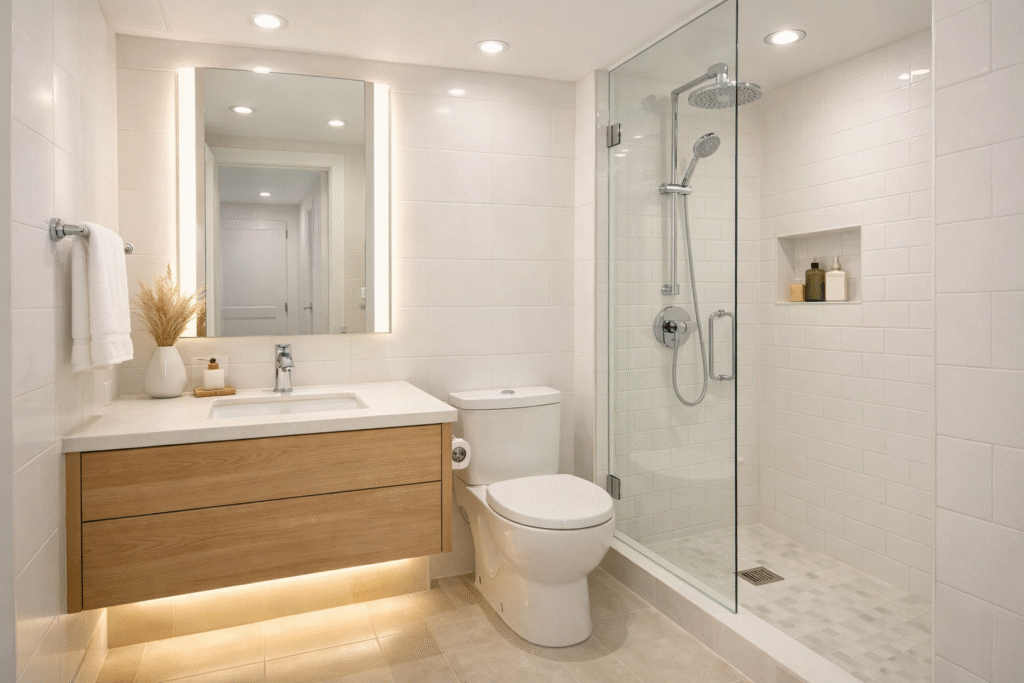
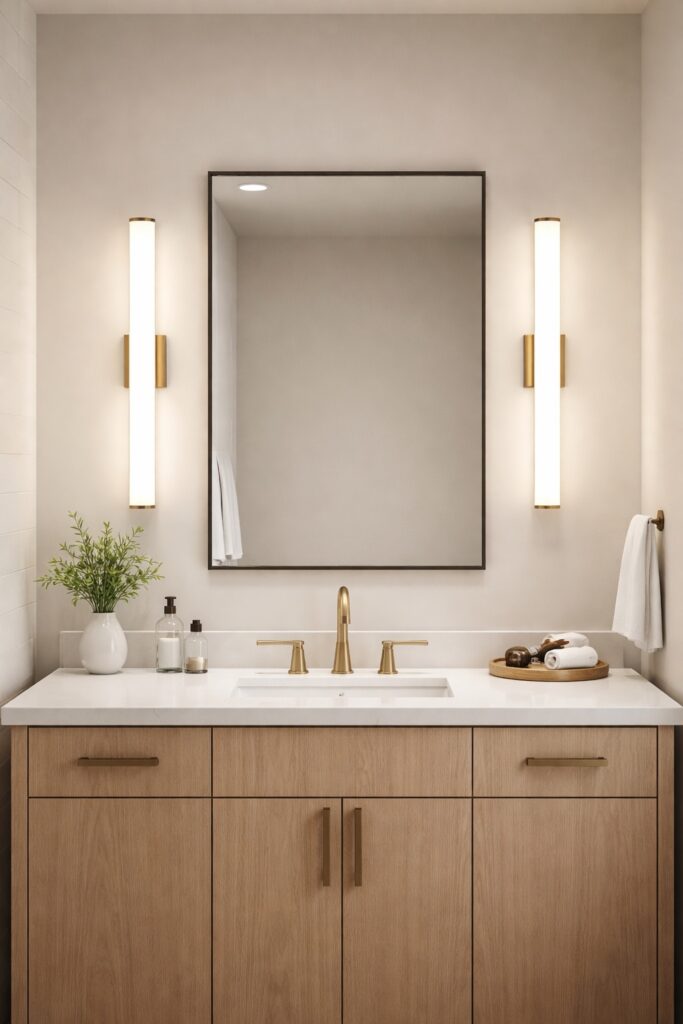
Lights on both sides of the mirror
No shadows on face. Reduces shadows for grooming tasks.
Backlit or halo mirrors
Provides even illumination and works well as secondary lighting in the evening.
Avoid a light directly above your head. It deepens shadows under your eyes and chin.
Guide: /how-to/plan-bathroom-lighting/
External reference: NICEIC lighting advice for bathrooms
https://niceic.com/householders/bathrooms-and-electrics/
4. Wall lights for mood, balance & wow factor
Wall lights help balance lighting across the room and reduce reliance on ceiling fittings alone. When placed correctly, they add visual depth without overpowering the space.
Perfect spots:
- Either side of a mirror
- Above a freestanding bath
- On a feature tile wall for texture
If a more decorative effect is desired, pick fixtures that throw light both up and down. This lifts the space visually and adds shadow play that feels a softer overall lighting balance.

5. Practical UK spacing, wiring & safety tips
A gorgeous layout still needs safe planning. Bathrooms are wet rooms, full of steam and splashes — correct placement matters. Safety should always be prioritised when planning bathroom lighting.
Quick UK checklist:
- Keep standard downlights at least 60cm from shower unless IP65
- Use moisture friendly materials in small or windowless rooms
- Hire a qualified electrician for rewiring or new circuits
- Ambient brightness around 150–200 lux feels soft yet functional
If you’re planning zones, here’s your next logical read:
/how-to/plan-bathroom-lighting/
External safety reference (trusted UK source):
> Electrical Safety First
https://www.electricalsafetyfirst.org.uk/guides-and-advice/electrical-items/bathroom-electrics/
6. Room by room bathroom lighting layouts examples
Every bathroom size needs a slightly different map. Here are setups that rarely go wrong.
Small UK bathroom
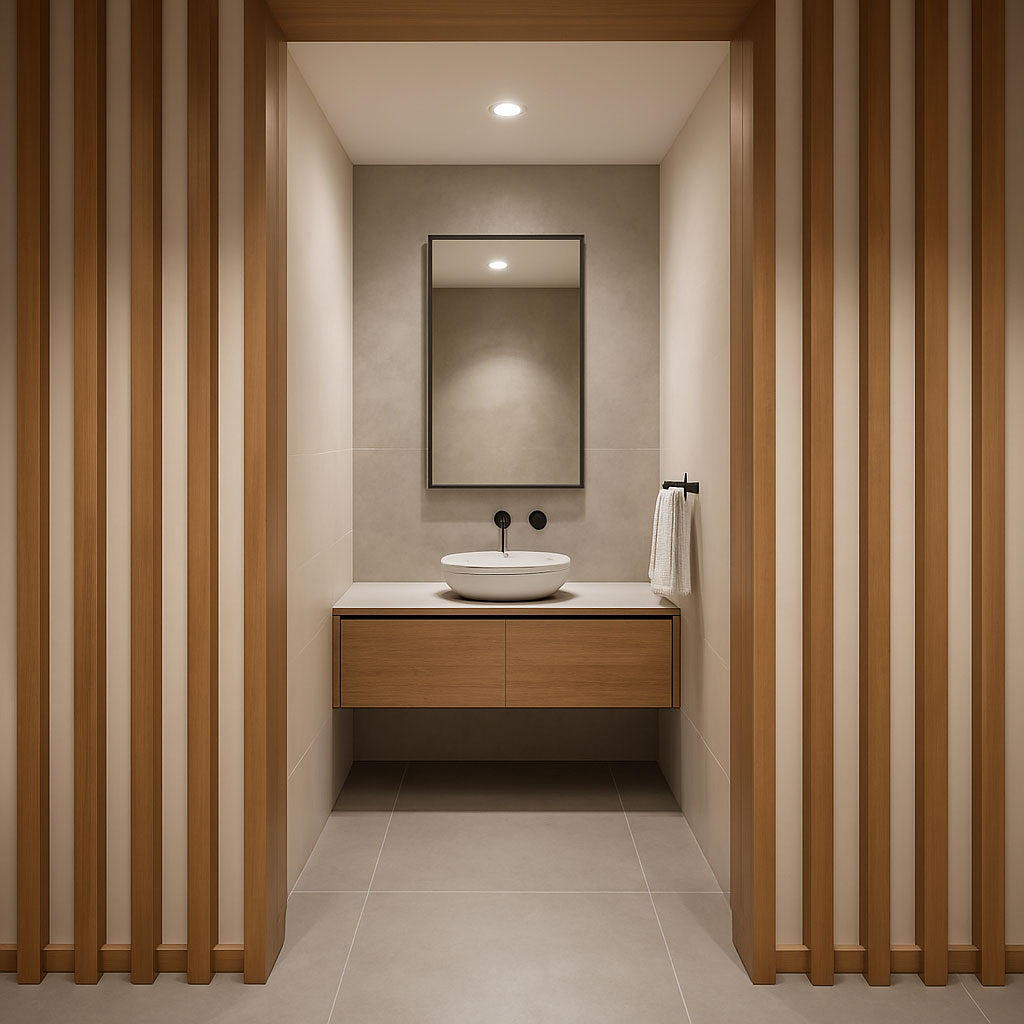
Use perimeter ceiling light + backlit mirror. Helps the room feel more open.
Family bathroom
Downlights for clarity, wall lights for evening baths. Best of both.
Ensuite
Keep it simple. Shower lit separately, mirror lit softly.
Wet room
IP65 fittings above shower. Niche lighting for accent illumination.
FAQs
How many lights do most bathrooms need?
Four to six works for most UK rooms.
Best colour tone for warmth?
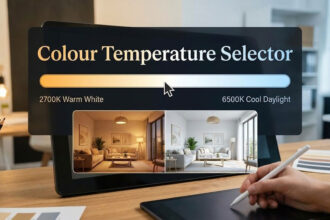
Around 2700K to 3000K. Soft. Cosy. Flattering.
Are LEDs safe in wet rooms?
Yes — if the correct IP rating is used.
Do I need wall lights?
Not essential but they can improve overall lighting balance.
Conclusion
Effective bathroom lighting layouts rely on combining ceiling, task, and accent lighting in a balanced way. By planning layouts around spacing, layering, and safety requirements, it is possible to create bathrooms that are both practical and comfortable to use.
Using these layout principles helps ensure lighting performs reliably across different room sizes and usage patterns over time.
Make sure you check our Bathroom Zones & IP Ratings Guide before buying