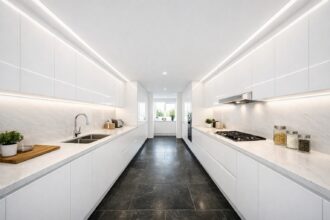
Plinth lighting ideas have become one of the most effective ways to transform a modern kitchen without changing the layout, cabinetry, or worktops. Positioned at floor level beneath base units, plinth lighting adds subtle ambience, visual depth, and practical illumination while helping kitchens feel more considered and welcoming.
Whether you are planning a new kitchen or upgrading an existing one, plinth lighting can play a surprisingly important role in both ambience and usability. In this guide, we explore what plinth lighting is, why designers use it, how to choose the right type and colour temperature, and how to avoid common mistakes so your kitchen lighting works beautifully day and night.
Safety Note: All fixed electrical work in kitchens (special locations) must be carried out by a qualified electrician in accordance with Part P of the Building Regulations and BS 7671. Do not attempt DIY mains wiring.
Table of Contents
What Is Plinth Lighting and Why Designers Use It
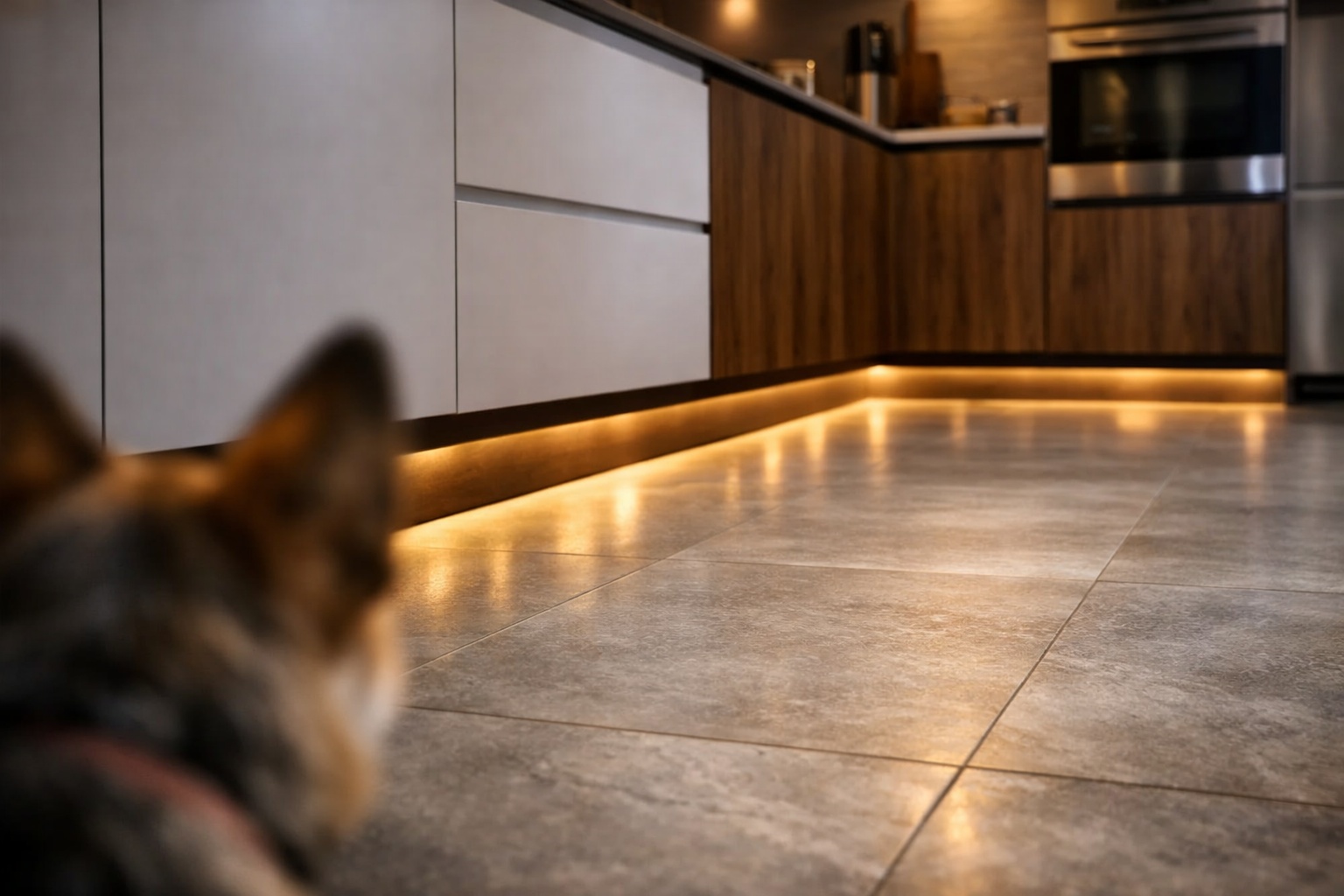
Plinth lighting refers to low level lighting installed within or beneath the kickboards at the base of kitchen cabinets. Instead of lighting work surfaces or ceilings, it creates a soft glow across the floor, visually lifting the cabinets and adding depth to the space.
Designers use plinth lighting for several reasons. First, it creates the illusion that cabinets are floating, which can make kitchens feel lighter and more spacious. This is especially effective in smaller kitchens or rooms with dark cabinetry. Second, plinth lighting adds a layer of ambient light that balances stronger task lighting from downlights or under cabinet fittings.
There is also a psychological element. Low level lighting feels calmer and less intrusive, particularly in the evening. It allows the kitchen to transition from a functional workspace into a more relaxed living environment without relying on bright overhead lights.
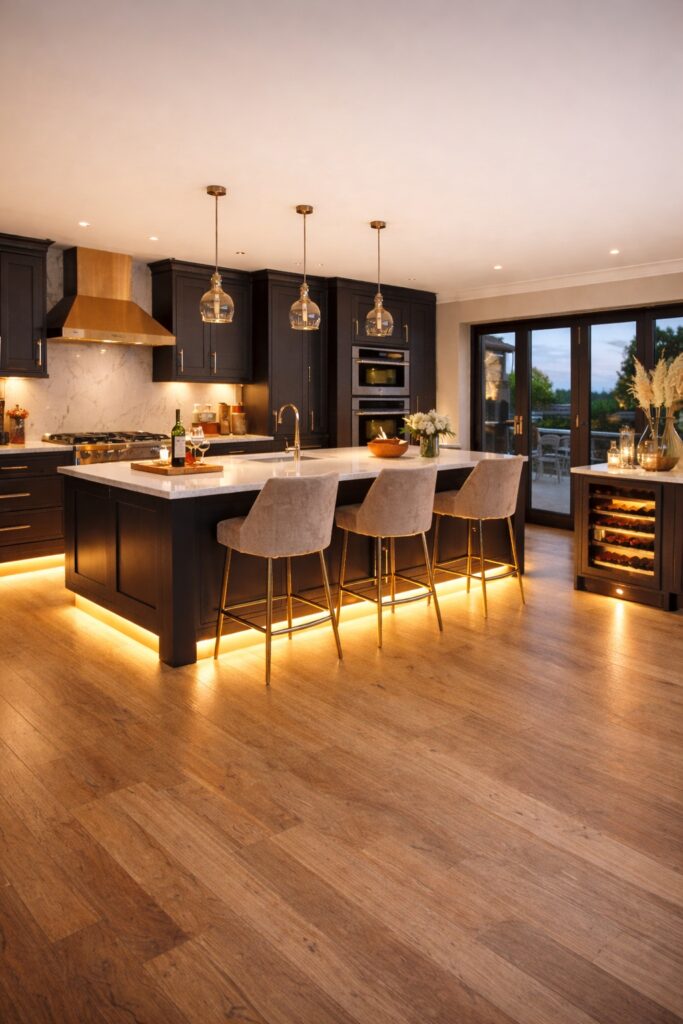
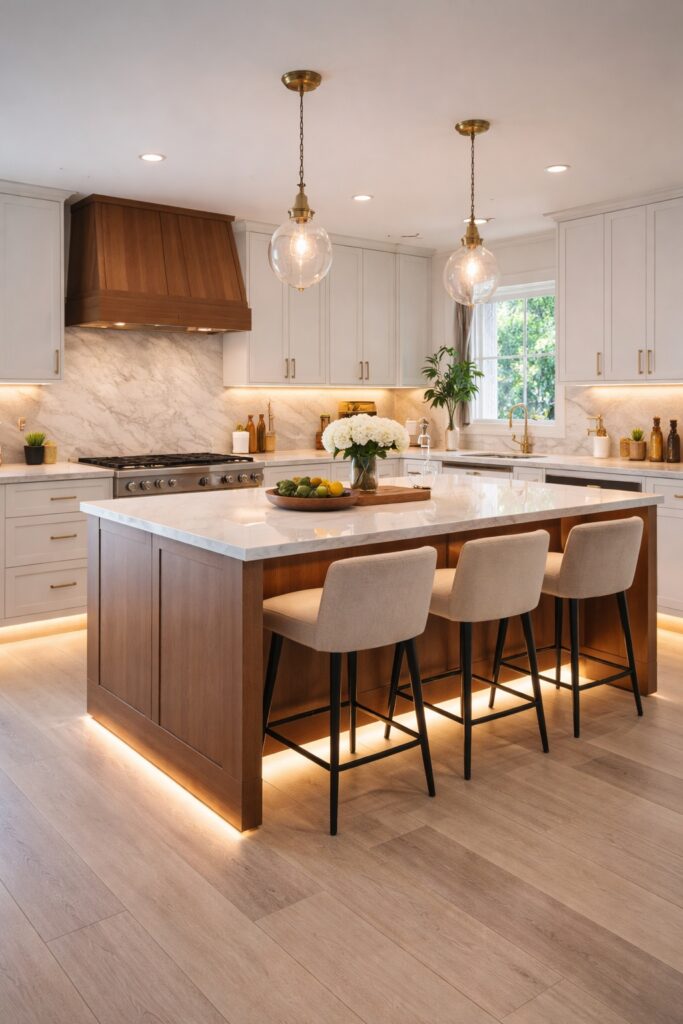
Want to understand the glow levels better? Pop over to our guide on colour temperature for kitchens for a quick refresher.
Is Plinth Lighting Worth It in Modern Kitchens?
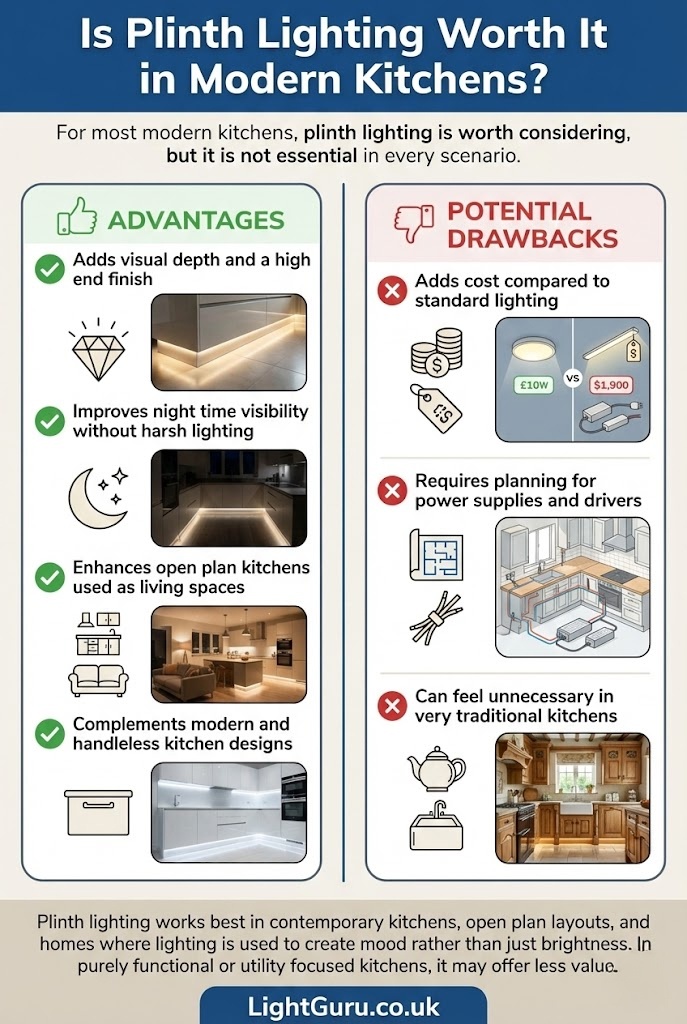
For most modern kitchens, plinth lighting is worth considering, but it is not essential in every scenario.
Advantages
- Adds visual depth and a high end finish
- Improves night time visibility without harsh lighting
- Enhances open plan kitchens used as living spaces
- Complements modern and handleless kitchen designs
Potential drawbacks
- Adds cost compared to standard lighting
- Requires planning for power supplies and drivers
- Can feel unnecessary in very traditional kitchens
Plinth lighting works best in contemporary kitchens, open plan layouts, and homes where lighting is used to create mood rather than just brightness. In purely functional or utility focused kitchens, it may offer less value.
Best Types of Plinth Lighting: Strip Lighting vs Spotlights
LED strip lighting
LED strip lighting is the most popular option for plinth lighting. Installed in a continuous run behind or beneath the plinth, it produces an even wash of light across the floor.
Pros
- Smooth, consistent light
- Minimal visual intrusion
- Ideal for modern kitchens
- Easy to dim and control
Cons
- Requires aluminium profiles and diffusers for best results
- Needs careful installation to avoid visible hotspots
For a completely seamless glow without hotspots, we recommend COB (Chip-on-Board) LED tapes which have no visible gaps between diodes.”
Recessed plinth spotlights
Plinth spotlights are small individual fittings recessed into the kickboard.
Pros
- More traditional appearance
- Easier retrofitting in some cases
- Works well in segmented layouts
Cons
- Can create uneven pools of light
- Less subtle than strip lighting
- Requires precise spacing
For most modern kitchens, LED strip lighting offers the cleanest and most designer friendly result.

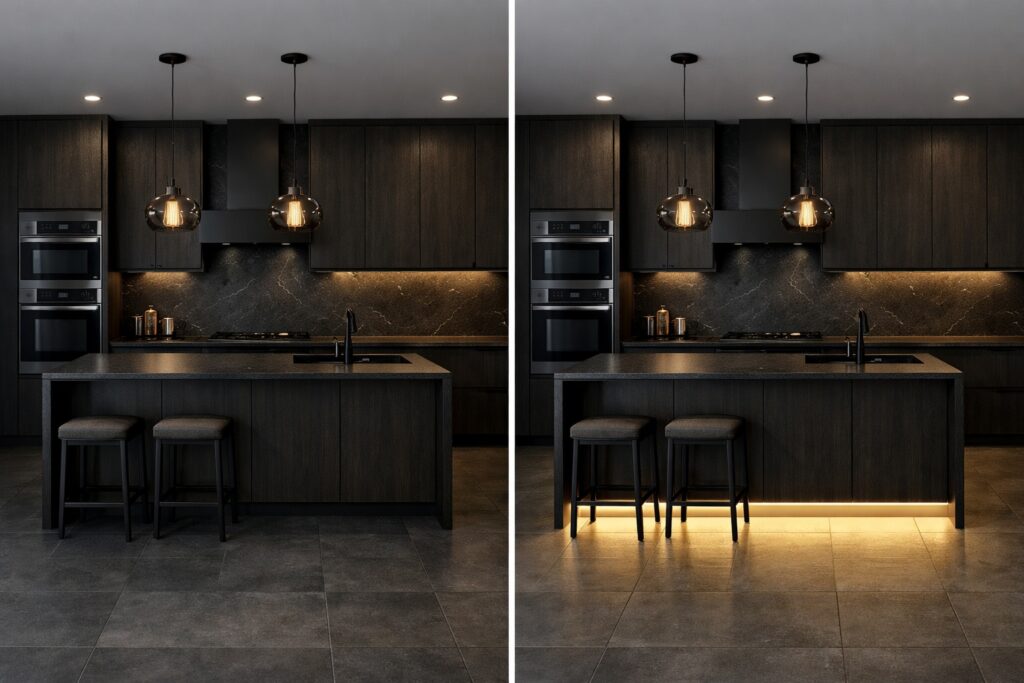
Curious about strip brightness and placement? Head to our full LED strip lighting guide for kitchens.
Choosing the Right Colour Temperature for Plinth Lighting
Colour temperature plays a crucial role in how plinth lighting feels.
2700K warm white
This creates a soft, cosy glow ideal for evening ambience. It works particularly well in kitchens that open into living or dining areas.
3000K warm neutral
A popular compromise that feels warm without appearing yellow. Suitable for kitchens used throughout the day.
4000K cool white
Best avoided for plinth lighting. While functional, it can feel clinical and undermines the calming effect of low level light.
For most homes, 2700K or 3000K will deliver the most pleasing result and integrate better with ambient lighting schemes.
How Bright Should Plinth Lighting Be?
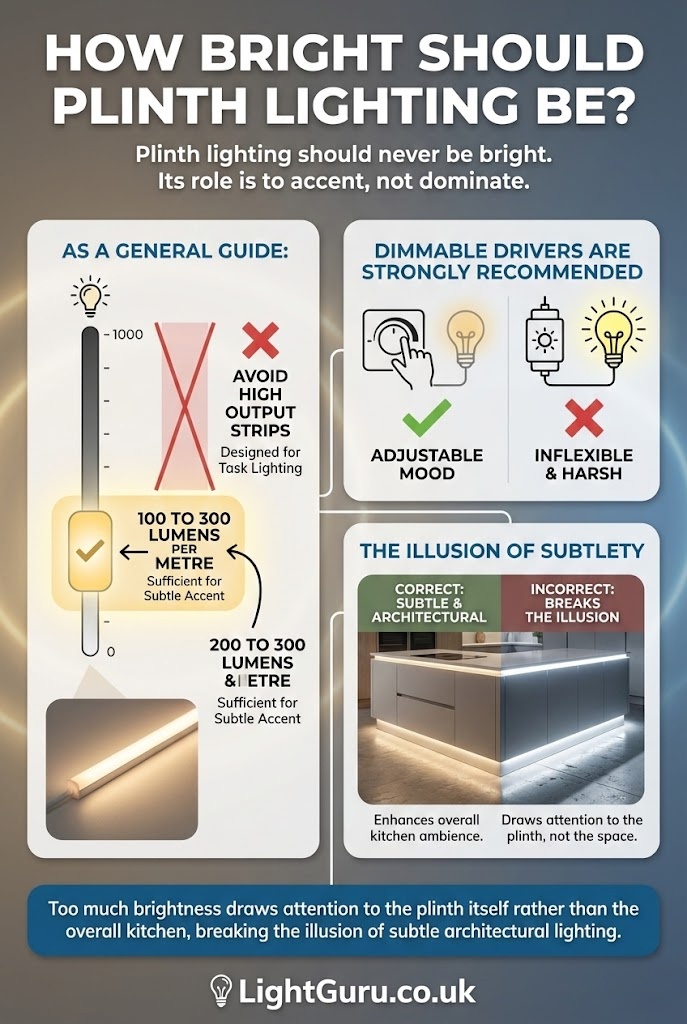
Plinth lighting should never be bright. Its role is to accent, not dominate.
As a general guide:
- 100 to 300 lumens per metre is sufficient
- Dimmable drivers are strongly recommended
- Avoid high output strips designed for task lighting
Too much brightness draws attention to the plinth itself rather than the overall kitchen, breaking the illusion of subtle architectural lighting.
Plinth Lighting Placement and Spacing Rules
Correct placement is essential for a professional finish.
- Position lighting slightly set back from the front edge of the cabinet
- Avoid placing LEDs too close to the floor to prevent glare
- Continuous runs provide the most seamless effect
- In corner units, maintain consistent spacing to avoid dark patches
Using aluminium profiles with diffusers helps soften the light and eliminate visible LED points, especially on reflective floors.

Smart, Sensor, and Motion Activated Plinth Lighting
Plinth lighting is particularly effective when paired with smart controls or motion sensors.
Motion activated plinth lighting is ideal for night time navigation, allowing safe movement without turning on bright overhead lights. Smart systems enable scene control, letting plinth lighting activate automatically in the evening or dim late at night.
A simple PIR motion sensor switch added to the driver allows lights to trigger automatically when you walk in for a midnight snack.
For families, older users, or open plan homes, this functionality adds both comfort and practicality.
Want more ideas? Browse our main inspiration hub kitchen lighting ideas.

Practical UK Setup Tips for Plinth Lighting
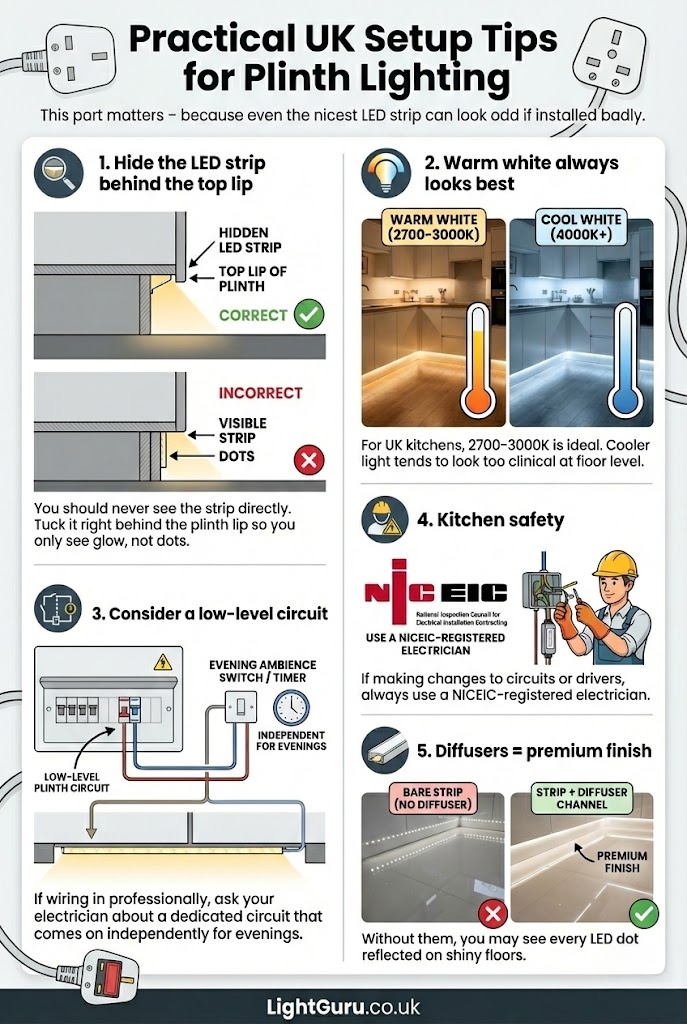
This part matters – because even the nicest LED strip can look odd if installed badly. Always use deep aluminium channels with milky diffusers to eliminate the ‘spotted’ look on tiled floors
1. Hide the LED strip behind the top lip
You should never see the strip directly. Tuck it right behind the plinth lip so you only see glow, not dots.
2. Warm white always looks best
For UK kitchens, 2700–3000K is ideal. Cooler light tends to look too clinical at floor level.
3. Consider a low-level circuit
If wiring in professionally, ask your electrician about a dedicated circuit that comes on independently for evenings.
4. Kitchen safety
If making changes to circuits or drivers, always use a NICEIC-registered electrician.
5. Diffusers = premium finish
Without them, you may see every LED dot reflected on shiny floors.
Room-by-Room Inspiration
Plinth lighting isn’t only for the main kitchen run – here’s where else it looks incredible:
Kitchen Islands
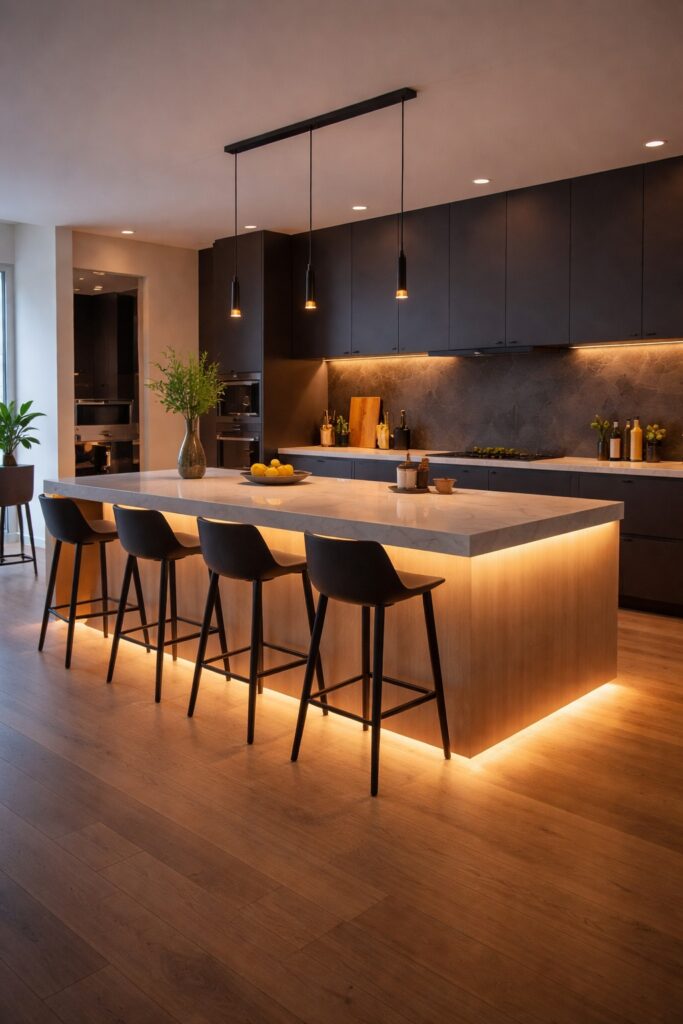
Make your island look like it’s floating. Works especially well with handleless designs.
Kitchen-Diners
Use plinth lighting as your evening mood light while eating.
Utility Rooms
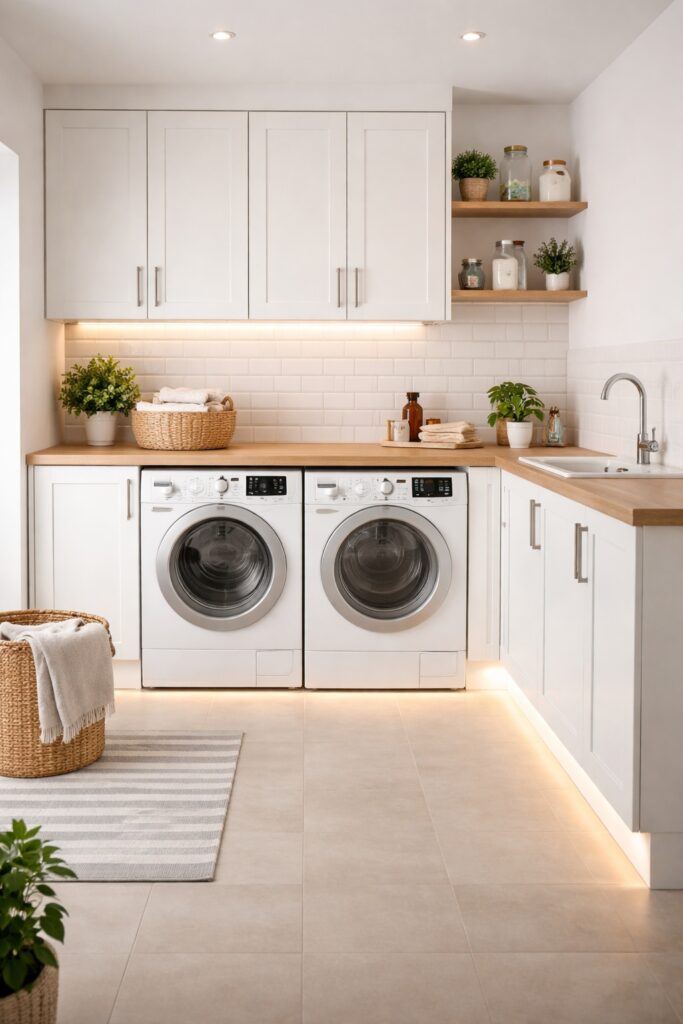
A low-cost way to brighten laundry areas without installing extra ceiling lights.
Open-Plan Spaces
Helps create gentle zones without putting up walls.
More layout ideas? Check out our guide how to plan kitchen lighting

Common Plinth Lighting Mistakes to Avoid
- Choosing cool white colour temperatures
- Using strips without diffusers
- Installing lighting that is too bright
- Poor driver placement with no ventilation
- Failing to plan wiring before kitchen installation
Avoiding these mistakes ensures the lighting enhances the kitchen rather than distracting from it.
FAQs About Plinth & Kickboard Lighting
What colour temperature is best?
Warm white (2700–3000K) looks the nicest at floor level.
Can I use battery strips?
Not ideal. They dim quickly and often lack proper diffusion.
Is plinth lighting outdated?
No. When installed subtly, it aligns perfectly with modern layered lighting design.
Does plinth lighting work with smart homes?
Yes. Many LED drivers and controllers integrate with popular smart systems.
Can plinth lights be used as night lights?
Yes. This is one of their best uses, especially when dimmed or motion activated.
Is plinth lighting expensive to run?
LED plinth lighting uses very little power and is inexpensive to run long term.
Can plinth lighting be added to an existing kitchen?
Yes, though access to power and driver placement should be considered.
Conclusion
When exploring plinth lighting ideas, the key is subtlety, balance, and choosing lighting that supports how your kitchen is actually used. It adds warmth, atmosphere, a touch of luxury, and that soft glow you see in glossy showrooms. Whether you’re lighting the island, the whole room, or just zoning a corner, the effect is always magical.