Living room downlights can make a space feel clean and modern, but they are also one of the easiest ways to get lighting wrong. Too many and the room feels harsh. Poor placement and it looks flat, uncomfortable, or full of glare.
This guide is a layout-first, numbers-second explanation of how to use downlights properly in a living room. You will learn how many you actually need, where to place them, and how to combine them with lamps so the room still feels warm and relaxed in the evening.
This guide focuses on one specific aspect of lighting design. For full room planning, layout, and brightness guidance, see our complete Living Room Lighting Guide.
If you want broader inspiration and layered lighting ideas, our complete living room lighting guide covers styles, mood, and fixture options in more detail.
Table of Contents
What downlights should (and should not) do in a living room
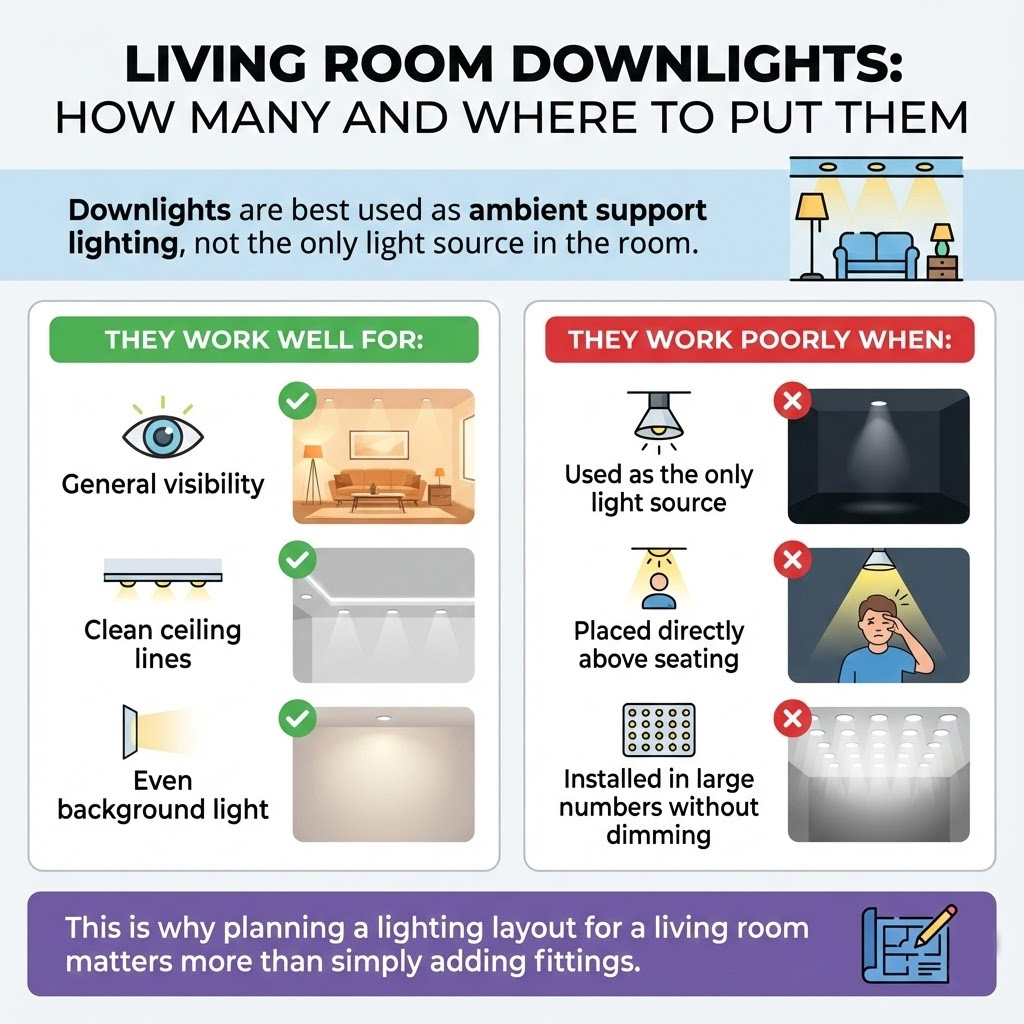
Downlights are best used as ambient support lighting, not the only light source in the room.
They work well for:
- General visibility
- Clean ceiling lines
- Even background light
They work poorly when:
- Used as the only light source
- Placed directly above seating
- Installed in large numbers without dimming
This is why planning a lighting layout for a living room matters more than simply adding fittings.
How many downlights does a living room really need?
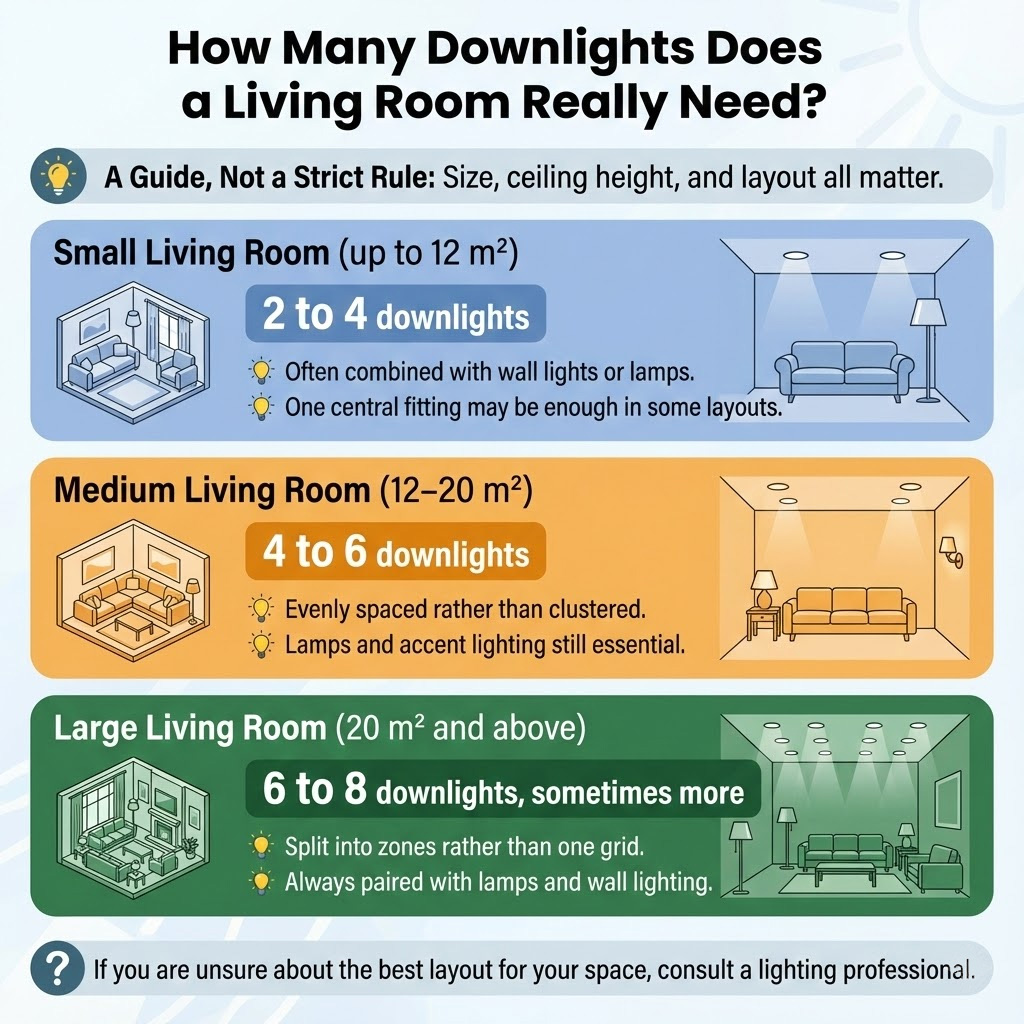
There is no fixed number that works for every room. Size, ceiling height, and layout all matter. Use the guidance below as a starting range, not a strict rule.
Small living room (up to 12 m²)
- 2 to 4 downlights
- Often combined with wall lights or lamps
- One central fitting may be enough in some layouts
Medium living room (12–20 m²)
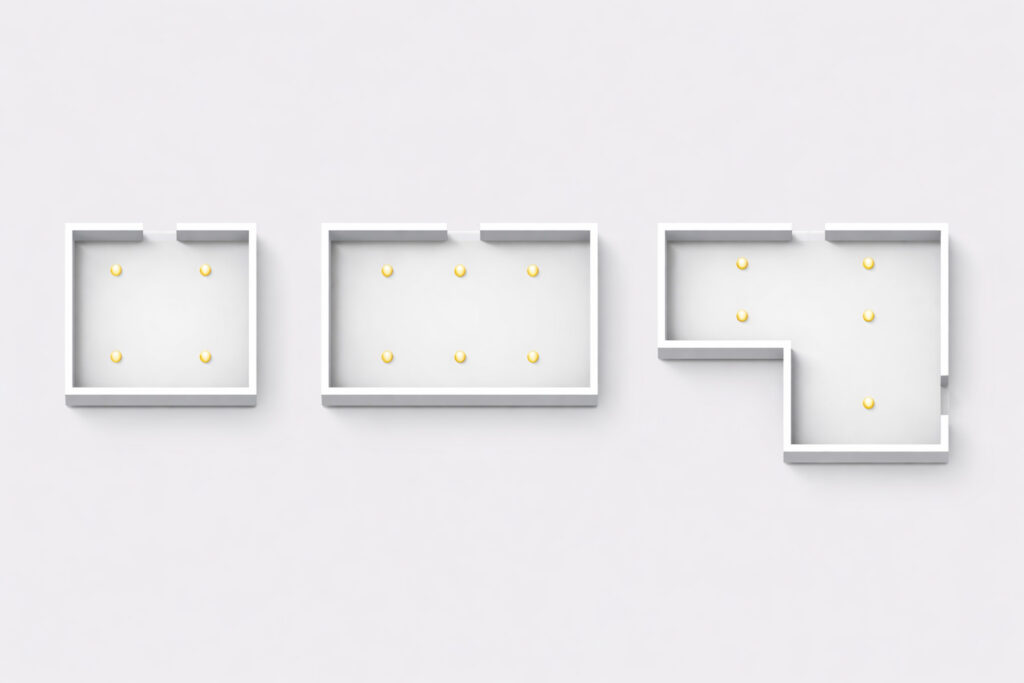
- 4 to 6 downlights
- Evenly spaced rather than clustered
- Lamps and accent lighting still essential
Large living room (20 m² and above)
- 6 to 8 downlights, sometimes more
- Split into zones rather than one grid
- Always paired with lamps and wall lighting
If you are unsure about overall brightness, you can calculate how bright your living room should be before deciding on numbers.
Where to put downlights in a living room
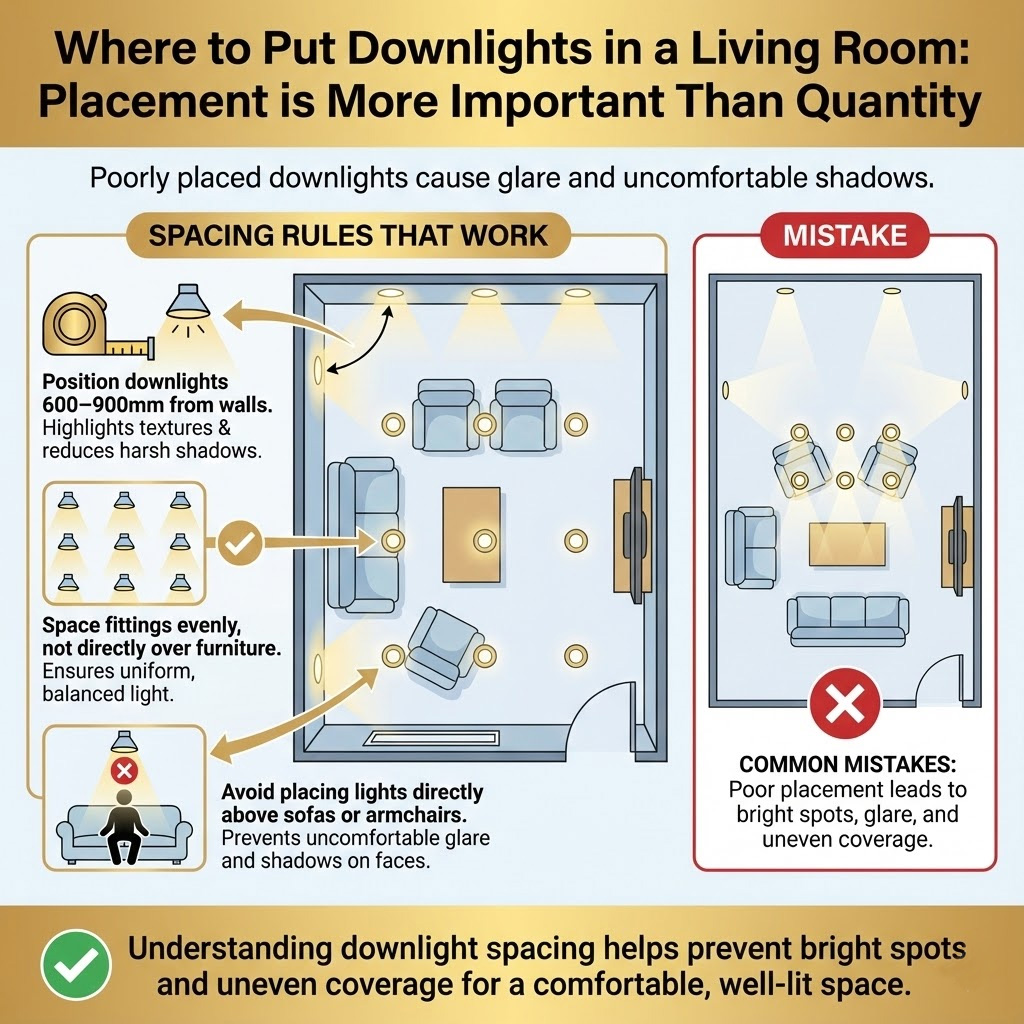
Placement is more important than quantity. Poorly placed downlights cause glare and uncomfortable shadows.
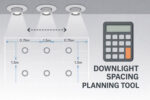
Spacing rules that work
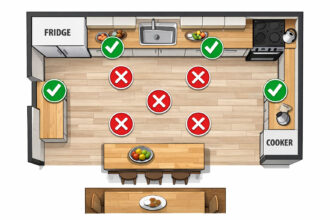
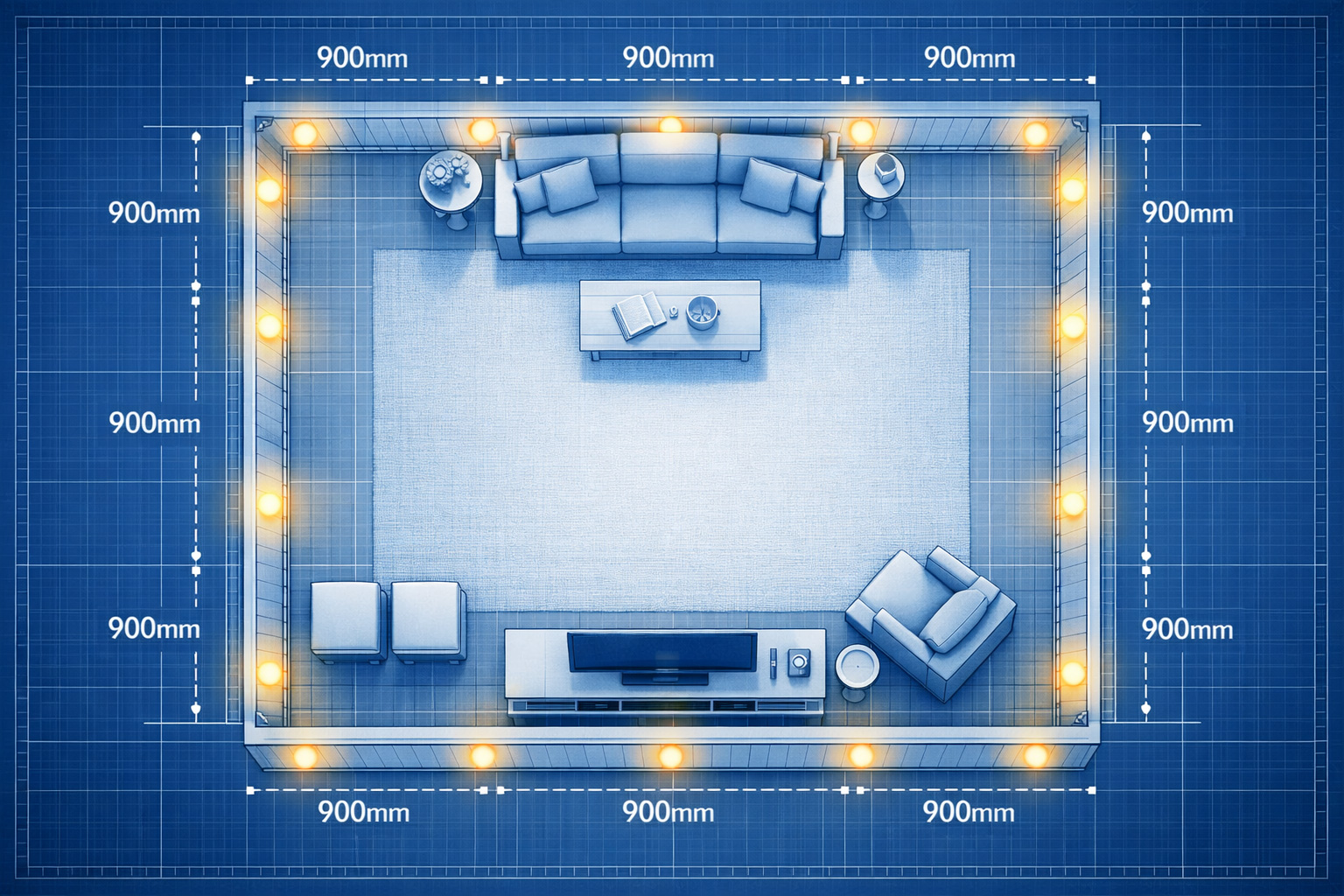
- Position downlights 600–900mm from walls
- Space fittings evenly, not directly over furniture
- Avoid placing lights directly above sofas or armchairs
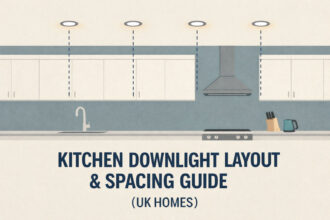
Understanding downlight spacing helps prevent bright spots and uneven coverage.
Using downlights to define zones
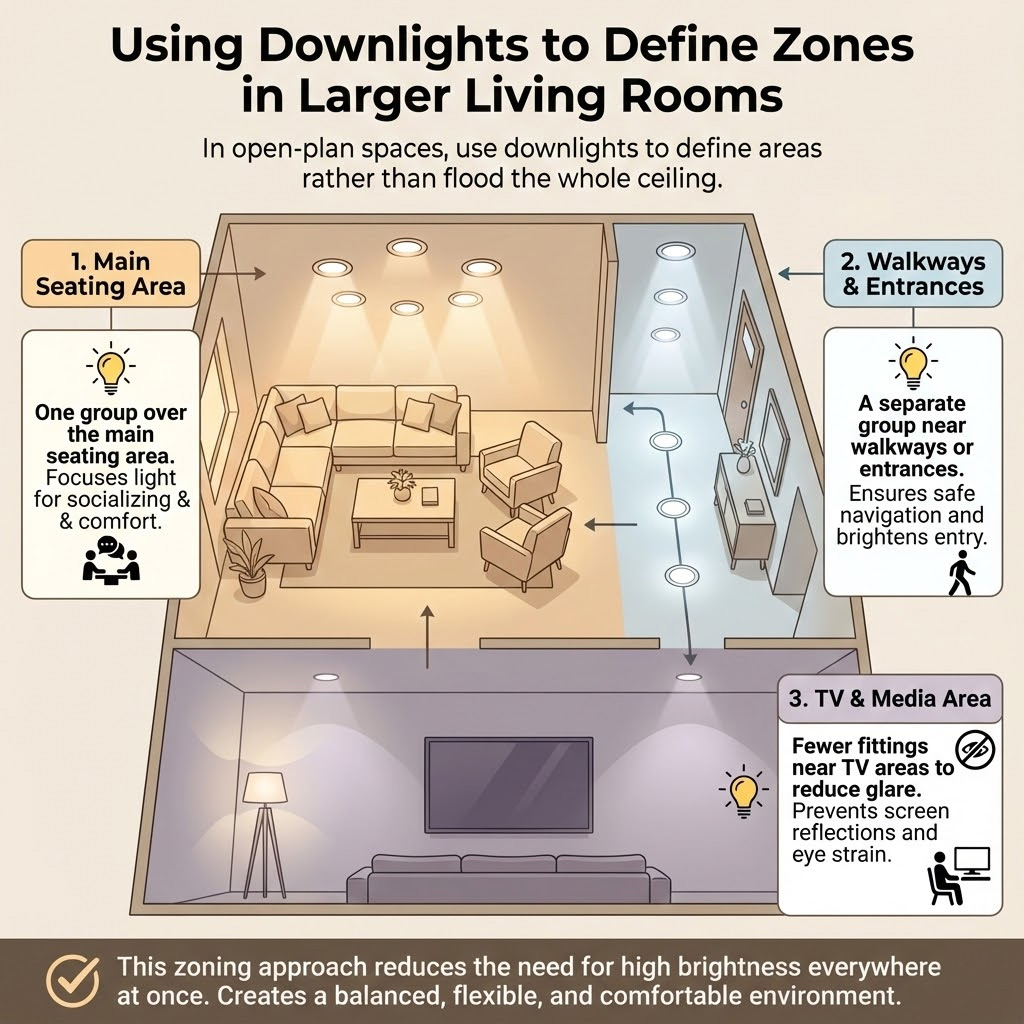
In larger or open-plan living rooms, downlights can help define areas rather than flood the whole ceiling.
Examples:
- One group over the main seating area
- A separate group near walkways or entrances
- Fewer fittings near TV areas to reduce glare
This zoning approach reduces the need for high brightness everywhere at once.
Downlights and lamps: getting the balance right
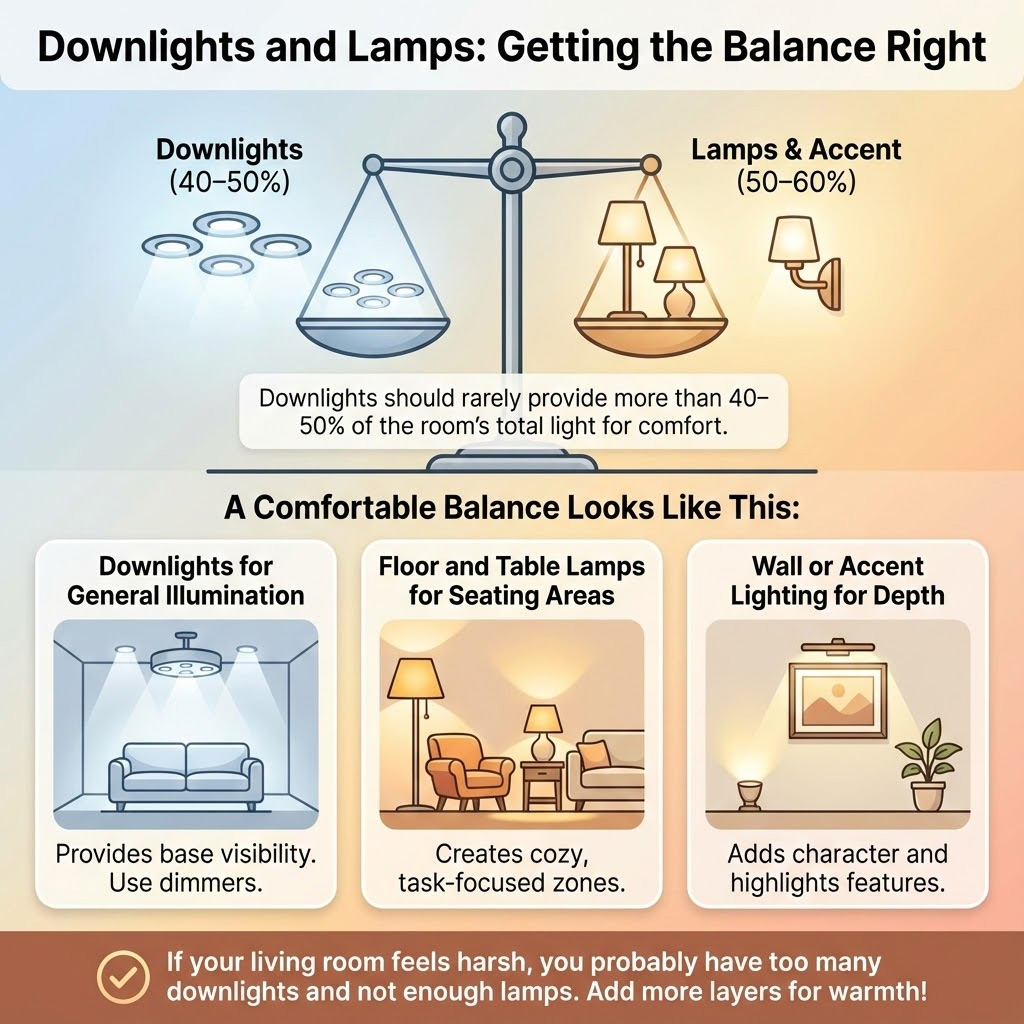
Downlights should rarely provide more than 40–50% of the room’s total light.
A comfortable balance looks like this:
- Downlights for general illumination
- Floor and table lamps for seating areas
- Wall or accent lighting for depth
If your living room feels harsh, the issue is usually too much ceiling light and not enough low-level lighting, not the downlights themselves.
Colour temperature and beam angle considerations
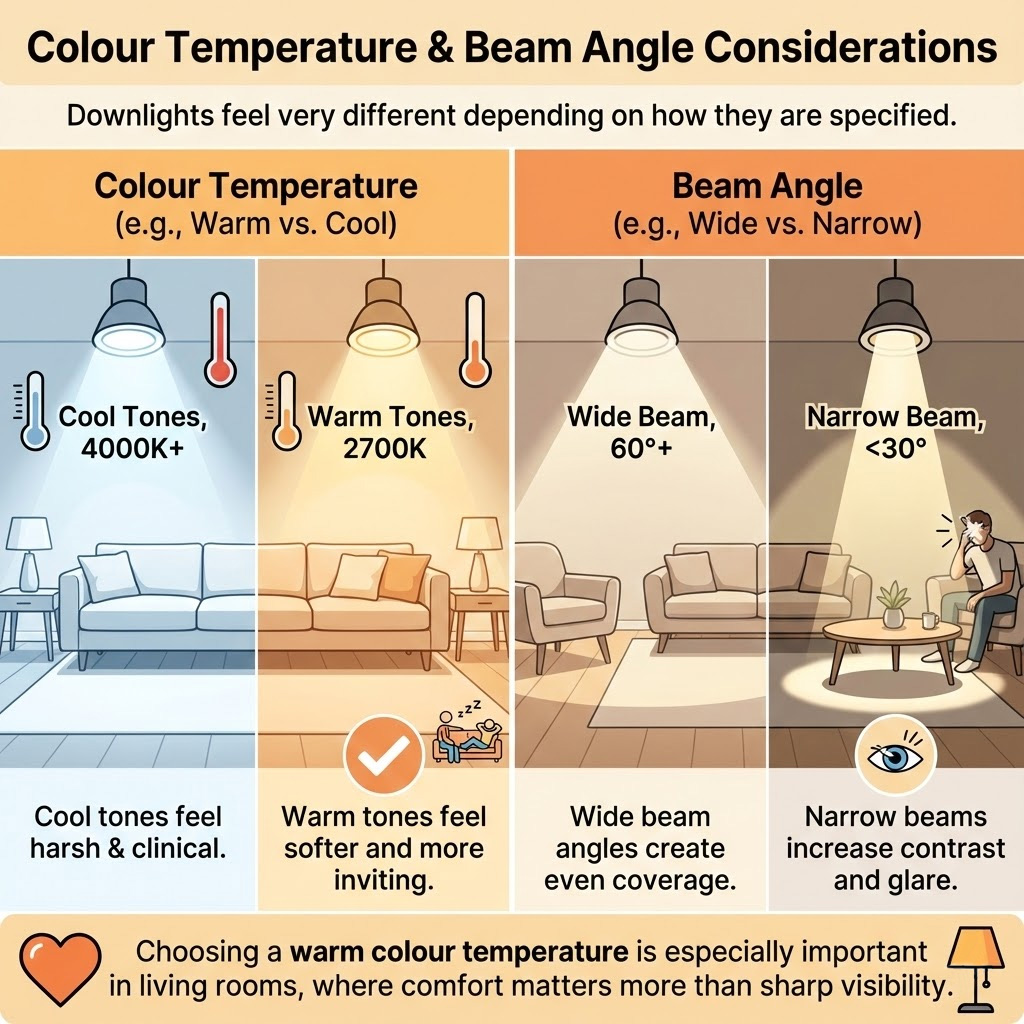
Downlights feel very different depending on how they are specified.
- Warm tones feel softer and more inviting
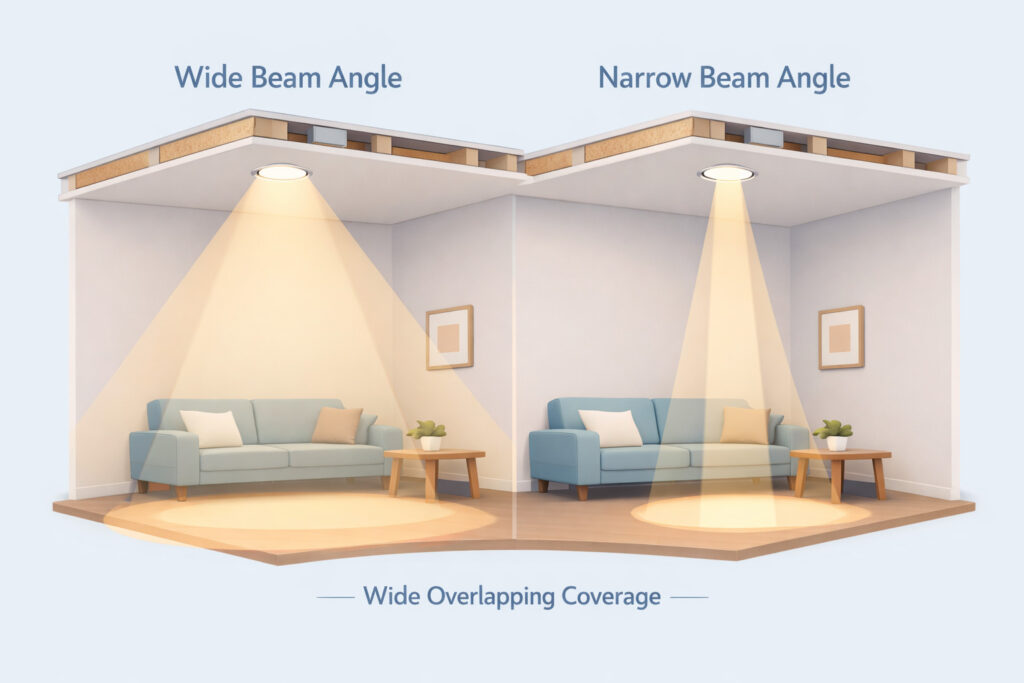
- Wide beam angles create even coverage
- Narrow beams increase contrast and glare
Choosing a warm colour temperature is especially important in living rooms, where comfort matters more than sharp visibility.
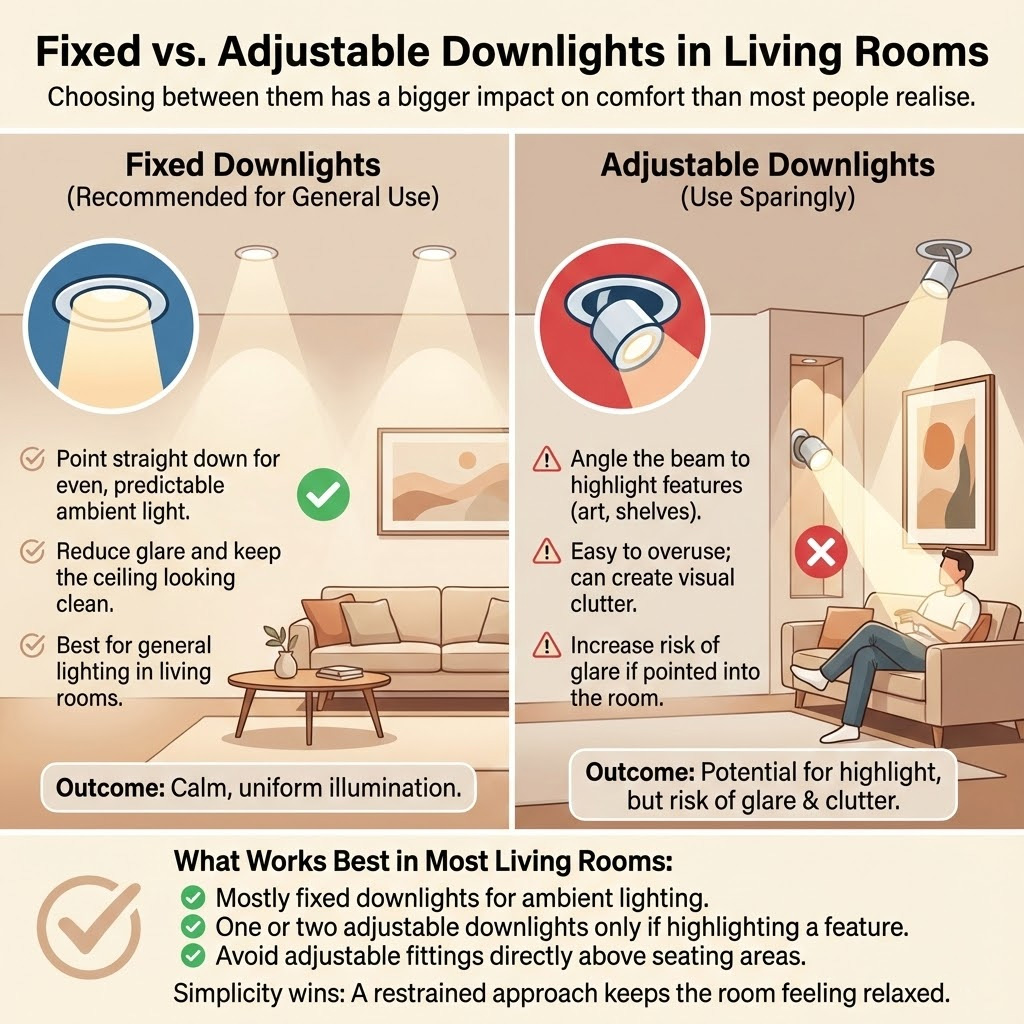
Fixed vs adjustable downlights in living rooms
Choosing between fixed and adjustable downlights has a bigger impact on comfort than most people realise.
Fixed downlights point straight down and create even, predictable ambient light. In living rooms, they are usually the best option for general lighting because they reduce glare and keep the ceiling looking clean and calm.
Adjustable downlights allow you to angle the beam, which can be useful for highlighting artwork, shelves, or architectural details. However, they are easy to overuse. Too many adjustable fittings can create visual clutter on the ceiling and increase the risk of glare, especially when beams point into the room rather than at surfaces.
What works best in most living rooms
- Mostly fixed downlights for ambient lighting
- One or two adjustable downlights only if you are highlighting a feature
- Avoid adjustable fittings directly above seating areas
For most homes, simplicity wins. A restrained approach keeps the room feeling relaxed rather than over designed.
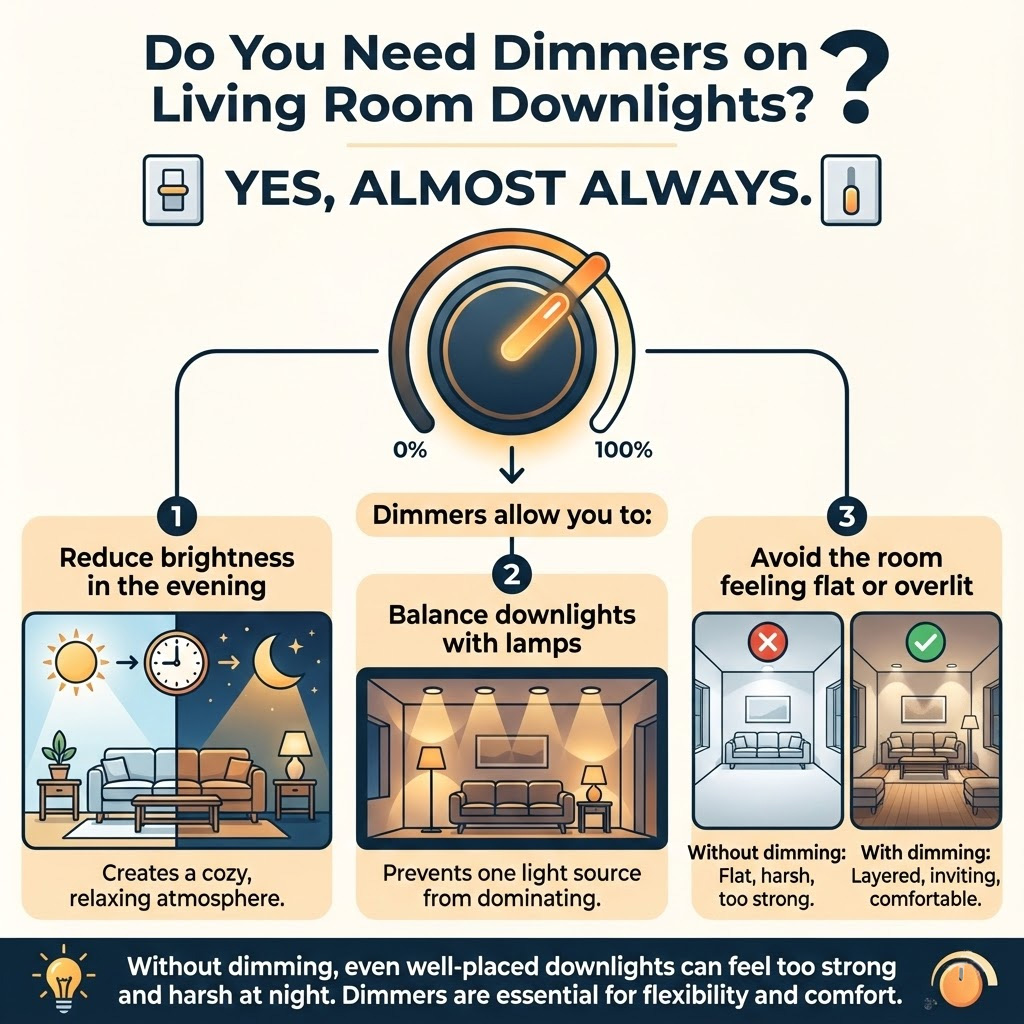
Do you need dimmers on living room downlights?
Yes, almost always.
Dimmers allow you to:
- Reduce brightness in the evening
- Balance downlights with lamps
- Avoid the room feeling flat or overlit
Without dimming, even well placed downlights can feel too strong at night.
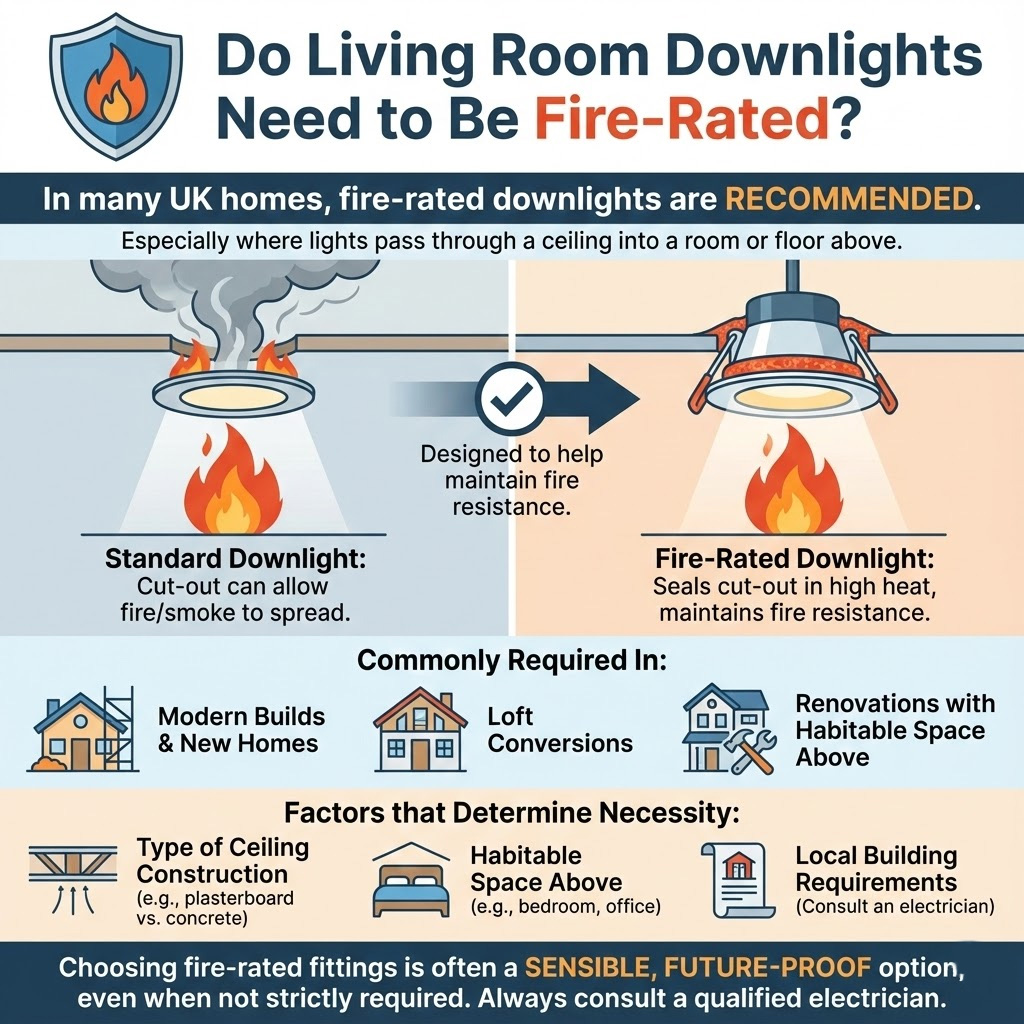
Do living room downlights need to be fire-rated?
In many UK homes, fire-rated downlights are recommended, particularly where lights pass through a ceiling into a room or floor above.
Fire-rated fittings are designed to help maintain the fire resistance of the ceiling by sealing the cut-out if exposed to high heat. They are commonly required in modern builds, loft conversions, and renovations, and are widely used as standard practice.
Whether fire-rated downlights are necessary depends on:
- The type of ceiling construction
- Whether there is a habitable space above
- Local building requirements
An electrician can confirm what applies to your home, but choosing fire-rated fittings is often a sensible, future-proof option even when not strictly required.
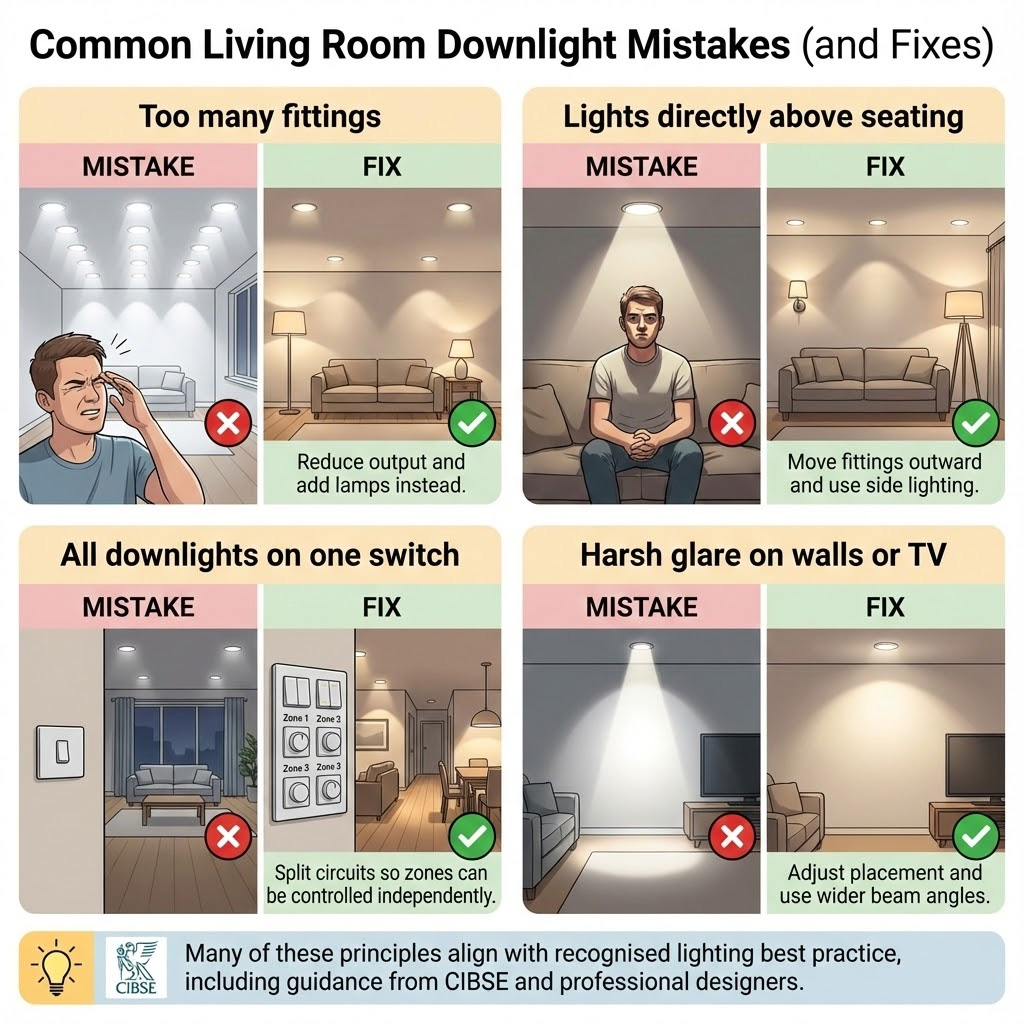
Common living room downlight mistakes (and fixes)
Too many fittings
Fix: Reduce output and add lamps instead.
Lights directly above seating
Fix: Move fittings outward and use side lighting.
All downlights on one switch
Fix: Split circuits so zones can be controlled independently.
Harsh glare on walls or TV
Fix: Adjust placement and use wider beam angles.
Many of these principles align with recognised lighting best practice used by professional designers and engineers, including guidance from the Chartered Institution of Building Services Engineers.
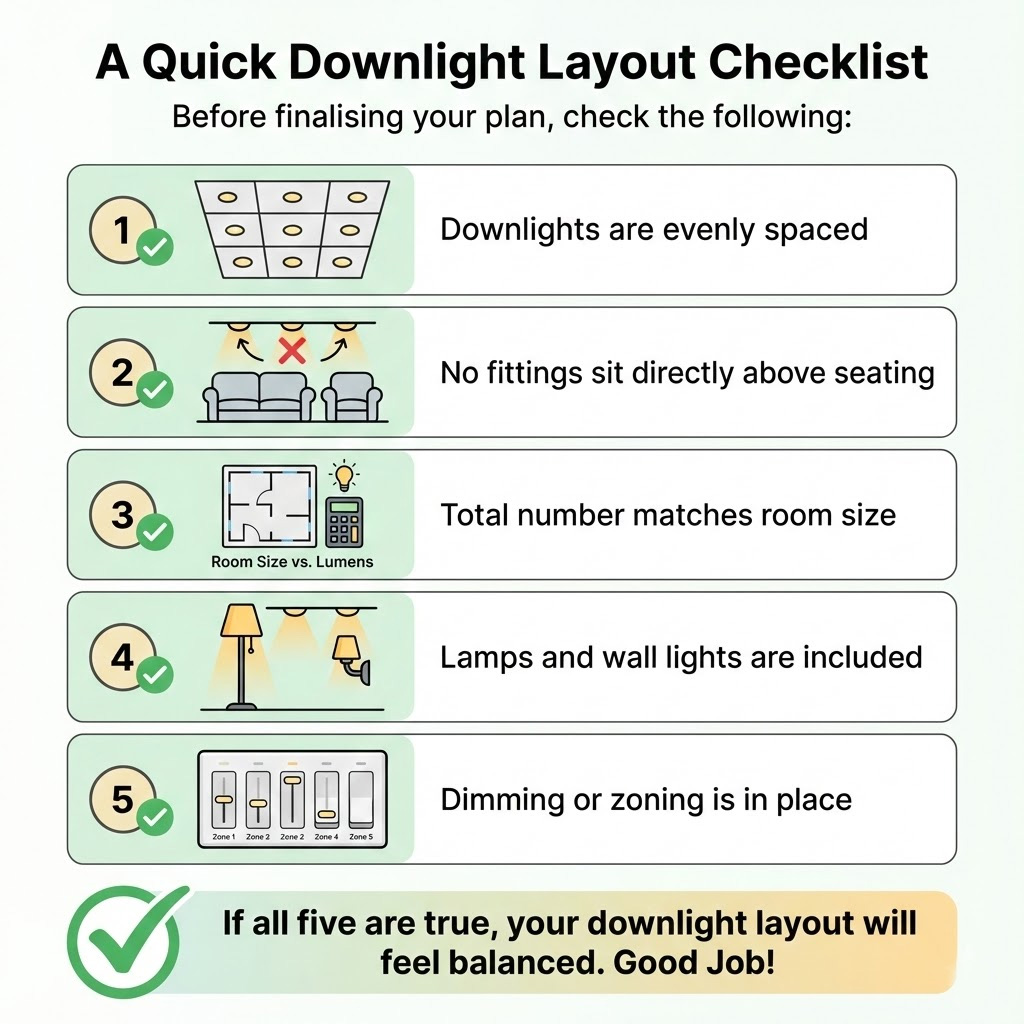
A quick downlight layout checklist
Before finalising your plan, check the following:
- Downlights are evenly spaced
- No fittings sit directly above seating
- Total number matches room size
- Lamps and wall lights are included
- Dimming or zoning is in place
If all five are true, your downlight layout will feel balanced.
Frequently asked questions
Can a living room have only downlights?
It can, but it rarely feels comfortable. Lamps and wall lights make a big difference.
Are downlights bad for living rooms?
No. They work well when used in moderation and combined with other light sources.
How far apart should downlights be?
Spacing depends on ceiling height and beam angle, but even spacing with distance from walls works best.
Should downlights be centred in the room?
Not always. Layout and furniture placement matter more than symmetry.
Final thoughts
Living room downlights work best when they support the room rather than dominate it. The goal is not to light everything from above, but to create a calm, flexible base layer that works alongside lamps and accent lighting.
Choose the right number, place them thoughtfully, and let the rest of your lighting do the work of comfort and atmosphere.