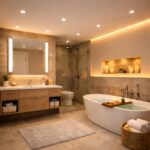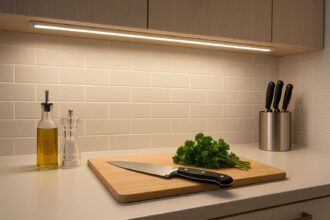
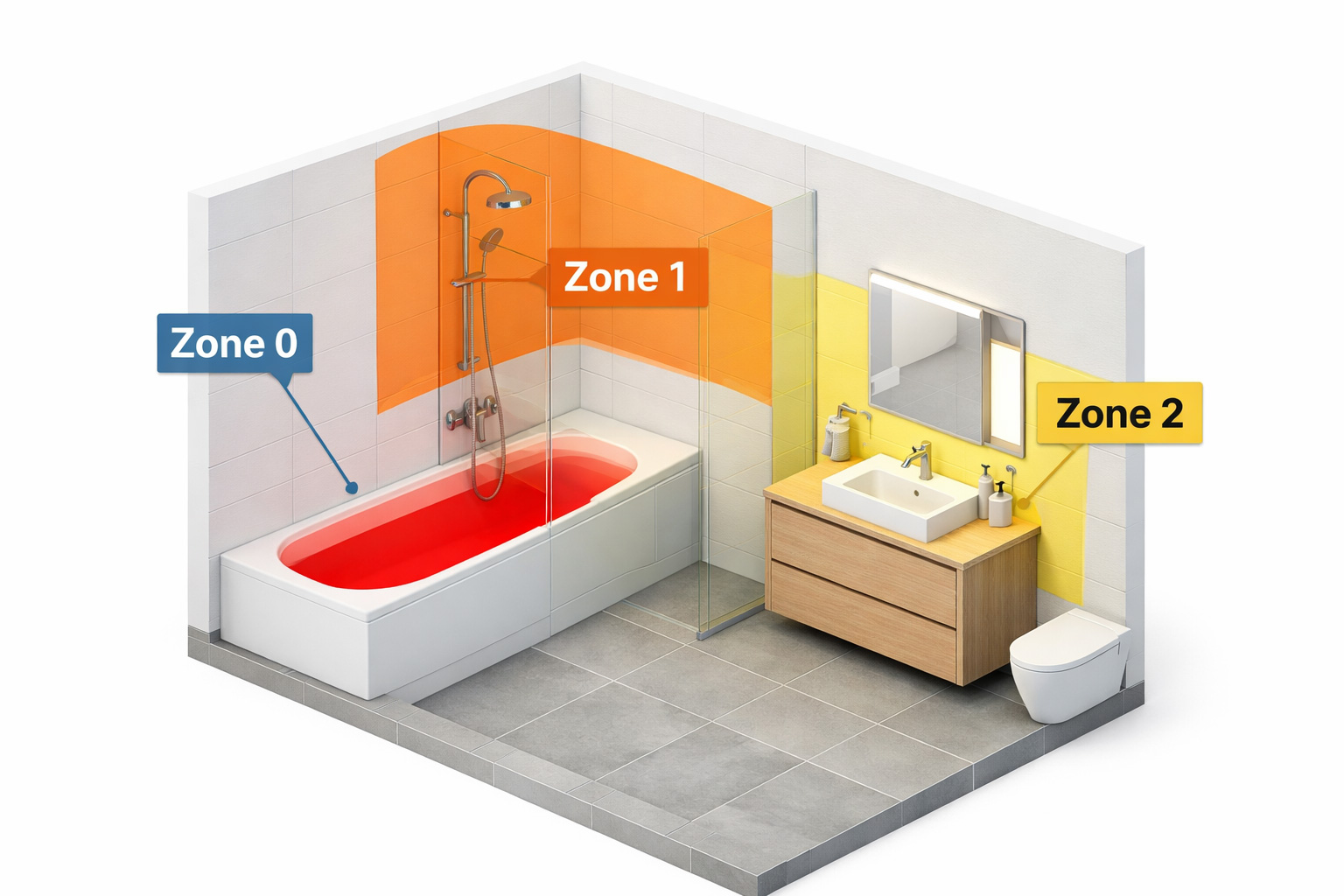
Bathroom lighting regulations in the UK are designed to reduce risk where water and electricity are used together. Bathroom zones define where fittings can be installed safely, based on proximity to water sources and exposure to moisture.
This guide focuses on one specific aspect of bathroom lighting design. For full room planning, layout, and safety zones, see our complete Bathroom Lighting Guide.
Transparency: Safety is our priority. We select products based on strict UK safety standards and IP ratings. If you purchase through our links, we may earn a commission at no extra cost to you.
Bathroom Zone IP Rating Checker
Find the correct IP rating for your bathroom lighting
Table of Contents
1. What are bathroom zones?
Bathroom zones are safety regions used in the UK to decide what lighting is safe where water is present. Because water and electricity present a clear safety risk when combined.
Think of your bathroom as a map with circles of moisture. The closer a fitting is to water, the higher its protection rating must be. Zones help you choose lighting that won’t corrode, short-circuit or fail the moment steam hits it.
If you know the zones, you can confidently place:
- downlights
- mirror lighting
- LED strips
- wall lights
- niche/perimeter lighting
- shower lighting
– and avoid expensive do-overs.
Consider our layout planning guide here → /how-to/plan-bathroom-lighting/
2. Zone 0 — The wettest area
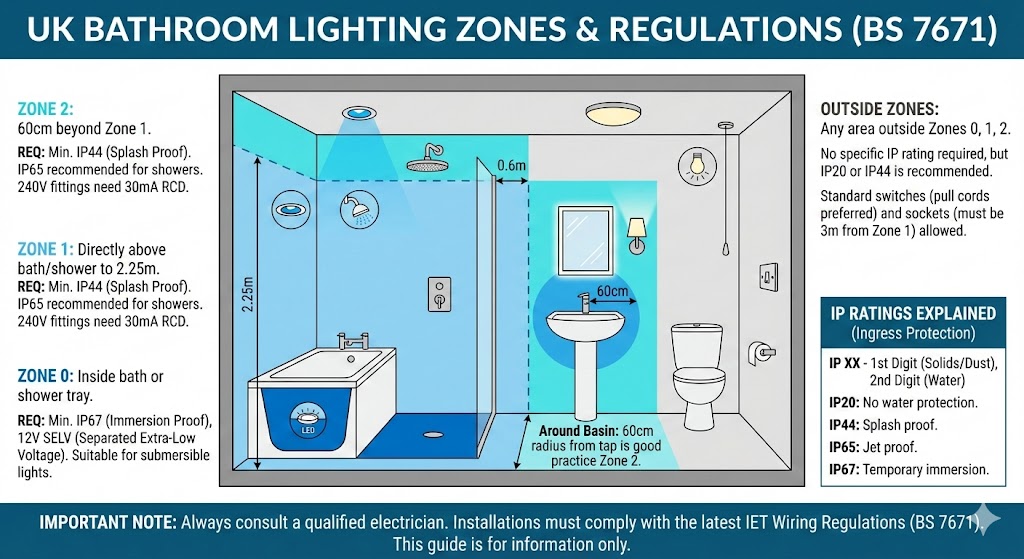
Zone 0 is anywhere inside the bath or shower enclosure — literally where you stand or soak. This is the most water-exposed zone, so fittings need the highest protection.
Requirements for Zone 0:
- IP67 minimum
- Must be designed for submersion
- Low voltage only (usually 12V)
- Transformer must sit outside Zone 0
For shower niches, you must use IP67 Waterproof LED Tape, not standard kitchen strip lights.
This is where you might place:
- tiny star-effect LEDs in a deep soak bath
- a soft glow inside a shower niche
- LED floor lighting in a walk-in wet room
Zone 0 lighting must be specified carefully due to continuous exposure to water.
External source for safety context:
Electrical Safety First – Bathroom Levels and Guidance
> https://www.electricalsafetyfirst.org.uk/guides-and-advice/electrical-items/bathroom-electrics/
3. Zone 1 — Above the bath or shower
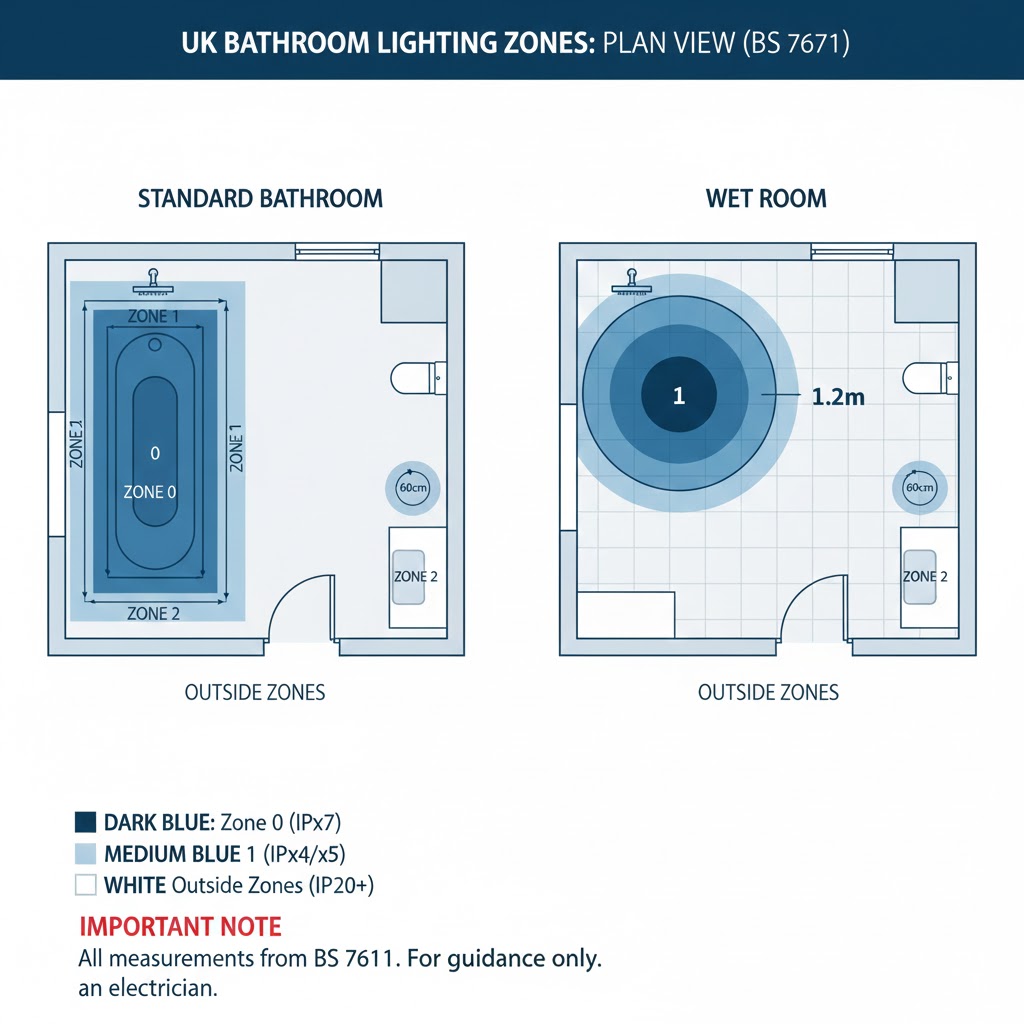
Zone 1 covers the space above the bath or inside the shower up to 2.25m high. This is where steam and water splash constantly, so protection is essential.
Requirements for Zone 1:
- IP65 recommended (minimum IP44 allowed with RCD circuit)
- Suitable for direct spray and steam
- Perfect area for shower downlights
Lights here should be hardy, moisture-sealed and built to live with humidity. Lighting in this zone should be designed to operate reliably in areas exposed to steam and direct water spray.
For peace of mind in Zone 1, we recommend Fire-Rated IP65 Downlights which are fully sealed against moisture.
Common placements:
- recessed waterproof downlights
- low-glare anti-steam LED spots
- feature pendant (only if high ceiling + safe IP rating)
Bathroom lighting layouts to help position Zone 1 lights → /how-to/plan-bathroom-lighting/
4. Zone 2 — The splash area around taps & sinks
Zone 2 extends 60cm around the bath edge, basin or shower border. It also includes areas slightly further from direct spray but still within splash range.
Requirements for Zone 2:
- IP44 minimum
- Safe for wall lights near vanity
- Good location for LED mirrors
This is where the practical beauty lighting happens – where you apply mascara, shave, moisturise and judge whether your skin really needs that expensive balm you bought at Boots.
Great fitting styles for Zone 2:
- vertical mirror lights
- halo mirrors with integrated LEDs
- up/down wall sconces
- soft accent lighting
Mirror lighting mouting guidance here → /how-to/how-high-should-mirror-lights-be-mounted/
Many modern IP44 Illuminated Mirrors now come with built-in demister pads, making them perfect for Zone 2.
5. Outside Zones — Everywhere else
Once you move beyond Zone 2, lighting becomes more flexible – though moisture and ventilation still matter in small UK bathrooms.
In open areas outside splash zones:
- Standard fittings allowed
- Still wise to choose bathroom-friendly materials
- Wall lights can be used to add visual warmth and reduce reliance on ceiling lighting.
Outside zones are great for:
- pendant statement lighting
- decorative wall fixtures
- ambient ceiling spots
- perimeter LED glow strips
6. Understanding Bathroom Zones IP ratings
Now the bit that everyone Googles.
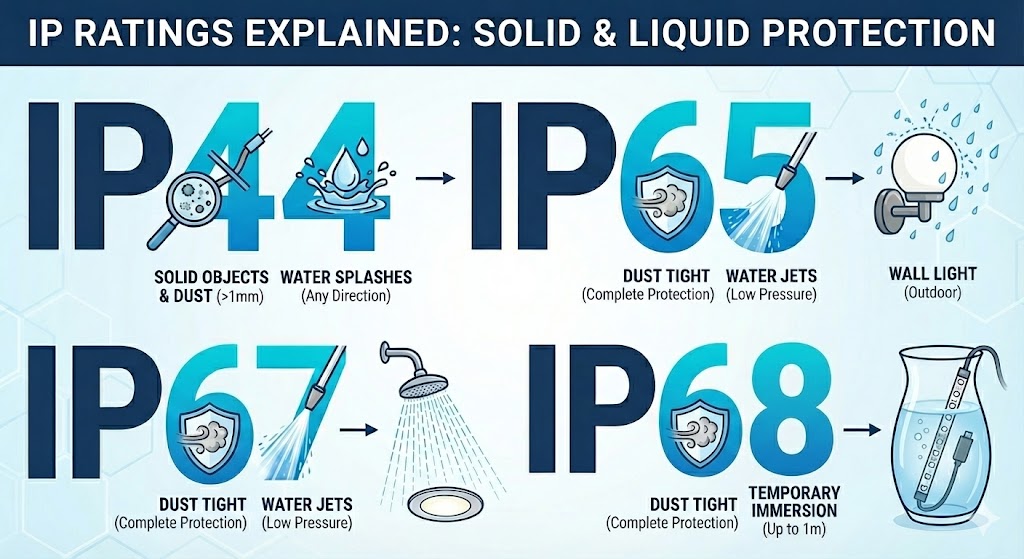
IP stands for Ingress Protection – how well a light fitting resists water and dust.
The numbers tell you everything:
| IP Rating | Protection Level | Water Resistance | Safe for Bathrooms? | Typical Use Case |
|---|---|---|---|---|
| IP20 | Basic touch protection | No water protection | Only outside zones | Ceiling fittings far from moisture |
| IP33 | Some dust/splash resistance | Minimal splash-safe | Outside zones only | Decorative fixtures, pendants |
| IP40 | Solid entry protection | Not water resistant | Outside shower/splash zones | General ceiling lighting |
| IP44 | Protected from objects + splashes | Splash-proof | Suitable for Zone 2 | Mirror lights, wall lights near basin |
| IP45 | Added protection & spray resistance | Enhanced splash-safe | Zone 2 and general areas | Wall luminaires with upward/downward beam |
| IP54 | Dust protected + splash resistant | Higher tolerance | Zone 2 recommended | Vanity LEDs, damp rooms with steam |
| IP55 | Dust protected + low-pressure jets | Strong spray-resistant | Zone 2/near wet areas | Feature lights near shower perimeter |
| IP64 | Dust tight + splash resistant | Solid steam-resistant | Zone 2 comfortable | LED strips around mirrors |
| IP65 | Dust tight + protected from water jets | Shower safe | Zone 1 approved | Shower downlights, ceiling LEDs |
| IP66 | Dust tight + high-pressure jets | Robust water protection | Zone 1 / wet rooms | Power shower areas + tough moisture zones |
| IP67 | Fully sealed, temporary immersion safe | Submersion proof | Zone 0 required | Lights inside niches, wet room floors |
| IP68 | Continuous submersion safe | Max waterproof | Zone 0 specialist | Pools + deep luxury lighting setups |
Reader-friendly summary
| Zone | Best IP Rating |
|---|---|
| Zone 0 | IP67–IP68 |
| Zone 1 | IP65+ |
| Zone 2 | IP44–IP66 |
| Outside Zones | IP20+ recommended IP44 if steamy |
Your golden rule:
- Wet zone? ➝ IP65–IP67
- Near sinks? ➝ IP44+
- Away from water? ➝ Standard ok
With these ratings in mind, choosing suitable fittings becomes more straightforward.
7. What lighting can go where?
| Zone | Allowed Lighting | Minimum Rating |
|---|---|---|
| Zone 0 | Submersible LEDs, niche strips | IP67 |
| Zone 1 | Shower spots, downlights, sealed fixtures | IP65 (IP44 min with RCD) |
| Zone 2 | Mirror lights, wall fittings | IP44 |
| Outside Zone | Most fittings | No rating required (but recommended in damp rooms) |
If in doubt → go up a rating. You’ll never regret safer + longer lasting.
8. Practical UK Installation Tips
- Use RCD protected circuits
- Hire a qualified electrician for rewiring
- Ensure adequate ventilation to extend LED lifespan
- Avoid placing a single downlight directly above a mirror
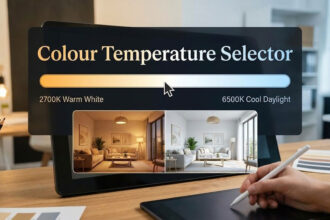
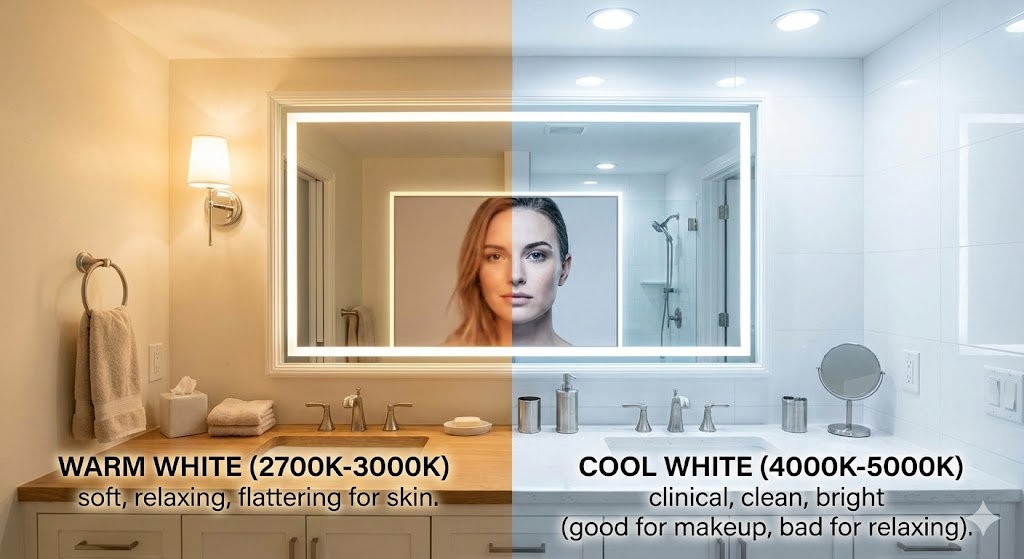
- Warm white lighting between 2700K and 3000K suits most bathrooms
External verification:
> NICEIC Bathroom Electrical Safety Guide
https://www.niceic.com/find-a-contractor/homeowner/guides/lighting
9. Room-By-Room Zone Ideas
- Small Bathroom
Zone 1 IP65 downlights + Zone 2 backlit mirror = feels twice the size. - Ensuite
Task light first, ambient second. Soft tones, lower glare. - Family Bathroom
Combine safe shower lighting with gentle wall lamps for bath time. - Wet Room
All shower zones = IP65+. LED niche lighting remains visible and effective in steamy conditions.
Pair with layouts here → /how-to/plan-bathroom-lighting/
FAQs
What does IP65 actually protect against?
Water spray + steam. Perfect for showers.
Can I put LED strips in a shower?
Yes – IP67 inside niches or under benches.
Are pendants allowed in bathrooms?
Yes – outside Zone 2 and with correct clearance.
Is IP44 enough near a mirror?
Yes – in Zone 2 or beyond.
Best colour temperature for bathrooms?
2700–3000K for warmth. 4000K if you want crisp clarity.
Conclusion
Bathroom zones and IP ratings are easier to manage once the basic rules are understood. By selecting fittings with the correct IP rating and placing them in suitable zones, it is possible to create a bathroom that functions safely while supporting a well balanced lighting layout.
Careful planning at this stage can help avoid future issues and ensure fittings perform reliably over time.