- Introduction
- Understanding the Three Layers of Lighting
- Kitchen Lighting
- Bathroom Lighting
- Living Room Lighting
- Bedroom Lighting
- Home Office Lighting
- Outdoor Lighting
- Quick Reference Summary
- FAQs
- Final Thoughts
Lighting transforms every space in your home – it shapes mood, defines style, and enhances comfort. The right lighting doesn’t just help you see; it helps you feel. From bright, energising kitchens to calm, cosy bedrooms, every room deserves its own thoughtful design.
In this complete guide from LightGuru, you’ll discover everything you need to know about lighting for every room in your home – from kitchen task lighting to soft bedroom ambience.
This guide focuses on specific brightness calculations. For our master room-by-room brightness calculator, see our main Lumens Guide.
Understanding the Three Layers of Lighting
Before diving into specific rooms, it’s essential to grasp the three key layers of lighting design:
- Ambient Lighting – the main, general light source that brightens the entire room.
Examples: ceiling pendants, LED panels, recessed downlights.
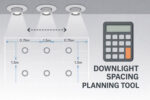
When planning ambient lighting with recessed fittings, spacing is just as important as brightness. Our downlight spacing calculator makes it easy to plan even, well balanced light across any room.
- Task Lighting – focused illumination for activities like cooking, reading, or grooming.
Examples: under-cabinet lights, mirror lights, desk lamps.
Getting task lighting right also means choosing the correct light output. This is especially important in kitchens, where our guide to lumens for kitchen lighting shows how much brightness you actually need for safe food preparation.
- Accent Lighting – decorative lighting that highlights features or adds depth.
Examples: wall sconces, picture lights, LED strips.
Accent lighting is often created using LED strips, which add depth without glare. You can see practical examples of this in our LED strip lighting ideas for kitchens, many of which translate well into other rooms.
Understanding these layers is the foundation of choosing lighting for every room that looks and performs beautifully.
For more on layering light, check out [How to Layer Lighting Like a Pro →] (future internal link).
For background on lighting design principles, visit the Lighting Industry Association – a trusted UK authority.
Kitchen Lighting – Bright, Practical & Inviting
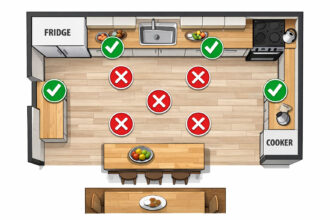
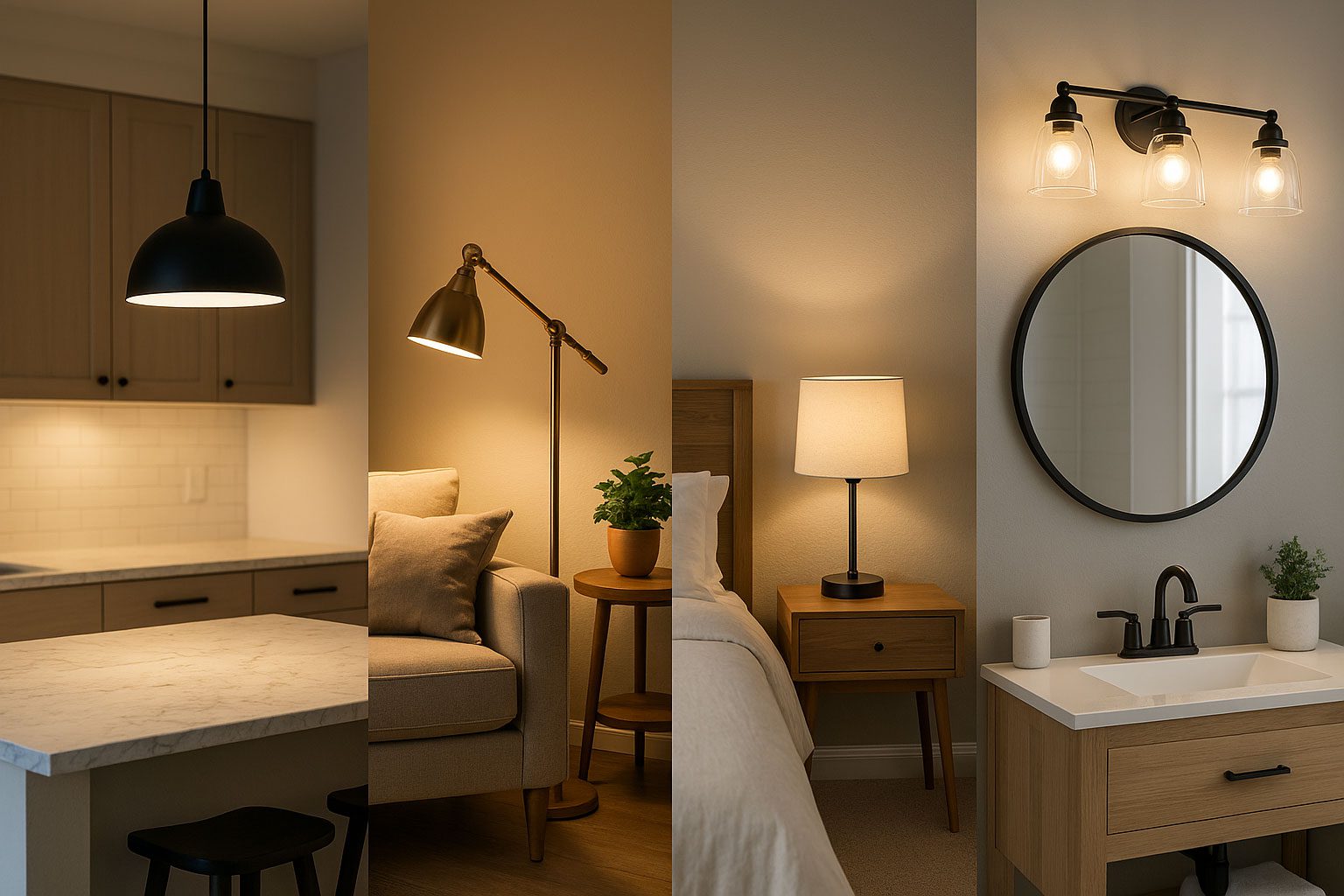
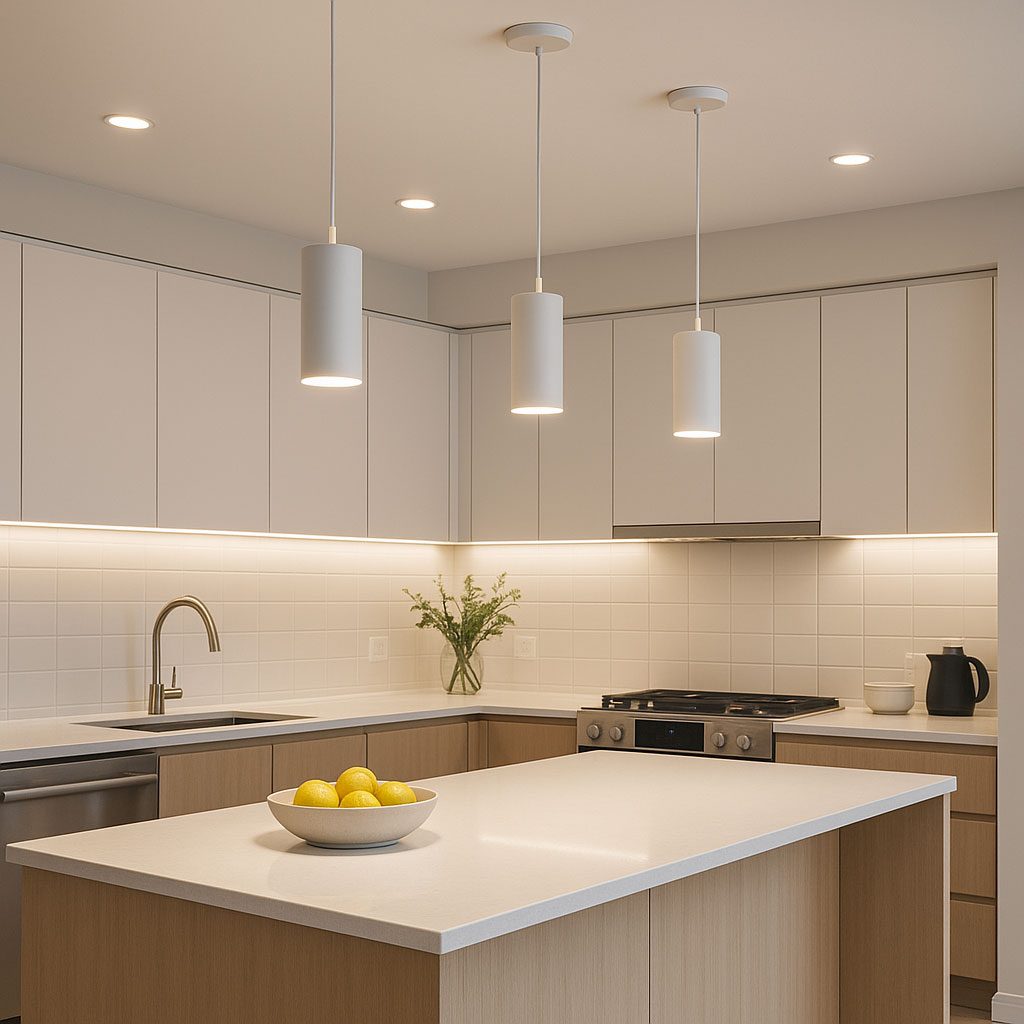
The kitchen is a functional workspace that also doubles as a social hub. A layered lighting plan keeps it bright, practical, and stylish.
Top Tips for Kitchen Lighting
- Use recessed downlights or LED panels for overall brightness.
- Add under-cabinet LED strips to light up worktops.
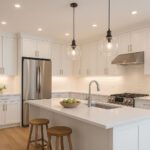
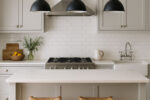
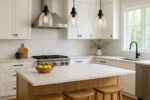
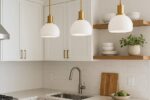
- Hang pendant lights above kitchen islands for a stylish focal point.
The kitchen is one of the most important rooms when planning lighting for every room in your home, as it combines function with design.
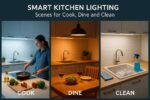
For a deeper look at layouts, brightness, and fixture choice, explore our complete kitchen lighting guide. You may also find these planning resources useful:
- Lumens for kitchen lighting to avoid dark worktops
- Kitchen downlight spacing guide with exact measurements
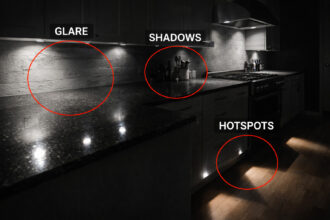
- Under cabinet lighting without shadows for task areas
- How high to hang kitchen island pendants using UK rules of thumb
Expert Tip
Choose cool white (4000K) lighting for prep zones and warm white (3000K) for dining or entertaining areas.
Bathroom Lighting – Safe, Bright & Relaxing
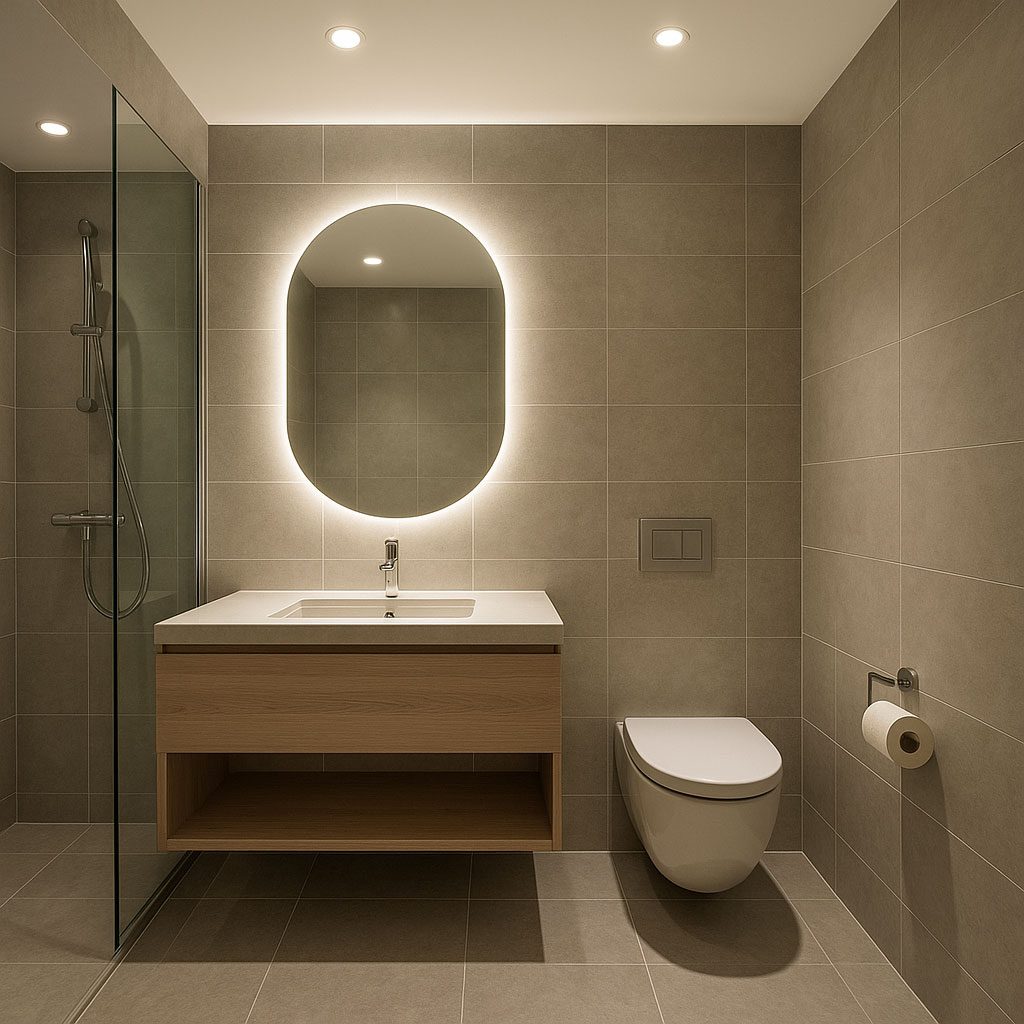
Bathrooms require lighting that’s both safe and stylish. Always check IP ratings to ensure fittings are suitable for moisture-prone areas.
Best Bathroom Lighting Options
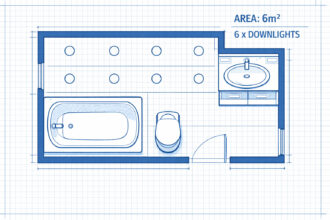
- IP44 or IP65-rated downlights for safe general lighting.
- Mirror or vanity lights for precise grooming.
- Soft wall lights for relaxation and ambience.
Bathroom lighting needs careful planning to balance safety, comfort, and appearance. These guides cover the most common problem areas:
- Bathroom lighting ideas for every style
- Bathroom zones and IP ratings explained
- Bathroom lighting layouts for small and large spaces
- How many downlights you need in a bathroom
- Bathroom mirror lighting ideas to avoid shadows and glare
Expert Tip
Combine cool white light (4000K) for clarity with warm light (3000K) for a spa-like effect.
For electrical safety regulations, refer to the NICEIC Bathroom Zones Guide (UK).
Once you’ve mastered kitchen and bathroom illumination, the next step in creating perfect lighting for every room is understanding how to layer light in your living spaces.
Living Room Lighting – Warm, Layered & Flexible
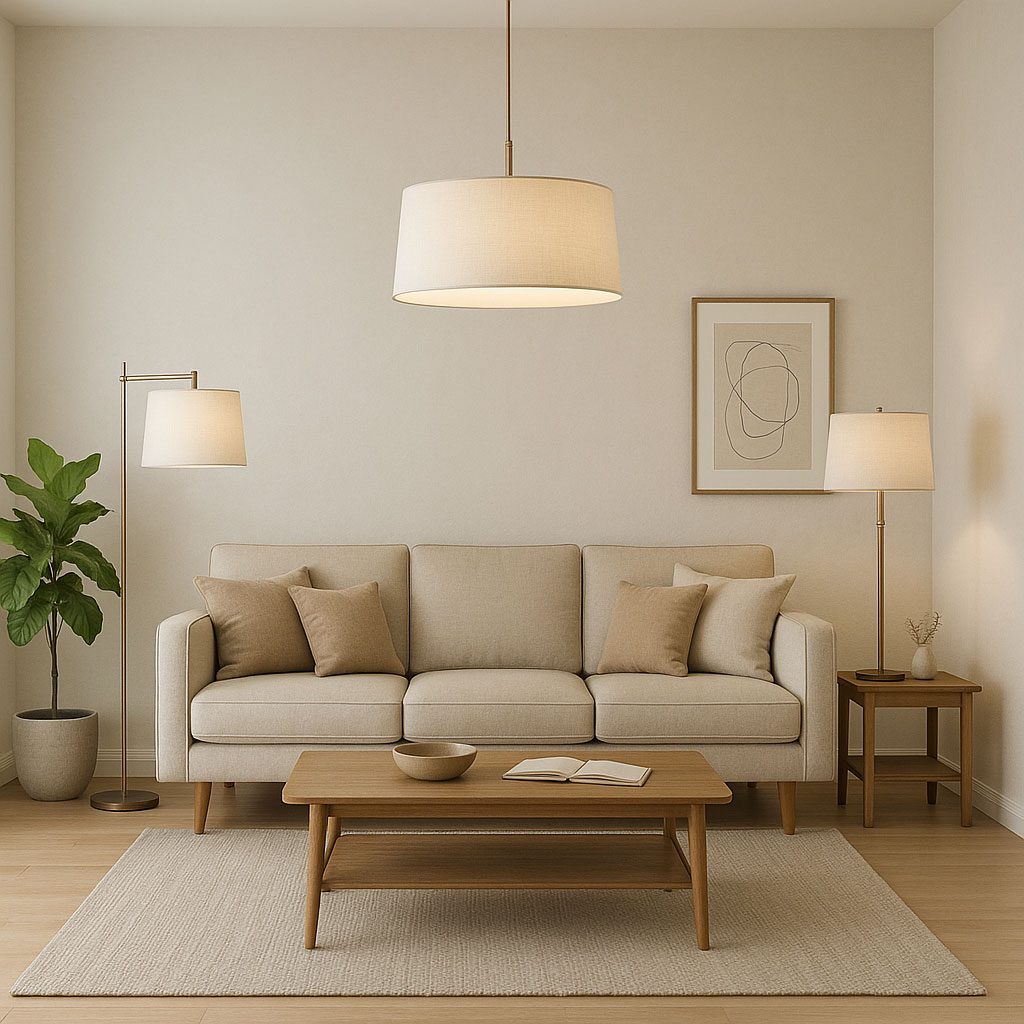
The living room is the heart of relaxation. It benefits from soft, adjustable lighting that adapts from day to night.
Living Room Lighting Ideas
- Use a ceiling pendant as a central statement.
- Add floor and table lamps for warmth.
- Install smart dimmable downlights for versatility.
If you want to refine your layout further, our living room lighting guide explores fixture placement, dimming, and layering in more detail. For step by step advice, see how to layer living room lighting like a pro.
Expert Tip
Layering light with dimmers or smart controls creates a cosy atmosphere while offering flexibility for reading, TV time, or entertaining.
Bedroom Lighting – Calm, Soft & Personal
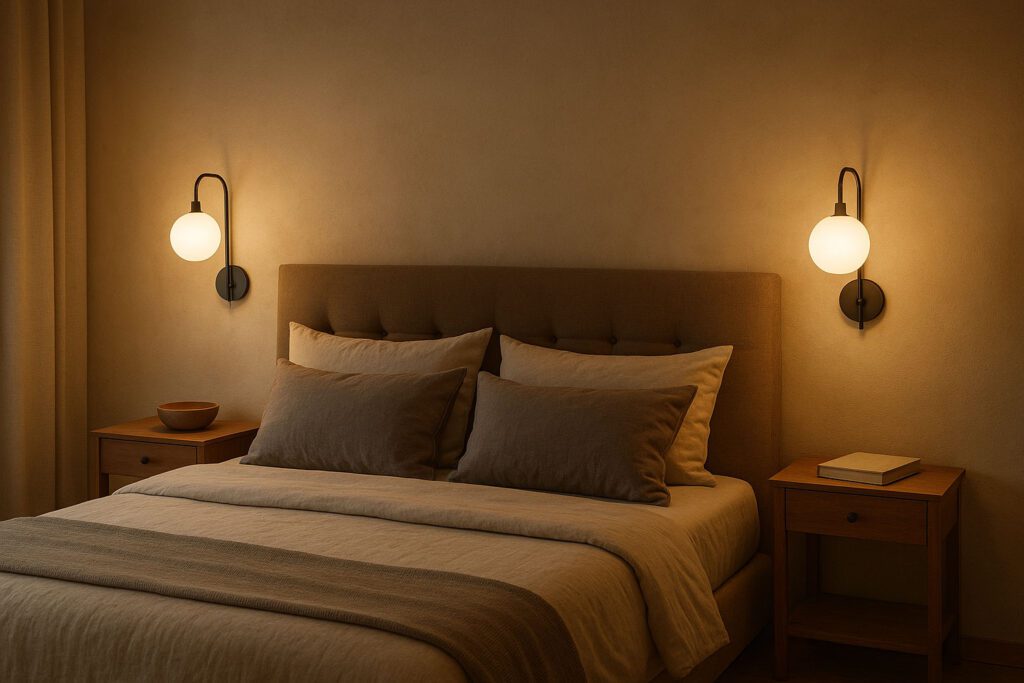
Bedroom lighting should promote rest while offering enough brightness for dressing and reading.
Bedroom Lighting Essentials
- Warm white ceiling light for general illumination.
- Bedside wall lights or reading lamps for focused use.
- LED strips behind headboards for subtle mood lighting.
Bedroom lighting works best when it is planned as a complete scheme rather than individual fittings. Our guide to creating the perfect bedroom lighting scheme shows how to combine ceiling lights, bedside lighting, and soft accent light for a restful result.
Expert Tip
Use 2700K–3000K warm tones and soft diffused fittings for a relaxed environment.
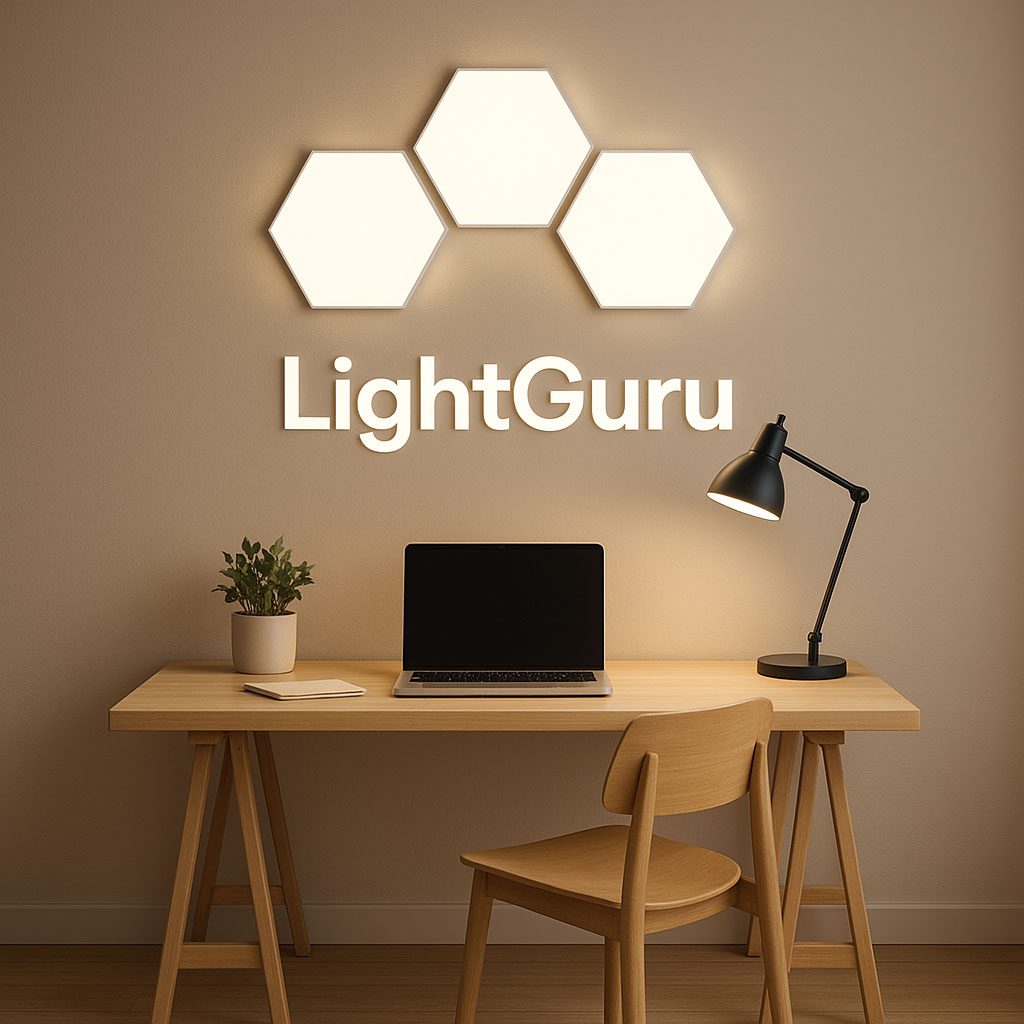
Home Office Lighting – Bright & Balanced
Lighting in your home office can directly influence focus and productivity.
Home Office Lighting Tips
- Neutral white downlights (4000K) for focus.
- Desk lamps for task areas.
- Wall lighting to soften shadows and reduce eye strain.
Brightness plays a major role in comfort and productivity. If your workspace feels tiring on the eyes, our guide on choosing the right LED brightness for each room explains how to balance clarity without harsh glare.
Expert Tip
Avoid harsh contrast by lighting both your desk and surrounding walls.
For guidance on eye comfort and display brightness, visit the Energy Saving Trust – Lighting Advice page.
Outdoor Lighting – Safe, Stylish & Secure
Outdoor lighting improves security and highlights your home’s architecture.
Outdoor Lighting Tips
- Wall lights or lanterns by entrances for visibility.
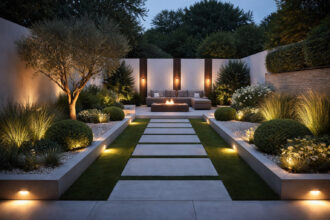
- Pathway or bollard lights to guide the way.
- Motion-sensor lights for added security.
- Spotlights for landscaping features.
Outdoor lighting choices depend heavily on environment and use. These guides explore common UK scenarios:
- Outdoor lights for coastal homes with corrosion resistant finishes
- Patio lighting ideas for British gardens
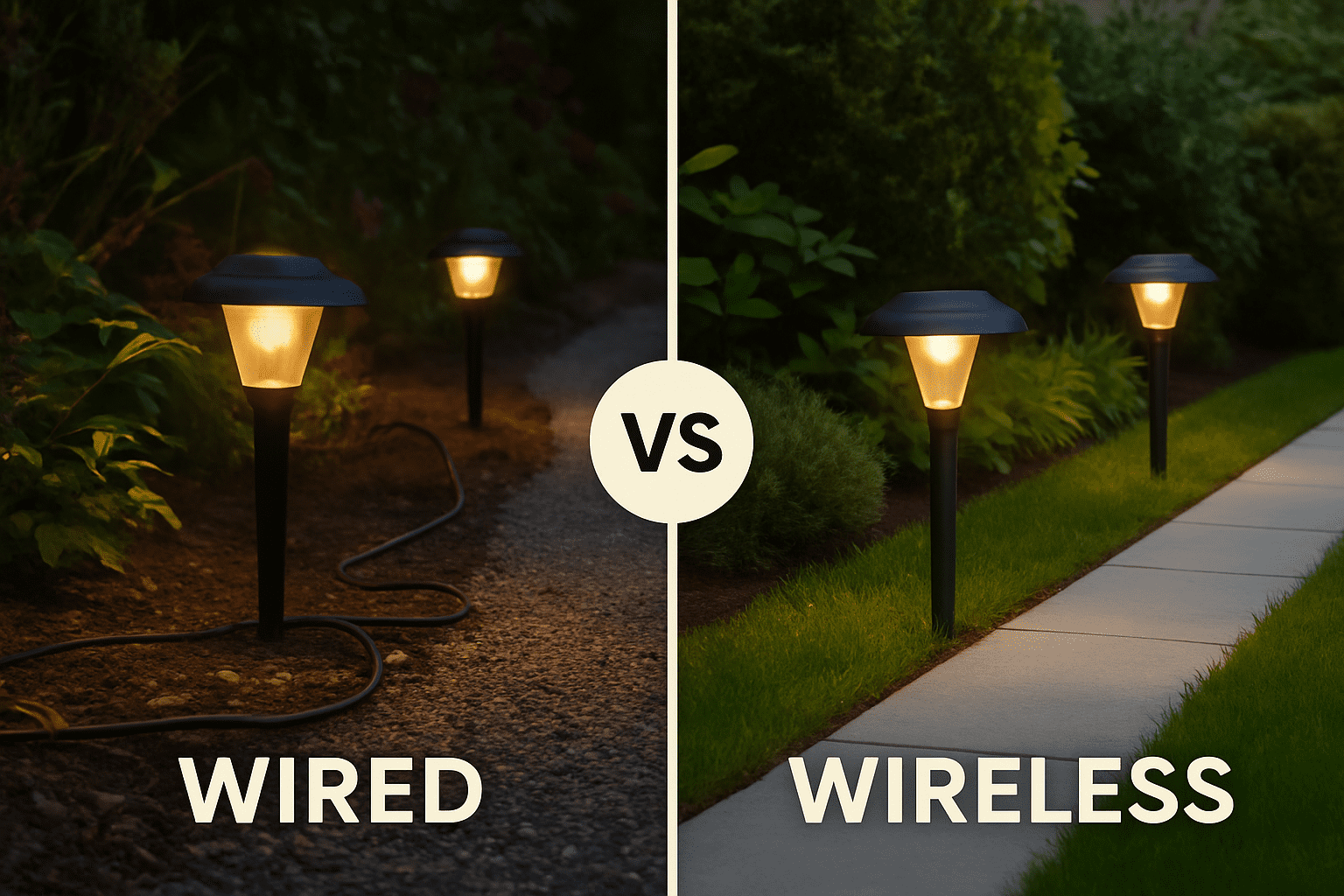
- How to light a garden path without wiring for simple installations
Expert Tip
Choose IP65-rated fixtures for full weather resistance. In coastal areas, opt for marine-grade finishes to prevent corrosion.
Quick Reference Summary
| Room | Ideal Lighting Types | Colour Temperature | Key Tip |
|---|---|---|---|
| Kitchen | Downlights, under-cabinet, pendants | 4000K | Layer task + ambient |
| Bathroom | IP44 downlights, mirror lights | 4000K (task) / 3000K (ambient) | Check IP ratings |
| Living Room | Ceiling, wall & floor lamps | 2700–3000K | Add dimmers |
| Bedroom | Ceiling + bedside lights | 2700K | Use warm tones |
| Office | Desk + ceiling lighting | 4000K | Reduce glare |
| Outdoor | Wall, path & motion lights | 3000–4000K | Use IP65-rated fixtures |
If you’re unsure how brightness, colour temperature, or colour accuracy affect different rooms, our guides to LED brightness for each room, warm vs cool lighting, and CRI vs colour temperature explain these concepts in plain English.
FAQs
Q1: What is the best lighting colour temperature for a home?
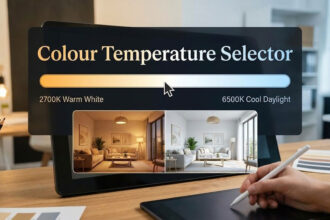
Warm white (2700K–3000K) creates a cosy, relaxed feel, while cool white (4000K) is better for task-heavy areas like kitchens and bathrooms.
Q2: How do I make my home lighting more energy efficient?
Switch to LED lights, use dimmers and sensors, and check the Energy Label Regulations for efficiency ratings.
Q3: What are lumens, and how many do I need?
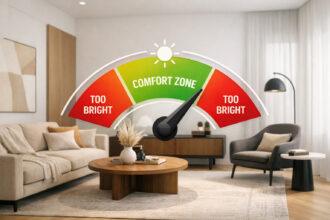
Lumens measure brightness — for example, a living room may need around 1,500–3,000 lumens in total, while kitchens may require 5,000+.
Our LED brightness for each room guide breaks this down with real examples for each space.
Q4: Can I mix warm and cool lighting in one room?
Yes – layering different temperatures can enhance depth and define zones within a space.
Q5: Do I need special lighting for bathrooms or outdoor areas?
Yes – always use IP-rated fittings designed for moisture or weather exposure (IP44 for bathrooms, IP65 for outdoors).
This is explained fully in our bathroom zones and IP ratings guide.
Final Thoughts – Designing Light with Confidence
Lighting is one of the most powerful design tools in your home. The right setup enhances comfort, mood, and practicality – and with LightGuru, you have the guidance to make every space shine perfectly.
By layering ambient, task, and accent lighting, you can design lighting for every room that balances beauty and practicality.
Next steps:
- [The Ultimate Guide to Kitchen Lighting →]
- [Bathroom Lighting Ideas for Every Style →]
- [How to Layer Living Room Lighting Like a Pro →]
External References
- Lighting Industry Association – LIA
- Energy Saving Trust – Lighting Efficiency
- NICEIC – Electrical Safety
- GOV.UK – Energy Label Regulations
Explore more LightGuru guides to master lighting for every room and beyond.