
IP ratings for outdoor lighting are one of the most confusing parts of garden and exterior lighting. Many people know they matter, but few understand what the numbers actually mean or which rating is right for different parts of the garden.
This guide explains IP ratings in a clear, practical way. You will learn what IP44, IP65, and IP68 really mean, where each is typically used, and how to choose the right level of protection without overcomplicating the decision.
This guide focuses on one specific aspect of lighting design. For full garden planning, layout, and safety guidance, see our complete Garden & Outdoor Lighting Guide.
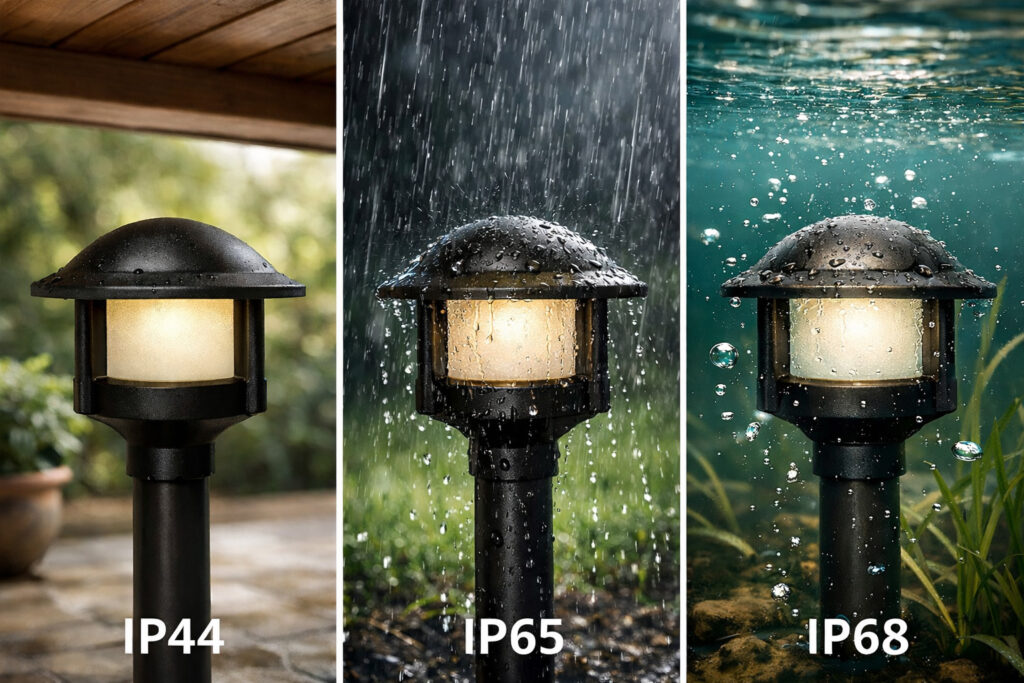
Table of Contents
IP ratings for outdoor lighting explained
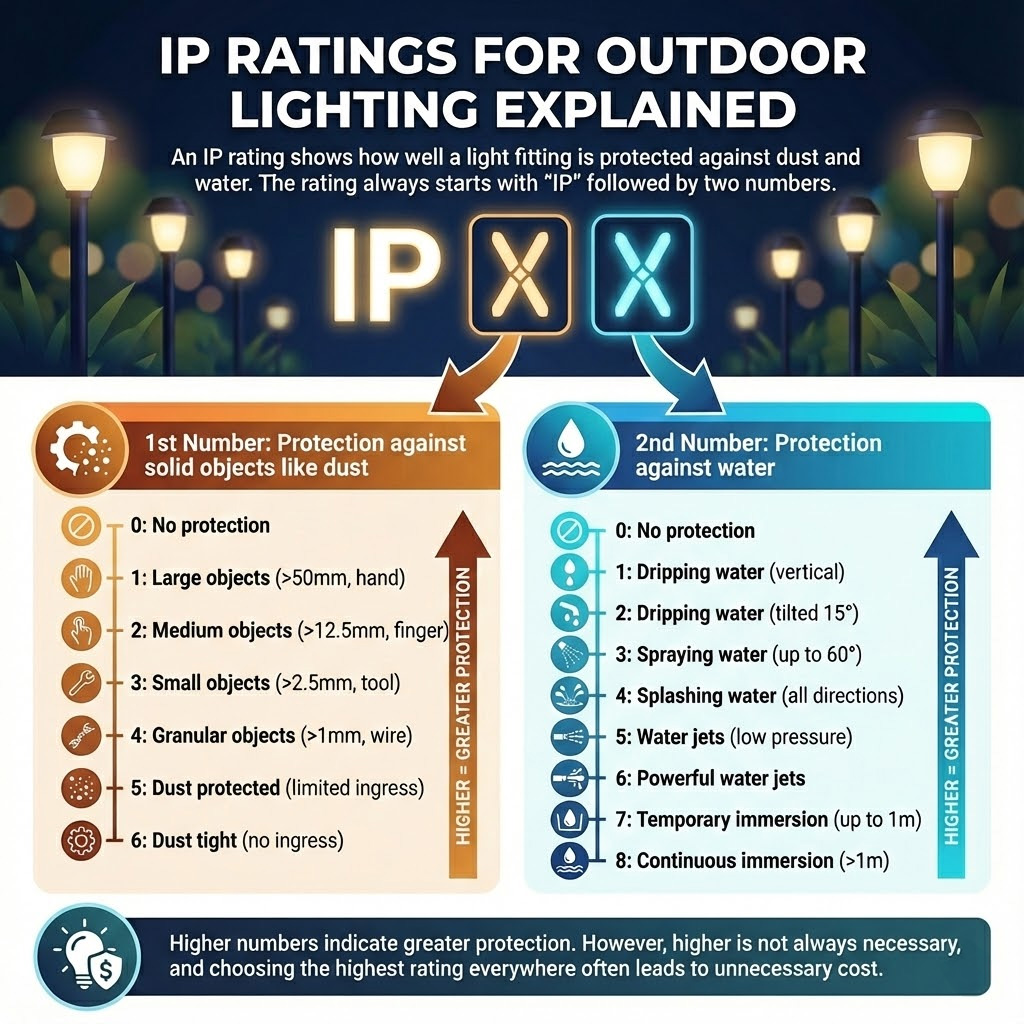
An IP rating shows how well a light fitting is protected against dust and water. The rating always starts with “IP” followed by two numbers.
- The first number refers to protection against solid objects like dust
- The second number refers to protection against water
Higher numbers indicate greater protection. However, higher is not always necessary, and choosing the highest rating everywhere often leads to unnecessary cost.
Why IP ratings matter outdoors
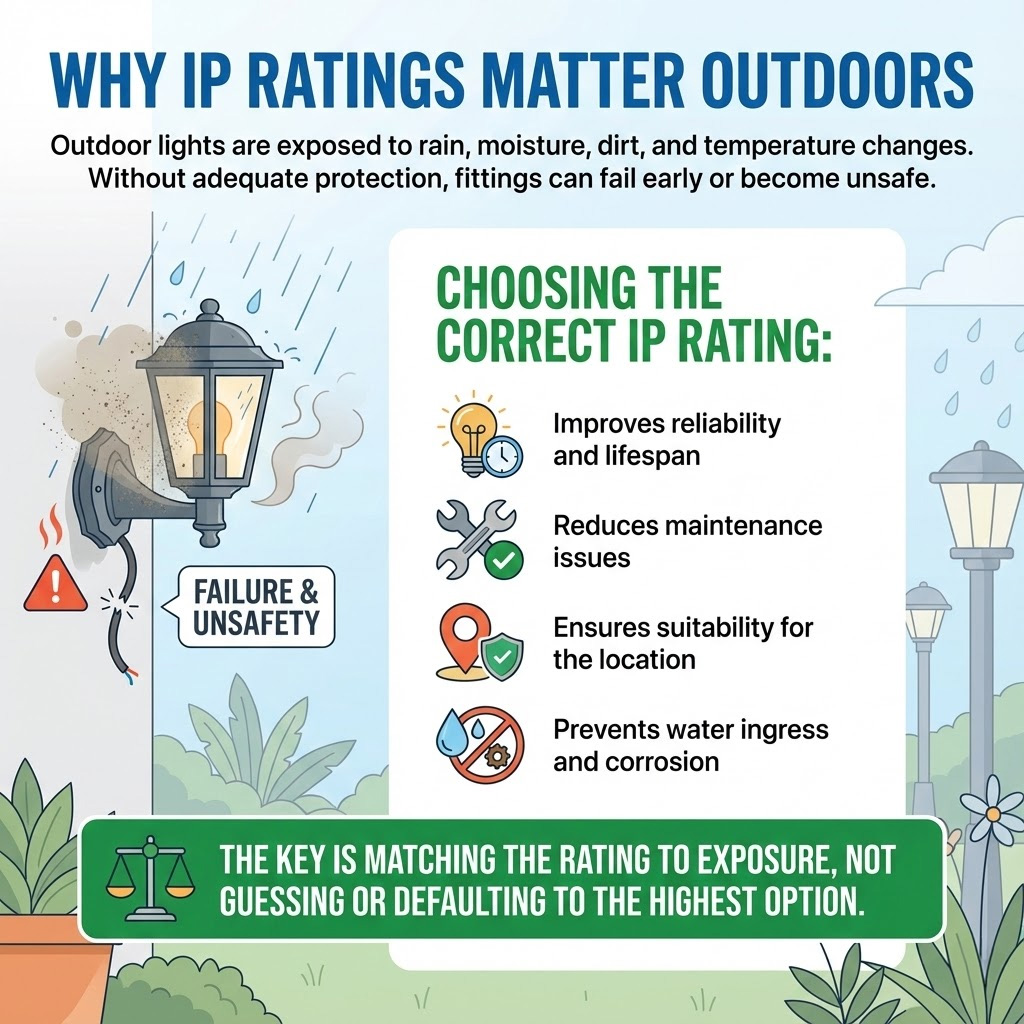
Outdoor lights are exposed to rain, moisture, dirt, and temperature changes. Without adequate protection, fittings can fail early or become unsafe.
Choosing the correct IP rating:
- Improves reliability and lifespan
- Reduces maintenance issues
- Ensures suitability for the location
- Prevents water ingress and corrosion
The key is matching the rating to exposure, not guessing or defaulting to the highest option.
Understanding the most common outdoor IP ratings
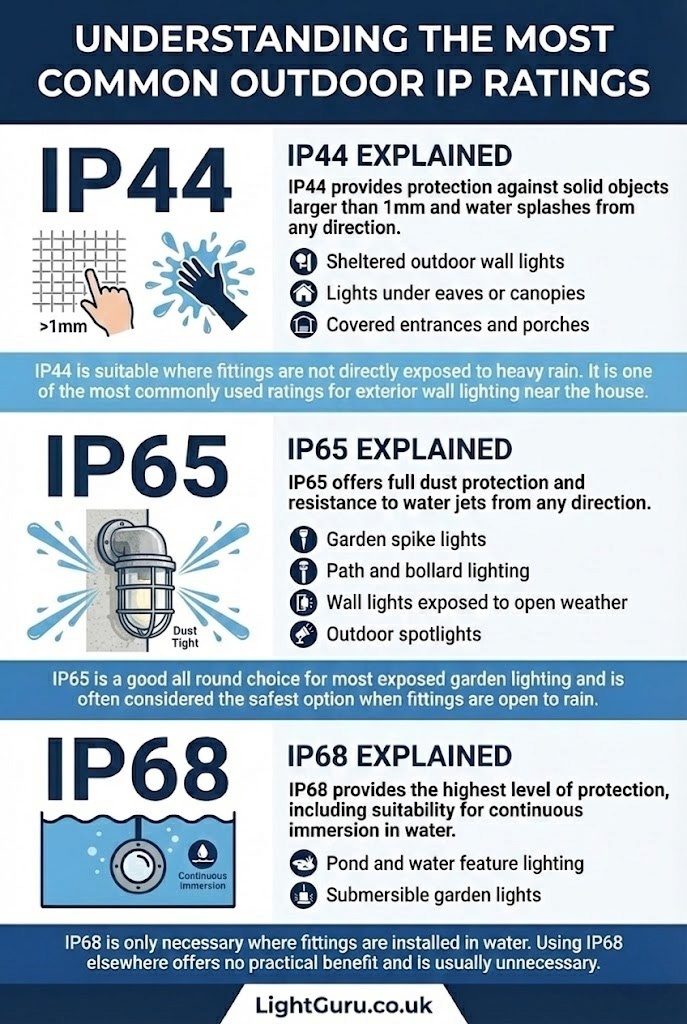
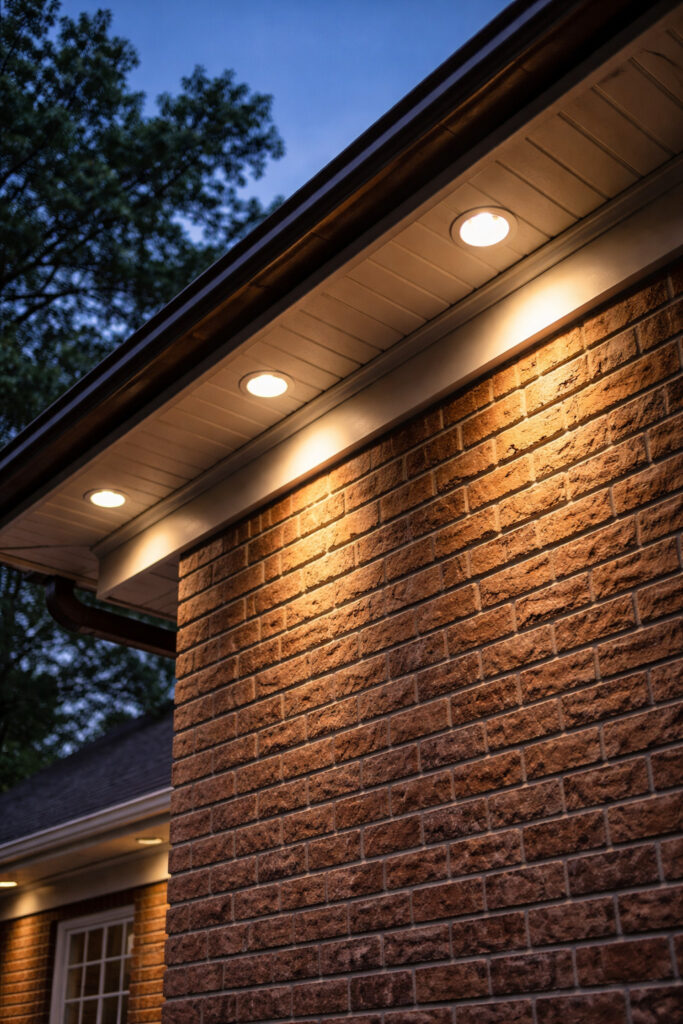
IP44 explained
IP44 provides protection against solid objects larger than 1mm and water splashes from any direction.
It is commonly used for:
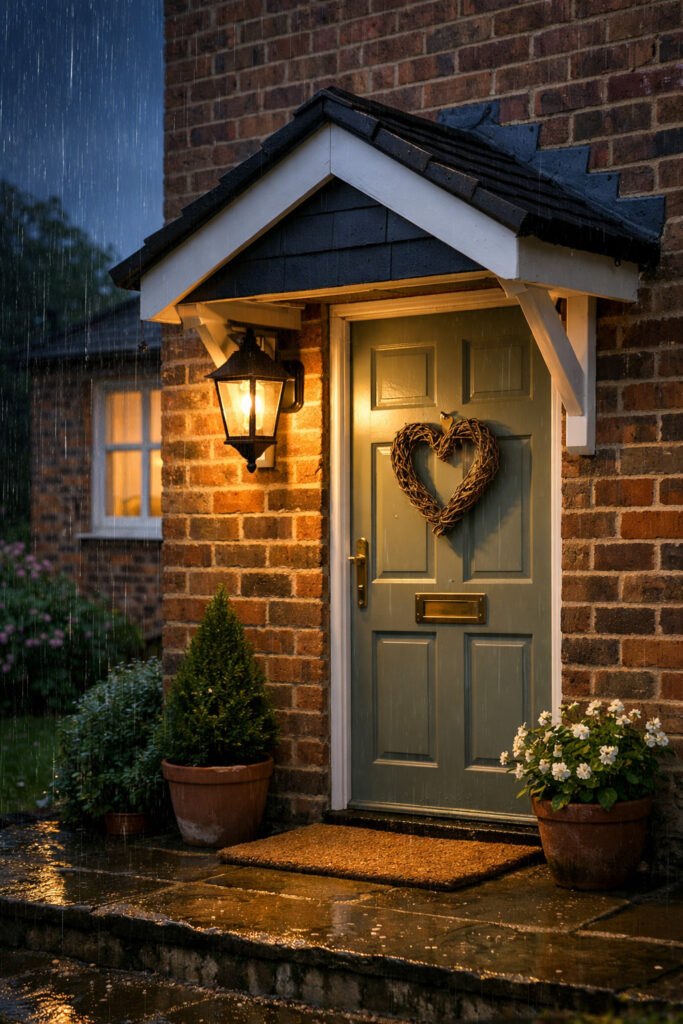
- Sheltered outdoor wall lights
- Lights under eaves or canopies
- Covered entrances and porches
IP44 is suitable where fittings are not directly exposed to heavy rain. It is one of the most commonly used ratings for exterior wall lighting near the house.
IP65 explained
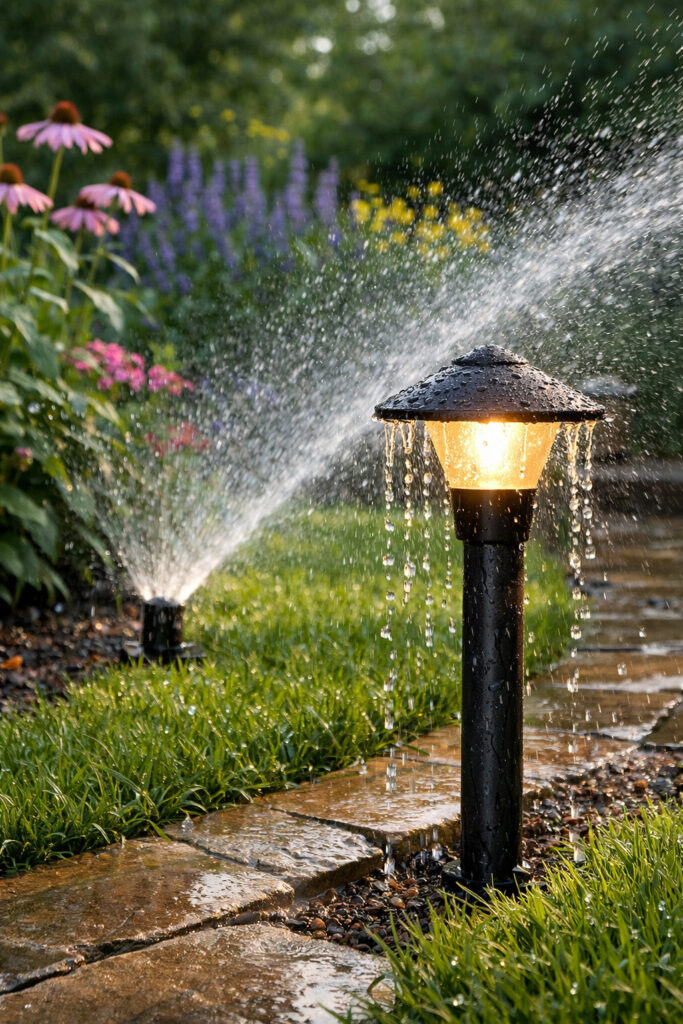
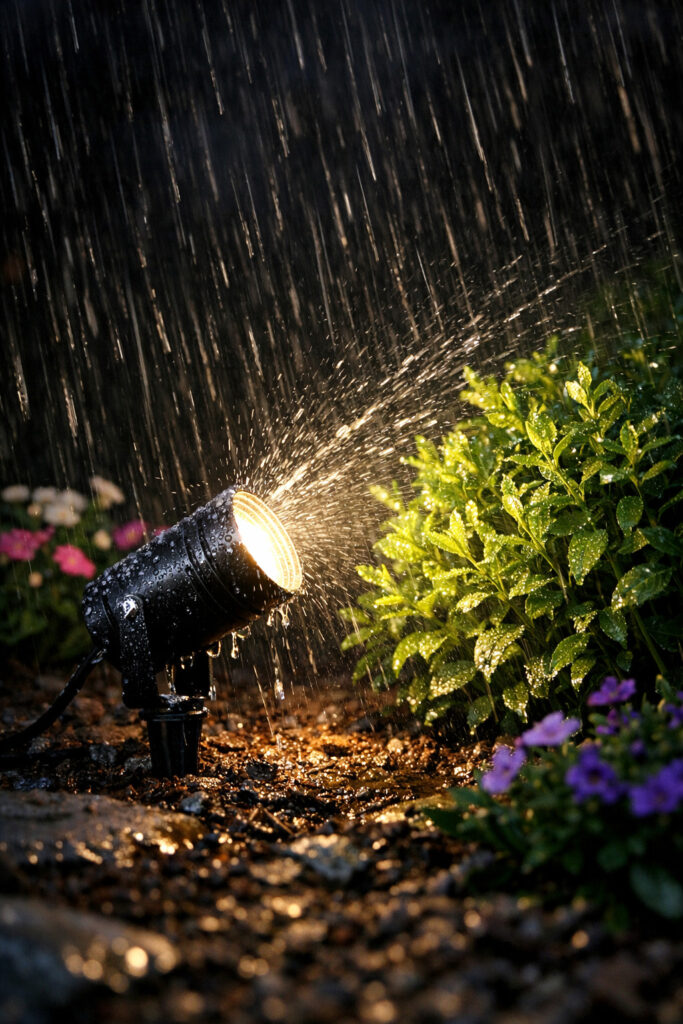
IP65 offers full dust protection and resistance to water jets from any direction.
It is commonly used for:
- Garden spike lights
- Path and bollard lighting
- Wall lights exposed to open weather
- Outdoor spotlights
IP65 is a good all round choice for most exposed garden lighting and is often considered the safest option when fittings are open to rain.
IP68 explained
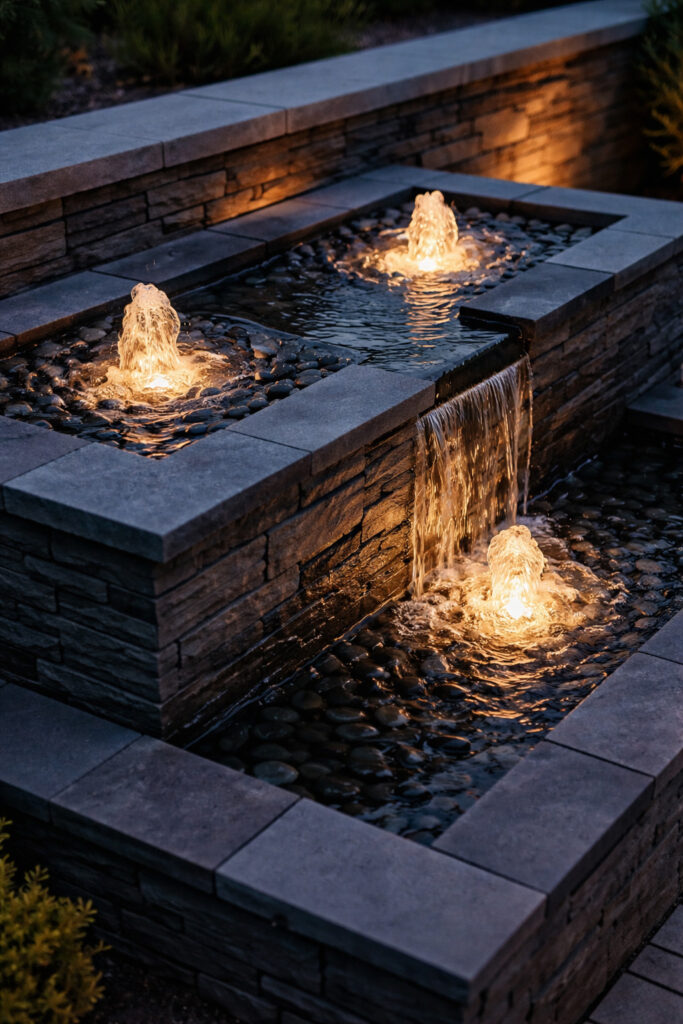
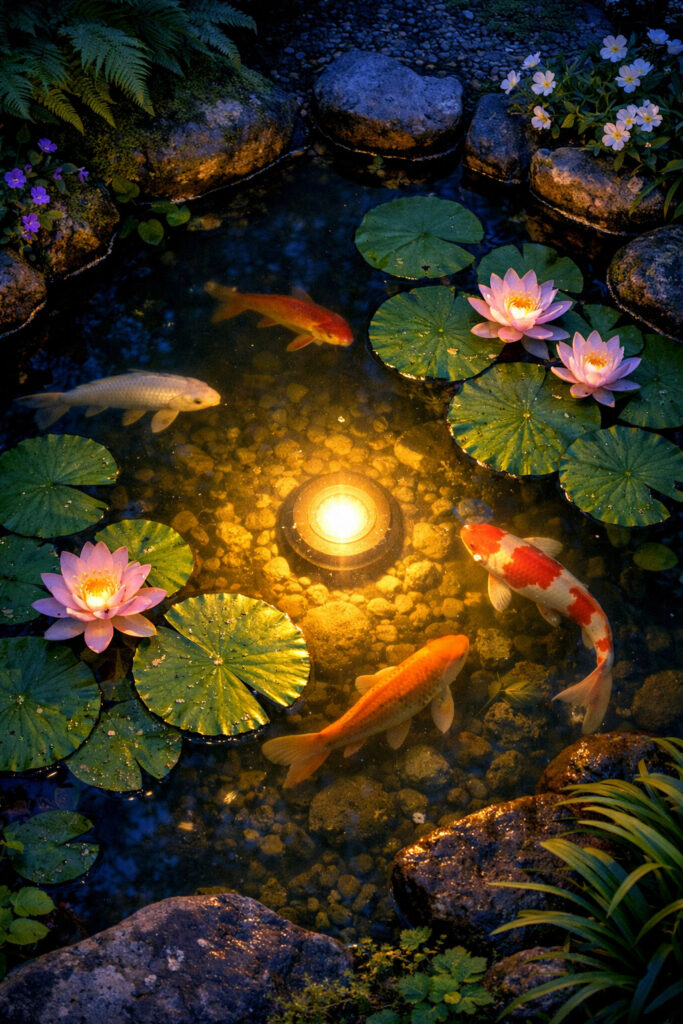
IP68 provides the highest level of protection, including suitability for continuous immersion in water.
It is typically used for:
- Pond and water feature lighting
- Submersible garden lights
IP68 is only necessary where fittings are installed in water. Using IP68 elsewhere offers no practical benefit and is usually unnecessary.
Outdoor lighting IP ratings and UK regulations (what to know)
In the UK, outdoor lighting must be suitable for its environment, but IP ratings themselves are not legal approvals. Instead, they indicate whether a fitting is appropriate for exposure to weather or moisture.
Most domestic garden lighting does not require planning permission, but installations should always follow UK electrical safety standards. An electrician can confirm requirements for power supply and installation, while IP ratings help ensure fittings are suitable for outdoor conditions.
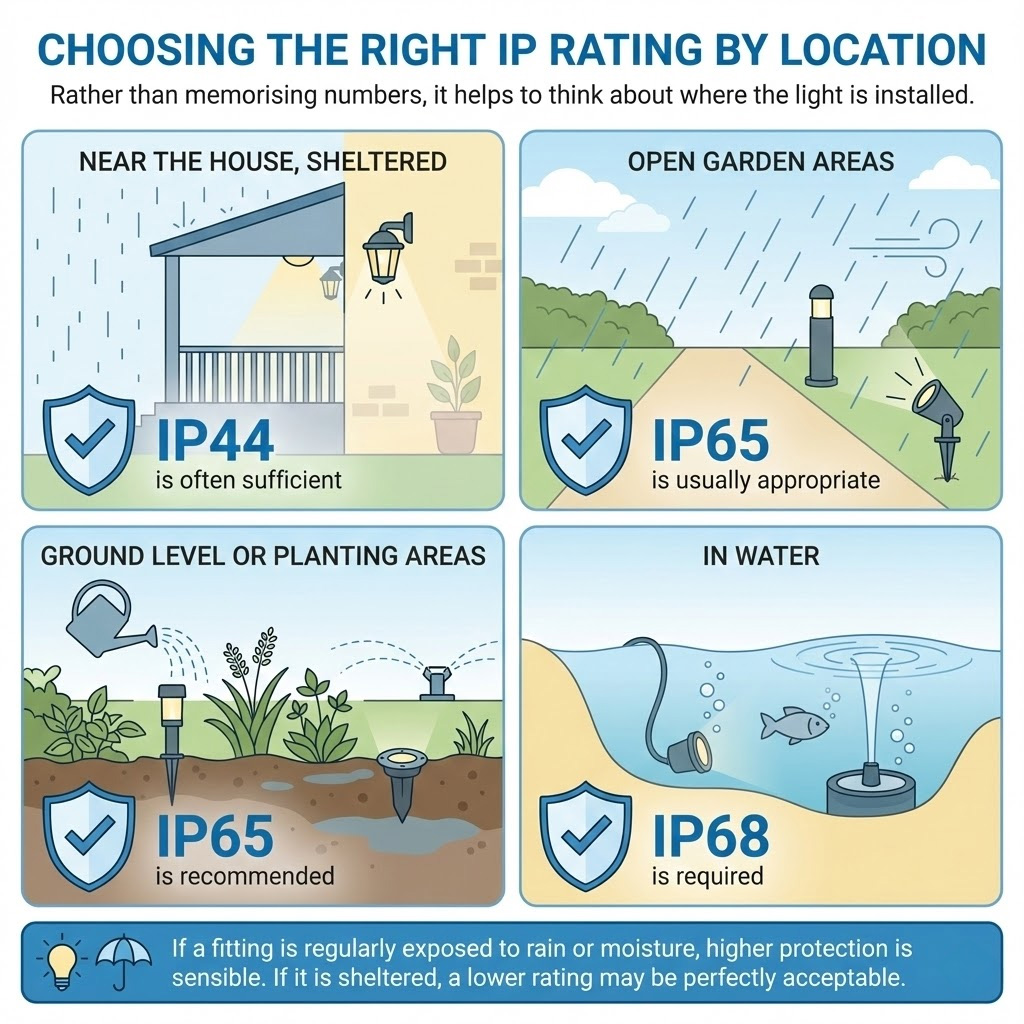
Choosing the right IP rating by location
Rather than memorising numbers, it helps to think about where the light is installed.
- Near the house, sheltered → IP44 is often sufficient
- Open garden areas → IP65 is usually appropriate
- Ground level or planting areas → IP65 is recommended
- In water → IP68 is required
If a fitting is regularly exposed to rain or moisture, higher protection is sensible. If it is sheltered, a lower rating may be perfectly acceptable.
Exposure depends heavily on positioning, which is why planning the garden lighting layout matters as much as the IP rating itself.
Do higher IP ratings mean better quality?
Not necessarily.
An IP rating only describes protection against dust and water. It does not guarantee:
- Better light quality
- Longer LED lifespan
- Superior materials
- Improved design
A well made IP44 light can outperform a poorly made IP65 fitting. IP ratings should be treated as suitability indicators, not quality scores.
IP ratings and ground recessed lighting
Ground recessed lights deserve special attention.
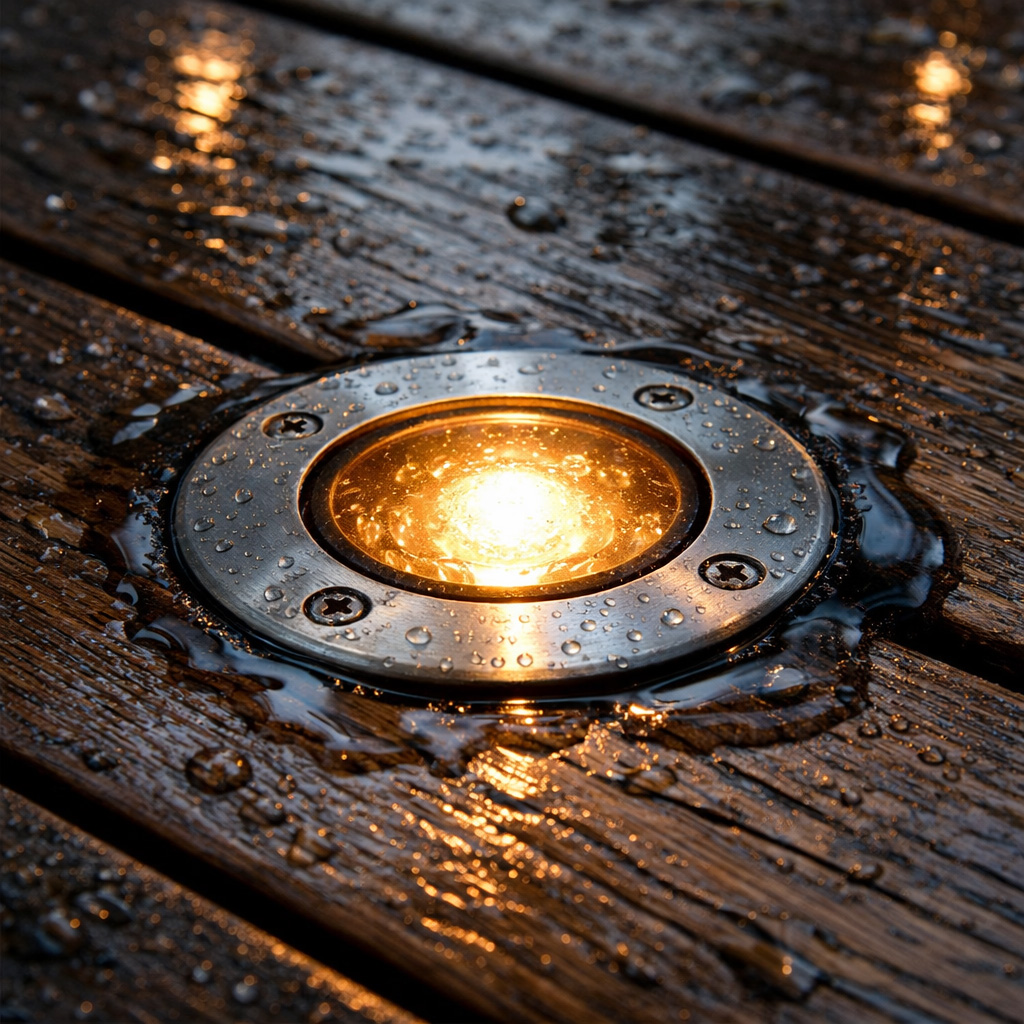
Because they sit at ground level, they are exposed to:
- Standing water
- Dirt and debris
- Pressure from foot traffic
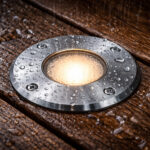
For this reason, ground recessed garden lights usually require at least IP65, and often higher depending on location. Good drainage is just as important as the IP rating itself.

IP ratings and garden building lighting
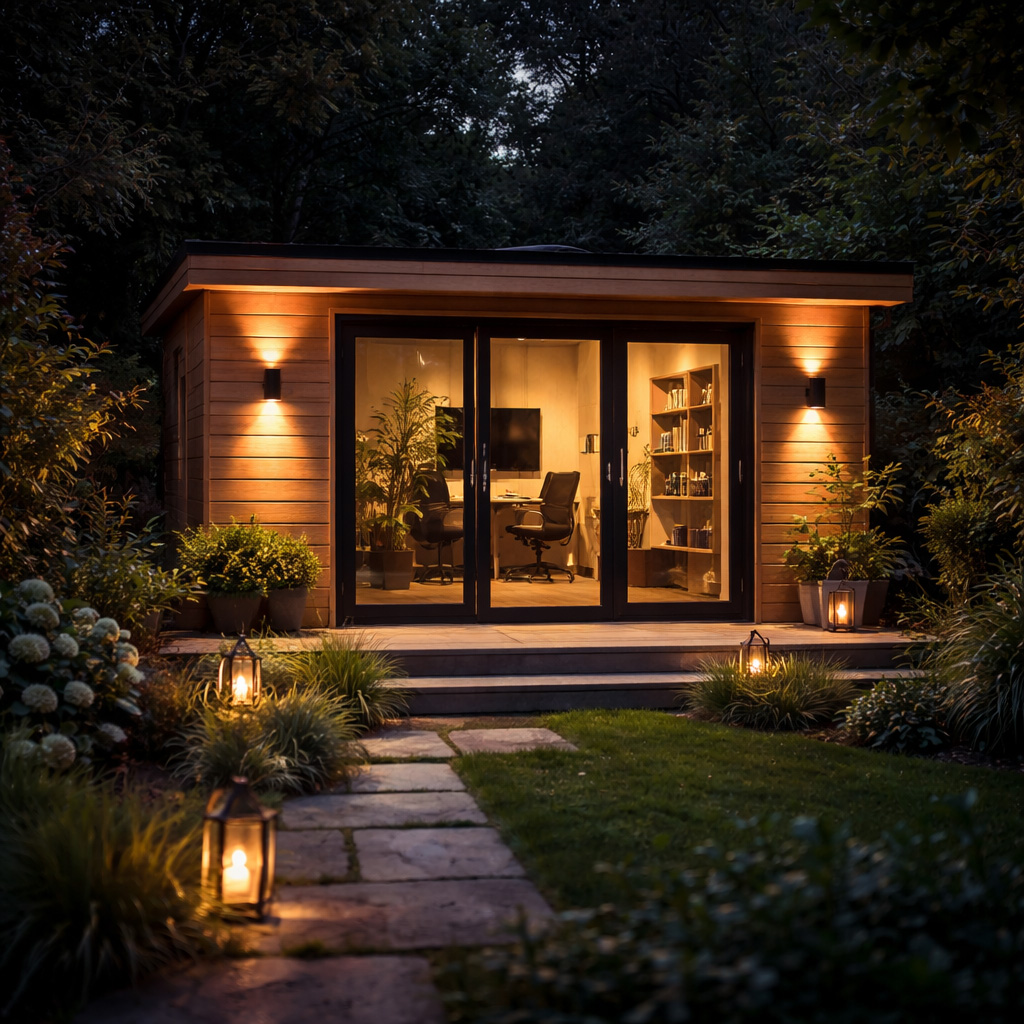
Lighting near sheds, garden offices, and studios often sits somewhere between indoor and outdoor use.
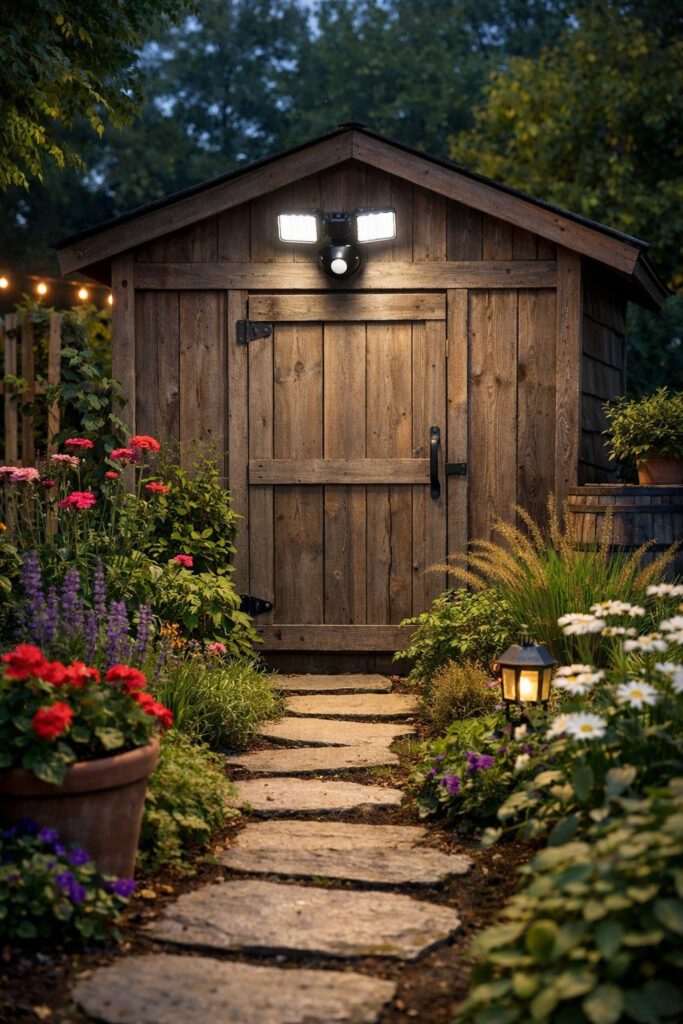
- Exterior wall lights on garden buildings usually need IP44 or IP65 depending on exposure
- Fully exposed elevations benefit from IP65
- Covered entrances may suit IP44
Interior lighting inside garden buildings follows indoor requirements and is planned separately.
Many outdoor wall lighting fittings near the house use IP44 when installed in sheltered locations.
IP ratings and safety considerations
IP ratings are part of overall outdoor lighting safety, but they are not the only factor.
Good practice also includes:
- Using fittings designed for outdoor use
- Ensuring correct installation
- Avoiding water traps around fittings
- Choosing appropriate locations
Guidance from organisations such as the Chartered Institution of Building Services Engineers supports matching protection levels to environmental exposure rather than over specifying fittings.
While IP ratings indicate protection against dust and water, overall suitability also depends on installation and use, and following recognised outdoor electrical safety guidance helps reduce risk in external environments.

IP ratings, light pollution, and responsibility
Choosing the correct IP rating does not mean using brighter lights. In fact, responsible outdoor lighting focuses on control and direction, not intensity.
Following official light pollution guidance helps ensure outdoor lighting is effective without unnecessary spill, glare, or environmental impact.
Common IP rating mistakes to avoid
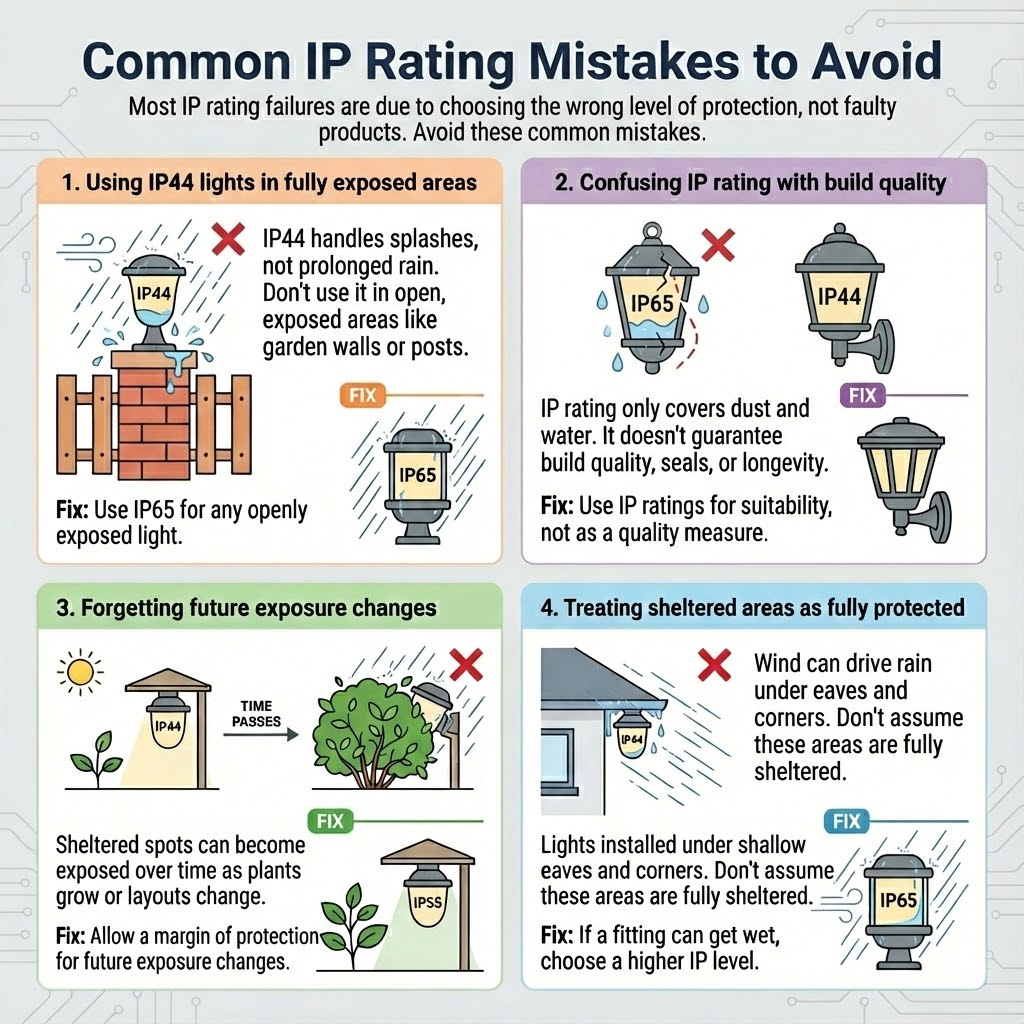
Most IP rating problems are not caused by faulty products, but by choosing the wrong level of protection for the location. These are the mistakes that most often cause frustration later.
Using IP44 lights in fully exposed areas
A very common issue is installing IP44 rated lights on open garden walls, fences, or posts with no overhead protection. While IP44 can handle splashes, it is not designed for prolonged exposure to wind driven rain.
Fix: Use IP65 for any light that is openly exposed to the weather.
Confusing IP rating with build quality
An IP rating only describes protection against dust and water. It does not guarantee good seals, durable materials, or long lifespan. A poorly made IP65 fitting can fail sooner than a well made IP44 light in the right location.
Fix: Use IP ratings as a suitability guide, not a measure of overall quality.
Forgetting future exposure changes
Plants grow, ground levels change, and garden layouts evolve. A fitting that starts in a sheltered position can become exposed over time as surroundings change.
Fix: Allow a margin of protection where future exposure is likely.
Treating sheltered areas as fully protected
Lights installed under shallow eaves or near corners are often assumed to be sheltered, but wind can still drive rain directly onto them. This often leads to IP44 fittings being used where they are not suitable long term.
Fix: If a fitting can realistically get wet, choose a higher protection level.
Many IP related issues fall into avoidable outdoor lighting mistakes rather than product failures.
How IP ratings fit into a complete lighting plan
IP ratings are just one part of a good outdoor lighting scheme. Layout, brightness, colour temperature, and control all play equally important roles.
For a full overview of how everything works together, our garden lighting ideas pillar shows how protection, placement, and atmosphere combine in real gardens.
Frequently asked questions
Is IP44 enough for outdoor lighting?
Yes, for sheltered areas. Exposed locations usually need higher protection.
Do all garden lights need IP65?
No. Only lights exposed to weather or ground moisture require that level.
Is IP68 waterproof?
Yes. IP68 fittings are designed for continuous immersion in water.
Can I use indoor lights outside if they are covered?
No. Outdoor fittings should always be rated for external use.
Final thoughts
IP ratings do not need to be complicated. The goal is simply to choose lighting that suits its environment. Matching protection levels to exposure keeps outdoor lighting reliable, safe, and long lasting without unnecessary expense.
Once IP ratings are understood, the rest of the lighting plan becomes much easier to manage.