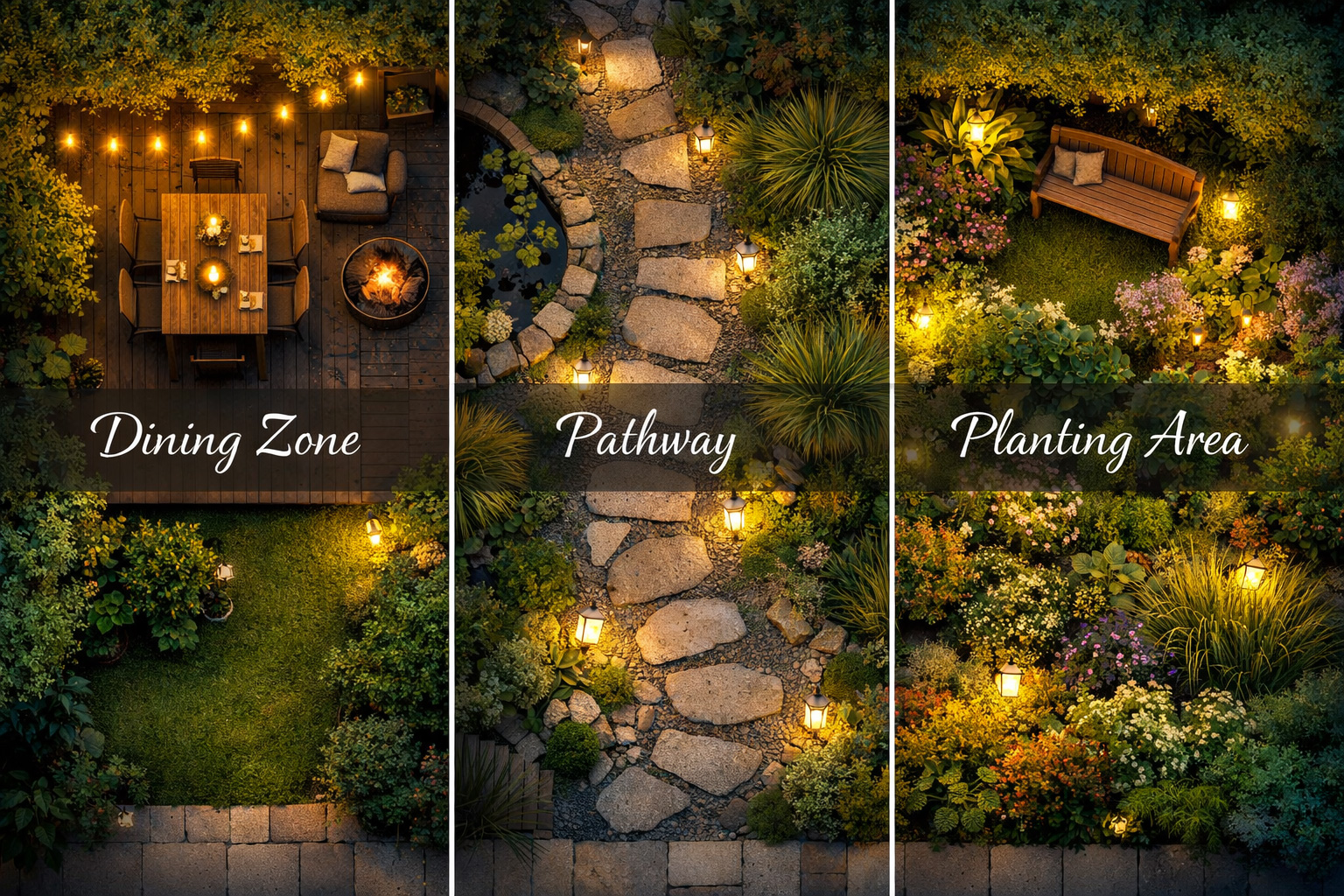
Garden lighting ideas have the power to completely change how an outdoor space feels once daylight fades. A garden that looks ordinary during the day can become calm, atmospheric, and welcoming at night with the right lighting approach. The transformation does not come from brightness or expensive fittings, but from thoughtful placement and restraint.
This guide is designed to be a comprehensive reference for garden and outdoor lighting. It covers planning, layout, lighting zones, styles, brightness, colour, control, and common mistakes, helping you understand how to light a garden in a way that feels natural rather than over designed.
Table of Contents
Why garden and outdoor lighting matters
Outdoor lighting is often added late in a project or treated as an extra, yet it has a greater impact on how a garden is experienced than many planting or layout choices.
Well planned garden lighting:
- Extends how long the garden can be used
- Improves safety on paths, steps, and level changes
- Adds depth and structure to planting
- Makes the garden feel connected to the home
- Creates atmosphere without visual clutter
Poor lighting often has the opposite effect. Too much brightness, glare, or poorly aimed fittings can make a garden feel uncomfortable, flat, or artificial at night.

How to plan garden lighting before choosing fittings
The most successful garden lighting schemes start with planning, not products.
Before choosing fittings, consider:
- How the garden is used
- Where people walk
- Where people sit or gather
- Which features matter visually
- Which areas should remain darker
A garden should be thought of as a series of zones, not one large space. Lighting should support movement, comfort, and visual interest without trying to illuminate everything.
Just like indoors, outdoor lighting works best when it is layered:
- Functional lighting for movement and safety
- Ambient lighting for atmosphere
- Feature lighting for visual focus
Darkness is not a problem to eliminate. It is a tool that gives light its impact.
Thinking in zones rather than fittings is essential, and our garden lighting layout guide explains this step-by-step.

Garden lighting layout and layering
One of the most common mistakes in outdoor lighting is treating the garden as a flat plane. At night, depth is created by contrast, not coverage.
A layered garden lighting layout typically includes:
- Low level lighting to guide movement
- Mid level lighting to define spaces
- Vertical lighting to add height and drama
Lighting should be aimed at surfaces rather than into open space. Walls, planting, fences, and trees all reflect light softly and help the garden feel grounded.
Leaving areas unlit is just as important as lighting key features. Darkness between lit zones allows the eye to rest and makes illuminated areas feel intentional.

The key lighting zones in a garden
Pathways and walkways
Paths need to be visible without feeling like a runway.
- Low level lights work better than tall fittings
- Even spacing matters more than brightness
- Light should fall onto the ground, not into eyes
Seating and dining areas
These areas benefit from soft, ambient lighting.
- Light should sit around people, not above them
- Warm tones improve comfort
- Multiple low level sources feel better than one bright fitting
Planting and borders
Lighting planting adds texture and depth.
- Uplight trees and larger shrubs
- Side lighting reveals shape and shadow
- Avoid lighting every plant equally

Trees and vertical features
Trees are one of the most effective features to light.
- Use fewer fittings than expected
- Aim beams carefully
- Allow shadows to form naturally
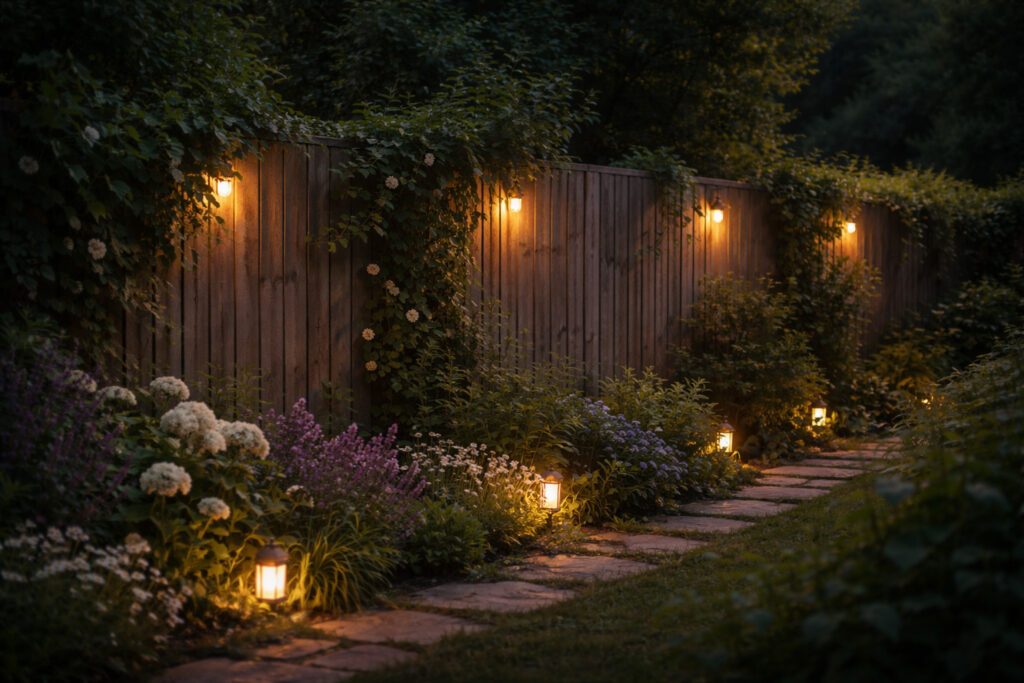
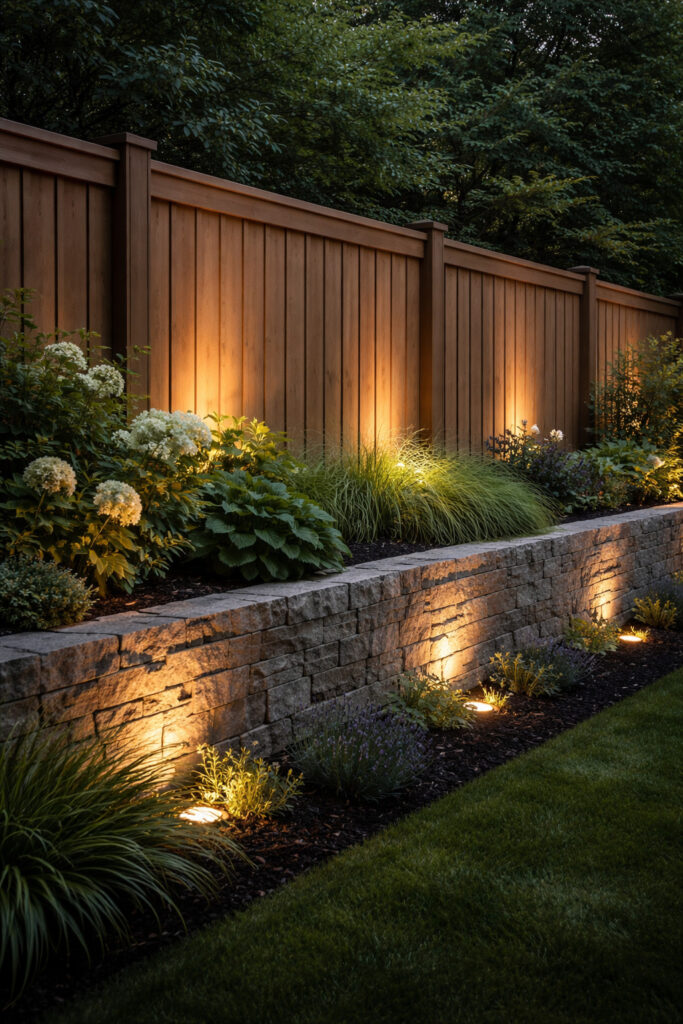
Boundaries and fencing
Boundary lighting defines space subtly.
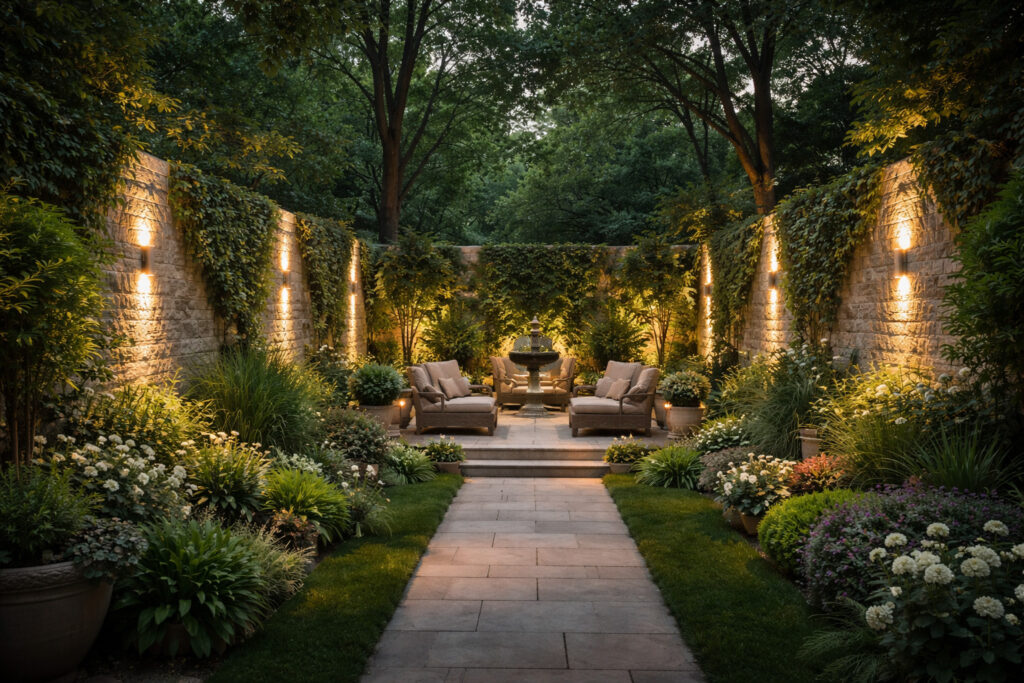
- Gentle wall or fence lighting works well
- Avoid continuous bright lines
- Suggest edges rather than outlining them
Entrances and thresholds
Entrances should feel welcoming and safe.
- Soft wall lighting near doors
- Balanced light that does not overpower
- Avoid harsh security style fittings near living spaces

Garden lighting ideas by type
Path lighting ideas
- Low bollards
- Recessed ground lights
- Discreet spike lights
Path lighting works best when consistent and understated.
Uplighting ideas
- Trees
- Architectural planting
- Garden structures
Uplighting should be used sparingly to avoid visual overload.
Wall and fence lighting ideas
- Downward facing wall lights
- Soft wall washers
- Hidden strip lighting
These help connect the house to the garden visually.
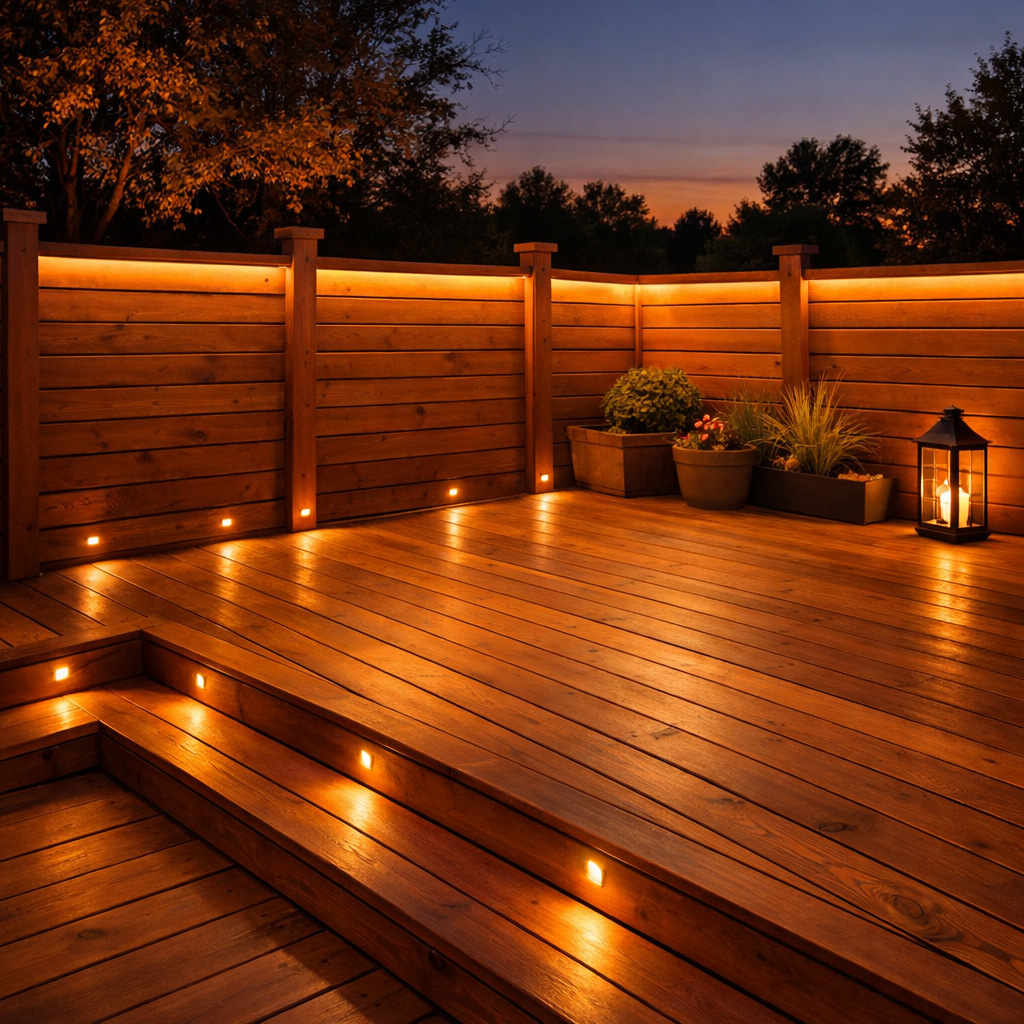
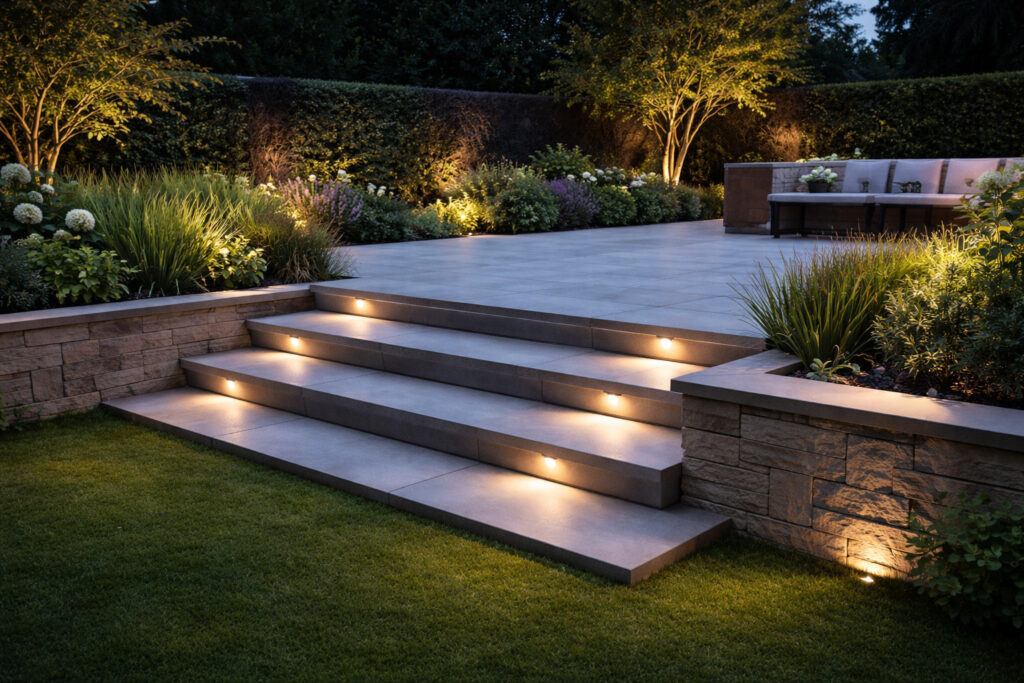
Decking and step lighting ideas
- Recessed step lights
- Under tread lighting
These improve safety without dominating the space.
Spike lights and spotlights
- Flexible and adjustable
- Ideal for planting and features
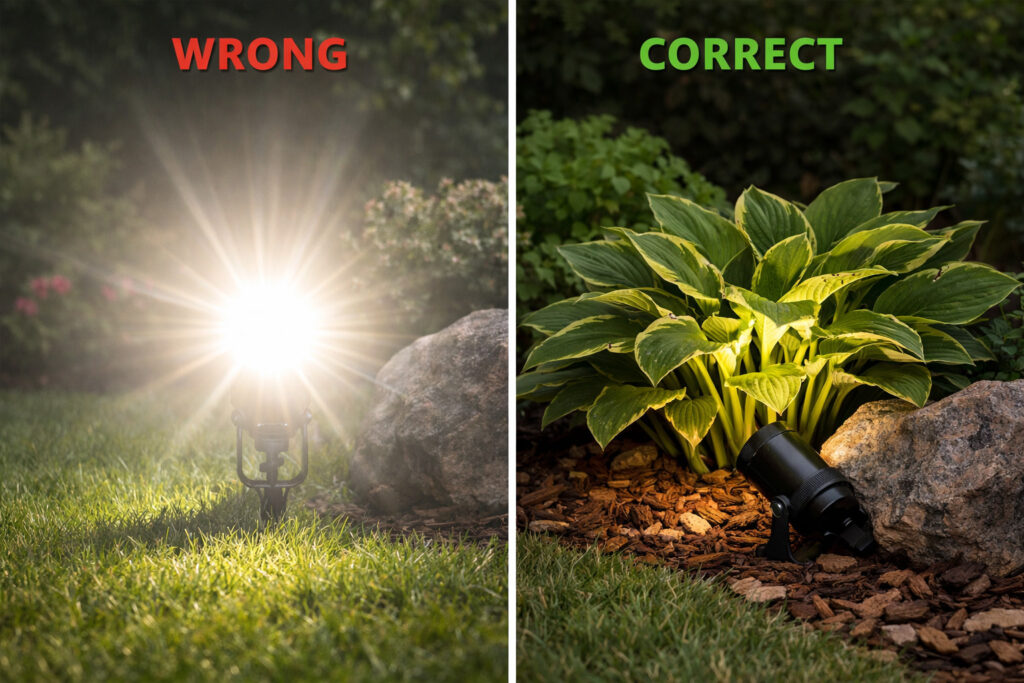
Poor aiming is the most common mistake with these fittings.
Decorative and ambient lighting
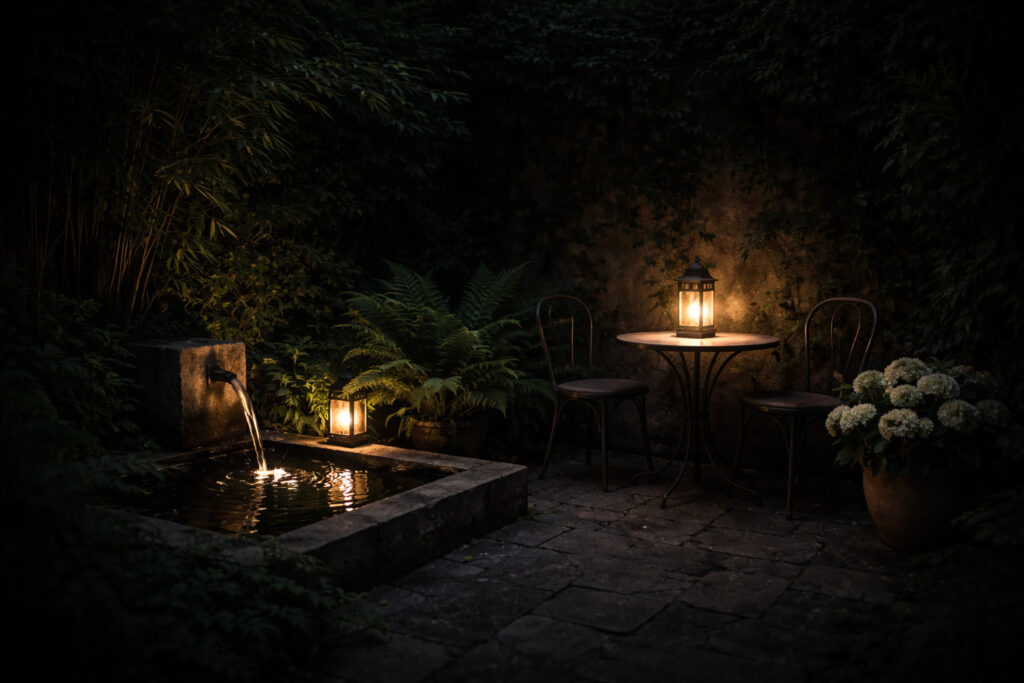
- Lanterns
- Festoon lighting
- Decorative accents
These work best as occasional highlights rather than permanent fixtures.
Garden lighting ideas by material and surface
Light behaves very differently depending on what it lands on, and this is one of the most overlooked parts of garden lighting design.
Brick and rendered walls
Brick and textured render soften light naturally, making them ideal for gentle wall lighting or grazing effects. Lighting these surfaces from a slight angle creates depth and avoids flat illumination. Very bright fittings are rarely needed because the texture does much of the work.
Wood fencing and decking
Wood absorbs more light than hard surfaces, so lower brightness often looks better. Warm tones complement timber finishes, while overly cool light can make wood look grey or lifeless. Concealed lighting works particularly well here, as it avoids glare and preserves the natural feel.
Stone paths and walls
Stone reflects light unevenly, which adds character but can highlight glare if fittings are poorly aimed. Low level lighting aimed across the surface rather than straight down produces a softer, more natural result.
Gravel and planting beds
Loose materials scatter light easily. Instead of trying to illuminate the surface, focus on lighting nearby plants or vertical elements so the ground remains subtle and visually calm.
Water features
Light reflects strongly off water. Gentle edge lighting or indirect illumination usually works better than direct spotlights, which can be distracting and overly bright.


Outdoor lighting ideas for different garden sizes
Small gardens
- Fewer lights at lower brightness
- Focus on one or two features
- Avoid lighting every boundary
Lighting should enhance depth, not reduce it.
Medium gardens
- Combine path lighting with feature lighting
- Create defined zones
- Balance practicality with atmosphere
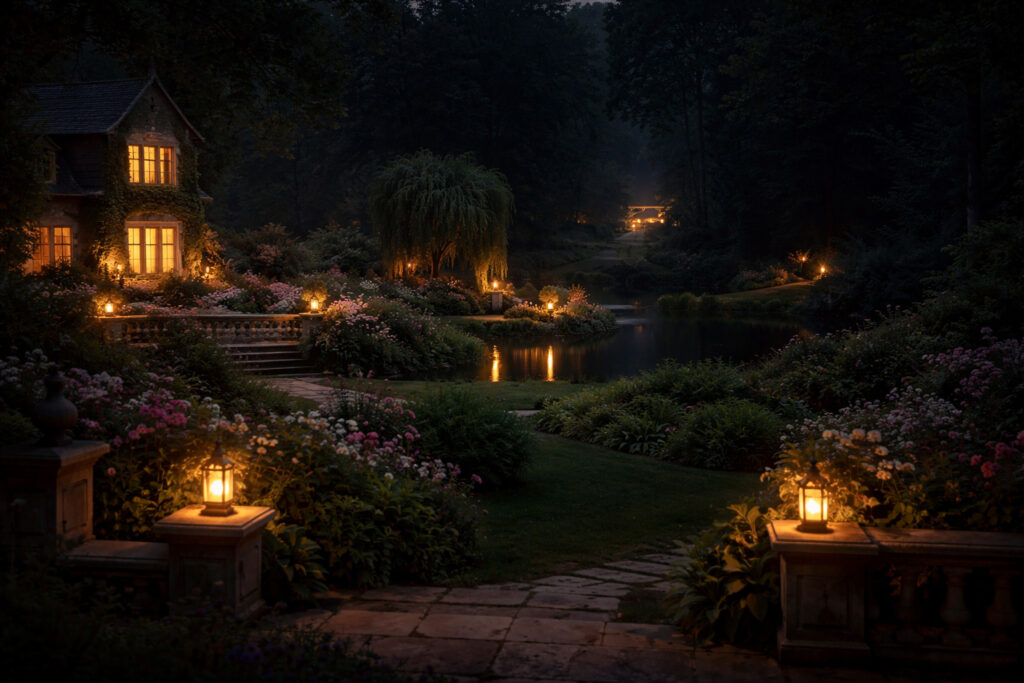
Large gardens
- Think in layers and distances
- Light focal points rather than everything
- Use darkness to separate areas
Garden lighting ideas by climate, exposure, and location
Not all gardens behave the same way at night. Wind, moisture, shade, and exposure all affect how lighting looks and performs over time.
Exposed and windy gardens
In open or elevated locations, lighting should feel grounded. Low level fittings work better than tall lights, which can feel unstable or visually restless in strong wind. Warm light also helps soften the harsher feel these locations can have at night.
Shaded or enclosed gardens
Gardens surrounded by buildings, trees, or high boundaries often feel darker even with lighting installed. Instead of increasing brightness, adding vertical lighting to walls or planting usually creates a better sense of space and depth.
Coastal or damp environments
Gardens near the coast or in consistently damp areas benefit from restrained lighting layouts. Fewer, well placed lights tend to age better visually than many exposed fittings. Subtle lighting also reduces the impact of reflections from wet surfaces.
Sunny vs north facing gardens
Gardens that receive strong daylight often feel darker by contrast at night. Gentle feature lighting helps ease this transition, while north facing gardens usually benefit from slightly more layered lighting to avoid flatness.

Garden lighting ideas for patios, terraces, and hard landscaping
Patios and terraces are often the most used parts of a garden, but they benefit from a different lighting approach to planting areas.
In these spaces, lighting should:
- Define the area without enclosing it
- Support seating and dining comfortably
- Avoid harsh shadows on faces
Low level wall lighting, recessed step lights, and subtle perimeter lighting work well for patios. Overhead lighting is rarely necessary outdoors and often feels intrusive. Instead, lighting should sit around the space, creating a sense of enclosure without brightness.
Terraces and raised areas benefit from lighting that highlights edges and level changes. This improves safety while also visually anchoring the structure within the wider garden.

Outdoor lighting ideas by garden use
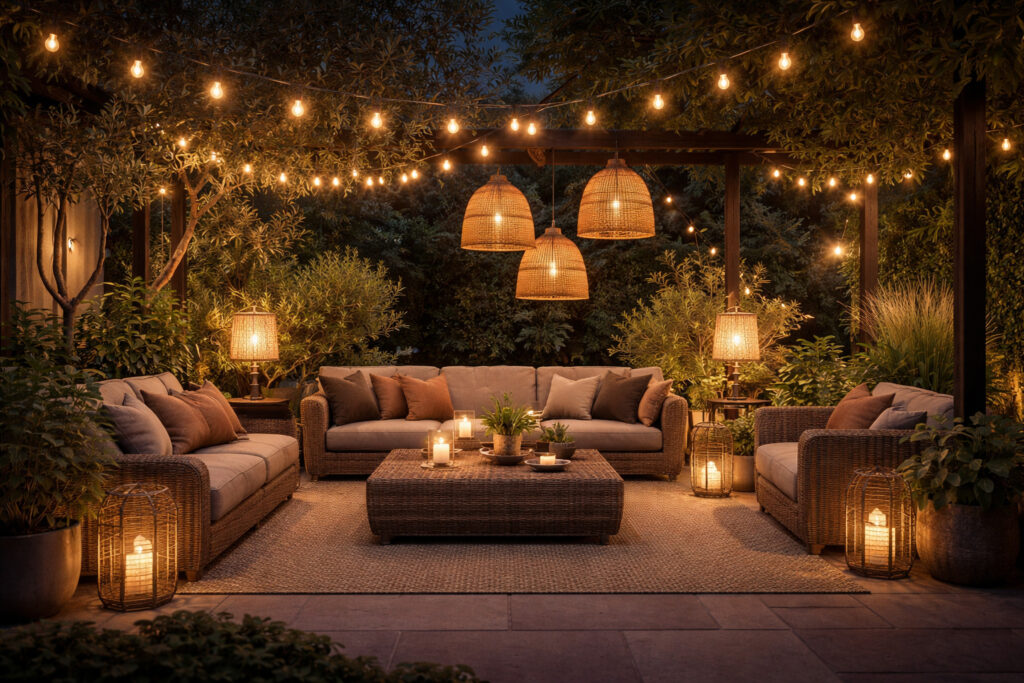
Entertaining gardens
- Warm, soft lighting around seating
- Good visibility without glare
- Flexible control for different moods
Relaxed, cosy gardens
- Low level lighting
- Emphasis on shadows and texture
- Minimal feature lighting
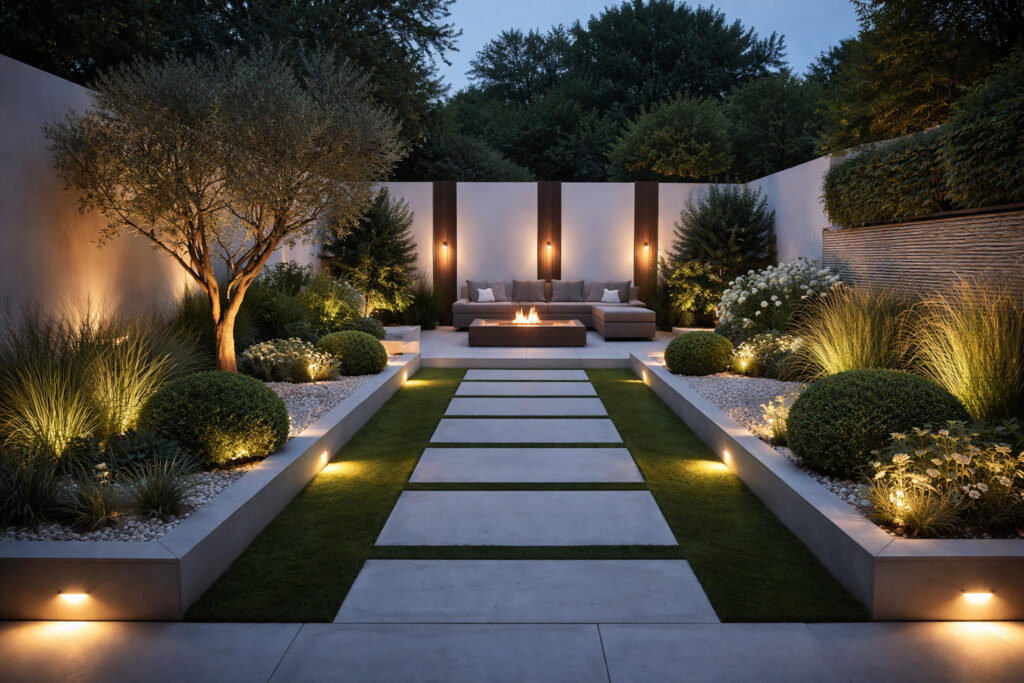
Modern minimalist gardens
- Clean lines
- Hidden light sources
- Architectural rather than decorative lighting
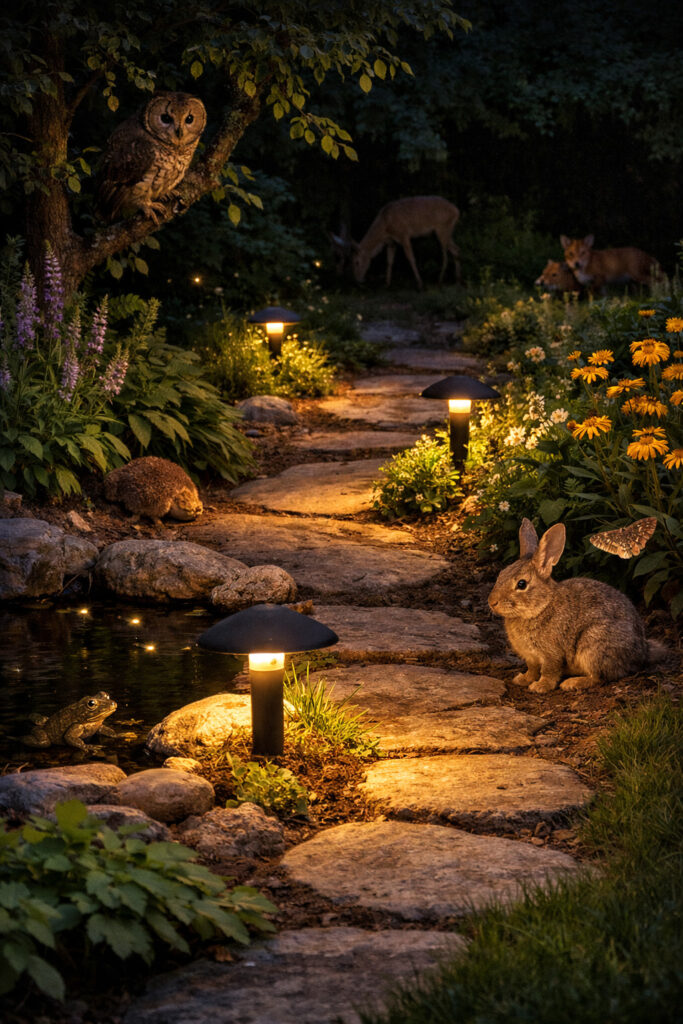
Wildlife friendly gardens
- Limit continuous lighting
- Keep dark corridors
- Avoid bright white light
Outdoor lighting for boundaries, privacy, and enclosure
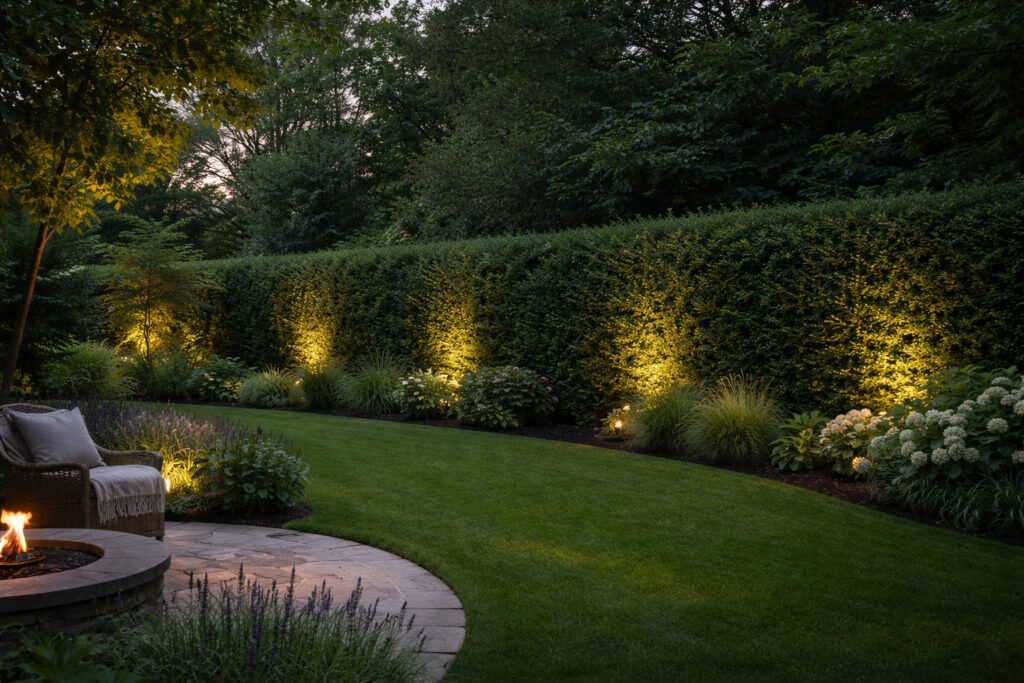
Boundaries play a psychological role in how a garden feels at night.
Lighting fences, hedges, or walls does not need to make them stand out. Instead, subtle lighting can:
- Suggest the edge of the space
- Increase the feeling of depth
- Improve privacy without drawing attention
Lighting that is too bright at boundaries can make a garden feel boxed in. Soft, intermittent lighting works far better than continuous illumination, especially when combined with darker areas beyond the main garden space.
How garden lighting should look from inside the house
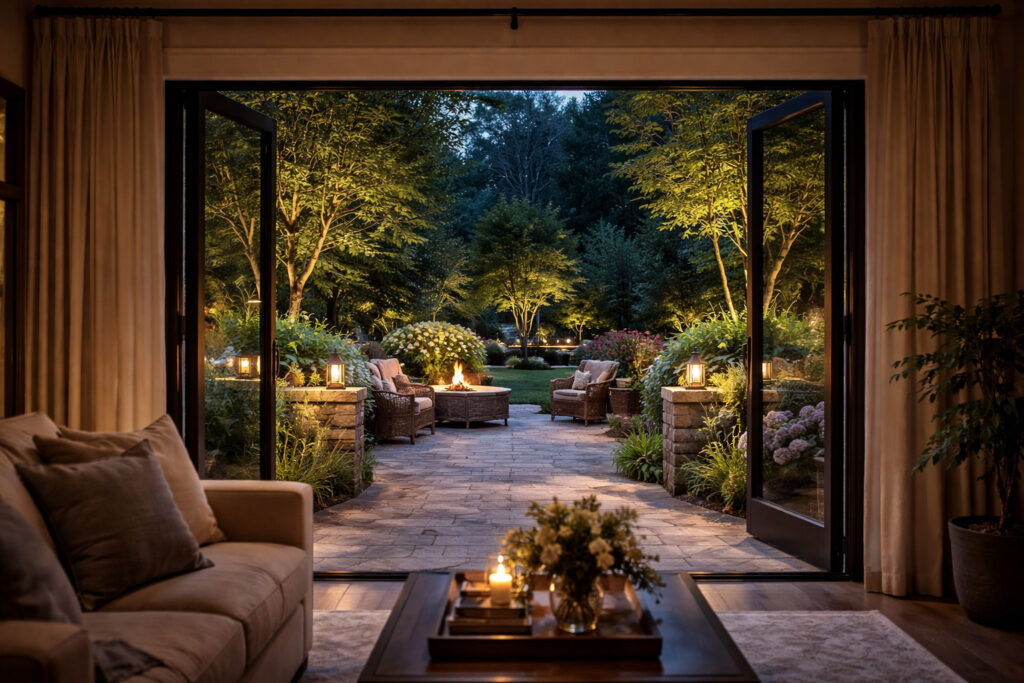
A garden is often viewed more from inside than from within it, especially in colder months.
Good garden lighting:
- Frames views through windows
- Avoids glare and reflections on glass
- Creates visual balance when seen from indoors
Lighting should feel like a continuation of the interior, not a separate scene. Over lighting close to the house often causes reflections that block the view out rather than enhancing it.
How outdoor lighting should transition from indoor lighting
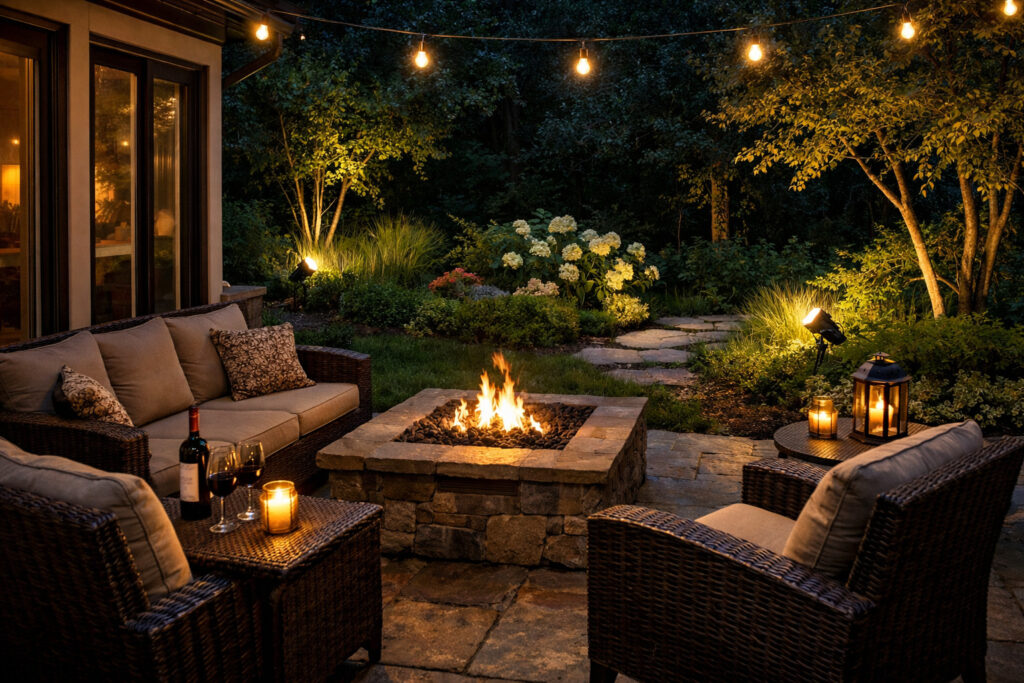
One of the strongest garden lighting schemes is one that feels like a continuation of the home.
To achieve this:
- Match outdoor colour temperature closely to indoor evening lighting
- Avoid sudden jumps in brightness near doors and windows
- Frame views from inside rather than flooding the garden with light
Lighting placed too close to the house often causes reflections in glass, reducing the view out. Pulling light slightly away from windows and aiming it into the garden improves visibility and creates a more natural transition between inside and out.
Just as thoughtful planning matters indoors, the same principles apply outdoors, and many ideas overlap with our living room lighting guide when it comes to layering and atmosphere.
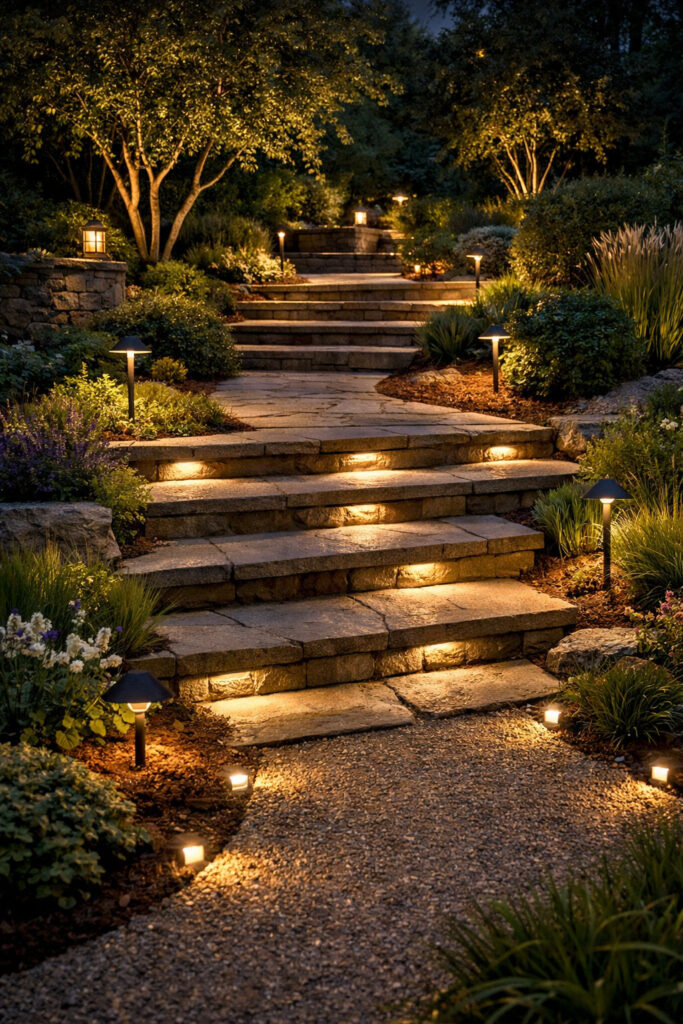
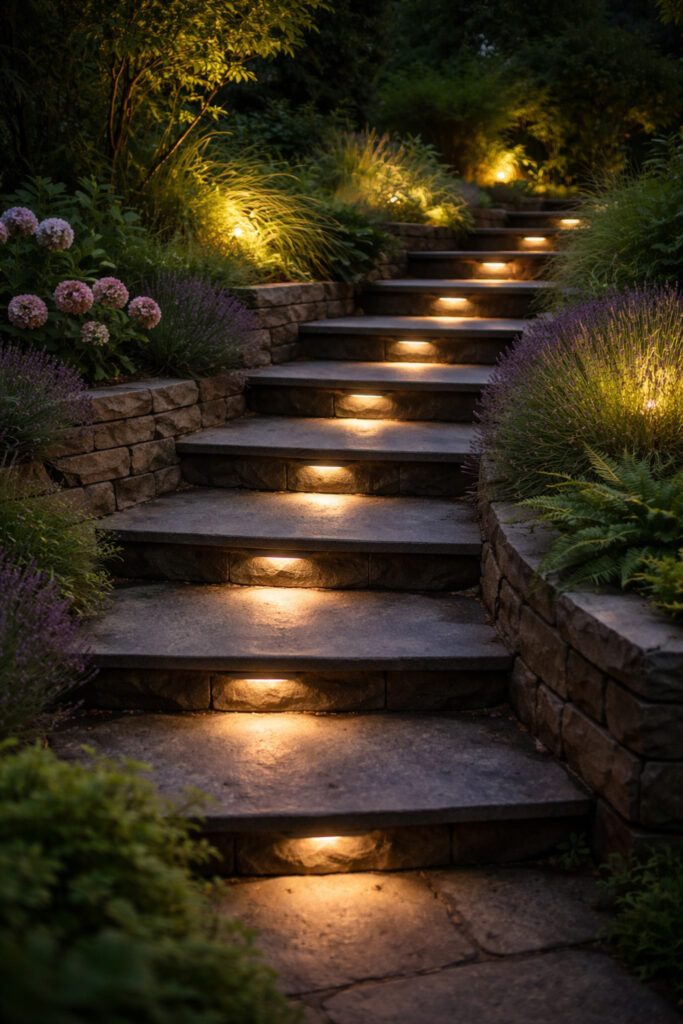
Lighting slopes, levels, and steps safely
Changes in level require careful lighting.
- Highlight step edges subtly
- Use multiple low level lights instead of one bright fitting
- Avoid lighting directly at eye height
The goal is guidance, not spotlighting.

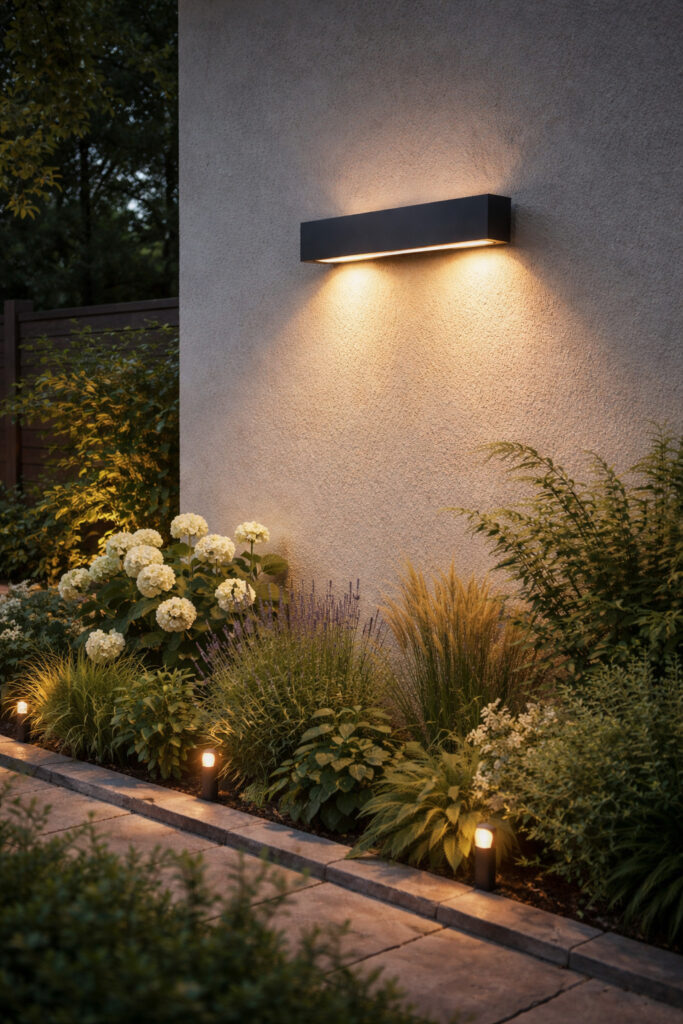
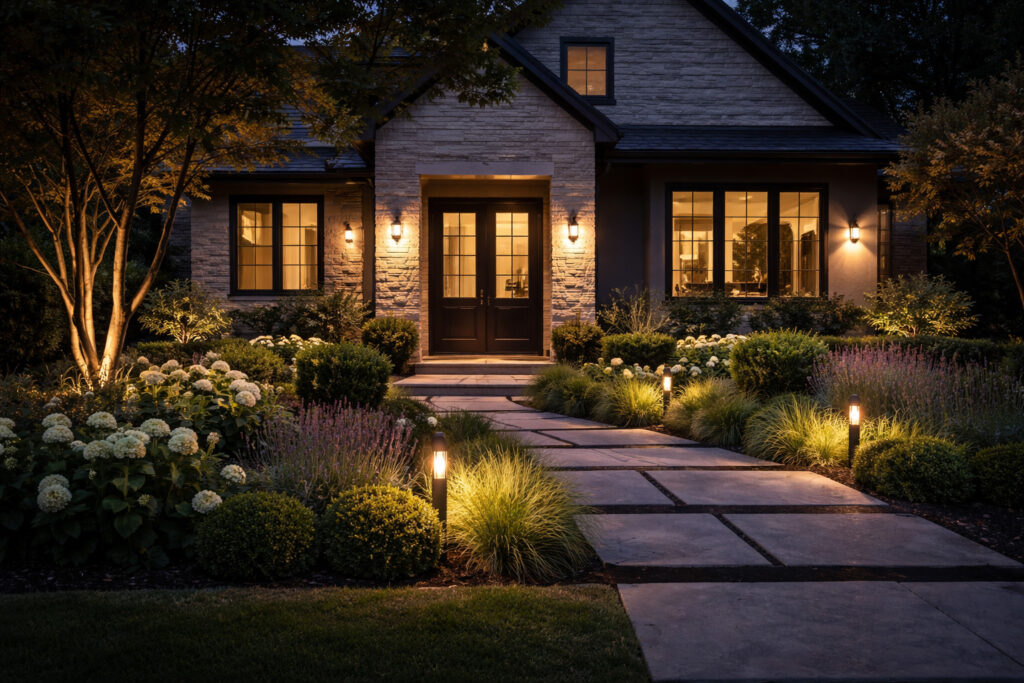
Outdoor wall lighting around the home
Wall lighting plays a key role in linking indoor and outdoor spaces.
- Use warm tones near living areas
- Avoid upward glare into windows
- Keep brightness moderate
Wall lighting should support the garden, not overpower it.
Choosing the right outdoor wall lighting helps create a smooth transition between the house and the garden.
How bright should garden lighting be?
Outdoor lighting should almost always be lower in brightness than people expect.
Common mistakes include:
- Using indoor brightness levels outside
- Relying on one bright fitting
- Trying to light everything evenly
A garden feels more natural when brightness varies across zones.

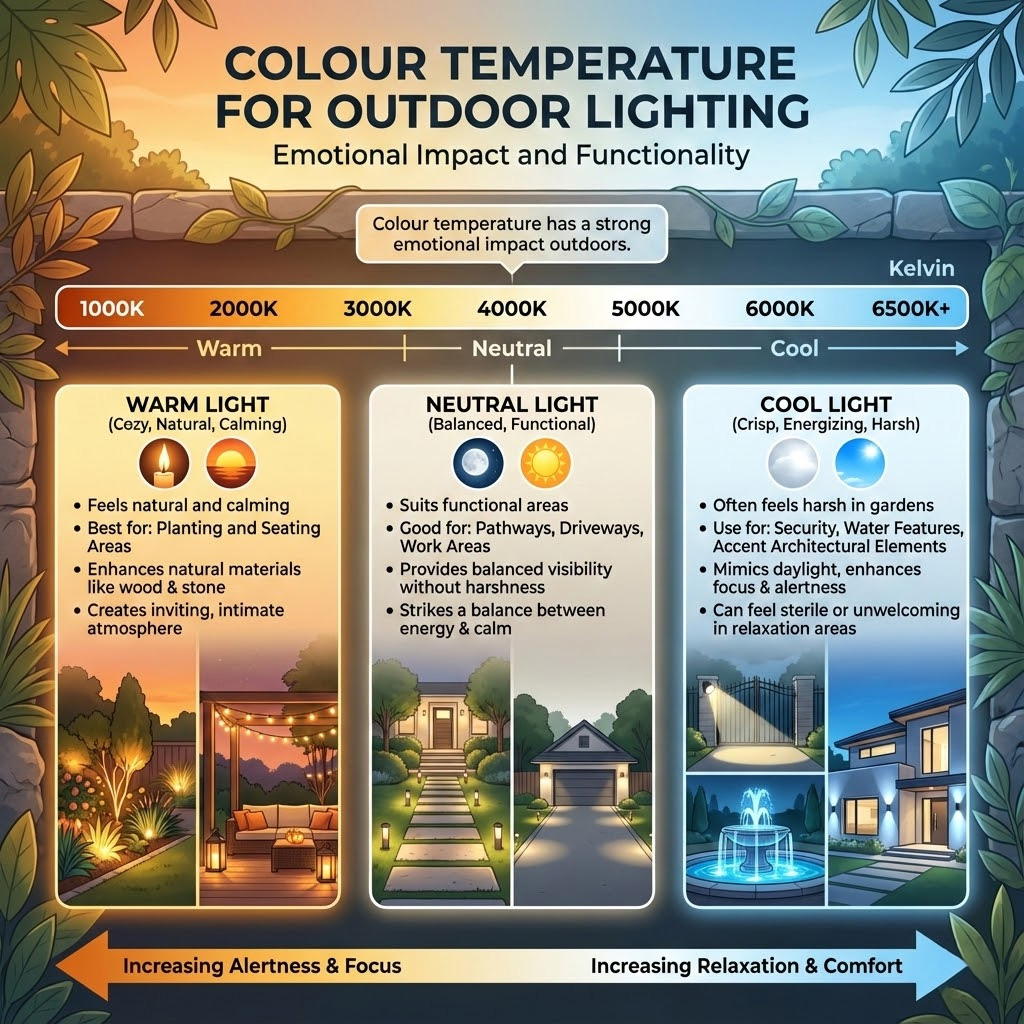
Colour temperature for outdoor lighting
Colour temperature has a strong emotional impact outdoors.
- Warm light feels natural and calming
- Neutral light suits functional areas
- Cool light often feels harsh in gardens
Warm tones usually work best for planting and seating areas.
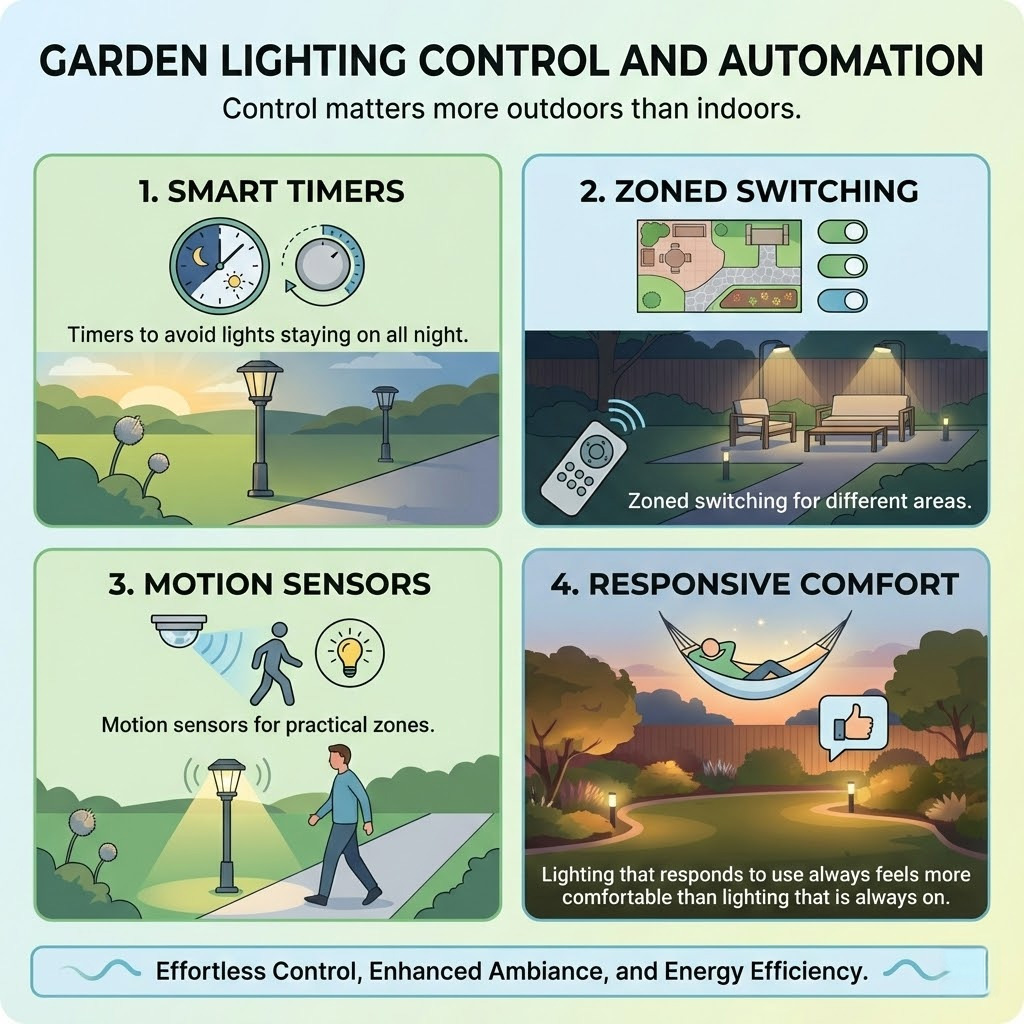
Garden lighting control and automation
Control matters more outdoors than indoors.
Good control options include:
- Timers to avoid lights staying on all night
- Zoned switching for different areas
- Motion sensors for practical zones
Lighting that responds to use always feels more comfortable than lighting that is always on.
Planning garden lighting for long-term ownership
Gardens change constantly, and lighting should be able to change with them.
Good long term planning includes:
- Allowing for plant growth
- Choosing adjustable fittings where possible
- Avoiding permanent lighting aimed at temporary features
- Expecting to re-aim lights occasionally
A lighting scheme that can evolve will always outperform one that is fixed and rigid.


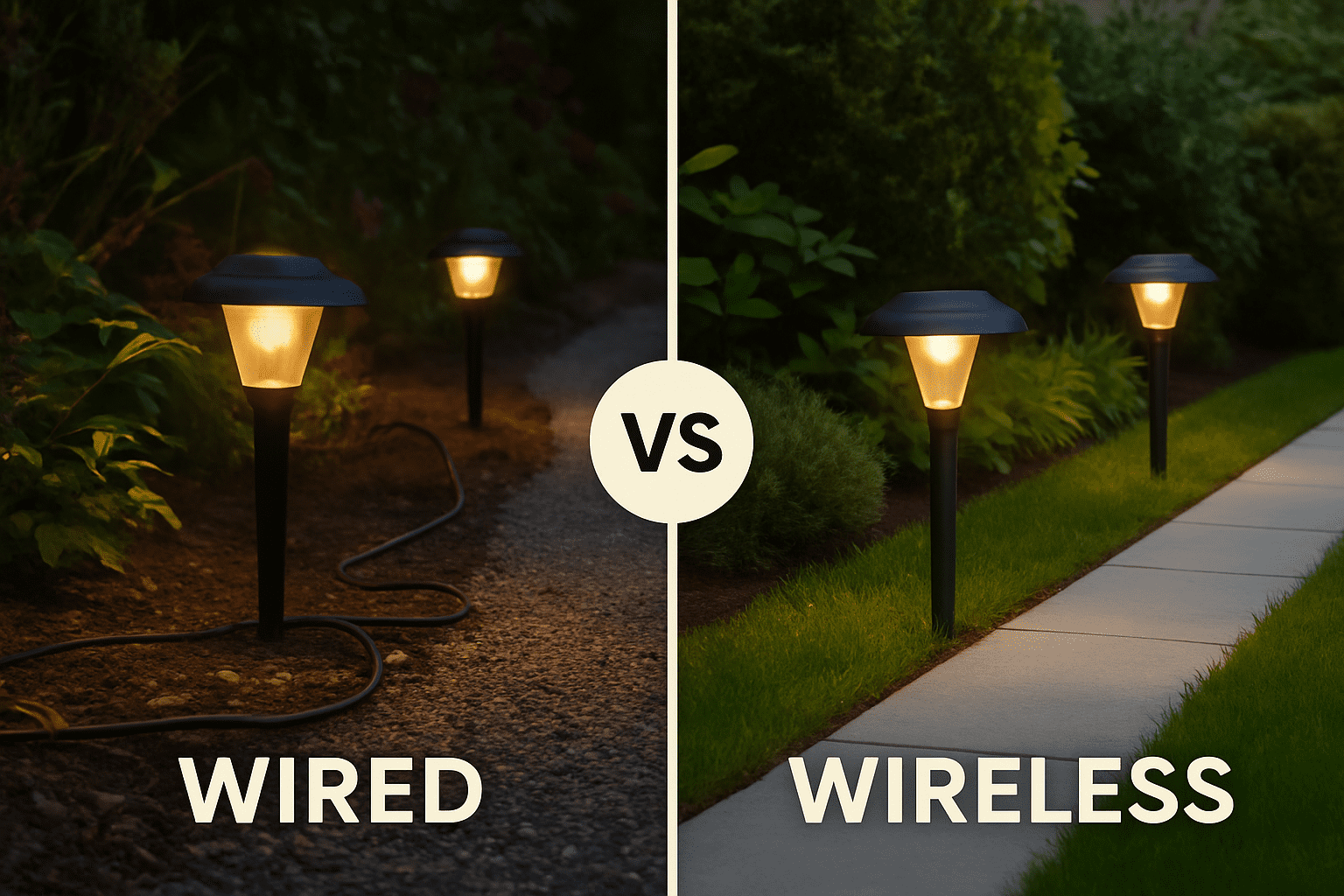
Solar vs mains powered garden lighting
Solar lighting
Advantages:
- Easy installation
- No wiring
- Useful for accents
Limitations:
- Weather dependent
- Limited brightness
- Less control
In some areas, solar garden lighting works well for accent features where wiring would be disruptive.
Mains powered lighting
Advantages:
- Consistent output
- Greater control
- Suitable for primary lighting
Many gardens benefit from using both, depending on location and purpose.

Garden building lighting ideas
Garden buildings such as offices, studios, and sheds benefit from thoughtful exterior lighting.
- Path lighting leading to the building
- Soft wall lighting near entrances
- Lighting that connects the building to the garden
Interior lighting for garden buildings should be planned separately.
Exterior lighting for sheds, offices, and studios is covered more fully in our garden building lighting guide.

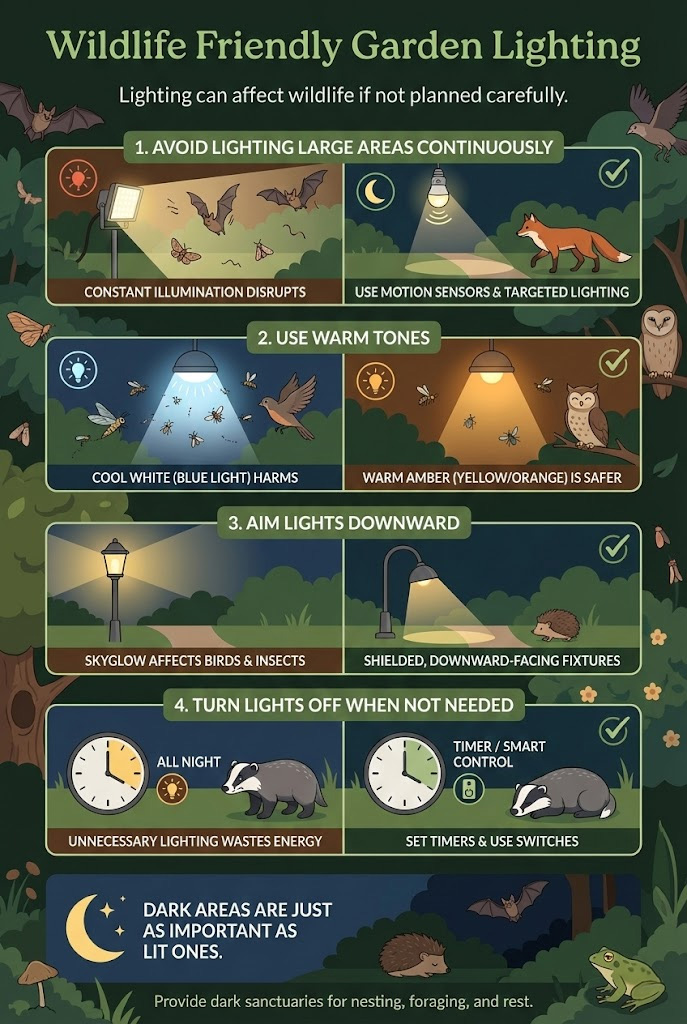
Wildlife friendly garden lighting
Lighting can affect wildlife if not planned carefully.
- Avoid lighting large areas continuously
- Use warm tones
- Aim lights downward
- Turn lights off when not needed
Dark areas are just as important as lit ones.
If protecting nocturnal wildlife is a priority, our guide to wildlife-friendly garden lighting explores this in more detail.
Excessive lighting can disrupt ecosystems, and guidance on protecting nocturnal wildlife highlights why restraint matters outdoors.
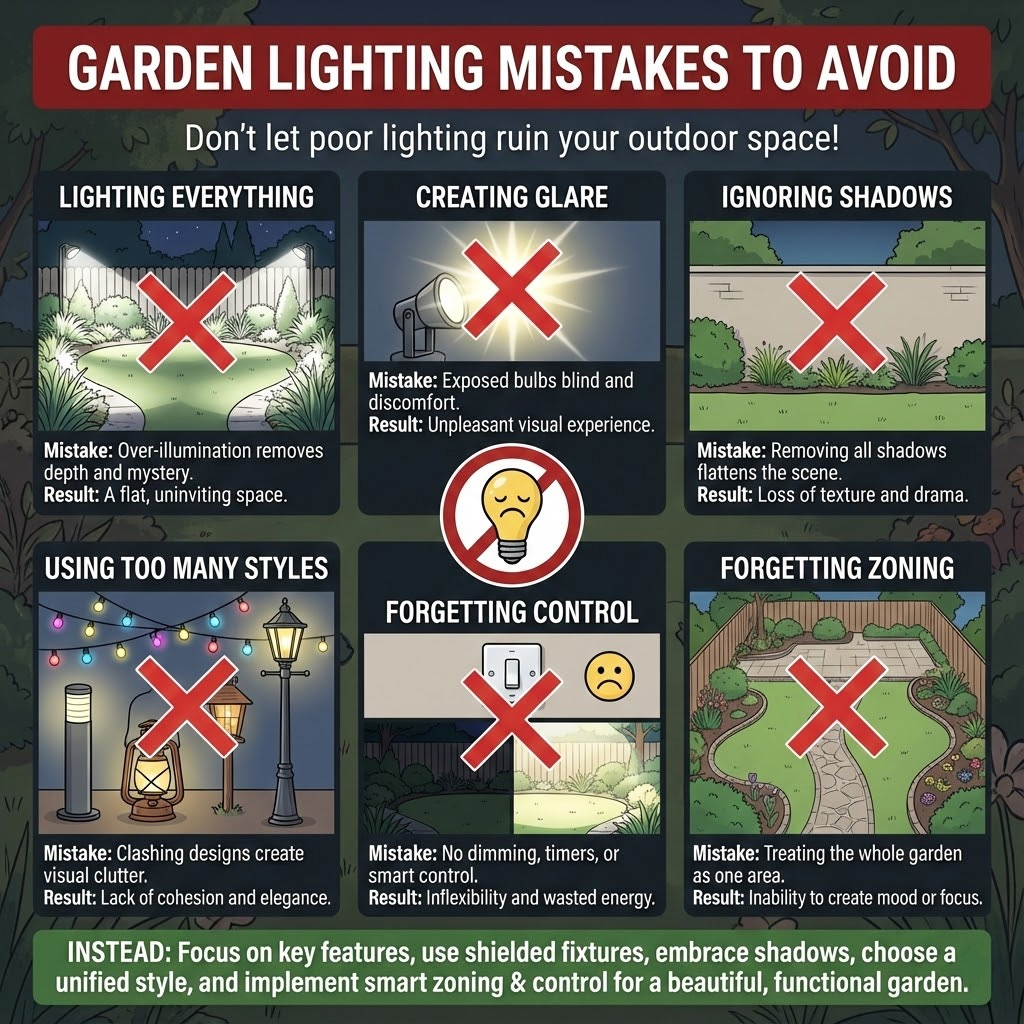
Garden lighting mistakes to avoid
- Lighting everything
- Creating glare
- Ignoring shadows
- Using too many styles
- Forgetting control and zoning
Many of these mistakes can be avoided by following recognised lighting best practice used by professional designers and engineers, including guidance from the Chartered Institution of Building Services Engineers.
Garden lighting mistakes homeowners only notice after installation
Some lighting issues only become obvious once a garden is lived with.
Common examples include:
- Too much light near the house, making the rest of the garden disappear
- Glare spilling into neighbouring properties
- Plants outgrowing the beam of fixed lights
- No spare capacity to add or adjust lighting later
- All lights controlled together with no flexibility
Planning for adjustment and restraint at the start avoids these frustrations later.
Many common issues fall into the category of avoidable outdoor lighting mistakes that can be corrected without replacing fittings.
Troubleshooting common garden lighting problems
Even well planned garden lighting can feel wrong once lived with. The key is knowing what to adjust, not what to replace.
The garden feels flat at night
This usually means too much light is aimed straight ahead. Adding side lighting or vertical illumination on planting or boundaries creates depth instantly.
Lights feel harsh after rain
Wet surfaces reflect more light. Reducing brightness or angling fittings away from reflective paths and patios often solves this without adding new lights.
Path lighting feels uneven or distracting
Spacing is often the issue rather than brightness. Reducing the number of lights and improving rhythm usually produces a calmer result.
The garden looks good from outside but not from indoors
This often means lighting is too close to the house. Moving light slightly further into the garden improves the view and reduces reflections on glass.

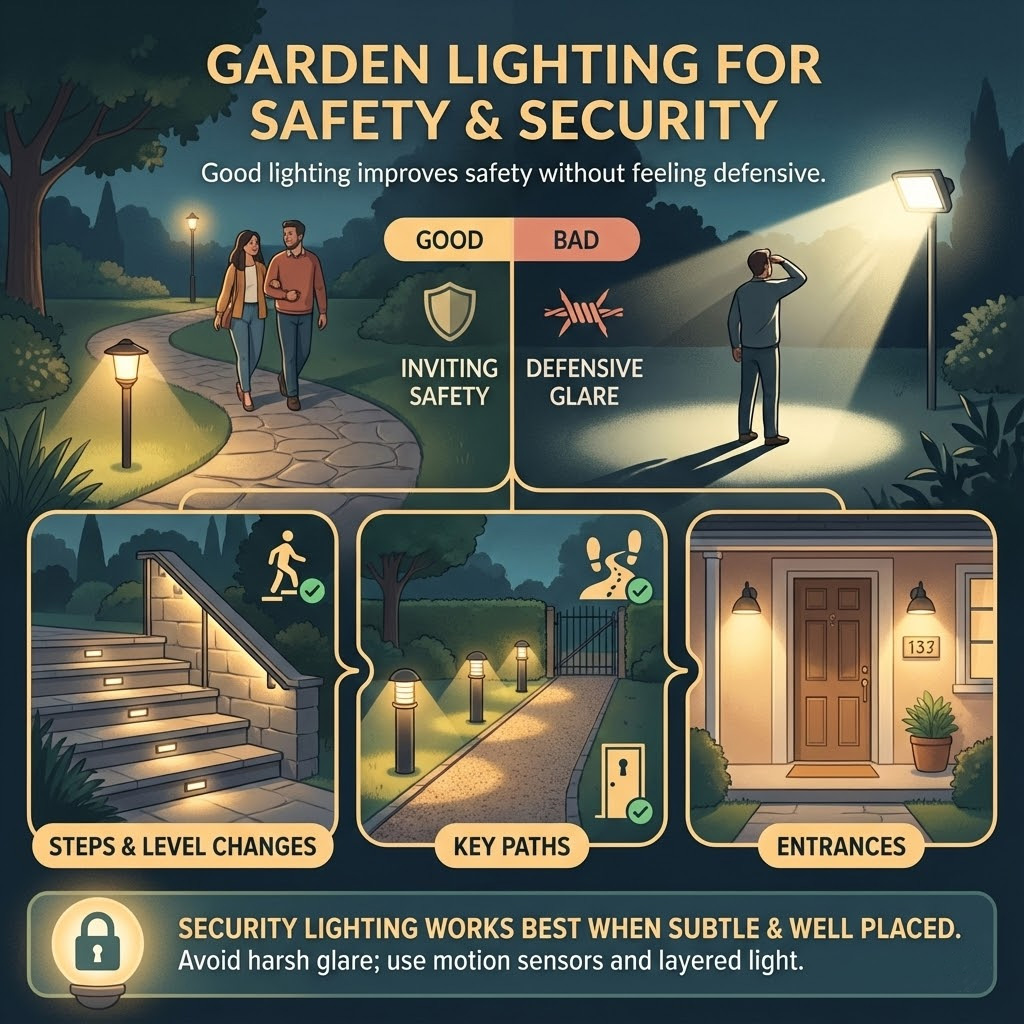
Garden lighting for safety and security
Good lighting improves safety without feeling defensive.
- Steps and level changes
- Key paths
- Entrances
Security lighting works best when subtle and well placed.
Excessive outdoor lighting can affect neighbours and wildlife, and following official light pollution guidance helps ensure garden lighting remains responsible and well balanced.
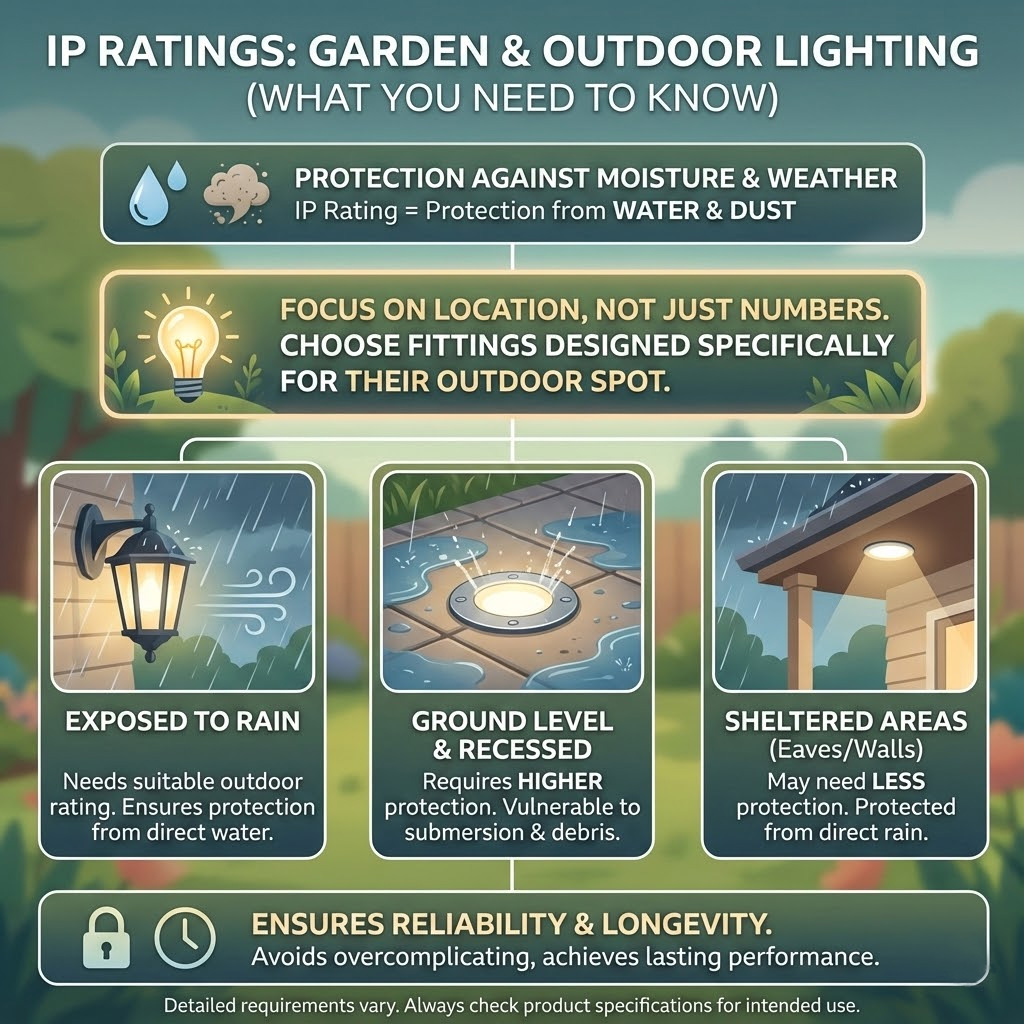
IP ratings for garden and outdoor lighting (what you need to know)
Outdoor lighting needs protection against moisture and weather, which is where IP ratings come in. An IP rating indicates how well a light fitting is protected against water and dust.
For most garden lighting:
- Lights exposed to rain need a suitable outdoor rating
- Ground level and recessed fittings require higher protection
- Sheltered areas near walls or under eaves may need less protection
Rather than focusing on numbers, the most important point is to choose fittings designed specifically for outdoor use in the location they are installed. This ensures reliability and longevity without overcomplicating the decision.
Detailed IP requirements vary depending on exposure and placement, and these are best explored separately when choosing specific fittings.
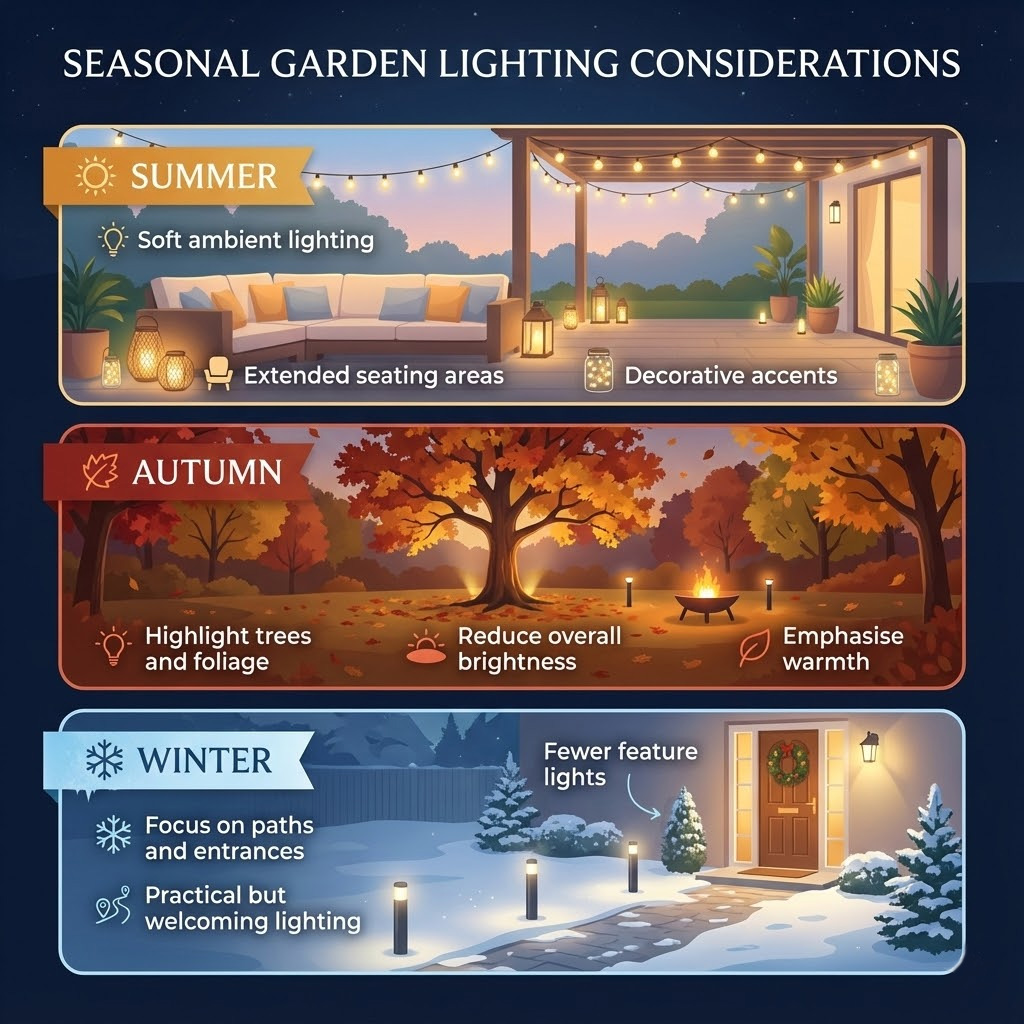
Seasonal garden lighting considerations
Summer
- Soft ambient lighting
- Extended seating areas
- Decorative accents
Autumn
- Highlight trees and foliage
- Reduce overall brightness
- Emphasise warmth
Winter
- Focus on paths and entrances
- Fewer feature lights
- Practical but welcoming lighting
Garden lighting maintenance and longevity
Outdoor lighting benefits from occasional attention.
- Clean lenses periodically
- Adjust aim as planting grows
- Check fittings after winter weather
Small adjustments keep lighting effective year round.

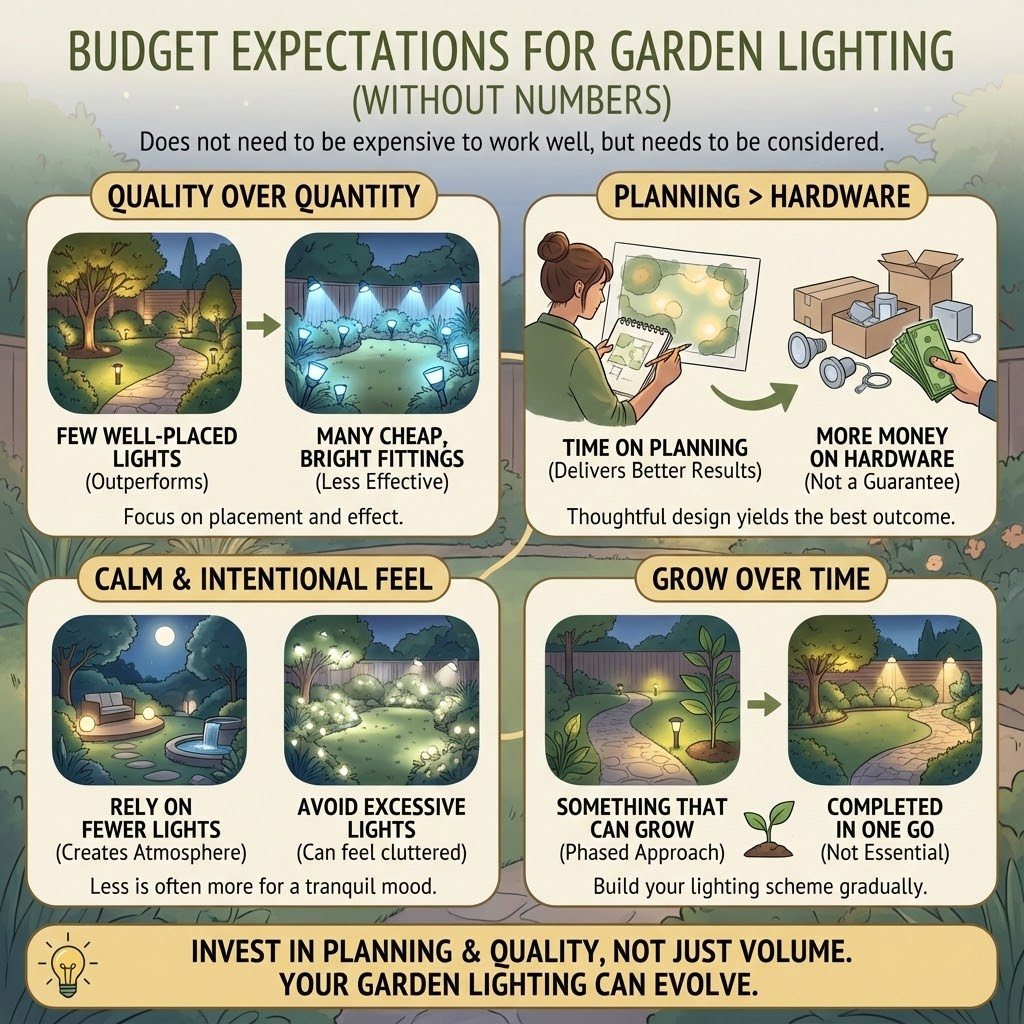
Budget expectations for garden lighting (without numbers)
Garden lighting does not need to be expensive to work well, but it does need to be considered.
A few well placed lights usually outperform many cheap, bright fittings. Spending time on planning almost always delivers better results than spending more money on hardware. Gardens that feel calm and intentional at night usually rely on fewer lights, not more.
Lighting should be seen as something that can grow over time rather than something that must be completed in one go.
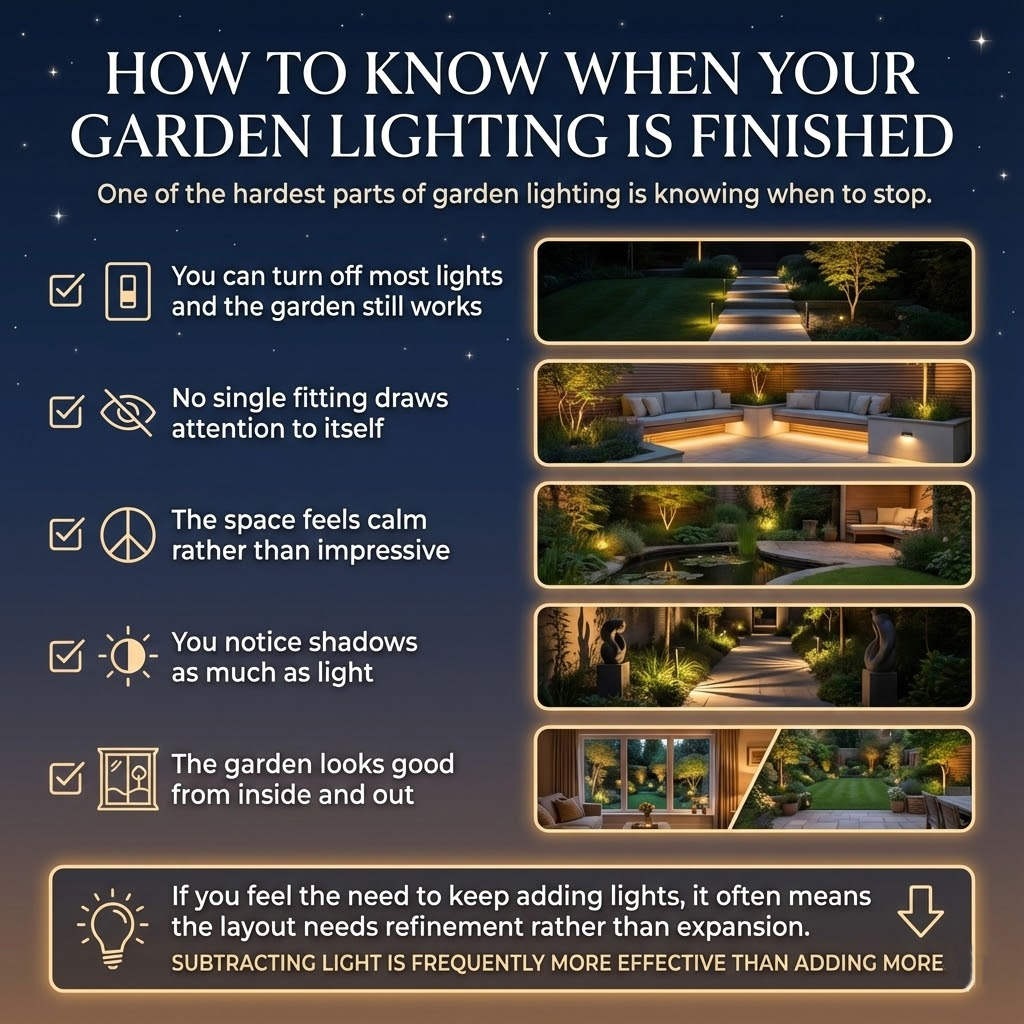
How to know when your garden lighting is finished
One of the hardest parts of garden lighting is knowing when to stop.
A garden lighting scheme is usually finished when:
- You can turn off most lights and the garden still works
- No single fitting draws attention to itself
- The space feels calm rather than impressive
- You notice shadows as much as light
- The garden looks good from inside and out
If you feel the need to keep adding lights, it often means the layout needs refinement rather than expansion. Subtracting light is frequently more effective than adding more.
Frequently asked questions
How many garden lights do I need?
There is no fixed number. Focus on zones and features rather than coverage.
Is garden lighting expensive to run?
Modern LED lighting uses very little energy, especially when layered properly.
Can garden lighting disturb wildlife?
Yes, excessive lighting can. Keeping darker areas reduces impact.
Do garden lights need planning permission?
Most domestic garden lighting does not, though listed buildings may differ.
Should garden lights stay on all night?
Usually no. Timers and sensors reduce unnecessary lighting.
Final thoughts
Great garden lighting is not about brightness or showing everything. It is about revealing just enough. When planned thoughtfully, outdoor lighting transforms a garden into a calm, welcoming space that feels intentional after dark.
Start with how the garden is used, light key features gently, and allow darkness to play its part. The result is a garden that truly comes alive at night.