This guide focuses on one specific aspect of lighting design. For full room planning, layout, and brightness guidance, see our complete kitchen lighting guide.
Affiliate disclosure: This article contains affiliate links. If you purchase through these links, we may earn a small commission at no extra cost to you.
Table of Contents
The Kitchen Lighting Showdown
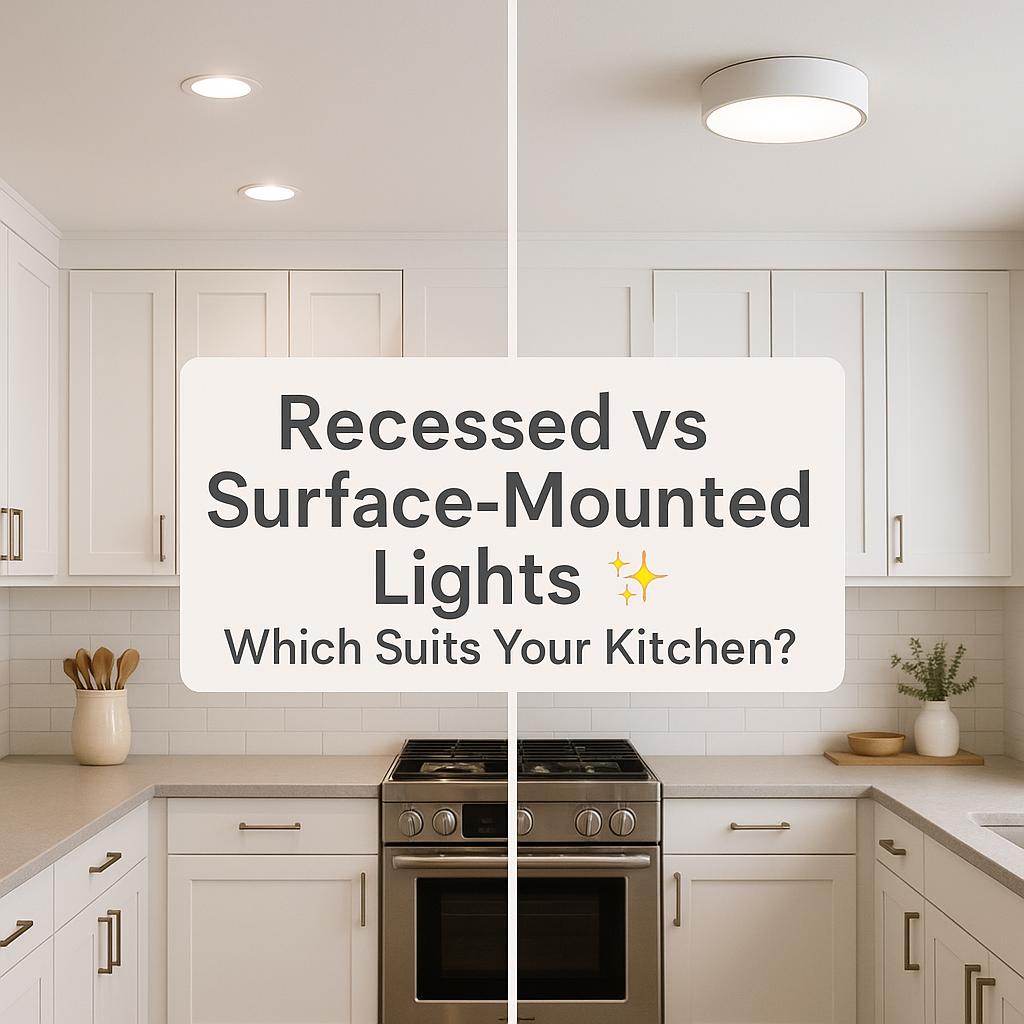
If you’re renovating a kitchen or giving it a refresh, one question always surfaces: should you go for recessed lighting or surface-mounted lights? Both options can completely transform the atmosphere of your kitchen, but they suit different ceiling heights, layouts, room sizes and interior styles.
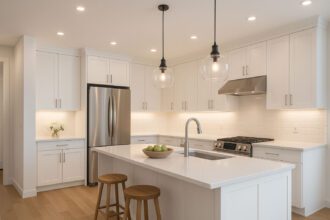
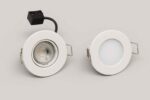
Recessed lighting (often called downlights or spotlights) sits inside the ceiling so the fitting is hidden, with only the trim or bezel visible. This approach delivers a clean, modern look with even illumination, no visual clutter, excellent shadow control, and a premium finish. It works particularly well in modern kitchens, spaces with low to medium ceilings, sleek styles like Scandi or contemporary minimalist, and busy kitchens that need lots of bright task lighting.
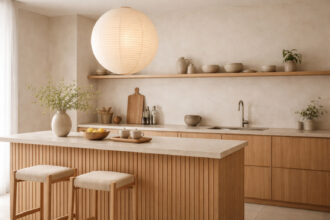
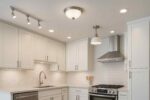
Surface-mounted lights, by contrast, sit on the ceiling rather than inside it. This category includes flush ceiling lights, semi-flush fixtures, surface-mounted spotlights, surface-mounted track spot heads, and decorative ceiling drums or discs. Surface lighting offers more decorative options, softer and more diffused light, easier installation, no need to cut holes in the ceiling, and more personality and visual interest. These fixtures work beautifully in older homes or rentals, kitchens with solid ceilings, ceilings with wiring limitations, and cottage, industrial or classic styles.
The Key Differences Explained
Appearance and Style
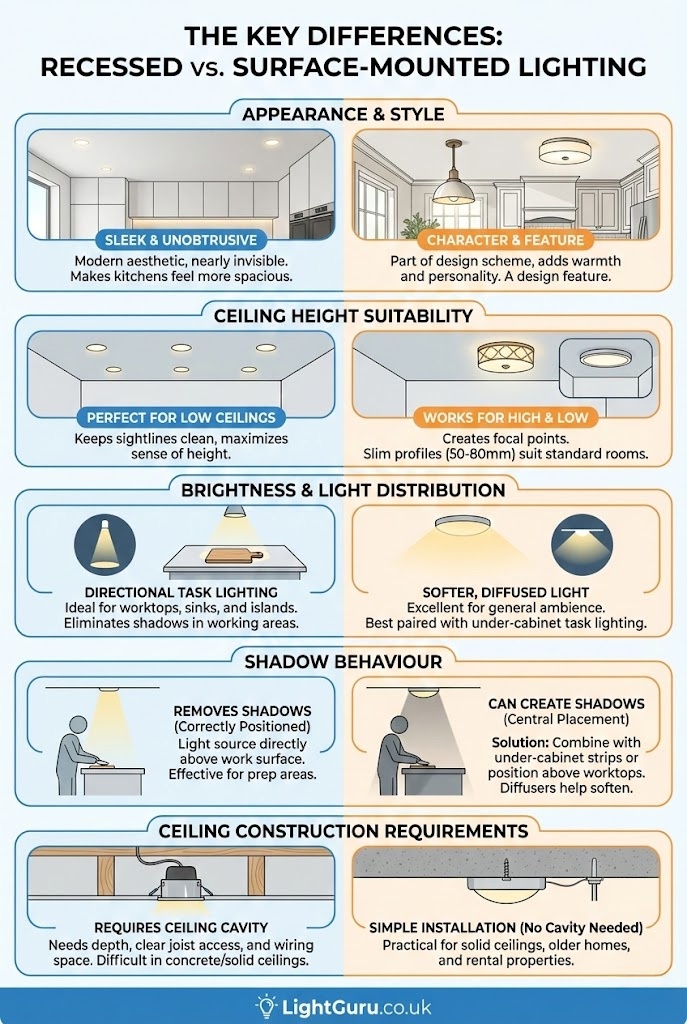
When it comes to visual impact, recessed and surface-mounted lighting take completely different approaches. Recessed lights are sleek and unobtrusive, making kitchens feel more spacious because they’re nearly invisible against the ceiling. This very modern aesthetic suits contemporary spaces where you want the architecture and cabinetry to take centre stage rather than the light fixtures.
Surface-mounted fixtures, however, become part of the room’s design scheme. They add character and work as a design feature in their own right, bringing more presence and personality to the space. For classic or cosy kitchens where you want warmth and visual interest overhead, surface-mounted options often feel more appropriate than the minimalist look of recessed spots.
Ceiling Height Suitability
Ceiling height plays a significant role in which option will work best for your kitchen. Recessed lighting is perfect for low ceilings because nothing hangs down into the room, keeping sightlines clean and making the space feel as tall as possible.
Surface-mounted lighting works better for higher ceilings or situations where you want a focal point overhead. That said, surface-mounted fixtures can still work well in low-ceiling kitchens if you choose slim profiles. A flush-mounted disc light that protrudes only 50-80mm from the ceiling won’t feel oppressive in a standard 2.4m room the way a deep pendant or chandelier might.
Brightness and Light Distribution
The way these two types distribute light differs significantly, and understanding this will help you plan the right combination for your kitchen. Recessed lights provide excellent directional task lighting, making them ideal for positioning above worktops, sinks and islands. When properly spaced, they can eliminate shadows in your main working areas and deliver strong, focused beams exactly where you need them.
Surface-mounted fixtures typically produce softer, more diffused light that spreads broadly across the room. This makes them excellent for general ambience but not always ideal as your only source of task lighting. Most kitchens with surface-mounted ceiling lights benefit from additional under-cabinet lighting to ensure worktop areas receive adequate illumination for food preparation.
Shadow Behaviour
Shadows can make or break a kitchen lighting scheme, particularly in working areas where you’re handling sharp knives or hot pans. Recessed lights remove shadows when positioned correctly because the light source sits directly above the work surface rather than behind the person using it. This makes them particularly effective above chopping zones, prep areas and anywhere you need clear visibility.
Surface-mounted fixtures can create shadows if placed centrally in the room, as you’ll cast your own shadow over the worktop when standing at the counter. The solution is either to combine central surface lighting with under-cabinet strips or to position surface-mounted spots in rows above the worktops rather than in the centre of the room. Fixtures with diffusers help soften any shadows that do occur. For detailed guidance on eliminating worktop shadows, see our downlight spacing calculator.
Ceiling Construction Requirements
Before committing to either option, you need to consider what your ceiling can accommodate. Recessed lights require a cavity above the ceiling with enough depth for fire-rated cans or fittings, clear joist access, and adequate wiring space. If you have concrete ceilings, steel mezzanine structures or tricky joist routes, recessed installation may prove difficult or impossible without significant building work.
Surface-mounted fixtures have much simpler requirements: one wiring point and a solid fixing into the ceiling. No cavity is needed, making them the practical choice for older homes with solid ceilings, extensions where cavity depth is limited, and rental properties where you can’t make permanent alterations.
Which Style Suits Different Kitchen Types?
Small Kitchens
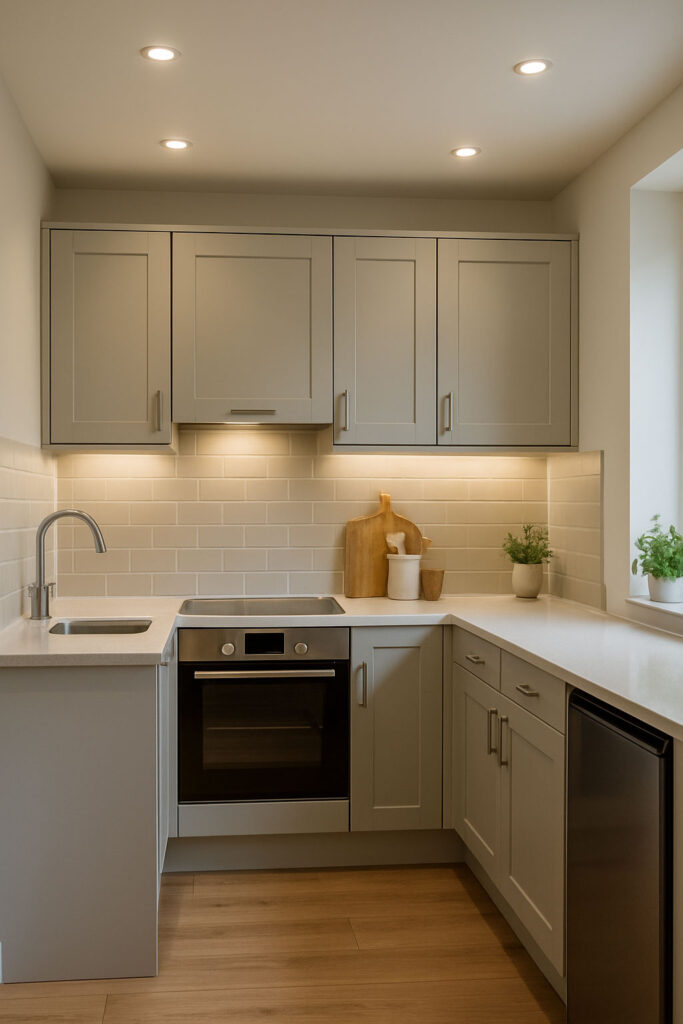
In compact kitchens, recessed lighting typically works better because it makes the room feel bigger by maintaining clean ceiling lines. The absence of any fixtures protruding into the room preserves the visual height, which is particularly valuable in galley layouts where every centimetre of perceived space counts.
That said, surface-mounted lighting can work in small kitchens if you choose slim flush fixtures. Avoid heavy, deep lights that will make the ceiling feel lower. A single flat LED panel or slim drum light with a profile under 60mm won’t overwhelm a small space the way a bulky fixture would. For more ideas on lighting compact spaces effectively, see our guide to galley kitchen lighting.
Medium Kitchens
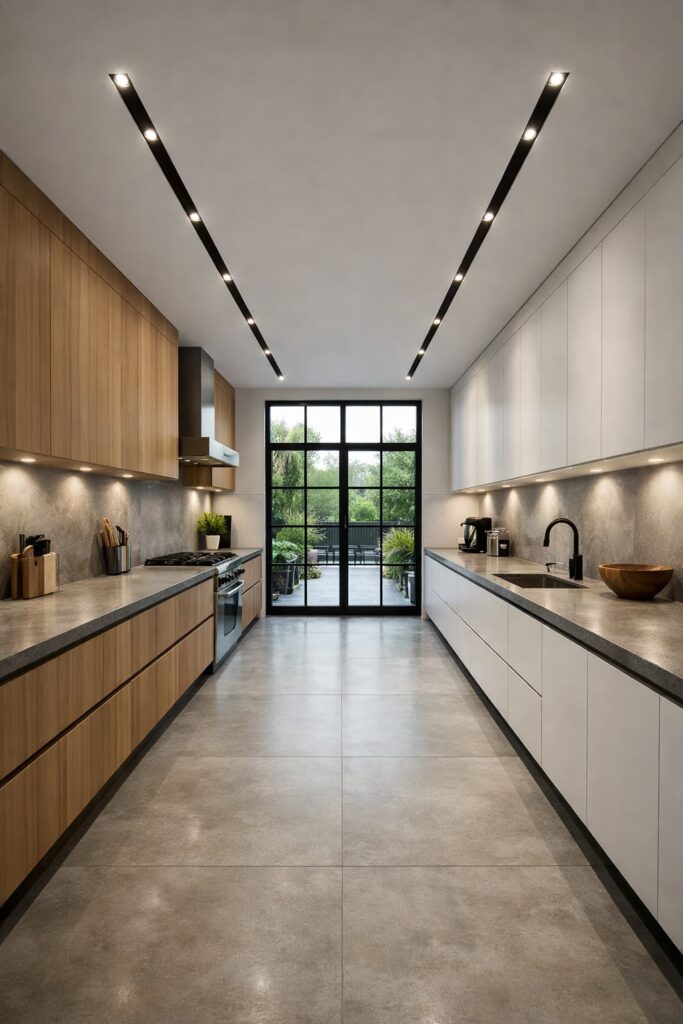
Medium-sized kitchens offer more flexibility. Recessed lighting works well for even task illumination, typically arranged in two rows positioned above the worktops on opposite walls. This ensures you’re never working in your own shadow regardless of which direction you’re facing.
Surface-mounted lighting can also work beautifully in medium kitchens, particularly as a way to add personality or replace a single central pendant with something that provides better coverage. Consider a large flush-mounted disc or a pair of smaller surface-mounted spots that can be angled toward your key working areas.
Large or Open-Plan Kitchens
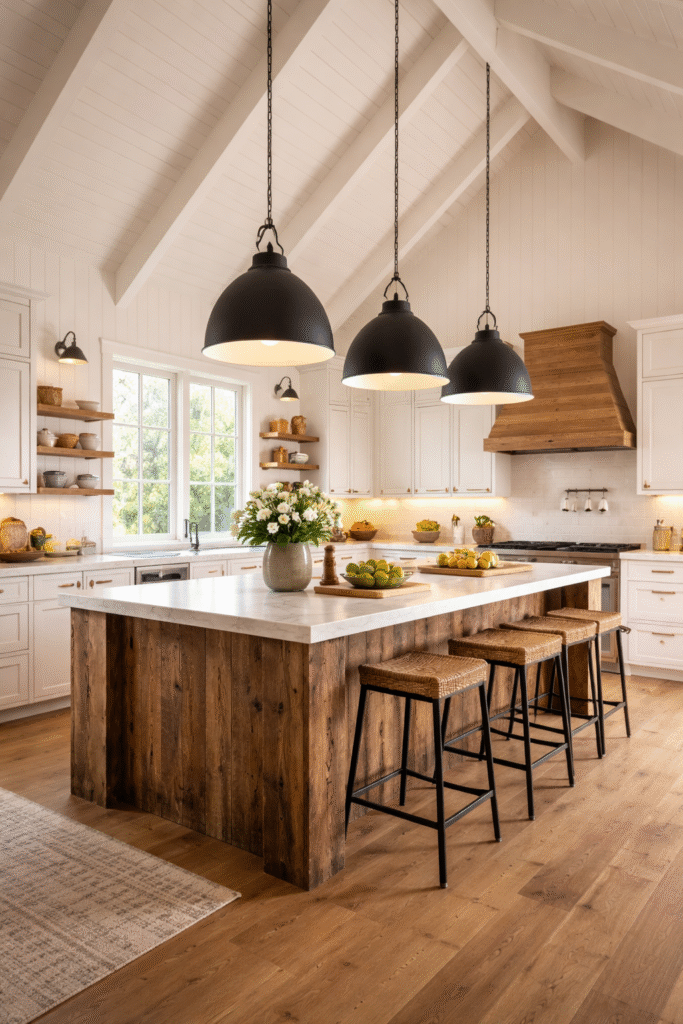
Open-plan kitchen-diners are where recessed lighting truly excels, because you can use it for zoning different areas: the main cooking area, island prep space, breakfast bar, and even a utility or laundry corner can each have their own group of downlights on separate switches or dimmer circuits. This allows you to adjust the lighting for different activities and times of day.
Surface-mounted fixtures work best as supplementary lighting or decorative accents in large spaces. A statement flush-mount above the dining area or a row of surface-mounted spots highlighting a feature wall can complement the recessed lighting that handles the practical illumination.
Cottage, Rustic or Shaker Kitchens
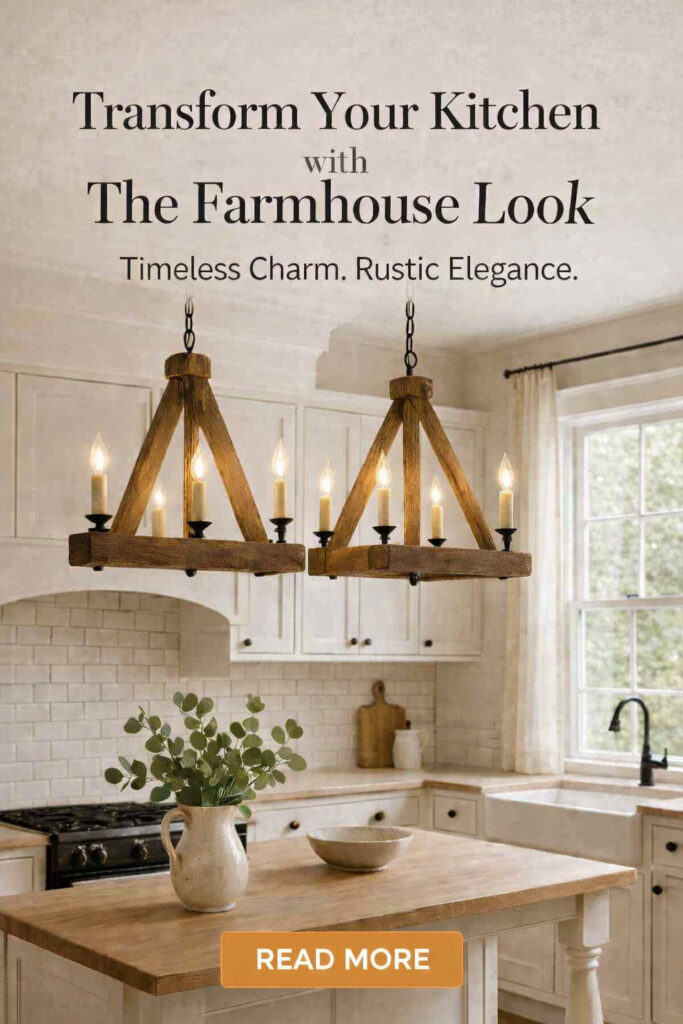
In traditional kitchen styles, surface-mounted fixtures often feel more authentic than modern recessed spots. Cottage kitchens, timber-heavy rooms and vintage or farmhouse styles all benefit from lighting that has visible character and presence.
That doesn’t mean recessed lighting can’t work in traditional kitchens—it absolutely can, particularly if you choose warm colour temperatures around 2700K and soft, rounded trims rather than stark modern bezels. The key is ensuring the lighting doesn’t fight against the overall aesthetic. For guidance on colour temperature selection, see our article on the best colour temperature for kitchen lighting.

Modern, Minimalist or Contemporary Kitchens
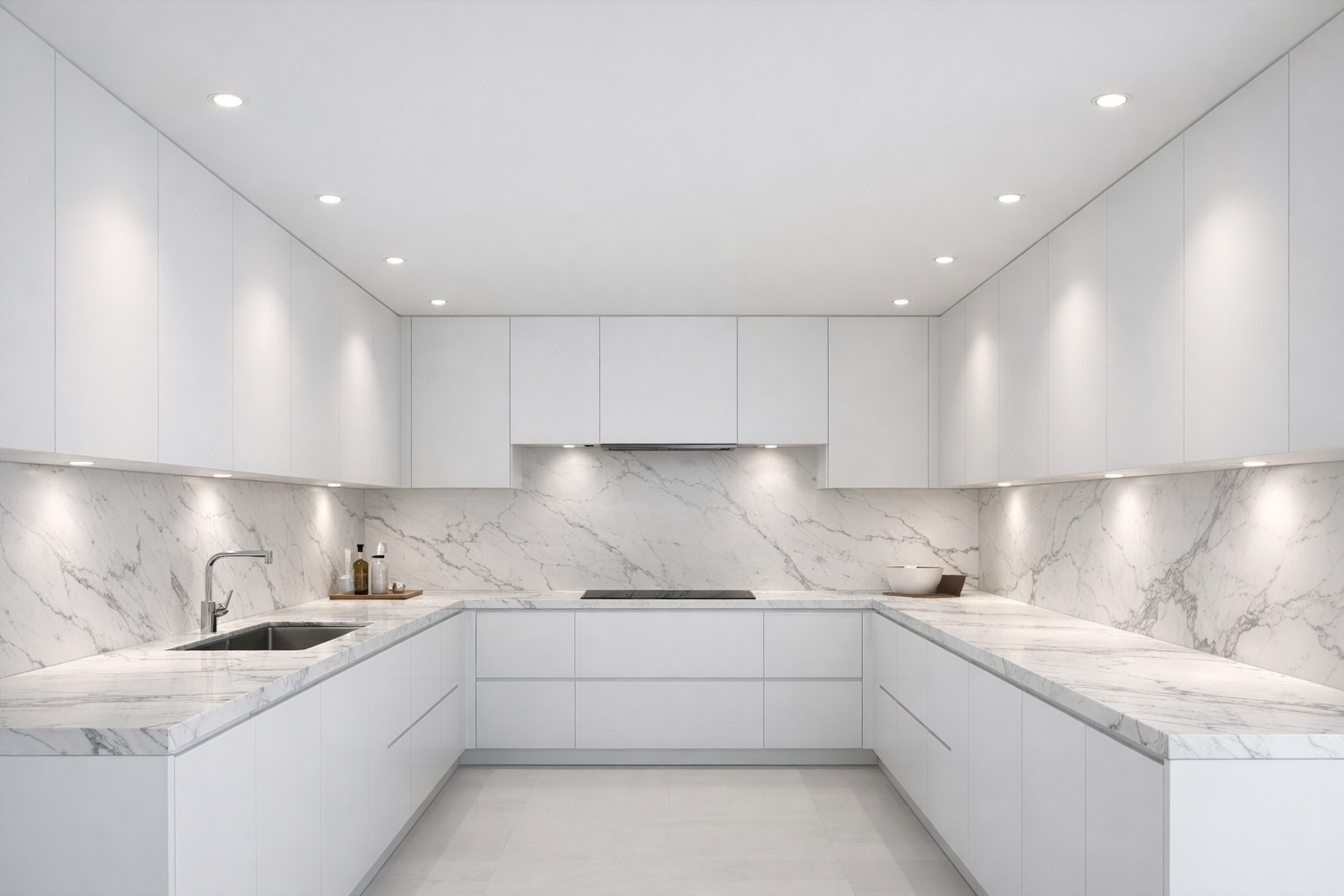
Contemporary kitchens with handleless cabinets, gloss finishes, crisp modern lines and low visual clutter are where recessed lighting feels most at home. The invisible fixtures complement the clean aesthetic, keeping all attention on the sleek surfaces and architectural details.
How Each Works with Other Light Types
Pairing with Under-Cabinet Lighting
Both recessed and surface-mounted ceiling lights work brilliantly alongside LED strip lighting under cabinets. The combination of recessed ceiling spots with under-cabinet strips delivers the best possible task visibility, eliminating shadows completely. Surface-mounted ceiling lights paired with strips create a perfect balance of ambient atmosphere and practical working light.
If you’re unsure which type of under-cabinet lighting to choose, our comparison of puck vs strip vs linear under-cabinet lights explains the pros and cons of each option.

Pairing with Pendant Lighting
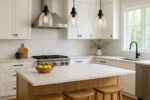
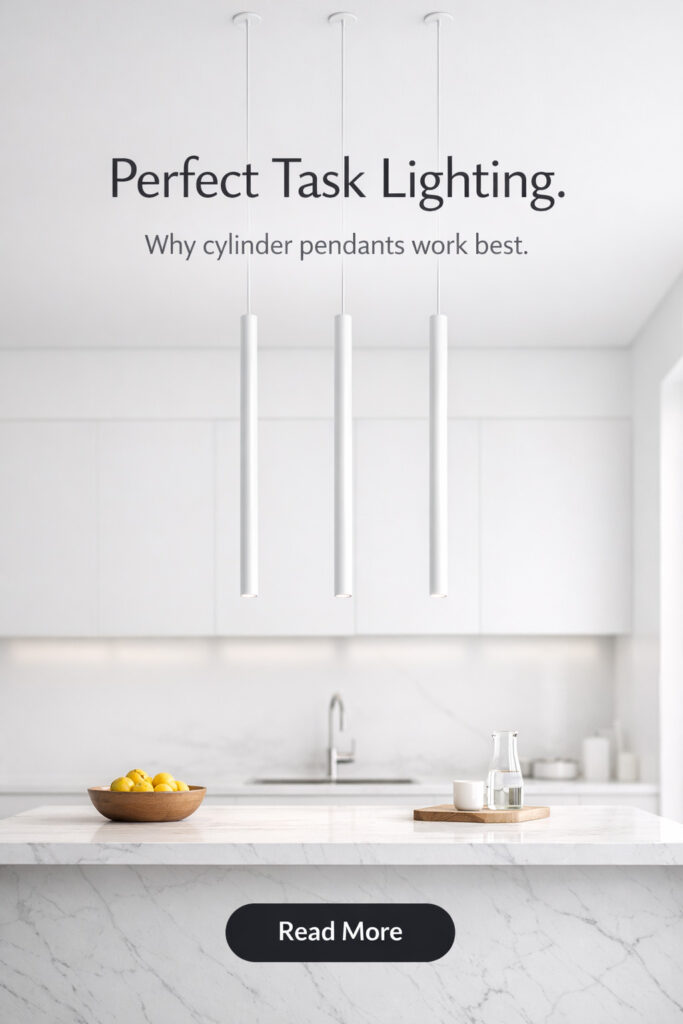
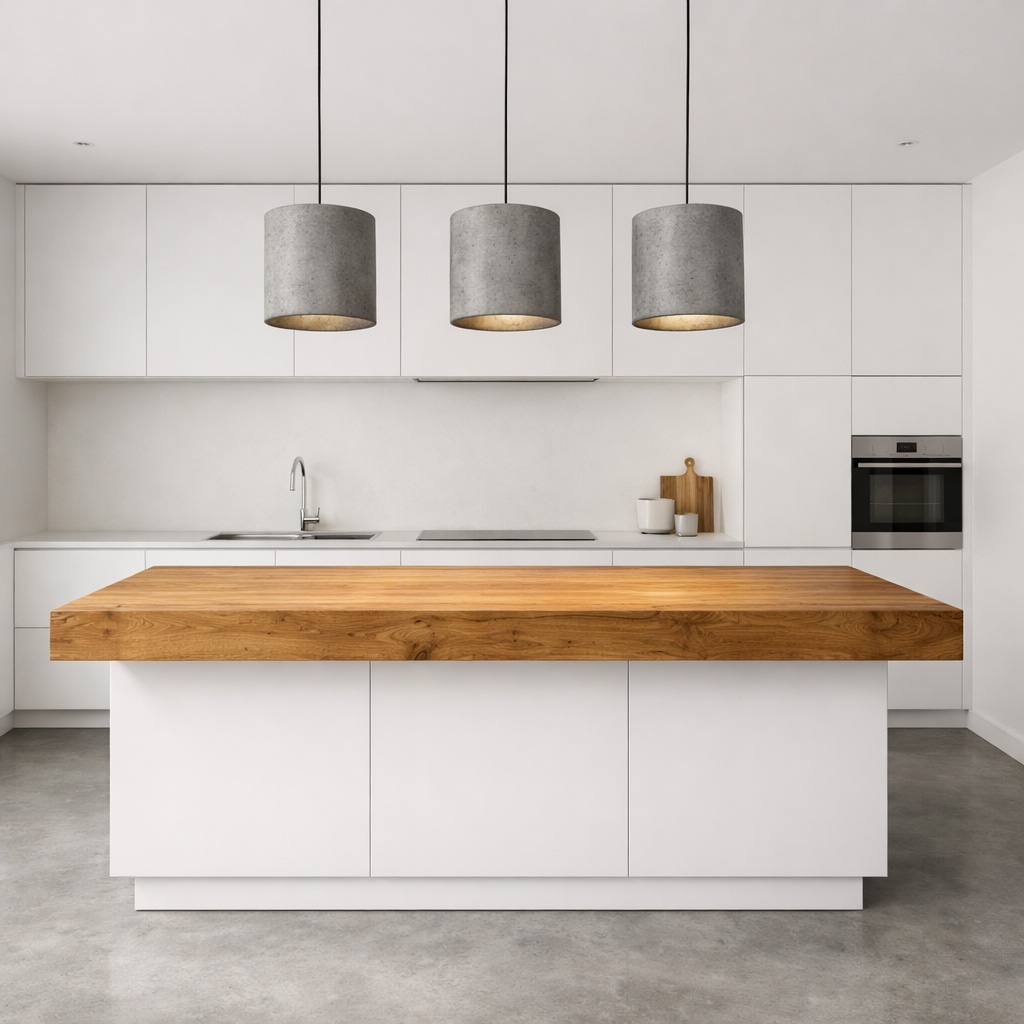
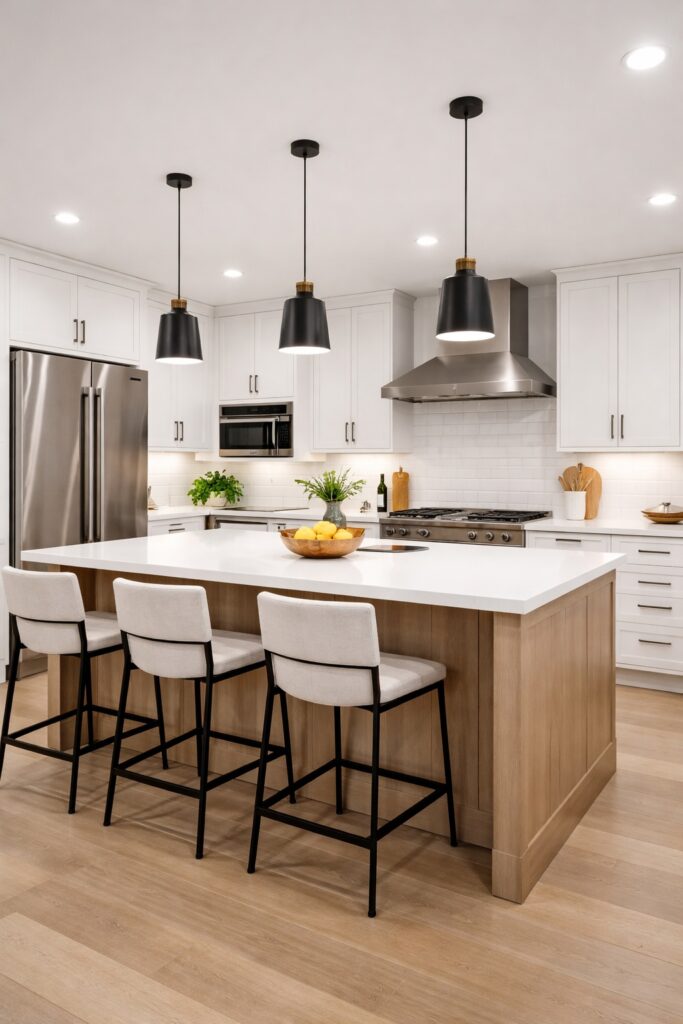
Both ceiling types pair beautifully with decorative pendants over islands or dining areas. Recessed lighting provides the background illumination throughout the room while pendants add visual interest and focused light over specific zones. Surface-mounted fixtures can complement decorative pendants by providing softer ambient light in areas away from the pendant’s pool of illumination.
Pairing with Track Lighting
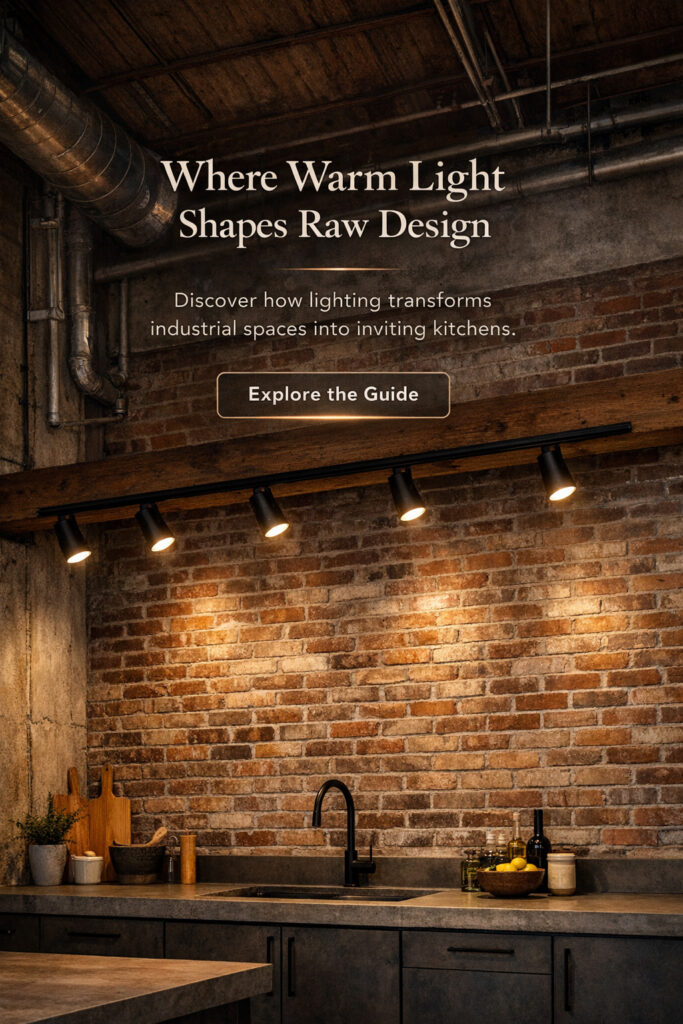
Track lighting offers directional flexibility that works well alongside either ceiling type. Recessed lights can handle even coverage while track heads highlight specific features or artwork. Surface-mounted spot heads can even integrate into track systems, giving you a unified look with the ability to redirect light as needed.

Safety and Regulation Notes
When planning your kitchen lighting installation, keep these UK-specific considerations in mind.
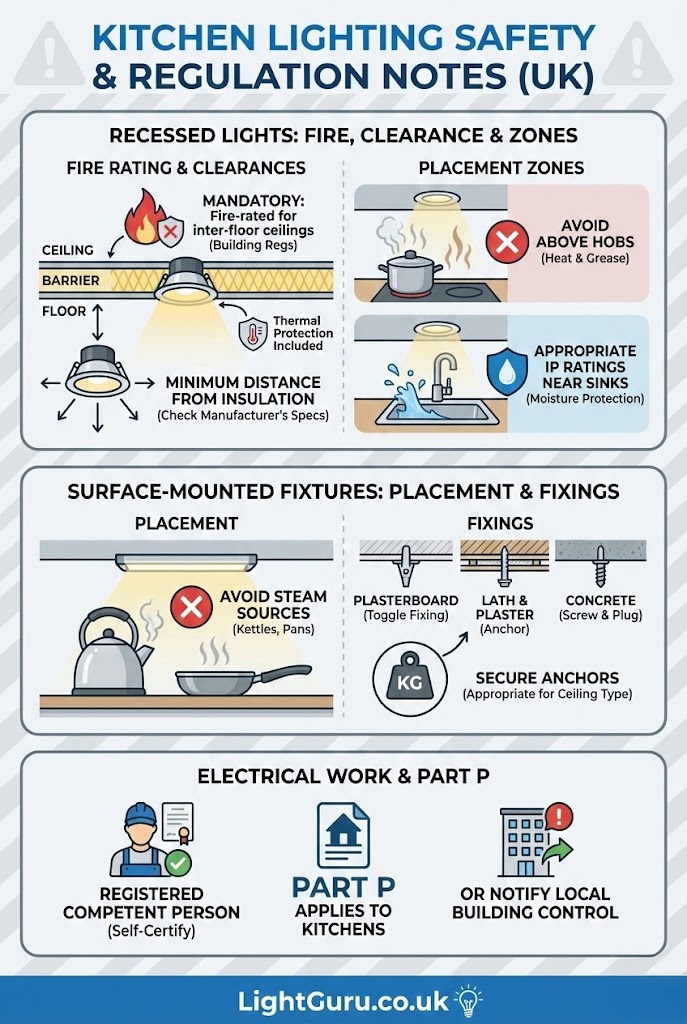
Recessed lights installed through a ceiling that forms a barrier between floors must be fire-rated to maintain the ceiling’s fire resistance. This is a Building Regulations requirement, not optional. You’ll also need proper clearances around the fittings—check the manufacturer’s specifications for the minimum distance from insulation and other materials. Recessed lights should not be installed directly above hobs due to heat and grease, and any fittings near sinks must have appropriate IP ratings for moisture protection. Fire-rated downlights like the meet current UK regulations and include the necessary thermal protection.
Surface-mounted fixtures are generally simpler to install safely, but you should still avoid mounting them too close to steam sources such as directly above kettles or pans. Ensure ceiling anchors are secure, particularly for heavier fixtures—use appropriate fixings for your ceiling type, whether plasterboard, lath and plaster, or concrete.
For all electrical work in kitchens, Part P of the Building Regulations applies. Unless you’re a registered competent person, you’ll need to notify your local Building Control or use a registered electrician who can self-certify the work.
Style Comparison at a Glance
Recessed lighting creates an ultra-modern look that blends into ceilings, makes rooms appear larger, and suits minimal and architectural interiors. Surface-mounted lighting adds visible character, acts as a focal design piece, works well in classic interiors, and brings warmth to a room.
Neither is inherently better—the right choice depends on your kitchen’s style, your ceiling construction, and the atmosphere you want to create.
Common Mistakes to Avoid
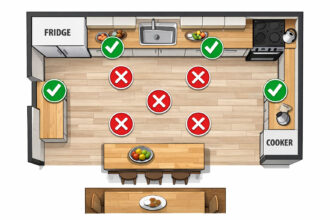
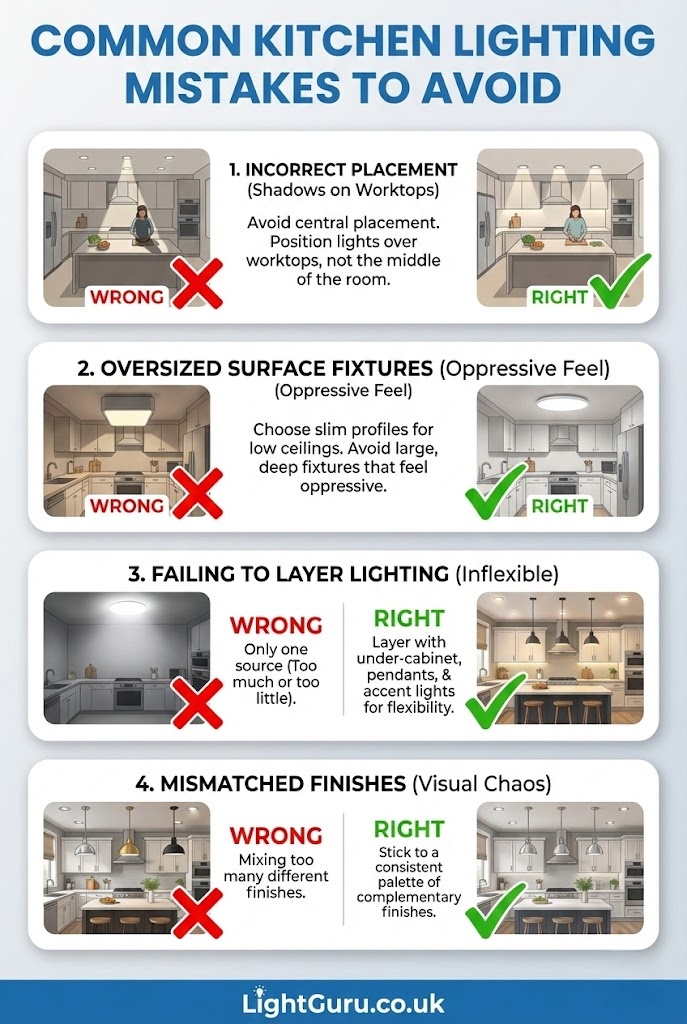
Putting recessed lights down the centre of the kitchen is one of the most frequent errors. This creates shadows on your worktops because you stand between the light and your working surface. Always position recessed lights above the worktops, not in the middle of the room. For detailed placement guidance, see our kitchen downlight spacing article.
Choosing surface-mounted lights that are too large or deep can make low ceilings feel oppressive. Measure your ceiling height and choose fixtures with slim profiles if you’re working with standard 2.4m ceilings.
Failing to layer your lighting leaves you with either too much light or not enough, with no flexibility between the two. Both recessed and surface-mounted ceiling lights need support from additional sources like under-cabinet strips, pendants over islands, or accent lighting to create a functional and atmospheric kitchen.
Mixing too many different finishes creates visual chaos. Stick to a consistent palette—if your recessed trims are brushed chrome, choose surface-mounted fixtures and pendants in the same or complementary finishes.
Can You Mix Recessed and Surface Lighting?
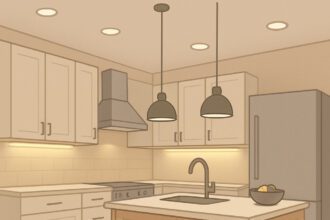
Yes—and in many kitchens, combining both types produces the best results. A layout that uses recessed downlights above prep areas, a surface-mounted semi-flush fixture as a central feature, pendants over the island, and under-cabinet strips for task clarity works beautifully in almost any UK kitchen.
The key is giving each fixture type a clear purpose. Recessed lights handle practical task illumination. Surface-mounted fixtures add decorative interest or ambient fill. Pendants provide focal lighting over islands or tables. Under-cabinet strips eliminate worktop shadows. When each layer has a defined role, the overall scheme feels cohesive rather than cluttered.
Frequently Asked Questions
Which is brighter: recessed or surface-mounted lighting?
Recessed lights typically deliver stronger, more focused task lighting because the beam is directed downward without diffusion. Surface-mounted lights produce broader ambient light that spreads across the room but may feel less intense at worktop level.
Which is better for low ceilings?
Recessed lighting keeps sightlines completely clear, making it the better choice for maximising perceived ceiling height. However, slim flush-mounted fixtures with profiles under 60mm can also work without making low ceilings feel oppressive.
Which suits older homes?
Surface-mounted lighting is often easier to install in older properties because it doesn’t require ceiling cavities. It also tends to complement period features and traditional kitchen styles more naturally than modern recessed spots.
Does recessed lighting work in cottage kitchens?
Yes. Choose warm colour temperatures around 2700K and consider softer, rounded trim styles rather than stark modern bezels. The key is selecting finishes and colour temperatures that complement the traditional aesthetic rather than fighting against it.
Can I mix both styles?
Absolutely. Many successful kitchen lighting schemes combine recessed task lighting with surface-mounted decorative fixtures, pendants and under-cabinet strips. Just ensure each fixture type has a clear purpose in your overall lighting plan.
Conclusion
Choosing between recessed and surface-mounted lighting comes down to your ceiling construction, your kitchen style, and the type of light you want to create. Recessed lighting offers sleek, modern brightness with excellent task performance and a premium invisible finish. Surface-mounted fixtures add personality, visual warmth and easier installation without the need for ceiling cavities.
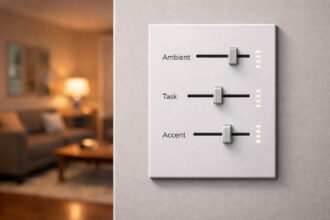
Both can look stunning, and most kitchens benefit from a combination that uses each type where it works best. Layer your ceiling lighting with under-cabinet strips and island pendants, put everything on dimmers, and you’ll have a kitchen that works beautifully for early morning coffee and late-night entertaining alike.
For more guidance on planning your complete kitchen lighting scheme, see our comprehensive kitchen lighting guide.